Saturday, October 23, 2010

Monarchy Profile: Norway

Name: The Kingdom of Norway
Reigning Monarch: His Majesty King Harald V
Reigning Family: House of Glücksburg
Status: Although the current form of the Kingdom of Norway came about in 1905 after the dissolution of the union with Sweden, the royal traditions of Norway are thousands of years old. Once a land of numerous small Norse kingdoms, Norway was united but spent much of the last few centuries united with either Sweden or Denmark. Norway is a constitutional monarchy with the monarch holding considerable powers on paper. Effectively, however, these powers are exercised by the Council of State in the name of the monarch. The reserve powers of the Crown are maintained as a security failsafe but the monarch today is effectively ceremonial. The monarch ratifies laws, dispatches and receives envoys and serves as a symbol of national unity. The King has sovereign immunity and the Council of State is responsible for his actions with other members of the royal family answerable only to the King. The King has the power to veto bills to prevent them becoming law but his veto can be overridden and in any event no modern King of Norway has ever tried to veto a bill. As with most European monarchies his powers are exercised exclusively by members of the sitting government.

Friday, October 22, 2010

Mad Rant: Where Have All the Cowboys Gone?

No, not just a song, but a legitimate question. Where have all the cowboys gone? Not my fellow cattlemen of course, but the good guy heroes of our culture? Where is Gary Cooper, wearing a white hat, defending the innocent and taking down the town bully? Where is John Wayne and the US Cavalry riding to the rescue of embattled settlers? For a more Old World example, where is the lone knight defending the honor of his beloved lady? Where is the God fearing hero with the strong arm and loyal heart ready to charge into the barbarian hordes for his king and country? We are told over and over again that the modern masses are too sophisticated for such figures, who (we are reassured) never really existed anyway. However, it seems to me, particularly in that dominant media of modern pop culture -cinema- the public still loves its traditional, good guy heroes.

For example, “Braveheart” was a hugely successful film and I will submit that, to a large extent, this was because it was an historical epic with really bad history. William Wallace was a good guy, about as close to a traditional hero as modern film seems capable of producing, struggling against King Edward I who was portrayed, in a simplistic and historically inaccurate way, as the blackest of Hollywood villains. And it worked, it was stirring, it was moving and people loved it. Contrast this with other historical films like “Kingdom of Heaven” or “The Alamo” (the latest version) in which traditional heroes are cut down and everyone on every side, be they ‘good guys’ or ‘bad guys’ are portrayed as having positive and negative aspects and so on. Unlike “Braveheart” both of these movies were major box office bombs. Surprisingly, people want heroes and villains in movies and they do not like to see traditional heroes denigrated no matter the justification.

Would a movie about George Washington that was exactly accurate really be a big success? Do Americans want to see their revered founder marrying money, driving slaves, cussing out his own soldiers after their constant defeats, blaming his men for lack of success or whining endlessly about how unappreciated he is? Of course not! The fact that it is all perfectly true makes no difference, that is not what people want to hear even if they know it to be true. Now, if a movie did this, it still could work (at least in some countries) if this was contrasted to a heroic portrayal of King George III, but we all know that is not going to happen. A movie might be made that tore down George Washington but it would invariably tear down King George as well. It would not be inspiring, it would not motivate anyone to see it and would basically leave those who did feeling rather down. Another example covered here was the St Joan of Arc film “The Messenger” which certainly did not make the English look good but made the French look just as bad and portrayed Joan as a lunatic. Audiences want someone to root for and more often than not these days they are not getting it.

I tend to be of the opinion, whether with movies or some other such media, that history should be taught with a point behind it. Naturally, I do not mean to change or revise the facts of what have happened, but in the telling of any story we always emphasize some things over others. However, there should be a moral to a story and some benefit to the telling of it. Once upon a time history was viewed as learning from the past so as to avoid mistakes in the future. A noble enough goal. However, if we are to follow the current trend of ‘everyone was bad and no one was better than anyone else’ I have to ask what lesson can we possibly learn from that? Call it what you like, moral relativism seeping into pop culture or simply bad filmmaking but it makes for some pretty mad “entertainment” and a very … Mad Monarchist.

Monarchy Profile: Oman

Name: The Sultanate of Oman
Reigning Monarch: His Majesty Sultan Quaboos bin Said Al Said
Reigning Family: Abu Sa’id dynasty
Status: Once partly held by the Portuguese and later part of the British sphere of influence, Oman was once a powerful state that dominated the southern Arabian peninsula and parts of eastern Africa. In recent years rebellions, internal strife and communist subversion have been problematic. Oman is an Islamic absolute monarchy with key decisions made by the Sultan and his appointed cabinet. In the 1990’s an electoral advisory council was established though universal suffrage was only established in 2003. Today women can vote and hold public office. Political parties are banned and all elected officials have only advisory and consultative powers with the Sultan holding final authority over the legislative and judicial process. Rather than being strictly hereditary, new monarchs are chosen by the agreement of the royal family after the death of the previous sultan.

Thursday, October 21, 2010

Favorite Royal Images: The Commander-in-Chief

Monarchy Profile: Qatar


Name: The State of Qatar
Reigning Monarch: His Highness Sheikh Tamim bin Hamad Al Thani, Emir of Qatar
Reigning Family: Al Thani dynasty
Status: The small Gulf State of Qatar is ruled by a family descended from the Tamim tribe originally from the interior of the Arabian peninsula. Previously a protectorate of the British Empire the State of Qatar became independent in 1971 when extensive mineral wealth was discovered in the country. Qatar is an absolute monarchy and the emir is the chief of state and head of government. There is Islamic and civil law codes with Islamic law usually prevailing. However, Qatar has modernized a great deal recently with press censorship being reduced recently. Commercial ties are maintained with Israel and Iran and women in Qatar are able to vote and hold public office since 2003. The reigning family is extremely wealthy and Qatar is known for having the population with the highest per capita income in the world. Only municipal officials are elected, the national assembly is appointed and political parties are banned.

Shameless Plug


Wednesday, October 20, 2010

New Orange Website

For those who speak Nederlands or have a good translator there is an excellent new website on the history of the Royal House of Orange-Nassau that has come to my attention. Have a look at the Historical Society of Orange-Nassau.

Papal Profile: Pope Callixtus III

Pope Callixtus III was the first member of the now notorious Borgia family of Spain to come to the throne of St Peter. Born in 1378 in Valencia he was first a lawyer and then later a diplomat for the King of Aragon. After entering the Church he was raised to the rank of cardinal for negotiating a reconciliation between King Alfonso V of Aragon and Pope Eugene IV. In 1455 the aging Cardinal Borgia was elected to the See of Peter as a compromise candidate, no one expecting him to live very long or do very much to rock the boat as they say. As usual, popular opinion was wrong. Taking the name Callixtus III he proved to be a very active and zealous pontiff despite his age and the one overriding goal of his reign was the dream of retaking the city of Constantinople for Christendom. He proved himself willing to sacrifice as much as necessary, to bear any burden to further the cause of this hoped for crusade.

Known as a pious man and an idealistic cleric he also gained a reputation for austerity born out of his drive to retake the capital of the Eastern Roman Empire. The extensive building programs under way in Rome were cancelled and the money funneled toward the crusade. Artists were dismissed as unnecessary at the moment, the papal treasury was emptied and Callixtus even stripped his own Apostolic Palace, selling his silver and gold to raise money for Constantinople. He said, the Pope could eat off the same plates as the peasants used as easily as silver or gold. However, despite his sacrifices and urgent calls for action on the part of the crowned heads of Europe most had no interest in renewing the fight against the formidable Turks. Some zealous souls did answer and waged an on-going war in the Balkans and the Aegean Sea but the powerful Sultan was hardly bothered by these and Constantinople was never in danger of falling.

The taxes, penny-pinching, and badgering for armies to assemble from the Pope meant that Callixtus III was not too popular in the capitals of Europe. Sadly, he was not terribly appreciated in his own either. The Romans, not too fond of foreigners to begin with since the whole Avignon affair, were unhappy with the appearance of so many new Spanish officials and two new Spanish Borgia cardinals as well as being rather disgruntled about the Pope halting the building projects that cost a great deal but had provided employment to many Romans. The noble aspirations of the Pope did not get him very far with the man on the street though his actual accomplishments include some very good but often overlooked things. For example, he officially rescinded the declaration of heresy leveled against (future saint) Joan of Arc, correcting one of the grossest miscarriages of justice of the Middle Ages. The crusade, such as it was, did have at least one notable success in lifting the Muslim siege of Belgrade for which the Pope declared August 6 the Feast of the Transfiguration. He also entrusted the military Order of Christ to Prince Henry the Navigator of Portugal, the country on the cutting edge of global exploration.

It was the misfortune of Callixtus III that virtually every power in Europe was busy fighting their own enemies (England and France, Germany and Hungary, Aragon and Genoa etc) to join forces in retaking Constantinople. Today he is also rather tainted, unfairly, by his family name and accused of the usual range of corruption and nepotism. However, all of this is quite unfair. He never attempted to enrich himself as is proven by the large sum of money left in the treasury at the end of his life and compared to most others his elevation of two nephews as cardinals is a poor basis for a charge of nepotism. He earnestly tried to end the petty squabbling across Europe and unite the Christian princes for the common defense and he should be given some credit for that. It is, perhaps, fitting that he died on August 6, 1458, the very day he previously ordered celebrated in honor of the victory at Belgrade.

Monarchy Profile: Saudi Arabia


Name: The Kingdom of Saudi Arabia
Reigning Monarch: His Majesty King Salman bin Abdul Aziz Al Saud
Reigning Family: Al Saud dynasty
Status: The modern country of Saudi Arabia was formed in 1932 by King Abdul Aziz bin Abdul Rahman Al Saud (Ibn Saud). The country is an absolute monarchy and an Islamic state with the national motto being the Islamic profession of faith and Islamic law being the law of the land. The King holds final authority over all areas, appoints all government officials and most high officials are usually princes of the extremely large royal family. Royals are given a religious education within the palace but also often spend a few years living with Bedouins in the desert to learn traditional Arab ways and better appreciate the customs and heritage of their culture. The preservation of Arab customs and values are very important to the Royal Family and the country as a whole to understand where they, as a people, come from; an important aspect of any monarchy. As an absolute monarchy and an Islamic state, Saudi Arabia is frequently criticized for lacking democracy, personal freedoms and civil rights. There is no sizeable opposition within the country as any dissent is swiftly suppressed. Abroad the criticism has been harsh at times but the dependence of the more liberal democracies of the west on the oil Saudi Arabia produces means that such opposition has never gone beyond words.

Tuesday, October 19, 2010

MM Video: Consorts of Portugal


The consorts of the Kingdom of Portugal from the Burgundy, Avis, Hapsburg and Braganza dynasties.

Monarchy Profile: Spain


Name: The Kingdom of Spain
Reigning Monarch: His Majesty King Felipe VI
Reigning Family: House of Bourbon
Status: The Kingdom of Spain in its current form grew out of the regime of General Francisco Franco who ruled Spain for 30 years. Two days after his death, in accordance with his wishes, Prince Juan Carlos became King of Spain in 1975. At once he set about implementing the transition from dictatorship to parliamentary democracy. This outraged Franco loyalists but changes went ahead with the first elections held in 1977. In 1978 a new constitution was enacted, recognizing the historic right of Juan Carlos to the throne (not simply as the choice of Franco) and the King relinquished his absolute power and became a constitutional monarch. Still, the respect the King commanded and the popularity he won by making Spain a democracy meant that the King had a great deal of influence despite relatively few powers in law. This was tested in 1981 when a military coup was launched in an effort to restore the old regime. King Juan Carlos suppressed it when most of the army obeyed his orders which won him even greater popularity. However, since that time his influence has declined somewhat, particular with the rise of regional separatists and the increasing dominance of socialist politicians opposed to the monarchy. Laws require royal assent but the King is not allowed to refuse to give it.

Monday, October 18, 2010

Soldier of Monarchy: Carl Gustaf Mannerheim

If there is any one man who could be called the “father” of modern Finland it is Carl Gustaf Mannerheim. Born in 1867 to noble Swedish-Finnish family that had lost its fortune, Mannerheim grew up as an impetuous and somewhat rebellious youth. Discipline problems scratched his plans to join the local Finnish army and so he opted for the Imperial Russian Army (Finland being, at the time, a Grand Duchy in the Russian Empire). He married but later separated from his wife and seemed to have little prospect of advancement until the outbreak of the Russo-Japanese War. Volunteering for service in the Far East Mannerheim proved his skill and courage quickly and was promoted to colonel for his actions at the battle of Mukden in Manchuria. After attending the last meeting of the Finnish Diet he was sent on a secret intelligence gathering mission through Turkestan to Peking. The “Great Game” between Russia and Britain was still lingering on and the Russian high command wanted to know what the prospects of a Russian invasion of western China would be and how much the Qing Imperial Army had modernized.

Mannerheim undertook the mission with considerable zeal, carrying on even after setbacks that would have discouraged most others. He reported on the attitudes of the ethnic minorities toward the Han Chinese, noted the anger in Inner Mongolia over Han encroachment and met with the “Great Thirteenth” Dalai Lama of Tibet. After reaching Peking and reporting on military, social and educational advancements that were underway as well as the increasing interest of Japan in the region after which he returned home via the Trans-Siberian railway. Resuming his military duties he was posted to Poland and then to the court of Tsar Nicholas II. When World War I broke out he again gave valuable and gallant service to the Russian Empire during the campaigns in Hungary and Romania. For his service he earned the Cross of St George, of which he was justly proud, and promoted to command a cavalry division.

However, for Mannerheim as with many others, the outbreak of the Russian Revolution changed the course of his life forever. Disgusted by the Bolsheviks he was determined to fight them to the last and was part of the “White Russian” opposition. However, he was also torn by his nationalist desire to see his beloved Finland independent and his loyalty to the Tsar whom he had so faithfully served. That little dilemma took care of itself when the Romanov dynasty was overthrown and the choice of an independent Finland or a communist-dominated one was easy for Mannerheim to make. Returning to his homeland he organized White forces to beat back the Bolshevik onslaught while Finnish patriots organized an independent government. Aside from the communists, who were always a minority among the Finns, there was division between those who favored a republic and those who favored a monarchy. The German Empire was supportive of the Finns and the choice of a German prince as King of Finland would ensure German favor while the western Allies would oppose such a move.

Mannerheim was a military man from the start, not a politician, and there has been some debate as to which side; the republicans or the monarchists, that he truly favored. For most it should be clear that Mannerheim favored a monarchy but I shall let Mannerheim speak for himself. As commander of the Finnish White Guards he said, “The army considers it their duty to openly state their wish that there will be guarantees to avoid the recurrence of those conditions (conditions leading to the Civil War), by creating a form of society and government that will forever protect us from a similar period of terror that our country has just escaped. The army regards as the only guarantee that the navigation of the state ship of Finland is entrusted in firm hands, which cannot be touched by party disputes and need not submit to compromises, sell power at bargain prices.” It certainly sounds as though a monarchy was what Mannerheim considered ideal.

However, as Germany was crumbling away in defeat toward the end of 1918 the monarchist position gave way as everyone knew the Allies would be against such a thing considering that it was a German prince, Frederick Charles of Hesse-Kassel (the Kaiser’s brother-in-law no less) who had been chosen to be King of Finland. Some in the army and White Guards especially wanted to make the hero Mannerheim King but nothing ever came of that idea though he did maintain order as regent until a government, now republican, could be organized. He obtained recognition of Finnish independence from Great Britain and America and organized food relief to be sent in to avoid starvation. The United States would later gratefully point to Finland as the only country to repay the war debts to America on time. When a government was organized Mannerheim stepped aside though he was already being attacked by liberals (socialists) for his staunch opposition to the communists. Mannerheim himself was less than impressed with the government, holding a rather low opinion of all politicians as creatures who stirred up divisions amongst the populace simply to further their own careers and increase their own power. Imagine that.

Mannerheim knew that Finland was not in the clear yet. His experience fighting the Bolsheviks gave him a clear understanding of their goals and he knew that, no matter how much they despised Imperial Russia, they would do all in their power to retain and retake every inch of what had formerly been the Tsar’s empire. As usual, Mannerheim was right and soon the new Union of Soviet Socialist Republics had annexed Estonia, Latvia and Lithuania after luring them to a conference to discuss political issues. He continued to support the conservatives in Finland but he spurned the suggestion of some on the radical right that he become dictator. Nonetheless, Finland was soon forced to turn to him for help in their greatest crisis since becoming independent. In 1939 the USSR summoned Finland to a conference just as they had the Baltic states and made extensive territorial demands. The Finns refused to surrender their territory and Mannerheim returned to duty as Field Marshal of the Finnish army to face the threat of a Soviet invasion.

It was a seemingly impossible task that faced the battle-hardened aristocrat but he went to work with care and vigor. Plans were drawn up to protect the populace, preparations were made for land, sea and air attacks and defenses were erected including a fortified line across the Karelian isthmus known as the Mannerheim Line. When the Red Army invaded the Soviets claimed they were only defending themselves (which became quite a joke in the international community) and commissars told the Russian soldiers that the oppressed Finns would welcome them with open arms. To say that Moscow, and the world, were stunned by what happened next would be an understatement. The over-confident communists walked into a firestorm of fierce Finnish resistance. Using hit-and-run tactics, concealed fortifications, ambushes and their knowledge of the terrain the Finns decimated the Soviet Red Army. Again and again the communists walked into Finnish traps, their situation not being helped by the fact that many of their troops were raw conscripts and their officer corps had recently been thinned of talented leaders by a massive military purge carried out by Joseph Stalin.

Mannerheim, it seemed, had thought of everything and though pushed to the breaking point his clever tactics and tenacious soldiers inflicted ruinous losses on the enemy. Yet, they knew they could not hold out forever against the Soviet hordes and, aside from some brave volunteers from Sweden and Norway and the like, no help was forthcoming for Finland. Adolf Hitler did offer to send a considerable number of expert German troops to help but Marshal Mannerheim rejected the offer. Naturally he did not wish to offend the only world leader willing to help but neither did he want to become a satellite of the Nazi regime. The Finns fought on alone to the bitter end when the Soviets, shaken to their senses, called in hordes of reinforcements to overwhelm the gallant Finns. A peace was negotiated with Finland losing extensive territories to the Soviet Union but, unlike the Baltic states, they kept their independence and could hope to retake what they had lost some day.

Mannerheim was the national hero of Finland and when the Axis forces invaded the USSR in World War II he took his troops into battle once again. In 1942 Hitler had met with Mannerheim but it was a less than cordial visit. Mannerheim would not receive him in any way that would make it appear to be an official visit or an endorsement of the Nazi leader and the assembled company gasped when Mannerheim boldly lit up his cigar in front of the notoriously anti-smoking Nazi dictator. Finland did go to war again against the USSR in conjunction with the Axis invasion but with very limited war aims that were in any event lost when the tide turned in favor of the Allies. After World War II ended in defeat for the Axis the Republic of Finland was the only country bordering the Soviet Union to retain its independence and a great deal of the credit for that must go to Marshal Mannerheim, particularly for the sound thrashing he gave the Red Army in the Winter War, known in Moscow as the “grave of the Russian field army”.

No less a figure than Stalin said that were it not for Marshal Mannerheim Finland would have been a Soviet satellite. After the war Mannerheim briefly served as President of Finland but politics was never to his liking and viewed his time in office as he had his military service; a duty that was imposed on him rather than something he sought for himself. He was never comfortable dealing with parliament and at his age was often ill and unable to devote his full time to his presidential duties. Mannerheim died on January 27, 1951 after a lifetime of service to his country. Widely celebrated around the world he still considered the greatest and most honored national hero in Finland today.
(For more information and fascinating stories on Marshal Mannerheim there is a wealth of information at the excellent blog The Sword and the Sea.)

Monarchy Profile: Swaziland

Name: The Kingdom of Swaziland
Reigning Monarch: His Majesty King Mswati III
Reigning Family: Diamini dynasty
Status: The landlocked Kingdom of Swaziland, which is completely surrounded by South Africa and Mozambique, is the last absolute monarchy on the African continent. From 1899 to 1968 Swaziland was a protectorate of the British Empire during which time the country was ruled by Sobhuza II. After his death in 1982 the Great Council of State chose his 14-year-old son Mswati III to succeed him as is the local custom. Although an absolute monarchy, the tradition in Swaziland is for a king and the queen mother to reign together as joint rulers, her title being Indlovukazi or ‘Great She-Elephant’. Today the King is often ridiculed for his lifestyle and for his very numerous wives. This actually is long-established custom that a king take a wife from each Swazi clan. Pro-democracy groups and human-rights groups are constantly criticizing Swaziland and accuse the King of being a dictator. In fact, he is simply ruling as all of his predecessors have done, which is as an absolute monarch. The king appoints all high officials but takes advice from the queen mother and council of ministers. An effort to allow greater democracy was undertaken in the 1990’s but civil strife and infighting quickly brought an end to this and political parties were banned.

Sunday, October 17, 2010

Monarchist Music: La Brabançonne


The very royalist national anthem of Belgium sung in all three official languages.

Monarchy Profile: Sweden

Name: The Kingdom of Sweden
Reigning Monarch: His Majesty King Carl XVI Gustaf
Reigning Family: House of Bernadotte
Status: Sweden is quite unique amongst the remaining monarchies of the world. The current royal family descends from a Marshal of France who was originally a republican revolutionary. Once an absolute monarchy and the dominant power in far northern Europe, today Sweden is a constitutional monarchy and officially neutral. Gustaf V was the last king to take an active role in Swedish affairs and since his reign the power and role of the monarchy has been drastically cut back. Today the King of Sweden has no political authority or official role in government at all but is a purely ceremonial figurehead of state. Still, the symbolic significance of the monarchy is important, both for the unity of the people and the history of their country. The King opens parliament, represents Sweden at home and abroad and awards Nobel prizes. Although opposition exists even the most strident leftist would have to recognize the stabilizing benefit of the monarchy. Today Sweden has a government that holds all power, one of the most socialized economies in Europe and a predominately non-religious population yet has never had a violent revolution.

Saturday, October 16, 2010

Royal News Roundup

On Sunday the Prince and Princess of Orange attended what was a rather sad occasion for your humble blogger. At Willemstad in Curacao they witnessed the official end of the Netherlands Antilles. The islands of Bonaire, Saba and Statia will become municipalities of the Netherlands while Curacao and St Maarten have become independent though, like Aruba, they are thankfully retaining the Dutch monarchy and are now constituent countries of the Kingdom of the Netherlands. The Prince and Princess met with some of the locals on their trip, toured an adult education center and even played a little baseball with some local schoolchildren. Back home, HM Queen Beatrix was busy swearing in her new government at the Hague on Thursday.

In the Far East, Crown Princess Victoria and Prince Daniel of Sweden had a seemingly enjoyable time visiting and seeing the sights of China during a trip to Beijing and Shanghai to promote Swedish business interests and visit the Sweden pavilion at the World Expo. To the south, in Vietnam, the city of Hanoi (formerly known as Thanh Long) is celebrated its millennium anniversary but a new film about the royal founder of the city, Ly Cong Uan (Ly Thai To) which stars Vietnamese actors in the leading roles but mostly Chinese actors in the supporting roles and which was filmed mostly in China. Emperor Ly Thai To was the founder of the Ly dynasty and the time he moved the capital to Thanh Long (“ascending dragon”) Vietnam had only fairly recently emerged from a thousand years of Chinese rule, which makes such national tensions at the time all the more strongly felt. Some changes are expected before the final release.

Amongst the Scandinavian royals HRH Prince Christian of Denmark celebrated his fifth birthday yesterday. The Mad Monarchist wishes the little prince and future King of Denmark a happy birthday and many, many more. HM Queen Margrethe II of Denmark welcomed the President of Ireland to her country on Monday for an official three day visit. A foreign visit did not go so well in neighboring Norway where the wrong anthem was played when HM King Harald V welcomed the President of the Swiss Confederation. The King later apologized for the error. Also this week the Queen of Sweden joined her daughter Princess Madeleine in New York City to launch a new campaign on the part of the World Childhood Foundation in cooperation with SIRIUS satellite radio to raise awareness of their activities and goals.

In southern Europe, this week His Holiness Pope Benedict XVI ordered the formation of a new Pontifical Council that will focus on the “New Evangelization”, particularly the re-evangelization of Europe. The Holy Father noted that while secularization continues the Christian roots of certain areas are still alive but that other regions have been almost totally de-Christianized. On Sunday at the opening of a synod of bishops from the Middle East the Pontiff spoke of the “false gods of the day” among which he included “public opinion” among those ideologies enslaving men and being elevated to the status of divinities. I’m sure somewhere Gregory XVI was smiling. In Spain a new book about the Prince and the Princess of the Asturias presents a refreshingly positive view of the next generation of Spanish royals and confidently declares that Prince Felipe and Princess Letizia are “Prepared to Rule”. In Monaco Prince Albert II and fiance Charlene Wittstock hosted a gala dinner in Monte Carlo for the Ireland Fund of Monaco. Earlier this week the Prince, after attending the Commonwealth Games in India, went to China where he visited the Monaco pavilion in Shanghai with sister Princess Stephanie.

In the Middle East a recent tape released by the terrorist network of Osama bin Laden again threatened the members of the Saudi Royal Family with assassination. Such threats are taken very seriously as last year alone assassination attempts were made against Prince Mohammed bin Nayef bin Abdul Aziz and Prince Nayef bin Abdul Aziz. On a happier note, the King of Jordan was pleased to welcome the President of Finland to the Royal Palace in Amman on Sunday.

Finally, in Great Britain the many employees of Her Majesty the Queen were less than happy when it was announced that their expected Christmas party has been canceled due to concerns over appearances because of the current economic crisis. Somehow I doubt the bureaucrats and members of parliament will be cutting back on their own festivities. The Queen and the Royal Family will of course be fine but, and this is the part the class-envy pinkos never seem to get, it is the humble employees who are the real losers here; the maids, the footmen, the gardeners etc. Those who incite class hatred against monarchy and, in this case, the British Royal Family never seem to stop and consider how many average working men and women the monarchy employs and how their jobs are threatened by constant budget cuts for the royals and even threats to the existence of the monarchy. However, budgetary cuts have not stopped the charitable impulse of the House of Windsor as HRH the Prince of Wales recently answered a call for help from Haiti, sending out his architectural charity to aid in the rebuilding of Port-au-Prince. Similar work has been done in places as far flung as Kingston and Kabul but this will be the biggest such rebuilding challenge the Prince’s charity has undertaken so far.

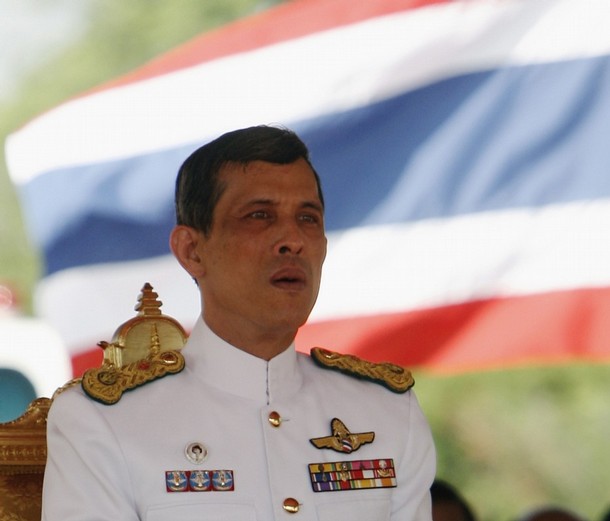
Monarchy Profile: Thailand


Name: The Kingdom of Thailand
Reigning Monarch: His Majesty King Maha Vajiralongkorn (Rama X)
Reigning Family: Chakri dynasty
Status: Thailand (formerly Siam) is a constitutional monarchy but one in which the king is widely revered and widely believed to hold a semi-divine status. Thais view their royal family with great respect for modernizing the country at a careful pace and for allowing Thailand to remain the only country in southeast Asia never colonized by a foreign power. Until 1932 Thailand was an absolute monarchy. A coup of civil and military elites took power at that time, though the King remained, and a succession of military governments followed. However, whereas other nations might have descended into outright civil war in similar circumstances Thai reverence for their beloved monarch proved decisive. Even though the King lacks actual political power, his widespread popularity and intense prestige has allowed him to intervene in moments of crisis to stop struggles for power from escalating. From 1973 onwards Thailand has been a basically stable constitutional monarchy though there have been periods of military intervention. Thailand is known for having strict Lèse majesté laws. However, the Thai monarch is so beloved and revered, if anyone were to speak disrespectfully of him in Thailand the authorities would be the least of their worries.

Friday, October 15, 2010

Monarch Profile: Ayurbarwada Khan

Ayurbarwada Khan, as known as Emperor Renzong of the Yuan Dynasty, was the eighth Great Khan of the Mongol Empire. In stark contrast to his predecessor and brother, Khaishan Khan, who ruled like in traditional Mongol fashion, as a nomadic chieftain of the steppe, Ayurbarwada Khan employed a more distinctly Chinese style in the administration of his vast realm. Ayurbarwada was born on April 9, 1285 to Darmabala and Dagi of the Khunggirat and was a great-grandson of the famous Kublai Khan. His destiny was shaped as a teenage boy when he was tutored by the Confucian scholar Li Meng. In 1305 the Dowager Empress Bulugan, wife of his uncle Temur Khan, removed him from court and sent him to Honan as the Prince of Huai-ning as part of her desire to remove all of the Khunggirat brothers of Khaishan Khan. Her aim was to have the governor of Ningxia, the Muslim Ananda, one of her favorites, take power.

However, Harghasun, the Yuan chancellor, recalled Ayurbarwada to Dadu where they plotted the overthrow of the Dowager Empress and Ananda who captured and imprisoned. He stepped aside for his brother Khaishan Khan to become Emperor and was in turn named crown prince and heir to the throne in June of 1307. The two brothers agreed that their descendents would rule the empire in turns. However, Ayurbarwada opposed the leadership style of his brother and some of his supporters abandoned him when he did not take the throne for himself. However, Ayurbarwada was a devout Confucian and said nothing of his disagreements with Khaishan Khan until his death in 1311 when Ayurbarwada Khan ascended the Yuan dynasty throne. Somewhat unusually for the Mongol Empire the transition from one Great Khan to another was largely peaceful and uncontested.

As Emperor, Ayurbarwada Khan was known for his Chinese sympathies. Being the product of a Chinese style education he loved painting and calligraphy and made a conscious effort to adopt Chinese methods of administration rather than carrying on with the Mongolian style of his predecessors. He got rid of the ministers left over from the reign of his brothers and replaced them with pro-Confucian ministers. In what was seen as the ultimate act of his reversal of policy to a more Chinese style he restored the civil service examination system for the first time since the Mongol conquest of China, at least for lower level administrators. Chinese scholars surrounded him and this naturally began to cause resentment amongst the Mongol princes at court. He met with more opposition when he encouraged Mongol nobles and commanders to learn from the principles of Confucius, implying, as they saw it, a form of Chinese superiority.

Opposition tended to form around the mother of the Great Khan, Empress Dowager Targi whose clique at court detested the pro-Chinese policies of the Emperor. Still, Ayurbarwada Khan went on reforming the judicial system, revising and codifying the legal system put in place by his ancestors and translating Confucian and other Chinese literature into Mongolian. In foreign policy there were no great successes but no major failures either. Attempts to assert influence over khanates in central Asia and southern Russia but to no effect. Authority was reestablished over what is now Xinjiang. Ayurbarwada Khan died on March 1, 1320, leaving the throne to his son and heir Crown Prince Shidebala in what was the only peaceful succession of a son in the history of the Yuan dynasty. His reign had been mostly stable and successful but his reforms left simmering resentment that would boil over in the years after his death. After his death he was given the temple name ’Emperor Renzong’ or ’Benevolent Ancestor’.

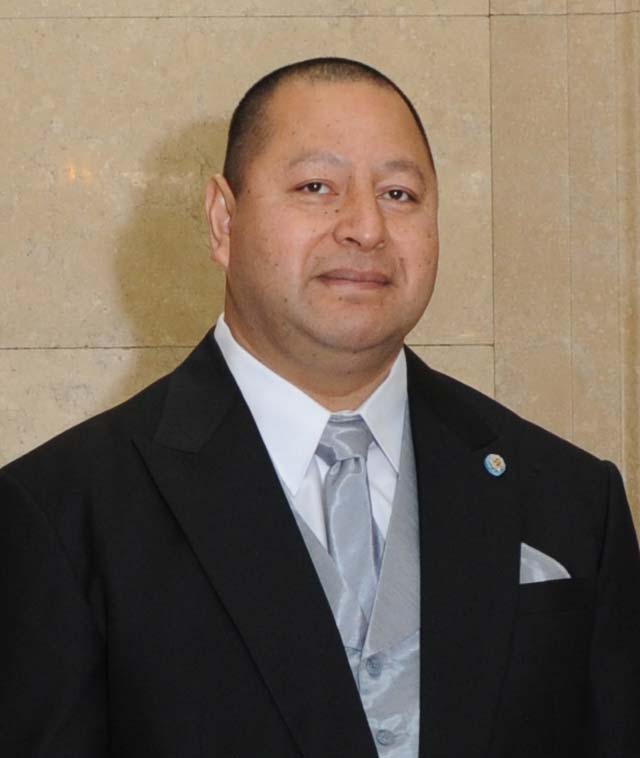
Monarchy Profile: Tonga

Name: The Kingdom of Tonga
Reigning Monarch: His Majesty King ʻAhoʻeitu ʻUnuakiʻotonga Tukuʻaho
Reigning Family: House of Tupou
Status: Tonga is a constitutional monarchy in the south Pacific Ocean and the only sovereign monarchy in the Pacific. Tonga was formerly known as the Friendly Islands after being given that name by the famous British explorer Captain James Cook in 1773. Although Tonga is a newly constitutional monarchy the person of the king, formerly known as the paramount chief of the islands, is a very revered figure and any insult or derogatory comments directed towards him would be considered a national shame. Formerly a British protectorate, Tonga was never colonized by a foreign power and joined the British Commonwealth in 1970. In the past the Tongan monarch held extensive legislative and judicial powers, however, the current monarch promised prior to his coronation to renounce these and defer to his prime minister on most state matters. Nonetheless a troublesome “pro-democracy” presence of agitators remains and the former King was obliged to sell off most of his primary sources of wealth. The current King of Tonga came to the throne on March 18, 2012 upon the death of his brother George Tupou V.

Thursday, October 14, 2010

Favorite Royal Images: Three Viet Generations

(left to right) HM Empress Nam Phuong, Prince Imperiale Bao Long, baby Princess Phuong Mai, Empress Dowager Doan Huy, HM Emperor Bao Dai of Viet Nam
Related Posts Plugin for WordPress, Blogger...