Showing posts with label military. Show all posts

Saturday, February 24, 2018

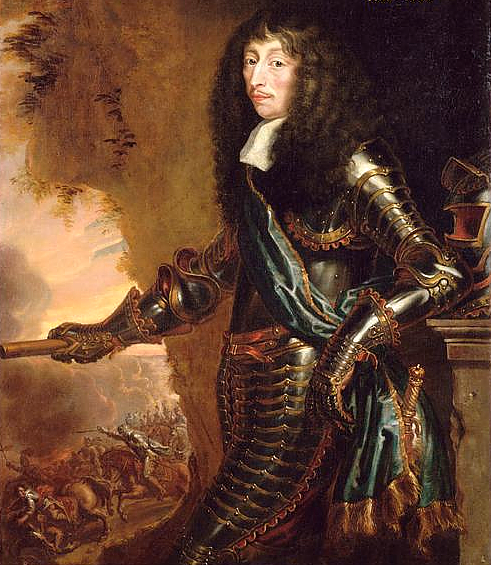
Battlefield Royal: Louis II de Bourbon, Prince de Condé

The way French military prowess is routinely denigrated, it is no wonder that the ignorant often say scoffingly that, in terms of great military leaders, the French would have nothing without Napoleon. And Napoleon wasn’t even really French. This attitude, however, derives almost entirely from World War II and is an exaggeration even if only looking at that unfortunate conflict. Rest assured, that even without Napoleon, France boasts a number of military giants, not only in French history but in the history of the world at large and one of those was most certainly Louis II de Bourbon, Prince de Condé. He was a colorful character to be sure, alternately regarded as a war hero, a traitor and the savior of his country. His achievements warrant his inclusion, not just on any list of great French military commanders but amongst the most remarkable and influential captains in world history (and he would not be the sole Frenchman on such a list).

The young prince
A “prince of the blood”, Louis was born the Duke of Enghien on September 8, 1621. As such, his was a childhood of wealth and privilege. Despite their august and semi-sacred status, many Bourbon royals could still be shy, withdrawn or even possessing of a degree of humility. Condé, however, was not one of them. He was proud, arrogant and could be extremely condescending. Yet, he was one of those rare personalities who, to the frustration of some, had as much talent as he had vanity. Entrusted, because of his birth, with a military command at the age of only nineteen, Condé nonetheless quickly proved that he more than merited such a position. He was no listless lord, no idle aristocrat, not at all one of those puffed up princes of popular fiction who is all glamour and no substance, the sort in any story we all wait to receive his comeuppance. On the contrary, Condé was driven to excel, possessed immense determination and real bravery. He also learned the art of war very quickly and very well. He became a master at evaluating the enemy and exploiting the slightest weakness.

The Prince at the Battle of Rocroi
He displayed so much talent that within three years he was given command of the French army and posted to the frontier to defend against an invasion from the Spanish Netherlands. However, standing still on the defensive was not his style. Condé went on the offensive himself and intercepted the Spanish army at Rocroi on May 19, 1643. This was no small affair. The Spanish infantry formations of pikemen and musketeers were rightly regarded as the best in the world in those days, a powerful combination of powder and steel that seemed unstoppable. The vaunted tercios, however, had met their match in the Prince de Condé. He concentrated his artillery to blast the Spanish lines, outflanked their cavalry with his own and then crushed the Spanish from both sides as his own infantry charged from the front and his cavalry from the rear. It was one of the most spectacular victories in French history. While losing only 2,000 men, Condé had wiped out 20,000 Spaniards, destroyed their army and in so doing also destroyed 150 years of Spanish military dominance in Europe. He had correctly evaluated his enemy and brilliantly exploited their weaknesses. It was his specialty and he won a victory that would never be forgotten.

The Battle of Rocroi, however, was only the beginning for the Prince de Condé. He next shifted to Alsace to meet the Bavarians. Although he did not destroy their army totally as he had the Spanish, in three sharp battles he forced the Bavarians to quit French soil and retreat back across the Rhine. When they returned the following year, Condé, along with another giant of French military history, Turenne, again defeated the Bavarians and forced them to withdraw. Time and again, over the next decade, Condé was called upon to chastise the enemies of France but with each victory he also gained enemies at court where jealously about the young man who so dominated the battlefields was not uncommon. The greater his popularity, the greater the envy many felt towards him. He did have his setbacks as well. In 1647 he was dispatched to Spain and met with a bitter loss at Lerida, a failure of logistics rather than battlefield tactics. Nonetheless, it was an aberration and he still succeeded in carrying out the occupation of Catalonia.

The Prince at the Battle of Lens
1648 saw the Prince de Condé rushed to command the French army in Flanders, the target of the Spanish forces of Archduke Leopold Wilhelm. Condé concocted a cunning trap for the Archduke, feigning a retreat to draw the Spanish out of their defenses at Lens on August 20. The enemy took the bait and as they came out Condé again used his cavalry to outflank them and rolled them up like a blanket. This additional success was welcome but it came at a time of great turmoil in France. “The God-given” Louis XIV was officially King of France but it was his mother, Queen Anne of Austria, who ruled as regent. She, however, had handed actual power over to Cardinal Mazarin and rumors about the two were rampant. Soon, leading aristocrats in France were preparing to rise up in revolt against the Queen-regent and Cardinal Mazarin. To lead this rebellion, the “Fronde”, the elites recruited the Prince de Condé. More controversial still, he made common cause with his former Spanish enemies to bring down the Queen Mother.

The Prince received at Versailles
In 1658, at the head of a largely Spanish army, the Prince de Condé met the loyalist forces of his old comrade-in-arms, the great Turenne. The resulting battle was short but decisive and it was Turenne who emerged victorious. Condé retreated, having already been sentenced to death in absentia for treason in 1654. The situation in France stabilized after 1659 when the war ended with the Treaty of the Pyrenees and the Prince began to use his connections to lobby for his pardon and return home. Many, obviously, were not enthusiastic about this but the enemies of France persisted and it proved impossible to leave so talented a captain in exile. In 1668 Condé finally succeeded in being brought home and given command of another French army. Some distrusted him and always would but his immense talents had not abandoned him and after a smashing victory over the Dutch at Arnhem in 1672 and later another triumph over the Prince of Orange at Seneffe in 1674, his loyalty seemed well proven and his critics were largely silenced.

The success at Seneffe, however, would prove to be his last victory. Although only in his mid-fifties, that was a more advanced age for the time than it is today and Condé was suffering from a variety of ailments ranging from gout, the common affliction of the upper class, to the simple effects of old age and so many years campaigning. He was simply no longer physically capable of taking to the battlefield and so, after more than thirty years of leadership, retired to his palatial home, devoting his remaining years to his family, study and of course, living as lavishly as he could. The great Condé died at Fontainebleau on December 11, 1686 at the age of sixty-five.

The Prince de Condé was one of the most remarkable figures France has ever produced and one of the most brilliant tacticians the world has ever seen. Coming from the very elite of the elite, Condé was nonetheless a “hands on” commander, a general who led from the front and who had the scars to show for it. During his many years of battles he had numerous horses shot out from under him and was wounded in action on multiple occasions. His courage was beyond question and his skill was obvious for all to see. He had a very quick mind, remarkable powers of observation and almost always found some fault in his enemy that he could exploit, in the heat of battle, to win the day. In his own time, Turenne was probably the only commander more influential than he and of course it helped that Turenne was never branded a traitor. Yet, even in that, Condé proved himself capable of snatching victory from the jaws of defeat in his own life. Widely regarded as the greatest war hero in France, he was condemned as a traitor, sentenced to death and yet, in a time of crisis, came back and smashed the Dutch to be celebrated as the savior of his country. In any listing of the great captains of history, from all around the world, one will surely find the name of Louis II de Bourbon, Prince de Condé.

Thursday, November 30, 2017

Sacrifice at Fort Carillon

Today is St Andrew's Day, the "national day" of Scotland as the feast day of Scotland's patron saint, Andrew. As such, it is a day to celebrate all things Scottish and, for me at least, nothing symbolizes the best of Scotland like the highland regiments of the British army. Today they have been sadly reduced but best not to dwell on that now. One of, if not the, most famous of these regiments was the 42nd Royal Highland Regiment of Foot, better known as the "Black Watch". It was formed in the aftermath of the 1745 Jacobite Uprising and, naturally, consisted of highlanders who had supported the government which meant they tended to be Protestants in their religion and Whig in their politics. The Black Watch would have a long history of many great victories and ample military glory, however, one of her most famous engagements was not a victory at all but a very heroic, tragic and bloody defeat. It would go down in history as one of the worst British defeats but for the men of the Black Watch it would be remembered for the tremendous sacrifice their soldiers made. It was during the French and Indian War (which regular readers will know all about) and happened at a French fort called, at the time, Fort Carillon, later re-named Fort Ticonderoga on the east border of what is today the state of New York, south of Lake Champlain.

The French and the Indians
The French, and their Indian allies, had been winning stunning victories over the British despite the fact that they were outmatched and the governments in both Paris and London had focused mostly on the European front of the war. The Marquis de Montcalm, commander of the French forces in North America, had won a string of victories in 1756 and 1757 despite having the odds against him. Although he did not enjoy it, the lack of French support for the war in the American colonies meant that he had to augment his forces with American Indian tribes who were difficult to integrate into European-style warfare. However, for a change, in what was to prove his greatest victory, the French would be fighting on their own. The British government, after a number of embarrassing setbacks, decided to made North America the main focus of their war effort, seeing it as of greater long-term value which did not exactly best please King George II who was very concerned about his native Hanover in Germany falling into the hands of King Louis XV of France. However, his fears were set aside in favor of a new, major, offensive in North America.

The British planned for a huge, crushing blow that would strike northward, via Lake Champlain, retaking lost outposts and ending in a massive attack on Quebec City, the capital of New France (Canada) which would win them the war. Doing that, however, would mean that they would have to take Fort Carillon which the French had just built to guard the southern approach to Lake Champlain (the lakes and rivers being the most efficient ways to travel in North America at the time). On paper, this seemed to be no great challenge. General James Abercrombie would have nearly 30,000 British troops at his disposal, a huge army by the standards of the time and place, with many excellent units such as the Black Watch. The Marquis de Montcalm, on the other hand, would have only 3,600 soldiers to defend the fort and many of these would be Canadian militia rather than French regulars. However, perhaps overconfident because of all of this, Abercrombie would fight this battle with all of the strategic calculations of a bulldozer. The Marquis, on the other hand, had his men in well fortified positions, with men in trenches out in front with other men on the walls to give them covering fire and obstructions in front of all of them. Although his defenses could have been more solid still, they would prove more than up to the task given that Abercrombie's plan was simply to charge right in.

Abercrombie's force approached on July 8, 1758 with local militia units and the famous "Roger's Rangers" out front having no problem forcing the French skirmishers back. However, Montcalm had good troops under his command in the center with good protection for them and artillery in redoubts to cover his flanks. One of these was unfinished but, it would not matter, because Abercrombie would be charging straight in, confident that his regulars could smash the French without undue difficulty. He was, of course, to be proven completely wrong. In fact, from the outset, everything seemed to go wrong for the British. Units were drawn into battle early and not as planned which led to disorganized attacks that failed and were very costly. The Black Watch was supposed to have been kept in reserve but, seeing their comrades engaged, demanded to join the fight and so were sent in as well. The result was that the British troops charged into a killing zone of withering French fire. Montcalm, who had thrown off his coat and was dashing among his men in his shirtsleeves, kept up French discipline and morale while the British commander was far away from the action (which had broken out before he had planned). Nonetheless, Abercrombie ordered more attacks, thinking each one would break the French lines and carry the day. Instead, he simply sent more men to certain death.

To make matters worse, the British had no artillery to provide fire support for their attacks. The barges carrying the guns had gone the wrong way and ended up floating down within range of the French in Fort Carillon who quickly spotted them and sank several of the barges in quick order. Abercrombie then sent in his reserves, mostly local militia, but they too were ruined and finally he decided to admit defeat and call off the attack. However, heroically but tragically, just because he had had enough, did not mean the hard fighting highlanders of the Black Watch had. They refused to retreat and continued trying to push on, finally charging forward, they alone managed to reach the foot of the outer walls of Fort Carillon but those who tried to continue ran into French bayonets. When there were finally none left to carry on, the battle came to an end.

Montcalm triumphant
Ultimately, the Battle of Fort Carillon would prove to be the most vicious and bloodiest battle of the French & Indian War. The British lost nearly 3,000 men dead, wounded or missing. The heroic highlanders of the Black Watch lost more than half of their entire number. The French, on the other hand, lost only a little over 600 men, the vast majority of them wounded rather than killed. It was the greatest victory in the military career of the Marquis de Montcalm and would never be surpassed. Abercrombie, by contrast, would never command an army in the field again. The British offensive had been stopped cold and with bloody losses, bringing about a change in command, however, the overall situation did not change at all. The British continued to make North America the main focus of the war, the French would provide precious little support to their own forces in the region and Montcalm would go on fighting against the odds until his life and French rule over Canada both came to an end. Because of a lack of resources and defeats elsewhere, the French would later abandon Fort Carillon, leaving it to be occupied by the British who renamed it Fort Ticonderoga. It would remain in British hands until the outbreak of the American War for Independence.

Saturday, July 15, 2017

The Netherlands in the Napoleonic Wars

At the time of the outbreak of the French Revolution, The Netherlands was still a republic, albeit a very business-minded republic with a prince, usually, holding the place of honor in government. This was the United Provinces, as they were often called, though some still referred to the area as the Spanish Netherlands to differentiate the lands from Belgium which was known as the Austrian Netherlands. Both areas were to see rebellions and upheavals and their destinies would prove to be intertwined. In the Austrian Netherlands, Catholics and leftist republicans joined forced in opposition to Emperor Joseph II to proclaim the independence of the “United States of Belgium” which was eventually suppressed by Emperor Leopold II. The trouble brewing in Belgium, where Catholic opposition to the Emperor brought about a common cause with the dissident, revolutionary sect, was the primary reason why Joseph II was probably the most anti-American and pro-British monarch on the continent during the American War for Independence as he feared the precedent this would set for his Belgian subjects.

Prince Willem V of Oranje
In the United Provinces, there had long been a tension, periodically breaking out into violence, between the republican faction and the royalist faction (or ‘Orange party’) of Dutch politics with the republicans wanting to keep the country a republic and, indeed, make it even more republican while the Orange party wanted to empower the Prince of Orange and make him king. The American War for Independence also highlighted this division as the Prince of Orange, Willem V, favored the British while the republican government favored the American patriots and ultimately succeeded in bringing the Dutch republic into the war against Britain alongside the American rebels (though the Dutch did not benefit by it). As in Belgium, the Dutch republicans seem to have been inspired by the American example as illustrated by how they began calling themselves the Patriot party in opposition to the Orange party. They became even bolder until finally clashes broke out between the Patriots and the Dutch army which tended to be loyal to the Prince of Orange. The situation became so serious that it took an armed intervention by King Friedrich Wilhelm II of Prussia to see the Dutch patriots cleared out.

Prince Willem V was thus in control but only by the grace of Prussian bayonets when the French Revolution began to come to a boil and, given recent events, he was well aware of the danger of such ideology spreading. In 1792 the French declared war on Austria and prepared to invade Belgium where they expected popular support. The Prince of Orange, not being in the strongest position, held back. However, 1793 saw the regicide of King Louis XVI of France and every royal in Europe was instantly made aware of how serious this situation was. On February 1, the United Provinces, led by Prince Willem V, declared war on the French Republic, joining the “War of the First Coalition”. There was, originally, some success when an Austrian-Dutch army led by the Prince of Coburg defeated the French under General Charles Dummouriez at the Battle of Neerwinden on March 18 in Belgium, however the Prince of Orange and his Dutch troops were defeated at Menin on September 3 and another Austro-Dutch army was defeated by the French at the Battle of Wattignies in October. The Austrians on their own, as well as the British and their German comrades did no better in the face of the mass conscript armies of France.

Willem VI, later Willem I
1794 saw the last of the coalition forces driven from Belgium and the country was annexed to the French Republic and would remain so for quite some time. That same year, French forces under General Charles Pichegru invaded the Netherlands along with a contingent of anti-Orange Dutch patriots led by General Herman Willem Daendels in a surprise attack during the harsh winter. Local republican revolutionaries rose up in support of the invaders, making things even more difficult. Whereas, in the past, the French had been traditional enemies of the Dutch, the French had made themselves the most acceptable allies for Dutch, Protestant, republicans by embracing republicanism and tearing down the Catholic Church as well the monarchy. The French republicans declared that they had come to “liberate” the Netherlands and in 1795 declared the country the Batavian Republic. Defeated from without and betrayed from within, Prince Willem V was forced to go into exile in England. The new French-backed Batavian Republic was declared a “sister republic” of France, one of many such puppet-republics the French established in the wake of their armies.

However, not everyone felt “liberated” by this turn of events. The behavior of the French republicans won them few friends outside the already ideologically committed and the French also annexed Flanders, Maastricht, Venlo and part of Walcheren with Flushing to France. The British, however, still had a good intelligence service operating in the area and took notice of the growing Dutch discontent with their so-called liberators and in 1799, as part of the War of the Second Coalition, launched a joint invasion of the Batavian Republic along with an Imperial Russian Army force. The British were led by the “Grand Old” Duke of York and the Russians by General Johann H. von Fersen. They were met by a Franco-Batavian (Dutch) force of about equal size but, after initial success, in battles lasting from August to November, the Anglo-Russian army was ultimately forced to retreat, leaving the Netherlands once again to the First French Republic and their local collaborators. The House of Orange had not been mere spectators to these events as the Hereditary Prince of Orange, later Willem VI, participated in the campaign alongside the British and Russians. In fact, he was instrumental in the seizure of a naval squadron known as the “Vlieter Incident” with the ships ultimately being sold to the Royal Navy.

Gen. Janssens at the Battle of Cape Town
The Prince of Orange also wrote a series of letters in 1795 known as the “Kew Letters” while in exile, instructing the governors of the Dutch colonies overseas to resist the French and cooperate with the British, in his capacity as Captain-General of the Dutch armed forces, in the hope of keeping these territories from being controlled by the Batavian Republic. Malacca, Amboina and West Sumatra (in the Dutch East Indies) did so and surrendered to the British without opposition. Cochin, or Dutch Malabar in India, on the other hand, required some “persuasion” from the Royal Artillery but, in the end, the Dutch holdings in India and Ceylon were captured by the British. Also in 1795 the British sent an expedition to seize control of the Dutch Cape Colony at the bottom of Africa. The local Dutch forces offered determined resistance but were finally compelled to surrender on September 15. Later, the British would hand the cape over to the Batavian Republic as part of a peace agreement and so another expedition would have to take it back again. When the Napoleonic Wars finally ended, the British would give back the Dutch colonies they seized, but not all of them, keeping some, such as the Cape colony, for themselves as it was a highly prized strategic chokepoint, controlling access to and from the Indian Ocean and south Atlantic.

Meanwhile, in 1803, Jan Rudiger Schimmelpenninck was elected President of the Batavian Republic but things began to change thanks to the grander aspirations of one Napoleon Bonaparte. After succeeding in making himself “Emperor of the French”, the client republics that France had set in neighboring countries suddenly received an upgrade to become client monarchies. In 1806 the Batavian Republic, at the behest of its French masters, became the Kingdom of Holland and the Emperor Napoleon awarded the new Dutch kingdom to his brother Louis (originally Luigi) who became King Ludwig I of Holland (or to be more precise, Lodewijk I). This led to a rather unusual situation as the new King Ludwig proved to be quite popular with his new Dutch subjects. Unlike, for instance, Napoleon’s older brother who became King of Spain, many Dutch people embraced their new monarch or, at least, did not dislike or oppose him. To his credit, Ludwig I took his new position seriously and tried to be a good king. That, however, ultimately led to trouble with his brother. King Ludwig I was supposed to be little more than a puppet but he was a puppet who tried to pull his own strings and when Dutch and French interests conflicted, Napoleon expected French interests to prevail. However, his brother actually stood up for Dutch interests which caused Napoleon no small amount of frustration (and at a time when he had much to be frustrated about).

King Ludwig I of Holland
This tension between the two Bonaparte brothers was exacerbated by the effort of the Emperor Napoleon to defeat Britain by means of economic strangulation. He instituted the Continental System which forbid France and all countries controlled by or allied with France from trading with the British which, as it turned out, proved more ruinous for the continent than it did for Britain and particularly for The Netherlands which had a heavily trade-based economy. Needless to say, smuggling soon reached epidemic proportions because of this and Napoleon was so desperate to stamp it out that in 1810 he simply annexed the Kingdom of Holland and it was absorbed into the French Empire. The former King Ludwig I, by then none too popular with his brother, fled into exile in the Austrian Empire and remained there for the rest of his life. So it was that, until 1813, the Dutch, willingly or not, mostly fought alongside the French under Napoleon. For some, this did not seem all that unnatural given the long history of Anglo-Dutch rivalry and warfare.

Because of this situation, there were prominent Dutch military men on both sides of the conflict. General Jan Willem Janssens had fought against the British at the Cape Colony and Java, was made Secretary-General for War for the Kingdom of Holland by Louis Bonaparte and then, after annexation, fought for Napoleon under Ney in the War of the Sixth Coalition. He would later serve as War Minister for the Kingdom of the United Netherlands in the last campaign against Napoleon. General David Hendrik Chasse, regarded by many as the best Dutch soldier of the period, was from the Patriot party and commanded the Dutch brigade that fought for Napoleon in Spain for which exploits he was elevated to baron. He carried on in French service after the annexation but remained bitter about it though he won decorations and promotions for outstanding service, even being credited with saving the French army at the Battle of Maya. For his offensive spirit and fierce attacks, Napoleon nicknamed him, “General Bayonet”. He too though would later fight against Napoleon as commander of the Third Netherlands Division during the Waterloo campaign. Later still, he would defend Antwerp during the Belgian Revolution.

Constant Rebecque
One soldier of the Dutch army who fought against the French revolutionaries as well as Napoleon the whole way was not actually Dutch but a Swiss professional soldier; Jean Victor de Constant Rebecque. He first came to France as part of the Swiss Guard protecting the King. He survived the massacre of his regiment during the Revolution and from there was employed by the Dutch, serving in the regiment of Prince Frederick. When the French conquered the United Provinces, he served with the British and later the Prussians before returning to the British along with the Prince of Orange during the Peninsular War under the Duke of Wellington. After the downfall of Napoleon, according to a previous agreement by the major allied powers, the former United Provinces as well as Belgium were to be united into one country with the Prince of Orange as its monarch. This would be the Kingdom of the United Netherlands which would officially come into being in 1815, combining the Seven Provinces, Belgium and Nassau, though Nassau would later be traded for Luxembourg. This was because the allies wanted a strong monarchy as a buffer between the French and the Germans. Rebecque was instrumental in organizing the Dutch-Belgian army and would serve as Quartermaster-General and chief aid to the Prince of Orange (commander of the Allied I Corps) in the Waterloo campaign.

Prince Willem V of Orange was long since gone by then, having died in exile in Germany in 1806 (in fact, his body was only reburied in The Netherlands in the 1950’s). He was succeeded by his son Prince Willem VI of Orange, however, in 1813 he had, with the downturn of fortune for Napoleon, returned to the Netherlands and received quite a warm welcome, almost everyone by that time having turned against the French. In 1815, with the support of the allies, he proclaimed himself King Willem I of the United Netherlands, also becoming, in due course, Grand Duke of Luxembourg. His son and heir was the Prince of Orange who would fight on more than one battlefield as chief deputy to the Duke of Wellington with his old military tutor Rebecque as his ‘right hand man’. Unfortunately, the military reputation of the Dutch, particularly as it concerns the Waterloo campaign, has suffered considerably and quite unjustly at the hands of their British allies, both in accounts from participants, post-war historians and even television filmmakers.

The Prince of Orange at Quatre Bras
Probably because so many had fought with the French, the British may not have been inclined to trust the Dutch too much and, in addition, there was the already mentioned long history of Anglo-Dutch rivalry in trade, colonial expansion and naval supremacy. Whatever the cause, the British quite unfairly ridiculed and derided the Dutch participation in the Waterloo campaign. More recently, historians have done serious research, not simply repeating what others wrote before them and have found that the standard British version of events was not true, indeed, in some cases was shown to be impossible. The truth is that the Dutch-Belgian army played a critical part in the final campaign against Napoleon. Indeed, if Rebecque had not countermanded an order from Wellington so that the Dutch-Belgian troops stayed and fought at the crossroads of Quatre Bras, the British would not have been able to occupy the choice position that Wellington had picked out to do battle at Waterloo. The Prince of Orange himself, has often been portrayed in a grossly exaggerated way as being totally incompetent. This is also not true. Though the Prince of Orange certainly made some mistakes, they were not due to incompetence but simply to his lack of experience.

King Willem I of the Netherlands
As it happened, the troops with the orange cockades acquitted themselves well and, again, if the Dutch forces had not held off the French for as long as they did at Quatre Bras, the subsequent defeat of Napoleon at Waterloo might never have happened. However, it did and so King Willem I was secure on his throne, achieving what almost all the Princes of Orange before him had dreamed of since the winning of Dutch independence. As things were established, he was also pretty much an absolute monarch, though that situation would not survive him. The French Revolution and Napoleonic Wars could be seen as the fire in which the modern Kingdom of the Netherlands was forged. At the beginning of the era, they were a republic, the Seven Provinces which was often called the United Provinces but which were far from united. Crippled by the feuds between the orange and patriot parties, the country was an easy victim of the revolutionary French. However, they endured and finally fought their way back, emerging as a strong and, mostly, united kingdom. Belgium and Luxembourg was part from them in time but for the Netherlands itself, the Napoleonic Wars were a pivotal moment in history. The Dutch had gone in as a republic but emerged as a monarchy.

Saturday, July 1, 2017

The Counts America Owes

Everyone knows that success has many fathers but failure is always an orphan. That is as true for the war that won the independence of the United States of America as with anything else. True enough, there are plenty of men without whose contributions the American rebellion would have ended in failure (hurrah for the Tories!) and I have always said that General George Washington deserves his share of credit in as much that, as the commander of the Continental Army, he would have been blamed if it had ended in tears. Therefore, the inevitable and theoretical credit must go to him where it is usually attributed. The actual and immediate credit, however, I would argue must lie with two men who were foreign to American soil and subjects of His Most Christian Majesty King Louis XVI of France. Most historians know the facts about these men and their contribution, however it simply would not do for a (pretended) egalitarian republic to heap all appropriate praise for the independence of America on two aristocrats from a Church-backed absolute monarchy. It doesn't exactly fit the preferred narrative.

The first worthy is Lieutenant General Jean Baptiste Donatien de Vimeur, Comte de Rochambeau. He was born in 1725 and was originally a cavalry officer, winning recognition for his heroism at Minorca during the French & Indian War. He had never served in America and spoke no English when he was chosen to command the French expeditionary forces sent to aid the rebel American colonists in their war against Britain. Although he most often does not get credit for it, the fact is that it was the Comte de Rochambeau who proposed and pushed for the move south to take on the British and loyalist forces under Lord Cornwallis at Yorktown, Virginia. George Washington was more intent on fighting General Clinton for New York, no doubt out of a desire to make up for his earlier, repeated humiliations in that colony at the hands of Howe. With the French army, Washington had the British outnumbered 3-to-1 and was looking for payback but it was Rochambeau who urged the move south, against Cornwallis, as a prize that would be easier to obtain and he was proven completely correct in that regard. As well as being responsible for the basic strategy, the forces under the Comte de Rochambeau also played a significant part in the campaign, contributing just as much, if not more, to the final outcome than Washington's army had. Had he been an American rather than a French aristocrat, he would almost without question be given full credit for the victory over the British at Yorktown.

The other French count who deserves credit for the part he played in securing American independence is Rear Admiral Francois Joseph Paul, Comte de Grasse. He was born in 1722 and was a huge, blunt talking, no nonsense sailor with a healthy respect for the Royal Navy of Britain and an understanding of their ways as he had been taken prisoner by them in 1747. He too was a very experienced warrior, having held commands in the Mediterranean and Caribbean Seas prior to his service in American waters. It was the Comte de Grasse who brought 3,000 additional French troops to the front at Yorktown and most critically, he won the Battle of Chesapeake which secured French naval domination of the waters off Virginia, closing Cornwallis in and preventing him from being evacuated by sea or being reinforced by General Clinton in New York. This was just as if not more decisive than any engagement fought on land during the campaign for as long as the Royal Navy held control of the coast (as they were accustomed to), no matter how bad things got, Cornwallis could always slip away to carry on the fight. Comte de Grasse eliminated any other options for the British and they had no choice but to stay bottled up in Yorktown, getting pounded by enemy guns and having their redoubts stormed one by one until they were finally forced to surrender.

We are rapidly approaching the Fourth of July in the United States and Americans will be celebrating the Declaration of Independence and all that goes with it. Yet, all too often we forget that the actual declaration did not really accomplish anything, it was heavy on "enlightenment" progressive rhetoric and contained more than a few outright lies about the British monarch but simply declaring independence does not make independence a fact. That independence that was declared on July 4, 1776 had to be fought for and would not become real, like it or not republicans, until His Britannic Majesty King George III saw fit to accept it. Declaring independence is easy, winning independence is the hard part and that independence would in all likelihood not have been won were it not for the Comte de Rochambeau and the Comte de Grasse, the first in taking the main war effort to Virginia to smash Cornwallis and the second in closing off any avenue of escape or help so that the smashing could be done. Anyone grateful for the existence of the United States of America should be grateful for the service of these two French aristocrats.

Monday, June 19, 2017

The Duc de Lauzun, a Life Lesson

The life of Armand Louis de Gontaut, Duc de Lauzun, better known in the Revolutionary period as Biron as he had by then become Duc de Biron, offers a great many lessons even for people today. He was a leading Freemason in France, a known proponent of the values of the “Enlightenment” and was very much a figure of the fashionable left, well known and quite popular with the elite ‘chattering class’ of high society people who loved flattering themselves, competing for radical credentials and discussing revolutionary ideas in their salons. The Duc de Lauzun was born in Paris on April 13, 1747 and grew up as a figure of the anti-traditional aristocracy. He married and was very popular in leftist high society, though it was not known as “the left” at the time of course. Like most of his friends, he still thought very highly of France in an abstract, civic way but spent his time pouring scorn on the traditions of France, never taking into account that, as an aristocrat, his very fate was bound up with those traditions he was undermining. It was, however, in the service of France, that he had his first real profession which was as a soldier.

Soldiers of Lauzun's Legion
In the aftermath of the disastrous French & Indian War (Seven Years’ War for Europeans), the French military was reformed in a major way. All too often historians today ignore how King Louis XVI of France had improved and revitalized the French army which Napoleon was later to lead to so many victories. Training, tactics, weapons and equipment were finally standardized, military academies were established, purchasing commissions was stopped, one light and one heavy company was added to each infantry regiment of the line, Prussian order tactics were adopted and so on. A group of eight new units were created, known as legions, of Volontaires étranger de la Marine for overseas service. These units were made up of Poles, Germans, Hungarians and exiles from Ireland and were combined arms formations with each having two fusilier, one grenadier and one chasseur companies as well as artillery and cavalry (hussars) in their own independent companies. The idea was to have units that could move quickly, pack a punch and be able to respond to any given situation with their own infantry, cavalry and artillery components. The British were set to do the same with such units as the Queen’s Rangers or the British Legion. A more modern example of something similar would be the battle groups of World War II.

Lauzun's Legion
The Duc de Lauzun gained some attention for capturing a British fort in Africa, Fort St Louis in Senegal, in early 1779 but it was the second of these foreign, marine legions that Lauzun raised and was given command of, along with the rank of brigadier in the corps overall. His unit soon became known as Lauzun’s Legion and was included with the French corps under the Comte de Rochambeau which was sent by King Louis XVI to aid the rebel colonists in America, led by George Washington, against the British during the American War for Independence. A lack of sufficient transportation forced Lauzun to leave many of his men behind but he was able to take several hundred infantry, cavalry and gunners who would make something of a name for themselves in the climactic Yorktown, Virginia campaign. A particular moment of glory was the action at Gloucester Point on October 3, 1781 when Lauzun’s Legion met and bested a British force under the fearsome Lt Colonel Banastre Tarleton, probably the best British cavalry officer of the war. Colonel Tarleton and the Duc de Lauzun almost engaged in personal combat but Tarleton was brought down when his horse was wounded and was taken away by some of his own men, narrowly avoiding being captured by the French. It was the largest cavalry engagement of the war and the British had been forced to retreat.

Not surprisingly, the Duc de Lauzun, after the surrender of the British at Yorktown and subsequent recognition of the independence of the United States of America, returned home to great fanfare as a genuine war hero. King Louis XVI promoted Lauzun to maréchal de camp for his exploits. However, Lauzun started on a new career in politics after the King, reluctantly, recalled the Estates-General. The Duc de Lauzun was chosen to be a deputy for the nobility of Quercy and, not surprisingly, became an outspoken advocate of the Revolutionary cause. When the French Revolution began, despite all of its ridiculous egalitarian thundering, the Duc de Lauzun was an ardent supporter. That is important to understand as he was not simply going along to get along as many other cowardly aristocrats did when the disaster came, he was taking his earlier political views to their logical conclusion and was just as devoted to the cause of the Revolution as he was to eradicating any who opposed it. In 1791 he was trusted with taking the oath of the French army of Flanders and was subsequently given command of that army. The following year he was given command of the Army of the Rhine to stand guard against the Austrians.

Badge of the Vendee' royalists
In every way, the Duc de Lauzun was a devoted revolutionary. After one year of watching the Rhine, he was assigned to deal with internal enemies, taking command of the army at La Rochelle in May of 1793. It was in this capacity that he aided in crushing the counter-revolutionaries of the Vendée, the heroic Catholic royalists who had risen up in the name of their faith and their monarchy. Lauzun, or Biron as he was then, was not the most brutal in suppressing these faithful people but he was certainly zealous. He gained credit for taking Saumur (site of a royalist victory in June) and winning the Battle of Parthenay. However, his troops had become increasingly disorderly and his superiors, in their typical revolutionary paranoia, began to have greater fears and suspicions about their accomplished duke. They subjected him to numerous questions, interference in his command and other harassment until he finally resigned his command. In spite of it all, the only thing they could actually accuse Lauzun of was being insufficiently vicious in his treatment of the counterrevolutionaries. He had never shown any lack of support for their cause but the charge that he was too lenient, too soft, on the enemies of the Revolution would haunt him.

The aristocrat, Duc de Lauzun, had sided against his class to support the Revolution but, in the end, he discovered that this would not save him. The barbaric firebrand Jean-Baptiste Carrier accused Lauzun of treason or “lack of civic virtue” in the revolutionary parlance and in July of 1793 he was stripped of all rank and offices and imprisoned. After a quick show trial by the Revolutionary Tribunal he was taken to the guillotine and beheaded on December 31. His wife was also subsequently arrested and she too went to the guillotine the following summer. So it was that the story of the Duc de Lauzun came to a tragic end, yet, it is hard to imagine anyone feeling much sympathy for him. Here was a man who was a traitor to his king, his country, his religion, his class and the entire civilization that birthed these things. In the end, he was also condemned as a traitor by his fellow traitors and that at least provides a valuable lesson, even for people today.

Biron, the revolutionary general
Although the French Revolution is usually portrayed as a mass uprising of the common people against the monarchy and a corrupt, decadent aristocracy, we must remember that, in terms of numbers, it was the common people who suffered the most from it. Whether out of conviction, as seems to have been the case with Lauzun, or mere self-preservation, not a few aristocrats decided to take the side of their natural enemies and join the Revolution. It should also not be forgotten that no small number of clergymen did as well in what was rather like the “liberation theology” of its day. They were, in their own way, no different from many of the so-called conservatives we see today who go along with the liberals either because they are dishonest and are fervent liberals themselves or because they think that the goodwill and cooperation they show the liberals will be returned to them. As we see in the case of the Duc de Lauzun or, to take a more lofty example, the Duc de Orléans, “Philippe Égalité” who voted for the death of his first cousin the King only to ultimately be sent to the guillotine himself also in 1793.

The revolutionary fervor of these men did not save them from being consumed by the flames they helped to fan in the first place. The drivers of the Revolution, with all of their egalitarian rhetoric, were happy to have the help of aristocrats like the Duc de Lauzun to gain power but they turned on them in the end since, no matter what their opinions, words or actions were, *who* they were, the very blood that was in their veins, made them the enemy. The Duc de Lauzun was obviously a man of talent, an aristocrat who, as such, was a natural leader. His military victories show what great deeds he was capable of and yet he could not or would not grasp the simple facts that his own revolutionary cohorts could; that a prince and a peasant are two different things that can never be the same, no less than a Swiss and a Saracen or a man and a woman. Aristocrats like the Duc de Lauzun, clergymen or even princes of the blood would never be more to the revolutionaries than what Stalin referred to as “useful idiots”. Some, like the famous Marquis de Lafayette, were able to survive but revolutions tend to ultimately feed on themselves and the Duc de Lauzun, as with most others who did not manage to escape the country, fell victim to the forces he had helped unleash. One can but wonder if, on his way to the guillotine, he did not have the awareness to regret the terrible path in life he had chosen to take. His life and his death should be a warning to anyone who thinks they can make common cause with the forces of darkness, posing as the forces of “enlightenment”.

Sunday, May 21, 2017

The Battle of Aspern-Essling, Austrian Victory Over Napoleon

It was on this day in 1809 that the Battle of Aspern-Essling was fought, during the War of the Fifth Coalition, between the forces of the French Empire of Napoleon Bonaparte and the Austrian Empire of Kaiser Franz I, with the Imperial and Royal Army being led by Archduke Charles of Teschen, probably the most formidable continental foe of the illustrious Corsican conqueror. The battle is not generally listed among the most significant of all time in the world but it was certainly not unimportant and had some very interesting aspects. It was a dark time for the Austrian Empire, Vienna had recently been taken by the French and the French or their allies were in possession of much of the Austrian heartland. Napoleon wished to cross the Danube and finish off the Archduke and his army but the Austrians had done a good job of destroying the bridges to hinder this effort. The idea, however, was to hinder and not attempt to stop, which the Archduke did not wish to do. Instead, it was his intention to allow Napoleon to cross the Danube so as to be able to fall upon his forces as they came across, before the entire Grande Armeé could arrive in force and concentrate against him. The Austrian plan was for the French to cross the river and they would then attack them on a front from the village of Aspern to the village of Essling.

The Prince of Liechtenstein
This was an excellent plan as it made the best use of the situation that the Austrians found themselves in. It would allow them to attack and annihilate a part of the French army which would be too strong to defeat when it was altogether and the French had to come after them, not only to deal with the threat that the Imperial & Royal Army posed to the French occupation of Vienna but also because Austrian irregulars led by the great hero Andreas Hofer from the Tyrol, were wreaking havoc on the French supply lines and rear echelon forces. The French had to move, they had to cross the Danube and as they did, Archduke Charles would attack them. He organized three of his corps (the Sixth, First and Second) to attack Aspern while the Fourth Corps would attack Essling. In the center, to respond to any French cavalry attack, was the commander of the Austrian reserve cavalry corps who happened to be Prince Johann I Joseph of Liechtenstein who had been, and would be again when the current crisis passed, the Sovereign Prince of Liechtenstein. Believe it or not, long before they were known for banking and art collecting, the Princes of Liechtenstein were more familiar as members of the Austrian army.

On May 21, 1809 as the French army was getting across the Danube, the Archduke launched his attack. First, at Aspern, the initial Austrian blow was dealt by General Johann von Hiller where he smashed into the French forces of General André Masséna, who he had fought before at Ebelsberg when the Austrians had been forced across the Danube. The fighting then had been savage and it was no less fierce on May 21. The French offered tenacious resistance as the successive waves of three Austrian army corps came smashing down on them, converging on their location. Street by street, house by house, the Austrians inched forward, slowly, painfully but inexorably until it seemed the French might not hold. Concerned that his flank would be turned, Napoleon launched an attack on the Austrian center, aimed at their artillery which was shelling French positions in Aspern. The French heavy cavalry in their shining cuirasses and plumed helmets with horsehair manes, rumbled forward, smashed the Austrians guns and took care to avoid the soldiers in square led by one Prince Friedrich Franz Xavier von Hohenzollern-Hechingen. He was from a different branch of the House of Hohenzollern than that which ruled the Kingdom of Prussia and, in fact, he had fought against the Prussians during his long military career. The French dashed around his infantry but met the Prince of Liechtenstein’s cavalry and though they made a good showing, they failed in their ultimate goal of diverting the Archduke from his plan of attack.

The French at Aspern-Essling
Meanwhile, at Essling, the town was hit by the Austrian Fourth Corps under Prince Franz Seraph of Orsini-Rosenberg whose family had been barons of the Holy Roman Empire of the German Nation and Imperial Counts. He faced the French Second Corps under Marshal Jean Lannes, who would ultimately lose his life in the battle. Once again, the fighting was fierce, the French just as determined in defense as the Austrians were determined in attack. By the time night fell, the French still held about half of the village of Aspern, the other half being in Austrian hands and while they also still held Essling, the Austrians had advanced so close that the two armies were said to be camped with pistol shot range from each other. As it was, Napoleon was confident that his troops had done well holding their ground and that the following day he could work one of his military miracles and bring about another French victory.

As dawn broke and the fighting erupted again on May 22, the confidence of the French Emperor seemed well founded. In Aspern, Masséna launched a counter-attack that stunned the Austrians and swiftly drove them back and out of the village. Simultaneously, Prince Orsini-Rosenberg was attacking Essling, however, Marshal Lannes and his men held on, were reinforced and launched their own counter-attack which, likewise, drove the Austrian forces from the town. However, that good news was followed by worrying news. At Aspern, the Austrian generals Hiller and Heinrich Graf von Bellegarde (a Saxon born officer from a noble family of Savoy) who commanded the Austrian First Corps, counter-attacked and smashed Masséna, driving the French out of town. Napoleon had to do something and he decided, once again, to launch a frontal attack on the Austrian center, this time with much more muscle. He aimed at precisely the point where the Austrian forces of the Prince of Hohenzollern and the Prince of Orsini-Rosenberg came together.

Austrian grenadiers charge at Essling
The French troops surged forward, infantry at the front, Lannes leading his men on the left and with cavalry in reserve. They hit the Austrian line and, as planned, the Austrians broke, each corps pulling back and the French charging into the opening. Napoleon had victory in his grasp, with the Austrian center broken, each wing could be rolled up in turn, attacked from flank and rear. However, at that critical moment, Archduke Charles himself personally led his last reserve forward, holding a Habsburg flag as he rallied his faltering soldiers. The Austrians held their ground, the French wave crashed against them but could go no farther. Along the line, the French were stunned and being shot to pieces. At the same time, unknown to the French, the Austrians had set several barges adrift on the river which moved downstream and at that moment hit the hastily assembled French bridges, destroying or damaging them. Napoleon feared his line of escape would be cut off and he would be trapped and destroyed on the riverbank so he called off his stalled attack.

Archduke Charles of Teschen
At Essling, the fight continued to be bitterly fought and see-sawed back and forth. The Prince of Orsini-Rosenberg attacked again and the Austrians took Essling but the French were able to counter-attack and drive him out. However, fearful of being cut off, Napoleon had ordered his men to fall back and so the Prince of Orsini-Rosenberg decided to shift his attack toward the French center since he had found no joy at Essling. Marshal Lannes fought a sort of rear-guard action, holding the Austrians off as long as possible while the French army retreated. He was mortally wounded in the process and by the end of the day, both armies were totally exhausted. Both sides had lost about 23,000 men killed, wounded or captured. It was not a decisive victory as Napoleon was able to escape with his army, nonetheless, it was a solid victory for the Austrians and Archduke Charles had done something that many had begun to think impossible; for the first time in about a decade, the famous Napoleon Bonaparte himself had been defeated in battle and the Archduke was the man who had done it. In the end, it was undone by another of Napoleon’s great victories at the Battle of Wagram which saw Austria defeated at the Fifth Coalition broke up, forcing the Kaiser to come to terms with Bonaparte. Still, the sting that the Habsburg Archduke had given him at Aspern-Essling meant that, while the terms of peace were certainly harsh, Napoleon was much less vindictive than he might have been and hoped to have Austria as a friend rather than a foe in the future.

Tuesday, May 9, 2017

The Military Might of the Kingdom of Spain

Although it may not seem so today, the Spanish have been a fighting nation and a country of great martial glory for the vast majority of their history. Perhaps because the Spanish had the good sense to stay out of the two World Wars, many people tend to forget this, particularly in the present when most of the countries of Europe have ceased to take the issue of national defense seriously. However, Spain is a country that was, in a sense, created on the field of battle, born out of the longest war in the history of the world. This produced a proud nation forged from the most intense flames of holy war. In the aftermath, innovation, a politically advantageous royal marriage or two and intense zeal surged the Kingdom of Spain rapidly forward as the most militarily powerful country in the western world, on land or sea, even though it had only recently freed itself from the shackles of foreign rule. The King of Spain had no equal in Europe and so looked to the west, from the “Land of the Setting Sun” to distant shores where the Spanish conquered the first empire upon which “the sun never sets”. This period of dominance was not able to be maintained but in the centuries that followed, the Spanish proved that they were perfectly capable of rising to the top again. Unfortunately, as with most great empires, the decline in Spanish fortunes only became disastrous when the Spanish started fighting each other rather than a foreign foe.

Don Pelayo de Asturias
It would be quite impossible to detail all of the military glories of Spain in a single article, so this will simply be a broad overview, looking at the major points and the major figures which too Spain from a conquered land of subject peoples to a unified nation that dominated entire continents. After the fall of the Roman Empire, the barbarian invasions of the Vandals and Goths, the Visigothic Kingdom of Spain emerged. However, in 711 AD Visigothic Spain was invaded by Muslim forces from North Africa (with the help of non-Christian turncoats in Spain itself) and most of the Iberian Peninsula was swiftly conquered. However, the re-conquest of Spain (la Reconquista) began almost immediately with the critical victory of Don Pelayo at the Battle of Covadonga which established the Kingdom of Asturias as the one corner of the Iberian Peninsula that the Muslims never controlled. This was the beginning of the longest war in history, an often brutal conflict that would last for 800 years until the last Muslim stronghold was destroyed in 1492. Those centuries saw the emergence of several Spanish Christian kingdoms, all of them almost constantly at war with the Muslims and also, sadly, sometimes at war with each other.

This period of the Reconquista produced the great Christian warrior-culture of the Kingdom of Spain. It also produced a number of legendary military heroes such as “El Cid” and King St Fernando III of Castile as well as the great Spanish religious-military orders of knighthood; the Order of Calatrava, the Order of Santiago, the Order of Alcantara and the Order of Montesa. As it was a religious war, it also imbued the Spanish with a special regard for the ‘fighting faith’ with particular devotions such as to St James the Moor Slayer and Our Lady of Los Remedios. It was also this long era of struggle which produced the component parts of the Kingdom of Spain as we know it today. Eventually, the Christian states came to be dominated by two factions; the Kingdom of Castile (or Leon-Castile) and the Kingdom of Aragon. The driving force behind the final victory over the Muslims was Queen Isabella I of Castile, a formidable, pious and shrewd woman, and by her marriage to King Fernando of Aragon, Spain became united for the first time.

El Gran Capitan
Even before this was accomplished, however, mostly due to the Kingdom of Aragon, the Spanish had also taken control of southern Italy and when the French moved against them, the Spanish became embroiled in the series of conflicts known as the Italian Wars. It was there that arose one of the greatest soldiers in Spanish history and one of the most influential military commanders in the world; Gonzalo Fernandez de Cordoba, known to the Spanish as “the Great Captain”. After an initial defeat, he was able to totally upset the French position without fighting a single major engagement and, once he was able, won a brilliant victory against them which was the first significant battlefield victory won by the use of firearms. This has impacted practically every war since up to the present day. It was Cordoba who set the standard, he was the example that the later Spanish conquistadores sought to emulate and he changed the way wars would be fought forever. To overstate the significance Cordoba has had on the art of war would be almost impossible and it was his lessons that influenced the men who would lead Spain to a position of military dominance in the western world.

Conquistadores
The year that King Fernando and Queen Isabella defeated the last of the Muslim forces in Spain, 1492, was also the year that a certain Italian navigator named Christopher Columbus set out on his voyage of discovery which ultimately opened the Americas to European colonization. The Kingdom of Spain would ultimately come to dominate the whole of South America, other than Brazil, all of Central America and much of North America though this last point is sometimes forgotten. Spanish control encircled the Gulf of Mexico, reached the Great Plains and farther north in California than is generally known. However, in all of this conquest, two incredible victories stand out as the most dramatic and these were the conquest of the Aztecs of Mexico by Hernan Cortez and the Incas of Peru by Francisco Pizzaro. Today these men, particularly Pizzaro, tend to be vilified but what they accomplished was unparalleled in the history of the world. With only a few thousand men they were able to conquer entire empires and the victory of Cortez over the Aztecs, won by a combination of superior weaponry and tactics as well as diplomatic skill in winning over native allies, represents what is quite possibly the greatest single military campaign in world history. With less than 2,000 Spanish soldiers, Cortez was able to prevail over hundreds of thousands of Aztec warriors. That is a feat unparalleled in military history. This was, of course, a long affair with military campaigns ranging from what is now the United States to Chile and Argentina, with some defeats along the way of course, but ultimately the Spanish were successful in conquering a vast, bi-continental American empire.

Meanwhile, closer to home, the Spanish combination of pikemen and musketeers quickly rose to dominate the battlefields of Europe. Habsburg Spain possessed the most powerful navy in the world and, contrary to some assertions, this did not end with the defeat of the mis-named “Invincible Armada” in 1588, though that was certainly a blow. One of the most important naval victories was, of course, the Battle of Lepanto which was fought by a largely Italian fleet against the Ottoman Turks, however, there was a sizeable Spanish contingent and it was a Spaniard, Don Juan of Austria, who was in command. On land, the Spanish were also heavily engaged in the Dutch Revolt and The Netherlands really became, for a time at least, the epicenter of the Catholic-Protestant war that was raging across Europe. The Dutch proved to be extremely formidable foes, yet they seemed to have met their match in the person of the Italian soldier Alessandro Farnese, Duke of Parma, who commanded the Spanish army (and was the son of a natural daughter of the King of Spain).

Alessandro Farnese, Duke of Parma
The Duke of Parma is widely considered the most brilliant soldier of his day and he led the Spanish forces to victory after victory. Under his command, the Spanish army recaptured all of Belgium, securing it for the Catholic side and continued to push on into The Netherlands itself until the Dutch were cornered and facing certain doom. It was only the timely intervention of the English fleet which saved them. However, across the border in France, the Wars of Religion were still raging and when the Protestants began to gain the upper hand it was the Spanish army of the Duke of Parma which defeated the Protestant forces besieging Paris and then another Protestant army that was besieging Rouen. However, soon after a minor wound ultimately brought about Parma’s untimely death in 1592. As the Catholic-Protestant conflict continued, Spanish soldiers also saw extensive service in the Thirty Years War across Germany and central Europe aiding in significant Catholic victories such as the Battle of White Mountain in 1620, the Battle of Stadtlohn in 1623 and the Battle of Nordlingen in 1634. After the intervention of the French, the Spanish forces won a number of victories and came close to capturing Paris itself in 1636. The French backed a Portuguese revolt against Spain which, combined with the emergence of the great French commander the Prince de Conde, forced the Spanish on to the defensive.

The era that followed saw a decline in Spanish fortunes which coincided with the rising power of France and during this period, any Spanish loss was usually France’s gain. Spain was also badly hit by the War of Spanish Succession (Queen Anne’s War for Americans) in which Spanish forces were engaged on both sides. Spain lost numerous territories in Italy, the Mediterranean and had to hand Belgium over to Austria but the loss of Gibraltar would prove the point that has hurt the most, obsessing Spanish governments ever since. However, this overall period of decline did not go on indefinitely and during the reign of King Carlos III, the Kingdom of Spain was able to regain that glorious reputation from the past. During the American War for Independence, Spanish forces were almost everywhere successful, taking back total control of the coast of the Gulf of Mexico, repelling a British invasion of Central America, retaking Minorca and capturing Pensacola, Florida. Spanish forces in North America raided British outposts to a greater extent than most are aware, even capturing a British fort in southern Michigan. The only Spanish operation which failed was the effort to re-take Gibraltar. Other than that, though, the Spanish forces had achieved every goal on their agenda.

El marques de la Romana
Unfortunately, this great victory was not capitalized upon but was followed by a period of decline which saw the Spanish military, particularly the army, reduced to a disastrous condition by the time of the outbreak of the French Revolution and Napoleonic Wars. The top Spanish general of the period, Don Gregorio de la Cuesta, was not the best and certainly not a “team player” in working with the British in the campaign to free the Iberian Peninsula from French rule. There were some heroic defensive battles in certain cities but, overall, the regular Spanish army performed quite poorly. However, there were still bright spots and signs that, with the proper care, Spain could have accomplished much more. It is generally agreed that the best Spanish commander of the period was General Pedro Caro, Marquis of La Romana. When King Carlos IV had been forced into an uneasy alliance with the French, La Romana led the Spanish contingent which served in northern Germany and Denmark. However, when Spain joined the Allies, La Romana used his considerable espionage talents to successfully withdraw most of his men to British ships where they were sent to join the fight for their homeland. La Romana faced a no-win scenario when he got home but still fought with great tenacity and secured numerous small-scale victories against the French before his untimely death in 1811. However, even at this time, the martial spirit of Spain survived among the people and while the regular army may have been lacking, the Spanish guerillas behind the lines waged an unrelenting campaign against the French which drained Napoleon’s forces considerably and played an absolutely crucial part in the ultimate Allied victory.

There were also a number of notable Spanish victories in the colonies during this period. In 1806-07, when Spain was allied to France, Spanish colonial forces successfully repelled a British invasion of what is now Argentina/Uruguay and in 1813 another Spanish colonial army defeated an army of Mexican revolutionaries and American land pirates at the Battle of Medina in Texas. In 1812 rebel forces in Venezuela were defeated by General Juan Domingo de Monteverde at the Battle of San Mateo, stopping the first republican effort at independence in that area. A year previously, the Count of Calderon, after a brilliantly fought campaign, led Spanish forces to victory at the Battle of Calderon bridge, defeating 100,000 Mexican rebels with only 6,000 royalists which put off Mexican independence for another decade. 1809 had similarly seen Jose Manuel de Goyeneche defeat rebel forces in Bolivia and blocked the expansion of the revolutionary movement out of Argentina until he was outflanked by General Belgrano and forced to retreat. Throughout all of this period, the Spanish forces were obviously capable of success and achieved incredible victories, however, the overall war effort was crippled by the internal divisions that would plague Spain for most of the rest of the century.

Tomas de Zumalacarregui
The original division, and one which was responsible for the success of numerous independence movements in the Spanish empire, was the conflict between those who favored a constitutional monarchy and those who backed King Fernando VII in restoring the absolute power. This lasted until the death of the King in 1833, by which time most of the empire had been lost and then followed a series of succession wars from 1833 to 1876 with brief respites in between the three major clashes. Spain stagnated while the country was locked in this bitter cycle of civil conflict. The Carlists (those who favored the succession of the King’s brother Don Carlos rather than his daughter Isabella II) came close to success on occasion but never quite achieved it. One problem was their lack of expert military leadership. There was, however, one man who emerged from the Carlist ranks who stood above the rest in talent and martial valor and that was General Tomas de Zumalacarregui who was devout, fearless and extremely skilled, winning one victory after another. However, Zumalacarregui was an asset that the Carlist leadership did not make best use of and following his death in 1835 there was really never another Carlist general that could measure up to his matchless talent.

The Carlist Wars also meant that focus tended to shift away from the remnants of the Spanish empire and major insurrections broke out in The Philippines and Cuba. The long, bitter struggle in Cuba eventually prompted intervention from the United States and the result was the Spanish-American War of 1898. Spain was outmatched and easily defeated at sea, however, if one looks at the battles fought in Cuba, one could still see the gallantry and determination of the glory days of Spain. The Spanish forces were defeated but they showed immense courage and inflicted considerably more losses on the enemy than they sustained themselves. Their valor and gallantry in the midst of a hopeless struggle was so impressive that they earned the admiration of their American foes. However, as the situation in Spain became, at least temporarily, more stable, military victories were still possible. In the First Melillan campaign (aka First Rif War) in Morocco, Spanish colonial forces won a decisive victory. The Second Melillan campaign (or Second Rif War) of 1909-1910 was a bit more intense and Spain took some heavy blows at the outset but, in the end, the Spanish army was once more victorious and the Spanish foothold in North Africa was expanded.

Spanish troops landing in Morocco
The Kingdom of Spain stayed out of World War I, showing better judgment than most European powers, but was soon forced back into another colonial conflict with the outbreak of the Third Rif War which lasted from 1920 to 1926. Once again, the Spanish were caught off guard and took the worst of it in the early stages of the conflict but, as before, in the end it was the Spanish forces that won the day, though this time they also had the support of the French who had a similar interest to seeing this problem dealt with for good. Not long after, the Spanish monarchy was overthrown and the horrific Second Spanish Republic was declared but the establishment, because of the last Rif War, of the Army of Africa and a Spanish Foreign Legion would prove important in the ultimate demise of the monstrous regime. The Army of Africa ultimately came under the command of General Francisco Franco and when a coup was launched in 1936 these forces were airlifted to the mainland and the Spanish Civil War ensued with the republican forces being aided by Mexico, the Soviet Union and communists and leftists from around the world (as well as subtle aid from France) while the nationalist forces, led by Franco received assistance from Germany and the Kingdom of Italy.

The civil war was a brutal and nasty business but there still stands out numerous examples of the finest martial tradition of the heroes of Spain. One such illustration was the heroic stand of General Jose Moscardo Ituarte at the siege of the Alcazar in Toledo where a thousand nationalists held out against a republican force eight times larger and with the general’s own son as a hostage. Franco took his army to relieve the siege and the result was a decisive nationalist victory. In 1937 Spanish nationalists with Italian support won a decisive victory at the Battle of Malaga which opened the way for a major string of successes for the nationalist side. In fact, the 1937 Battle of Guadalajara would largely be the only major republican victory of the entire war. Even in battles in which they held superior forces on land and in the air, the republicans proved unable to match the nationalists whose ranks included most of the professional soldiers of the Spanish army. In March of 1939 the last major nationalist offensive was launched and by April 1 Generalissimo Francisco Franco was able to announce the end of the war and his ultimate victory.

Agustin Munoz Grandes
The Spanish Civil War was extremely significant, not just for Spanish history but for the history of Europe in general as a republican victory may well have enabled the forces of international communism to dominate the continent. It was also the conflict that has been called the “dress rehearsal” for World War II, where many men and tactics were first tried that later rose to prominence in the largest war in history. Again, the Spanish had the good sense to stay out of World War II but some Spanish soldiers were involved. Franco allowed the formation of a volunteer unit, the “Blue Division” along with air support in the form of the “Blue Squadron” to aid the Axis war effort on the condition that they only be used on the eastern front to fight the Soviets and never against the western allies. Eventually, Allied pressure forced Franco to withdraw the Blue Division but they performed extremely well on what was arguably the harshest front of the war. Led by General Agustin Munoz Grandes, the division served with Army Group North in the siege of Leningrad and surrounding engagements. Hitler himself said that the Spanish Blue Division was, “equal to the best German ones”. While critical of their habits, Hitler nevertheless said that, when confronted by the Russians, “…the Spaniards have never yielded an inch of ground. One can’t imagine more fearless fellows. They scarcely take cover. They flout death. I know, in any case, that our men are always glad to have Spaniards as neighbors in their sector.”

After World War II, Spanish military activities have grown increasingly limited but still achieved success in the modest operations undertaken. There was the “Forgotten War” in Spanish West Africa fought in late 1957 to early 1958, assisted by the French, which ended in a Spanish victory. However, the Western Sahara War which lasted officially from 1975 to 1991 saw Spain abandon the area which remains disputed by several native groups all claiming ownership of the region. In the decades since, Spain has undertaken no major military operations but has participated modestly in numerous NATO military campaigns. The Kingdom of Spain sent a medical team to the Vietnam conflict, a team of engineers to the First Gulf War, engaged several aircraft in the NATO interventions in Bosnia, Kosovo and Libya. In the (ongoing) war in Afghanistan, Spain contributed a rapid response force, logistical support personnel and military instructors but operated under orders not to engage the enemy, not to leave their area of operations and to fight only when directly attacked. Leadership of this international force is on a rotational basis and the Spanish contingent has declined to take charge each time their turn has come. To date, 102 Spanish military personnel have been killed in Afghanistan from all causes.

Spanish troops parade in Afghanistan
From 2003 to 2004 the Kingdom of Spain was officially a participant in the Iraq War (Second Persian Gulf War etc, names vary) or at least the aftermath with 1,300 military personnel serving, mostly in policing duties with 11 being killed during their time in the field. Prime Minister Jose Luis Rodriguez Zapatero, once elected to power, kept his promise to withdraw Spanish military forces from Iraq though, by that time, only 260 remained in the country. None of this is much out of the ordinary for European countries which, in the last fifty years or so, have drastically increased spending on social welfare programs while just as drastically downsizing their military forces, confident in their NATO membership that the United States military will handle any significant defense crisis that should arise. In short, Spain, like most European countries, have largely stopped taking national defense seriously, preferring to focus inwardly and on the European project rather than making their own way in the world at large.

In conclusion, we can see that the proper will, ambition and unity is all that is holding Spain back from being as powerful as it once was. Like many others, the people today have become comfortable with being a less than top-tier power. Throughout its history, the Kingdom of Spain has accomplished some of the greatest military feats of all time and those heroes of the past like Cordoba or Cortez possessed no magic, their blood was the same as that which flows through Spanish veins today. No one now would consider Spain a significant military power and they would have a number of explanations for this and excuses for why it cannot be otherwise. However, consider that, in economic terms, Spain is about equal to Russia. Yet, Russia is much more militarily significant because they devote more of their economy to national defense and developed their own nuclear deterrent. In other words, even with an economy little if any more productive than that of Spain, they have made different choices, they have made their military and an independent foreign policy their top priorities. Spain, as these pages have shown, can be and has been an extremely strong nation, a top-tier power and there is no reason that Spain cannot be again with the right decisions, a united people and something more than the material to believe in. ¡Viva el Rey! ¡Arriba España!
Related Posts Plugin for WordPress, Blogger...