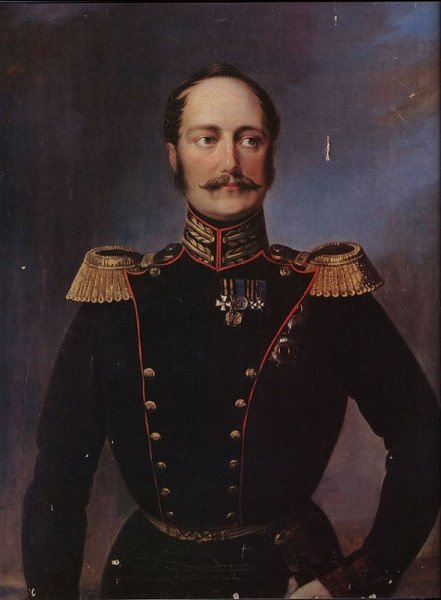
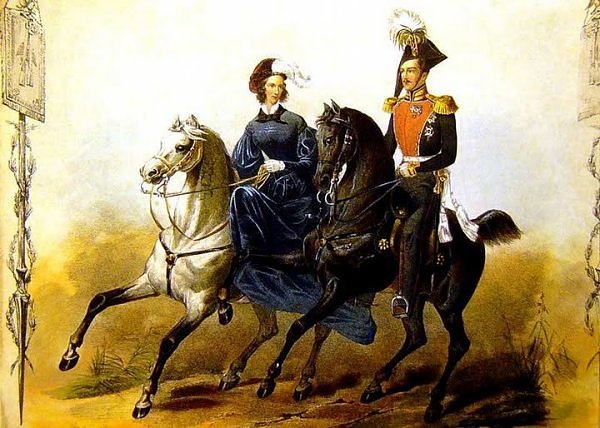
One of the more controversial monarchs Russia has had, both in his own time and today, is Czar Nicholas I. For being ready, willing and able to stamp out threats to traditional authority across the continent, he was known in his own time as the “Gendarme of Europe”, the policeman walking the beat on watch for revolutionary republicans. Later he would also be nicknamed, “the Iron Czar” and more recently he is often referred to, slanderously by those who I think are showing their political bias, as the ‘Stalin of Imperial Russia’. This, needless to say, is absurd as the two men were absolutely nothing alike in terms of character, background, worldview or their policies. It is said, I think, for the simplistic reason that both made use of secret police forces, both were intolerant of dissent and that is about where the similarities end. The same, of course, could be said about the vast majority of leaders of countries throughout history and even today. Personally, I think the comparison is more often due to a desire to ‘normalize’ Joseph Stalin in an effort to deny the truth which is that he was the most vicious, sadistic, incompetent and murderous ruler the Russian people have ever had to endure and no one comes close to him in comparison.
Czar Nicholas I, however, did not murder tens of millions of his subjects, he did not stamp out talent wherever he could find it, he did not encourage rebellion and terrorism around the world nor did he have any desire to dominate the planet. He was an autocrat and he was, thus, autocratic but the Czar himself would not have considered this an insulting or derogatory term. He believed to his last breath that it was his duty to God to be autocratic and that his autocracy was exercised in the service of his people as an obligation from God. Czar Nicholas I was a man of deep faith, a man who passionately believed in Russian Orthodox Christianity, in Christian monarchy, traditional authority and in the “Divine Right of Kings” to use a rather outdated term. Czar Nicholas I was also very much a nationalist. His greatest affection was for the Russian people, he believed that Russia was for the Russian people and should be as Russian as humanly possibly. Secondarily, he also had great affection for the Slavic peoples of Europe and felt that it was his duty, after safeguarding the Russian people, to safeguard or liberate to the extent possible other Slavic peoples. His views and priorities could be best illustrated by the slogan for his reign which was, “Orthodoxy, Autocracy, Nationality”. Those are the things he valued most, in that order and each being derived from the former.
Nicholas Pavlovich Romanov was born at Gatchina on June 25, 1796 to Czar Paul and his wife Czarina Maria Feodorovna (Dorothea of Wurttemberg). He did not lead a pampered childhood at all, as was common in Russia despite what people think of royalty in general. He was made to sleep on an army bed, a habit he kept up for the rest of his life (just as Kaiser Franz Joseph of Austria would) and kept to a very strict routine of study and exercise overseen by General Count Lamsdorf. He was not fond of study but very early on came to love the army and military life. He also had instilled in him a very strong and sincere Orthodox Christian faith, which he also tended to view in military terms. God was his supreme commander, he would be His general and lead people on the path to salvation. He joined the Imperial Russian Army in 1814 but, to his deep regret, did not see action in the battles against the French that made Russia famous.
In 1815 he visited Berlin where, as a military man, he was awed by the discipline and professionalism of the Prussian army. He was also very much taken by the daughter of King Friedrich Wilhelm III, Princess Charlotte and he was decisive in his choice of wife. In 1817 the two were married, beginning many years of marital bliss as the two were deeply attached to each other. Taking the Russian name of Alexandra Feodorovna, she gave birth to their first child, the future Czar Alexander II, a year later in 1818. With his army life and his Prussian bride, he was as happy and contented as he could be. Despite his appearance, being a strict and no-nonsense military man, he was a very passionate individual and could become quite emotional at times. One such occasion, when he burst into tears, was when he was told that his brother Constantine had no desire to be Emperor of Russia and that the duty would likely fall on him. His life was just as he wanted it and he did not aspire to the imperial throne. However, as a man of duty, he would do as duty required even if it was a sacrifice for him.
The problem was that there were deep divisions in the upper echelons of the Imperial Russian Army at the time of the death of Czar Alexander I in 1825. During the wars against Napoleon, many Russian officers had picked up a great deal of French thinking and wanted to import these ideas to Russia. Many also disliked Nicholas because he was so strict as a commander and expected everyone to obey army regulations to the letter, regardless of how lofty their rank. Because of this, and because Constantine did not wish to be Czar but refused to make a public statement to that affect, Nicholas was caught in an awkward position. Taking advantage of Constantine’s obstinacy, the liberal army officers began plotting a military coup, thinking they could overthrow Nicholas and have Constantine, a man who had no wish to rule, as a puppet Czar who would do nothing while they made Russia more like Napoleonic France. Some, like Colonel Pavel Pestel, of the Southern Society, even wanted to overthrow the monarchy and establish a republic. Fortunately for Nicholas, someone informed him about what these secret societies were up to.
On December 14, 1825 Nicholas was proclaimed Emperor and Autocrat of all the Russias and only hours later a group of these army dissidents, known as Decembrists, gathered in Senate Square in St Petersburg, demanding a constitution for Russia, emancipation of the serfs and pledging themselves loyal to Constantine. Nicholas was ready for them and soon came out with his loyal troops to surround them. There was a period of tension as Nicholas demanded that these men return to duty as he wished to avoid spilling Russian blood if at all possible. However, there would be no stepping down for the Decembrists and, as much as he disliked doing so, Czar Nicholas I would not shirk his duty and he ordered the artillery to open fire on them. The attempted uprising was crushed at the outset and 56 men were killed. The new Czar spent the first night of his reign at the Winter Palace interrogating the dissidents and, in the end, 253 were punished with various terms of imprisonment or exile, 31 were sent to spend the rest of their lives in hard labor in Siberia but only 5 were executed.
There would certainly be no constitution and no emancipation of the serfs for the Russian Empire under Nicholas I and this incident on the very first day of his reign only convinced him that revolutionary republicanism was a disease that was easily spread and he would have to be all the more strict and all the more on guard that it never be allowed to take root in Russia. He would be a very ‘hands-on’ ruler, toured the country extensively, had studies taken of the situation and would enact any needed changes gradually and carefully. In domestic policy, his focus was on stability. In foreign policy, he was certainly no warmonger, fearing that wars cause stress that could be exploited by revolutionaries. However, war was not long in coming to his door due to the traditional enemies of Russia in Persia and Turkey. In 1826 the Persians (Iranians) arrested the Russian ambassador and launched a war to regain provinces in the Caucasus lost to Russia in a previous conflict. Czar Nicholas responded swiftly and forcefully.
From the spring of 1826 to 1828 the Russians and Persians fought for control of the Caucasus. In the end, Russia was again victorious and Armenia, Azerbaijan and what is now Igdir Province were ceded to Russia and Russia was able to have a fleet on the Caspian Sea. This was the last of the official Russo-Persian Wars but they still resonate today. Russia, which aids and has helped to arm and strengthen modern-day Iran, mostly does not remember these conflicts but the Iranians certainly do and still consider all of these areas, as well as parts of what is today southern Russia, to rightfully belong to them and they still intend to take it all back someday. That Russia would assist in strengthening Iran is a notion that Czar Nicholas I would have considered too ridiculous to even be entertained for a moment. The Turkish Ottoman Empire was also a regime that the Czar never trusted for a moment, yet it was a more difficult issue. He detested the fact that the Caliph of Islam continued to rule over large populations of Orthodox Christians in the Balkans, yet he also believed in traditional authority and that, as the legitimate monarch, all of the subjects of the Ottoman Sultan had a duty to submit to him.
The Persian conflict had been one of self-defense, forced on him by the Persians. However, as long as the Turkish Sultan did not attack Russia, he could take no action. Again, he knew how easily revolution can spread and just as the Turkish Sultan would not want his Christian subjects to rebel, the Czar would not wish the Catholic, Lutheran or Muslim subjects of the Russian Empire to rebel against him. Instead, he cooperated with the British and French to push for the Greeks to be given autonomy within the Ottoman Empire and for Russian merchant ships to have access to the Straits to reach the Mediterranean. However, the Sultan refused to grant autonomy to the Greeks and after signing an agreement granting Russian ships access to the Straits, the Sultan then closed the Straits, and this finally induced the Czar to declare war on the Turks in 1828. Once again, the Imperial Russian Army was everywhere victorious on both the Balkan and Caucasian fronts. When Russian troops captured Adrianople in August of 1829, moving toward Constantinople, the Turkish Sultan decided to sue for peace. The resulting treaty gave autonomy and Russia the right to occupy Moldavia and Wallachia until the Turks completed their war reparations payments and gave autonomy to Serbia. It also gave Turkish recognition to Russian sovereignty over Armenia and Georgia and granted autonomy to Greece which, by 1830, the major powers of Europe agreed to advance to complete independence for a Greek kingdom.
The early years of the reign of Nicholas I had been ones of calm at home and glorious victories over Russia’s enemies abroad. Things were going very well. However, in 1830, the Czar was alarmed when revolution broke out in France in July and in Belgium (then part of the United Netherlands) in August. The situation in France ended fairly quickly but the Czar was slow to recognize the new regime of King Louis Philippe, however, he did finally do so as he soon had his own problems to deal with. As he was always eager to help any brother monarch threatened by revolution, when the Belgians rose in revolt, he quickly messaged King Willem I of the Netherlands with an offer of a Russian and Polish army to help him crush the Belgians. This, however, set off an uprising in Poland as the Poles had no desire to do such a thing, particularly considering that they were Catholics living under an Orthodox monarch and could sympathize with the Catholic Belgians who were subjects of a Protestant monarch. The Polish uprising of November 1830 was very serious indeed. Many Poles had never been happy ever since the Habsburg, Hohenzollern and Romanov monarchs had partitioned their country out of existence and suppressing them would take a fair amount of time and energy. It was not until September of 1831 that Russian Imperial troops were able to regain control of Warsaw.
In the aftermath of this rebellion, Czar Nicholas I was convinced that previous Russian monarchs had been far too lenient on the Poles. He considered Poland vital to the status of Russia as a power in Europe, placing it within reach of the western powers and he would not tolerate any dissent there. He closed down Polish universities, abolished the Polish parliament and the separate Polish army. Poland would be ruled more directly from St Petersburg and he also began forcing the Poles to speak Russian. The Czar who believed in, “Orthodoxy, Autocracy and Nationality” wanted to suppress disunity in his empire and one way was to have everyone be conversant in the same language. He placed similar requirements on Belorussia and Ukraine in what has since been called a campaign of ‘Russification’. To the extent possible, he wanted to make Russia an empire of one people, with one faith under one monarch. Obviously, there would be differences among his subjects but he wanted to at least apply pressure toward greater unity in language and religion.
Despite what many have said since, the Russian economy grew during the reign of Czar Nicholas I, though certainly not as quickly as occurred in some other countries. The Czar was not a fan of modernization and feared that railroads would ‘weaken the moral fiber of Russian society’. However, if it could help in suppressing revolution, he could be persuaded. When he saw how quickly the British were able to dispatch their redcoats from Manchester to Liverpool to respond to a rebellion in Ireland, he thought he might give railroads a chance and so the first Russian rail line, running from Tsarskoe Selo to St Petersburg, was opened in 1837. Russia still lagged behind the other great powers but things were certainly not stagnant as they are often portrayed. Wars, which the Czar did not start but had forced upon him, did tend to cause inflation but it did not get out of control and exports of wheat increased and the cotton industry grew.
When it came to serfdom, which the Decembrists had wanted to abolish, Czar Nicholas I was, again, quite different from how he is often portrayed. The Czar did not like serfdom, indeed, he strongly opposed it. Yet, the Czar did not feel it would be right to impose emancipation on the nobility who depended on serfdom. To do so would doubtless inflame the nobility against the monarchy and it could cause immense social unrest by raising expectations, not only among the emancipated serfs, but the rest of the Russian populace as well. Instead, true to character, Czar Nicholas tried to lead by example. The Crown Estates of Russia covered vast tracts of the country and were home to a huge number of serfs. The Czar ordered the general in charge of these lands to enact changes to improve the lives of the serfs who lived and worked on these imperial properties. Poorer serfs were allotted more land, schools were built for their children and new model farms were established. Nicholas hoped that the rest of the nobility would follow his example in this regard and do similar things to improve the lives of their own serfs. Some noble Russian aristocrats did exactly this but, unfortunately, most did not.
Another internal matter for which Nicholas I is often attacked is in the area of education. Modern historians tend to associate the reign of Nicholas I with censorship and excessive use of the secret police. However, the Czar increased spending on education and opened a number of new technical and vocational schools. The Czar was certainly not opposed to education or thought it of no value, he simply insisted that the education teach things of practical value (imagine that) and teach students to be loyal, patriotic and pious Russians. He would not tolerate the dissemination of revolutionary ideas and these things did tend to circulate most heavily among the educated class which is why the Czar tended to distrust them. What is also often overlooked is that the Third Section, tasked with hunting down subversive elements, was also tasked with finding and eliminating corruption within the government, dishonest and incompetent officials which is something that is almost always overlooked. It is also worth noting that despite this intolerant atmosphere of censorship that liberal historians moan about, newspaper circulation increased under Nicholas I and Russian literature flourished. Nicholas I was also very interested in architecture and patronized a number of building projects throughout his reign.
The one area at home in which Nicholas could be faulted somewhat was in his private life. Unlike Alexander III or Nicholas II, Czar Nicholas I did have a mistress, one Vervara Nelidova, one of his wife’s ladies-in-waiting. However, I am more inclined to be forgiving of the Czar on this score than I would be with most other monarchs because of the circumstances. As stated previously, Nicholas and his wife truly loved each other and that never changed. They were extremely close, very affectionate and very familiar with each other. She called him “Nicks” and he called her “Mouffy”. Unfortunately, the Czarina began to suffer from increasingly poor health and was eventually diagnosed with a heart condition. She became increasingly frail and finally the doctors advised that she cease from performing her marital duties. It was only at that point that Nicholas began his affair with Nelidova. He never lost any of his respect or affection for his wife and would have preferred restricting his affections to her but, as her condition did not allow this, the Czar found that while the spirit indeed was willing, his flesh was weak. He would not endanger the health of his beloved wife so he would satisfy his physical desires with Nelidova. It was a purely sexual relationship and the Czarina always remained his most beloved and his most trusted confidant. Unfortunately, gossip of such things does tend to spread and when, due to his own health problems, the Czar began to show his age, his enemies spread lurid tales that greatly exaggerated his extramarital escapades. Whispers grew to the effect that Nelidova was wearing him out and things of that nature. It was not true of course but it arose from the one blot on an otherwise spotless record of moral fortitude.
As the Czar of Russia, Nicholas of course had many obligations to distract him from such things and one subject that remained a constant problem was the Turks. Nicholas worried a great deal about the state of the many Orthodox Christians living under Turkish rule, yet he showed more astute judgment than many Twentieth Century politicians would in that he understood that the collapse of the Ottoman Empire would lead to chaos. By supporting the Turks against the Egyptians he gained a favorable agreement regarding the Straits and he also agreed with the King of Prussia and the Emperor of Austria that the Ottoman Empire should be maintained and to oppose the French in their efforts to increase their influence by undermining the Turks. The three monarchs agreed that, if the Ottoman Empire should begin to dissolve, they would work together to see to it this would be done in an orderly way, particularly in the Balkans, under their cooperative guidance. Privately, Nicholas thought that the Ottoman Empire was doomed but he was convinced that it would require all of the great powers working together to handle this when the time came. Unfortunately for him, while Nicholas thought that the British were on the same page as he was, the British did not think he was being sincere and with their liberal press full of stories portraying Nicholas as a harsh, authoritarian tyrant, they were convinced that he intended to expand Russian territory at the expense of Turkey and that they should, therefore, support the Turks. This would have very disastrous consequences in the years to come.
The Turkish situation soon faded to the background when the worst thing possible in the mind of Nicholas I occurred in 1848 when revolutions began breaking out all across Europe. Whereas, in 1830, the Czar had been quick to offer help to any imperiled monarch, this time he was slower to respond, fearing trouble at home as the unrest spread so far, so quickly. He did not want to have his army far away in a foreign country if a major rebellion suddenly broke out in the Russian Empire itself. However, the threat of revolution on the doorstep of Russia was another matter. He stamped down calls for a constitution in Moldavia and Wallachia but the real crisis arose when revolution broke out in the Austrian Empire. The Hungarians rebelled and the Polish areas under the Habsburg Crown rose up as well to support them. This greatly alarmed the Czar as he feared the bulk of the Polish population, under the Romanov Crown, might follow their example. However, there were uprisings in almost all parts of the Austrian Empire, even in Vienna itself but most seriously in Italy and Hungary and the Austrians simply could not cope with them all. Czar Nicholas I decided to intervene and sent the Imperial Russian Army into Hungary to crush the rebellion there in support of the new Austrian Emperor Franz Joseph. A fair-minded man, he also intervened in Germany to prevent Prussian aggression against Denmark, resulting in an agreement by 1850.
Although there had been no serious unrest in Russia itself, the revolutions of 1848 caused Nicholas to redouble his efforts to guard against any hint of unrest or dissent and not unreasonably so. He was more vigilant than ever, yet, the next great crisis would be the most serious of his reign and it would come from without rather than within. It all started in the Holy Land where the French, under Napoleon III, demanded privileges from the Ottoman Sultan for the local Catholic population which had previously been given to the Orthodox Christians. Czar Nicholas, quite understandably, objected to this and intervened with the Sultan on behalf of the Orthodox Christians, seeing himself as their protector. He also did not want to see French influence spread in the region and assumed that, as in the past, the British and Austrians would be in agreement with him, particularly as he had just pulled Austria’s chestnuts out of the fire in Hungary. However, they did not and, backed by the French and British, the Turks were defiant and soon Russia broke off diplomatic relations and sent an army to the Russo-Turkish border in the Balkans.
The British media worked the public into a furor on the issue and the politicians made harsh denunciations of Russia that they could not back down from, accusing Russia of preparing for a war of conquest against the Turks. The Czar wanted no such thing and tried to settle the issue by compromise but, emboldened by the French and British showing support, the Turkish Sultan refused to budge and furthermore demanded that the Russians withdraw from Moldavia and Wallachia. In October of 1853 Russia and Turkey began what became known as the Crimean War. Britain and France soon joined in on the side of Turkey, the Italian Kingdom of Piedmont-Sardinia would later as well. This was all bad enough, but the most infuriating thing of all was when the Emperor of Austria demanded that Russia evacuate Moldavia and Wallachia as well, threatening to join the war on the allied side otherwise. Nicholas thus had no choice but to comply but he was positively enraged that the Habsburg monarch, of all people, would do such a thing, having so recently come to his rescue when the Habsburg monarchy was in real danger of total collapse. It was a slight that the Russians would not forget.
As the war went, the initial battles with the Turks had been Russian victories. However, as the British and French landed expeditionary forces on the Crimean Peninsula, things began to go badly. The shortage of railroads meant that the Russian generals could not get troops and supplies where they were needed quickly enough. The Russians were not as well equipped as the French and British, and whereas they could focus on the Crimean front, Russia had to maintain troops there, in the Balkans and in the Caucasus against the Turks. The war devolved into a bloody stalemate and siege warfare, focused around Sevastopol in a way that would look very familiar to observers of the last year of the American Civil War or most of World War I. More than half a million Russians would die in the conflict and it would end in defeat, a bitter blow for the nation which had previously known victories over the pan-European army of Napoleon, the Shah of Persia and the Ottoman Sultan. Many believed that Czar Nicholas I would have sooner killed himself than agree to the peace Russia was eventually forced to make but he did not live long enough to see the end. He caught pneumonia after a military parade and died on February 18, 1855.
As the length of this profile probably indicates, I will admit to being very partial to Czar Nicholas I and likely all the more so because he tends to be so often and unjustly criticized. In his own time, his fellow monarchs almost invariably had a low opinion of him which seems like a disgusting level of ingratitude for the man who was ever ready to rush to the defense of any one of them in their time of crisis. He was a very monarchist monarch, a man of principle and integrity. He was a man of faith and a ruler who took his duties to God and his nation very seriously. He was a man of good character and a much more capable and successful ruler than most are willing to give him credit for. Modern liberal historians describe him only in terms of a reactionary who oppressed everyone and enforced stagnation on his country. Not true. Literature and architecture flourished under his reign, the economy expanded and he ruled over a Russian Empire that was larger than it had ever been before or ever would be again. True, other powers advanced more quickly in technology and industry but given the fact that Nicholas was confronted by one crisis after another, from his very first day on the throne, it is entirely understandable that he would make security and stability his top priorities. He was a great man and a great monarch. Russia was fortunate to have such a man at such a difficult time.
Showing posts with label Romanov. Show all posts
Wednesday, August 2, 2017
Thursday, November 17, 2016
Monarch Profile: Czar Alexander II of Russia
The reign of Alexander II Nikolayevich, Czar of all the Russias, stands as a tragic illustration of the old adage that, ‘no good deed goes unpunished’. His time on the Russian throne saw many important changes in Russia and in Russian interaction with the outside world. Actions which Alexander II took had a profound impact on his country and the world around him. At least as important as the actions he took, however, was the fate which befell him as this had a dramatic effect on the nature of Romanov rule in the eras of the two Russian emperors which followed after him. His reign reveals the immense potential that the Russian Empire possessed as well as revealing the great dangers that were festering in its midst which would ultimately lead to the downfall of this empire which had, for centuries, stood as a colossus on the world stage. Czar Alexander II was a man who tried to learn from the successes and failures of those who had gone before him and his own successors would take a hard lesson from how he fared as the autocrat known to history as, “the Czar Liberator”.
His Imperial Highness Grand Duke Alexander Nikolayevich of Russia was born in Moscow on April 29, 1818 to the “Iron Czar” Nicholas I and his consort Charlotte of Prussia. Obviously, with a father known to history as the “Iron Czar” and a mother who was the daughter of a Prussian king, the atmosphere in which Alexander was raised could be called extremely conservative to put it mildly. He had a somewhat liberal tutor for the time, upon whom historians have tended to put rather too much emphasis in explaining the later actions of Alexander but he was given a very well rounded if not extremely intricate education. It was, rather, life experience which was most to shape the views and actions of Alexander in his adult life. As is often the case, he was quite a different character from his very strict father and would come to possess a considerably different worldview from the Russian monarchs who preceded as well as succeeded him. His time as a free and unattached youth was rather short as his father passed away during the height of the Crimean War in 1855 when Alexander was only 37. The state of affairs that existed at the time of his coming to the Russian throne was to effect him profoundly.
On September 7, 1855 Czar Alexander II was crowned “Emperor and Autocrat of all the Russias” in a grand and solemn Orthodox ceremony. His distaste for military adventures was certainly impacted by the fact that he came to the throne at a time when Russia had lost the Crimean War and it had fallen to him to agree to the peace terms imposed by the Allies, primarily the British and French empires. The importance of this was quite significant. Czar Alexander II had seen his father stand as the champion of traditional authority in Europe. He had extended help to the Austrian Empire in suppressing rebellion and had offered it to others only to see these same powers collude against Russia, on the side of Ottoman Turkey, or at least take no action to come to the aid of Russia. Not only did this defeat sour Alexander II on the subject of war but it also caused him to take a more pragmatic and less idealistic view of foreign affairs than his father had. There was to be no ‘brotherhood of monarchs’ among the crowned heads of Europe and so, Alexander II would play the diplomatic game and seek to gain what advantage for his country he could and align himself with those powers most similar to Russia in their values, politics and system of government.
Austria and Prussia had at least remained neutral, though Austria had certainly threatened to intercede against Russia which caused a souring of relations which never really ended while he would always harbor suspicions of the French and British. The Crimean fiasco also prompted changes at home. Russia had been defeated, frankly, by relatively minor expeditionary forces which she should have been able to crush swiftly and completely. Czar Alexander II studied the matter closely and found rampant corruption and gross inefficiency in the upper echelons of his empire. This, not without foundation it must be said, he tended to blame on the aristocracy which he viewed as altogether too grasping and devoted to leisure rather than the good of the nation. His hopes, therefore, were placed on the great mass of the Russian peasantry, hard working, God fearing, loyal people who endured much and seemed more simplistic and wholesome.
As a result, not long after taking the throne, Czar Alexander II began instituting a series of reforms such as abolishing corporal punishment, allowing for elected judges and encouraging local self-government. Because of this, some historians have labeled Alexander II a “liberal” but he was far too sensible a man for that. Rather, it was his belief that the autocracy could be maintained as part of a modern state and his reforms were aimed at making Russia more efficient, more effective and more prosperous. He had supported the strict defense of the autocracy of his father and never wavered in that position, however, he thought that with the proper changes Russia could advance to the level of countries like Britain and France which had triumphed over Russia due to how backward Russia was in terms of industry, infrastructure and the state bureaucracy. In general, it was his ministers who carried out these reforms though the Czar did deal personally with some he took a particular interest in and he was instrumental in settling disputes between his top officials.
One act for which Alexander II remains famous in “the New World” was his decision to sell Alaska to the United States of America in 1867. Some, given the immense mineral wealth discovered there later, have criticized the Czar for this but, it must be remembered, at the time many Americans thought they were the ones who had gotten the worst of the deal. Before anyone knew of the gold and oil deposits there, it seemed that the U.S. had simply purchased a huge, frozen wilderness that was largely uninhabitable and devoid of prospects for development. In any event, Alexander II had sold the territory simply because of the continued tensions between Russia and the British Empire. The Russian presence in the region was extremely minimal and there was no way Russia could defend the territory. Alexander II feared, not unreasonably, that the British could easily move from Canada to seize Alaska and thus place themselves at the backdoor of the Russian Far East. It was far better to have Alaska in American hands as that would ensure the British never gained control of it and, at the time, the United States had a far friendlier relationship with Russia than Britain or France did.
The other act for which Czar Alexander II remains most famous is his emancipation of the serfs in 1861. This was a dramatic change for the Russian Empire but it was not so radical as many people think. A number of Russian monarchs, including his father Nicholas I, had wanted to end serfdom but never felt able to. Numerous conservative voices had, for some time previously, advocated abolishing serfdom on the orders of the Czar as a preferable alternative to having it end by means of a massive servile insurrection that might bring down the monarchy and destroy the Russian Empire entirely in the process. Liberals lauded Alexander II for this action but it stirred up considerable resentment on the part of the aristocracy and land owners. Nor was it a smooth transition, which is to be expected considering how deeply engrained serfdom was in Russia. The Czar took the ultimate step of freeing the serfs and insisted that they be given land to sustain themselves once they were free. Unfortunately, the landowners inflated the value of the land and the peasants had to go into considerable debt to the government to pay for it. Because of the way it was handled, Alexander II had to issue further reforms, dismiss a number of the ministers responsible for it and deal with a certain amount of unrest.
At home, Alexander II showed himself to be rather unlike his father but more akin to his more distant predecessors in his private life. In 1841 he had married Maria of Hesse-Darmstadt, the daughter of Hessian Grand Duke Ludwig II. It was a marriage willingly entered into by a loving couple rather than an arranged matter of state and the two initially had a very happy and successful wedded life. The two were certainly busy, having eight children before the death of the Czarina in 1880, however, long before that time the Czar began a series of affairs with a number of aristocratic ladies. Upon the death of his wife, the same year Alexander II married Katia Dolgorukaya, his latest mistress, by whom he had four more children. His infidelity was heartbreaking for his Hessian bride, who was a very sincere, good-natured lady, disliked by the more haughty ladies at court who often ridiculed her for being bothered by her husband’s affairs. Alexander II was known to be rather short-tempered and was often in poor health and not a few attributed this to his irregular private life.
On the world stage, the policy of Alexander II was to end the isolation the Russian Empire had been in since the end of the Crimean War, though to do so carefully. His greatest rival remained the British and while he was on friendlier terms with Prussia (being the son of a Prussian mother) the north German kingdom was then in no position to be of much help. During the American Civil War, some feared that the biggest and bloodiest conflict in the western hemisphere might draw the Old World into conflict as well. With the British and French empires being seen as sympathetic to the southern Confederacy, Russia had little choice but to foster good relations with the United States. Expansion in Asia was also underway at this time and there, again, the British were the primary opposition to Russia. 1861-62 saw the Russian Imperial Navy wintering in New York so that, in the event of war with Britain and France, the Russian fleet would be free to prey upon their ships in the Atlantic rather than being stuck in the ice blocked ports of the Russian coast. San Francisco, California also received a visit from the Russian navy.
The effort to foster better relations with the United States, it must be said, was not because of any political or ideological sympathy, despite what some historians have tried to portray as a friendship between President Lincoln and Czar Alexander II as two crusaders against slavery. At most, Russia wished to encourage the United States as a counter-weight against the British Empire, particularly at a time when Anglo-American relations were extremely poor due to the U.S. blockade of southern ports and the building of ships for the Confederate navy in England. It was also not as though the spread of the American Civil War to Europe was the only potential source of conflict. Russia was also at odds with the major European powers over turmoil in Poland.
Polish nationalists began orchestrating anti-Russian demonstrations in 1860 and some terrorist attacks, such as an outbreak of arson in St Petersburg, were blamed on Polish forces. Initially, Czar Alexander II responded in a conciliatory fashion by granting the Poles greater autonomy within the Russian Empire but this failed to satisfy the dissidents. They wanted nothing less than the restoration of complete Polish independence and this eventually escalated to outright rebellion in 1863 when Russian authorities tried to conscript the Polish leaders of this movement into the Imperial Army. When the rebellion spread to parts of Lithuania, Belorussia and Ukraine, Czar Alexander II abandoned his earlier effort at appeasement and reverted to brute force. The military was sent in to crush the rebellion, Polish officials were sacked and replaced by Russian officials and the teaching of the Russian language in Polish schools was made compulsory. Contact between Poland and the leadership of the Catholic Church in Rome was cut off and Ukrainian books were banned. Great Britain, France and the Austrian Empire were seen as being sympathetic to the Poles and thus antagonistic toward Russia and this caused a real concern that Russia could, again, be drawn into war.
Czar Alexander II hoped it would not come to that and set about trying to even the odds by getting one or more of the great powers to move away from the British and French and closer to Russia. The French Second Empire seemed the most likely candidate. Britain and Russia had too many conflicting interests, the Prussians were as yet too weak and a great deal of animosity still existed with Austria. In 1857 Czar Alexander II and Emperor Napoleon III met in Stuttgart and in the following years worked out a Franco-Russian agreement which stipulated that France would support a revision of the 1856 Treaty of Paris and that, in return, Russia would not support Austria in the clash between France and Austria in Italy everyone knew was coming. Unfortunately for Alexander II, this short-lived alliance proved to be a mistake. When war between France and Austria came, neither side emerged satisfied and the French resented the fact that Russia had not done more to help them, even though their agreement had promised only Russian neutrality. To make things worse, the Czar was alarmed by the upsurge of Italian nationalism the war caused, for which France was blamed, as this also inspired Polish nationalists to acts of anti-Russian resistance. When Napoleon III joined Britain and Austria in criticizing Russian actions in Poland, Alexander II regarded the agreement with France to be ended and focused on strengthening ties with their arch-enemy Prussia.
Russian expansion in Asia also prompted ill-will from the French as well as the British. Since the Crimean War settlement had effectively blocked in Russia from the west, expansion to the east, toward the Pacific seemed the only available option. Russia extracted treaties and territorial concessions from the Chinese, expanding Russian territory and leading to the establishment of Vladivostok in 1860. The British were becoming increasingly friendly with Japan, had extensive influence in China and the French, around this same time, were expanding in Southeast Asia and briefly became involved in Korea. Neither welcomed Russia as a competitor in East Asia and the tension this caused helped prompt the Czar to sell Alaska to the United States. Russian power also expanded in Central Asia, which alarmed the British, and the Caucasus which alarmed the Turks and Persians. By that time, however, Prussia was rising rapidly as a force to be reckoned with again, though this was potentially a double-edged sword for Russia. In the end, Czar Alexander II chose to shun the newly republican France for an alliance with the German and Austrian emperors though relations between Russia and Austria would never be very trusting or cordial.
The rise of the German Empire changed the situation in Europe and Russia and Britain, once bitter enemies, began to slowly drift more closely together. Aiding this was the rise of the Pan-Slav movement which opposed any friendship with Germany and Austria-Hungary, viewing the Austrians and Hungarians in particular as their greatest rivals for influence in the Balkans as Turkish power continued to decline and Slavic, Orthodox populations began to come ‘up for grabs’. A Serbian uprising against the Turks did finally spark another war between the Russian and Ottoman Empires in 1877, something that Alexander II had not wanted but likewise would not back down from either. By this time, his son and heir, Nicholas, had died and Alexander became noticeably more depressed and temperamental. His mood was not improved by the number of attacks against the Russian monarchy by revolutionaries, in spite of his many reforms and concessions. The war, this time with the Turks alone unsupported by Britain and France (who had been rather turned off by their former ally of the Crimean War after Turkish persecution of Christians in the aftermath), went quite well for Russia. The Russian armies joined with the Bulgarians in driving the Turks almost completely off of the European mainland.
Czar Alexander II obtained a favorable peace from the Turks but the war effectively ended the “Three Emperors League” as Austria objected to Bulgaria falling within the Russian sphere of influence and the Germans, under Bismarck, took the side of their Austrian brethren against the Russians so that many in Russia, particularly the Pan-Slav activists, felt robbed of the fruits of their victory. Russia would never be friendly with Germany and Austria-Hungary again and in the years to come would align with her former enemies of Britain and France, forming what would become the battle lines of the First World War. And, at the same time, Alexander II faced nothing but hardship on the home front. Attacks by revolutionary radicals included shootings and bombings and this prompted the Czar to take repressive measures, a change in attitude from his earlier efforts to encourage support for the throne through reforms and concessions.
The Czar also continued to suffer from numerous health problems and in 1880 the Czarina passed away. Only a few weeks later Alexander II married his latest mistress which prompted outrage from the Russian Orthodox Church and the ranks of his own family. In an effort to regain public support and calm instability, Alexander II began to shift again toward allowing greater freedom for his subjects. Unfortunately, it was just at this time that he came under attack by a gang of assassins who threw a bomb at his carriage. The vehicle was armored, so the Czar was unhurt but, in a rush of unthinking compassion, he left the carriage to attend to his wounded driver and the murderers immediately threw a second bomb at his feet which exploded, gruesomely and mortally wounding the “Czar Liberator”. He was taken to the Winter Palace and died on March 13, 1881, the throne passing to his son Czar Alexander III.
Throughout his reign, most epitomized by his emancipation of the serfs, Alexander II had endeavored to be a monarch of mildness and reason. Yet, his reforms angered the traditional elites while winning no support for the Crown from the liberals and certainly none from the revolutionaries. The lessons of his life were not lost on his successor Czar Alexander III. His father had extended a hand and had been brutally murdered for it. From that time on, a return to strict discipline and harsh repression would be the order of the day. On the world stage, the Russian Empire had expanded but, to the eyes of the Russians at least, had been betrayed by first Napoleon III and then by the Germans and Austrians. Alexander III would firmly plant himself in opposition to the Germans and Austrians, even if that meant an alliance with republican France, the ideological opposite of the Russian Empire at every level. So it was that the reign of Czar Alexander II, beginning with granting greater freedom, emancipation for the serfs and efforts at reconciliation, ended with the battle lines of World War One being formed and the assertion by his son and later grandson that reforms to win over liberals was a wasted effort and that only strength and stern measures would preserve the Russian Empire.
His Imperial Highness Grand Duke Alexander Nikolayevich of Russia was born in Moscow on April 29, 1818 to the “Iron Czar” Nicholas I and his consort Charlotte of Prussia. Obviously, with a father known to history as the “Iron Czar” and a mother who was the daughter of a Prussian king, the atmosphere in which Alexander was raised could be called extremely conservative to put it mildly. He had a somewhat liberal tutor for the time, upon whom historians have tended to put rather too much emphasis in explaining the later actions of Alexander but he was given a very well rounded if not extremely intricate education. It was, rather, life experience which was most to shape the views and actions of Alexander in his adult life. As is often the case, he was quite a different character from his very strict father and would come to possess a considerably different worldview from the Russian monarchs who preceded as well as succeeded him. His time as a free and unattached youth was rather short as his father passed away during the height of the Crimean War in 1855 when Alexander was only 37. The state of affairs that existed at the time of his coming to the Russian throne was to effect him profoundly.
On September 7, 1855 Czar Alexander II was crowned “Emperor and Autocrat of all the Russias” in a grand and solemn Orthodox ceremony. His distaste for military adventures was certainly impacted by the fact that he came to the throne at a time when Russia had lost the Crimean War and it had fallen to him to agree to the peace terms imposed by the Allies, primarily the British and French empires. The importance of this was quite significant. Czar Alexander II had seen his father stand as the champion of traditional authority in Europe. He had extended help to the Austrian Empire in suppressing rebellion and had offered it to others only to see these same powers collude against Russia, on the side of Ottoman Turkey, or at least take no action to come to the aid of Russia. Not only did this defeat sour Alexander II on the subject of war but it also caused him to take a more pragmatic and less idealistic view of foreign affairs than his father had. There was to be no ‘brotherhood of monarchs’ among the crowned heads of Europe and so, Alexander II would play the diplomatic game and seek to gain what advantage for his country he could and align himself with those powers most similar to Russia in their values, politics and system of government.
Austria and Prussia had at least remained neutral, though Austria had certainly threatened to intercede against Russia which caused a souring of relations which never really ended while he would always harbor suspicions of the French and British. The Crimean fiasco also prompted changes at home. Russia had been defeated, frankly, by relatively minor expeditionary forces which she should have been able to crush swiftly and completely. Czar Alexander II studied the matter closely and found rampant corruption and gross inefficiency in the upper echelons of his empire. This, not without foundation it must be said, he tended to blame on the aristocracy which he viewed as altogether too grasping and devoted to leisure rather than the good of the nation. His hopes, therefore, were placed on the great mass of the Russian peasantry, hard working, God fearing, loyal people who endured much and seemed more simplistic and wholesome.
As a result, not long after taking the throne, Czar Alexander II began instituting a series of reforms such as abolishing corporal punishment, allowing for elected judges and encouraging local self-government. Because of this, some historians have labeled Alexander II a “liberal” but he was far too sensible a man for that. Rather, it was his belief that the autocracy could be maintained as part of a modern state and his reforms were aimed at making Russia more efficient, more effective and more prosperous. He had supported the strict defense of the autocracy of his father and never wavered in that position, however, he thought that with the proper changes Russia could advance to the level of countries like Britain and France which had triumphed over Russia due to how backward Russia was in terms of industry, infrastructure and the state bureaucracy. In general, it was his ministers who carried out these reforms though the Czar did deal personally with some he took a particular interest in and he was instrumental in settling disputes between his top officials.
One act for which Alexander II remains famous in “the New World” was his decision to sell Alaska to the United States of America in 1867. Some, given the immense mineral wealth discovered there later, have criticized the Czar for this but, it must be remembered, at the time many Americans thought they were the ones who had gotten the worst of the deal. Before anyone knew of the gold and oil deposits there, it seemed that the U.S. had simply purchased a huge, frozen wilderness that was largely uninhabitable and devoid of prospects for development. In any event, Alexander II had sold the territory simply because of the continued tensions between Russia and the British Empire. The Russian presence in the region was extremely minimal and there was no way Russia could defend the territory. Alexander II feared, not unreasonably, that the British could easily move from Canada to seize Alaska and thus place themselves at the backdoor of the Russian Far East. It was far better to have Alaska in American hands as that would ensure the British never gained control of it and, at the time, the United States had a far friendlier relationship with Russia than Britain or France did.
The other act for which Czar Alexander II remains most famous is his emancipation of the serfs in 1861. This was a dramatic change for the Russian Empire but it was not so radical as many people think. A number of Russian monarchs, including his father Nicholas I, had wanted to end serfdom but never felt able to. Numerous conservative voices had, for some time previously, advocated abolishing serfdom on the orders of the Czar as a preferable alternative to having it end by means of a massive servile insurrection that might bring down the monarchy and destroy the Russian Empire entirely in the process. Liberals lauded Alexander II for this action but it stirred up considerable resentment on the part of the aristocracy and land owners. Nor was it a smooth transition, which is to be expected considering how deeply engrained serfdom was in Russia. The Czar took the ultimate step of freeing the serfs and insisted that they be given land to sustain themselves once they were free. Unfortunately, the landowners inflated the value of the land and the peasants had to go into considerable debt to the government to pay for it. Because of the way it was handled, Alexander II had to issue further reforms, dismiss a number of the ministers responsible for it and deal with a certain amount of unrest.
At home, Alexander II showed himself to be rather unlike his father but more akin to his more distant predecessors in his private life. In 1841 he had married Maria of Hesse-Darmstadt, the daughter of Hessian Grand Duke Ludwig II. It was a marriage willingly entered into by a loving couple rather than an arranged matter of state and the two initially had a very happy and successful wedded life. The two were certainly busy, having eight children before the death of the Czarina in 1880, however, long before that time the Czar began a series of affairs with a number of aristocratic ladies. Upon the death of his wife, the same year Alexander II married Katia Dolgorukaya, his latest mistress, by whom he had four more children. His infidelity was heartbreaking for his Hessian bride, who was a very sincere, good-natured lady, disliked by the more haughty ladies at court who often ridiculed her for being bothered by her husband’s affairs. Alexander II was known to be rather short-tempered and was often in poor health and not a few attributed this to his irregular private life.
On the world stage, the policy of Alexander II was to end the isolation the Russian Empire had been in since the end of the Crimean War, though to do so carefully. His greatest rival remained the British and while he was on friendlier terms with Prussia (being the son of a Prussian mother) the north German kingdom was then in no position to be of much help. During the American Civil War, some feared that the biggest and bloodiest conflict in the western hemisphere might draw the Old World into conflict as well. With the British and French empires being seen as sympathetic to the southern Confederacy, Russia had little choice but to foster good relations with the United States. Expansion in Asia was also underway at this time and there, again, the British were the primary opposition to Russia. 1861-62 saw the Russian Imperial Navy wintering in New York so that, in the event of war with Britain and France, the Russian fleet would be free to prey upon their ships in the Atlantic rather than being stuck in the ice blocked ports of the Russian coast. San Francisco, California also received a visit from the Russian navy.
The effort to foster better relations with the United States, it must be said, was not because of any political or ideological sympathy, despite what some historians have tried to portray as a friendship between President Lincoln and Czar Alexander II as two crusaders against slavery. At most, Russia wished to encourage the United States as a counter-weight against the British Empire, particularly at a time when Anglo-American relations were extremely poor due to the U.S. blockade of southern ports and the building of ships for the Confederate navy in England. It was also not as though the spread of the American Civil War to Europe was the only potential source of conflict. Russia was also at odds with the major European powers over turmoil in Poland.
Polish nationalists began orchestrating anti-Russian demonstrations in 1860 and some terrorist attacks, such as an outbreak of arson in St Petersburg, were blamed on Polish forces. Initially, Czar Alexander II responded in a conciliatory fashion by granting the Poles greater autonomy within the Russian Empire but this failed to satisfy the dissidents. They wanted nothing less than the restoration of complete Polish independence and this eventually escalated to outright rebellion in 1863 when Russian authorities tried to conscript the Polish leaders of this movement into the Imperial Army. When the rebellion spread to parts of Lithuania, Belorussia and Ukraine, Czar Alexander II abandoned his earlier effort at appeasement and reverted to brute force. The military was sent in to crush the rebellion, Polish officials were sacked and replaced by Russian officials and the teaching of the Russian language in Polish schools was made compulsory. Contact between Poland and the leadership of the Catholic Church in Rome was cut off and Ukrainian books were banned. Great Britain, France and the Austrian Empire were seen as being sympathetic to the Poles and thus antagonistic toward Russia and this caused a real concern that Russia could, again, be drawn into war.
Czar Alexander II hoped it would not come to that and set about trying to even the odds by getting one or more of the great powers to move away from the British and French and closer to Russia. The French Second Empire seemed the most likely candidate. Britain and Russia had too many conflicting interests, the Prussians were as yet too weak and a great deal of animosity still existed with Austria. In 1857 Czar Alexander II and Emperor Napoleon III met in Stuttgart and in the following years worked out a Franco-Russian agreement which stipulated that France would support a revision of the 1856 Treaty of Paris and that, in return, Russia would not support Austria in the clash between France and Austria in Italy everyone knew was coming. Unfortunately for Alexander II, this short-lived alliance proved to be a mistake. When war between France and Austria came, neither side emerged satisfied and the French resented the fact that Russia had not done more to help them, even though their agreement had promised only Russian neutrality. To make things worse, the Czar was alarmed by the upsurge of Italian nationalism the war caused, for which France was blamed, as this also inspired Polish nationalists to acts of anti-Russian resistance. When Napoleon III joined Britain and Austria in criticizing Russian actions in Poland, Alexander II regarded the agreement with France to be ended and focused on strengthening ties with their arch-enemy Prussia.
Russian expansion in Asia also prompted ill-will from the French as well as the British. Since the Crimean War settlement had effectively blocked in Russia from the west, expansion to the east, toward the Pacific seemed the only available option. Russia extracted treaties and territorial concessions from the Chinese, expanding Russian territory and leading to the establishment of Vladivostok in 1860. The British were becoming increasingly friendly with Japan, had extensive influence in China and the French, around this same time, were expanding in Southeast Asia and briefly became involved in Korea. Neither welcomed Russia as a competitor in East Asia and the tension this caused helped prompt the Czar to sell Alaska to the United States. Russian power also expanded in Central Asia, which alarmed the British, and the Caucasus which alarmed the Turks and Persians. By that time, however, Prussia was rising rapidly as a force to be reckoned with again, though this was potentially a double-edged sword for Russia. In the end, Czar Alexander II chose to shun the newly republican France for an alliance with the German and Austrian emperors though relations between Russia and Austria would never be very trusting or cordial.
The rise of the German Empire changed the situation in Europe and Russia and Britain, once bitter enemies, began to slowly drift more closely together. Aiding this was the rise of the Pan-Slav movement which opposed any friendship with Germany and Austria-Hungary, viewing the Austrians and Hungarians in particular as their greatest rivals for influence in the Balkans as Turkish power continued to decline and Slavic, Orthodox populations began to come ‘up for grabs’. A Serbian uprising against the Turks did finally spark another war between the Russian and Ottoman Empires in 1877, something that Alexander II had not wanted but likewise would not back down from either. By this time, his son and heir, Nicholas, had died and Alexander became noticeably more depressed and temperamental. His mood was not improved by the number of attacks against the Russian monarchy by revolutionaries, in spite of his many reforms and concessions. The war, this time with the Turks alone unsupported by Britain and France (who had been rather turned off by their former ally of the Crimean War after Turkish persecution of Christians in the aftermath), went quite well for Russia. The Russian armies joined with the Bulgarians in driving the Turks almost completely off of the European mainland.
Czar Alexander II obtained a favorable peace from the Turks but the war effectively ended the “Three Emperors League” as Austria objected to Bulgaria falling within the Russian sphere of influence and the Germans, under Bismarck, took the side of their Austrian brethren against the Russians so that many in Russia, particularly the Pan-Slav activists, felt robbed of the fruits of their victory. Russia would never be friendly with Germany and Austria-Hungary again and in the years to come would align with her former enemies of Britain and France, forming what would become the battle lines of the First World War. And, at the same time, Alexander II faced nothing but hardship on the home front. Attacks by revolutionary radicals included shootings and bombings and this prompted the Czar to take repressive measures, a change in attitude from his earlier efforts to encourage support for the throne through reforms and concessions.
The Czar also continued to suffer from numerous health problems and in 1880 the Czarina passed away. Only a few weeks later Alexander II married his latest mistress which prompted outrage from the Russian Orthodox Church and the ranks of his own family. In an effort to regain public support and calm instability, Alexander II began to shift again toward allowing greater freedom for his subjects. Unfortunately, it was just at this time that he came under attack by a gang of assassins who threw a bomb at his carriage. The vehicle was armored, so the Czar was unhurt but, in a rush of unthinking compassion, he left the carriage to attend to his wounded driver and the murderers immediately threw a second bomb at his feet which exploded, gruesomely and mortally wounding the “Czar Liberator”. He was taken to the Winter Palace and died on March 13, 1881, the throne passing to his son Czar Alexander III.
Throughout his reign, most epitomized by his emancipation of the serfs, Alexander II had endeavored to be a monarch of mildness and reason. Yet, his reforms angered the traditional elites while winning no support for the Crown from the liberals and certainly none from the revolutionaries. The lessons of his life were not lost on his successor Czar Alexander III. His father had extended a hand and had been brutally murdered for it. From that time on, a return to strict discipline and harsh repression would be the order of the day. On the world stage, the Russian Empire had expanded but, to the eyes of the Russians at least, had been betrayed by first Napoleon III and then by the Germans and Austrians. Alexander III would firmly plant himself in opposition to the Germans and Austrians, even if that meant an alliance with republican France, the ideological opposite of the Russian Empire at every level. So it was that the reign of Czar Alexander II, beginning with granting greater freedom, emancipation for the serfs and efforts at reconciliation, ended with the battle lines of World War One being formed and the assertion by his son and later grandson that reforms to win over liberals was a wasted effort and that only strength and stern measures would preserve the Russian Empire.
Tuesday, July 1, 2014
Wednesday, June 18, 2014
Favorite Royal Images: A Danish Empress of Russia
Empress Maria Feodorovna of Russia
(Dagmar of Denmark) consort to Czar Alexander III
(for photos and portraits, Empress Maria has always been a particular favorite, she has such depth to her eyes, every image is almost hypnotic)
Tuesday, April 29, 2014
Wednesday, November 6, 2013
MM Mini View: Romanov Tsars of Russia, Part IV
Continued from Part III
Emperor Alexander II: With Alexander II we have a Tsar who, I think, meant well, had the best of intentions but made rather a mess of things. I also have a problem with his private life in which, despite having a “love match” with his marriage to Princess Marie of Hesse-Darmstadt he went on to have numerous affairs with various women of the Russian nobility. He ended the Crimean War, and it ended badly, but there was really no other option there. Alex II then set out on the path that would lead to him being known as the “Tsar Liberator”. He dismissed conservative officials, freed political prisoners and in 1861 emancipated the serfs. While noble, this had rather disastrous consequences, causing the government to spend an exorbitant amount of money compensating the landowners and still leaving most former serfs penniless and without a means of support. To deal with this, elected regional councils were set up because the central government was hopelessly overburdened and, again, while it surely seemed like a good idea at the time, these councils became breeding grounds for radical liberals. Well intentioned efforts to grant autonomy to Poland only spurred greater demands for total independence and rebellions broke out that spread to Lithuania, Belorussia and the Ukraine. He started to then move back to the right, tried to make a deal with France that went nowhere but did expand in Asia, earning the suspicion of many and it was partly to balance this out that he sold Alaska on the cheap to the United States. His efforts to allow greater freedom only encouraged revolutionaries to demand more, the other powers reduced the extent of his victory over the Turks in the Balkans and in 1881 he was assassinated while trying to aid his wounded driver. In many ways, his death summed up his reign; suffering death for trying to do something benevolent.
Emperor Alexander III: After the regicide of Alexander II, Tsar Alexander III seemed to learn the lesson well, in other words, ‘no more mister nice guy’. To me, Alexander III has always seemed the quintessential Romanov Tsar. In many ways, he personified Russia at its best. He was a huge, incredibly strong man who was stern and devoted to the autocracy in government yet also a warm and even playful family man, faithful to his wife and devoted to his children. He further pushed the campaign of “Russification” yet his reign was not the totally repressive, stagnant era many portray it as. He made honest efforts to reform the economy, enacted the first child labor laws, expanded railroad construction and worked to protect Russian industry which was still finding its footing. When famine broke out he encouraged private charities to help rather than simply expanding the government to handle everything. The only thing I can really fault Alexander III over was his foreign policy and even then, what happened was not his responsibility alone. The “Three Emperors’ Alliance” with Germany and Austria was broken off and the Russian Empire, the most traditional, absolute monarchy in the neighborhood allied with the French Republic. Still, at home he had strengthened the monarchy, kept a peace that allowed Russia to develop and it speaks to his character that his decline into ill health and finally death was brought on by overexertion in saving his family in a train wreck. Russia had lost a truly great man.
Emperor Nicholas II: Another one of my favorites, Tsar Nicholas II can be a difficult figure to summarize because he was such a great man, not just a good one but a great one, who also made or at least presided over some major mistakes. There are few other examples in the history of the world I could point to of a monarch who better understood his place under God, the awesomeness of the responsibility on his shoulders and a total commitment to his duty out of a sincere religious devotion than that of Nicholas II. There was never a more devoted husband and father and never a more sincere Christian monarch. Yet, he did make some pretty big mistakes, the first major one being the war with Japan. Even if, in the end, he had defeated the Japanese and made Korea a Russian colony, it would not have been worth the damage done at home which brought about the 1905 Revolution. Likewise, intervening in 1914 turned a Balkan war into a world war and yet, even though that may have been the most disastrous mistake he ever made, it was done with the noble motivation of defending a weaker Slavic power that had already agreed to most of the Austrian demands from a stronger neighbor. As far as his rule of Russia, mistakes in that direction have, I think, been grossly exaggerated. He could have been firmer, sure, but he did appoint some good men to office only to have them assassinated. And, in spite of all the plain bad luck, Russian industry expanded as never before under his reign, civil liberties existed that had never existed before and even in the midst of World War I there were signs that Russia was on the verge of a come-back. His reign was not the series of disasters most portray it as, it is simply hard for anyone, no matter how good, to prosper as a ruler when you are opposed by people who want to destroy the entire country and its very foundations. All too often Nicholas II is portrayed as someone unwilling to compromise with political opposition or hear a differing points of view -it was nothing like that. His enemies did not just have different ideas on how to solve national problems that were not being heard, they wanted to murder Russia itself. You cannot reason with that. Nicholas II was not perfect in every way but he was a great man and that should be enough. Russia, under Nicholas II, did not need a better emperor but in many cases needed better people.
Emperor Alexander II: With Alexander II we have a Tsar who, I think, meant well, had the best of intentions but made rather a mess of things. I also have a problem with his private life in which, despite having a “love match” with his marriage to Princess Marie of Hesse-Darmstadt he went on to have numerous affairs with various women of the Russian nobility. He ended the Crimean War, and it ended badly, but there was really no other option there. Alex II then set out on the path that would lead to him being known as the “Tsar Liberator”. He dismissed conservative officials, freed political prisoners and in 1861 emancipated the serfs. While noble, this had rather disastrous consequences, causing the government to spend an exorbitant amount of money compensating the landowners and still leaving most former serfs penniless and without a means of support. To deal with this, elected regional councils were set up because the central government was hopelessly overburdened and, again, while it surely seemed like a good idea at the time, these councils became breeding grounds for radical liberals. Well intentioned efforts to grant autonomy to Poland only spurred greater demands for total independence and rebellions broke out that spread to Lithuania, Belorussia and the Ukraine. He started to then move back to the right, tried to make a deal with France that went nowhere but did expand in Asia, earning the suspicion of many and it was partly to balance this out that he sold Alaska on the cheap to the United States. His efforts to allow greater freedom only encouraged revolutionaries to demand more, the other powers reduced the extent of his victory over the Turks in the Balkans and in 1881 he was assassinated while trying to aid his wounded driver. In many ways, his death summed up his reign; suffering death for trying to do something benevolent.
Emperor Alexander III: After the regicide of Alexander II, Tsar Alexander III seemed to learn the lesson well, in other words, ‘no more mister nice guy’. To me, Alexander III has always seemed the quintessential Romanov Tsar. In many ways, he personified Russia at its best. He was a huge, incredibly strong man who was stern and devoted to the autocracy in government yet also a warm and even playful family man, faithful to his wife and devoted to his children. He further pushed the campaign of “Russification” yet his reign was not the totally repressive, stagnant era many portray it as. He made honest efforts to reform the economy, enacted the first child labor laws, expanded railroad construction and worked to protect Russian industry which was still finding its footing. When famine broke out he encouraged private charities to help rather than simply expanding the government to handle everything. The only thing I can really fault Alexander III over was his foreign policy and even then, what happened was not his responsibility alone. The “Three Emperors’ Alliance” with Germany and Austria was broken off and the Russian Empire, the most traditional, absolute monarchy in the neighborhood allied with the French Republic. Still, at home he had strengthened the monarchy, kept a peace that allowed Russia to develop and it speaks to his character that his decline into ill health and finally death was brought on by overexertion in saving his family in a train wreck. Russia had lost a truly great man.
Emperor Nicholas II: Another one of my favorites, Tsar Nicholas II can be a difficult figure to summarize because he was such a great man, not just a good one but a great one, who also made or at least presided over some major mistakes. There are few other examples in the history of the world I could point to of a monarch who better understood his place under God, the awesomeness of the responsibility on his shoulders and a total commitment to his duty out of a sincere religious devotion than that of Nicholas II. There was never a more devoted husband and father and never a more sincere Christian monarch. Yet, he did make some pretty big mistakes, the first major one being the war with Japan. Even if, in the end, he had defeated the Japanese and made Korea a Russian colony, it would not have been worth the damage done at home which brought about the 1905 Revolution. Likewise, intervening in 1914 turned a Balkan war into a world war and yet, even though that may have been the most disastrous mistake he ever made, it was done with the noble motivation of defending a weaker Slavic power that had already agreed to most of the Austrian demands from a stronger neighbor. As far as his rule of Russia, mistakes in that direction have, I think, been grossly exaggerated. He could have been firmer, sure, but he did appoint some good men to office only to have them assassinated. And, in spite of all the plain bad luck, Russian industry expanded as never before under his reign, civil liberties existed that had never existed before and even in the midst of World War I there were signs that Russia was on the verge of a come-back. His reign was not the series of disasters most portray it as, it is simply hard for anyone, no matter how good, to prosper as a ruler when you are opposed by people who want to destroy the entire country and its very foundations. All too often Nicholas II is portrayed as someone unwilling to compromise with political opposition or hear a differing points of view -it was nothing like that. His enemies did not just have different ideas on how to solve national problems that were not being heard, they wanted to murder Russia itself. You cannot reason with that. Nicholas II was not perfect in every way but he was a great man and that should be enough. Russia, under Nicholas II, did not need a better emperor but in many cases needed better people.
Friday, November 1, 2013
MM Mini View: Romanov Tsars of Russia, Part III
Continued from Part II
Emperor Peter III: There is no doubt that Tsar Peter III is one of those emperors you are not supposed to like, however, I think a great deal of injustice has been done to the man. Most of the worst things said about him were said by those who were trying to justify their betrayal and that should be kept in mind. Forced into a marriage he did not want by his aunt Elizabeth it was never a happy union. His wife, Catherine, wanted nothing to do with him, did not like his fondness for the military and he probably didn’t like her fondness for adultery. He ended the war with Prussia and even made an alliance with Prussia which has often been attacked since but which there was not much opposition to at the time and which was continued after his death. What did annoy many Russian elites was his determination to fight for Holstein-Gottorp his paternal duchy in a war against Denmark. The immense early praise he had been given for freeing the nobility from compulsory service and restoring their freedom to travel abroad was forgotten. He broke the trade monopoly held by the aristocracy and insisted that nothing should be imported that Russia could produce herself. He made it illegal for lords to kill peasants, granted freedom of religion (very controversial), made trials public and abolished the secret police. Yet, even with all of that, it was his determination to go to war with Denmark that proved the final straw and he was overthrown in a coup arranged by his wife Catherine and later murdered in 1762. He was not ideal, few are, but I do not believe he was anywhere near as terrible as his murderers claimed him to be.
Empress Catherine II: It is not surprising that Catherine II has gone down in history as Catherine the Great, at least if one considers that the greatness attributed to her was that achieved by Russia and was not based on her own merits. It is hard for me to hold too favorable an opinion of Catherine the Great who was at the very least highly complicit in the regicide of a reigning monarch. In a way, I often think of Catherine the Great in much the same way as Queen Elizabeth I of England. Both were involved in the death of a monarch (in the case of Catherine, her own husband which is worse) and both had tastes and policies not to my liking. However, both were also masters of “image” and there is no doubt that the image of Russia under Empress Catherine II was one of grandeur, power and just overall ‘greatness’. There were improvements made in public health, promotion of trade and an expansion of the Russian Empire. Her private life was not quite so scandalous as most think but she still had quite a few “favorites” in her time (at least 12) but she was usually charming and few visitors were not impressed by her. She encouraged education and established elected councils for local government. Although praised and adored by the “Enlightenment” types, Catherine was very concerned about keeping Jacobinism out of Russia while at the same time being reluctant to go to war with France even after the monarchy was brought down. She died in 1796, a far from ideal figure in my view but there is no doubt that her reign was seen as a glorious one for Russia.
Emperor Paul: The popular perception of Tsar Paul remains a generally negative one. He is seen as being harsh, militaristic and erratic, often referred to as the “mad Tsar”. Perhaps not surprisingly, in spite of all this I have a soft spot for the man. It is true that he was short tempered and obstinate but often his virtues are twisted into vices. He was unbending in his principles, his loyalty and his faith -so he is called obstinate. Yet, when situations changed and he had to alter his policies he was celled erratic. One of the most impressive things about him was his ability to recognize his own faults and to then take steps to minimize them as much as possible. He improved the army and tried to centralize the government in order to reduce costs. He enacted laws to make life better for the serfs and was properly zealous in his efforts to stop the spread of revolutionary materials in Russia. He was a very monarchist monarch who believed firmly in monarchy and legitimate authority. It was his frustration with the Austrians and particularly the British over their intention of keeping lands after the French had been driven out rather than restoring their previous governments (along with his fascination with the Knights of Malta) that led him to change his foreign policy and even contemplate an offensive against the British in India. It never happened though as he was murdered in 1801.
Emperor Alexander I: As with Catherine the Great, Tsar Alexander starts out in a bad place in my book because of his complicity or at least knowledge of the plot against his father. However, he knew nothing of how far it ended up going (though he should have) and was horrified and guilt-ridden when he learned of the regicide. His was to be a liberal reign, reversing the supposedly repressive policies of Paul. However, once he was secure on the throne he had the conspirators removed from power. He made peace with the powers of Europe, annexed Georgia and expanded Russian rule in the Caucasus and over Kazakhstan. Another clash with France brought defeat but, even after an invasion that left Moscow in flames, it was Emperor Alexander who emerged victorious. The reforms he enacted in education and government were well motivated but did not accomplish a great deal. His private life was not always pristine but his faith was sincere and he was firmly committed to monarchial solidarity to prevent future revolutions which is all to his credit. He made Russia the dominant military power in Europe and he gained Bessarabia, Poland and Finland in the end. Happily, he became more traditional over the years, more firm in upholding imperial power and the Orthodox Church. On the whole; one of the good ones and his reputation became so great he was known as Alexander the Blessed.
Emperor Nicholas I: When it comes to monarchs, the man known as the “Iron Tsar” would be pretty tough to beat in my book. He is one of my all-time favorites. Contrary to the way he is often portrayed, he was not a man ambitious for power and actually cried when first told that his elder brother did not want to be Tsar. This is because he understood the awesome responsibility of being emperor and he accepted it as a sacred duty. Orthodoxy, autocracy and nationality were the watchwords of his reign and Nicholas I embodied the Romanov emperors at their best; strong, devoted to his family, faithful to God, firm and resolute when he needed to be, ever alert to danger and committed to Russian greatness. He did finally take a mistress but it was under circumstances that make it much easier to forgive him for it than others. He was no warmonger (seeing war as a risk of revolution) but he did not shirk from it if he thought it in the national interest. It may surprise some to know that he considered serfdom an evil but that it would be unfair and damaging to the country to simply abolish it all at once on his own authority. He was absolutely intolerant of subversion and anything that hinted of revolution which is to his credit. He also understood that such threats beyond the Russian borders could affect his country too and it was toward that end that he rode to the rescue of the Emperor of Austria when Hungary rose in rebellion. For that he became known as the “Gendarme of Europe”. Nicholas I was a monarchist monarch if ever there was one. His first war with Turkey won territory in the Caucasus and greater freedom for some Orthodox areas in the Balkans but his second was not successful with Britain and France also arrayed against him and he died before it was finished. Finally, his policies that have been labeled “Russification” have been criticized by many as encouraging pan-Slavism that became dangerous. Even if that is true, it was certainly unintentional. Despite his reputation, Nicholas I was not a cruel man but he had a clear picture of what Russia was supposed to be: Russian and Orthodox. His view of Russia was a view all monarchs should have toward their charges; a unique culture entrusted to him to protect from all harm.
To be concluded in Part IV...
Emperor Peter III: There is no doubt that Tsar Peter III is one of those emperors you are not supposed to like, however, I think a great deal of injustice has been done to the man. Most of the worst things said about him were said by those who were trying to justify their betrayal and that should be kept in mind. Forced into a marriage he did not want by his aunt Elizabeth it was never a happy union. His wife, Catherine, wanted nothing to do with him, did not like his fondness for the military and he probably didn’t like her fondness for adultery. He ended the war with Prussia and even made an alliance with Prussia which has often been attacked since but which there was not much opposition to at the time and which was continued after his death. What did annoy many Russian elites was his determination to fight for Holstein-Gottorp his paternal duchy in a war against Denmark. The immense early praise he had been given for freeing the nobility from compulsory service and restoring their freedom to travel abroad was forgotten. He broke the trade monopoly held by the aristocracy and insisted that nothing should be imported that Russia could produce herself. He made it illegal for lords to kill peasants, granted freedom of religion (very controversial), made trials public and abolished the secret police. Yet, even with all of that, it was his determination to go to war with Denmark that proved the final straw and he was overthrown in a coup arranged by his wife Catherine and later murdered in 1762. He was not ideal, few are, but I do not believe he was anywhere near as terrible as his murderers claimed him to be.
Empress Catherine II: It is not surprising that Catherine II has gone down in history as Catherine the Great, at least if one considers that the greatness attributed to her was that achieved by Russia and was not based on her own merits. It is hard for me to hold too favorable an opinion of Catherine the Great who was at the very least highly complicit in the regicide of a reigning monarch. In a way, I often think of Catherine the Great in much the same way as Queen Elizabeth I of England. Both were involved in the death of a monarch (in the case of Catherine, her own husband which is worse) and both had tastes and policies not to my liking. However, both were also masters of “image” and there is no doubt that the image of Russia under Empress Catherine II was one of grandeur, power and just overall ‘greatness’. There were improvements made in public health, promotion of trade and an expansion of the Russian Empire. Her private life was not quite so scandalous as most think but she still had quite a few “favorites” in her time (at least 12) but she was usually charming and few visitors were not impressed by her. She encouraged education and established elected councils for local government. Although praised and adored by the “Enlightenment” types, Catherine was very concerned about keeping Jacobinism out of Russia while at the same time being reluctant to go to war with France even after the monarchy was brought down. She died in 1796, a far from ideal figure in my view but there is no doubt that her reign was seen as a glorious one for Russia.
Emperor Paul: The popular perception of Tsar Paul remains a generally negative one. He is seen as being harsh, militaristic and erratic, often referred to as the “mad Tsar”. Perhaps not surprisingly, in spite of all this I have a soft spot for the man. It is true that he was short tempered and obstinate but often his virtues are twisted into vices. He was unbending in his principles, his loyalty and his faith -so he is called obstinate. Yet, when situations changed and he had to alter his policies he was celled erratic. One of the most impressive things about him was his ability to recognize his own faults and to then take steps to minimize them as much as possible. He improved the army and tried to centralize the government in order to reduce costs. He enacted laws to make life better for the serfs and was properly zealous in his efforts to stop the spread of revolutionary materials in Russia. He was a very monarchist monarch who believed firmly in monarchy and legitimate authority. It was his frustration with the Austrians and particularly the British over their intention of keeping lands after the French had been driven out rather than restoring their previous governments (along with his fascination with the Knights of Malta) that led him to change his foreign policy and even contemplate an offensive against the British in India. It never happened though as he was murdered in 1801.
Emperor Alexander I: As with Catherine the Great, Tsar Alexander starts out in a bad place in my book because of his complicity or at least knowledge of the plot against his father. However, he knew nothing of how far it ended up going (though he should have) and was horrified and guilt-ridden when he learned of the regicide. His was to be a liberal reign, reversing the supposedly repressive policies of Paul. However, once he was secure on the throne he had the conspirators removed from power. He made peace with the powers of Europe, annexed Georgia and expanded Russian rule in the Caucasus and over Kazakhstan. Another clash with France brought defeat but, even after an invasion that left Moscow in flames, it was Emperor Alexander who emerged victorious. The reforms he enacted in education and government were well motivated but did not accomplish a great deal. His private life was not always pristine but his faith was sincere and he was firmly committed to monarchial solidarity to prevent future revolutions which is all to his credit. He made Russia the dominant military power in Europe and he gained Bessarabia, Poland and Finland in the end. Happily, he became more traditional over the years, more firm in upholding imperial power and the Orthodox Church. On the whole; one of the good ones and his reputation became so great he was known as Alexander the Blessed.
Emperor Nicholas I: When it comes to monarchs, the man known as the “Iron Tsar” would be pretty tough to beat in my book. He is one of my all-time favorites. Contrary to the way he is often portrayed, he was not a man ambitious for power and actually cried when first told that his elder brother did not want to be Tsar. This is because he understood the awesome responsibility of being emperor and he accepted it as a sacred duty. Orthodoxy, autocracy and nationality were the watchwords of his reign and Nicholas I embodied the Romanov emperors at their best; strong, devoted to his family, faithful to God, firm and resolute when he needed to be, ever alert to danger and committed to Russian greatness. He did finally take a mistress but it was under circumstances that make it much easier to forgive him for it than others. He was no warmonger (seeing war as a risk of revolution) but he did not shirk from it if he thought it in the national interest. It may surprise some to know that he considered serfdom an evil but that it would be unfair and damaging to the country to simply abolish it all at once on his own authority. He was absolutely intolerant of subversion and anything that hinted of revolution which is to his credit. He also understood that such threats beyond the Russian borders could affect his country too and it was toward that end that he rode to the rescue of the Emperor of Austria when Hungary rose in rebellion. For that he became known as the “Gendarme of Europe”. Nicholas I was a monarchist monarch if ever there was one. His first war with Turkey won territory in the Caucasus and greater freedom for some Orthodox areas in the Balkans but his second was not successful with Britain and France also arrayed against him and he died before it was finished. Finally, his policies that have been labeled “Russification” have been criticized by many as encouraging pan-Slavism that became dangerous. Even if that is true, it was certainly unintentional. Despite his reputation, Nicholas I was not a cruel man but he had a clear picture of what Russia was supposed to be: Russian and Orthodox. His view of Russia was a view all monarchs should have toward their charges; a unique culture entrusted to him to protect from all harm.
To be concluded in Part IV...
Wednesday, October 30, 2013
MM Mini View: Romanov Tsars of Russia, Part II
Continued from Part I
Empress Catherine I: Peter the Great did a great deal to benefit Russia and also some things that I do not think were so beneficial. I count among those leaving Russia in the hands of his common-born wife Empress Catherine I. She continued the policies of her late husband, good and bad alike but did win some popularity for lowering taxes but cutting the strength of the army. Overall, I am not a big fan of Catherine I. She was not a very upstanding woman, she encouraged corruption whereas her husband had tried to wipe it out, she tended to be dominated by those around her, who usually had self-interested motives and she only attained power thanks to a coup by the famous Preobrazhensky Guards led by Colonel Menshikov. She was gluttonous, lustful and spiteful, getting rather nasty when she came to power and started to settle old scores. Fortunately, she was not around for very long. She wanted her daughter Elizabeth to succeed her but instead, when she died in 1727 the throne passed to Peter, son of the late Tsarevich Alexei.
Emperor Peter II: Only 11-years-old when he came to the throne, Peter II, was immediately thrust into the devious world left by Catherine I with Colonel Menshikov as the power-behind-the-throne. When he tried to marry his daughter to the new Emperor the nobility rallied in support of Peter II who finally had Menshikov and his whole family deported to Siberia. The capital was moved from St Petersburg back to Moscow, the navy was downsized and it seemed that the pendulum was swinging back from the direction it had gone under the first Peter. Where Peter II would have taken Russia we will never know as he died of smallpox in 1730 on what was to be his wedding day. Very sad. Given the brevity of his reign, I cannot have very strong opinions on Peter II one way or the other but I tend to think he would have made a fine tsar and taken things back in a more traditional direction had he lived.
Empress Anna: Since Peter II left no heir, a number of candidates were sorted through before the choice fell on Anna, daughter of the late Tsar Ivan V, though it was conditional. Even then, many of the Russian nobles had a problem with it and rightly so as it turned out since she immediately repudiated the agreement she had signed and much of her reign was dominated by her German advisors and German boyfriend. Her position was weak and that made her paranoid and liable to lash out in all directions. German advisors took Russia into a war over Poland alongside Austria that achieved little. Anna was a bit of a patron of the arts but her tastes, like her values, were erratic. The same could be said for her personality and sense of humor though it tended to be cruel. Her reign was not a glorious period at all. It was not a complete disaster but it was nothing to be proud of. She reigned from 1730 to 1740 when she died of kidney failure, childless but still able to pass the throne to a fellow descendant of Ivan V.
Emperor Ivan VI: The nominal reign of the infant Ivan VI was so short and so controversial in how it came about that many do not recognize him as being worthy of inclusion among the list of Russian emperors. It is impossible to have much of an opinion of him as the poor child was never more than a political football. He came to the throne at less than 2 months old and from the start was fought over by the German officials who dominated the reign of Empress Anna. The next year, in 1741, the baby emperor was deposed by the partisans of Elizabeth, the daughter of Peter the Great, taken from his family and kept in confinement. He was kept for many years in this sad, isolated state until he was stabbed to death, most likely on the orders of Catherine the Great in 1764 to prevent anyone for attempting to rescue him and mount a rebellion to restore him to the throne. By the agreement Anna had made and then rejected, Ivan VI never should have been Tsar in the first place. In the end, he was simply a figure of pity, thrust on the throne as an infant and then punished for the rest of his life for fear of what others might do on his behalf.
Empress Elizabeth: After two rather disastrous reigns by female monarchs the Empress Elizabeth, well, doesn’t entirely break that bad trend but she at least had some positives aspects about her rule to balance out the negative ones. She was quite a contradictory person, attending divine worship regularly and often going on religious pilgrimages while also being frivolous, hedonistic, lustful and gluttonous. Still, she kept on good terms with the Church (which backed her coup to take power), boosted the influence of the nobility, got rid of some influential foreigners but not all and she saw to it that the succession was put in order. Most state business was attended to by her advisors while she focused on enjoying herself and her male favorites. Elizabeth did play an active role in foreign policy however and her forces were victorious over Sweden and she forged an alliance with Austria aimed against the Ottoman Empire and Prussia as Frederick the Great was seen as a threat to Russian influence in central Europe. Russian troops marched to the Rhine but because they took no part in the fighting, Elizabeth was left out of the peace process. She was a great patron of the arts (and something of a clothes horse) and the policies of her government did bring about a great boost to the economy. At the end of her reign she allied with France and Austria against Prussia, winning some victories but she died in 1761 before the war was finished.
To be continued in Part III...
Empress Catherine I: Peter the Great did a great deal to benefit Russia and also some things that I do not think were so beneficial. I count among those leaving Russia in the hands of his common-born wife Empress Catherine I. She continued the policies of her late husband, good and bad alike but did win some popularity for lowering taxes but cutting the strength of the army. Overall, I am not a big fan of Catherine I. She was not a very upstanding woman, she encouraged corruption whereas her husband had tried to wipe it out, she tended to be dominated by those around her, who usually had self-interested motives and she only attained power thanks to a coup by the famous Preobrazhensky Guards led by Colonel Menshikov. She was gluttonous, lustful and spiteful, getting rather nasty when she came to power and started to settle old scores. Fortunately, she was not around for very long. She wanted her daughter Elizabeth to succeed her but instead, when she died in 1727 the throne passed to Peter, son of the late Tsarevich Alexei.
Emperor Peter II: Only 11-years-old when he came to the throne, Peter II, was immediately thrust into the devious world left by Catherine I with Colonel Menshikov as the power-behind-the-throne. When he tried to marry his daughter to the new Emperor the nobility rallied in support of Peter II who finally had Menshikov and his whole family deported to Siberia. The capital was moved from St Petersburg back to Moscow, the navy was downsized and it seemed that the pendulum was swinging back from the direction it had gone under the first Peter. Where Peter II would have taken Russia we will never know as he died of smallpox in 1730 on what was to be his wedding day. Very sad. Given the brevity of his reign, I cannot have very strong opinions on Peter II one way or the other but I tend to think he would have made a fine tsar and taken things back in a more traditional direction had he lived.
Empress Anna: Since Peter II left no heir, a number of candidates were sorted through before the choice fell on Anna, daughter of the late Tsar Ivan V, though it was conditional. Even then, many of the Russian nobles had a problem with it and rightly so as it turned out since she immediately repudiated the agreement she had signed and much of her reign was dominated by her German advisors and German boyfriend. Her position was weak and that made her paranoid and liable to lash out in all directions. German advisors took Russia into a war over Poland alongside Austria that achieved little. Anna was a bit of a patron of the arts but her tastes, like her values, were erratic. The same could be said for her personality and sense of humor though it tended to be cruel. Her reign was not a glorious period at all. It was not a complete disaster but it was nothing to be proud of. She reigned from 1730 to 1740 when she died of kidney failure, childless but still able to pass the throne to a fellow descendant of Ivan V.
Emperor Ivan VI: The nominal reign of the infant Ivan VI was so short and so controversial in how it came about that many do not recognize him as being worthy of inclusion among the list of Russian emperors. It is impossible to have much of an opinion of him as the poor child was never more than a political football. He came to the throne at less than 2 months old and from the start was fought over by the German officials who dominated the reign of Empress Anna. The next year, in 1741, the baby emperor was deposed by the partisans of Elizabeth, the daughter of Peter the Great, taken from his family and kept in confinement. He was kept for many years in this sad, isolated state until he was stabbed to death, most likely on the orders of Catherine the Great in 1764 to prevent anyone for attempting to rescue him and mount a rebellion to restore him to the throne. By the agreement Anna had made and then rejected, Ivan VI never should have been Tsar in the first place. In the end, he was simply a figure of pity, thrust on the throne as an infant and then punished for the rest of his life for fear of what others might do on his behalf.
Empress Elizabeth: After two rather disastrous reigns by female monarchs the Empress Elizabeth, well, doesn’t entirely break that bad trend but she at least had some positives aspects about her rule to balance out the negative ones. She was quite a contradictory person, attending divine worship regularly and often going on religious pilgrimages while also being frivolous, hedonistic, lustful and gluttonous. Still, she kept on good terms with the Church (which backed her coup to take power), boosted the influence of the nobility, got rid of some influential foreigners but not all and she saw to it that the succession was put in order. Most state business was attended to by her advisors while she focused on enjoying herself and her male favorites. Elizabeth did play an active role in foreign policy however and her forces were victorious over Sweden and she forged an alliance with Austria aimed against the Ottoman Empire and Prussia as Frederick the Great was seen as a threat to Russian influence in central Europe. Russian troops marched to the Rhine but because they took no part in the fighting, Elizabeth was left out of the peace process. She was a great patron of the arts (and something of a clothes horse) and the policies of her government did bring about a great boost to the economy. At the end of her reign she allied with France and Austria against Prussia, winning some victories but she died in 1761 before the war was finished.
To be continued in Part III...
Wednesday, October 23, 2013
MM Mini View: Romanov Tsars of Russia, Part I
Tsar Michael I: The first Romanov to rule Russia, placed on the throne by the Church and known as a frail but pious youth in the beginning, Michael I showed he was stronger than he appeared by having to deal at the outset with Polish and Swedish armies on Russian soil and some rebellious Cossacks. He got Novgorod back from the Swedes but had to accept some losses to Poland. Under Michael I the ruined Russian economy began to recover, Orthodoxy was staunchly defended but a renewed war with Poland was undercut by an attack by the Tatars. All Russia gained was the King of Poland giving up the claim to be Tsar of Russia. His reign was no great success on every front but it was a good, solid beginning for the Romanov dynasty. He regained some territory, not all, but it was a start and his rule brought a welcome period of internal order so that the rebuilding of the country could begin after the disasters that preceded his reign. He knew a great deal of hardship in his personal life but his strong faith never wavered and the work he accomplished made it possible for his successors to succeed in areas in which he had only broken even.
Tsar Alexei I: One of my favorite Tsars, Alexei I was only 16 when he became Tsar of Russia after his father Michael in 1645. He had a cosmopolitan sort of education but he was staunchly devoted to the Russian Orthodox Church and Russian culture in the best Romanov tradition. His knowledge of music and liturgy was so great he could often be found correcting the priests when they made a mistake. He was a benevolent ruler but not a soft one. He got the Assembly of the Land to approve his war with Poland and then never called them again nor did the Duma meet very frequently. He had to raise taxes early on, which was not popular and which he was reluctant to do but saw no other option. He did also cut the pay of government workers and reduced their number. Serfdom was legally established, which some may frown at now but regulating it was an improvement over what existed before and though his war against Poland and Sweden gained some territory, it was not as much as was hoped for. Still, it provided a staging ground for the greater gains made later by Peter the Great. He worked to reform the Church which ultimately led to some unfortunate clashes with the Patriarch but the personal piety of Alexei could never be doubted. War costs hurt the economy but he also enacted reforms to the economy and trade, one of which was cutting off special trading rights of the English after the regicide of King Charles I. He died during a war against the Turks. Alexei I was a good Tsar who set the stage for great things to come and his reign was the last great flowering of the old Muscovite culture.
Tsar Feodor III: The successor of Alexei was only 14 when he came to the throne and like his father was known for his pious devotion to the Church, being well educated and well read. He reformed the army by abolishing the practice of basing rank on ancestry rather than ability and he abolished mutilation as punishment for crimes in preference to exile to Siberia. He married a Polish Orthodox wife and the Russian court began to take on a Polish style for a while but she died in 1681 along with their newborn child. The Tsar married again but he himself died not long after with no son to succeed him. His reign had not been a terribly successful one but, lasting only from 1676 to 1682 he hardly had the chance to accomplish much of anything. Still, he had shown promise and during his time on the throne had been able to do a few things of great importance by making beneficial changes to the army, the justice system, managing a land survey of central Russia and bringing some reconciliation to the Church. Had he reigned longer he may have done much more but simply never had the opportunity.
Tsar Ivan V: Poor, poor man. Ivan V was not expected to reign at all. The sudden death of Feodor III without an heir caused some confusion but the initial decision was to crown the younger son of Alexei, Peter, because of the afflictions Ivan suffered from. However, the streltsy (the militia regiments set up by Ivan IV) rose in revolt, most believe at the instigation of Alexei’s daughter Sophia who wished to rule herself with Ivan V as a mere puppet. The streltsy went on a rampage and, as a result, Ivan V and Peter I were declared joint-rulers. Sophia emerged as the real winner and she has been portrayed as the villain of the story even though she was probably nowhere near as bad as most think. A trade treaty was signed with China and Russia joined Poland in the Holy League against the Turks (along with the Austrians and Italians). Ivan V married but had a girl, making him less useful to Sophia and in the end the brothers turned on their sister. However, Ivan V was still somewhat unwell and his brother dominated the scene until his death in 1696.
Emperor Peter I: I cannot help but have some mixed feelings about Peter the Great. He is best known for “modernizing” which is to say, “westernizing” the Russian Empire and while that probably worked out for the best, as an old fashioned reactionary I cannot help but be just a little bitter about the loss of the traditional Muscovite style that prevailed before his time. Still, Peter the Great is a giant figure in Russian history and rightly so. At 6ft 7in tall he was almost a giant himself for the time he lived. He was energetic, curious, ambitious and led Russia to great accomplishments. All of which I applaud him for but I tend to think most of that could have been accomplished without totally doing away with the old styles and traditions to the extent that Peter did. One of his primary goals was a Russian presence on the Black and Baltic Seas and he took advantage of any opportunity to press forward in those areas. He was the father of the Russian navy for all intents and purposes and he toured Europe to learn all the latest advances before going home and imposing western methods and styles on Russia, whether anyone liked it or not. He thought Sweden would be easily defeated until King Charles XII cleaned his clock in 1700 but Peter responded by improving the army, their weapons and tactics and in the end he defeated a Swedish invasion of Russia, gained a foothold on the Baltic and founded the great city of St Petersburg. His reforms of the economy were well meant but often badly implemented, he didn’t get along with his son and his relations with the Church were often not any better. Still, he expanded Russia in the Baltic, the Far East and gained a foothold in northern Persia before his death in 1725.
Continued in Part II
Tsar Alexei I: One of my favorite Tsars, Alexei I was only 16 when he became Tsar of Russia after his father Michael in 1645. He had a cosmopolitan sort of education but he was staunchly devoted to the Russian Orthodox Church and Russian culture in the best Romanov tradition. His knowledge of music and liturgy was so great he could often be found correcting the priests when they made a mistake. He was a benevolent ruler but not a soft one. He got the Assembly of the Land to approve his war with Poland and then never called them again nor did the Duma meet very frequently. He had to raise taxes early on, which was not popular and which he was reluctant to do but saw no other option. He did also cut the pay of government workers and reduced their number. Serfdom was legally established, which some may frown at now but regulating it was an improvement over what existed before and though his war against Poland and Sweden gained some territory, it was not as much as was hoped for. Still, it provided a staging ground for the greater gains made later by Peter the Great. He worked to reform the Church which ultimately led to some unfortunate clashes with the Patriarch but the personal piety of Alexei could never be doubted. War costs hurt the economy but he also enacted reforms to the economy and trade, one of which was cutting off special trading rights of the English after the regicide of King Charles I. He died during a war against the Turks. Alexei I was a good Tsar who set the stage for great things to come and his reign was the last great flowering of the old Muscovite culture.
Tsar Feodor III: The successor of Alexei was only 14 when he came to the throne and like his father was known for his pious devotion to the Church, being well educated and well read. He reformed the army by abolishing the practice of basing rank on ancestry rather than ability and he abolished mutilation as punishment for crimes in preference to exile to Siberia. He married a Polish Orthodox wife and the Russian court began to take on a Polish style for a while but she died in 1681 along with their newborn child. The Tsar married again but he himself died not long after with no son to succeed him. His reign had not been a terribly successful one but, lasting only from 1676 to 1682 he hardly had the chance to accomplish much of anything. Still, he had shown promise and during his time on the throne had been able to do a few things of great importance by making beneficial changes to the army, the justice system, managing a land survey of central Russia and bringing some reconciliation to the Church. Had he reigned longer he may have done much more but simply never had the opportunity.
Tsar Ivan V: Poor, poor man. Ivan V was not expected to reign at all. The sudden death of Feodor III without an heir caused some confusion but the initial decision was to crown the younger son of Alexei, Peter, because of the afflictions Ivan suffered from. However, the streltsy (the militia regiments set up by Ivan IV) rose in revolt, most believe at the instigation of Alexei’s daughter Sophia who wished to rule herself with Ivan V as a mere puppet. The streltsy went on a rampage and, as a result, Ivan V and Peter I were declared joint-rulers. Sophia emerged as the real winner and she has been portrayed as the villain of the story even though she was probably nowhere near as bad as most think. A trade treaty was signed with China and Russia joined Poland in the Holy League against the Turks (along with the Austrians and Italians). Ivan V married but had a girl, making him less useful to Sophia and in the end the brothers turned on their sister. However, Ivan V was still somewhat unwell and his brother dominated the scene until his death in 1696.
Emperor Peter I: I cannot help but have some mixed feelings about Peter the Great. He is best known for “modernizing” which is to say, “westernizing” the Russian Empire and while that probably worked out for the best, as an old fashioned reactionary I cannot help but be just a little bitter about the loss of the traditional Muscovite style that prevailed before his time. Still, Peter the Great is a giant figure in Russian history and rightly so. At 6ft 7in tall he was almost a giant himself for the time he lived. He was energetic, curious, ambitious and led Russia to great accomplishments. All of which I applaud him for but I tend to think most of that could have been accomplished without totally doing away with the old styles and traditions to the extent that Peter did. One of his primary goals was a Russian presence on the Black and Baltic Seas and he took advantage of any opportunity to press forward in those areas. He was the father of the Russian navy for all intents and purposes and he toured Europe to learn all the latest advances before going home and imposing western methods and styles on Russia, whether anyone liked it or not. He thought Sweden would be easily defeated until King Charles XII cleaned his clock in 1700 but Peter responded by improving the army, their weapons and tactics and in the end he defeated a Swedish invasion of Russia, gained a foothold on the Baltic and founded the great city of St Petersburg. His reforms of the economy were well meant but often badly implemented, he didn’t get along with his son and his relations with the Church were often not any better. Still, he expanded Russia in the Baltic, the Far East and gained a foothold in northern Persia before his death in 1725.
Continued in Part II
Tuesday, July 2, 2013
Tuesday, May 21, 2013
Tuesday, April 2, 2013
Favorite Royal Images: Romanov Heir
HIH Tsarevich Alexei of Russia
martyred by communists in what was no less than an effort to murder the very future of Holy Russia
Tuesday, December 18, 2012
Favorite Royal Images: A Lovely Russian
HIH Grand Duchess Tatiana of Russia
Probably my favorite picture of her, taken in the Crimea in 1913
Tuesday, July 17, 2012
Wednesday, June 20, 2012
Monarch Profile: Tsar Paul I of Russia
I will admit, I have a soft spot for Tsar Paul I, often referred to as the “Mad Tsar”. He was a monarch of very monarchist sensibilities, a dedicated sovereign and a man with a great sense of imagination and adventure. The popular image of him as an unsavory, authoritarian lunatic was, it must be remembered, an image spread by those who murdered him and who tried to portray him in the most negative light possible to justify their heinous crime. He was certainly not flawless, but his faults have been grossly distorted and he possessed many admirable qualities. He was born on September 20, 1754 to the future Tsar Peter III (then a Grand Duke) and his formidable wife who would become known as Catherine the Great in St Petersburg. His mother, however, would later cast doubts on his legitimacy, showing little regard for the future stability of the Russian Empire but all of that involves speculation. Soon after he was born the Empress Elizabeth removed the little prince from his parents and as he grew up he would hold a grudge against his mother for the murder of his father and the subsequent coup that made Catherine Empress of Russia. His education was entrusted to Nikita Ivanovich Panin who was to teach him to be an “enlightened” monarch but he was also surrounded by the quiet example of many pious women as well as the Empress Elizabeth who was a devoted daughter of the Russian Orthodox Church in the best, traditional, fashion.
According to his critics, Paul was trouble from the start, obstinate, obsessive, moody and temperamental. In fact, these are distortions of some of his best qualities, exaggerated later by those wishing to ruin his reputation. He was unbending in his defense of traditional principles, a man of restless energy and a man capable of changing direction when he could see something was not working; all fine things that can easily be cast in a negative light. He did have a temper on him but this was far from unusual amongst the ranks of the Romanovs. One of his religious instructors, the future Metropolitan of Moscow, instilled in him a devotion to the Church and said of the future Tsar that, “Fortunately, my high-born student always had a leaning towards godliness, and also enjoyed discussions and conversations about God and the faith”. His strong faith in God would sustain him through the difficult years of his life. Catherine the Great kept him always at a distance, frustrating his desire to serve Mother Russia and give vent to his restless energy. At times he often felt like a prisoner in his own country but was finally given a ray of light when his mother determined it was time for him to marry. She asked her friend Frederick the Great of Prussia to suggest a suitable candidate and he dispatched three young Hessian princesses for the Grand Duke to consider.
Contrary to those who have portrayed Paul as cold and unfeeling, he was immediately taken by the Princess Wilhelmina, a beautiful, pleasant and outgoing young lady who won over everyone. It took only two days for Paul to determine that she was the one for him and on September 29, 1773 the two were married, the princess converted to Orthodoxy and was thereafter known as Grand Duchess Natalia Alexeievna of Russia. She supported her husband but soon rumors were running thick of an affair between the Grand Duchess and her husband’s best friend. Paul remained blissfully ignorant of this talk and was extremely distraught in 1776 when Grand Duchess Natalia died after giving birth to a stillborn son. Paul was crushed and blamed the doctors for the death of his wife. There was little time for mourning, however, as Empress Catherine quickly arranged another marriage for her son with Princess Sophia Dorothea of Wuerttemberg, later known as Maria Feodorovna. Paul gave his wife a detailed set of instructions which show how well he knew his own shortcomings, keeping his entire day strictly regimented so that not a minute was lost to idle frivolity. In their years together Maria Feodorovna gave Paul four sons and six daughters.
Naturally, with so much bad blood between the Grand Duke and his mother there were talks of doing to the Empress what she had done to her own husband. Paul would have none of it. When the plan was amended to spare the life of the Empress and simply have a coup for Paul to take power he still would not allow anything of the sort. As much as he opposed his mother and her way of life, he would not dishonor himself by resorting to rebellion. By refusing to go along with the plan, the plotters feared he would betray them and had him poisoned. Paul managed to survive but retained several maladies for the rest of his life as a consequence of his unbending loyalty. He was not well liked at court, a fact which is often mentioned, but this was not necessarily a bad thing. He disliked most of those at court as well as disapproved of the ostentatious style of Catherine the Great and the immorality that prevailed there. He was often cheered wildly by the common people and when on a European tour with his wife was described in glowing terms by Emperor Joseph II (a man not known for being free with his praise) who wrote to his brother about what good parents Paul and Maria were, how interested they were in learning, particularly about charitable and educational subjects to benefit their people. Leopold of Tuscany was equally impressed, describing them as possessing “a great deal of spirit, talent and thoughtfulness”.
Still deprived of a role in government, when the couple returned to Russia the Grand Duke set up his own model estate at Gatchina Palace where luxury and decadence were forbidden in favor simplicity, military discipline and pursuits which expanded the mind. He was fond of playing chess and of drilling his soldiers which he did in the Prussian style, being greatly impressed by the stunning victories of Frederick the Great. The serfs on his estate were mostly Finns and Grand Duke Paul took good care of them, tolerating their Lutheran faith, always sharing with them the latest advances in agriculture and lending them money when they were in need. He built a free hospital for them as well as schools for the local peasant children. These facts are often left out of the accounts which like to portray the estates of Paul as nothing more than an armed camp presided over by a militaristic martinet. The army was always important to him but he was far from being no more than a heartless drillmaster as he is often portrayed. His only chance to see battle himself was during the war with Sweden of 1788-90 during which he did come under enemy fire, though the Swedes later apologized for having shot at him.
As Catherine the Great began to fail in health there was talk that she would pass over her son and leave the Russian crown to her grandson Alexander. If there was such a plan, it was not able to be put into effect and in 1796 Tsar Paul I became Emperor of Russia without opposition. He had his father reburied alongside Catherine II at Peter and Paul Cathedral and the following year decreed a new law to regularize the succession, basing it on male primogeniture and adherence to the Russian Orthodox faith. Almost at once he began abolishing those policies of his mother he disapproved of, called off the war against Persia, released from jail those Catherine had imprisoned and clamped down on the spread of subversive ideas and activities. He also set about immediately to reform the army, based on the Prussian model. Not all of these changes were popular but, as Paul I said, “I prefer to be hated for a rightful cause than loved for a wrong one.” The lives of the regular soldiers were much improved, government spending was reduced and the first ministers were established. While not trampling on traditional rights, he urged landowners to exempt serfs from work on Sundays, forbid the breaking up of families and advised that serfs should work on the land of their masters no more than three days a week.
Far from being a harsh authoritarian, Tsar Paul I made everyone more equal under the law, which not everyone in the nobility appreciated. Under his rule, nobles would pay taxes and if they committed crimes would be subject to the same corporal punishment given to the common people. Which is not to say that Paul I was any sort of revolutionary. Quite the contrary. Because of the spread of revolutionary ideas from France, in 1800 Tsar Paul I cut off all imports of books and music and even forbid the use of such words as “citizen” and “society”, which was to his credit. He believed absolutely in divinely ordained monarchy, legitimate authority and was totally opposed to revolution on principle. It was because of his devotion to these ideals that he joined Great Britain, Naples and Austria in the Second Coalition against revolutionary France. Russia was, at that point, under no threat whatsoever, but Paul I would oppose revolution and defend legitimate monarchs wherever and whenever they were threatened. His goal was to see the lawful monarchs restored to their thrones in Italy and he was particularly outraged by the French occupation of Malta in 1798. The Knights of Malta had fascinated him since he was a boy and in that year he secured his election as their Grand Master. It was his greatest wish to see Russia liberate Malta and restore the island to the Knights.
In his drive to remove the French from the eastern Mediterranean where they could menace Russian trade on the Black Sea, Paul made peace with Ottoman Turkey and joined them in seizing the Ionian Islands from France which were then occupied by Russia. The Russian troops under the famous General Suvorov fought well in Italy and even when forced to retreat fought a brilliant delaying action through the Alps. The fact that Tsar Paul made and dropped alliances in turn has often been cited as proof of his madness but, in actuality, it was all due to his devotion to the cause of legitimate authority. He withdrew from the coalition when it became clear that rather than restoring the prior monarchs, Austria intended to keep the Italian territories they conquered for themselves. When Napoleon came to power in France, the Tsar hoped this might be a sort of counter-revolution and attempted to come to terms with “the Little Corporal” but Napoleon refused to agree to Paul’s demands that the pre-revolutionary regimes in Germany, Italy and on Malta be restored. When Great Britain occupied Malta and retained it rather than restoring it to the Knights as well as going along with the Austrian conquests in Italy, Paul I broke with Great Britain and even considered an offensive to drive the British out of India.
Through it all, the Tsar never forgot his people and he was meticulous in looking out for their welfare. He wanted to be the accessible Tsar and indeed he was. One of the things he is remembered for was putting in what we would today call a “suggestion box” at the Winter Palace where any Russian could leave him letters, making suggestions, reporting problems or ask for assistance. This was no meaningless charade either as the Tsar collected and read these letters himself every day and answered every single one. He was known to spend whole nights on his knees in prayer and wrote of government that, “The object of every society is the happiness of each and all”. He rose at five o’clock every morning and remained constantly busy until his head touched the pillow at night. Many have described him as being paranoid but this seems an odd accusation to make considering the tragic end of Tsar Paul I. As has often been said, it’s not paranoia if they really are out to get you. So it was with Paul I. A plot was hatched with the knowledge of his son and heir Alexander, though Alexander had no idea that the plot included regicide. Count Peter Pahlen, military governor of St Petersburg, was the chief architect of the coup. On the night of March 11-12, 1801 the conspirators infiltrated the Tsar’s residence, Mikhailovsky Zamok, and found Paul I in his bedroom. The Tsar was attacked, fought back, was brutally beaten and finally strangled to death with a sash. The murderers quickly announced that the Tsar had died of an apoplexy but the truth spread quickly.
This meant that some new justification for the coup had to be found and the madness of Tsar Paul I was quickly seized upon. If the Tsar had been murdered, so be it, but the murderers tried to argue that they had only done what was necessary in ridding Russia of an emperor who had gone hopelessly insane. It was not true of course but the story became widespread with some real eccentricities being exaggerated out of all proportion to support the story. In any event, Tsar Paul I was gone and his son took his place, who would himself become a beloved figure in Russian history. Still, Tsar Paul I deserves to be remembered for what he was. He was a devoted son of the Church, a man who believed in an orderly world of legitimate monarchs, a monarch who looked after the least of his subjects before the most prominent and the ruler who established the framework for how the Russian Empire was to operate for most of the rest of its history. He was a good man really who had legitimate reasons for everything he did and who did the best he could for Russia and the cause of Godly government around the world.
Subscribe to:
Posts (Atom)


.jpg)


.jpg)