Showing posts with label Holy Roman Empire. Show all posts

Monday, October 23, 2017

A Brief Word on Titles

Today we are quite used to titles being sort of honorary and nothing more, particularly, I think, in the English-speaking world but, certainly after the French Revolution, in most of the west as well. The British monarchs, for example, became fond of awarding titles to victorious generals which reflected their success such as Viscount Allenby of Megiddo (a place in the Middle East) or Baron Napier of Magdala (a place in Ethiopia) in addition to some actual location in the U.K. but while they may have had some traditional privileges associated with the place in the U.K. mentioned in their title, it certainly was not their own to rule as they pleased. In the old days, more so the farther back prior to the French Revolution one chooses to go, this was not the case. A title more often meant that the holder of that title actually controlled and ruled the land in question. William the Conqueror, for example, was the Duke of Normandy and he ruled Normandy. So, in the past, a title could mean there were actual lands and people and those lands that the holder of the title actually controlled, sometimes, even then, it was more in name than in fact.

Coronation of Otto the Great of Germany
One area that often causes confusion is the “Holy Roman Empire of the German Nation”. You will, for the sake of being easily understood, see the ruler of this entity be referred to as the ‘Holy Roman Emperor’ but his actual imperial title was “Emperor of the Romans”. His primary subsidiary titles were “King of the Germans” or “King of Germany” (the one which mattered the most), “King of Italy” and later “King of Burgundy”. Usually the Emperor held these titles prior to or upon becoming “Emperor of the Romans” but this was not always the case. Usually, whoever became King of Germany was confirmed by the Pope and could then be crowned Emperor of the Romans though not many actually were. Eventually, papal-imperial relations became such a touchy subject that this stopped being done which is why every emperor after Charles V were technically only entitled to be called “Emperor-elect” as they did not officially become “Emperor of the Romans” until crowned by the pope and no emperor after Charles V ever was.

This issue of titles can be very confusing but it is rather important in understanding why certain historical events were so important when, on the surface, it may seem as though there should have been no difficulty about them. Even the title at the very top, “Emperor of the Romans” was rather complicated. Technically, a Roman was and is simply a native of the city of Rome, however the title could be seen, and was, to refer to “Romans” in the broader sense of basically all Europeans or at least all Christian Europeans which, eventually, they all were. Maps might show the actual city of Rome as being part of the Holy Roman Empire but the emperors did not usually rule Rome but rather the popes ruled the city of Rome and part of the reason why there was so much ‘storm and stress’ between the popes and the emperors was because, originally, the popes were supposed to be superior to the emperor in their spiritual capacity but subjects of the emperors in the temporal sphere. It did not usually work out this way in practice though as neither wished to be overruled by the other on any issue.

Emperor Romulus surrenders his crown
Similarly, the title of “King of Italy”, falsely regarded by many as an innovation of the Nineteenth Century, was a title which had been in use consistently ever since the fall of the Western Roman Empire when Emperor Romulus Augustus was deposed by Odoacer who was then proclaimed “King of Italy”. You then had the Ostrogoth kings of Italy, then the Lombard kings of Italy and finally it was the German emperors who came to hold the title and would often be crowned King of Italy, after being crowned King of Germany, while on their way from Germany to Rome to be crowned Emperor of the Romans. However, because the Holy Roman Empire was more like a collection of small countries than one, united, powerful country, this did not mean that the emperors, as kings of Italy, actually ruled Italy.

In the first place, relatively soon after Odoacer became King of Italy, the Eastern Roman Empire invaded and recaptured the southern half of the peninsula and later other conquerors did as well so that different political entities were established there and the King of Italy only actually held even nominal rule over the northern half of the peninsula. Yet, even then, the German emperor who was King of Italy did not usually rule even northern Italy himself because of the nature of the empire. Northern Italy was ruled by people like the Doge of Venice, the Duke of Milan, the Duke of Savoy and so on who may or may not have been loyal to the German emperor and their nominal king depending on the situation. Quite often, to prevent the emperors from ruling Italy, the pope would form a coalition of the rulers of the northern Italian states to band together in opposition to the emperors. Sometimes they succeeded, such as under Pope Alexander III, and sometimes they did not, such as under Pope Clement VII. His defeat, by the way, is what resulted in the victorious Charles V being the last Emperor to be crowned by the Pope himself.

Crown of Prussia
Most of the time, the most significant title of the emperors was their position as King of the Germans as that is where they held the most actual power, though most still had to negotiate with the princes and nobles under them in order to accomplish anything. However, this is why there were supposed to be no other kings within the empire other than the Emperor himself who was King of Germany as that would conflict with his title. This is why it was significant when the Elector of Brandenburg demanded to be ‘upgraded’ to King of Prussia as it was seen as being a challenge to the authority of the Emperor who was King of the Germans. Eventually, because the Prussian heartland was outside the borders of the empire, and the Emperor really needed the help of the Prussians, it was decided to allow the Elector of Brandenburg to be called “King in Prussia” but not “King of Prussia”. Later, under Frederick the Great, all pretense would be dropped and he simply adopted the title “King of Prussia” anyway and there was nothing the Emperor could really do about it.

At the very end of the life of the Holy Roman Empire, this ban on more than one king was thrown completely out the window as the victorious Napoleon Bonaparte began to redraw the map of central Europe as he negotiated a new continental order centered around France. This is when, in addition to the King of Prussia, you suddenly had a King of Saxony, a King of Bavaria and a King of Wurttemberg within the historic lands of Germany and different imperial electors than there had been before. Ultimately, however, none of that really mattered as by then the Empire had become so nominal as to be practically nonexistent anyway. Even before the time of Napoleon, when one spoke of the “Emperor” they actually meant the ruler of Austria as he clearly did not rule the whole of the German nation. In 1804 the Emperor Francis II, wishing to end the charade as well as preventing Napoleon himself from being elected, abolished the Holy Roman Empire of the Germans and declared himself Emperor Francis I of Austria, which later became the “Dual-Monarchy” of Austria-Hungary under Francis Joseph.

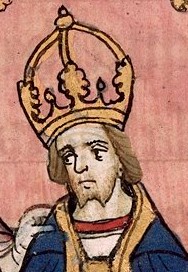
Emp. Ferdinand wearing the Crown of Italy
Nonetheless, once someone has a title, they usually want to keep it. As such, those German princes who had been elevated to royal status by Napoleon, were allowed to keep their titles as part of the means of encouraging them to turn against Napoleon and join the Allies. So, after that whole affair, there was no longer a King of Germany but instead kings of Prussia, Bavaria, Saxony and Wurttemberg as well as the Emperor of Austria who was also a king several times over in his own empire. The Kingdom of Burgundy had been broken up centuries before any of this so that left only the Kingdom of Italy. Napoleon had revived the Kingdom of Italy and actually made it a reality, intending it to be his secondary title after Emperor of the French, taking a great interest in it and naming his step-son viceroy. However, after his downfall, the Kingdom of Italy was no more as most of the territory was handed over to the Austrian Empire rather than being restored to its previous rulers. The Crown of Italy was also held by the Habsburgs but they created a new title to use with it, “King of Lombardy-Venetia”. The title King of Italy would not be revived until 1860 with the accomplishment of Italian independence and unification.

The subject can be much more complicated if one chooses to go into all of the details and all of the changes over time but, I hope this little summary will at least give those unfamiliar a better grasp of the titles associated with the Holy Roman Empire and perhaps make certain past (and future) articles easier to understand.

Thursday, October 12, 2017

A Brief Word on Faith & Frederick Barbarossa

The German emperors tend to have a rocky history when it comes to Church-state relations, partly because, in their time, anything involving the popes were also state-state relations. For some reason I have yet to fully understand, some modern Catholics are willing to be more understanding regarding some emperors than others. So, Emperor Frederick I (Barbarossa), who found himself at odds with the pope is still reviled by many today while Emperor Charles V, who waged war against the pope, is celebrated. I hasten to add that this does not mean Charles V should be vilified, those who defend him are correct inasmuch as his problems with the pope were political and not religious, however, I am saying that one could be more consistent in applying such understanding in regards to the Hohenstaufen kaiser as one is with the Habsburg. The fact that it is not is, in my view, unfortunate and helps to further religious division, particularly for Germans, and that division has led only to widespread religious indifferentism. If, as any monarchist should, one wishes the German people to get back in touch with their monarchical roots, Frederick Barbarossa is a figure that cannot be ignored and should not be dismissed. He was one of the most important German emperors ever, I would say easily among the top three, and the Holy Roman Empire of the German Nation cannot be fully understood without him.

Did Emperor Frederick I have problems with the Church in his time? Most would say, "yes" but I would add that his problems were more with the papacy than with the Church as a whole. Problems there certainly were though and ultimately this stemmed from the fact that the First German Reich, referred to officially as the "Holy Roman Empire" had a very different beginning than the original Roman Empire which preceded it. It all came down to the fact that this new entity had begun with the Pope, St Leo III, crowning Charlemagne "Emperor of the Romans" and, as such, the papal view was that the imperial crown was theirs to give and theirs to take away. Emperor Frederick I, as with many of his fellow kaisers, needless to say, did not tend to share this view. There was also a territorial dispute which originated from, basically, the Pope giving land to the King of Sicily which Frederick regarded as being part of the empire without checking with the emperor first and after the Emperor had signed an agreement with a previous pope that promised there would be no such agreement between the Emperor and the King of Sicily without papal approval, so it seemed like a double-cross to the Germans.

When Pope Alexander III was challenged by a rival in the person of anti-Pope Victor IV, the rather bad relations between Frederick and Alexander meant it was no great surprise that the Emperor recognized Victor IV as the rightful Bishop of Rome. Yet, even then, it seems to have been purely political as Emperor Frederick had first conveyed to Pope Alexander that if he would agree to see things his way, Frederick would remain with him but when the Pope refused, the Emperor sided with his rival. When Victor IV was succeeded by another anti-pope, Frederick supported him as well until he was defeated and driven from Rome by Alexander III. The Emperor mounted a last major invasion of Italy but met with a stunning defeat at the hands of the Italians at the Battle of Legnano. After this, Emperor Frederick I finally gave up on his ideas of empire, resigned to contenting himself with Germany and (this is important) formally and publicly patched things up with Pope Alexander III. So, yes, the Pope and the Emperor had their "issues" but, in the end, they kissed and made up. The dispute was always of a political nature and not really about doctrine or dogma.

Especially in these dishonest and disjointed times we live in, I think it is important to keep a few things in mind before being too hard on Emperor Frederick. He was one of the few German emperors to actually be crowned by the Pope (in 1155) with his troops killing off the Roman republicans who had been antagonizing the pontiff while he was there. Emperor Frederick, though he was excommunicated along with anti-Pope Victor IV, only had a problem with that because from his first day to his last he considered himself a staunch Roman Catholic and never considered being anything else. Indeed, he was widely considered a very devout and pious man who wanted the papal and imperial powers to work together but did insist that the pope recognize the imperial power which he wielded in secular matters. He was not some raving, unorthodox, heretic who was, for example, trying to argue that mothers could kill their children or that two men can get married. Finally, it is also worth remembering that even after all of his trials and difficulties, Emperor Frederick I died while going on Crusade to retake the Holy Land from Islam. In short, while not denying or covering up the very real differences Frederick Barbarossa had with the papacy, I think Catholics should not be too hard on him. The first view of him that comes to mind should not be that of a villain.

It is only my opinion, and I may well be wrong, but I cannot help but think that such attitudes probably played into the hands of someone Catholics should oppose much more; Martin Luther. I can imagine it being a great gift to him and his portrayal of the pope as a corrupt, Italian prince who lorded over the Germans that their most celebrated national heroes among the emperors tend to be the ones most condemned by the Catholic Church. In some cases, there were legitimate grounds for such condemnations with emperors who were clearly in need of some "correction" but I do not think Frederick Barbarossa was really one of them and I think some distinction should be made between those who had religious differences with the Church itself and those who had political disputes with the papacy at a time when, for good or ill, the pope was a political figure and acted as such. Again, Frederick Barbarossa was crowned emperor by the Pope, it was in his reign that the empire was first referred to as the "Holy" Roman Empire, he took his position as the secular leader of Christendom very seriously and died on crusade. I think Catholics should stop with the knee-jerk evaluation of him as an enemy to be immediately condemned at every opportunity.

Wednesday, October 4, 2017

The House of Habsburg and the Jews

Particularly after World War II, many have looked back and heavily scrutinized any comments concerning the Jews from German Kaiser Wilhelm II in a very obvious effort to portray him, and thus justify his overthrow, as the precursor to Adolf Hitler. That, however, is a ridiculous exercise. The Kaiser did make accusations against the Jews, no doubt because of their overrepresentation in the ranks of his enemies on the far left, but he also expressed genuine horror at the first anti-Semitic crackdowns in Germany under the Nazi regime. The entire narrative, however, is a canard. Hitler, after all, was a native of Austria rather than Germany and none of these people ever look to the relationship between the last two Austrian Kaisers and the Jewish population, doubtless because there is little, if anything, which can be used against the final Habsburg monarchs in that regard. What was the relationship like between the Jews and the Habsburg emperors? The answer is that it was one subject to change.

The First Reich, the “Holy Roman Empire of the German Nation”, had a large and very old Jewish population. Because the First Reich was usually a very decentralized body, more like a collection of small countries than one, large, empire other than in the periods when a particularly strong German Kaiser came to the throne and united the German people behind him. The Jewish population predated the rise of the House of Habsburg to the imperial throne, the Hohenstaufen Kaiser Friedrich II being notable for encouraging Jews to enter the financial sector and, indeed, they soon became known as the ‘servants of the treasury’. They were recognized as a separate group within the empire, allowed to live by their own laws and were not subject to the same laws as the Christian population. However, because of the decentralized nature of the empire, their status varied from locality to locality with some local rulers being more tolerant of them than others. There were occasions of mob violence against them but, overall, they were generally far better off than the Jews in other countries.

Albert II of Germany
Just prior to the Habsburgs attaining the imperial throne the status of the Jews initially remained the same as it had been previously. However, that changed under Archduke Albert V of Austria, aka Albert II of Germany. During the Hussite Wars the Jews were accused of complicity with the enemy and after a notorious incident of Eucharistic desecration at a church in Krems in 1420, Albert V ordered that the Jews be arrested, forced to convert and forfeit their property. Some were deported, some fled and a few were burned. Albert V banned Jews from Austria, destroyed the synagogue in Vienna and declared that they would never be allowed back. The successor of Albert V as Archduke of Austria would be the first Habsburg to be elected to the imperial throne; Emperor Frederick III. The “eternal ban” of Albert V turned out to be nothing of the sort as Emperor Frederick III canceled it, welcomed the Jews back and was extremely popular with the Jewish community who hailed him as the “King of the Jews”. The Jewish population revived quickly and prospered quickly, finding no shortage of customers for their businesses, particularly those looking for loans. Yet, this period of tolerance was not eternal either as Friedrich III was succeeded by Emperor Maximilian I.

Emperor Maximilian I, a very astute statesman and a figure who looms large in European history, found the Jewish presence rather at odds with the foundational principles of what was supposed to be a Catholic Christian empire. He did not go as far as he could have or as far as other monarchs had done in countries such as England, France or Spain but in 1496 he ordered the expulsion of all Jews from Styria and, later in 1509, confiscated Jewish property and burned all Jewish books. Yet, this situation did not persist nor was it widespread. After greatly expanding the reach of his dynasty, Maximilian was succeeded by Emperor Charles V who, despite being one of the most significant emperors, did not command unquestioning obedience. Faced with enemies such as the French, the Turks, the first Protestants and even the Pope, he had to take care to respect local authorities. He tolerated Jews in his German lands but in Spain, of which he was king as Carlos I, where Jews had been expelled, they remained expelled. Indeed, compared to Martin Luther, many Jews viewed Emperor Charles V as their guardian from fundamentalist mobs. In this period the Habsburg emperors were known to defend the Jews from the repressive measures of the Estates-General.

Ferdinand I
However, the outbreak and spread of Protestantism, and with it an increase in Christian fundamentalism, was bound to cause trouble for the Jews who stood out as the most noticeable non-Christian population within the borders of Christendom. When Emperor Charles V abdicated and divided his lands, the German half went to Emperor Ferdinand I who remained tolerant of them but did order them to wear a symbol marking their status as Jews. Today, this tends to cause an uproar due to memories of Hitler making the Jews wear a Star of David on their clothes but for Emperor Ferdinand it went no further than that. He did not molest them, he simply wanted them to be easily identified as a people apart which, it must be said, the Jews themselves considered themselves to be. However, restrictions on them did increase throughout the reigns of Emperors Maximilian II, Rudolf II and Matthias. This is often attributed to the Society of Jesus and an increasingly “fanatical” Catholicism in the empire, in reaction to the Protestants, yet, most ardent Catholics have a generally less than extremely favorable view of any of these Habsburg monarchs with many doubting the Catholic zeal of Maximilian II and Rudolf II and with Emperor Matthias also often viewed as too tolerant of non-Catholics.

It should also be pointed out that Emperor Ferdinand II, who is generally regarded as a Catholic champion like Emperor Charles V, was also like Charles V in being more tolerant of the Jews. He opposed their persecution and even allowed them to build a new synagogue. Obviously, it is ridiculous to attribute anti-Semitism to Catholic zealotry when the monarchs who are most celebrated by traditional Catholics, Charles V and Ferdinand II who led the Catholic side of the Thirty Years War, were more tolerant of Jews than Maximilian II or Rudolf II who are generally disliked by these same staunch Catholics. Indeed, during the Thirty Years War, Emperor Ferdinand II found the Jewish population to be a very valuable tax base to support his war effort against the Protestant coalition. In many ways, the Catholic emperors who wanted reconciliation with the Protestants tended to be more anti-Jewish while the Catholic emperors who wanted to defeat the Protestants were more tolerant of the Jews, at least during this period.

Emperor Leopold I
Things changed again with the reign of Emperor Leopold I. He was a staunch Catholic and had a very different attitude toward the Jews than his predecessors. Leopold I expelled the Jews from many of his lands, including banning them from Vienna in 1640. However, while he deported a great many Jews, he ultimately did not prevent them from returning which, in spite of accusations of persecution, they inevitably did. It is also worth noting that Emperor Leopold I had a Jewish economic advisor, one Samson Wertheimer. Clearly, whatever his attitude toward Jews collectively, he was willing to make exceptions. Although not extremely significant, it is also true that not all the Jews did come back after being expelled from the Habsburg lands with some moving all the way back to the Holy Land, following a rabbi who purported to be the messiah but who later converted to Islam (!). In general, however, over the ensuing years and throughout the reigns of a number of monarchs, the situation of the Jews was peaceful and the attitude of the Imperial Crown generally tolerant.

This trend generally remained in place though with one slight exception. Maria Theresa, Archduchess of Austria and Queen of Hungary, inherited the Habsburg lands, prompting the War of the Austrian Succession (King George’s War to Americans) and she married the Duke of Lorraine, bringing to the Habsburgs one of the claims to the Latin Kingdom of Jerusalem. She was a devout Catholic, not a fan of the “Enlightenment” and not a big fan of the Jews. She wrote that, “Henceforth no Jew, no matter under what name, will be allowed to remain here without my written permission. I know of no other troublesome pest within the state than this race, which impoverished the people by their fraud, usury and money-lending and commits all deeds which an honorable man despises. Subsequently they have to be removed and excluded from here as much as possible.” However, it should also be remembered, she had a similar opinion of Protestants and wished to deport them as well which ultimately prompted a threat from her eldest son to abdicate. She also, like Leopold I, had Jews in her court and her ministers did convince her to moderate somewhat.

Emperor Joseph II
Her son, Emperor Joseph II, is generally regarded as much more tolerant than his mother, however, as is often the case with Joseph II, the truth is more complicated with him. He did not, like his mother, wish to expel all Jews or deport them to wild, frontier areas, but he did basically want them to stop being so Jewish. Emperor Joseph II was perfectly willing to restore the old tolerance toward the Jews but, at the same time, he also wanted them to stop being ‘a nation within a nation’ and integrate or assimilate as we would say today. He would give them the same rights as his Christian subjects but also expected them to submit to the same obligations with no special privileges. Joseph II, for example, was happy to let Jews worship as they please and do business as they pleased but he also wanted them to speak German rather than Yiddish, be subject to service in the Imperial Army, submit to the same laws as everyone else and so on. The Jews accepted their restored rights but generally refused to assimilate. It was, for Joseph II, one more project of his that failed to reach completion. As with most of the innovations of Joseph II, his successors, Leopold II and Francis II/I moderated the most extreme but largely kept the rest in place.

The status of the Jews remained largely unchanged until the reign of Emperor Franz Joseph who also oversaw the transition of the Austrian Empire to the “Dual-Monarchy” of Austria-Hungary. Rather than being a primarily German power, as the First Reich had been, Austria-Hungary reflected the shift toward multi-nationalism. Emperor Franz Joseph lifted remaining restrictions on the Jews and even championed their cause, repeatedly condemning anti-Semitism. As a result, he was widely popular with the Jews who called him the King of Jerusalem. They also recognized that nationalism by the member peoples of Austria-Hungary was a threat to them and so regarded themselves and the monarchy as having a common enemy. Rabbi Joseph Samuel Bloch, a native of Polish Galicia, was highly involved in this, promoting a Jewish form of Austrian patriotism. The restoration of full citizenship for Jews by Emperor Franz Joseph caused many to flock to Vienna. One of the most notable was Theodor Herzl, father of the Zionist movement, who believed that anti-Semitism could never be eliminated and the only solution was for the Jews to have a state of their own outside of Europe.

Badge of Jewish support for the K.u.K. war effort
Emperor Franz Joseph elevated many Jews to the nobility and gave them special considerations in the army. In the last conflict of the Habsburg drama, the Imperial and Royal Army included Protestants, Jews and Muslims which would likely have shocked previous generations. Rabbis and Imams served alongside priests in the chaplaincy. These policies were continued by Emperor Charles (Kaiser Karl) though he had little time to establish the same sort of relationship with his various peoples that his uncle had over so many years. According to Scottish author Gerald Warner, in Austria at least (likely not Hungary) the Jews were very supportive of the restoration of Emperor Charles and his son and would-be successor Archduke Otto is credited with helping a great many Jews escape Austria after its annexation by National Socialist Germany. This is rather remarkable given that all three of the founders of the Austrian Communist Party were Jews as was the leader of the short-lived communist takeover of Hungary Bela Kun. However, neither Emperor Charles or Archduke Otto in his long life ever relented in their friendly attitude toward the Jews or showed any regret over the policies of the last Habsburg monarchs in this regard (or any other really).

Rabbi praying over Emperor Charles & Empress Zita
No doubt this attitude contributed to the visceral hatred Adolf Hitler had toward the House of Habsburg whom he regarded as altogether too pandering towards Jews, Slavs and others rather than the German-Austrians. The problem that usually arises with this issue is that so many who focus on it tend to have a very simplistic attitude and firmly set preconceived notions one way or the other, pro- or anti-Semitic. History, as is usually the case, is more complicated than that. Some Habsburg monarchs were very indulgent with the Jews, some very clearly found them objectionable. However, on the whole, Jews fared better under the Habsburgs than in most other parts of Europe, the decentralized nature of the empire being very beneficial for them. When the King of England or King of France expelled the Jews, they were expelled from the country entirely. Under the Habsburgs, however, even when an emperor did expel them, they could only be expelled from lands directly belonging to the Habsburg dynasty and not from the whole empire over which the emperor had no control. Some did try to change this but none were successful. So, after starting out quite hostile to each other, the Jews and the Habsburgs ended on quite friendly ground with even the end of the empire not changing the attitude of the Habsburg dynasts in that regard.

Tuesday, July 18, 2017

The Strange Case of Emperor Rudolf II

It was on this day in 1552 that Rudolf von Habsburg, the future Holy Roman Emperor of the German Nation, was born in Vienna, Austria to Emperor Maximilian II and his Empress Maria of Spain. He came to the various Habsburg thrones from 1572 to 1576 as King of Hungary and Croatia, King of Bohemia, King of Germany and finally as the Emperor-Elect. Today, when Emperor Rudolf II is remembered, he tends to be remembered as one of the oddballs of the Habsburg dynasty at best and at worst he is blamed for the outbreak of the horrific Thirty Years War which devastated central Europe for decades and left Germany in ruins for many decades to come after. It was one of the most truly devastating events in all of German history and probably nothing like it was seen until the utter destruction of defeat in 1945. Emperor Rudolf II will certainly not make my list of “favorite Habsburg monarchs” but the fact that he is so ridiculed or outright despised by so many people on both ends of the political spectrum means that I cannot help but at least have some sympathy for him.

What is the problem with Emperor Rudolf II? Why is so much ridicule and blame heaped on him? There is certainly, if most accounts are believed, much in him worthy of criticism. However, I think the reason why so much is heaped on him is, at least to a large extent, because he managed to alienate both ends by trying to steer a middle course in his policies. One will also notice that, to justify opposition or a negative opinion of Emperor Rudolf II, critics will more readily address his personal life rather than his policies because, if one looks at his policies, I think it becomes much more difficult for the “left” and the “right” (so to speak) to criticize him without more than a bit of hypocrisy or revealing their overreach. People want to look for scapegoats, they want to find a “villain” for every story and for many on both sides of the political spectrum, Emperor Rudolf II was an obvious target. What can make the disinterested observer feel some pity for Rudolf II is that, in modern times, he will be attacked from the right for doing certain things, attacked by the left for doing other things yet never praised by the left or the right for doing the things that the other side attacks him for.

There are, of course, people on the left today who will criticize Emperor Rudolf II simply for being an emperor, pointing to him as a totally unfit person who came to power simply because of an accident of birth who was inept, corrupt and tyrannical. Yet, few right-wing monarchists will defend Emperor Rudolf II because of his policies or personal life and much of this comes down to the religious divide in western Christianity between Catholics and Protestants. Each have some valid points to make yet, I would say that the fact that these divisions existed in his own lifetime to such an extent, even within his own family, that this rather disproves the notion that blame for the Thirty Years War could be laid solely at his doorstep. Catholics dislike Rudolf II because, honestly, he was not much of a Catholic, he certainly was not devout or personally pious and if certain accusations about him are to be believed, he was very far from that. He also made concessions to the Protestants which angered the Catholics immensely. However, this did not, in turn, win him much loyalty from the Protestants since, after all, no matter how nominally, he was still a Catholic and the head of a traditionally Catholic dynasty and leader of an officially Catholic empire.

In this regard though, I think Rudolf II was a victim of bad timing and those who heap undue amounts of blame on him, I think, tend to forget the historical context of his life. For example, Emperor Charles V, Rudolf’s great-uncle, also made concessions to the Protestants and, as those familiar with the horrific ‘Sack of Rome’ know, even used Protestant soldiers to make war on the Pope. Yet, Emperor Charles V was known to be a very staunch Catholic personally and, as a champion of Christendom, Catholics tend to forgive him for these things. Yet, it highlights the precedent that he set. Charles V had fought the Protestants to be sure but he ultimately made concessions to them because he considered it more important to have peace and at least some degree of unity in Germany so that he could focus on fighting the French, the Italians and the Turks. His younger son and heir to the German half of his continental empire, Emperor Ferdinand I (Rudolf’s grandfather), also opted for a policy of religious neutrality between the Catholics and Protestants in order to maintain the peace in Germany. He pushed for reform in the Catholic Church, was generally tolerant of Protestants but allowed them no further power, hoping that the division would be solved by reconciliation.

Finally, Emperor Rudolf’s father, Emperor Maximilian II, went even farther with trying to bring both sides together. He was more generous toward the Protestants, so much so that some suspected him of having Protestant sympathies, yet he still refused to give them access to the ‘top tier’ as it were of imperial power by allowing Protestant prince-bishops. However, at the same time, he pushed for the Catholic Church to change in ways that would make it more acceptable to the Protestants, again, in the hope that the religious division could be ended by finding a middle ground that would accommodate both the Catholic and Protestant camps. Obviously, he was not successful but, given the actions of his predecessors, it should hardly come as a surprise that Emperor Rudolf II would not have the makings of a religious zealot about him. Emperor Rudolf II was, in my view, simply not very religious at all, which is not to say he was an atheist or completely uncaring about the subject but that the theological divisions between the Catholics and Protestants were on a level that simply did not interest him and I can imagine him being baffled as to why the two sides could not just stop arguing about such things and get on with other business.

Emperor Rudolf II did make even further concessions to the Protestants but it was not because he agreed or sympathized with them but rather that he wanted to stop them from rebelling and if some greater degree of rights and privileges would do the job, he would give those to them. The reason why the outbreak of the Thirty Years War is so often laid at his feet is that it was these concessions which seemed to be threatened by his successor and which the Protestants rose up to demand be honored that led to the initial outbreak of hostilities. However, as well as what happened under the emperors before him, people also tend to forget what happened after him as his end ultimately came when his brother Matthias rebelled against him and ultimately deposed him, fearful that Rudolf was diminishing the imperial power. However, to gain the support of the Protestants in order to take power from his brother, Matthias too had to make further concessions to them and he too carried on the tradition of trying to find a middle path that would, if not reconcile, at least keep the peace between the Catholic and Protestant factions. Things only really boiled over when Emperor Matthias died and was succeeded by Emperor Ferdinand II who, for a change, was a very serious Catholic and who was most intent on seeing religious divisions ended in the empire by restoring Catholic supremacy.

As we know, that never quite worked out either and ultimately both sides eventually had to learn to live with each other. Emperor Rudolf II did do something which, I would think, traditional Catholics would applaud him for, yet it is more often a source of criticism against him which was to push for another crusade. He hoped that he could unite the Christians of Germany and, perhaps, Christendom as a whole, by another war against the Ottoman Turks. The Muslims, after all, saw no difference between a Catholic infidel and a Protestant infidel so, perhaps, Rudolf reasoned that this would bring the bickering Christians of Europe together against a common enemy. Unfortunately for him, this did not work and the war was a long, grueling affair which ultimately accomplished almost nothing. Spain made some contribution as did most of the Italian states to this frustrating conflict known as “the Long War” but it proved to be a bloody stalemate with neither side gaining a clear advantage. For Rudolf II, it was a drain of men, resources and brought no greater Christian unity as, in order to prosecute the war, as emperors almost invariably had to do, he was compelled to make concessions to the various subsidiary princes to contribute men and resources to the ultimately fruitless conflict.

So, his religious policies angered Catholics while still not earning any great loyalty from the Protestants and his foreign policy proved to be ineffective and costly. All of these concessions to various groups also encouraged opposition from within the Habsburg family ranks as they saw imperial power being diminished further and further yet, as mentioned above, the younger brother who ultimately dethroned him would find that he would have no choice but to do the same. Most, however, choose to focus on the personal life of Emperor Rudolf II and he was an unusual and rather colorful character to be sure. As monarchs do not tend to make a public issue of their sexual proclivities, I prefer to avoid the subject, to the frustration of some readers I have noticed. Rest assured, I am well aware that many regard King Frederick the Great of Prussia or King James I of Great Britain as homosexuals, I simply do not care. I think one could argue the point and I do not see how it could be proven with any degree of certainty one way or the other and, while I certainly think it matters in moral terms, as long as they keep it to themselves, it does not matter *to me*. Were they so inclined and were they to make a public issue of it, trying to push this as acceptable or praiseworthy behavior, then I would certainly have a problem with it.

As with a growing list of historical figures, Emperor Rudolf II has now also been deemed by many to have been a homosexual. Personally, I do not know what his sexual preferences were and would rather keep it that way. There are some such royals about whom I have no doubts, some prominent cases which most accept but which I tend to disbelieve but with Rudolf II, I really have no idea one way or the other. There seems to be just as much “evidence” to me that he was as there is that he was not. He talked about marriage a lot but never went through with it, there are rumors of some homosexual relationships yet there are even more rumors of heterosexual relationships and illegitimate children that he produced. My only conclusion is that he does seem to have been a rather lustful man which is hardly uncommon. Rumors of affairs are things I put very little weight in as gossip is often spread maliciously but the, sometimes rather explicit, erotic artwork Rudolf collected is the primary basis for my admittedly banal assessment of his private life. Was he or wasn’t he? I don’t know but Emperor Rudolf II did seem to be a bit of a pervert.

I only mention this at all because it is something that Rudolf II does tend to be criticized for and yet, I have noticed that this is usually a red herring. Particularly among those who think there should be no limit to sexual practices, partners or proclivities at all, there is a noticeable habit of always trying to paint those you dislike as some sort of sexual deviant. Everyone knows, for example, that Eva Braun was the mistress of Adolf Hitler and everyone knows that Clara Petacci was the mistress of Benito Mussolini. Does anyone know the name of Franklin Roosevelt’s mistress? Does anyone know of any affairs by Winston Churchill or Joseph Stalin? I doubt this is an accident. Consider also, if you live in the west, how many times you have seen those photos of Vladimir Putin riding a horse without a shirt splashed across the media. This, I think, illustrates my point well enough. Everyone knows who Eva Braun was but I bet no one reading this could name FDR’s secretary he had the affair with without looking.

Aside from this issue though, Rudolf II was also accused of being so devoted to intellectual and artistic pursuits that he neglected government. This may actually be true, however, I have not failed to notice that be it Emperor Rudolf, Britain’s King Edward VIII, President Trump or President Obama, people seem to complain the most about rulers who shirk their duty even though they think those exact rulers are ruling badly. If they are not good at their job, one would think you would be happy to see them abdicating, playing golf or, in the case of Rudolf II, devoting himself to art, music and certain currently discredited fields of science. Again, it is certainly true that Rudolf II spent a great deal of time and money collecting works of art, however, criticism for him over this may be more due to the fact that it can no longer be appreciated. Unlike other monarchs whose art collections became great national treasures, that of Emperor Rudolf was lost, sold or destroyed in the years and reigns after his death so that it cannot be appreciated but it is still easy to criticize him for accumulating it.

Perhaps the thing about Rudolf II that seems the most odd today, however, is his fascination with two particular subjects which have been discredited and those are astrology and alchemy. Now, to be fair, the Emperor was rather obsessive, particularly in regards to alchemy and I think it is safe to say allowed the subject to occupy much more of his time and attention than he should have. Rudolf was positively obsessed with alchemy, even having a private alchemist laboratory of his own and spent his life trying in vain to find the elusive “Philosopher’s Stone”. He even hired two brothers named Edward and Alphonse to, ..no, wait, never mind (inside joke). Today, of course, people regard astrology and alchemy as so much superstitious nonsense, completely absurd and unscientific. I would agree that the Emperor spent rather too much time on the subject, however, I would push back on criticism of the Emperor on this front almost more than any other. Today, we view astrology as basically a swindle for the superstition but, at the time of Rudolf II, astrology was considered scientific “fact”. Practically every European government embraced it and every monarch, even the Pope in Rome, had an official court astrologer.

Astrology is something I point to frequently today in comparison to the evolutionists or the global warming/climate change phenomenon. We are told that these things are scientific facts by the scientific community and yet, once upon a time, the scientific community also said that astrology was a scientific fact and that one could concoct an elixir that would turn lead into gold (maybe they never got their Transmutation Circle just right). My point being that, while I think it is fair to criticize Rudolf II for going overboard on these subjects and allowing them to monopolize his time, it is completely unfair to portray him as some sort of occultist lunatic for doing so. Interest in astrology may have led some to a better understanding of actual astronomy and we know as a matter of historical fact that the study of alchemy was a step along the process of developing scientific understanding and played a part in the establishment of modern chemistry and medicine as we know them today.

In the end, it is safe to say that Emperor Rudolf II was not a successful monarch. He never married or produced legitimate offspring, imperial power was diminished under his rule, his foreign policy won no great victory and he provided no lasting stability as evidenced by the fact that he was ultimately overthrown by his younger brother. His critics are many and there is much in him that can be validly criticized. However, I do think some of the criticism of him is unfair and much of it, even if fair, is certainly unfortunate and does not cast his critics in a very favorable light either. In regards to the most serious accusation against him, that he must bear responsibility for the Thirty Years War is, I think, a considerable overstatement and lays too much blame on him for a disaster which was caused by the cumulative policies and events spanning the reigns of a number of German emperors. He certainly was not one of the best, but he was also far from being the worst national leader the world has ever seen.

Those interested may wish to read…
My Favorite Habsburg Emperors
MM Mini-View: The Habsburg Emperors

Friday, June 2, 2017

How About Restoring the Holy Roman Empire?

The Holy Roman Empire of the German Nation, the First Reich, was the central political entity of the western world for a great many centuries and, as we have talked about before, has been in the mind of many people, most often Catholics, in particular in terms of comparing and contrasting it with the European Union. As I have stated before, the EU is nothing at all even close to what the First Reich had been, however, for those who claim that the European Union should be embraced as a modern-day version of the Holy Roman Empire, my response is simple; why not just restore the Holy Roman Empire itself? Such a thing is hardly likely in this day and age and yet, it is no more unlikely than the restoration of any other monarchy which I will not relent in pressing for. Additionally, it is not as though it would be fundamentally impossible to restore the First Reich in terms of the modern European political map as the First Reich was itself a rather malleable thing, which is probably why it was able to endure for so long.

The body that eventually became known as the Holy Roman Empire existed long before the actual term itself came into common usage and originated in a sort of effort by Pope St Leo III and the Frankish king Charlemagne to revive the Western Roman Empire but in a very different form, with a different basis and a largely different population, certainly a different ruling class, than the original Roman Empire. It was always a somewhat amorphous thing, during the reigns of particularly powerful emperors it was a definite empire but in the intervals between such monarchs was often more like a confederation of loosely aligned minor states. As the name suggests, certainly from the time of Emperor Otto the Great, it was a German-dominated entity and the core of it, the heartland of it, was what is today Germany. However, it was also seen as a unifying force for all of Western Europe or all of Christendom. The Emperor did not directly rule over all the countries of Christendom, indeed he did not directly rule all of the Empire itself exactly but he was supposed to be the senior monarch of Christendom, higher in status than the kings of France or England. He could not command them, but the idea was that he should be treated with all due respect as their senior.

Now, should all of this sound too frightfully Roman Catholic for Protestant monarchists, remember that at the end of the Holy Roman Empire the Protestants were a well established and accepted force within the empire and several of the Prince-Electors were Protestants, though in a rather odd turn of events one of those Protestant electors was a Catholic. There was even a Protestant caucus within the Reichstag. In the last shuffling of the deck before the First Reich was dissolved, the Prince-Electors were: The Prince-Archbishop of Regensburg, the King of Bohemia, the King of Bavaria, the King of Saxony, the King of Prussia (Elector of Brandenburg), the King of Great Britain (Elector of Hanover), the King of Wurttemberg, the Grand Duke of Baden, the Elector of Hesse-Kassel and the Grand Duchy of Wurzburg (who later became the Grand Duke of Tuscany, long after the Empire was gone). Obviously, things had changed a great deal from the, not original but early and long lasting official organization of the empire as the Kingdom of Germany, the Kingdom of Italy, the Kingdom of Burgundy (Arles) which didn’t actually exist most of the time and the Kingdom of Bohemia. All of these were kingships held by the Emperor and, originally, there were supposed to be no other kings within the empire besides the emperor himself. That, of course, changed when the Elector of Brandenburg became the “King in Prussia” and later the “King of Prussia”.

The point is that the Holy Roman Empire was changeable and it is not beyond the realm of possibility that it could be reconstituted today with the restoration of monarchies across Europe. In other words, one would not have to dethrone some monarchs, restore others and reset everything in order to accomplish a restoration. This is one of the differences between the actual Roman Empire and the Holy Roman Empire of the German People. The original Roman Empire had a long history of its own going back through the Roman Republic to the ancient Roman kings. There was a specific political system in place with a specific procedure for becoming Emperor of the Romans who ruled “SPQR” which was in the name of the, “Senate and the People of Rome”. What was or what became the Holy Roman Empire began with the coronation of Charlemagne as “Emperor of the Romans” by Pope St Leo III on Christmas Day 800 AD. This meant that the Pope had claimed for himself the authority to choose the emperor, unlike the old system in which the Pope was simply called upon to bless the Emperor of Rome who had come to power in the usual way. More significantly to how history unfolded of course, he also reserved the right to remove the Emperor. What the Pope gives, the Pope can also take away which was no doubt one reason why most emperors ultimately found they could get along just fine without being crowned by the Pope.

In a modern restoration of the Holy Roman Empire, one could have electors such as Prince Georg Friedrich of Prussia, Prince Donatus of Hesse, Archduke Karl of Austria, Prince Ernst August of Hanover, Duke Franz of Bavaria, Prince Alexander or Prince Rudiger of Saxony (I’m not going to get into that dispute here), Margrave Maximilian of Baden, Duke Carl of Wurttemberg and others. The others are where there could be some trouble. The clerical electors could prove problematic, one reason being that the Catholic Church in modern times has not exactly been zealously pro-monarchy and, assuming old attitudes prevail though they probably don’t, the lay electors might object to having churchmen involved in the election of the emperor given that the Church, under St Pius X, abolished any imperial involvement in the election of the pope after Emperor Franz Joseph last used his veto power. However, it is nothing that could not be worked out.

There is also the issue that the Grand Duke of Wurzburg, as mentioned, later became the Grand Duke of Tuscany which, as we know, was abolished with the incorporation of Tuscany into the Kingdom of Italy and we are not supposed to be robbing anyone of their throne or re-drawing the map of Europe to do this remember. Personally, I’d be fine with the Grand Duchy of Tuscany being restored, along with others, within the Kingdom of Italy. However, if old customs are to be kept to, the Grand Duke of Tuscany would have to finally declare his nationality once and for all. You see, when the Italians began to get really forceful about not wanting to be ruled by foreigners, supporters of the Grand Duke (and those like him) were quick to say that these cadet branches self-identified as Italians or more precisely Tuscans or Florentines or whatever you wish to call them (either sounds odd in English) but, when it came to the Holy Roman Empire, again, despite what some have claimed about the mentality of people prior to the French Revolution, nationality was important and the leaders of the empire would be expected to object to an elector who is not a German. In the old days the King of Bohemia (before they were Habsburg) was sometimes challenged as an elector on the grounds that he was not German and thus had no business taking part in who would be Emperor over the German nation. Depending on how the clerical electors are reconstituted, it might also be possible to simply replace the Grand Duke with a clerical elector as the Bishopric of Wurzburg is still around today.

There might also be some objections to the Grand Duke of Baden and King of Wurttemberg both being electors given that these are, in modern Germany, part of the same state and we are not supposed to be re-drawing the map here. However, as these things have been done in the past, the Grand Duchy of Baden could be restored within the Kingdom of Wurttemberg and his vote could be given to some other prince of the German states. One could go back to an earlier, smaller roster of electors, none of this was ever set in stone. The “Golden Bull” of Emperor Charles VI was supposed to do something of the sort but, obviously, changes were made right up to the very end of the existence of the Holy Roman Empire. Indeed, the Hessians insisted on keeping their electoral title even after the empire was no more, simply because it was more prestigious than what they had otherwise. All of that could be worked out as some electors were lost and others were raised to the status. There were rules for all of this but all those rules could be changed and were. It was not even set in stone that the electors had to choose a candidate from among their own number, hence King Francis I of France and King Henry VIII of England once threw their proverbial hats in the ring. At one point it was not even considered beyond the realm of possibility that there might be a Protestant emperor. He would not be crowned by the Pope and thus would remain “Emperor-Elect” officially but then, that came to be standard procedure as well.

None of this is absolutely impossible. However, the biggest problem with restoring the Holy Roman Empire is, to my mind, undoubtedly the current mindset of modern Europe. Restoring the empire would be a comparatively small matter, indeed some maintain that Emperor Franz II had no power to dissolve the empire and so it still exists but is simply dormant, awaiting the election of a new emperor. The issue that should give traditional monarchists some pause about this is who would be elected, what would this revived empire really look like considering the values that prevail in Europe, the modern Catholic Church and the Protestant churches that the electors belong to. The motivations that those in power had in the past are not the motivations that those in power have today and my biggest concern with a revived Holy Roman Empire of the German Nation would be what torrent of changes it would immediately be subjected to and I can think of nothing more frightening the possibility that the electors might choose to “make a statement” with their vote. Even if they stuck to tradition and elected Archduke Karl of Austria, I would still fear what the threat of being unpopular might prompt him to do. However, at the end of the day, whatever they came up with would almost have to be a considerable improvement over what exists at the moment.

This points to the reason why I tend to get rather frustrated with people who tend to blame all problems on modern monarchs and who complain that if only they would act like the monarchs of old, everything would be better. I am afraid not, that is not how it works. A modern Holy Roman Empire would not be the same as the historic Holy Roman Empire. People create societies, cultures and so on and as people change, the societies they create change. The First Reich was essentially the Catholic German empire. The Second Reich was a Protestant-run German empire in which religious differences were not of paramount importance. The Third Reich, well, that is a rather long story but it was a reflection of its time and I think it is significant that while the current political masters want Germans to forget the First Reich, want Germans to forget the Second Reich, they *never* want Germans to forget the Third Reich, it is too important for them and their hold on power.

Personally, I tend to look back with more longing on the Roman Empire of Constantine and Theodosius than I do the Roman Empire of Otto and Frederick. However, the core, the spirit if you like, the “idea” of this Roman Empire is something the modern masters of the planet do not want us to remember or work to revive. The Holy Roman Empire hardly, if ever, worked the way the ideal was supposed to. However, that very ideal, that very vision, of western, European, Christian monarchies all in harmony, all pulling in the same direction with varying degrees of local autonomy terrifies the sort of rulers the world has today. Yes, powers such as France, Spain, Britain even largely Italy and so on were outside of it but the ideal was that they would all see themselves as being on the same team, this “team” known as Christendom, synonymous with “western civilization”. That is something worth considering, worth trying to work out, worth trying to strive for.

Thursday, March 30, 2017

Monarch Profile: Emperor Leopold II

His Royal Highness Peter Leopold Josef Anton Joachim Pius Gotthard von Habsburg-Lothringen, Prince Imperial and Archduke of Austria, Prince of Hungary and Bohemia, Prince of Tuscany was born in Vienna, Austria on May 5, 1747 the ninth child and third son of Emperor-Elect Francis Stephen and Empress Maria Theresa, Archduchess of Austria and Queen of Hungary. When his older brother, Archduke Charles, died of smallpox early in life in 1761 he became next in line for the Habsburg throne after his eldest brother who would be Emperor Joseph II. As it was not expected that he would inherit the numerous thrones of the House of Habsburg, as a child he was first given an education aimed at his joining the priesthood. However, even while quite young he did not take well to his religious education and it soon became clear he was not cut out to be a priest. Instead, it was decided to ‘farm him out’ to Italy and as a child he was engaged to marry the heiress of the Duchy of Modena. This never came to be but Italy was still in his future.

In an effort to keep as much of Italy within the Habsburg family as possible, an agreement was made to marry him to the Infanta Maria Luisa of Spain, daughter of His Catholic Majesty King Carlos III, and make him heir to the Grand Duchy of Tuscany which was then held by his father. As such, when Francis Stephan died in 1765 and his older brother became Emperor Joseph II, Archduke Leopold became the Grand Duke of Tuscany, though even as a young man he had little to do. His formidable mother, Empress Maria Theresa, appointed most of the officials who actually administered the country and his brother the Emperor also made sure that Tuscany stayed in step with the rest of the Habsburg lands. As such he had little to do in Florence and, unfortunately, occupied much of his time with a string of extramarital affairs. However, he was not without ambition and ideas of his own and in 1770 he was able to free himself from Vienna and take matters in hand himself.

After taking power into his own hands, Grand Duke Leopold lowered taxes, enacted a public works program, streamlined the bureaucracy, cut government regulations, abolished the death penalty and tried to appropriate the property of the Church, which he did not succeed at but which was illustrative of his problems with the Catholic hierarchy and the source of considerable tensions between himself and the Pope. He was not very popular with his Italian subjects, however, as his entire personality was very much at odds with the culture of Tuscany. He was austere, private, preferred to live simply and, like his brother, wanted rationality in all things. His people rather liked displays of pageantry, grandeur and had become used to the way things had been since the days of the Medici. There were corruptions, but they were corruptions the people had become comfortable with and the tension with the Church also caused problems. All in all, Leopold was simply too German or Austrian for his very Italian subjects. His improvements of public health, provision for the mentally ill and abolition of corporal punishment were things most people approved of, but he simply did not act like a typical Italian prince was expected to. Where he was expected to be grand, lavish and vibrant, he was plain, not very sociable and rather reclusive.

The family life of Leopold II was rather similar. His Spanish Bourbon wife, Maria Luisa, was rather more devoutly religious than he was but she was also a devoted, tolerant wife who was very supportive of her husband, ignored his numerous affairs and seemed genuinely attached to him despite her being more of the warm and friendly type and he being more of the cold, silent type. Nonetheless, their marriage, odd as it looked, seemed to work for them as they had sixteen children together, securing the future of the Habsburg-Lorraine dynasty. As far as his older brother was concerned, Leopold and Joseph were as close as two siblings of their nature could be. Leopold was supportive of his brother, approved of his policies and the two were essentially on the same page on most any issue. He had genuine concern for him, yet was still cold and calculating enough to keep his distance from Joseph II over policies which were unpopular, even though Leopold himself approved of them. At the end of his reign, Joseph II was beset by problems; unrest in Belgium, unrest in Hungary, tensions with the Church, opposition to his policy of Germanization, but when he was on his deathbed and tried to have his younger brother take over as regent, Leopold refused and it was some time after the death of Emperor Joseph II that Leopold left Florence for Vienna in 1790.

Once he became Emperor-Elect Leopold II of the Holy Roman Empire/First German Reich, Leopold became one of those monarchs who falls between the two larger personalities. Historians tend to give little attention to his reign, Leopold II serving as little more than a temporary bridge between the reigns of Emperor Joseph II and Emperor Francis II (later Francis I of Austria). Yet, Leopold II came along at a critical time in the history of Europe and western civilization in general. The French Revolution was building steam, and without France, Austria had no support against the growing powers of Prussia to the north and Russia to the east. The Ottoman Turks were also a constant irritant to the south. Within the empire, there was also unrest among the Hungarians, Bohemians, Belgians, the clergy and the nobility. Emperor Leopold II tried to steer a middle course, repealing just enough of the policies of his autocratic brother to gain support but holding to most of the same principles.

Leopold II adopted a ‘divide an conquer’ strategy to restore imperial rule over Belgium, then secured a pact with the King of Prussia to oppose the revolution in France. However, this was an agreement neither had any intention of acting on, at least for the time being, but it served to prevent any moves by Russia in the east while the German states were engaged in the west. He arranged a truce with the Turks to put off any trouble on that front and made renewed efforts at friendship with the British, aided by the fact that his brother Emperor Joseph II had been the most vociferous European monarch in condemning the recent rebellion in the British colonies in America. He relented on some of his brother’s efforts to bring “rationality” to Catholicism but still maintained state controls over the Church and papal pronouncements. He maintained many of the public services of his brother but revoked emancipation and returned some peasants to serfdom in order to win back the support of the Bohemian nobility. He placated the Hungarians by having a Hungarian coronation (which his brother had never done) and granting the Magyar nobles a more prominent voice in national affairs, seen by some as the first step toward the eventual “dual-monarchy”.

Naturally, the growing French Revolution increasingly occupied the mind of the crowned heads of Europe. Emperor Leopold II had taken no action against the revolutionaries, at times seemed to think the situation had resolved itself with King Louis’ forced acceptance of a constitutional monarchy, yet later Leopold called for monarchist solidarity in opposing the Revolution after the arrest of the French King and Queen. However, again, he took no action, refusing to break his scheduled priorities and focusing on his peace negotiations with the Turks. The situation in France was worsening by the day when Emperor Leopold II suddenly dropped dead in Vienna in March of 1792 after only two years on the imperial throne, passing the Habsburg dominions to his son who became Emperor Francis II, later Emperor Francis I of Austria. It would be left to him to be the primary continental opposition to the forces of the French Revolution, the empire of Napoleon and to lead the forces of counterrevolution in Europe in the Nineteenth Century.

All in all, Emperor Leopold II did not make much of an impression during his reign. Perhaps, had he reigned for more than two years, he would be viewed differently. However, as it was, he had much the same views as his brother and predecessor, while being more politically flexible, less autocratic and more inclined to be pragmatic. This had made him, in turn, more criticized by both ends of the political spectrum. Still, at a time when Europe was on the brink of upheavals that would be almost unprecedented, Emperor Leopold II did secure his countries, ending less important problems to focus on the growing threat of revolution and took the first steps towards an alliance of the crowned heads of Europe to stand opposed to the spread of carnivorous republicanism. He tended not to be a very likable man but no one could call him an incapable one.

Friday, February 19, 2016

Monarch Profile: Emperor Henry VII

Emperor Henry VII of the Holy Roman Empire (First German Reich) is often overlooked amongst the famous German monarchs of the Dark to Middle Ages. The devoted Otto the Great, fierce Frederick Barbarossa or flamboyant Frederick II certainly receive more attention but Henry VII certainly had an impact in his time and inspired one of the most famous literary works of the period. Probably more known in Italy than Germany, he was able, inadvertently or not, to inspire people and represented something for many people that was far greater than he ever could have been himself. He was born in or around 1275 in Valenciennes in northern France, the son of Count Henry VI of Luxembourg. Although his native land was in France, it was also within the boundaries of the Holy Roman Empire which, while centered on Germany and consisting mostly of Germans (hence, “Holy Roman Empire of the German People”), it also included bits of other surrounding nations depending on the political situation. In his youth, the future Henry VII was well acquainted with how precarious that political situation was.

Voltaire famously quipped that, “…the Holy Roman Empire was in no way holy, nor Roman, nor an empire” and he was not entirely wrong. Holiness, well, that could come and go, and times it really tried and at other times it certainly fell short. It certainly was not truly “Roman” as the Pope ruled Rome and would become quite peevish if any German Emperors got ideas to take it from him. As for being an “empire”, however, that too was changeable. As a patchwork of minor states and cities, it was often not much of a player on the world stage but, under men like the aforementioned Otto or Frederick, it could rise to truly imperial status if the emperor was tough enough, smart enough and ambitious enough to make it so. In the time of young Henry of Luxembourg, this was not the case and the empire of the Germans was in rather bad shape. As Count of Luxembourg, Henry was constantly being harassed by neighboring German petty rulers and was forced to look beyond the imperial borders for help. He kept his people safe and, by all accounts, ruled his lands wisely but did have to avail himself of the protection of King Philip the Fair of France (perhaps known as Philip the Unfair if you were Jewish or a Knight Templar).

Things were going fine for Henry until King Albert I of Germany (a Hapsburg) was assassinated and a power-struggle ensued with King Philip the Fair of France hoping to carry out a French takeover of the Germans by having himself elected Emperor. He spent huge sums of money trying to bribe the German Prince-Electors but ultimately it was to no avail. Everyone feared that France would be too powerful if Philip were to be elected. However, King Philip could also be counted on to oppose any of the German candidates the electors would normally have turned to. As it happened though, the Count of Luxembourg was energetically putting his own candidacy forward, winning over many powerful people and making a pretty good case for himself. He was eligible, seemed to be a good ruler and while within the empire was also a vassal of the King of France so Philip would likely not object much to his election. The issue was decided and the Count of Luxembourg was elected King of the Romans in 1308 and crowned at Aachen the following year. Pope Clement V, in Avignon, confirmed his election and announced that he would crown him emperor at Candlemas in 1312. This would be important as it would lend prestige to his position, since some people did not take Luxembourg very seriously, and Henry VII knew that there were some Germans none too thrilled with his election and that the French king still coveted his position for himself.

Also, because of this situation, Emperor Henry VII felt he needed a powerbase. The French were a threat and the Germans were, he thought, not sufficiently reliable in their loyalty so he needed something to act as a counter-balance to these forces. That powerbase, he determined, was Italy. His first thought was to manage this by a dynastic alliance between his daughter and the son of the King of Naples. This, he hoped, would strengthen his own position by giving him influence in southern Italy and, since King Robert of Naples was the champion of the pro-papal, anti-imperial Guelph faction (opposed to the Ghibellines who supported the German Emperor) would also strengthen the imperial cause in general throughout Italy. Unfortunately for him, the King of France learned of this and supported the King of Naples in basically refusing the marriage alliance. With that effort having failed, Emperor Henry VII decided to invade Italy and secure his new powerbase by conquest.

One of the many people who were attracted to the idea behind this expedition was the famous Italian writer Dante Alighieri who had originally been part of the Guelph faction but who had been soured by this bitter divisions and feuding in Italy and seized on the ambition of Emperor Henry VII of Luxembourg to restore the power and unity of the Holy Roman Empire as being the solution to the problems he found with society. He wanted to see Italy strong and united and identified Henry VII as the monarch who could accomplish this. So it was that the Emperor inspired Dante to write his famous work ‘De Monarchia’ which called for a universal monarchy with the Pope and the Emperor limiting themselves to their own field, spiritual and secular, and both receiving their authority from God. This, of course, did not go over well with the Pope but given the idealism of Emperor Henry VII, it is easy to see how he could have inspired such high hopes in people. Unfortunately for the Emperor, his idealism revealed a certain naiveté about how deep and bitter were the divisions in Italy between the Guelph and Ghibelline camps. He met with both sides, showed no favoritism and hoped to win over all to cause by his magnanimity. He called on the Italian states to basically put the past behind them, welcome everyone home (because, as happened to Dante, when one side took a city the members of the opposing faction were usually exiled) and to reconcile. Not everyone was prepared to do this.

When faced with such resistance, Henry VII resorted to force and he came with 5,000 knights and men-at-arms to back him up. He reached Turin in November of 1310 and later proceeded to Milan where he was crowned King of Italy with the sacred Iron Crown of Lombardy in 1311. He continued his policy of reconciliation by recalling the deposed Visconti family but the Guelphs were preparing for war to stop him. It was, however, insufficient and Henry VII defeated the Guelphs and made Matteo Visconti his Imperial Vicar in Milan, appointing his brother-in-law, Count Amedeus V of Savoy, Vicar-General of Lombardy. All of this sparked widespread rebellion on the part of the Guelphs but Henry VII managed, by force of arms, to secure his control over most of northern Italy with some areas, such as Parma, Verona and Padua, accepting his rule more willingly. As he fought his way south, toward Rome, more popular opinion began to turn against him and Guelph cities united to oppose him. They did this militarily as well as with a medieval propaganda campaign that proved somewhat effective at ruining the reputation of the man so many had at first hailed as the harbinger of a new era of peace and prosperity. Meanwhile, in France, King Philip also put what pressure he could on Pope Clement to turn the Pontiff against the Emperor-elect and the Pope began to give signs that Henry of Luxembourg was falling out of favor with him.

After many hard-fought battles and long, arduous sieges of fortified Italian cities, Henry VII finally made his way to Genoa and more heartbreak. It was there that his wife, Margaret of Brabant, passed away and that he learned that King Robert of Naples, who he had first hoped to make an ally, was preparing to march against him and oppose his effort to dominate Italy. Several important cities, including Florence, pledged their support to the King of Naples against Henry VII. His Italian powerbase seemed to be turning into a quagmire as Florence instigated a rebellion against him in Lombardy and Robert of Naples moved into the Romagna at the end of 1311 and beginning of 1312. He gratefully accepted an offer of friendship from Venice, took some cities himself but there always seemed to be bad news for every bit of good news for the imperial cause.

The Emperor officially informed Florence that they were on his ‘naughty list’ and sailed to Pisa where he was warmly received and then began taking action to thwart the King of Naples by allying himself with his regional rival King Frederick III of Sicily (son of Pedro III of Aragon). He had just set out for Rome for his imperial coronation, something which would hopefully strengthen his position, only to be informed that Clement V did not plan to crown him in the Eternal City itself. Still, Henry and his German troops pressed on only to be confronted with more civil war in Rome between the Colonna family that supported his cause and the Orsini family that rose up on behalf of Robert of Naples. Henry, his German troops and their Italian allies fought their way into Rome but failed to take St Peter’s but Henry VII was going to have his coronation, Pope or no Pope. So, instead, he was crowned by two supportive cardinals in the Lateran Basilica. He then declared himself master of all Italy, whether the Guelphs or Robert of Naples liked it or not, and then fought his way back out of Rome and headed for Tuscany.

Once there he effectively declared war on Robert of Naples and Pope Clement V more openly declared himself the enemy of Emperor Henry. The Pope had his own arrangements with the local princes and city republics and popes traditionally opposed any German emperor gaining power over Italy. For Clement V, there was also the King of France who could make life very unpleasant for the Pontiff if he were to take the side of his enemy. Meanwhile, in September of 1312, Emperor Henry VII besieged the city of Florence whose forces were initially weaker than his own but which was receiving support from other city-states that also opposed the imperial forces. Ultimately, the forces under siege were far more numerous than the forces Henry had available to besiege them and the siege proved to be little more than an inconvenience. After about six weeks the Emperor gave up in frustration but that frustration was boiling over. The man who had entered Italy with a policy of peace and reconciliation, of treating both sides fairly and playing no favorites, had finally found his limit. In a fury he ordered all areas under his command to arrest all Guelphs or whatever enemies of his they could find and execute them all for treason.

This, needless to say, caused a stir and cost him the support of many of his Italian allies, fearful of the consequences of such actions. For his part, Henry VII received more German troops to reinforce his army at Pisa and in August of 1313 began his campaign to take on Robert of Naples once and for all. His first target was the city of Sienna but, unfortunately for the Emperor, his campaign would be ended not long after it began. No doubt weakened by his many battles, arduous journeys and infuriating political problems, Henry VII of Luxembourg contracted malaria and died on August 24, 1313 in Buonconvento at the age of only 39. His campaign had ended in failure and, to a large extent, the dream many shared that rested on his shoulders had died with him. Emperor Louis IV of Bavaria succeeded him and tried to finish what he had started but that expedition also ended in failure. Much of the goodwill he had at the beginning of his adventure had been lost before it was all over but at least some still thought well of him and continued to revere the ideal which he fought for, or at least, which he was able to embody for others. Such was the reason, we can safely assume, that in his later writings, Dante gave Emperor Henry VII an exalted place in Heaven.
Related Posts Plugin for WordPress, Blogger...