Showing posts with label luxembourg. Show all posts

Friday, February 19, 2016

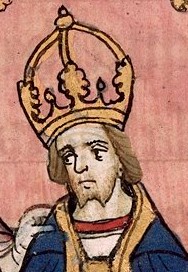
Monarch Profile: Emperor Henry VII

Emperor Henry VII of the Holy Roman Empire (First German Reich) is often overlooked amongst the famous German monarchs of the Dark to Middle Ages. The devoted Otto the Great, fierce Frederick Barbarossa or flamboyant Frederick II certainly receive more attention but Henry VII certainly had an impact in his time and inspired one of the most famous literary works of the period. Probably more known in Italy than Germany, he was able, inadvertently or not, to inspire people and represented something for many people that was far greater than he ever could have been himself. He was born in or around 1275 in Valenciennes in northern France, the son of Count Henry VI of Luxembourg. Although his native land was in France, it was also within the boundaries of the Holy Roman Empire which, while centered on Germany and consisting mostly of Germans (hence, “Holy Roman Empire of the German People”), it also included bits of other surrounding nations depending on the political situation. In his youth, the future Henry VII was well acquainted with how precarious that political situation was.

Voltaire famously quipped that, “…the Holy Roman Empire was in no way holy, nor Roman, nor an empire” and he was not entirely wrong. Holiness, well, that could come and go, and times it really tried and at other times it certainly fell short. It certainly was not truly “Roman” as the Pope ruled Rome and would become quite peevish if any German Emperors got ideas to take it from him. As for being an “empire”, however, that too was changeable. As a patchwork of minor states and cities, it was often not much of a player on the world stage but, under men like the aforementioned Otto or Frederick, it could rise to truly imperial status if the emperor was tough enough, smart enough and ambitious enough to make it so. In the time of young Henry of Luxembourg, this was not the case and the empire of the Germans was in rather bad shape. As Count of Luxembourg, Henry was constantly being harassed by neighboring German petty rulers and was forced to look beyond the imperial borders for help. He kept his people safe and, by all accounts, ruled his lands wisely but did have to avail himself of the protection of King Philip the Fair of France (perhaps known as Philip the Unfair if you were Jewish or a Knight Templar).

Things were going fine for Henry until King Albert I of Germany (a Hapsburg) was assassinated and a power-struggle ensued with King Philip the Fair of France hoping to carry out a French takeover of the Germans by having himself elected Emperor. He spent huge sums of money trying to bribe the German Prince-Electors but ultimately it was to no avail. Everyone feared that France would be too powerful if Philip were to be elected. However, King Philip could also be counted on to oppose any of the German candidates the electors would normally have turned to. As it happened though, the Count of Luxembourg was energetically putting his own candidacy forward, winning over many powerful people and making a pretty good case for himself. He was eligible, seemed to be a good ruler and while within the empire was also a vassal of the King of France so Philip would likely not object much to his election. The issue was decided and the Count of Luxembourg was elected King of the Romans in 1308 and crowned at Aachen the following year. Pope Clement V, in Avignon, confirmed his election and announced that he would crown him emperor at Candlemas in 1312. This would be important as it would lend prestige to his position, since some people did not take Luxembourg very seriously, and Henry VII knew that there were some Germans none too thrilled with his election and that the French king still coveted his position for himself.

Also, because of this situation, Emperor Henry VII felt he needed a powerbase. The French were a threat and the Germans were, he thought, not sufficiently reliable in their loyalty so he needed something to act as a counter-balance to these forces. That powerbase, he determined, was Italy. His first thought was to manage this by a dynastic alliance between his daughter and the son of the King of Naples. This, he hoped, would strengthen his own position by giving him influence in southern Italy and, since King Robert of Naples was the champion of the pro-papal, anti-imperial Guelph faction (opposed to the Ghibellines who supported the German Emperor) would also strengthen the imperial cause in general throughout Italy. Unfortunately for him, the King of France learned of this and supported the King of Naples in basically refusing the marriage alliance. With that effort having failed, Emperor Henry VII decided to invade Italy and secure his new powerbase by conquest.

One of the many people who were attracted to the idea behind this expedition was the famous Italian writer Dante Alighieri who had originally been part of the Guelph faction but who had been soured by this bitter divisions and feuding in Italy and seized on the ambition of Emperor Henry VII of Luxembourg to restore the power and unity of the Holy Roman Empire as being the solution to the problems he found with society. He wanted to see Italy strong and united and identified Henry VII as the monarch who could accomplish this. So it was that the Emperor inspired Dante to write his famous work ‘De Monarchia’ which called for a universal monarchy with the Pope and the Emperor limiting themselves to their own field, spiritual and secular, and both receiving their authority from God. This, of course, did not go over well with the Pope but given the idealism of Emperor Henry VII, it is easy to see how he could have inspired such high hopes in people. Unfortunately for the Emperor, his idealism revealed a certain naiveté about how deep and bitter were the divisions in Italy between the Guelph and Ghibelline camps. He met with both sides, showed no favoritism and hoped to win over all to cause by his magnanimity. He called on the Italian states to basically put the past behind them, welcome everyone home (because, as happened to Dante, when one side took a city the members of the opposing faction were usually exiled) and to reconcile. Not everyone was prepared to do this.

When faced with such resistance, Henry VII resorted to force and he came with 5,000 knights and men-at-arms to back him up. He reached Turin in November of 1310 and later proceeded to Milan where he was crowned King of Italy with the sacred Iron Crown of Lombardy in 1311. He continued his policy of reconciliation by recalling the deposed Visconti family but the Guelphs were preparing for war to stop him. It was, however, insufficient and Henry VII defeated the Guelphs and made Matteo Visconti his Imperial Vicar in Milan, appointing his brother-in-law, Count Amedeus V of Savoy, Vicar-General of Lombardy. All of this sparked widespread rebellion on the part of the Guelphs but Henry VII managed, by force of arms, to secure his control over most of northern Italy with some areas, such as Parma, Verona and Padua, accepting his rule more willingly. As he fought his way south, toward Rome, more popular opinion began to turn against him and Guelph cities united to oppose him. They did this militarily as well as with a medieval propaganda campaign that proved somewhat effective at ruining the reputation of the man so many had at first hailed as the harbinger of a new era of peace and prosperity. Meanwhile, in France, King Philip also put what pressure he could on Pope Clement to turn the Pontiff against the Emperor-elect and the Pope began to give signs that Henry of Luxembourg was falling out of favor with him.

After many hard-fought battles and long, arduous sieges of fortified Italian cities, Henry VII finally made his way to Genoa and more heartbreak. It was there that his wife, Margaret of Brabant, passed away and that he learned that King Robert of Naples, who he had first hoped to make an ally, was preparing to march against him and oppose his effort to dominate Italy. Several important cities, including Florence, pledged their support to the King of Naples against Henry VII. His Italian powerbase seemed to be turning into a quagmire as Florence instigated a rebellion against him in Lombardy and Robert of Naples moved into the Romagna at the end of 1311 and beginning of 1312. He gratefully accepted an offer of friendship from Venice, took some cities himself but there always seemed to be bad news for every bit of good news for the imperial cause.

The Emperor officially informed Florence that they were on his ‘naughty list’ and sailed to Pisa where he was warmly received and then began taking action to thwart the King of Naples by allying himself with his regional rival King Frederick III of Sicily (son of Pedro III of Aragon). He had just set out for Rome for his imperial coronation, something which would hopefully strengthen his position, only to be informed that Clement V did not plan to crown him in the Eternal City itself. Still, Henry and his German troops pressed on only to be confronted with more civil war in Rome between the Colonna family that supported his cause and the Orsini family that rose up on behalf of Robert of Naples. Henry, his German troops and their Italian allies fought their way into Rome but failed to take St Peter’s but Henry VII was going to have his coronation, Pope or no Pope. So, instead, he was crowned by two supportive cardinals in the Lateran Basilica. He then declared himself master of all Italy, whether the Guelphs or Robert of Naples liked it or not, and then fought his way back out of Rome and headed for Tuscany.

Once there he effectively declared war on Robert of Naples and Pope Clement V more openly declared himself the enemy of Emperor Henry. The Pope had his own arrangements with the local princes and city republics and popes traditionally opposed any German emperor gaining power over Italy. For Clement V, there was also the King of France who could make life very unpleasant for the Pontiff if he were to take the side of his enemy. Meanwhile, in September of 1312, Emperor Henry VII besieged the city of Florence whose forces were initially weaker than his own but which was receiving support from other city-states that also opposed the imperial forces. Ultimately, the forces under siege were far more numerous than the forces Henry had available to besiege them and the siege proved to be little more than an inconvenience. After about six weeks the Emperor gave up in frustration but that frustration was boiling over. The man who had entered Italy with a policy of peace and reconciliation, of treating both sides fairly and playing no favorites, had finally found his limit. In a fury he ordered all areas under his command to arrest all Guelphs or whatever enemies of his they could find and execute them all for treason.

This, needless to say, caused a stir and cost him the support of many of his Italian allies, fearful of the consequences of such actions. For his part, Henry VII received more German troops to reinforce his army at Pisa and in August of 1313 began his campaign to take on Robert of Naples once and for all. His first target was the city of Sienna but, unfortunately for the Emperor, his campaign would be ended not long after it began. No doubt weakened by his many battles, arduous journeys and infuriating political problems, Henry VII of Luxembourg contracted malaria and died on August 24, 1313 in Buonconvento at the age of only 39. His campaign had ended in failure and, to a large extent, the dream many shared that rested on his shoulders had died with him. Emperor Louis IV of Bavaria succeeded him and tried to finish what he had started but that expedition also ended in failure. Much of the goodwill he had at the beginning of his adventure had been lost before it was all over but at least some still thought well of him and continued to revere the ideal which he fought for, or at least, which he was able to embody for others. Such was the reason, we can safely assume, that in his later writings, Dante gave Emperor Henry VII an exalted place in Heaven.

Saturday, April 25, 2015

Should the Low Countries Have Fought World War II?

Should the Low Countries have fought World War II? Obviously, that is a somewhat silly question. They had no choice. They were attacked, invaded and occupied so it is only natural that they would resist and fight to liberate their lands and populations from foreign domination. However, one of the requirements of a “just war” according to the School of Salamanca (building on the works of St Thomas Aquinas) is that it is just to fight a war of self-defense as long as there is a reasonable possibility of success. Otherwise, to do so, would be a futile sacrifice of life that would be immoral. Not a few people would look at the vast disparity in the military capabilities of the Kingdoms of the Netherlands, Belgium and the Grand Duchy of Luxembourg compared to Nazi Germany and conclude that there was no reasonable chance of success, that any resistance would be futile and thus it was wrong to fight and the Dutch, Belgians and Luxembourgish should have simply submitted peacefully to German domination. After all, we can see with the benefit of hindsight how overwhelming the Nazi blitzkrieg was; Luxembourg was occupied in a day, the Netherlands surrendered in four days, Belgium in eighteen.

Dutch East Indies colonial troops
Yet, there is more to it than that. In the First World War, the Belgians resisted fiercely and, indeed, the Germans never managed to conquer quite all of Belgium. In World War II, even after their homelands were conquered, the Netherlands and Belgium carried on fighting. Dutch forces made a significant contribution to the war against Japan in the Dutch East Indies and colonial troops from the Belgian Congo participated in the Allied conquest of Italian East Africa. Even tiny Luxembourg was not left out of the eventual Allied counter-attack in Europe. None of these countries ever expected to be fighting alone. Regardless of what neutrality pacts they had in place, the only powers that any of these countries could reasonably expect to face hostilities from was France or Germany and in all probability they themselves would not be the target. None would certainly be isolated. If, for some reason, France invaded to get at Germany, they could count on German support whether guaranteed or in any way obligated or not. As did happen, when Germany invaded, they had the support of the French, and eventually the British, in the overall struggle that ensued.

Field Marshal Montgomery & Dutch Prince Bernhard
On their own, neither the Netherlands, Belgium or Luxembourg could hope to defeat the Germans. However, they did not need to be able to in order to have at least a reasonable chance of success (still not considerable, but at least “reasonable”). Going back to the First World War, the only reason to strike the Low Countries was because the low, flat terrain offered a faster route to France for the Germans than to attack directly across the heavily fortified French frontier. Of course, in that conflict, as it turned out, the Germans did extremely well against the French on the Franco-German border even when greatly outnumbered. However, this overall strategic situation meant that neither the Dutch nor the Belgians would have to defeat the Germans outright but rather simply be able to offer enough resistance so that any gain in time that was to be had by advancing through the Low Countries was eliminated or even simply severely mitigated for the Germans. This would make conquering these countries unfeasible even if still totally possible. It was possible for the Low Countries to at least defend themselves sufficiently so that an invading power, while being able to conquer them, would gain no advantage from doing so and thus would choose to avoid them or, if determined to attack, at least be held off long enough for assistance from stronger powers to arrive to assist.

Belgian Congolese colonial troops in Ethiopia
It is rather bewildering that this logic could be lost on those who would argue that any resources devoted to defense for the Low Countries are resources wasted. They have hardly been the only ones to adopt such a strategy. Canada, for example, previously had defense plans in the event that war broke out with the United States. These were made in the Twentieth Century when, obviously, in isolation, there is no doubt that the United States could easily roll over and crush Canada with little trouble. Yet, Canadian resistance would not have been futile as they could conceivably have held off American forces long enough for the British to bring in support from the U.K. and across the empire, along with what was, at that time, a Royal Navy that was stronger than that of the United States so that such resistance could have been offered that any attack on Canada would not have been worth the cost. Likewise, when the Japan Self-Defense forces were first organized, a “shield and sword” strategy was adopted as part of the alliance with the United States. Originally, this was aimed at the possibility of Russian aggression. Today, the overall strategy has not changed but with China as just as if not more likely adversary. The Japanese Self-Defense Force acts as the shield and the American military as the sword, offering sufficiently fierce resistance to delay a Russian or Chinese attack until the massive strength of the American armed forces can be brought to bear to destroy the invader. This is not significantly different from the strategy the Low Countries did or could have adopted prior to both World Wars.

Dutch troops on guard, 1939
The reasons for the swift defeat of the Low Countries must be understood on a case by case basis. Little Luxembourg actually did have a defense strategy seemingly based on that above, with a series of roadblocks and iron gates to slow an invading army until help could arrive, but it was not pursued fully and, when the attack came, the small military corps was confined to barracks. There was little to no resistance to speak of. For the Dutch, too much trust had been put in the notion that Germany would respect Dutch neutrality as they had in the first war. The Netherlands could have made itself a much tougher nut to crack if proper resources had been devoted to the military and if defense plans had been taken more seriously. Even as it was, even surrendering after four days of fighting, the Dutch had held out three days longer than the Germans expected. They could have held out much longer if the army and air forces had not been so neglected by the government and if defensive flooding had been enacted sooner. The hope of neutrality also prevented the establishment of sophisticated plans for allied cooperation and so no significant help could reach Holland in time. Likewise, in the Dutch East Indies, naval defenses could have been stronger and the colonial forces on land had a mentality based almost completely on providing internal security rather than repelling a foreign invader due to the fact that the Dutch never considered any other regional power an enemy that would wish to attack them.

Belgian troops at the start of war
The Belgians, of course, had the most recent experience at fighting a world war. King Leopold III himself had served in the trenches with the small but tenacious Belgian army in the brutal Flanders sector. Defense was taken much more seriously in Belgium, in fact the Belgians had, along with the French, invaded Germany in the Weimar era due to the Germans not being prompt with reparations payments. However, more was obviously still needed in making Belgium fully prepared for another war but it is easy to see why this was lacking. The country had been devastated in the First World War and naturally the priority was in recovering from that. There were also those that thought, or at least hoped, that such an invasion would never happen again, a sort of ‘lightening cannot strike the same place twice’ mentality. The events of the last war had also forced Belgium to abandon neutrality and the kingdom was firmly in the Allied camp. Yet, that was a camp that hardly presented a united front.

Belgian troops in retreat
Relations with Britain and France were very close and the Belgian and Italian monarchies had been linked by the royal marriage of Princess Marie Jose to Prince Umberto of Piedmont, heir to the throne of Italy. However, when Hitler began to seem a menace, the alliance seemed to come apart. Mussolini was angered at having stood alone against Hitler in the first Nazi attempt to grab Austria and later the French and British pushed Italy into the German camp by sanctioning Italy over the war in Ethiopia. There was further alarm when Britain came to a naval agreement with Nazi Germany so that it seemed France and Britain were isolating Italy and reconciling with Germany rather than the reverse. Belgium, not unreasonably, began to lose faith in the Allies to oppose Hitler and so decided, at the last minute, to try going back to the previous policy of neutrality. King Leopold III announced this policy change in 1936 and the following year Hitler pledged to respect Belgian neutrality in any future war -a promise he had no intention of keeping of course. When the war started, defenses were strengthened and Belgium was by far the most militarily powerful of the Low Countries (in fact, the Belgian army was four times larger than the British army sent to France, which goes to show how woefully unprepared the British were if nothing else).

Belgian troops in the field
However, it was too little, too late. Belgium held out longer than the Netherlands and even the Germans remarked about how well the Belgians fought but the neutrality policy had left them quite ill-equipped for serious conflict. There was also poor coordination with the other Allies when the attack on Belgium came so that, in a reverse of the strategy outlined above, it was the Belgians who were basically sacrificed to buy time for the British to retreat from the continent amidst a rapidly crumbling French war effort. The Belgians did not trust the French (partly because of the Franco-Soviet pact that existed prior to Stalin cozying up to Hitler), the Maginot Line was not extended across Belgium because of Dutch-Belgian neutrality and the British, in whom the Belgians placed most of their hopes, had subordinated their own forces to the French whose plans proved to be almost totally ineffective against the ultimate German onslaught. Because of the policy of neutrality, there were no meetings between the French, British and Belgian military leaders prior to the war to make detailed plans for cooperation and, as a result, their forces were poorly coordinated. In the end, Belgium held out for 18 days before the King, seeing the French coming apart and the British about to abandon the continent, decided to save the lives of his remaining soldiers and surrender. He felt the war was over, the Allies defeated and, given the situation at the time, such a view is totally understandable.

Queen Wilhelmina with U.S. President Roosevelt
Obviously, there were numerous reasons for the lack of readiness that led to the Low Countries being so swiftly defeated in the German blitzkrieg to the west. There is also the rather significant fact that the German armed forces comprised a fantastic fighting machine. Putting aside the regime that was giving them orders, the military itself performed with great ability and would have been an extremely formidable opponent for even the most militarily robust nations on earth. They more than once were able to handily defeat the Russians and Americans as well as the French and British so that is clearly a very large part of this equation. However, the Low Countries were not wrong to resist the German invaders to the utmost. The only possible exception is Luxembourg and tiny Luxembourg really didn’t try to resist, knowing that it would be futile. The same was true for Denmark. The Danes, had they better prepared themselves, could have made more of a fight but, as it was, they were pretty much powerless to resist and so they didn’t. For the Dutch and Belgians, however, they were at least capable of making the Germans work hard for their victory and had different decisions been made, would have been able to have done better still. It doesn’t mean that they could have stopped the Germans cold but given what weaknesses they did have and what strengths (though squandered) the Allies had, they could have mounted a defense of their countries that would have, at the very least, had at least some chance of success.

Sunday, April 19, 2015

The Monarchy of Luxembourg in World War II

The memory of World War I hung heavily over the grand ducal family of Luxembourg in the build-up to World War II. Grand Duchess Marie Adelaide had, quite unjustly, been criticized heavily for her conduct during the occupation of Luxembourg by the forces of the German Empire and in the aftermath had been forced to abdicate in favor of her younger sister who became the Grand Duchess Charlotte in 1919. There had been a real possibility of Luxembourg abolishing the monarchy and becoming a republic or even being annexed to Belgium or France. The French had encouraged the view that the monarchy had collaborated with the Germans and it cost the pious and lovely Marie Adelaide her throne. The monarchy was maintained but Grand Duchess Charlotte had to take steps to sever all ties with the hated Germans, selling off all family property in Germany to the state of Prussia in 1935. Care was also taken that, if the Germans ever invaded again, the Grand Duchess would not remain in the country but would go into exile and place all hopes for the future in the success of the Allied armies.

Grand Duchess Charlotte
When war began over the German invasion of Poland, a repeat of the events of the summer of 1914 seemed possible and in 1940 Luxembourg attempted to fortify itself. This was the creation of the “Schuster Line” which was not actually a fortified line but rather a series of concrete barricades set up on the main roads in and out of the tiny country with heavy steel gates that could be shut in the event of an attack. The idea was to slow any invader and give time for other countries, such as the French, to arrive to actually defend Luxembourg in fulfillment of the obligations of the treaty guaranteeing Luxembourg neutrality. However, because of that same treaty, Luxembourg was obliged to build such barriers along the French as well as German borders so as to remain strictly neutral. In truth, the “Schuster Line” was hardly a formidable obstacle and really served mostly as a sugar pill to give the public the impression that their country could be defended. Actually, there was no way these roadblocks would slow a German advance in any meaningful way and little hope that the French could arrive in time to actually stop an invasion.

That invasion came on May 10, 1940 and the small Luxembourg Volunteer Corps (essentially what amounted to one battalion of militia) was ordered to stay in its barracks. The Germans moved in and occupied the country in a day with little to no resistance. In fact, most of the opposition they faced came from Luxembourg policemen, six of whom were wounded compared to only one Luxembourgish soldier. No one was killed. Elements of the French army did make contact with the Germans in Luxembourg but was little more than an armed reconnaissance and quickly fell back behind the Maginot Line on the French border. Grand Duchess Charlotte and the rest of the Royal Family had already left the country. When the first German units had violated Luxembourgish territory the day before, the Grand Duchess had summoned her ministers and all agreed to place the fate of their country totally in the hands of France. This had to be done as, since the changes following World War I, the Grand Duchess had less power than her predecessors. Remembering what had happened to her sister, there was no thought to staying in the country.

Grand Duchess Charlotte
Of course, France itself crumbled rapidly in the face of the German blitzkrieg. After six weeks of confused fighting the French were defeated and the British had abandoned the continent. Grand Duchess Charlotte was advised, toward the end, by the French government that they could not vouch for her safety and so she, her family and her ministers all fled through Spain to Portugal and from there took ship to England where they established a government-in-exile. For their part, the Germans seemed unsure as to whether this was a good thing or a bad thing. Once the Nazi grip on France and the Low Countries was secure, the Germans sent a message to Grand Duchess Charlotte offering to restore her to the throne in Luxembourg though of course German military necessity would mean that the country would remain occupied and subject to Germany for the duration of the war. Needless to say, Grand Duchess Charlotte was not about to accept such an offer and quickly refused and used the BBC to broadcast to the people of Luxembourg to encourage them to persevere until the day of liberation. In response, Luxembourg was the one Low Country that the Germans took a firm position on, erasing the Grand Duchy from the map by annexing it directly to the “German Reich”.

This action made it clear that the life or death of Luxembourg and the Luxembourgish monarchy would depend entirely on the success or failure of the Allied war effort. To her credit, Grand Duchess Charlotte did everything in her power to support that effort. Her husband, Prince Felix of Bourbon-Parma, was a veteran of the Austrian army in World War I and had served as Inspector-General of the Luxembourg Volunteer Corps. However, after being forced into exile he took charge of their children (six in all) and took them to the safety of the United States where they settled on Long Island in New York. The estate they lived on belonged to a family friend who had previously been the American ambassador to Belgium and Luxembourg. Grand Duchess Charlotte rejoined her family in Montreal, Canada (where the children were sent to school) but never had much time for her private life due to the war. She traveled across the United States to encourage the American public to support the Allied war effort and to donate to help the Allies. President Roosevelt fully supported this as he wanted to get involved in the war but did not want to oppose the isolationist majority of the American people who, after a bad experience in World War I, wanted to stay out of “Europe’s wars”.

Prince Jean
The Grand Duchess met with President Roosevelt several times and was one of a number of exiled European royals that FDR hosted and cooperated with to try to influence the American people toward joining the Allies (eventually, Japan solved this problem for him). Grand Duchess Charlotte also had to frequently return to London and her government-in-exile in spite of the fact that German planes and submarines made any crossing of the Atlantic very risky. When the United States did finally join the war in December of 1941 hopes for the liberation of Luxembourg and restoration of the monarchy were revived. At that moment, it seemed that victory was no longer a question of “if” but rather “when”. Grand Duchess Charlotte continued her broadcasts to her people, becoming a symbol for the underground resistance and Luxembourg contributed as much as it could to the Allied war effort. In 1942 Prince Jean (future Grand Duke) volunteered for the British army and served in the Irish Guards, eventually rising to the rank of captain in 1944.

When the moment for the Allied invasion of France came, though necessarily small, the occupied Grand Duchy of Luxembourg was still represented. About seventy Luxembourgish volunteers were attached to the Artillery Group of the First Belgian Infantry Brigade, eventually under their own officers trained in Britain. Each of their guns were named after the children of the Royal Family. This Luxembourgish battery of artillery was transferred to France in August of 1944, serving in the wider Battle of Normandy. Prince Jean had already come ashore on D-Day and served in the Battle of Caen, later participating in the liberation of Brussels. As the Allies moved in the resistance in Luxembourg rose up and began to engage the Germans such as at the Battle of Vianden Castle where 30 resistance fighters, armed by the United States, successfully held off an attack by 250 soldiers of the Waffen-SS. On September 10, 1944 Allied forces, including Prince Jean, liberated Luxembourg City. Damian Kratzenberg, leader of the pro-Nazi collaborators was arrested and, after the war, executed. However, the Germans returned and re-took much of the country in the Ardennes Offensive (aka The Battle of the Bulge”) which took a heavy toll on the local population. In the end, the Allies fought their way back and expelled the Germans from Luxembourg soil for good.

The Grand Duchess is welcomed home
The Grand Duchy was restored to independence and, in the moment of the greatest public celebration, the monarchy was restored as well with the triumphant return of Grand Duchess Charlotte. All in all, the monarchy of Luxembourg emerged probably better off than those of Belgium or The Netherlands. Britain, America and Russia nixed plans to annex parts of Germany to Luxembourg but the monarchy had never been more popular and the status of the tiny country rose to new heights. The military was strengthened, Luxembourg became a member of NATO, participating in operations around the world, ties with foreign countries were established or strengthened and Luxembourgish forces were even given occupation duties in the French zone of West Germany. Before the war, few outside of Europe and even heard of Luxembourg but afterwards the little Grand Duchy would become much more well known with defense, economic and diplomatic ties to countries all over the world.

Luxembourg and its monarchy had suffered greatly. Some 500 people were killed in the Battle of the Bulge alone, tens of thousands were made homeless and the 3,500 Jews in the country were wiped out. About 5,700 people of Luxembourg died in the war, about 2% of the population and not a few had been forcibly conscripted into the German military after the Nazis annexed the country. The Grand Duchess’ sister, Crown Princess Antonia of Bavaria, was arrested by the Nazis in Hungary and sent to a concentration camp where she was tortured but, thankfully, she survived the ordeal but her health was never the same and she died nine years later in Switzerland, having vowed never to set foot in Germany again. It was a long, painful ordeal but Luxembourg had emerged stronger than before, more united around the monarchy and a more confident member of the community of nations. Today, the Luxembourgish monarchy is one of the most secure and popular in the world.

Friday, June 27, 2014

Monarch Profile: Grand Duchess Marie-Adelaide of Luxembourg

One of the most dramatic and moving true stories to come out of World War I is a story that is not very well known. Amongst the monarchs of the Great War most people know about the tragic downfall of the Czar of Russia and his family, the heroic resistance of the King of the Belgians and the villainous portrayal of the German Kaiser. Many more than in the past also now know about the Austrian Emperor who tried to make peace. Yet, how many know the story of the first female monarch of Luxembourg who lost her throne and almost brought down the monarchy with her as a result of the First World War? It is a rather surprising story from start to finish and perhaps nothing is more surprising than the fact that more people do not know about it. True enough, the Grand Duchy of Luxembourg is one of those very small European countries that attracts little attention. However, it has had a pivotal place in European history for centuries with many declaring that the possession of the fortress of Luxembourg determined who ruled the continent and the effort of France to annex Luxembourg in 1867 almost brought about the Franco-Prussian War three years early. It has long been vital and, in the wake of World War I and the reign of Grand Duchess Marie-Adelaide, it came close to disappearing from the map or at the very least becoming something totally alien to the Luxembourg of today.

Her Grand Ducal Highness Marie Adelaide Therese Hilda Wilhelmine was born on June 14, 1894 in Berg Castle in central Luxembourg to Grand Duke Guillaume IV and his Grand Duchess Marie Anne of Portugal. She was the eldest of six children, all of them girls, which was somewhat problematic for a country under Salic law. In fact, the House of Nassau had taken the throne of Luxembourg from the Dutch House of Orange, detaching it from the United Kingdom of the Netherlands, not very long before specifically because the Salic law in Luxembourg would not permit the Grand Duchy to be ruled by a woman; Queen Wilhelmina of the Netherlands. Initially, there was no resume to suppose that a son would not be born eventually, however, after the birth of her fifth little sister in 1902 it became clear that something would have to be done. Either the law would have to be changed or there would be a succession crisis that could, possibly, have disrupted the peace of Europe. The last thing anyone wanted was to see France and Germany start fighting over Luxembourg. So, the law was changed and on July 10, 1907 the 13-year-old Princess Marie-Adelaide was declared heir presumptive to the Grand Ducal throne.

All too soon, the Princess was face to face with destiny. On February 25, 1912 her father died and at the age of 17 Marie-Adelaide became the first reigning Grand Duchess of Luxembourg and the first Luxembourgish monarch born on native soil since Count John the Blind in 1296. The seemingly fragile girl, with her delicate beauty, was naturally charming and it helped that, for the moment, she had her mother to help her along as regent until the Grand Duchess turned 18 the following year. Her mother, a Portuguese Infanta born in Germany due to the ousting of her father King Manuel I, was only too familiar with what was necessary in a monarch. She was also responsible for the deeply held Catholic faith of the young Grand Duchess. The minority of the new monarch was soon over and on her birthday in 1912 the Luxembourgish Prime Minister, Auguste Laval, administered her oath of office amidst a respectful and happy atmosphere.

Grand Duchess Marie-Adelaide, from the beginning, even at so young and age, made it clear at her inauguration that she would be an active monarch and also showed how much the values of her family and her religion she held to. Her first speech contained many sentiments that people even today will find familiar. She said, “It is my desire to judge according to the requirements of justice and equity which will inspire all of my acts. The law and general interest will only guide me. Is judging fairly not just equal justice for all, but a protective justice for the poor and weak. The growing economic inequality between men is the greatest worry of our age. Social peace, no matter how ardently desired, remains to this day an elusive ideal. Is it not necessary to work on reconciliation and solidarity?” Alas, before her reign was over, it would seem that many of her subjects had forgotten those compassionate and heartfelt words from their Grand Duchess. And, just to further show how seriously she took her faith and her authority as monarch, she refused assent to a bill on her first day “on the job” that would have minimized the role of the clergy in education. She would be an active monarch, a devoutly Catholic monarch and, it should perhaps be most emphasized, a patriotic monarch.

Her words were timely as there were grumblings of social discontent in the little country that only a few years before had been described as rather delightfully dull. A London periodical on world affairs described the events of 1910 in Luxembourg as, “Nothing worth registering happened in this happiest of all countries”. Very soon, however, the hushed rumblings of grievances were drowned out by the growing tensions between France and Germany as well as, increasingly, most of the Great Powers of Europe. Then came the earth shattering events of 1914. In Sarajevo the Austrian Archduke Ferdinand was assassinated, a threatened war between Serbia and Austria-Hungary entangled Germany, Russia and France. The German plan for fighting a two front war called for an invasion of the Low Countries to take the French Republic in a strategic flank. This move was modified so as to avoid invading the Netherlands but Belgium and Luxembourg would not be so fortunate. The neutrality of Belgium and Luxembourg became a “scrap of paper” and it was no great secret that the Germans intended to violate it. The German government itself stated that they had broken no law for, “necessity knows no law”.

On August 2, 1914 the grey-green columns of the Imperial German Army began to march toward the borders of Luxembourg. Today, many people know of the calm and courageous leadership of King Albert I who took command of the Belgian army to wage a hopeless defense of his country against the Teutonic juggernaut. The monarch of Luxembourg, on the other hand, had far less than even the Belgians could muster in their small but determined army. Nonetheless, Grand Duchess Marie-Adelaide decided to meet the foe herself. In a dramatic move, she raced to the Luxembourg frontier and parked her car crossway in the middle of the road to block the way of the German forces. She also sent an urgent radio message to German Kaiser Wilhelm II, warning him that he would, “sacrifice the honor of Germany” if his forces violated the neutrality and sovereignty of Luxembourg. To make sure it was known that Luxembourg was not a willing accomplice of this violation she also sent a copy of the message to King George V in London. None of it, of course, could stop the German advance and Luxembourg was occupied on the first day and would remain under German control for the duration of the war.

In fact, Luxembourg became the command center of the Central Powers war effort as not long after Kaiser Wilhelm II established his headquarters in the Grand Duchy. It was an unfortunate situation but it had happened and there was nothing the Grand Duchess could do about it. Luxembourg was at the mercy of the Germans, so the Grand Duchess endeavored to make the best of a bad situation. She received the German Kaiser with all due courtesy and ensured that little to no animosity was displayed between them. Later on, the Grand Duchess would be viciously attacked because of this, but of course to have done otherwise would have only made a bad situation worse. There was also a very real danger of Luxembourg losing its independence entirely as most German planners envisioned the Grand Duchy being annexed to the German Empire in the event of a Central Powers victory. With her charm and consideration, it is also often forgotten, the Grand Duchess also prevailed upon the German Kaiser to commute the death sentences of a number of French, Belgian and Luxembourgish nationals who had been accused of anti-German activity. Many people owed Marie-Adelaide their lives.

Nonetheless, elements in the government became increasingly upset with her for a number of reasons, the war often simply providing a popular excuse to oppose the Grand Duchess for other reasons. Leftist parties, for example, had long been disgruntled by her active involvement in the governing of Luxembourg, some even going so far as to accuse her of having launched a royal coup. The fact that she championed many causes which they claimed to support made no difference to them. Using the war as an excuse became easier the longer it dragged on as Luxembourg undeniably suffered a great deal, not simply from the occupation but from the devastating impact of the Allied blockade as well (probably most of all but, of course, it wouldn’t do to complain about that when the war was over and the Allies stood victorious). One incident enemies of the monarchy seized on was a visit by the Grand Duchess to King Ludwig III of Bavaria in June of 1917. This, combined with what they termed to be royal “interference” in politics was the professed justification for the leader of the coalition government of Luxembourg to resign. What no one seemed to care about was the personal and perfectly innocent reasons the Grand Duchess had for visiting the Bavarian Royal Family.

The fact was that there was a burgeoning romance between the younger sister of the Grand Duchess, Princess Antonia of Luxembourg, and the widowed heir to the Bavarian throne Crown Prince Rupprecht, who happened to be commander of an army group on the western front and a field marshal. In fact, the two became engaged in 1918 and Princess Antonia of Luxembourg became the last Crown Princess of Bavaria. The fact that “the heart has its reasons”, that a marriage between two Catholic royal houses like Bavaria and Luxembourg was perfectly natural and that the Bavarian Crown Prince was a fine man and a humane, upstanding officer was shrugged off. It was all portrayed in the most negative way possible and the worst of the blame was heaped on the monarch Grand Duchess Marie-Adelaide who was practically made out to be a traitor, giving aid and comfort to the enemy when in fact, all she had actually done was to be courteous and civil and actually saved a number of lives in the process and probably made life easier for her subjects. It can be easily imagined that the occupation could have been made much more painful if the Grand Duchess had been openly antagonistic toward the Germans. It might also be mentioned that no one knew how it would turn out and if the Central Powers had been victorious the very existence of Luxembourg as a sovereign state might have depended on the good graces of men like the German Kaiser or the support of the King of Bavaria.

Again, much of this was likely phony outrage by people who were enemies of the Grand Duchess for political reasons. As it turned out, Luxembourg seemed to be almost in as much peril as a result of the Allied victory. The French Foreign Minister accused her of having compromised herself with the enemies of France and there was some talk of France annexing Luxembourg. Others also gave serious consideration to the idea of handing Luxembourg over to the Kingdom of Belgium. The simmering situation boiled over as soon as peace came to Europe and the Grand Duchess seemed beset by enemies. She was cruelly and most unjustly vilified as being some sort of a collaborator when, of course, no one had been more opposed to the German invasion and occupation than she had been. Still, the enemies of the monarchy did their work well and soon there was a growing republican movement in the country which only a few years before would have been positively unthinkable. A growing number of the people also voiced support for some sort of closer association with France or Belgium. In fact, in 1922 Luxembourg did enter into an economic union with Belgium. The French government encouraged such disorder by refusing to have anything to do with Luxembourg, calling the government of the Grand Duchess “gravely compromised”.

It was an astonishing position to be in. Grand Duchess Marie-Adelaide had been the first and most forceful to act when Luxembourg was faced with an invader. That she did not stop them on her own, with her one automobile, is hardly something to condemn her for; Luxembourg was simply not capable of resisting. Since resistance would have been futile and would have certainly brought about only greater suffering, the Grand Duchess adapted to the situation and did the best she could for her people and her country. She had also broken no laws and despite the complaints of her “meddling” in politics, she had never once violated the constitution or overstepped her authority in any way. However, republicans are nothing if not irrational and they raised an increasing fervor against their monarch until at one point the French Republic seized on the disorder to send in troops to occupy the country yet again. On January 9 the situation deteriorated to the extent that socialist leaders openly declared a republic. The dynasty was hanging by a thread. With great sadness, the pious and kind-hearted Grand Duchess finally felt she had no choice but to step aside in the hope of preserving the monarchy and so, on January 14, 1919, she abdicated in favor of her sister Charlotte.

Ultimately, there was a vote on whether Luxembourg should become a republic in September of 1919 and by an 80% margin the public chose to keep their monarchy and the new Grand Duchess Charlotte. That the electoral victory was so large is a clue as to just how trumped up all the vitriol against Marie-Adelaide and the monarchy had been in the first place. After her abdication, Grand Duchess Marie-Adelaide went to Italy and entered a convent, being known as Sister Marie of the Poor. However, despite being only 24 years-old at the time of her abdication, her health was rapidly failing and she was eventually forced to leave the convent so as not to be a burden on the other sisters. She went to live in Bavaria with her sister, by then Crown Princess Antonia of Bavaria (though the Bavarian monarchy had been abolished of course) and it was there that she died of influenza in 1924 before she had even reached the age of 30.

Happily, the monarchy in Luxembourg has endured with Grand Duchess Charlotte seeing it through another World War and another period of German occupation, though she went into a temporary exile in London, and today the monarchy in Luxembourg is secure and quite popular. Nonetheless, what happened to Grand Duchess Marie-Adelaide was a gross injustice. It was, at least, not as tragic as the fate suffered by the Romanovs, but it was a despicable outrage nonetheless. Never had the monarchy of Luxembourg come so close to falling and it was all based on monstrous falsehoods and malicious insinuations. Grand Duchess Marie-Adelaide deserves to be better known and indeed honored as a caring, devoted and engaged monarch, a kind and sincerely Christian young woman -for such she was and as such she should be remembered.

Saturday, October 20, 2012

Royal News Roundup

The first of the two biggest royal news stories this week came from the Far East where HM the “King-Father” Norodom Sihanouk of Cambodia died in a hospital in Peking after years of deteriorating health. The King presided over Cambodian independence from France before trying to remain neutral in the war engulfing Vietnam. Overthrown in a US-backed coup by one his generals (while out of the country) the King was kept under house arrest for the most part during Pol Pot’s reign of terror. In the aftermath of the Vietnamese invasion that expelled the dictator the King was restored in a UN-backed referendum. He was the only Southeast Asian royal to regain his throne once it was lost and the last surviving leader from the decades of conflict that gripped Indochina. The body of the late King was escorted to the Royal Palace with all of the pomp and ceremony Cambodia could muster and will remain there for the next three months before his burial ceremony. King Bhumibol Adulyadej the Great of neighboring Thailand, himself in increasingly poor health, sent his condolences to the Cambodian people on this sad occasion. Virtually no one in Cambodia has known a world without King Sihanouk in it.

Happier news prevailed in India with a low-key royal wedding by a couple better known for their celebrity status than royal origins. On Tuesday HH Prince Saif Ali Khan of Pataudi married his girlfriend of five years Kareena Kapoor in Bombay. It is the second marriage for Prince Khan who inherited the title of Nawab of Pataudi upon the death of his father (a famous cricket champion) last year. Kapoor may not be from a princely family but she is from ‘Bollywood royalty’ with a family that has long been famous in the film and entertainment industry.

Finally, in Europe, the biggest royal story of the week was also the best kind; a happy royal romance with the wedding of HRH Hereditary Grand Duke Guillaume of Luxembourg and Countess Stephanie de Lannoy. It was a fairly casual and low key affair, starting at the Grand Ducal Palace and then, in a small but smart procession the dashing duke and his cute countess moved on to the Grande Threatre de la Ville de Luxembourg for their civil wedding ceremony. Among the royal guests besides the immediate Grand Ducal family of Luxembourg were Her Majesty Queen Fabiola of Belgium, still serene and stately even in a wheelchair, along with other royals from Belgium, The Netherlands, Norway, Sweden, Liechtenstein, Denmark, Romania. Britain was represented by Prince Edward and Countess Sophie and there were royals from beyond European shores from Morocco, Jordan, Japan and elsewhere further afield. With the wedding made official, the Hereditary Grand Duke became the last European royal heir to marry and the Countess became Hereditary Grand Duchess Stephanie of Luxembourg, becoming a citizen of Luxembourg as well as her native Belgium. We join all those loyal subjects of the Grand Duke and all the other fans of the House of Luxembourg in sending congratulations to the happy couple and wishing them all the best in their life together. The religious ceremony is being held this morning and there will be many more celebrations, fireworks and all the best that Luxembourg can boast on this most happy occasion.

Thursday, April 26, 2012

Sorry Girls, He's Off the Market

It was announced officially today that HRH Hereditary Grand Duke Guillaume of Luxembourg is engaged to 27-year old Countess Stephanie de Lannoy. The countess is a granddaughter of Princess Beatrice of Ligne and comes from one of the most old and esteemed noble families of Belgium. The couple have been dating for about a year or two and have known each other for about the last five years. So, now we have another royal wedding to look forward to. Our congratulations goes out to the happy couple and our condolences to all the young ladies around the world whose hearts are breaking today. The countess is fluent in French, Dutch, German and Russian, having studied Russian literature in Moscow. She is a classic movie fan and loves the violin and piano. The couple seem very happy together and, for a change, we will actually be seeing a marriage between two people that would not have been out of place in the days when noble and royal rank were considered important. Good for them!

Tuesday, February 14, 2012

Favorite Royal Images: Seeds of Greatness

Princess Josephine-Charlotte, future Grand Duchess of Luxembourg and little brother Prince Baudouin, the future (and my favorite) King of the Belgians. Ain't they cute?

Tuesday, June 21, 2011

Favorite Royal Images: Little Luxembourger

HRH Princess Sophie of Luxembourg, daughter of Grand Duke William IV, she later married Prince Ernst Heinrich of Saxony.

Wednesday, November 17, 2010

Favorite Royal Images: Brother and Sister

The future King Baudouin of the Belgians and his sister the future Grand Duchess Josephine Charlotte of Luxembourg

Tuesday, June 1, 2010

MM Video: Alexandra of Luxembourg


HRH Princess Alexandra of Luxembourg, Nassau and Bourbon-Parma was born February 16, 1991 and is the fourth child and only daughter of HRH Grand Duke Henri and HRH Grand Duchess Maria Theresa of Luxembourg.

Friday, April 16, 2010

Multiple Birthday Wishes

April 16 seems to be an eventful day for birthdays amongst the royal families and crowned heads of Europe. It was on this day in 1927 that His Holiness Pope Benedict XVI was born and it was on this day in 1940 that Her Majesty Queen Margrethe II of Denmark was born. In 1955 on this day His Royal Highness Grand Duke Henri of Luxembourg was born, the same day as his young son Prince Sebastian in 1992 (18 already, it's hard to believe). Finally, it was on this day just a short time ago in 2008 that Her Royal Highness Princess Eleonore of Belgium was born. The Mad Monarchist wishes His Holiness, Her Majesty and Their Royal Highnesses all a very happy birthday with many more to come.

Friday, April 2, 2010

Consort Profile: Infanta Maria Ana of Portugal


HRH Infanta Maria Ana of Portugal was born on July 13, 1861 at Schloss Bronnbach, the fifth daughter of HM King Miguel I of Portugal (who had previously been deposed) and Adelaide of Lowenstein-Wertheim-Rosenberg. Despite living in exile, mostly in Germany, the former Portuguese monarch saw to it that his daughters were raised as princesses, given the best that he was able to provide for them and did his utmost to see them married well.

Infanta Maria Ana was married to Hereditary Prince Guillaume of Luxembourg, son and heir of HRH Grand Duke Adolphe of Luxembourg, on June 21, 1893 at Schloss Fischhorn, Zell am See. Some eyebrows were raised at the prospect of a mixed marriage between the Protestant Guillaume and Catholic Maria Ana, however, as Luxembourg was a Catholic country Prince Guillaume had already decided that when he became Grand Duke his children would be raised Catholic so that the people and their royals could be of the same faith. After the marriage the Infanta adopted the French version of her name Marie Anne.

On November 17, 1905, with the passing of his father, the young prince became Grand Duke Guillaume IV of Luxembourg with Marie Anne as his consort. From 1894 to 1902 the couple had six daughters; Marie-Adelaide (who never married), Charlotte who married her cousin Prince Felix of Bourbon-Parma, Hilda Sophie who married Prince Adolph zu Schwarzenberg, Antoinette who married Crown Prince Rupprecht of Bavaria, Elizabeth Marie who married Prince Ludwig Philip of Thurn und Taxis and Sophie Caroline who married Prince Ernst Heinrich of Saxony.

Because of the decision of Grand Duke Guillaume IV to unite the people and monarchy in religion Grand Duchess Marie Anne oversaw the Catholic upbringing of her children and as the Grand Duke was the last male heir of the House of Nassau he enacted a change in the succession to allow for his daughters to succeed him and on July 10, 1907 made Hereditary Grand Duchess Marie Adelaide his successor. She was later succeeded by her sister who became the Grand Duchess Charlotte. Not long after the Grand Duke fell ill and Grand Duchess Marie Anne stepped in to serve as regent of Luxembourg on his behalf until he finally passed away in 1912. She also served as regent for about 3 months more on behalf of her daughter until she came of age.

During World War II the Grand Ducal Family of Luxembourg was forced to go into exile with the invasion of Nazi Germany. It was in New York City, New York that the Dowager Grand Duchess Marie Anne died on July 31, 1942.

Friday, March 19, 2010

Globe Trotting Royals

HRH Hereditary Grand Duke Guillaume of Luxembourg (above) will be visiting the U.S. cities of Los Angeles, Phoenix, Seattle and San Francisco as part of a delegation to meet with the heads of companies with a history of doing business with Luxembourg and to encourage more businesses to move or open new branches there (many businesses are fleeing California in particular these days) and likewise to meet with those companies interested in the opportunities Luxembourg offers.

HRH the Prince of Wales and the Duchess of Cornwall have been on a tour of Eastern Europe and have just finished their visit to Poland where the Duchess had to take a break from the activities of the day due to back pain. The royal couple will next be visiting Hungary. The Prince of Wales hopes to strengthen ties with the eastern countries that have recently been coming into the European Union. Just after his arrival in Poland the Prince of Wales visited the grave of Father Jerzy Popieluszko, a priest murdered by the communists who the Vatican is set to beatify next year this summer. The couple have also met with the Polish President and First Lady and visited a group of Muslim Tatars on the Belarussian border.

Last week HM King Norodom Sihamoni of Cambodia visited France to accept his place in the French Academy of Inscriptions and Belles-lettres. The King formerly lived in France and in his acceptance speech talked about the veneration of the Khmer people for their ancient temples and of the great work done by his father, Senior King Norodom Sihanouk. Cambodia became a French protectorate in 1863 and became independent in 1953 under King Sihanouk.

Tuesday, January 26, 2010

Cost Report on European Monarchies

Radio Netherlands Worldwide reports that the United Kingdom and the Netherlands have the costliest monarchies while Luxembourg has the cheapest based on a report out of Belgium. This story comes via Lëtzebuerg who thinks the Luxembourg monarchy is also the best value for the money. Forgive the slight digs at other monarchies; Luxembourgers have every right to be proud of their Grand Ducal Family. These reports can be annoying (see the rant below) but are also useful at pointing out to republicans who see every monarchy as on the same level as Louis XIV at Versailles. I would also point out that the little Principality of Liechtenstein is often left out (Monaco often is as well, but still commands more attention for, say what you will about the Grimaldis -they are certainly not boring). The Prince of Liechtenstein actually receives no money from his subjects and annually gives money from his own fortune to support the running of the Liechtensteiner government. They also keep a low profile and have remained scandal-free. It is clear that even those countries that spend more on their royals like the British and Dutch still spend far less than most republics and Luxembourg has certainly has much to be proud of with a monarchy that is cost-effective, good at their job, widely loved at home and respected abroad.

Wednesday, November 11, 2009

Happy Birthday Guillaume!

H.R.H. Hereditary Grand Duke Guillaume of Luxembourg (possibly the most high-born Giants fan) celebrates his 28th birthday today. Guillaume is the eldest child of Grand Duke Henri of Luxembourg and Grand Duchess Maria Teresa. The Mad Monarchist joins all his future subjects in Luxembourg in wishing the Hereditary Grand Duke a very happy birthday with many more to come!

Thursday, October 15, 2009

The Latest from Luxembourg

The Grand Ducal Family of Luxembourg has passed a few milestones lately. October 7th marked the ninth anniversary of Grand Duke Henri's accession to the Luxembourg throne. They marked the occasion with the release of a new set of family photos, group and individual, in formal and informal attire, showing off again that the Grand Ducal Family are obvious winners in the genetic lottery. The photos can be see on the Luxembourg monarchy's website here. These were the first family photos to include Princess Tessy, the wife of Prince Louis, and the couple’s two sons, Gabriel and Noah. On October 9th TRH Prince Guillaume and Princess Sibilla of Luxembourg were in Monaco for the European Organization for the Research and Treatment of Cancer gala hosted by HSH Prince Albert II (covered on Mad for Monaco). Yesterday, HRH Grand Duke Henri of Luxembourg along with his son and heir Hereditary Grand Duke Guillaume hosted a reception at the Grand Ducal Palace following the ceremonious opening of the Chamber of Deputies for Luxembourg's new political term. Ordinarily Grand Duchess María Teresa would have attended but is still taking it easy after having surgery early last month.
Related Posts Plugin for WordPress, Blogger...