In this day and age of republican dominance there is a great deal to annoy the average monarchist. ClichĂ©s, all of them negative toward monarchy, seem to have the gift of immortality. At the same time, the drawbacks of republicanism are often commented on and agreed to but never seem to shift public opinion. Every serious historian, for instance, knows that Queen Marie Antoinette never said, “Let them eat cake” and yet it continues to be endlessly repeated over and over again. Everyone with any knowledge of the world around them knows that, with the exception of the little principalities of Monaco and Liechtenstein, European monarchs have virtually no political power at all and yet the word “king” remains synonymous with someone wielding absolute power. A politician who oversteps the limits of his constitutional authority is always said to be behaving like a king or like royalty when, in fact, there are far more republican tyrants all around the world today than there are absolute monarchs, all of whom are confined to the Islamic world save for little Swaziland in Africa. It seems this is a double standard we will never be rid of. Yet, tiresome as it may be, falsehoods must be refuted with facts, as often as they arise, regardless of the circumstances. The world at large could really use a good education when it comes to the idea of monarchy.
Today, one of my biggest aggravations is the constant association of royalty with idleness, luxury and extravagance. Both sides of the political spectrum like to make use of accusations of “royal” behavior to condemn their opponents. In the past, the overreach of President George W. Bush in the United States, along with the fact that he is the first son of a President to become President himself since John Quincy Adams, led many Democrats to dub him “King George” -and they didn’t mean it as a compliment. Not to be outdone, when First Lady Michelle Obama took lavish vacations the Republicans compared her to Queen Marie Antoinette and when Obama holds lavish parties, goes golfing with celebrities or has his annual Christmas in Hawaii at taxpayer expense, his political enemies complain about Obama presiding over an “imperial presidency”. Do any of these people have any idea what they are talking about? No, of course they don’t. The odd misstatement here or there could be attributed to simply being unable to pass up a damaging analogy but at this point it really does begin to look like sheer ignorance. It is that ignorance combined with a gross misconception about monarchy that leads to this ridiculous analogies and that can be illustrated with a few examples and monarchists should point these out.
First, to be fair, we can certainly understand why the images of opulence exist in the popular imagination. One of the things most monarchists love about monarchy is the pomp and splendor that (traditionally anyway) goes along with the institution. Royals live in palaces, ride in gilded carriages attended by liveried footmen and wear magnificent jewels. It certainly looks pretty lavish, doesn’t it? Even the famously bicycling royals of The Netherlands don an ermine robe when it comes to swearing-in day. However, the fact remains that those magnificent jewels and robes are very old family heirlooms, bought and paid for many years ago (in some cases centuries ago) and their continued use costs the taxpayer nothing. In Great Britain, the Queen is known for being exceptionally frugal, using the same car until it practically falls apart. In fact, in a recent year, the travel expenses for the entire British Royal Family was considerably less than the travel expenses for President Obama and his small crew. The Queen would never dream of spending so much as the American president nor would any British government allow such a thing for ‘mere’ royals. Yet, when the average republican thinks of royalty, they think of big expenses for taxpayers. They do not think of the Prince of Liechtenstein whose subjects pay him nothing at all. In fact, he gives from his own private funds to help the government run smoothly.
The comparisons of Michelle Obama to Queen Marie Antoinette over lavish vacations seems particularly ridiculous considering that the ill-fated French Queen never went on even a single foreign vacation in her life. Bundled off to France as a very young lady she never left the country again and, indeed, seldom ventured far beyond the confines of Paris and Versailles. Royal travel has traditionally been extremely limited. In Britain, no monarch from King Charles II to King George IV ever even made it over the border to Scotland. Yet, when people think of Marie Antoinette, they think lavishness and frivolity, they do not think of a woman who gave large amounts to charity, who broke down social barriers at court and who invited poor children to eat with her own royal offspring at Versailles. When it comes to royal children for that matter, it may surprise some to know how much more luxuriously the children of a President of the United States live compared to royal or even imperial offspring.
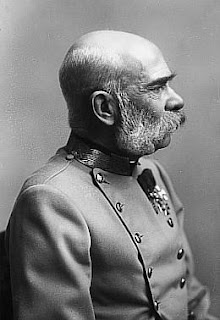
All of those who talk of Obama having an “imperial presidency” should consider two of the great, old empires of Europe. The Romanov Archduchesses Olga, Tatiana, Maria and Anastasia, for example, had to sleep on camp beds and take cold baths. Their educational schedule was positively Spartan with dawn till dark studies and exercises. The White House may not be the Winter Palace but you can be sure the Obama daughters are taking hot baths at night. Similarly, when one thinks of an Emperor one doesn’t usually think of someone like Emperor Francis Joseph who slept on an army cot and wore clothes until they were worn out -and then patched them and wore them some more! One of his contemporaries, German Emperor Wilhelm I, was also notoriously frugal. He was known to sit down at a small table with his grandson (future Wilhelm II) for a glass of wine. After their glasses were poured, the emperor would mark the level of the wine with a pencil on the side of the bottle to make sure no one was pinching any when he wasn’t looking. In Russia, Emperor Alexander III preferred the simple meals of his servants to the delicacies of the banquets thrown by the upper class and his idea of recreation was a simple walk in the Russian wilderness with some sausage and a piece of bread for his lunch. These imperial leaders were hardly men of lavish, wasteful luxury and indulgence.
Of course, not every monarch was known for being frugal. Neither has such a trait always been considered positive. Indeed, even as far back as the Roman Empire, certain Caesars were criticized for being miserly. However, these examples should be pointed out, and there were plenty of others (such as King George VI putting the palace and Royal Family on the ration system in World War II). Even today, the spending habits of some monarchs are no doubt troublesome. The King of Swaziland, for instance, does himself no favors in that regard. However, the fact remains that monarchy remains a much better value for money than the average republic even if not every one is like the Emperor of Japan, growing his own rice. Monarchs, especially today, are much more thrifty than politicians if for no other reason than that they are scrutinized to such a vastly greater extent than any elected official. There is also the fact that much of what people see as the lavish and glamorous side of royalty comes at the private expense of the royals and not from the public trough which is, again, something rarely seen in a republic. Furthermore, most of the expense comparisons between monarchies and republics do not even usually take into consideration the immense costs of elections and election campaigns, held with great frequency even if they never seem to actually change anything.
It is a struggle to change such entrenched popular misconceptions and, naturally, the republican crowd will never allow for a fair and honest exchange if they possibly help it, but the effort should be made. It pains me to think of someone like Emperor Franz Joseph being thought of as extravagant simply for being of imperial status. Plenty of monarchs were quite thrifty and plenty of royals and royal children lived far less pampered lives than many of their republican opposites. However, even for those monarchs who were rather lavish, such as King Louis XIV of France, I would take that lavishness any day over the republican politicians in power today. At least the lavishness of someone like Louis XIV served a higher purpose (whether he intended it to or not is irrelevant) to raise the status of his country, the glory of his country and make it a land to be marveled at from people all over the world and for generations to come. Given how many people still go to visit Versailles, filled with awe and wonder at the magnificence, I would say it was worth every penny.
But, of course, I would; I am … The Mad Monarchist
Showing posts with label money. Show all posts
Friday, June 14, 2013
Thursday, October 4, 2012
Money and Monarchies
The first U.S. presidential debate of this election season is now behind us and, by all accounts, President Obama got spanked. The topic of the evening was domestic issues, predominately jobs and the economy. Most, however, seemed to be paying more attention to style than substance. Respondents said that Romney seemed more “presidential” than the President himself, that he projected more strength and sounded like he knew what he was talking about whereas even Democrats bemoaned that Obama seemed weak, defensive and rather unhappy to even have to be having the debate and responding to questions and accusations. Does this mean that the American people learned nothing about the dangers of choosing a national leader based on style rather than substance? Perhaps, but perhaps not. We shall have to wait and see if there is any change in the polls in favor of Romney as a result of this first debate performance. Why am I even talking about this? What did any of it have to do with monarchy? Well, Mitt Romney made one reference to a monarchy that is currently in a great deal of trouble; the Kingdom of Spain, but the fact is that many monarchies, along with many republics, are facing similar economic problems as those talked about between the two contenders to be America’s next president.
Economics are now dominating almost all national discussions and it is worth contrasting the most high-profile republic and the most high-profile monarchy in the world today; the United States and the United Kingdom. In a new book by Robert Gray called “Presidential Perks Gone Royal” it is detailed how vastly more expensive the American First Family is when compared to the British Royal Family. Last year the maintenance of President Obama and his family cost U.S. taxpayers some $1.4 billion, which is about twenty times more the $57.8 million that Her Majesty the Queen and the Royal Family cost British taxpayers. It should also be mentioned that the monarchy is an even greater value considering that the Queen is also the Sovereign of Canada, Jamaica, Belize, Australia, New Zealand and numerous other countries absolutely free of charge. It amazes me that republicans dare even raise the issue of cost considering that, in almost every instance, monarchies are far greater value for money than republics. Furthermore, while dishonest politicians like to use the cost of royalty as a tool of distraction, there is not a monarchy in the world that is in financial trouble because of the cost of the monarchy.
True, as mentioned in the debate last night, the Kingdom of Spain is in dire financial trouble. However, no one, absolutely no one, can even pretend to claim that the Spanish debt crisis is due to the money that goes to the Spanish monarchy. The amount spent on the Spanish Royal Family is positively Lilliputian compared to what the government spent or spends on bureaucracy, welfare, medical care, pensions, wasteful government projects (like the “green” energy boondoggle) the trade imbalance and so on. I would argue that the Spanish economy also became too dependent on money funneled into the country by the EU and when that began to dry up as more countries entered the EU and put their hand out and as the trough simply began to run out, businesses in Spain panicked. Similarly, in the United Kingdom, one need look no farther for the biggest drain (by far) on the public purse than the National Health Service which, not surprisingly, is the one area absolutely no one wants to touch. When looking at government spending in the United Kingdom, more than half (59%) is taken up by welfare, the NHS and education. The amount spent on the monarchy is so small it doesn’t even appear on most charts. Complaining about this would be like using your credit card to buy a 747 jet liner and then telling people that it was the cost of the peanuts that put you in debt.
Here’s another good comparison to make. In one year the British taxpayers spent $57.8 million on the monarchy. Also in one year, American taxpayers spent $304.5 million on economic aid alone to Kazakhstan (the least among the top 25 recipients of U.S. foreign aid). British and Commonwealth taxpayers are also spared the cost of presidential elections every four years. U.S. taxpayers also have to cover part of the multi-million cost of the Democrat and Republican Party conventions every four years which, nowadays, serve absolutely no real practical purpose at all anymore but which are, effectively, a four-day long infomercial on the candidate of that particular party. Think about that when you think of Sandra Fluke standing before a stadium full of people on live television broadcast to millions around the world complaining about women being silenced or when you think of Clint Eastwood talking to an empty chair. If you’re an American taxpayer -you helped pay for that.
The bottom line is that monarchies are a bargain compared to republics. The only reason this is not well known to people is partly because of the success of royals in doing more with less. Royal displays of pomp and ceremony are generally much more rare than republican displays, but they do them so much better. People are mesmerized by the site of horse-drawn carriages, jewels, crowns and ermine robes and just assume that this all must cost a great deal of money. In fact, it doesn’t because these coaches, jewels and crowns are all very, very old and in many cases were bought and paid for centuries ago. When you see the Queen enrobed and crowned at the state opening of Parliament, you think splendor and majesty, which is true, you don’t think that there stands a woman wearing hand-me-downs but that is also true. Monarchies should be thankful that they are what they are and avoid the huge economic waste of having a president. Republics which are concerned about economic issues could do worse than start with restoring their monarchy.
Economics are now dominating almost all national discussions and it is worth contrasting the most high-profile republic and the most high-profile monarchy in the world today; the United States and the United Kingdom. In a new book by Robert Gray called “Presidential Perks Gone Royal” it is detailed how vastly more expensive the American First Family is when compared to the British Royal Family. Last year the maintenance of President Obama and his family cost U.S. taxpayers some $1.4 billion, which is about twenty times more the $57.8 million that Her Majesty the Queen and the Royal Family cost British taxpayers. It should also be mentioned that the monarchy is an even greater value considering that the Queen is also the Sovereign of Canada, Jamaica, Belize, Australia, New Zealand and numerous other countries absolutely free of charge. It amazes me that republicans dare even raise the issue of cost considering that, in almost every instance, monarchies are far greater value for money than republics. Furthermore, while dishonest politicians like to use the cost of royalty as a tool of distraction, there is not a monarchy in the world that is in financial trouble because of the cost of the monarchy.
True, as mentioned in the debate last night, the Kingdom of Spain is in dire financial trouble. However, no one, absolutely no one, can even pretend to claim that the Spanish debt crisis is due to the money that goes to the Spanish monarchy. The amount spent on the Spanish Royal Family is positively Lilliputian compared to what the government spent or spends on bureaucracy, welfare, medical care, pensions, wasteful government projects (like the “green” energy boondoggle) the trade imbalance and so on. I would argue that the Spanish economy also became too dependent on money funneled into the country by the EU and when that began to dry up as more countries entered the EU and put their hand out and as the trough simply began to run out, businesses in Spain panicked. Similarly, in the United Kingdom, one need look no farther for the biggest drain (by far) on the public purse than the National Health Service which, not surprisingly, is the one area absolutely no one wants to touch. When looking at government spending in the United Kingdom, more than half (59%) is taken up by welfare, the NHS and education. The amount spent on the monarchy is so small it doesn’t even appear on most charts. Complaining about this would be like using your credit card to buy a 747 jet liner and then telling people that it was the cost of the peanuts that put you in debt.
Here’s another good comparison to make. In one year the British taxpayers spent $57.8 million on the monarchy. Also in one year, American taxpayers spent $304.5 million on economic aid alone to Kazakhstan (the least among the top 25 recipients of U.S. foreign aid). British and Commonwealth taxpayers are also spared the cost of presidential elections every four years. U.S. taxpayers also have to cover part of the multi-million cost of the Democrat and Republican Party conventions every four years which, nowadays, serve absolutely no real practical purpose at all anymore but which are, effectively, a four-day long infomercial on the candidate of that particular party. Think about that when you think of Sandra Fluke standing before a stadium full of people on live television broadcast to millions around the world complaining about women being silenced or when you think of Clint Eastwood talking to an empty chair. If you’re an American taxpayer -you helped pay for that.
The bottom line is that monarchies are a bargain compared to republics. The only reason this is not well known to people is partly because of the success of royals in doing more with less. Royal displays of pomp and ceremony are generally much more rare than republican displays, but they do them so much better. People are mesmerized by the site of horse-drawn carriages, jewels, crowns and ermine robes and just assume that this all must cost a great deal of money. In fact, it doesn’t because these coaches, jewels and crowns are all very, very old and in many cases were bought and paid for centuries ago. When you see the Queen enrobed and crowned at the state opening of Parliament, you think splendor and majesty, which is true, you don’t think that there stands a woman wearing hand-me-downs but that is also true. Monarchies should be thankful that they are what they are and avoid the huge economic waste of having a president. Republics which are concerned about economic issues could do worse than start with restoring their monarchy.
Tuesday, January 26, 2010
Cost Report on European Monarchies
Radio Netherlands Worldwide reports that the United Kingdom and the Netherlands have the costliest monarchies while Luxembourg has the cheapest based on a report out of Belgium. This story comes via Lëtzebuerg who thinks the Luxembourg monarchy is also the best value for the money. Forgive the slight digs at other monarchies; Luxembourgers have every right to be proud of their Grand Ducal Family. These reports can be annoying (see the rant below) but are also useful at pointing out to republicans who see every monarchy as on the same level as Louis XIV at Versailles. I would also point out that the little Principality of Liechtenstein is often left out (Monaco often is as well, but still commands more attention for, say what you will about the Grimaldis -they are certainly not boring). The Prince of Liechtenstein actually receives no money from his subjects and annually gives money from his own fortune to support the running of the Liechtensteiner government. They also keep a low profile and have remained scandal-free. It is clear that even those countries that spend more on their royals like the British and Dutch still spend far less than most republics and Luxembourg has certainly has much to be proud of with a monarchy that is cost-effective, good at their job, widely loved at home and respected abroad.
Subscribe to:
Posts (Atom)


.jpg)


