Showing posts with label Catholic. Show all posts

Thursday, October 12, 2017

A Brief Word on Faith & Frederick Barbarossa

The German emperors tend to have a rocky history when it comes to Church-state relations, partly because, in their time, anything involving the popes were also state-state relations. For some reason I have yet to fully understand, some modern Catholics are willing to be more understanding regarding some emperors than others. So, Emperor Frederick I (Barbarossa), who found himself at odds with the pope is still reviled by many today while Emperor Charles V, who waged war against the pope, is celebrated. I hasten to add that this does not mean Charles V should be vilified, those who defend him are correct inasmuch as his problems with the pope were political and not religious, however, I am saying that one could be more consistent in applying such understanding in regards to the Hohenstaufen kaiser as one is with the Habsburg. The fact that it is not is, in my view, unfortunate and helps to further religious division, particularly for Germans, and that division has led only to widespread religious indifferentism. If, as any monarchist should, one wishes the German people to get back in touch with their monarchical roots, Frederick Barbarossa is a figure that cannot be ignored and should not be dismissed. He was one of the most important German emperors ever, I would say easily among the top three, and the Holy Roman Empire of the German Nation cannot be fully understood without him.

Did Emperor Frederick I have problems with the Church in his time? Most would say, "yes" but I would add that his problems were more with the papacy than with the Church as a whole. Problems there certainly were though and ultimately this stemmed from the fact that the First German Reich, referred to officially as the "Holy Roman Empire" had a very different beginning than the original Roman Empire which preceded it. It all came down to the fact that this new entity had begun with the Pope, St Leo III, crowning Charlemagne "Emperor of the Romans" and, as such, the papal view was that the imperial crown was theirs to give and theirs to take away. Emperor Frederick I, as with many of his fellow kaisers, needless to say, did not tend to share this view. There was also a territorial dispute which originated from, basically, the Pope giving land to the King of Sicily which Frederick regarded as being part of the empire without checking with the emperor first and after the Emperor had signed an agreement with a previous pope that promised there would be no such agreement between the Emperor and the King of Sicily without papal approval, so it seemed like a double-cross to the Germans.

When Pope Alexander III was challenged by a rival in the person of anti-Pope Victor IV, the rather bad relations between Frederick and Alexander meant it was no great surprise that the Emperor recognized Victor IV as the rightful Bishop of Rome. Yet, even then, it seems to have been purely political as Emperor Frederick had first conveyed to Pope Alexander that if he would agree to see things his way, Frederick would remain with him but when the Pope refused, the Emperor sided with his rival. When Victor IV was succeeded by another anti-pope, Frederick supported him as well until he was defeated and driven from Rome by Alexander III. The Emperor mounted a last major invasion of Italy but met with a stunning defeat at the hands of the Italians at the Battle of Legnano. After this, Emperor Frederick I finally gave up on his ideas of empire, resigned to contenting himself with Germany and (this is important) formally and publicly patched things up with Pope Alexander III. So, yes, the Pope and the Emperor had their "issues" but, in the end, they kissed and made up. The dispute was always of a political nature and not really about doctrine or dogma.

Especially in these dishonest and disjointed times we live in, I think it is important to keep a few things in mind before being too hard on Emperor Frederick. He was one of the few German emperors to actually be crowned by the Pope (in 1155) with his troops killing off the Roman republicans who had been antagonizing the pontiff while he was there. Emperor Frederick, though he was excommunicated along with anti-Pope Victor IV, only had a problem with that because from his first day to his last he considered himself a staunch Roman Catholic and never considered being anything else. Indeed, he was widely considered a very devout and pious man who wanted the papal and imperial powers to work together but did insist that the pope recognize the imperial power which he wielded in secular matters. He was not some raving, unorthodox, heretic who was, for example, trying to argue that mothers could kill their children or that two men can get married. Finally, it is also worth remembering that even after all of his trials and difficulties, Emperor Frederick I died while going on Crusade to retake the Holy Land from Islam. In short, while not denying or covering up the very real differences Frederick Barbarossa had with the papacy, I think Catholics should not be too hard on him. The first view of him that comes to mind should not be that of a villain.

It is only my opinion, and I may well be wrong, but I cannot help but think that such attitudes probably played into the hands of someone Catholics should oppose much more; Martin Luther. I can imagine it being a great gift to him and his portrayal of the pope as a corrupt, Italian prince who lorded over the Germans that their most celebrated national heroes among the emperors tend to be the ones most condemned by the Catholic Church. In some cases, there were legitimate grounds for such condemnations with emperors who were clearly in need of some "correction" but I do not think Frederick Barbarossa was really one of them and I think some distinction should be made between those who had religious differences with the Church itself and those who had political disputes with the papacy at a time when, for good or ill, the pope was a political figure and acted as such. Again, Frederick Barbarossa was crowned emperor by the Pope, it was in his reign that the empire was first referred to as the "Holy" Roman Empire, he took his position as the secular leader of Christendom very seriously and died on crusade. I think Catholics should stop with the knee-jerk evaluation of him as an enemy to be immediately condemned at every opportunity.

Thursday, July 13, 2017

Royal Saints and the Catholic Church

I recently had an exchange online (not the usual unpleasant sort) which I thought worth bringing to these pages as others may find it interesting. The question put to me was why, in the long history of the Roman Catholic Church, have relatively so few royals been raised to the status of recognized sainthood by the Church. Is it harder for monarchs to achieve sainthood? Is something blocking their way? My short answer was that it comes down to a little of column “A” and a little of column “B”. For one thing, the Catholic Church hierarchy today holds a vastly different broad view of politics than in the past. Whereas the historic Catholic Church held that, as Pope Pius VI said, monarchy is the best form of government, the Catholic Church of today is all about liberal, representative democracy, or at least so they claim. It would certainly be difficult to imagine His Holiness Pope Francis being very praiseworthy of any monarch as an ideal Christian ruler. Loyalty and obedience are not so popular as diversity and human rights nowadays. Yet, this was not always the case.

St Louis IX w/Crown of Thorns
Most Catholics, and indeed most western Christians of any sort know of some saintly monarchs as these tend to date from before the Protestants came to be. Most will have at least heard of one king-saint from most countries that have been around a long time. There is King St Louis IX of France, King St Ferdinand III of Castile, King St Edmund the Martyr of East Anglia, King St Stephen of Hungary, King St Olaf II of Norway and so on. However, given the huge number of kings over thousands of years of Christian history, most of that history being dominated by monarchies and practically nothing else, their ranks can seem rather thin. Why is this? As stated at the outset, my immediate response is both that of royal worthiness as well as political machinations that would block the causes for the canonization of royals. In each case, human frailty plays the dominant part I would say. In the first place, monarchs are usually figures of wealth, power and prestige and, as such, they doubtless face a greater degree of temptation than an ordinary person would. In this way, yes, it is probably harder for a monarch to be worthy of canonization than a lesser person would be.

It would, however, be absurd to think that politics does not play a part in this either and not simply today when monarchy is the exception rather than the rule and traditional monarchies are frowned upon as being ‘backward’ and ‘authoritarian’. Christian monarchs, unfortunately, have a long history of fighting with other Christian monarchs and this applies to Catholics just as much if not more so than to Protestants. When one considers the monarchs who have been recognized as saints, such as those mentioned above, I direct your attention to who their enemies were. In most cases, their enemies were non-Christians; pagans or Muslims and the opinion of pagans and Muslims tended to hold little weight in the Catholic Church in those days. If, however, the Catholic Church had moved to canonize someone like King Henry VI, a monarch who was once considered saintly by a great many people in England, one could expect the French to protest against this vociferously as Henry VI had not only claimed the French Crown (as many English monarchs did) but was the only one to actually be crowned King of France in Paris. Likewise, being of the House of Lancaster, the notables of the House of York might have opposed it too. For a time, it seemed that the Tudors might have pushed for his canonization but then the break with Rome over the marriage of King Henry VIII brought all of that to a total halt.

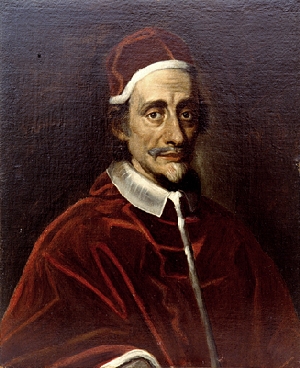
Blessed Innocent XI
So, you can see how this would play out. Try to canonize a French monarch, you upset the Germans. Try to canonize a German monarch, you upset the French. This also applied to the Roman Pontiffs themselves. Pope Innocent XI, for example, was beatified centuries after his death but his cause never progressed beyond that point and the reason for this is well known to those familiar with his case. At the time of his pontificate, the most powerful Catholic monarch was King Louis XIV of France and, as we have discussed before, the Popes tended to oppose whichever Catholic monarch was the strongest in their time and Pope Innocent XI was very much opposed to King Louis XIV of France. As such, when his cause for canonization came up, French clergymen blocked it from going forward and it was not until the 1950’s that he was beatified and his cause has not progressed since for, while there is no longer a French monarchy to oppose it, there are few who feel strongly about pressing it either. Doubtless there have been other, similar cases. Now, as I have also mentioned before, contrast this with the sudden flurry of papal canonizations. Since the Second Vatican Council, every deceased pope has either been canonized or is at some point along in the process of being canonized (John XXIII, Paul VI, John Paul I & John Paul II). A few have pointed out, particularly given how poorly the Catholic Church has fared in this era, that this looks like an effort to ‘canonize the council’.

The person who raised this issue also pointed out that out of 46 (or 47 depending on how you count them) Holy Roman (German) Emperors, only one, Emperor Heinrich II, is recognized as a saint. Once again, it would be foolish to think that the long history of rivalry and antagonism between the popes and the German emperors played no part in this being the case. All of the most famous German emperors could expect heavy opposition to any consideration of their piety. Even someone as widely admired as Emperor Otto the Great would likely be opposed given that he was quite strict about the Church in his lands being answerable to him. Emperor Frederick Barbarossa is possibly the most famous of the Medieval German monarchs yet, as far as the Catholic Church is concerned, he was a villain and, to be fair, from the standpoint of the Church, it is just as legitimate that they view him as such as it is for the Germans to view him as a hero for his victories. Even an emperor most Catholic monarchists admire perhaps more than any other, Emperor Charles V, would be an almost impossible case. It would be hard to imagine the Catholic Church canonizing a monarch who waged war against the Pope, regardless of the circumstances.

Empress Maria Theresa
There are also those monarchs who might have been more easily canonized in the past than today. Queen Isabella I of Castile, for example, has a small but fervent following who wish for her to be canonized, yet such a cause could expect to attract immense criticism upon the Church from Jewish, Muslim and Native American groups and advocates. Such criticism is basically groundless and shouldn’t have any impact but realistically it should be expected and not surprising that the Church would wish to avoid the whole subject and everything it would bring up from the establishment of the Spanish Inquisition to the voyage of Columbus. The Austrian Empress Maria Theresa, Queen of Hungary, would also, I think, be worth consideration for canonization, yet she too would attract a great deal of opposition due to her attitude toward the Jews and such a cause might also generate political opposition from Poland. Again, such cases would bring up issues that the Church would rather not deal with.

Of course, canonizations are much more common among the ranks of the clergy. Not only are they less susceptible to political objections but, even among the hierarchy where the temptations associated with power and prestige are more common, they are also the ones who determine whether a cause goes forward or not which makes things much easier of course. This is not to imply that the system is out or order of course, only that any system consists of human beings and human frailty applies to the clergy as well as the laity. It also cannot be denied that even among the clergy, political opposition can still cause complications. The cause of Saint Josemaria Escriva, for example, was the source of considerable controversy because of his association with the regime of Generalissimo Franco in Spain or the cause of Blessed Aloysius Stepinac who was imprisoned by the communists and martyred after World War II for complicity with the Axis regime of the Independent State of Croatia. This sparked immense opposition and it remains to be seen if his cause will progress further. The cause to canonize Pope Pius XII himself is also very well known for the political opposition it has aroused due to accusations that he was insufficiently zealous in opposing the Nazi and Fascist government all the way to accusations of sympathy and collaboration with them, all of which has aroused considerable debate and acrimony. To date he has reached the status of “venerable”.

King Baudouin of the Belgians
Unfortunately, the enemies of traditional authority are also not always the only source of opposition to royal saints. For example, I would think that the Belgian monarchs King Albert I and King Baudouin worthy of examination but of course the mainstream types will not push for causes for them, because they were monarchs and held traditional moral views, yet there are likewise intransigent types on the right who will neither take up their cause because of their opposition to a Belgian monarchy existing in the first place (though this is absurd given that Belgian independence came at the expense of a Protestant monarch and their previous, failed, bid for independence was against a Catholic, Habsburg monarch who far-right Catholics heartily despise). King Baudouin has been talked about more than others, particularly by the Pro-Life, anti-abortion community given his public stand on that issue. However, that would also then invite opposition from leftists everywhere and no doubt they would also take issue with his words of praise for King Leopold II at the granting of independence to the Congo. The (now retired) Cardinal Godfried Daneels, while praising King Baudouin, said some years ago that a cause for canonization was “not going to happen”.

There is also the fact that, sadly, for a great many people Catholic monarchies in particular are seen as a source of division rather than unity, nothing but an open door to trouble that is best avoided. In Spain, France and the former Italian states (basically an all Bourbon problem) there continues to be intense internal dynastic disputes which are unrelenting and which the Church, as with most others, would certainly wish to avoid getting in the middle of. The left is content to let the feuding monarchists focus on fighting each other and the right would prefer not to get caught in the crossfire and look for other, non-royal alternatives. Even if there was a worthy candidate, the Church would have to show considerable courage to canonize someone in such a position, given the intense opposition it would immediately attract from the opposing faction of the various Bourbon family branches.

Blessed Maria Cristina di Savoia
However, while all of this must seem grim to Catholic monarchists, and it is certainly far from ideal, if one is prepared to not be partisan on the subject, there is still room for hope. Royal canonizations are rare but they are certainly not unheard of, even today. The most prominent example, of course, is the beatification of Emperor Charles of Austria and a French bishop did, in 2009, open a cause for his wife Empress Zita of Bourbon-Parma which it would be hard to imagine anyone objecting to and, while extremely rare certainly, saintly royals who are husbands and wives are not without precedent. There are also currently a number of potential royal saints under consideration within the historic ranks of the Italian royal House of Savoy. Maria Cristina of Savoy, Queen of the Two-Sicilies, was beatified in 2014 (being a Savoy means taking neither side in the feuding branches of the Bourbon-Two Sicilies dispute), Princess Maria Clotilde of Savoy has a cause open, making her a “Servant of God” and Queen Elena of Italy (wife of King Victor Emmanuel III) is, last I heard, under consideration for a cause of her own. All of this is good to see, though I would caution that the Italian Royal Family has a history of royals being beatified but not going on to sainthood. Still, there are royal causes being pressed which I fully support and am grateful for.

Blessed Charles of Austria
Certainly, there are many others that I would think certainly at least worthy of consideration and some I think should have been canonized long ago. Speaking of the House of Savoy, almost every recent royal consort would be worthy of consideration, Maria Pia of Savoy, Queen of Portugal, King Charles Emmanuel IV and his Bourbon bride would both be worth looking into I think. On the subject of the Bourbons, I think it odd that King Louis XVI and his Habsburg bride Queen Marie Antoinette have not been canonized already. The Dauphin, Louis XVII, would seem to be a child martyr to me and his sister Marie-Therese would seem more than worthy of consideration I think. There are others of course but, much beyond that, in France or Spain or Italy, with the Bourbons you start running into the dynastic disputes that make them all untouchable without kicking off a firestorm of acrimony. King Baudouin of the Belgians is, I think, deserving and I have been told that there has at least been talk of a potential cause for Queen Astrid. There are also others among the ranks of the Habsburgs who I would think would be possibilities given that the current family leadership has, since the days of Archduke Otto, become ‘acceptable’ to the powers-that-be and considering that, thankfully, the followers of the Habsburgs have shown more loyalty and adaptability than those of the Bourbons so that it remains one of the few Catholic dynasties that is not at the center of any serious inheritance disputes.

Clearly, there are obstacles and plenty of difficulties but hope remains and there are plenty of causes worth pursuing. Certainly, nothing will happen if no one at least tries.

Tuesday, June 13, 2017

Catholic Saints, Korea and Japan

In 2014 I wrote an article titled, “Assassins, Sainthood and Joan of Arc” in which I commented on the cause for canonization currently underway in the Republic of Korea for Ahn Jung Geun, a Korean Catholic most famous for being the man who assassinated the first Prime Minister of the Empire of Japan, Prince Ito Hirobumi. Not surprisingly, this move raised some eyebrows given that Ahn Jung Geun not only seemed to be rather deranged and perhaps not in full possession of his faculties but particularly because the one act in his life which made him famous was not caring for the unfortunate, giving his life for his faith or converting people to Christianity but was, rather, the murder of an unarmed man and gunning down several others. He has, since his death, been lavished with praise and honor by the governments of South Korea and Communist China while, not surprisingly, being regarded as a terrorist and murderer in Japan. Obviously, there are a great many political implications for the Catholic bishops in South Korea promoting the canonization of this individual.

Mass in Japan
The Japanese have every reason to object to this and it would certainly be an unusual thing for the Catholic Church to do. The Church did not, as I pointed out in 2014, give in to the public call for the canonization of Balthazar Gerard in the 1580’s who had assassinated the Dutch leader Prince Willem “the Silent” of Orange. However, the Roman Catholic Church of today is quite different from that of the Sixteenth Century and in recent years the requirements for canonization have been “streamlined” considerably so that it is much easier to have someone canonized today than in the past when it might take several centuries for someone to be verified as a saint worthy of veneration. In other words, as much as I would oppose the canonization of such an individual, I do not think it beyond the realm of possibility that the Catholic Church today might go along with it, that the Holy See might simply go along with the recommendations of the Korean bishops who are pushing for this assassin to be recognized as a saint. I made my objections clear enough, I think, in that 2014 article but today I want to propose a positive action that the Japanese could take in response to this.

Konishi Yukinaga
The Catholic Church in Japan should, I think, propose a more worthy figure from their own history for canonization. I think the Japanese bishops should start a cause for the canonization of Konishi Yukinaga. For those unfamiliar with his exploits, you can read the story of the conflict he is most famous for in my recent article, “Clash of Monarchies: The Imjin War”. Konishi Yukinaga was a great Japanese warrior, a daimyo and a Catholic. He was also the leader of the vanguard force of the samurai armies of Toyotomi Hideyoshi which invaded Korea in 1592. He led the conquest of Busan, was instrumental in the conquest of the Korean royal capital of Seoul and gained further fame for his defense of the captured city of Pyongyang against the armies of Ming China. After a peaceful interlude he arranged, Yukinaga, who was also known by his baptismal name of Augustine (in Portuguese) Konishi, still played a prominent part in the second invasion of Korea, even fighting alongside a bitter rival of his, the daimyo Kato Kiyomasa who had a vicious hatred of Christians. In the final period of the war, Konishi was most distinguished by his heroic defense of Suncheon Castle against much larger Chinese and Korean forces.

All of that makes, I think, Konishi Yukinaga worthy of being considered one of the best Japanese warriors of his time but, of course, it does not make someone worthy of canonization. That being said, neither does the murder of a foreign dignitary which is what Anh Jung Geun is most known for. Is there anything else that would make Konishi Yukinaga more worthy of being “Saint Augustine Konishi”? I would say, yes. In the first place, his faith was obviously important to him and this is significant as other Japanese Christians of the period are often accused of being insincere in their conversions. It is not uncommon to find Japanese daimyos in particular, Otomo Sorin comes to mind, who are accused of converting simply to gain greater favor and cooperation from the Portuguese and who did not genuinely accept Christianity. Personally, I find such accusations to often be unfair but in any event this would not apply to Konishi Yukinaga. After the war in Korea, following the death of Lord Hideyoshi, the Japanese fought another civil war over who would take charge of the country. Konishi backed Ishida Mitsunari, unfortunately for him, rather than Tokugawa Ieyasu and was defeated at the Battle of Sekigahara. In the aftermath, in keeping with custom, the defeated daimyos committed ritual suicide. Konishi, who was captured by Takenaka Shigekado at Mount Ibuki, refused to kill himself because, as a Christian, this would be a sin and so he was beheaded by his captors.

Konishi Yukinaga
This, I think, is proof enough that Konishi was a sincere Christian. However, more than that, he was also something of a peacemaker and got himself into some trouble over his desire to make peace. The Koreans would no doubt object to the canonization of the conqueror of their capital just as the Japanese object to the idea of canonizing the assassin of their first prime minister but Konishi Yukinaga was no anti-Korean bigot. Before he landed his invasion force, he sent a last message to again urge the Koreans to join with his forces in friendship to fight against their Chinese overlords only to be rebuffed. Then, after China intervened in the war, he and a Chinese envoy arranged a period of peace for several years. This was controversial because it was a peace based on a deception. Konishi and the Chinese envoy both, basically, agreed to tell their masters what they wanted to hear. So, Konishi Yukinaga told Lord Hideyoshi that the Chinese had agreed to surrender and the Chinese envoy told the Ming Emperor that the Japanese had agreed to surrender. For a fear years, the war ended and peace prevailed until Lord Hideyoshi received a message from the Ming Emperor granting him the tributary status of “King of Japan” which caused no small amount of outrage and a great deal of anger directed at Konishi Yukinaga.

Obviously, this was not a successful or very sound effort at peace but it was an effort to make peace nonetheless. “Blessed are the peacemakers” is what Christ said and Konishi Yukinaga had tried, even if not by the best means, to be such a peacemaker. We can also see that Konishi was not an anti-Korean bigot as well as how serious he was about his faith by the fact that he married a Korean woman during the war and she was baptized as a Christian, taking the name of “Julia”. Historians still debate the issue but it is quite possible that the Catholic Japanese samurai were the first Christians to ever come to Korea and if so, Julia would have converted at the time of her marriage which shows that Konishi Yukinaga had no prejudice against Koreans and also that his Christian faith was important enough to him that he insist his wife become Catholic as well so that they would have a proper Catholic family.

Having said all of this, I have no doubt, given the level of knee-jerk anti-Japanese sentiment in Korea, that the Koreans would find a cause for the canonization of Konishi Yukinaga objectionable. Yet, I fail to see how anyone could legitimately say that it is more objectionable that their effort to canonize an assassin. Konishi Yukinaga, though I will grant he is far from the traditional sort of candidate, seems to me to be a far more worthy individual and I think a legitimate case could be made for his consideration for sainthood. Perhaps, if the Japanese hierarchy began to seriously take up this suggestion and begin looking into a cause for the canonization of Konishi Yukinaga, it might make some think twice about the obviously politically motivated effort to canonize Anh Jung Geun. The process is different these days and the more thought I have given this, the more I think it is an idea worth pursuing. Japanese Catholics might try praying for the intercession of Konishi Yukinaga. Perhaps a miracle will be forthcoming. If a formal investigation of his merits were to result in the Korean episcopacy re-thinking their own motivations, that would be something of a miracle itself.

Tuesday, April 25, 2017

The Order of Calatrava

The Order of Calatrava is the most senior military-religious order of knighthood in the Kingdom of Spain, in fact, the most senior on the Iberian Peninsula, though it was second in terms of being given official sanction by the Roman Pontiff. It was founded in January of 1158 by St Raymond of Fitero (San Raimundo de Fitero) during the reign of King Sancho III of Castile. The fortress of Calatrava la Vieja had been retaken from the Muslims a few years earlier by Sancho III’s father, King Alfonso VII of Castile, and holding it was proving problematic. In those days of private, feudal armies, there was no permanent military force that could be counted on. St Raymond took up the challenge, knowing that there were a number of knights and the sons of knights associated with the recently formed Cistercian Order (a Catholic religious order also known as the “White Monks”) and so began establishing a permanent militia force associated with the order. This was the birth of the Order of Calatrava (sometimes also called the Order of Calatrava la Vieja and later, after moving, the Order of Calatrava la Nueva) which was to play a significant part in the on-going, centuries long struggle to retake the Iberian Peninsula from its Islamic conquerors.

San Raimundo de Fitero
Under their first Grand Master, known only as Don Garcia, the knights of the Order of Calatrava saw their first battles against the Moors. They received their confirmation from Pope Alexander III on September 26, 1164 with their final rule being approved in 1187 by Pope Gregory VIII. And, that rule was a rigorous one intended to instill great religious piety as well as martial discipline on all members of the order. There the basic vows of the Cistercians, a vow of silence in the refectory, dormitory and oratory, a certain number of prayers that had to be said every day, a certain number of fasts to be observed throughout the year, abstinence three days a week,  as well as additional disciplines such as the knights being required to sleep in their armor and so on. The purpose was to give them a secure grounding in the faith they were fighting to defend, the morals they were expected to uphold and to be ready for battle at any time in case of any emergency. Originally situated on the front lines, an area filled with danger which had been easy to take but difficult to hold, they were an elite force that was always prepared to act when and where they were needed.

This made for a magnificent fighting force indeed and in their first battles against the Arab and North African invaders, they proved themselves well worth their keep, winning decisive victories in engagement after engagement. In fact, they were so successful that the neighboring King of Aragon called on them for help in defending his own lands. Yet, this was a long and arduous war that was to know many setbacks as well as victories. The lands that were given as a reward for their many battles won soon became imperiled and divided due to a family dispute between the Castile and Leon branches of the Royal House of Ivrea. Then came the greatest disaster which was a renewed, fierce Muslim invasion by the Almohads of Morocco. The Almohad Caliphate overthrew and supplanted the previous Almoravid dynasty and by 1172 came to rule all of the Islamic areas of the Iberian Peninsula with fundamentalist zeal. At the Battle of Alarcos in 1195 the fortress of Calatrava fell to the Almohads and the order was almost wiped out completely. Those living in the Kingdom of Aragon tried to take charge and set up their own Grand Master but this was objected to by the remnant in Castile so that, while the Castilian knights of Calatrava sheltered and reformed in the Cistercian monasteries where they took refuge, the leader of the knights in Aragon, while not permitted to be Grand Master, was elevated to the status of Grand Commander for Aragon.

Knight of the Order of Calatrava
In Castile, the knights finally began to replenish themselves somewhat and took up residence in Salvatierra Castle, thus being known for a time as the Knights of Salvatierra, but this fortress too fell to the Almohads in 1209. The seriousness of the situation prompted Pope Innocent III to call on the whole of Christendom to rush to the aid of their fellow Christians in Spain and in 1212 the castle of Calatrava itself was (again) retaken and restored to the Grand Master of the order.  After the victorious Battle of Las Navas de Tolosa, the tide began to turn and the Muslim forces were pushed back farther and farther. Within a span of three years the order moved their headquarters to Calatrava la Nueva and took into their ranks the members of the Order of Monfrague (founded in 1196 by the Order of Mountjoy knights who had refused to merge with the Knights Templar). This was the start of a period of success and triumph for the Christian forces and the Order of Calatrava oversaw the establishment of new orders of knighthood which would later be famous in their own right such as the Order of Alcantara in Leon and the Order of Avis in Portugal. It was the high point of chivalric Spanish knighthood and culminated with the capture of Cordova in 1235 by King St Ferdinand, Cordova having previously been the capital of the Islamic caliphate.

When other important cities, including Seville, were retaken, King Alfonso X of Castile was feeling so triumphant that he began to plan for a campaign eastward to restore the Latin Kingdom of Jerusalem with his Spanish knights. The Order of Calatrava was respected, militarily powerful, largely independent of the local government and quite wealthy with extensive lands of its own. However, these strengths also made them a prize to be fought over and in 1296 an internal dispute broke out with two rival Grand Masters fighting for leadership of the order. By the early years of the Fourteenth Century it became noticeable that the zeal and piety of the early knights had been dissipated by greed and ambition. Plots and intrigues started to be commonplace with rival leaders or factions allying with the secular powers in various power plays. This ultimately resulted in the Kings of Castile becoming ever more involved with the leadership of the order, ultimately forcing the election of the candidate of their choosing to be Grand Master. One was even set to marry Queen Isabella I of Castile until his death prevented it.

Rodrigo Telles Giron
Things had clearly reached a low point when Pope Pius II allowed the Grand Master, Rodrigo Telles Giron, to make his bastard son his heir which left the order under the nominal leadership of an 8-year old child. He was, of course, acted for by guardians but while the order had become a rather extensive empire unto itself, it was also increasingly divided. When Portugal and Aragon fought over the succession to the throne of Castile, different factions within the Order of Calatrava took opposing sides. It was only in their twilight that their honor was fully restored and we saw a glimpse of what the knights used to be under the leadership of Lopez de Padilla who was a respected warrior who led the knights in the last campaign of the war against Granada. He did not live to see the final victory and he would be the last of the independent Grand Masters, but he had provided a last glimmer of light in an otherwise dark decline.

With the expulsion of the last Islamic stronghold in Spain, King Ferdinand of Aragon took control of the Order of Calatrava himself and this was approved by Pope Innocent VIII. By 1540 Pope Paul III removed the vow of celibacy for the knights, replacing it with a vow of conjugal fidelity which greatly changed the nature of the order which began to become increasingly less military-religious and more of an honorary and secular. With the 800-year “Reconquista” having ended in triumph, the knights had lost their original reason for existing. The vow of poverty was later removed by Pope Julius III and though King Philip IV, in 1652, charged with Spanish orders with defending the doctrine of the Immaculate Conception, it was clear that the military character of the order was a thing of the past. They became restricted to the aristocracy and upper class with the last thing close to military action being undertaken by them was a call for assistance in suppressing the 1640-50 Catalan rebellion during which time the Order of Calatrava did not participate directly, consisting mostly of wealthy, older men and not young warriors, the order funded the arming and outfitting of an army regiment, along with the other Spanish orders of knighthood, which thus became known as the “Regimen of the Orders”.

King Alfonso XIII
By the time the Spanish Habsburgs were replaced by the Spanish Bourbons, the Order of Calatrava had already largely become a money-making institution rather than a religious or military one. As such, the Bourbons made use of it for that purpose and when King Carlos III founded his own order of knighthood, he required the existing Spanish orders to cough up the money to pay for it. This loss of funds forced the Order of Calatrava to sell off many of its assets which ultimately meant that it was not even fit for service simply as a profitable enterprise anymore. What it did have left was confiscated by King Jose (Bonaparte) in 1808 but later restored by King Ferdinand VII. However, it was finally secularized officially in 1838 though, effectively, this had long been the case. Still, the Order of Calatrava does survive, usually grouped together with the Orders of Santiago, Alcantara and Montesa as “the Spanish orders” with all of their insignia often being seen grouped together. As with all of them, the Order of Calatrava is now a hereditary order with the King of Spain as Grand Master.

Thursday, March 10, 2016

Anti-Papal Profile: Anti-Pope Felix V (Duke Amadeus VIII of Savoy)

Once upon a time in Europe there was a major Catholic embarrassment known as “the Great Schism”. It came as a result of what is known as “the Babylonian Captivity” or the “Avignon Papacy” when the papal court moved from Rome to Avignon in France which produced a succession of French pontiffs who were seen as little more than the tools of the French Crown. That ended with Pope Gregory XI and when he died the people of Rome were determined to have a Roman pontiff rather than a French one. They were quite forceful about it and so the cardinals elected a rather unpleasant fellow (not exactly a Roman but a southern Italian deemed ‘close enough’) who took the name Pope Urban VI. The French, however, did not like that and so declared his election invalid, the cardinals electing another pope, a warrior-cardinal (Robert of Geneva), who took the name Pope Clement VII. He is what is known as an “Anti-Pope” or an invalid pope. This was the beginning of the “Great Schism” which saw Catholic Europe split into feuding factions, at one point with three different men all claiming to be the “true” Pope at the same time. It was a major embarrassment and it is not surprising that anti-Popes tend to be viewed as ‘bad guys’ in Catholic history.

Popes, popes, everywhere a pope!
However, that is not necessarily true. Pope Urban VI, for example, while undoubtedly the valid, legitimate pontiff, was a rather unsavory character and most who had to deal with him found him a rather vindictive, bullying jerk. Pope Clement VII, on the other hand, though nicknamed “the butcher” in his earlier, military career just because of a trifling incident involving the massacre of a few thousand people, was widely considered the much better man, a very nice fellow who treated people well, was forgiving toward his enemies and genuinely considered himself the valid pontiff. Practically any Catholic history will, in fact, relate that while Urban VI was the correct pope, Clement VII would have made a better one. Not every anti-Pope was an ambitious usurper, thirsty for power but rather were sometimes men of sincere piety who, in a confusing and tumultuous time, were prevailed upon to accept the papal crown as a duty to the Church and Christendom. The “Great Schism” was, thankfully, mostly ended with the election of Pope Martin V in 1417, however one rival remained and there would be a couple more before it was all over. The man regarded by history as the last of the anti-Popes is an illustration of a good, devout man being caught up in a situation not of his making which left him on the wrong side of Church history but still with a good reputation.

That man was Amadeus VIII, Count and later Duke of Savoy. He was born on September 4, 1383 to Count Amadeus VII of Savoy and Bonne of Berry (granddaughter of King Jean II of France). His father died in 1391 leaving him Count of Savoy at an early age but his mother acted as his regent until he was old enough to rule in his own right. As the Count of Savoy he was quite a successful ruler. He enlarged his domains, oversaw economic prosperity, earned a reputation for being mild-mannered and just as well as being quite religious. With the Hundred Years War still raging between England and France, he tried several times to arrange a negotiated end to the conflict though to no avail. When the “Great Schism” broke out, he was very troubled by it, more so than most because of his pious nature. He had been such a success and had such a great reputation that, in 1416, Sigismund of Luxembourg, the Holy Roman (German) Emperor gave him an aristocratic promotion, raising him to the status of Duke of Savoy. Later, he also conferred on him the title of Count of Geneva. Earlier he had married Mary of Burgundy and had a happy home life, fathering nine children. However, his world fell apart when his beloved wife died in 1422 and Duke Amadeus VIII turned his back on the world.

Amadeus VIII retired, though he retained his title, handing power over to his son Louis, to live a contemplative life as a hermit in Ripaille on the shores of Lake Geneva. He took five knights with him to live by a monastic code he devised as the Order of St Maurice, which, combined with another, is still one of the senior chivalric orders of the Italian Royal Family today. He was thus mostly out of touch from that time on though he had kept up with the events of the Council of Basel-Ferrara-Florence. It was this council, in opposition to Pope Eugene IV, which elected him (Anti-)Pope on October 30, 1439. It was not a position he had sought for himself and it took a period of negotiations before he could be prevailed upon to accept the papal crown. The primary motivation of the electors seems to have been the wealth and prestige they thought Amadeus would bring with him to their cause. He finally accepted and was duly installed as Pope Felix V on November 5, 1439.

"Pope" Felix V
Anti-Pope Felix V renounced his secular titles and was crowned by Cardinal d’Allamand in 1440. For the first few years of his pontificate his secretary was Aeneas Sylvinus Piccolomini, later Pope Pius II. The actual pope, Eugene IV, excommunicated him of course and he found no widespread popular support for his position beyond his own lands in Savoy and across Switzerland. Those who did acknowledge him as the rightful pope included the Dukes of Austria, Tyrol, Bavaria-Munich, the Count-Palatine of Simmern, the Teutonic Order and a handful of religious orders and universities in Germany. Most of those who appointed cardinals refused to take their places and as Pope Eugene IV gave way to Pope Nicholas V support for Felix V fell away further. He was also frequently at odds with the Council of Basel over financial matters which is the one area that tends to taint his reputation. Still, no one could find that he had acted in bad faith or could show any evidence of serious defects in his character. His position continued to deteriorate though through 1442 and 1443 after which he increasingly became isolated and ignored. Efforts to establish a papal court and control over the Church bureaucracy ended in frustration and finally the pretense came to an end in 1449 when he submitted to the authority of Pope Nicholas V on April 7.

Nonetheless, it was not all that bad an end for anti-Pope Felix V. Because of his good name and recognition that he had been misled rather than acting purposely malicious, Pope Nicholas V was inclined to be forgiving. He appointed Amadeus of Savoy Cardinal of St Sabina and made him his permanent Apostolic vicar-general for the lands of the House of Savoy as well as the dioceses of Basel, Strasbourg, Chur and others. The papal schism had ended and there seemed to be few hard feelings about it, so a happy ending all in all. Amadeus VIII carried on in ecclesiastical office, under the legitimate pontiffs, until his death on January 7, 1451 at the age of 67.

Thursday, April 16, 2015

Santo Niño de Cebú

The monarchist legacy in the Philippines can be a tricky subject. However, one area in which the Spanish colonial legacy is not controversial is in the area of religion with the Philippines standing out as the most devoutly Catholic country in all of Asia. Within that spectrum, one of the most beloved local focuses for religious devotion is the 'Holy Child of Cebu'. It is the oldest Christian icon in the Philippines and its origins in the islands have monarchist origins. It was brought by the Portuguese explorer (in the employ of Spain) Ferdinand Magellan and given as a gift to the Raja of Cebu, Humabon, as a gift to mark his baptism into the Catholic faith. Incidentally, the gift was presented along with another icon, a statue of Our Lady of the Remedies which later became a very specifically royalist icon in Mexico. Over the centuries, the Holy Child icon was embellished with fine cloth and the regalia of a Christian emperor.

Eventually, as this particular devotion grew and grew in popularity, it achieved the farthest heights of official recognition. Pope Innocent XIII approved of special liturgical texts for the celebration of the 'Holy Child of the Philippines'. Centuries later, both Pope Paul VI and Pope St John Paul II gave the devotion special recognition. In 1965 Pope Paul VI empowered his legate to hold a pontifical high mass and a canonical coronation for the image, which is a rare honor indeed. The only other Christ images to be so crowned have been the Holy Infant of Prague in what is now the Czech Republic and the Holy Child of Aracoeli in Italy (which was stolen in 1994).

During the colonial era, the Holy Child of Cebu was named Captain-General of the Spanish forces of the Philippines, which was marked by the addition of military garb in the form of boots and a red sash. In 2011 the modern Filipino navy named the Holy Child the "Lord Admiral of the Seas" on the anniversary of the rediscovery of the image (it had been lost for some time following its original presentation to the raja until the establishment of Spanish rule). Probably the most beloved and widely revered icon in the Philippines, it is the focus of a special liturgical feast every third Sunday of January.

Thursday, June 26, 2014

The Bonaparte Crusader

Few people, even, or perhaps especially, monarchists would think of a Bonaparte as a religious crusader. Napoleon Bonaparte supported the violently anti-clerical French Revolution and though he ultimately made his peace with the Church, none could forget that he had looted Rome, annexed the Papal States and even took the Pope prisoner at one point. Devout Catholic monarchists were always among his most bitter of enemies. Yet, his nephew and eventual successor, Louis Napoleon Bonaparte, eventually Emperor Napoleon III, had a reign which, on the face of it, would suggest to the casual viewer of history the character of a champion of Catholicism. Is this a case of appearances being deceiving? On the other hand, the Catholic Church has a history of strange relationships with those regarded as her most ardent defenders. Two men widely regarded as Catholic champions were Holy Roman Emperor Charles V and his son King Philip II of Spain. Both actually waged war against the Pope, the Emperor inadvertently unleashing the most savage and vicious brutalization of the city of Rome that ancient city has ever experienced. Emperor Napoleon III never did such a thing, in fact causing himself considerable trouble by his commitment to defending the Pope. Yet, Napoleon III remains less than highly regarded in virtually any of the wide variety of Catholic circles.

The reasons for this odd relationship owe something to the man himself, the Bonaparte president who made himself “Emperor of the French” as well as to the times in which he lived, his family name, which was both a blessing and a curse, and the changes in the nature of Catholic sentiment from what it had been in centuries past. What is undeniable is that Napoleon III did many things in the name of defending Catholicism and it is just as evident that it did him little good personally. Certainly, his past plays a part in his public image. Early on, no one would have taken Louis Napoleon Bonaparte to be a future protector of the Catholic Church. He joined a revolutionary secret society in Italy that made him a wanted criminal by both the Papal government and that of the Austrian Empire. His life-long goal, of course, was a return to political power in France for the Bonaparte name and in that he did manage to put himself alongside many Catholics. They may not have been in favor of the same thing but they were opposed to the same thing; the popular monarchy of King Louis-Philippe. Eventually, after numerous failures and exiles, Louis was successful in rising to power in the wake of the downfall of the last King to reign over France and he became President of the Second French Republic.

Almost immediately, the “Prince-President” as he was known, came charging to the rescue of the temporal power of the Catholic Church. In the Revolutions of 1848 radicals led by Giuseppe Mazzini had driven Pope Pius IX from the Eternal City and declared the birth of the Roman Republic. The French government sent troops to wipe out this new regime and, of course, increase French influence in Italy as well. However, as they marched on Rome they were defeated by the veteran Italian guerilla fighter Giuseppe Garibaldi. Louis Napoleon sent reinforcements and the Roman Republic was crushed in a second attack. From that time until the end of his rule, French troops would remain in Rome to suppress dissent and uphold the political power of Pope Pius IX. This earned Louis-Napoleon some popularity with French Catholics. However, while approving of his actions, not all approved of him and particularly worrying was the large presence of Catholic French monarchists in the international volunteer army Pope Pius IX assembled to defend the political power of the papacy. For those men, who were obviously ardent Catholics and just as ardent legitimist French monarchists, Napoleon III was a usurper who they would never respect or support regardless of what his policies happened to be.

Napoleon III & Eugenie
However, after managing to become President-for-life and finally Emperor as Napoleon III, Louis took a step that added greatly to the Catholic character of his empire. He married the very devout, conservative and lovely Spanish countess Eugenie de Montijo. For the rest of his reign, Empress Eugenie could be counted on to always argue in favor of Catholic causes and rushing to the rescue whenever the Church was imperiled. Napoleon III was usually persuaded to oblige but, it seems safe to suppose, perhaps not always with the purest of motives. As early as 1853 the Emperor took France into a major and costly war ostensibly on the grounds of defending the rights of Catholics in the Holy Land, which was ruled by the Ottoman Empire, in response to demands from Czar Nicholas I of Russia for greater rights for Orthodox Christians. In truth, of course, the war was more about Britain and France trying to prevent Russian expansion into the Balkans as well as holding off the possible collapse of the Ottoman Empire for fear of the destabilizing effects that would have (surely an unrealistic concern…) but, officially, it was portrayed in the French press as Napoleon III defending the Catholics of the Holy Land against Eastern Orthodox efforts to dominate them. The war was hard and the war was bloody but, fortunately for Napoleon III, it ended in an Allied victory and the Russian Empire being forced to sue for peace.

French attack on DaNang
Not long after, Napoleon III initiated the first of what would be several interventions in East Asia when, in 1858, he joined the British in an expedition into China. Here, the initial pretext was the murder of a French priest and a general unpleasantness for Christians in China. However, again, there was also the ulterior motive of opening up Chinese markets to French trade. French influence in China would also, ultimately, be tied to French involvement in Indochina, starting with Vietnam. Here again, the first involvement came about in response to the persecution of Catholic missionaries. Of course, there was much more to it than that. France had originally made an alliance with the Nguyen Dynasty in the reign of King Louis XVI. However, due to domestic unrest at home, France never supplied the assistance the King had promised but still tried to collect payment (in privileges and territory) from the “Great South”. However, subsequent Vietnamese monarchs tried to keep their distance from the French and draw closer to China. Emperors Minh Mang, Thieu Tri and Tu Duc tried to discourage missionary activity by expelling French priests and threatening to execute Catholics. Some were but the most dramatic threats were never followed through on and were issued mostly in an effort to frighten foreigners into staying away. That tactic did not work, nor did the effort to carry out anti-foreign policies at times when France seemed to be distracted by events elsewhere.

French attack on Saigon
Empress Eugenie was always quick to urge her husband to take action whenever Catholics were in danger around the world. It is also true that the French navy had a high proportion of very conservative, Catholic officers and they were able to take action on their own authority being so far removed from the government in Paris. They, like Napoleon III, were also concerned about France falling behind Britain in the race to gain control of Asian territories. Ultimately, again, the persecution of Catholics prompted French naval forces to take action and in 1858 they bombarded and captured the coastal city of Danang. Napoleon III sent in reinforcements and an undeclared war was underway. French forces suffered heavily from heat and tropical diseases as well as fierce Vietnamese resistance. Despite their technological superiority, the Vietnamese forces may have been able to prevail with the aid of their inhospitable climate were it not for the outbreak of a revolt in the north that forced Emperor Tu Duc to come to terms with France in order to prevent the possible overthrow of the dynasty. In 1859 French forces occupied Saigon and Cochinchina, the extreme south of Vietnam, became a French colony. In time, all of Indochina would come under French control.

French land in Beyrouth, Lebanon
New opportunities for Napoleon to act as the champion of the Catholic Church came quickly. In what is now Lebanon, then part of the vaguely defined region of Syria within the Ottoman Empire, Maronite Christians came under vicious attack by radical Islamic elements. The Middle East had a special place in the historical memory of France and for the Bonapartes in particular due to the victories there by the first Napoleon. The song “Departing for Syria” had been written by the Emperor’s mother and had become a sort of unofficial national anthem for the Second French Empire. To the applause of French Catholics, Napoleon III sent about 7,000 soldiers to Lebanon in 1860 and 1861, putting a stop to the violence against the Maronites and obtaining from the Ottoman Sultan the right to appoint a Christian governor for the region (who was subject to the approval of the Sultan of course). In less than a year the French troops were withdrawn and Napoleon III could congratulate himself on a rather neat and successful intervention which had increased French influence in the near east and won him praise (if not lasting, heartfelt support) from Catholics in France. His next foreign adventure would not end so well.

French officers in Mexico
For some time there had been growing concern over events in Mexico. A bitter civil war ended with the radical, anti-clerical Benito Juarez becoming President and defaulting on all foreign debts. The Catholic Church lost all special privileges, Church property was seized and the Mexican government attempted to take total control of the Catholic Church in Mexico. Empress Eugenie took a special interest in this case and urged her husband to do something. Many powerful bankers also wanted some action that would see them paid the money owed them. Ordinarily, the United States would have prevented anyone from intervening in Mexico (other than themselves of course) but as a civil war was raging north of the Rio Grande there was nothing that the Lincoln administration could do but issue threats and condemnations. In 1862 Napoleon III joined with the British and Spanish in a joint expedition to enforce the payment of debts from Mexico. After some rushed promises, Britain and Spain withdrew but France did not and after an early setback at the Battle of Puebla, Napoleon III sent in more troops and the French were everywhere victorious. Mexico City was taken, a Catholic conservative junta was established and in 1864 the Archduke Maximilian of Austria was crowned Emperor of Mexico. More victories followed and soon the government-on-the-run of Juarez was on the verge of total defeat and collapse.

The Prince-Regent of Korea
Everything seemed to be going well but then, in the spring of 1865, Confederate General Robert E. Lee was forced to surrender and the American Civil War soon came to an end. The United States sent a curt ultimatum to France: pull out or we will force you out. War weariness had been growing at home and a dejected Emperor ordered French forces to withdraw from Mexico. At about the same time, there was another episode, again on behalf of the Catholic Church, that caused Napoleon III some serious embarrassment. In 1866 the Prince-Regent and father of the King of Korea launched a surprise campaign to eliminate western elements in his country and had about 10,000 Catholics massacred, Korean converts and French missionaries. This was combined in the minds of the French naval officers in the region with further persecutions in China. As the Chinese had dominated Korea off and on for about a thousand years, the French thought that retribution against one would also send a message to the other. Admiral Pierre Gustave Roze led a naval force and about 600 French marines to punish Korea for this and threatened to conquer the whole kingdom for the French Empire. This was mostly an empty threat as, without considerable reinforcements from France, Roze could obviously not conquer anything with his one squadron and a few hundred marines. As it happened, they were overwhelmed by about 10,000 Korean troops and were forced to retreat after doing relatively little damage.

Empress Eugenie as 'Queen of Asia'
Some demanded a more serious expedition to bring serious retaliation against Korea but with the deteriorating situation in Mexico, Napoleon III considered further action to be out of the question. By the following year the Mexican Empire had collapsed and Napoleon III faced more criticism, being blamed for abandoning the ill-fated Emperor Maximilian to a republican firing squad. In the years that followed, France also came under increasing threat from the rising power of the Kingdom of Prussia which was rallying all the German states north of Austria behind its leadership. Napoleon III hoped that the Catholic German states of the south would take the side of France or at least remain neutral rather than ally with the Protestant Kingdom of Prussia but that hope was a vain one. The French Emperor still had one heavy price to pay for his policy of acting as the defender of the Pope and the Catholic Church. With France under threat and Austria having just been humbled in a short war with Prussia, there was a plan to form an alliance to contain Prussian expansion. However, the Austrian Empire was worried about the newly formed Kingdom of Italy taking advantage of any conflict to reclaim Italian territory still under Austrian control. The Austrians would not agree to any alliance with France unless the Italians joined in as well to ensure that they would not act independently or take the other side.

French light infantry in Rome
At first, this seemed to be no problem. King Victor Emmanuel II of Italy had been an ally of Napoleon before and was fully prepared to take part in such an alliance. There was just one problem and that was the continued presence of French troops on Italian soil, the garrison that remained in Rome to maintain papal rule of the city. The nationalist Italians wanted all foreign troops out of Italy and wanted no part of an alliance with France until those forces were gone. Napoleon III knew that he would face an immediate outcry from French Catholics if he withdrew his army, especially after having maintained them there for so long. He simply could not do it and so the hoped for alliance never came to be. Without Italy, Austria would not move and so France stood along against Prussia and her German allies. The result was the Franco-Prussian War of 1870 which saw the Second French Empire crushed and Napoleon III forced to abdicate and go into exile. So, we return to our original question; was Emperor Napoleon III a champion of Catholicism and should he be remembered as such?

"Apotheosis of Napoleon"
To some adherents of the Bonaparte legacy he may well be and, as we have seen, they have a considerable number of facts to support such a claim. If one is to look at who took action, who took risks and who plain and simply ‘did something’ to protect the Catholic Church and Catholics around the world, Napoleon III certainly deserves some credit for that because he did. However, it can also be said with justification that he might have done the right thing for the wrong reasons. In every case there was invariably some ulterior motive to the imperial foreign policy besides an altruistic effort to protect Catholicism. Yet, has that not almost always been the case anyway? Very rarely does any government do something for one reason and one reason only. What makes it perhaps even more interesting that, whatever his other reasons for doing so, Napoleon III so frequently took action to defend the Catholic Church is the conclusion that it ultimately did him little to no good at least as far as his own career and his objective of firmly establishing the Bonaparte dynasty in France was concerned. A cynical look at the basic facts and political realities would cause not a few to conclude that Napoleon was wrong to have risked anything or gone to any pains to help the Church at all. The fact that he did may, perhaps, have been the result of a fundamental misunderstanding of the nature of French Catholics.

Napoleon III at Sedan
Most really devout French Catholics who were serious about religion and about defending the Church and particularly the power of the Pope were, as mentioned earlier, staunch monarchists and the most zealous were the legitimist monarchists in particular. They might still fight for France in spite of Napoleon (and some did) but they were never going to accept him. Napoleon III was never going to win these people over no matter what his policies did. Even if he had stepped in front of an assassins bullet and gave his life for the Pope it would not change the fact that he was a Bonaparte and would never have any legitimacy to rule over France in the eyes of the legitimists. Certainly there were some Catholics who did support Napoleon III and many more that were prepared to accept him and at least not oppose him but his policies in regard to the Church probably won him more enemies on the left than they did friends on the Catholic right. Most monarchists never regarded him as anything more than a usurper and were it not for the bitter feud between French royalists it is possible he would have never come to power in the first place.

The legacy that was not
Was Napoleon III a Catholic champion? He certainly did a great deal on behalf of the Church and Catholics around the world that the leader of no other major power did. He did it with ulterior motives in most every case but that was nothing really new. It was also always hard to regard his actions as totally sincere given his radical, revolutionary youth, particularly when seen in combination with his ulterior motives. There was also the tendency to view any effort undertaken on behalf of the Church to be credited to Empress Eugenie rather than Napoleon III. Whether his actions won him favor in the eyes of God is something known only in eternity. For the world in which he lived, Napoleon III was faced with the fact that, at the end of the day, his greatest strength was his greatest weakness. He had risen to power on his name and his connection to his famous uncle. If he had not been a Bonaparte he would have likely died in obscurity. However, that very name alone probably meant that he would never be seen as a great hero to most devout Catholics. He may have done a great deal for the Church around the world, but for French royalists, as much as they might have approved of what he did, he was still not the man that should have been doing it and nothing could change that. In purely political terms, for his empire and the future of his dynasty, what Napoleon III did for the Church ended up gaining him nothing and in some ways costing him a great deal.
Related Posts Plugin for WordPress, Blogger...