
Showing posts with label Christina. Show all posts
Showing posts with label Christina. Show all posts
Sunday, May 6, 2012

Thursday, May 19, 2011
Monarch Profile: Queen Christina of Sweden

Christina was born in Stockholm on December 8, 1626 to Maria Eleanor of Brandenburg and King Gustavus Adolphus of Sweden, the “Lion of the North”. Her Hohenzollern mother was rather unkind to her and her father ordered that she be raised as a boy. A true military genius who became the Protestant champion of Europe during the 30 Years War he would have preferred Christina to have been a son. When her father was killed at the battle of Lützen she became Queen of Sweden at only six years old. As she grew up she quickly displayed an independent streak and a very active mind. Educated as a boy and taking her coronation oath as a king rather than a queen, as per the wishes of her father, Christina was often referred to at court as the Girl King. She had an interest in a variety of subjects and loved long discussions with educated people on any subject which caught her interest. She also loved ballet, opera, theater and riding horses which necessitated wearing more masculine styles of clothing.

Queen Christina continued to make tongues wag across Sweden, though her most controversial studies, on the topic of religion, were kept secret. She met with Jesuit priests to learn more about the Catholic Church and in it, for once, she found a faith she could sink her teeth into; one that satisfied her fiery intellect as well as her heart. Where others saw idolatry and traces of paganism, Christina saw faith alongside reason, mysticism along with philosophy. Eventually, she determined that the Catholic Church was the true Church and made up her mind to convert. However, she tread softly and slowly, wishing no harm to come to her beloved country. If word had got out prematurely it might have meant chaos, her own death or even civil war. She was, after all, Queen of an officially Protestant country where Catholics were put to death and she was the daughter of the Protestant champion of the 30 Years War, the undeniably great man Gustavus Adolphus.

In 1649 Queen Christina had named her cousin, Charles X Gustav, as her heir though he had no role in government at all so long as she was on the throne. This set the stage for her abdication as well as being a way to stop the various European princes who had been seeking her hand in marriage. She had no desire to marry and preferred to devote her time to the arts and education. She was also eager, frankly, to leave behind the prejudices of her government. Officials groaned over her lack of attachment to Lutheranism and the more deeply she came into agreement with the Catholic Church the harder she found it to disguise her low opinion of Protestantism. The government also objected over her proposed alliance with Catholic Spain in which Sweden was to share the spoils of a new invasion of Portugal. Some attributed this to a total lack of understanding of statecraft on her part, but Spain was a major power and could have been a useful ally. The real reason for the opposition seems to have been simply the fact that the Lutheran elites of Sweden were repelled by any friendliness to Spain which was long considered the Catholic champion of Europe.
Despite the efforts of her detractors to portray her as a woman out of control at the end of her reign, the care she felt for her country is clearly seen in the plans she put into effect over a considerable length of time to ensure a peaceful transition of power when the time came for her to leave. That time came on June 5, 1654 when Queen Christina abdicated the Swedish throne and passed power to her cousin who became King Charles X Gustavus. She disguised herself as a man under the name of Count Dohna and left the country on a transcontinental trek to Rome. At Innsbruck in the Spanish Netherlands she was met by a Church delegation and was officially received into the Roman Catholic faith taking the name Maria Christina Alexandra.

A little over a year after her arrival she traveled to France as the guest of the preeminent European monarch of the day King Louis XIV. The very proper and protocol conscious ladies of the French court were shocked by her casual manner and doing such outrageous things as not sitting properly and clapping at a ballet. Hardly what anyone today would consider shocking behavior. The French elites were impressed by her but often with the attitude of being impressed by an oddity rather than by her own merits. She let her hair down, as we might say, but there was nothing truly scandalous about her actions and she was undoubtedly enjoying the freedom of being beyond the control of her gloomy government ministers and stuffy bureaucrats. She lived essentially the life of an Italian Renaissance prince and of course no Italian Renaissance prince worthy of the name did not have some political intrigue under his belt and Queen Christina was no different.
In 1656 a plan was conceived to put Queen Christina on the throne of the Kingdom of Naples; that part of southern Italy nominally under the rule of Spain but long neglected and finally being contested by France. The French army promised her support and Cardinal Mazarin, the power behind the French throne, was involved in the enterprise. However, this scheme fell apart as the result of the treason of the Italian master of horse for Queen Christina at Fontainebleau. He learned of the plot and in 1657 made it known. He was called before the Queen and presented with evidence of his betrayal and was summarily executed by members of her household staff. This caused quite a stir in France and subsequent historians have made quite an issue out of it, however, it was perfectly legal in the time and place as the prince (or princess) of any court at that time was judge, jury and executioner over those of his or her household. The man had betrayed his mistress and such treason would have resulted in death one way or another in any court or country in the world at the time.
 |
| Queen Christina and Pope Innocent XI |
In 1662 she again sent word out of her desire to return to her homeland even if she would not be Queen. However, the prejudiced government insisted on such restrictions placed on her residence that she would have been little more than a prisoner in her own home and for an independent woman like Queen Christina this was totally unacceptable. She remained in Rome, keeping up with the latest discoveries and theories as she always had done until her death on April 19, 1689. She left her massive library and exquisite art collection to the Pope and named her friend Cardinal Decio Azzolino, leader of the so called Catholic Flying Squad, heir to her estate. She was buried in the crypt beneath St Peter‘s Basilica and has a prominent monument on display there in her honor; Queen Christina being one of only three women to be so honored in the basilica.
Were all things as they should be, that is where the story of Queen Christina would end. Instead, there are the lingering, modern day controversies which must also be addressed. In the many works concerning her written long after her life she has been portrayed as a lesbian, a bisexual or owing to her occasions of wearing masculine attire as a transgender person. However, there is absolutely no factual basis for any of these accusations. As a matter of fact there is not one shred of hard evidence of her ever having a sexual affair with anyone. The most that can be presented are letters to female friends, none of which actually suggest anything more than strong personal friendship and her letters to her friend Cardinal Decio Azzolino, none of which, again, convey anything but strong friendship and one would have to do some extremely stretched reading between the lines to make anything more of them and in such cases one is usually able to find whatever one wishes, seeing things that are not there and twisting words so far out of proportion as to be totally unrelated to the original work.
As for Queen Christina dressing like a man and having male mannerisms, it must be remembered that she was purposely raised as a boy, encouraged to act like a king rather than a queen and many of her hobbies like horseback riding necessitated wearing something more practical than feminine attire. We should also keep in mind that by modern standards most of the men in her day dressed in a way we would consider feminine with long, flowing hair, earrings and lacey collars and cuffs. She also enjoyed study, learning and other things which were, at the time, considered the domain of men and her attire may have been no different from women today who are in big business that wear pantsuits to fit in better with their male counterparts and keep from drawing undo attention to their gender. As to the transgender issue itself, the body of the Queen was examined in our own time and no evidence of any sexual abnormalities were found. All in all the adoption of Queen Christina by the gay, lesbian or transgender communities as some sort of icon really represents nothing more than people grasping at straws in an effort to write themselves into the history books by claiming figures long gone as their own.
 |
| Greta Garbo as Queen Christina |
Thursday, April 7, 2011
MM Movie Review: Queen Christina
 For some reason, I feel the need to repeat in blatant fashion what most of you who have read my reviews probably already know. I am an admittedly biased reviewer. There are some topics and genres that I just *like* and thus I can enjoy watching a movie that is pretty bad even while noting the many things wrong with it. That is not to say that “Queen Christina” is a bad movie, in fact I think it is a pretty darn good movie, but there is also a great deal wrong with it in the historical department. However, I like royal-themed movies (especially about the lesser known figures) and finding a well made, well done royal bio-pic about someone other than the usual English monarchs like Henry VIII or Elizabeth I means that I am willing to overlook some glaring historical inaccuracies -though I cannot help but note them and get a little worked up about them when they (invariably) happen. But, on to the film:
  “Queen Christina” is the story of the reign of the controversial Queen Christina of Sweden. The film was made in 1933 and stars Greta Garbo in the title role. The director was Rouben Mamoulian of “Dr Jekyll & Mr. Hyde” fame (I also liked “Blood & Sand” but I’m *very* biased on that one). To say that “Queen Christina” is based on the life of the famous Swedish queen would probably be going way too far. It might be more correct to say ‘vaguely inspired by’. I have a hard time with this one because the history is so terrible you almost have to just overlook that whole aspect. It is as if they really were not even trying. At all. It also helps that Greta Garbo is spectacular in this, absolutely at her best (and how fitting to have a Swedish actress play a Swedish queen -sometimes I’ve been tempted to think Hollywood had some sort of rule against that). She is stunning, she is totally convincing and shows herself to simply be a great actress. That goes a very long way as well.
 We are first introduced to Christina as a little girl who, upon the death of her father; the Protestant champion of the Thirty Years War Gustavus Adolphus, is ushered in amongst the notables of Sweden to be crowned ‘king’. I don’t know who the child actress was there but she did a good job too. The film lets you know that this is when Sweden was at the top of her game, the dominant power in northern Europe but also stretched dangerously thin, getting by on sheer skill and determination. The coronation scene was one of my favorites -as such usually are, and the little actress was very winning as she delivered her speech, proudly and rather annoyed when she forgot a certain line. From there we flash forward to Queen Christina all grown up and racing through the Swedish countryside on horseback, wearing masculine attire -which is perfectly historically accurate. That, at least, the film does get right.
 Sweden is still at war, the pressure for a royal wedding is growing and the strain on the public is evident, to the Queen if no one else. Again, this part the film does pretty much get right. The Queen was fond of riding horses, did dress like a man and was very interested in art, philosophy, the sciences and so on. She was reportedly not nearly so attractive as Greta Garbo, but we can forgive that. In the film, the Queen is distressed at how much the ongoing war is costing, both in lives and treasure, and she sees no end to it. She deplores wasting lives, talent and money on destruction rather than more artistic and intellectual pursuits and she becomes determined to make peace. This does not go over well, but the Queen is adamant and fears that if the war continues the Swedish peasantry will be wiped out and they will have to hire foreign mercenaries to fight their battles. The Queen is also in no hurry to marry. She is frustrated by the constant constraints her royal position places on her and fears that marriage will only take even more freedom from her. However, her ministers are adamant that she must marry and Prince Charles, her cousin and a hero in the war against the Catholics, is the preferred choice.
 If you feel like you’ve seen this before, you probably have. The story of the overwrought royal longing for personal freedom is a story we have all heard before and, I must confess, it does wear on me. I always detected a hint of republicanism in such portrayals; the idea that royals need to be “rescued” from the monarchy. In any event, this is where the movie takes a dramatic u-turn away from historical reality. A suave, debonair ambassador arrives to convey a message from the King of Spain and unknowingly meets the Queen when his carriage becomes stuck in the snow. Thinking, by her attire, she is a local nobleman the two become fast friends at a local inn where she questions him about the great Spanish painters, life in a foreign country and all the rest. How anyone could ever mistake Greta Garbo for a boy is quite beyond the realm of possibility but we will invoke the suspension of disbelief on that one. Forced to share a room the ambassador finally learned the gender of his new buddy and the two spend several days at the inn completely infatuated with each other.
 Nothing of the sort ever happened of course, Queen Christina never had any affairs that we know of, but now the film has an illicit romance to carry it through. The ambassador is rather shocked and displeased when he learns that his new best girl is actually the Queen of Sweden when he finally appears for an audience. To make matters worse there is an unscrupulous courtier who also had his hat set for the Queen and he makes the ambassador his inveterate enemy. He whips up an angry mob to howl for the blood of the Spaniard and in one of the most memorable scenes of the film the Queen confronts her unhappy subjects and through her courage and charm turns their angry protests into loyal cheers. However, her beau is captured by the courtier and threatens to kill him if the Queen does not send him away. Forced to do so, immediately thereafter the Queen announces her abdication, to the great sorrow of her people, and plans to run away with the ambassador to live happily ever after at his coastal hacienda in Spain.
 Again, this is complete fiction. The actual reason that Queen Christina abdicated was in order to become a Catholic, something not even hinted at in the movie, and it was not a spur of the moment decision. In fact, the Queen prepared long in advance for her abdication in order for there to be a smooth transition and as little fuss as possible. She left her country out of conviction, not romantic infatuation. The ending of the movie, I will spare the details so as not to ruin it for those yet to see it, left me frankly shocked and a little bewildered. The acting is good, the story moves along nicely, there are a number of fantastic shots but it simply has very, very little to do with the actual Queen Christina who once ruled Sweden. The movie is also a little risqué in parts (a warning to the people of Kansas) as this was before the era of the MPAA Production Code and filmmakers could get a way with more. There is no nudity or bad language of course, but naughty behavior is implied that would not have been allowed in later years.
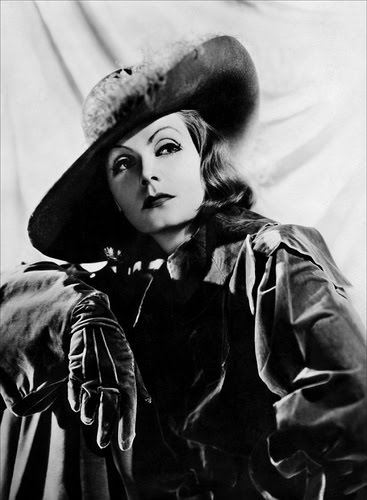 The filmmakers actually hired an expert to ensure that nothing in the film would offend the current Swedish Royal Family though they seem to have completely ignored his advice. However, the queen portrayed in the film is portrayed, I think, in a very positive way. She genuinely cares for her country and her people (at least until leaving them in the name of love) and come across as a very sympathetic character. This has, I think, more to do with Greta Garbo than anything else and the film is certainly better at showing off her skills as a great actress than it is in telling the real story of Queen Christina. The movie does get some aspects of her character right but, overall, pretty well misses the point of what Queen Christina was all about. That being said, I cannot help but like the movie. It is well cast, well shot, well directed and has some great dialogue in it and Greta Garbo gives a masterful performance. It has that air about it of being a “classic”. I simply think that the same cast and crew could have made an even better movie had they stuck to the true story of the most controversial Swedish Queen who once said, “I love the storm and fear the calm”. Indeed.
Monday, March 29, 2010
Swedish Anniversary in America
 It was on this day in 1638 that the North American colony of New Sweden was founded, during the reign of Queen Christina (above). The expedition set out the year previously under the command of Admiral Clas Fleming (a native of Finland) with the colony to be established by the veteran Dutch colonialist Peter Minuit all done under the aegis of the New Sweden Company. The Swedes settled in the area of Delaware Bay and began construction of Fort Christina near present-day Wilmington, Delaware. Settlements went ahead as planned even though it was in an area already claimed by the Dutch as part of their New Netherland colony. Most of the settlers were Swedes and Finns (more Finns arriving later) with an assortment of other Europeans, predominately German and Dutch. Minuit called the leaders of the local Delaware Indians together and negotiated rights to the land. New Sweden was a successful enough colony until 1655 when a Dutch army under New Netherland Governor Peter Stuyvesant led an attack that captured Forts Christina and Fort Trinity after which time the area of New Sweden was incorporated into the New Netherland colony which was, in turn, captured by the English in 1664. But, it was 372 years ago today that the Kingdom of Sweden arrived in America.
Subscribe to:
Posts (Atom)
