Monday, May 12, 2014

Royal News Roundup

In the English-speaking world last week, the Prince of Wales spoke to a meeting of Holocaust survivors, the Queen and Prince Philip visited Essex and later gave a special thanks to the work of the Journalists’ Charity. The Duchess of Cornwall opened an armed forces medical training base and the Countess of Wessex paid a visit to her regiment, the 5th Rifles, before they deployed to Afghanistan. The Prince of Wales also became patron of the Cystic Fibrosis Trust so, all in all, a fairly routine week. In Scandinavia, little Prince Henrik posed for some new photos marking his 5th birthday last Sunday but the most news in northern Europe was made in Norway. It was announced that Princess Martha Louise and her family will be moving home from London sometime this summer. Crown Prince Haakon and Crown Princess Mette-Marit helped clean up a beach but the most controversial news was when Progressive Party deputy Per Sandberg said that the Crown Prince and Princess are leftists and make people, like himself, become republicans. He was interviewed, along with republican Monica Maeland for a recently published book called “The Republic of Norway”. He pointed to the royal couple taking leftist political stances on issues such as the environment, climate change, immigration and others and said that they are acting like politicians and it strengthens his position as a republican, adding that, “It will lead to more and more people being republicans”.

The Palace would not comment on the subject, but of course I will: Certainly there are not many political issues in which I would agree with the Crown Princely couple but that does not effect my loyalty to the idea of monarchy at all and I would hope most Norwegians would feel the same, though I am just as sure that most Norwegians agree with their royals and disagree with me on such issues. However, it is worth noting that in this day and age when royals are supposed to be above parties, impartial and totally non-political that so many can embrace caused like those mentioned and not be accused of being partisan (until now anyway). It only seems to matter when it concerns taking a right-wing position. I suspect this will only become harder in the future as governments these days think it is their business to play a part in every aspect of our lives so that ultimately, there will be no issue that isn’t a political one. It should be known that the Progress Party is considered a right-of-center party in Norway which supports smaller government, lower taxes, restrictions on immigration and greater capitalism. None of which would any European government tolerate a royal voicing any support for whatever. It has often seemed to me that royals want to do something, anything and it is no surprise to me that they gravitate toward the causes that they do. Talk about lowering taxes and they will be accused of not wanting to pay “their fair share”, talk about immigration and they will be accused of being racists but feel free to talk about inclusion and climate change all you like -you’ll be “making a difference”. It does not make me feel like becoming a republican, it simply makes me feel sorry for the royal remnant in Europe these days.

Further down on the continent, King Willem-Alexander and Queen Maxima of the Netherlands attended the National Remembrance ceremony in Amsterdam last Sunday to commemorate all the Dutch men and women, civilian and military, who have died in wars or peace-keeping missions since the Second World War. Later in the week the royal couple attended a “Freedom Concert” and the King attended a play about Anne Frank. Meanwhile, royal sister-in-law Princess Laurentien paid a ‘low key’ visit to Sidney, Australia to attend the Fauna & Flora International. In neighboring Belgium, King Philip held a working meeting with the president and board members of the European Central Bank on Wednesday. On the Spanish front, HRH the Prince of the Asturias was in the Costa Rica this week where he met with out-going President Laura Chinchilla and attended the inauguration of President Luis Guillermo Solis. And, in African royal news, Prince Seeiso of Lesotho teamed up with Britain’s Prince Harry for a summer party in London to benefit their mutual charity “Sentebale” which assists those suffering from AIDS in the small African country.

In Asia the biggest news this week was certainly the implementation of sharia law in the tiny Sultanate of Brunei. Why so many should consider it so outrageous that a country which is overwhelming Muslim and surrounded by other Muslim countries should adopt the Islamic legal code continues to baffle me. Celebrities and movie stars in Hollywood protested in front of an elite hotel owned by the Sultan of Brunei and demanded that he sell it. It was a firestorm of protest! Personally, I cannot muster up very strong feelings on the subject, not living in Brunei and not being a Muslim, I cannot bring myself to care a great deal. If you are a Muslim it would seem only natural to me that Islamic teaching would have some influence over how your justice system (what is deemed ‘right’ and ‘wrong’) works just as it does, oh -I’m sorry- I mean *did* in the Christian countries of the west, once upon a time. Ask an ancient Druid what he thinks about the law of Moses being enacted in ancient Jerusalem and his answer would probably be similar to my own. However, I do have to point out a few curiosities about this and ask why so many seem to be picking on the little Sultanate of Brunei in this case.

Where were all of these people when the Shah of Iran was overthrown and replaced by the Ayatollah who, you guessed it, implemented sharia law in his country? They were all supporting President Carter who abandoned the Shah and allowed the Ayatollah to take over. In Brunei, they are protesting against the cruelties of a legal code that was only just started, which had not had time to be cruel or unjust to anyone, yet they were not doing this about Iran which has been stoning women for adultery and hanging homosexuals for years. Where have the Hollywood elites been all this time? For one thing, they were supporting President Obama who wants to make nice with the mullahs in Tehran. Could it be that Brunei is a safer country to protest against, being a tiny, little oil state that could never be a threat to anyone -unlike Iran? Why do these same people call people in America or European countries racist when they object to sharia law being practiced in the west only to stage a protest when Islamic law is enacted in an Islamic country? It certainly seems strange to this observer.

And another thing [Underage readers and people in Kansas stop reading now], I have seen several articles, some of them regurgitated from years ago, by women detailing how they were used and abused by the sexually depraved Sultan and his family. The ones about one royal brother in particular are fairly common and his depravity is no big secret but as for the Sultan himself this seems to be convenient timing to hold him up as a hypocrite. And, that he may well be, I don’t know and I don’t want to know. However, go ahead and hate me if you like, I have no sympathy for these women and am not impressed by the tone they take in their articles, jumping on the current, fashionable bandwagon. One points out that in the sharia law code punishments are harsh for homosexuality, adultery, theft and abortion and says, “There’s also capital punishment for rape and sodomy. I am no expert in international human rights. My only qualification in commenting on this issue is that one drunken evening in the early 90’s, the sultan and I committed at least two of the aforementioned offenses…” Well, gee you modest woman, I wonder which two it was? This is what you call, “Talking About Something by *Not* Talking About Something”. In every case, they claim some trickery was used to get them where they are but I am not so sure I buy that, at least totally. Because, they also talk about living in palaces and penthouses, lavish parties, fabulously expensive gifts and so on. In my book, keeping in mind I have a rather Roman view of justice, once you accept some form of payment, you stop being a victim and start being a paid prostitute. Also keep in mind that these women with all these stories all date from before sharia went into effect in Brunei so, again, why now?

If anyone was actually kidnapped, held prisoner and raped, I have nothing but the greatest sympathy for them and would favor seeing the guilty party, no matter how high born, suffer the most slow and painful punishment possible. However, I have never heard any actually say that, though some have come close. Usually it is a case of, I was technically an adult but young and stupid and made a mistake. Well, I’m sorry, but that’s life and that is not a shocking turn of events when one is starting out looking to cash-in on your ‘physical attributes’ in one form or another in the first place. I cannot have much sympathy for people who are crying about having to pay the stupid tax. That being said, I don’t like hypocrisy either, no matter who does it. But that leads to another question about these salacious stories. They are so heavy on condemning the Sultan or his family for being hypocrites (and I’ve heard similar stories about Arab princes on holiday and how fast they run through the European prostitutes) but it makes me wonder (and I mean this sincerely) if they are upset that the prince or Sultan is doing this or that everyone else is not allowed to do it? I’m really confused on that one. They don’t seem to have a problem with other elites who use women up and throw them away on a daily basis in countries all over the world. Some even get to be President of the United States and are endorsed by the National Organization for Women. So, that’s all I really have to say about the outrage over sharia in Brunei. I’m not for it but I’m not a Muslim so that should rather go without saying and the law wouldn’t apply to me even if I lived in Brunei which I do not. I’d just like to know, as far as the outrage goes; why them and why now?

Friday, May 9, 2014

Restoring Monarchy - What It Takes

I have been asked many times by many different people in various parts of the world, what exactly a frustrated monarchist can do to advance the cause, to restore a fallen monarchy or defend an existing one. The persistence of these questions gives me the impression that many find my answers unsatisfying. That is understandable. We live in a world which has fallen so far from traditional values that there are few satisfying answers to be had. Of course, as I have mentioned before, there are little things anyone can and should do in their daily lives to support the monarchist cause. Display your loyalty proudly, refute revolutionary lies with royalist truth, do not let a distortion go unanswered, point out the hypocrisy of the republican activists, mark important occasions and never allow anyone to cause you to think of yourself as the one with strange views (particularly if you are a subject of a monarch), start with your family and friends and stand together with like-minded individuals. In many cases, religious institutions can be a good focal point as well. However, the wider “war” is a more difficult matter and it is on that front that I fear too many have given up or simply fail to give battle because of a desire for someone else to do the hard work for them or on their behalf. This is what I want to address today.

On numerous occasions I have said that what is required is a conversion of the modern culture. That is a difficult task and requires a different sort of commitment than that of someone fighting for king and country in a military struggle. It calls for dedication, patience and resilience. It is a long, tiresome competition that rewards endurance more than decisive action. Sadly, far too many prefer not to try even attempting so daunting a task with a final goal that is so far out of sight. This causes not a few monarchists to, almost subconsciously, switch priorities and demand that their monarch (if they have one) stand as their champion rather than acting as the champion of their monarch. They look at society and wonder why the monarch does not do something to make it all better. This often leads to disenchantment and frustration and then anger. They begin to actively blame their monarch for the ills of modern society and effectively become republicans by either abandoning their allegiance outright or backing some ideal era from the past or a rival royal line from history that is not involved in modern society, has never been involved and so cannot be blamed for anything but upheld as a pristine, imaginary alternative. Although they could never bring themselves to call themselves republicans, they become effectively that by joining the side of those who wish to see the remaining monarchies of the world pulled down.

I have personally seen this pattern of behavior more often than I would like and some fly through the stages faster than others. Some have even ended up becoming republicans outright after they realize that their idealistic, imaginary sort of monarchism gets them nowhere and often involves a falling out with their handful of on-line confederates who each tend to think that their way is the only way. The real problem though, is the one they fail to address and shirked from in the first place; the conversion of the culture. A monarch cannot change society when that society does not even take their monarch seriously. They can do scarcely little for a people who have forgotten what true loyalty really is. Too many today have no conception of real loyalty, too many have no conception of what a monarch really is, their place in a country or nation and, increasingly, many have forgotten what even a nation is or why it is important. They have allowed themselves to become small, focused only on their whims and appetites, relativistic in their thinking and while patting themselves on the back for being so broad-minded they feel a false pride while they themselves, their society, even their nation willingly allows itself to shuffle toward extinction.

It is important to keep priorities in order and not to stand on the sinking deck of the Titanic arguing over whether the captain was properly certified or not. As stated at the outset, that does not mean letting everything else slide and just trying to wage some sort of a moral campaign but it does mean that the problem of the republican mindset is not simply a political one. This sort of thinking is, in itself, a product of the post-revolutionary, ideological world. We have been taught to think in ideological ways and that everything will be perfect if we can just find and implement that perfect political formula that always seems so elusive. The problem is that there is no one, rigid, ideology that would well serve everyone in the world. Peoples and cultures are too different for that, even in these modern, globalist times when it sounds like everyone is repeating the same talking points peppered with popular phrases like “equality”, “sustainability” and “social justice”. Some countries have different priorities than others, some are much more regulated than others, some are much more monolithic than others and what works in one place might not work in another. So, the arguments and the tactics for trying to restore the monarchy in a country like Portugal is going to be vastly different from the arguments for restoring the monarchy in a country like Russia. What might be the best approach in Italy may not be the best approach in Nepal.

What is common to all is the fact that each republic represents a people who have (often violently) cut themselves off from their own history. It is a fact that, rightly or wrongly, many European monarchies (and Commonwealth Realms like Australia and Canada) have tried to deemphasize their own history in an effort to encourage and facilitate multiculturalism. Some monarchists in these countries do not see that as a bad thing and are proud of the ability of their monarchs to unite various people from various religious and cultural backgrounds. However, even if one regards that as a positive thing, the same circumstances do not apply to republics. Where monarchies remain, their monarchs have presided over the change in their countries toward multiculturalism and so everything was done under the “umbrella” of the existing monarchy. In republics, on the other hand, this attitude would not be possible as the new populations of immigrants and the descendants of immigrants really have no connection with the former monarchy, most of which have not existed in the lifetime of anyone still above ground. For countries like this, it would be extremely difficult for the public to ever even open their mind to the idea of restoring the monarchy without getting in touch again with their own history, the unique story of their people in which monarchs invariably played a large part.

Every revolutionary republic is like a country cutting off its own head and expecting a new one to grow in its place. It doesn’t happen, so they flail around trying to find a replacement, constantly trying to reinvent themselves until they reach the point that they don’t know who they are because they have forgotten who they were in the first place. That is why I cover a great many historical subjects and figures (I’m also just interested in the subject on my own) because people must be awakened to their own history -and the TRUTH of history so that they begin to feel a real connection with the past. Even the largely ceremonial monarchs that are most common today are still historical figures in that, even while not impacting policy and world events as in the past, they are a living link with the history of their country and their people. They embody history and the history of themselves and their family is the history of their countries and peoples as a whole. If, for example, one is a citizen of the Czech Republic, the history of your country as it is today only goes back as far as 1993. Prior to that, it was a part of Czechoslovakia and even then, the Czechoslovakia of the post communist era was a totally different thing than the Czechoslovakia of the communist era which was totally different from the original Czechoslovakia which was still a very young country. Yet, if you are a Czech aware of your history, you know a land and a people that stretched back to the Moravian Empire and which had been part of the Austrian Empire which was a successor state of the Holy Roman Empire which was a revival or an attempted revival of the classic Roman Empire that goes back to the beginnings of western and European civilization under a monarchy that was, indirectly, a continuation, in some way at least, of those original Roman Emperors.

Far too many people are ignorant of their own history, their own national story. Even those which seem to be obsessed with the subject are often only fixated on holding on to past grudges rather than having a full understanding of where they come from. Not long ago I had a verbal altercation with a Korean woman who was, as usual, accusing the Japanese of denying history. Yet, she was totally unaware that the last Crown Princess of Korea was Japanese and left Japan to spend the rest of her life in Korea, caring for the most vulnerable of the population. She said she had never been taught this in school and I have no doubt that is true. She could detail every real or imagined injustice Korea ever suffered during the rather brief period of Japanese colonial rule but that is not a true understanding of Korean history, just a determination to hold a grudge against Japan and claim victim status. A true understanding would not reduce Korea to being known simply as a battlefield of the Cold War and a Japanese colony but would cover vast centuries of trials, triumphs and accomplishments from King Munmu of Silla to the grandest heights of Sejong the Great. That is also another byproduct of the “small thinking” of modern times that so many people today seem to want to be pitied rather than admired or respected. It is sadly not at all uncommon, particularly in formerly colonial countries that have been less than a roaring success.

No matter if one is from China, Turkey or Ethiopia, although they have very few similarities, a proper understanding of history will awaken people to the fact that the end of the era of monarchy was a break with the natural history of their land and people that included some bad times certainly but also their proudest moments of national greatness and achievement. Sure, modern mainland China may have shot some junk into space and have nuclear weapons, but they have never built anything to rival the Ming architecture of the Forbidden City or produced any philosophers anywhere close to being on the same level as Confucius nor had any national leader as revered as the KangXi Emperor. Modern Iran has a history limited to the life of the Ayatollah Khomeini while Imperial Iran had a lineage that went back to the likes of Cyrus the Great, and, I might add, the last Shah made a point of trying to acquaint his people with the entirety of their cultural legacy, not just on the post-Islamic period, but back to ancient times when Persia was a world super-power.

My point is that for monarchy to be revived, attitudes and values must be changed. People must be convinced of the truth of ancient wisdom, which some would call common sense because it has to be in order to last long enough to become ancient. They must be brought to a more traditional way of thinking, with a proper respect for tradition itself, for religion and things like national myths and folklore. They must also be made aware of their history. These are not easy things to accomplish, which is probably why so many ignore them and simply damn their constitutional monarchs for not snapping their fingers and changing the world by magic. However, we can influence them in a million different ways, often by things that seem inconsequential. It may seem like a little thing, but it makes a difference which can be seen by how the communist Chinese government has reacted to the hanfu movement (mentioned here not long ago) which simply seeks to revive traditional Han Chinese dress and customs. You can do it by doing something like that, wear something that attracts attention, fly a flag, wear a ribbon on your lapel, put a royal portrait in your cubicle at work -anything that will encourage someone to ask you a question and thus give you an opportunity to explain to them, first that monarchy is important to you, and later, in time, why it should be important to them. Most of all, remember that in a struggle such as this, the thing that pays off the most is simple persistence.

Thursday, May 8, 2014

Monarch Profile: King William IV of the United Kingdom

Fair or not, it is a fact that the life and reign of King William IV has been largely overshadowed in history by his successor Queen Victoria. It is not uncommon for King William IV to be given barely a mention simply as the predecessor to the Queen who gave her name to an age and became the longest-reigning monarch in British history. However, while he may not stand out much from the ranks of British monarchs, he was a solid overseer of his dominions and led a life of remarkable service that should not be forgotten. The future monarch Prince William Henry was born on August 21, 1765 at Buckingham Palace, the third son of Their Majesties King George III and Queen Charlotte of the United Kingdom of Great Britain and Ireland. With two elder brothers ahead of him in the line of succession, no one ever thought he would one day wear the crown himself. He did not have much of a childhood, spending most of his early years at Richmond but, in those days, children were expected to grow up rather quickly. When he was only thirteen his private education ended and he was shipped off to the Royal Navy as a midshipman, learning the ropes (literally and figuratively) to become an officer.

To the modern reader this may seem somewhat shocking but 13-year old midshipmen were not uncommon in those days, some, in fact, were younger than that and boys working as “powder monkeys” onboard ship could be considerably younger still. The teenage prince was, of course, a special case but received very little special treatment. He took his lessons with the other young gentlemen, took his turn performing menial tasks, played pranks, had fights and got in trouble like all the rest. He also saw combat at the battle of Cape St Vincent in 1780 during the American War for Independence. He served ashore in New York and was even the focus of a kidnapping plot by the rebel forces of the Continental Army. However, British intelligence learned of the scheme and assigned a guard to the prince, so the plot was called off. Prince William was a dedicated officer who loved the navy and the navy life. In 1785 he earned his commission as a lieutenant and in 1786 was appointed captain of HMS Pegasus, serving in the West Indies under the famous Admiral Horatio Nelson. The legendary admiral had a high opinion of Prince William and the two became fast friends with the Prince giving the bride away at Nelson’s wedding to Frances Nisbet in 1787. Later, the Prince was promoted to command a frigate and in 1789 became a Rear Admiral. That same year King George III granted him the titles of Duke of Clarence and St Andrews and Earl of Munster.

This entitled him to a seat in the House of Lords and, like his brothers, tended to associate himself with the Whigs in opposition to his father the King. This ended up costing him more than he would have ever expected. Having resigned from active duty in the Royal Navy upon entering the political fray, he found it difficult to return to the service he loved. Probably just as a thoughtless show of rebellion, he opposed the British declaration of war on France. It was a stupid thing to do and when he was applied to return to the navy, eager to take part in the war at sea, he was denied. Even after publicly changing his position and speaking out in support of the war, the conflict with France would pass without the Prince being given any significant command or seeing any front-line service. This left him with nothing to do but argue politics in the House of Lords and he would have been much better suited to a career at sea as his political views tended to be scattered and inconsistent. He thought the laws related to marriage and family were too harsh and that the penalties against dissenting Christians were oppressive but saw nothing wrong with the continued legality of slavery in the British colonies. It might have caused some to remember the nickname Prince William was given by his family as a youth; “Silly Billy”.

Perhaps because of this, views on the Duke of Clarence tended to be divided. In many ways he quite liberal, being a staunch advocate of Catholic emancipation but he was also more supportive of his family and was never able to be as cruel toward his father as his older brother King George IV had been. Most liked him, whether viewing him as forward thinking or just a good natured, simple sailor. He lived, for a time, with his mistress, a London actress, but later married Princess Adelaide of Saxe-Coburg-Meiningen. Not considered a great beauty, she was nonetheless an excellent wife, faithful, supportive and very religious. Unfortunately, the two never had any children who long survived so that the only offspring of the Duke of Clarence were the ten illegitimate children he fathered during his years with his mistress “Mrs. Jordan”. Still, he had a happy and genuinely good marriage with Princess Adelaide who, perhaps, helped reform him just a bit. The choice he made was also more important than it may have first appeared since his only surviving elder brother, King George IV, had only one legitimate child who predeceased him. So it was that, at a fairly advanced age for the time, the Duke of Clarence became heir to the throne. For most of his life he had given it very little thought, but once the Crown was within reach, he took great care to live to obtain it. He went to great lengths in an effort to remain in good health.

On June 26, 1830 at six in the morning, the Duke was awakened and told that his brother was dead and he was now King William IV of the United Kingdom of Great Britain and Ireland and Hannover. He said he had always wanted to sleep with a queen and went back to bed with his newly elevated wife Queen Adelaide. However, once he was later fully awake, few other monarchs displayed such unabashed joy as King William IV. He dashed off, alone, driving his own open carriage through the streets of London, shaking hands with his new subjects, offering a ride to those who desired one and even getting some kisses of congratulations from some prostitutes. Some were aghast at his behavior, particularly after all the preening and finery of George IV, but many others viewed it favorably. Many ordinary people were pleased that their new monarch seemed so “normal” and viewed him as a good man of common sense who would sort things out in the government. It seemed rather heart-warming to have the new monarch actually approach common people on the street and tell them how happy he was to be their new king. Needless to say, his coronation on September 8, 1831 was a much less extravagant affair than that of his brother, whose coronation had been the most lavish in all of British history. King William IV was a practical, unassuming and dedicated monarch who was all about the “business” and not about the “show”. Still, he was not without a sense of humor. When the Privy Council was first brought in to him and dropped to one knee, he mischievously asked, “Who is Silly Billy now?”

Despite the outrage of the more grand members of the court and aristocracy, the great majority of the people cheered King William IV for his simplicity and care to spend as little of their tax money as possible. King William looked to the future with the hope and optimism of the reformer, and perhaps with the naiveté of one as well but that would fade quickly. Queen Adelaide, on the other hand, remained the nervous one. Always preparing piously for the end of the world, as Queen she prepared for a possible revolution, admiring the late Queen Marie Antoinette and hoping she could behave with such stoic courage when the mob came for her. She need not have worried. When King William IV, not waiting for any preparations to be made or for guards to line the streets, dashed over to Westminster, hurriedly placed the crown on his head at an odd angle and declared Parliament dissolved (clearing the way for the passage of the Reform Bill) the public cheered him mightily for sending the politicians home. The Whigs adored him, thinking he was firmly on their side, which, of course, he was not. He was a dutiful monarch who was not about to support anything he thought detrimental to the welfare of his people.

King William IV was nothing if not a hard worker. His first prime minister, the Duke of Wellington, said that he accomplished more with William IV in ten minutes that he had been able to get done with George IV in ten days. He got along well with Earl Grey, the Whig Prime Minister who had replaced Wellington but he was not about to be the servant of the Whig party either. When King William became convinced that reforms were becoming too much and being done too quickly, he determined to apply the brakes. In 1834 he dismissed the Whigs from office and appointed Sir Robert Peel to the post of Prime Minister but Peel found it impossible to form a government and, in the end, the King had to invite the Whigs to come back again. King William IV would be the last British monarch to appoint a Prime Minister without the support of Parliament and while he supported many liberal ideas for reform and greater democracy, he did so in an effort to win support for the existing institutions and seemed rather shocked when this did not always prove to be the case. He had seen his father, King George III, dismiss ministers, call new elections and have the people vote in accordance with his wishes for the most part. However, with the reforms, King William saw himself lose popularity for doing the same and came to accept that the scales of power were tipping in favor of Parliament and the House of Commons during his reign.

On the world stage, King William IV was friendly with the United States, supported Belgian independence and the candidacy of Duke Leopold of Saxe-Coburg-Gotha to be King of the Belgians. However, he opposed unnecessary intervention in foreign countries and never even visited his Kingdom of Hanover in Germany. Under the system that existed then, the Austrians actually had more influence in Hanover than the British did and when the brilliantly conservative Austrian Chancellor Prince Metternich took action to prevent the spread of liberalism in Germany, it was only with difficulty that King William IV saw this pushed back. He gave Hanover a new constitution that was friendlier to the middle class and gave much more power to the parliament but it was a flash in the pan, more suited to Britain than Germany and after his death, the next King of Hanover would see these changes done away with. In his domestic life, King William was mostly troubled by disputes and drama within the Royal Family. As he had no children of his own, the most intense of these involved the succession and his adamant opposition to his sister-in-law the Duchess of Kent, mother of Princess Victoria who would succeed William on the throne. The King took great offense at the Duchess disrespecting Queen Adelaide, disliked her tyrannical nature and was suspicious of the influence the controller of her household, John Conroy, seemed to have over her. King William was determined to live long enough to see Princess Victoria reach adulthood so that the Duchess of Kent would never be able to hold the power of regent for her daughter.

Determined to the end, King William IV managed to do exactly that. He died on June 20, 1837 at Windsor Castle, just one month after his niece turned eighteen. Today, his relatively short reign is often overlooked but it was a crucial period in British history. Despite his earlier opposition, King William IV signed the abolition of slavery in the British colonies, enacted laws to stop child labor and provide assistance for the poor. On the negative side, his reign marked the ascendancy of Parliament dominated by the House of Commons but it would be wrong to paint William IV as being a man of any particular political ideology. He opposed the extremes of both the left and the right and was a thoughtful, competent constitutional monarch. Like the sailor he started off as, King William IV provided a steady hand on the wheel of the great ship of state and steered it along a moderate course through political waters that would have upset things and caused great disasters in less capable hands.

Wednesday, May 7, 2014

Monarchist Quote

"In this vein, I earnestly hope that in 2014 we will be mindful of making conscious efforts to concentrate on shaking ourselves free from our spiritual statelessness—a mentality seriously affecting us since the end of the Greater East Asian War and the American occupation of Japan (1945-1952). That we Japanese alienated ourselves from the origin of our culture and civilization has been the single biggest cause of this condition that continues to plague us today."
-Yoshiko Sakurai

Tuesday, May 6, 2014

The Ming Dynasty After the Fall

A couple weeks ago, on April 25, was the anniversary of the end of the rule of the Ming dynasty over China with the death of the last Ming Emperor, Chongzhen, in 1644. By the time Emperor Chongzhen came to the throne it is likely that the Ming Dynasty was already beyond repair. He tried to set things to rights but corruption had run rampant, the treasury was empty, bad harvests and drought had caused widespread famine and hunger and rebellions were becoming increasingly commonplace. The last straw was the attack of a group of rebels under Li Zicheng who had already turned usurper by declaring himself emperor of the “Shun Dynasty”. With no hope for survival, Emperor Chongzhen gathered the female family members together and, with tears streaming down his face, killed them all with his own sword before hanging himself in the Jingshan Park behind the Forbidden City. Hundreds of courtiers dutifully followed their monarch in death rather than serve the usurper. As we know, Li Zicheng never became a real ruler of China, being driven from power and defeated by the Mongol and Manchu forces of the Qing Dynasty that next assumed the Mantle of Heaven. The Ming Dynasty tried to carry on for a time as the Southern Ming Dynasty but they were a beaten and increasingly fractured force, eventually giving way to the forces of the Great Qing Empire.

Yongzheng
The family, under their original name of Chu, continued to survive and for that brief time early on they even then made rather uncomfortable enemies for the new Manchurian dynasty. Emperor Huang Taiji had come to power in Peking at the head of his forces, standing as the avenger of the fallen Ming Dynasty, punishing the usurper who had overthrown them yet still determined to see their own victory consolidated rather than handing power back over to the Ming. They had won, following all established tradition, and secured the Mandate of Heaven, happily without actually overthrowing the previous dynasty. So it was that the suppression of the Southern Ming could be seen as somewhat awkward. In any event, once all was settled and secure, the Qing Dynasty took steps to show that there were no hard feelings between themselves and their imperial predecessors in China. So it was that the Qing Emperor Yongzheng (one of the three great Qing monarchs who reigned at the height of Manchu power and prestige) granted to the heir of the Ming Dynasty the title of “Extended Grace” in reference to the mercy that the Ming had been shown by their successors. So, the heir of the Ming dynasty, head of the Chu family, was the Marquis of Extended Grace in the aristocracy of the Great Qing Empire.

There was only one condition attached to the title by the Manchu court and it was really no condition at all but more akin to a reward for doing what every faithful Chinese gentleman would feel obliged to do in any event and that was that twice a year the Marquis of Extended Grace was to visit the Thirteen Imperial Tombs (of the Ming Dynasty) to perform the rites of remembrance and give a report on this to the Qing court for which the Manchu Emperor would compensate him for his expenses on these occasions. So, in effect, the Qing Emperor was paying the Ming heir for doing officially what he almost certainly would have done or would have wished to do in a private capacity in any event. After the passage of centuries most of the people of China forgot about the descendants of the former dynasty and the family itself came to be in a very modest condition, by not a few standards some would even say impoverished. However, each Marquis of the Chu family continued to dutifully visit the Thirteen Imperial Tombs and receive their allowance from the Qing court without ever actually meeting the Great Qing Emperor himself. That situation persevered until finally the reign of the Qing Dynasty too came to an end.

Marquis of Extended Grace
The British tutor of the last Manchu Emperor, Reginald Fleming Johnston, relates in his book, “Twilight in the Forbidden City” about his noticing the name of the Marquis of Extended Grace in the court newspaper and suggesting to the young Emperor that he should meet with the heir of the former Ming Dynasty. It was all arranged and on September 7, 1924 the last Qing Emperor met face to face with the heir of the last Ming Emperor in the Forbidden City (itself a monument of the Ming Dynasty reign). Later he called on Johnston to thank him for having arranged the visit but protested when Johnston offered to return the favor and visit the Marquis at his own home. He confessed that the traditional robes he wore were borrowed and he did not wish anyone to see the poor state he was living in. Johnston agreed to respect his wishes but did photograph him and later sent him copies of the snaps along with some gifts to thank him for his courtesy. He was a loyal and genteel man who greatly impressed the British scholar as did his actions later. 1924, after all, was the year that the last Qing Emperor was expelled from the Forbidden City by the corrupt forces of the Republic of China and in the aftermath it became much easier to tell who the true friends of the monarchy in China were.

Immediately after the Revolution, the republicans tried to make a show of paying pretended homage to the memory of the Great Ming Empire, the last of the dynasties of the majority Han nationality. The traitor Sun Yat-sen even went to the tomb of the founder of the Ming Dynasty (absurdly wearing a western frock coat and top hat) to proclaim that they had driven the foreign Manchurians from power. However, they took no care to actually preserve and maintain the relics of the Ming era and the tombs themselves soon began to fall into decay. Their pretended respect for the old Ming Dynasty was just that; a pretense and nothing more. It also annoyed the republican elite that the Ming heir, the Marquis of Extended Grace, even after the fall of the Qing Dynasty, continued to pay his respects at the tombs of his ancestors in the name of the Manchu Emperor. As stated above, this was still going on decades later in 1924 when the Marquis and the last Emperor finally met in person. The republicans had tried to convey the idea that they respected the history and culture of the old, traditional China by paying lip-service to the Great Ming Empire of the past. However, their game of pretend was ruined by the fact that the Ming heir remained loyal to the last Qing Emperor and continued to perform the duties attached to the noble title he had been given. He of course, had no reason to prefer the republic. It had done nothing but betray the dynasty which had shown favor and reconciliation to his own family, they certainly did not restore the Ming nor did they even grant any assistance to the Marquis in his poverty. They also refused to recognize his noble title.

No doubt some today would like to assert that the fidelity of the Ming heir to the Qing Dynasty was purely a matter of convenience, of serving the powers-that-be rather than any sincere act of principle. Those people, however, would be totally wrong as the actions of the Marquis of Extended Grace himself prove. Naturally he came to know that, after being granted an imperial audience himself in 1924, the last Qing Emperor was expelled from the Forbidden City, was effectively placed under house arrest by the republican authorities and later managed to escape to the foreign concession in Tientsin, given a safe haven in the Japanese legation. Chu Yu-hsun, Marquis of Extended Grace, heir of the Ming dynasty, despite his poverty, managed to save enough money, which was a considerable sacrifice for himself, to make the journey to Tientsin simply to kowtow before his Emperor one last time and assure him of his continued loyalty and devotion. Johnston mentions in his book that the Marquis had two young sons at the time he met him but what exactly became of the family I do not know. Under the republic they slipped into total obscurity with many of their former loyalists eventually becoming secret societies and gangs in China and in foreign countries, some perhaps not even cognizant of their origins. Still, despite the effort of the republic to use any lingering loyalty felt for the Ming dynasty to their own advantage, the Marquis of Extended Grace set the right example of loyalty to his own ancestors and of loyalty to the imperial system.

Monday, May 5, 2014

Royal News Roundup

Last week started off with the double canonization of Popes John XXIII and John Paul II in Rome with, for the first time in history, two living popes (Francis & Benedict XVI) participating in the mass together. The remaining Catholic monarchies were well represented at the ceremony. In attendance were King Juan Carlos and Queen Sofia of Spain, King Albert II and Queen Paola of the Belgians, Prince Hans-Adam II, Princess Marie, Prince Nicholas and Princess Margaret of Liechtenstein, Grand Duke Henri, Grand Duchess Maria Teresa, Prince Louis, Prince Sebastian and Hereditary Grand Duchess Stephanie of Luxembourg. The two new papal saints were also not without some, indirect, royal connections. Although both were of humble backgrounds, Pope John XXIII was a particularly good friend to Princess Giovanna of Italy, later Queen Ioanna of Bulgaria, when he was Apostolic Visitor to that country and Pope John Paul II, whose father was an officer in the Imperial-Royal Army of Austria-Hungary, was named after Blessed Charles I, the last Hapsburg Emperor.

Also in southern Europe, the Princely Family of Monaco is stressing again their disassociation from the upcoming film on the late Princess Grace which is about to have its premier in Cannes. The film, which stars Nicole Kidman as Princess Grace and Tim Roth as Prince Rainier, focuses on a difficult period in Franco-Monegasque relations and the invitation to Princess Grace by Alfred Hitchcock to return to acting. The Princely Family was initially supportive of the project and even helped bring attention to the film as well as providing information and details on the life and important events to be covered in the movie. However, the filmmakers repeatedly disregarded the facts and ignored corrections which the Palace, helpfully, provided in an effort to make the story more “dramatic”. After a certain point, the House of Monaco cut ties with the project and denounced the film as an inaccurate piece of fiction simply trying to cash-in on the name and image of the late Princess Grace.

In the north, King Carl XVI Gustaf of Sweden celebrated his 68th birthday and in Denmark the authorities announced an investigation into claims that credit card transactions by members of the Royal Family were leaked to gossip magazines. The King of Norway announced he will be attending the D-Day ceremonies this summer and both Sweden and Norway hosted a visit by King Philip and Queen Mathilde of the Belgians this week. For the House of Windsor, the biggest yet least interesting story (for yours truly at least) was the break-up of Prince Harry and his South African girlfriend. The Prince of Wales and Duchess of Cornwall also led mourners at the funeral of Duchess Camilla’s brother Mark Shand who died after falling and suffering a head injury in New York. Later in the week, for the wedding of a friend, Prince William and Prince Harry were in Memphis, Tennessee where the two princes also took time to visit “the King’s castle”, Graceland, the home of Elvis Presley. Prince Harry also made a splash at the party scene in Miami, Florida.

Africa made some royal news when Grammy-winning hip-hop singer Erykah Badu (from the United States) gave a special concert for the birthday of King Mswati III of Swaziland. Badu is described as a “human rights activist” and was criticized by many people for hypocrisy for singing for the King and giving him a gift of a hundred dollars and a stone supposed to contain properties to ‘lift his spirits’. The singer responded via Twitter that she was not paid by the King and knew nothing of the political situation in Swaziland (and to be fair, before this hit the news, I had never heard of Erykah Badu so…). As most know, King Mswati III is the last absolute monarch in Africa and is the focus of a great many accusations of tyranny and corruption. Over in the Middle East, Princess Haya of Jordan, secondary consort of the Emir of Dubai and Prime Minister of the UAE, Sheikh Mohammed bin Rashid Al Maktoum, celebrated her 40th birthday last week. She is also president of the International Equestrian Federation and so popular that in the same week that organization changed its rules to allow the Princess to run for a third term in that position. In Saudi Arabia, a new Minister of State took his oath of office and a new website was unveiled by which the people can petition the King directly.

In Asia, a Thai comedian and red shirt activist lost his appeal after being convicted of a slur against the King in a political speech. He is not the first and many of the red shirt supporters of the fugitive former Prime Minister Shinawatra are claiming that the authorities are using the lese-majeste laws to persecute them. However, that is nonsense as members of the yellow shirts have been punished for the same offense and it is simply a fact that the red shirts are less supportive and reverent of the monarchy than their political rivals. Also in southeast Asia, making quite a bit of news last week, was the “unveiling” (no pun intended) of the new sharia law code by the Sultan of Brunei. We have discussed this before and it covers the usual items, fines for indecency, pregnancy without being married or failure to attend Friday prayers, provisions for corporal punishment and stoning and all that stuff. Not many news outlets or international watchdogs mention that the new law code applies only to Muslims, who are of course the majority, and not the non-Muslim minority in Brunei, most of whom are Chinese. Finally, last week HIH Princess Akiko of Mikasa visited Turkey and was presented with a special album of photographs from the sinking of the Ottoman frigate “Ertugrul”. This relates to a famous incident that brought Ottoman Turkey and the Empire of Japan together in 1889 when the Turkish frigate, after a visit to Japan, was sunk in a storm off the coast. Japanese fishermen rescued the survivors and treated them with such kindness and dignity that the event is remembered every five years and has been a source of Turkish-Japanese friendship ever since.

Friday, May 2, 2014

On the Legitimacy of Monarchs

One of the problems with this medium (of the media) is that new people come along and start reading but have no idea what has already been written about unless they go back through the archives beyond the front page. New readers are, of course, not a problem but it does mean that one is often questioned on a point covered in the past, at times covered repeatedly though the questioner is ignorant of this. I have tried to set things out in the “About” section and, of course, anyone can peruse the archives as they wish, yet, not everyone is going to do that. Many, the majority probably, will simply start with the front page and go from there. One such issue that comes up from time to time, more often than I would like certainly (hence the page devoted exclusively to the subject) is royal legitimacy. This is a subject your resident mad man finds increasingly tiresome and frankly, though it is perhaps flattering in a way, I am astounded that anyone would seek out a blogger for the ultimate and absolute definition of “truth” in the universe. It sounds absurd to put it like that, but that is often what it comes down to. The republican mentality and what the former Pope or Pope Emeritus or Co-Pope or whatever Benedict XVI is supposed to be now once called the tyranny of relativism has done its work well. Speaking of the Roman Pontiff, there once was a time when the legitimacy of any monarch, in Catholic eyes, depended on the endorsement of the Pope. Such is no longer the case as there are people who deny the legitimacy of the Pope while still calling themselves Catholics.

That underlies one reason why I refuse to start down the rabbit hole of arguments over royal legitimacy; because there is no end to it. Almost every single monarch still reigning in Europe has some group of people, no matter how small, denying their legitimacy to occupy their throne. And, for the one or two others, I dare say some of the arguments against other monarchs could be applied to them as well. There are some who even delight in feuding over the legitimacy of monarchs who are not even reigning and dynasties which have not actually held a throne in over a hundred years. What this is supposed to accomplish in the reality of the present remains a mystery to me. Two groups that have always stood out the most to me are the Jacobites of Great Britain and the Carlists of Spain. Both were monarchists for whom I have the utmost respect and the greatest sympathy. Had I been alive in their day, I would have certainly been among their ranks of supporters. In the case of the Jacobites, they resisted gallantly and fought like heroes. They were eventually defeated but they remain, for me at least, an honorable memory. In time, they realized that their cause truly was lost and reconciled themselves to the new royal line. The tiny minority today who has taken up their name and denies the legitimacy of Queen Elizabeth II are, frankly, no better than republicans and by their very actions insult the legacy of the actual Jacobites.

I say that because, even in the days when actual Jacobites were still alive, men who had actually fought with “Bonnie Prince Charlie”, they recognized then that times were changing and the temper of society was not as it had been in the past. Many came to America and settled in the piedmont of North Carolina. When the American War for Independence broke out, there was no talk from these men of “German Georgie” but rather they rallied to the Crown and in support of King George III, recognizing that the monarchy under a different royal relation than they would have preferred, was far better than supporting godless republicanism. The Jacobites had, in a way at least, been fighting for the “Divine Right” but more or less since the victory of King William III, the Crown ruled by the right of Parliament. However, the American rebels were denying any right for a Crown at all, further than that, they were denying even a place for any Crown at all in national life. This was, obviously, something no Jacobite would find it easy to tolerate. If the people had turned against the very idea of monarchy; how on earth could they be expected to understand the significance of royal bloodlines and dynastic legitimacy?

The Jacobites remain, for me, an honorable memory and an example of truly steadfast monarchist loyalty. That in no way changes my view that the one and only monarch of Great Britain and Northern Ireland is Queen Elizabeth II and that she should be supported and defended to the last measure. The public sentiment has changed quite drastically even from what it was in 1776, even in Britain. As I would assume most monarchists know, the legitimate heir to the Stuart royal line (which was what the Jacobites supported) is, today, Duke Franz of Bavaria. I assure you that the vast majority of people in Great Britain have never heard of the Duke, have no idea who he is and have absolutely no interest in bringing this elderly Bavarian royal bachelor over to London to become their monarch. As it happens, Duke Franz himself has never voiced any such desire either. From his actions it can be assumed that he would be perfectly happy to occupy the throne of a restored Kingdom of Bavaria were he to be asked, but no more than that just as no heir of the Stuarts has actually claimed the Crowns of England, Scotland and Ireland since the death of the last actual male descendants of King James II himself. The point is that, as things stand now, the only option besides a Great Britain and Northern Ireland under Queen Elizabeth II and her heirs and successors is a Great Britain and Northern Ireland with no monarch at all, and it is as simple as that. The public mentality has changed and they no longer accept any legitimacy other than that bestowed by the public will. The monarchy remains because the public wish it to remain and they have not the slightest conception of even the mentality behind legitimacy based on royal bloodlines and this giving someone an inherent, God-given right to be the monarch of their country. That is simply the fact of the matter, deplorable though it may be. Carrying on that fight today would be rather like a Latin-mass traditional Catholic trying to convince a population of Buddhists of the invalidity of Vatican II. You have your priorities grossly out of order.

Next we come to the Carlists who are a very unique case to say the least of it. Here was a group of legitimists who lost the war, lost many wars in fact only to finally have their cause prevail in the end at which point they refused to accept victory and resumed the war (though only in words and mostly confined to the internet these days). In some ways, the Carlists remind me of the pro-Orange majority of the Church of England back in 1688. They were a church that existed only because of the principle of non-resistance to royal authority that was arguing that the church must resist the royal authority. Similarly, the Carlists were absolute monarchists who were driven to rebellion by the actions of the last absolute monarch of Spain, King Fernando VII, who declared his daughter rather than his brother to be his heir and successor. However, he did not do this by the traditional legal process but simply decreed it on his own absolute authority and so, after his death, the Carlists rebelled against his daughter and proclaimed his brother Don Carlos to be the true King of Spain. For myself, I have no doubts that the Carlists were on the side of the angels in their cause, however, one could make a legitimate case that, after a certain point, they were doing Spain more harm than good by continuing on rather than seeking some sort of reconciliation. Eventually, the country went to ruin, the empire fell away and even if they had been militarily successful, the Carlist heir would have had far less of a realm to rule as a result of the long succession of wars.

This was something that Britain did not suffer. The Jacobite risings were fewer and less severe than the Carlist wars and the British Empire did not suffer as a result of them. In Spain, on the other hand, the situation deteriorated to such an extent that both sides were increasingly discredited so that it was decided to reject the Bourbon dynasty as a whole and import a monarch from the Italian House of Savoy. When that failed to solve the problem, Spain became a republic for the first time in history though it was so inept that it thankfully was short-lived. The monarchy was restored, the old conflict resumed and soon enough another republic was declared that proved far more disastrous. Happily, with the death of Infante Alfonso Carlos, Duke of San Jaime in 1936 (“King Alfonso Carlos I”) it seemed that the legitimacy problem was solved as the exiled King Alfonso XIII then became the senior male descendant of King Carlos IV (the last monarch before Fernando VII). That should have been the end of it according to the original bone of contention which was the suppression of Salic Law by Fernando VII which had been in place ever since the Bourbon royals came to Spain (ironically, the older tradition in Spain had allowed female succession).

However, as we know, that was not the end of it as there are still people claiming to be Carlists and in opposition to the existing Spanish monarchy in spite of the fact that King Juan Carlos is the undisputed, senior male descendant of King Carlos IV. Like him or not, he is the legitimate King of Spain, period, end of discussion. The problem is that the modern-day neo-Carlists started changing the standards by which they judged royal legitimacy. With the death of the Duke of San Jaime, it ceased to be based on bloodline legitimacy and became all about religious and political ideology. Of course, even in that they could not agree with themselves and broke up into communist and anti-communist factions (as absurd as that seems) and it basically came down to “the legitimate heir is whoever we think is best”. Now, obviously, one does not have to be much of a monarchist to see that this is a mentality totally at odds with the very idea of hereditary monarchy and which is much more akin to some sort of republicanism. It no longer is accepting whomever Heaven shall provide and turns into accepting whoever I think is best. And, just like in Britain, these neo-Carlists (aside from the leftist lunatics) aid the republican cause by attacking their monarch and monarchy at every opportunity seemingly oblivious to the fact that Spanish society is about as far from being staunchly monarchist and traditional Catholic as one can possibly be. To the extent that they acknowledge it all, they blame it all on the King. This is absurd and unfair and it is easy to see why.

There had been terrorist campaigns by regional separatists and communist groups for some time before the death of Generalissimo Franco. Spain was not some sort of solidly right-wing, traditional Catholic place before the King took over. The prospect of another civil war was a major concern for people at the time as the extremes on the right and on the left had not gone away. King Juan Carlos decided that the only way to avoid this was with a constitutional monarchy in which the public could vote for whichever side they pleased, vote them into power and vote them out again. The idea that everyone was happily pro-Franco in Spain before the King restored the constitutional monarchy is rather disproved by the first election results in which the wishy-washy coalition came in first with 35% of the vote, the socialists came in second with 30%, the communists with 10% and the Popular Alliance (the most pro-Franco of them all) earned less than 9% of the vote. The point being that the people could have told the King, “no thanks” and voted for the old National Movement to continue just as they could have voted down the new constitution of 1978 and held on to the old one but, again, they did not. The King of Spain did not come in, suppress Francoism (or whatever one chooses to call it) and force liberal democracy down the throats of the Spanish people. To avoid violence and unrest, he simply gave them the choice and they decided to go in a very different direction. The Spanish Falange had been in major decline since the 1960’s and it was also no fault of the King that, upon the death of Franco, the National Movement splintered into several feuding factions, none of which have been politically significant since.

It is also a fact that the Falange, the National Movement, was never solidly monarchist and traditional in the first place. Originally, the Falange was, in fact, staunchly republican and, I would argue, some of their more left-leaning and populist policies probably helped the Spanish public get to the point that it is today. It was very modernist and revolutionary but those parts were simply pushed aside after the rise to prominence of Franco who was not a political ideologue but simply a monarchist and traditional conservative. It was Franco who basically forced the Falangists and Carlists together into one movement (the regionalism of the Carlists also being forced to give way to national unity just as certain elements of the Falange program had to give way to accommodate the alliance). So, to sum up, Spain has come a very long way since the days of absolute monarchy and wars over bloodline legitimacy. The legitimate monarch is on the throne of Spain and tearing him down will not bring the old Spain back. The only options available for that are the same options that have always been available; coercion or persuasion of which the only realistic option is persuasion. That means defeating your enemies in the voting booth which can only be done by converting society to a more traditional way of thinking because if the King of Spain falls the result will not be the emergence of another Franco but the emergence of a (God forbid) Third Spanish Republic.

This is why, on the “Legitimacy” page, the first line is, “First and foremost, it is the official position here at The Mad Monarchist that the legitimacy of the remaining reigning monarchs of the world is not to be called into question.” As I said there, monarchists today are an endangered species and no longer have the luxury of feuding over centuries-old dynastic disputes, many of which involve monarchies that have not even existed in over a hundred years. When the very idea of monarchy has been discarded by so many in favor of revolutionary republicanism, this is the time to man the battlements, flood the moat and pull up the drawbridge, not assist the enemy by giving them another reason to disregard their reigning monarchs. These republicans know, even if some monarchists do not, that 9 times out of 10, when a monarchy is abolished, it is gone forever. Restorations are rare things and so long as even the bare bones of a monarchy remain, I will fight to preserve them so that, perhaps, one day society can be brought back to its senses and monarchy resume its rightful place and in proper fashion. That means, it doesn’t matter if I agree with everything a particular monarch or royal says or not (I have to bite my tongue quite a bit sometimes), it means I don’t have to approve of how every existing monarchy functions or what policies their elected governments pursue because, as hard as it might be, refurbishing an existing monarchy is a great deal easier than restoring one that has been overthrown.

In explaining some of the myriad of dynastic disputes to one perplexed person, I was asked why everyone else in the world could not be like Japan; just have one monarchy, one dynasty and no arguments about it. My reply was that we all could but it would require doing something that few people, even some monarchists, seem able to do which is to regard the monarch as sacred and inviolable. If you like and agree with the monarch, wonderful, if not; blame the advisors, blame the politicians, pull the whole world down around the monarch if you like, but the monarch must remain sacrosanct and above all such things. What the world needs right now is a change in values, a change in the heart and in attitude and if that happens, political change will follow naturally and genuinely. I would encourage everyone to push for and strive for and argue for a more traditional society, a return to basic common sense and natural law but I would also urge everyone to not assist the republicans by making an enemy of any monarch but rather display a steadfast loyalty and devotion that is stronger than any passing trends of social fashion.

Thursday, May 1, 2014

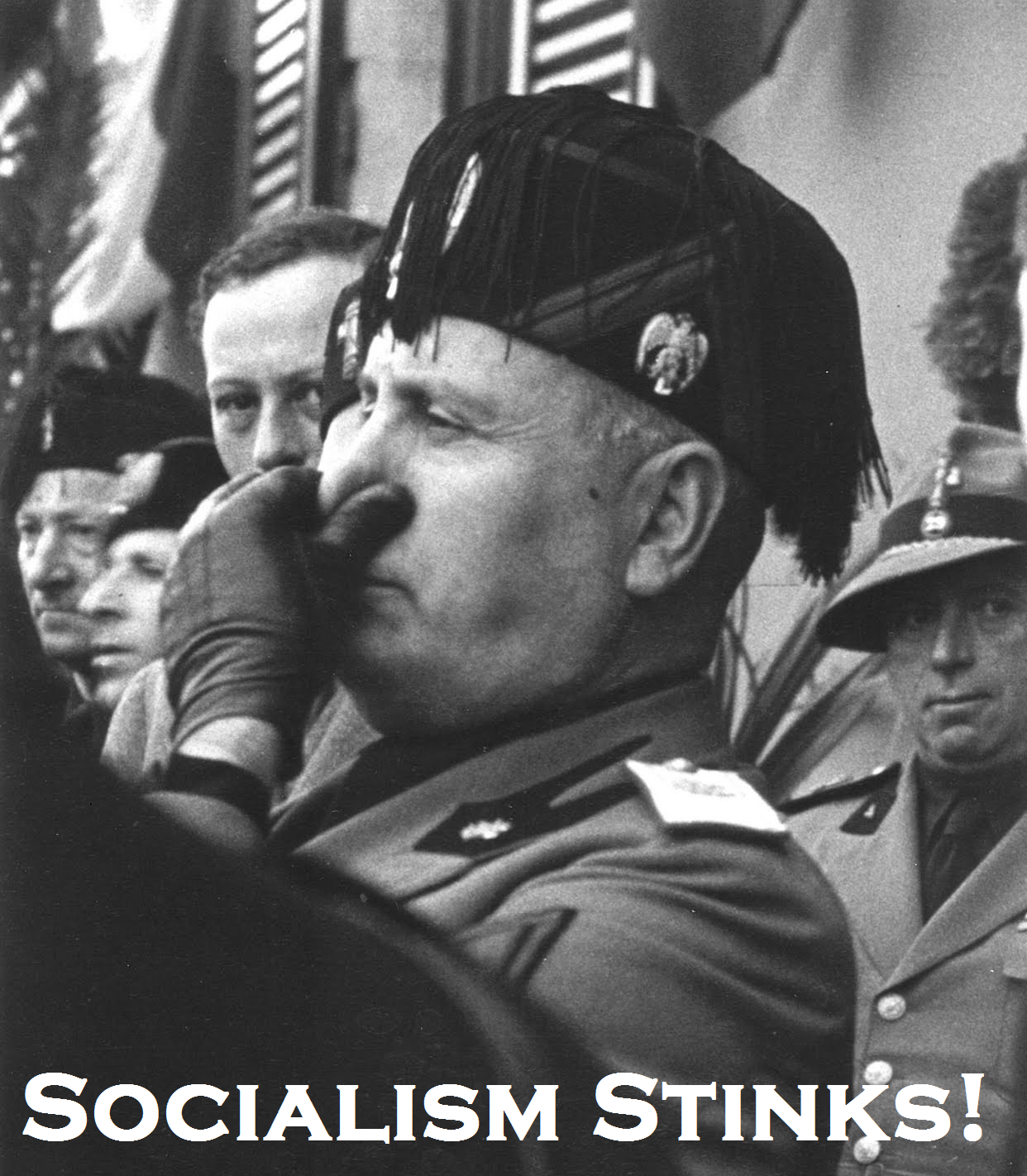
Mussolini and the Monarchy

There are few things that better illustrate the hypocrisy of the republican mentality than the case of Mussolini and the Kingdom of Italy. With Benito Mussolini we have a man who came to power during a time of crisis, mostly because none of the more mainstream political factions could come together or put forward an alternative, a man who became wildly popular in Italy only to become extremely unpopular after the fortunes of war turned against Italy. He was then disowned by his party leadership and removed from office by the King. However, the monarchy was then blamed for Mussolini ever coming to power and maintaining himself in power and was then abolished and the Royal Family exiled from their homeland as a consequence. Yet, while Mussolini was subjected to ‘mob justice’, his own family was not given similar treatment. So, the public that embraced him was not held to blame, but instead the monarchy was and the monarchy was “blamed” for Mussolini to such a degree that they were, for decades, barred from even entering their country while members of the Mussolini family not only remained on Italian soil but even continued to seek elected office and work in politics. That is something which should always be kept in mind because, while the monarchy was blamed for the Fascist period, the post-war Italian republic is set up in such a way that while it is illegal for Italy to restore the monarchy (under the current constitutional framework) there is nothing to stop another totalitarian political party from coming to power at all.

So, what was the relationship like between Mussolini and the monarchy really? The short answer is that it was a complicated one and subject to change. Consistency was never a strong point for Mussolini save for his consistent desire to gain and maintain total power for himself and for Italy to restore itself to the status of a great power under his leadership. As most probably know, Mussolini started out as far from being a monarchist as one could possibly be. Raised by a socialist father and named after a Mexican revolutionary, he spent most of his life as an anti-monarchy, anti-clerical, left-wing radical. In fact, his condemnations of the monarchy, the aristocracy and the Catholic Church were so extreme that even his fellow Marx-quoting socialists thought he took things a bit too far. As a socialist, he tried to dominate the other socialists and bend them to his will and this caused him to begin to lose favor in the ranks of his fellow Marxists. They recognized that he was an immensely gifted speaker and propaganda writer but he was not what we would call a “team player”. The last straw came with the outbreak of World War I. Mussolini, formerly an anti-war, anti-military activist who fled the country rather than serve his mandatory term in the army, became outspokenly pro-war and volunteered to fight at the front.

To his credit, he backed up his rhetoric with action and joined in the fight. In fact, he met the King, Victor Emmanuel III, for the first time when he was recovering in a hospital the King toured to visit the wounded. The King, of course, had no idea that the man who later became “Duce” of Fascism was a man he had met earlier in a field hospital. Mussolini effectively parted company with his fellow socialists, in the first place, over nationalism. He was a nationalist rather than an internationalist and Mussolini was convinced that by taking part in the Great War, Italy would become a more powerful and prestigious country. Belatedly he came to realize the stunningly obvious: the socialists did not care about Italy and even to the point of their theoretic concern for the working class, they cared no more for the Italian workers than they did Russian, Polish, German or French workers. Mussolini could not tolerate this and broke ranks with them, joining with other war veterans and outcast radicals to form what later became the National Fascist Party. In the early days, their attitude toward the monarchy tended to range from hostile at worst to ambiguous at best. They were still very much on the political left in their early days and, even if they were nationalists, were still very far removed from the official nationalist party that was staunchly pro-monarchy in their platform.

However, Mussolini gained little support from fellow republicans for his new movement. If one was going to be a republican revolutionary, after all, why not just stick with the socialists and go all the way rather than take up with these black shirt-wearing nationalists who preached much the same thing on a smaller scale? More than that, though, Mussolini began to gain more support that was not of the left because he so hated the socialists who rejected him and because the socialists seemed to hate his movement almost more than any other. Socialists could look at the liberals and monarchists and see them as their ideological enemies but they saw Mussolini as something more hateful: a traitor, a sort of socialist heretic. The problem for Mussolini was that it became harder for him to hold to his original, republican worldview when an increasing number of his most prominent supporters were monarchists who looked to Fascism as the way to save Italy from socialist revolution and who would turn on him in an instant if he ever tried to act on his republican rhetoric. These would include such Black shirt leaders as General Emilio De Bono and Cesare De Vecchi. Soon there would be more. However, even as late as 1920 Mussolini was still talking about a republican revolution and tried to get the well-known nationalist Gabriele D’Annunzio onboard with such a scheme.

Even not long before the famous March on Rome, the public position of Mussolini concerning the monarchy was ambiguous. In August of 1922 a group of army officers, sympathetic to the Fascist fight against Marxism, wrote an open letter demanding that Mussolini clarify his position on the monarchy because their oath of loyalty to the King was absolute and “The officers of the Italian army, before they would commit treason, would commit suicide”. Mussolini responded in a way that was not entirely reassuring, saying that the monarchy was in no jeopardy from the Fascists, provided that it did not put itself in such jeopardy. In other words, implying that if the monarchy did not stand in his way he would allow it to survive but if not, he would tear it down. Obviously, this was not the answer that loyal monarchists worried for the future of their country and the looming threat of a communist revolution wanted to hear. So, finally, at a speech in Udine on September 20 the Duce publicly cut ties with his republican past and urged any remaining republicans in the ranks of the Black Shirts to do the same, telling them that, “you must have the courage to be monarchist” and saying that, “The monarchy, therefore, would represent the historical continuity of the nation. A beautiful role, a role of incalculable historical importance” in any future Fascist regime.

Some Fascists, like the talented Italo Balbo, remained republican at heart but Mussolini’s pledge to support the monarchy brought in other supporters such as Luigi Federzoni when the Italian Nationalist Association merged with the Fascists. The March on Rome was held (which in the event was more of a victory parade than the seizure of power Mussolini later liked to imply) and Mussolini came to power, from the start following all of the proper protocol in his dealings with the King. His private opinions, however, may not have ever changed and his public monarchism may have been no more genuine than his Catholic baptism which he underwent after coming to national prominence and a lifetime of being an avowed atheist. He could be quite insulting about the King in private, fuss and complain about royal ceremonies or duties he was obliged to participate in, yet for some members of the Royal Family he seemed to have some genuine admiration and at times he could spare a kind word for the monarch, once saying, even before the March on Rome, that he and the King were the only two serious figures in the entirety of Italian politics.

However, more often than not, his words were not kind and he did not hesitate to stoop to ridiculing the King for his size, saying that such a man was too “small” for the great Italy he intended to build. Yet, what makes that all the more ironic, is that no one was more respectful and even seemingly nervous in the presence of the King than Mussolini. For all of his machismo and bombast, whenever he was confronted by the person of his monarch, it was as if his republicanism totally abandoned him -at least until the audience was over. The King, for his part, almost never spoke slightingly of Mussolini but, while never perhaps trusting him completely (and for good reason) was impressed by the results he delivered and by his vision to make the Kingdom of Italy a great power; to restore, as the famous phrase went, “the glory that was Rome”. After Fascism became firmly entrenched, a duality emerged represented by the twin portraits of the King and the Duce that were displayed in every Italian classroom. Mussolini did firmly believe in strength through unity and perhaps convinced himself that Italy would be stronger and more united with the monarchy than without it; though often enough he gave the impression that he would prefer to be without it.

For example, when Hitler made his official state visit to Rome, the German dictator made little attempt to conceal his own disdain for the monarchy and having to deal with the King (the Head of State) rather than his hero Mussolini (the Head of Government) Mussolini himself commented that Hitler was fortunate in not having a monarchy to slow him down and that, in due time, he hoped Hitler would eradicate monarchy from Europe. However, officially, Mussolini was supportive of the Italian monarchy and it was possible for a loyal monarchist to be a Fascist as well, especially considering that most never heard the occasional anti-monarchist remarks their Duce made. It could be difficult, given his stance in public, to tell when exactly Mussolini was being genuine. He met regularly with the King, as required, and when Italian forces conquered Ethiopia and occupied Albania the King of Italy was given the further titles of Emperor of Ethiopia and King of Albania. The “diarchy” prevailed while times were good and as the Fascists became part of the establishment they also came to be more monarchist, whether Mussolini liked it or not -and many of his more rowdy and left-wing Black Shirt squad leaders from the early days certainly did not. He detested Crown Prince Umberto and Crown Princess Marie-Jose and did his best to keep them confined to the sidelines but seemed content to continue with the system as it was.

What many have wondered, however, is whether or not this would have continued indefinitely. We cannot know, of course, what might have happened had the future unfolded differently. Some maintain that, had Italian and Axis forces been totally successful in World War II, Mussolini would have ridden a wave of popular support in abolishing the monarchy altogether and assuming total and unfettered control of his new Roman Empire. Certain of his remarks could encourage one to make such an assessment. However, others point to how entwined the dynasty was and consider that to be an impossible outcome. What about those monarchists who remained on the Fascist Grand Council? What about the relationship of the colonies to the Crown or the Savoy prince who was placed on the throne of Croatia? No one can say for sure as there is evidence to support both theories. What did happen was that Mussolini did break with the monarchy but not of his own choosing. As the war had turned completely against Italy and Allied forces were on Sicilian soil the Fascist Grand Council essentially passed a vote of “no confidence” in the Duce, who did not take it terribly seriously and counted on the King to back him up. Instead, the King dismissed him from office and had him placed under arrest, or, “protective custody” if one prefers.

When Mussolini was liberated by his Nazi ally and reinstalled in the puppet state at Salo, it seemed that he reverted back to the old, left-wing revolutionary he had been in his youth, claiming all the while that everything from 1922-1943 had been a fraud, a compromise and that his “Italian Social Republic” represented “true” Fascism free of the contaminating influences of the monarchy and the Church. This new regime was staunchly republican and much more left-wing in contrast to the professed corporatism of the Kingdom of Italy under his rule. The King was condemned as a participant in a “treasonous” conspiracy, all businesses with more than 100 employees were nationalized and friendly overtures were even made to the socialists and communists in a (futile) effort to gain popular support for what was really a Nazi puppet-republic. Mussolini referred to his monarch as ‘Victor Savoy’ or, more grandly, the greatest traitor in history. It is, perhaps, a mark of his own gentlemanly nature and upbringing that, even after it was all over and he was in exile in Egypt, the King never spoke hatefully of Mussolini who had cost him and his dynasty their Crown and country. He tried, as always, to be reasonable and understanding, pointing out his gifts as well as his weaknesses.

In the end, one question remains. Which was the real Mussolini? Was it the republican revolutionary of his youth and final days or the dutiful Duce of 1922-1943 who had encouraged his Black Shirts to have the “courage to be monarchist”? His remarks in private suggest it was the former, yet, if things had gone differently we might assume otherwise. After all, Mussolini was not, on the whole, a consistent man in most things and even himself admitted that there was more than one Mussolini. After being restored to power by Hitler, he said in an address that, “There is a Mussolini who embodies the Mussolini of yesterday, even as the one of yesterday embodied the one of today…” This was the man who had been a zealous and lifelong socialist only to later say that his program was to “smash the heads of the socialists” but then, at a later stage, asserted that he had never entirely abandoned socialism. This was a man who had accepted Jews into the Fascist ranks and been touched by their loyalty and Italian patriotism only to later enact the anti-Semitic laws favored by his Nazi ally. This was a man who gone to jail for opposing the war in Libya only to support Italian entry in World War I and then to lead Italy into World War II. Even the King had admitted that Mussolini had his talents, had done some good things and was more complex than the cartoonish villain of Allied newsreels but when it comes to the monarchy, the preponderance of evidence suggests that if Mussolini was ever loyal to the monarchy at all, that loyalty was conditional and only temporary. Which makes it all the more unfortunate that the Royal Family ended up being scapegoated to cover up for the mainstream liberal parties and, indeed, all those of the general public who had presented Mussolini with the path to power and who so cheered him in times of victory and prosperity.
Related Posts Plugin for WordPress, Blogger...