Showing posts with label anniversary. Show all posts

Saturday, January 21, 2017

Inspiration In A Tragic Anniversary

It was on this day in 1793 that His Most Christian Majesty King Louis XVI of France was beheaded by a gang of revolutionary criminals calling themselves the government of the First French Republic. He was certainly not the only innocent man to have his life taken by this same insidious poison. His wife would also lose her head and their little boy would be brutalized and ultimately starved to death. The "Reign of Terror" would take the lives of many, many tens of thousands of French men, women and children, all in the name of their radical, Utopian, egalitarian, blood-stained ideology. Most readers here will be well aware of this unpleasant story, so repeating all the gory details can be avoided. However, there is something beneficial in the inspiration that this sad history provides. The most obvious, of course, the pious and courageous way in which King Louis XVI met his end but it extends far beyond his own example.

Thomas Paine, famous as the propagandist of the American War for Independence (who ended his life despised in America for his virulent anti-Christian tirades and attacks on the character of George Washington) was also part of the gang of villains behind the French Revolution. However, he warned his fellow revolutionaries that killing King Louis XVI would be a mistake. Indeed, his opposition caused Paine to be arrested and were it not for foreign intervention he likely would have been killed too. Paine, of course, had little to no sympathy for King Louis XVI himself, but warned the French revolutionaries that if they killed the King they would forever forfeit the goodwill and support of the American people and the newly independent United States which saw His Most Christian Majesty as their great savior, who had aided them in their hour of need. Paine was proven correct. The Franco-American alliance died along with King Louis XVI at the Place de la Revolution.

The U.S. would go on to fight an "undeclared war" against the French Republic, its first conflict as an independent country but this was relatively minor compared to the reaction of the rest of the western world. The regicide of King Louis XVI sparked what was probably the greatest era of monarchial solidarity that western civilization would ever see. That was truly inspirational. The Austrian Kaiser, the King of Prussia, the King of Spain, the King of Portugal, the King of Naples and the rulers of other Italian states all came together. The King of Piedmont-Sardinia, who could not hope to triumph over his massive neighbor, enthusiastically joined the fight. The King of Great of Britain and Ireland, which had so recently fought against King Louis XVI, nonetheless put history aside and joined in the common struggle against the revolutionary pestilence. Here was an example of European unity that required no top-heavy talking shop of sinister, parasitic politicians to bring about, only shared values and a sense of honor.

Their example should serve as an inspiration for us and shame us for our own divisions and petty squabbling. The Habsburg and Bourbon dynasties had long been rivals, the French and English for even longer. Britain and Prussia were Protestant, Spain and Austria were Catholic but none of that mattered in the face of this outrage. All came together to avenge a monstrous crime, defend Christianity, civilization and the concept of traditional authority. They did this, not out of naive idealism but out of a rational understanding that they had to put aside their differences and come together because all of them were equally threatened by this revolutionary poison that had brought down, in so violent a way, the revered House of Capet which had seemed as permanent as the sun in the sky. They knew they faced a grave danger that was far more serious than what issues divided them. Their example is one we would all do well to follow today.

Monday, September 12, 2016

The Horror After Haile Selassie

It was on this day in 1974 that the last Ethiopian monarch, Haile Selassie, was overthrown by a communist ruled military clique, known as the Derg. Because this was the work of communists and because western media tended to ignore anything unpleasant that occurred in African countries after colonialism ended (which was supposed to solve everything) there is not much awareness about what followed but it was a living horror to put even the "Reign of Terror" to shame. After World War II, the Soviet Union made Ethiopia something of a priority and turned out massive amounts of propaganda in an effort to turn the Ethiopian people against their monarch. This was the same country that had backed Haile Selassie so long as he was fighting Italian Fascists, which had been allied with Haile Selassie in World War II and which had awarded him the military Order of Suvarov in 1959. Haile Selassie had himself also been cheering on the downfall of the European colonial empires in Africa, failing to appreciate the fact that most of the forces behind the movement were under communist control and would be no friend to him later. Likewise, when Haile Selassie was again overthrown, unlike the last time, in 1974 there would be no British Empire to set him back on his throne again. After a period of increasing unrest, instability and internal problems for the country, Haile Selassie was overthrown in a military coup and later murdered.

This military clique, known as the Derg, took absolute control of the country and was, of course, backed the whole time by the Soviet Union and their masters in Moscow. The emperor had certainly made mistakes which hurt his cause, however, he certainly cannot be held responsible for the treason of others and the issues they seized on in order to take power were almost invariably due to things far beyond the ability of the emperor to control (unless one assumes the King of kings should be able to control the weather or global oil prices). The mistakes he made shrink in insignificance compared to the mistake of his overthrow and the dismantling of the monarchy which was the only government Ethiopia had ever known in its entire, ancient history. Why was this so? A simple look at the subsequent history of the country proves it beyond all doubt. How did Ethiopia fare without a monarch? Well, there was one coup after another in this communist dictatorship that couldn’t even manage to agree on a single dictator. There were numerous rebellions, all of them bloodily suppressed, there was drought, famine, massive starvation and soon Ethiopians were fleeing their homeland in record numbers. Part of the country was even conquered by the Somalis and the Somali incursion was only beaten back with massive assistance from the rest of the communist bloc. I do not wish to sound too offensive here but, when you need the help of the Soviet Union, East Germany, North Korea and Cuba to defeat a country like Somalia -you are not doing very well.

The man in charge of all of this, the man who had taken the place of Emperor Haile Selassie, was Mengistu Haile Mariam. Remember that name. What Stalin was to Russia, what Choibalsan was to Mongolia, what Mao was to China, Mengistu was to Ethiopia. He instituted a reign of terror in Ethiopia on a scale that made even the French revolutionaries look like slackers. Hundreds of thousands of people were massacred, hundreds of thousands were arrested and tortured and hundreds of thousands more were starved to death. All told, even by conservative estimates, Mengistu caused the deaths of more than two million of his fellow Ethiopians. Some believe he may have killed his former emperor personally and given what a vicious, hateful man he is, it is not beyond the realm of possibility. The Ethiopian people experienced a level of suffering under his rule that none of them had ever known before. No emperor, nor even any foreign conqueror, was so brutal and barbaric toward the Ethiopian people as Mengistu was. He intentionally murdered people by slow starvation and if there was one constant throughout his decades in power it was probably widespread starvation, some of it purposely inflicted and much of it the result of his idiotic, Marxist policies. He remains one of the most despicable villains in African history. Thanks to him, even today, when foreign people think of "Ethiopia" they tend to picture starving children.

Now, most histories will tell you that the nightmare of Mengistu and his communist tyranny ended in 1991. Do not be fooled. The nightmare has not ended and will not until traditional government, the monarchy, is restored to Ethiopia. As the Soviet Union began to fold, the primary source of aid to Mengistu dried up and his regime was toppled. He fled to Zimbabwe and the open arms of his friend and fellow tyrant Robert Mugabe where he remains to this day, despite being indicted by an Ethiopian court for genocide. However, the party that replaced Mengistu was the Ethiopian People’s Revolutionary Democratic Front, a democratic socialist party. In other words, communism for slow learners. Unfortunately, this is not unique to Ethiopia as we have seen the same all over the world. When communist regimes fall, the party renames itself the social democrats or democratic socialists and continues on just as they did before. They took power and held on to it, giving the world some show-elections just to make everyone happy while continuing on the tradition of corruption, wars and poverty that characterized the preceding regime. It is still a country of starvation and repression.

What happened in Ethiopia, under communism, is not much remembered today but everyone would do well to learn from it. The misery, the mass murder, the oppression was on a scale such as was seen in Cambodia under Pol Pot with a death toll in the millions. In the "Qey Shibir" or 'Red Terror' alone the murdered numbered in the hundreds of thousands. The Derg tried to wash its hands of the matter but the bands of radicals who carried out the killings had been armed by them and organized by them as an instrument of punishment for "reactionaries". They only came to care about the horror when some of these radical groups began to target Derg officials and sympathizers as well in a way not too dissimilar from that of Mao's Red Guards in China. In the capital city alone, aside from the adults, well over a thousand young children were murdered and left in the streets. All of this would have been enough to retard the progress of even the most advanced countries and it certainly has in Ethiopia but recovery has been even more slow and painstaking since the government still, to a large extent, clings to the leftist policies of the communist era. This summer, protests broke out against the oppression of the government as well as demands for more wealth redistribution (a learned habit) and this resulted in a crackdown that has been more violent than the country has seen in decades.

Is there a way to end the cycle of misery? Certainly, and it is not difficult to see but it will require getting rid of the entrenched, ruling elite that has persisted since the days of the Derg. Ethiopia needs to take a "back to basics" approach, restore their traditional leaders, revive traditional values, end the policies that have proven so ruinous and adopt policies that have been proven to work around the world. It means an end to the culture of dependency and a revival of a healthy sense of national pride. It also requires an emphasis on faith as the Coptic Christians of eastern Africa are becoming an increasingly imperiled minority (see events such as the crackdown in Egypt, the horrors in the Sudan and the deportation of Ethiopian laborers from Saudi Arabia for evidence of the squeezing of African Christians). If that is done, Ethiopia is well placed to play an important part in pulling east Africa back from the brink of disaster and being, as she once was, an example for others to follow as a powerful and prosperous African state.

Wednesday, November 12, 2014

Anniversary of the Emperor of Japan

This year marks the Silver Jubilee (as it would be called in the west anyway) of HM the Emperor of Japan who had his formal enthronement ceremony twenty-four years ago today. It was truly an historic event, coming after the 63-year reign of his father, the Showa Emperor, which was the longest reign in Japanese imperial history. Although born in the time of the Empire of Japan, the current Emperor was still only about 12-years old when Japan surrendered in 1945. He did most of his ‘growing up’ during the days of the American occupation and the post-war State of Japan. As such, things were quite different for him compared to past Japanese emperors and on his shoulders rested an immense responsibility. He would be the first monarch to reign after the war, after the empire and under the new constitution and the new place Japan found itself in on the world stage. Fortunately, he had the advantage of a long-reigning father who presided over the most dramatic changes and so the Emperor was able to be brought up in this new atmosphere and fully prepared for his position and what would be required of him by the time he came to the throne in 1989. Since then, he has proven himself to be one of the great monarchial leaders of the world and an example to his own people and to others worthy of emulation.

The past 25 years of the current imperial era have seen high points and low points for Japan but through it all, the Emperor has been exactly the monarch that the situation, and the times, needed him to be. He came to the throne at a time when Japan was undergoing astounding economic success. The country had risen from the ashes of war to become the second largest economy on earth and, for a time, it even looked as though Japan might surpass the economic powerhouse of the United States as the value of the currency rose and investment poured in. However, over-confidence, reckless spending and bad decisions by banks, businesses and the government soon caused the bubble to burst and Japan experienced the infamous “Lost Decade”, which was actually more than a decade, of economic stagnation. Over the many years of difficulties, the Emperor was a symbol of reassurance to the public as well as an example of frugality and simplicity. The Japanese monarchs have long been known for living elegantly but simply and the current Emperor has been no exception. He always set an example of being majestic and dignified without being ostentatious. The public, after the economic bubble burst, took this to heart and began to follow his example; extravagance was no longer fashionable.

On the political front, the long rule of the Liberal Democratic Party (the most conservative mainstream party) came to an end in 1993 but the coalition that replaced it soon collapsed and the LDP made its way back into politics in a bizarre coalition of its own that gave Japan its first socialist prime minister in half a century. Although most remembered today for his high profile apology to the other nations of Asia for the Japanese role in World War II, the election of a socialist prime minister was just the first in a string of disasters Japan had to deal with. His massive amounts of new regulations and entitlements did the economy no good, in 1995 a major earthquake struck Kobe and two months later a cult group carried out a poison gas attack on a Tokyo subway that killed 13 people and injured many, many more. The Emperor responded to such events with a dutiful adherence to his constitutional role and by acting in a kind and compassionate way to give comfort to his people in times of natural disasters. Both of these duties the Emperor would be called on to perform throughout his 25-years on the throne. In terms of politics, the Emperor has remained above the turmoil, never drifting to one side or the other but always on the side of Japan as a whole.

Although the Emperor is not a political figure in that he is not involved in politics or policy making, he is a leader and is undoubtedly the greatest leader Japan has and not simply by virtue of being the Emperor. He has shown more wisdom, moderation and foresight than virtually any political or social leader in Japan in his lifetime. In terms of domestic politics, the Emperor has always been scrupulous about following the rules and sticking to the constitution. This has made him an invaluable source of stability in very politically unstable times. Even when Japan was undergoing rapid turnovers of governments, one after another, there was no collapse in confidence domestically or in foreign countries. Anywhere else where governments came and went so quickly this would cause a panic but not in Japan and that is because, simply by being there, the Emperor has a calming effect. The politicians in Tokyo may bicker and feud but everyone feels that it will all be okay because the Emperor is still in his palace and all is right with the world. The Emperor, going about his duties, closing one Diet session and opening another, is a sign of survival. The Emperor is still there, just as he always has been, so Japan is still here, the country will not cease to exist because politicians cannot come to an agreement.

On the world stage, the Emperor has been, perhaps even more important over these last 25 years. His reign has seen the start of Japan reemerging as a force in world affairs and as a major military power (even if it is not, legally, a formal military). Japan deployed forces (in a non-combatant capacity) abroad for the first time since World War II, showing an increasing willingness to put the past behind them and become more self-sufficient in defense matters. Of course, this has not always been welcomed by those in other countries and bigoted elements at home and abroad (though they despise each other) have both sought to cling to memories of the war and keep Japan shackled to the past, a focus of hostile and suspicious feelings. However, so far, they have been unsuccessful thanks in no small part to the actions of the Emperor himself. In contrast to the narrow-minded chauvinism of the radicals, the Emperor has traveled the world, solidifying relations with allies, renewing old friendships and forming new and better relations with foreign countries as the embodiment of a confident, peace-loving, mature Japan. He has struck just the right note on every occasion, expressing regret for past events but honoring past heroism and sacrifice, acknowledging history but not being enslaved by it. Rather than carry on old grudges, the Emperor has set his focus on strengthening the Japan of today and tomorrow by goodwill and strong friendships in the international community. And, where Japan has been met by bigotry, the Emperor has taken the moral high ground, meeting such animosity with polite kindness, an open mind and an outstretched hand. Such warmth and dignity on his part has served more than once to highlight the immaturity of those powers which cling to bitterness.

While serving as an inspiring example at home and putting the best image of Japan forward around the world, the Emperor has also been a great comfort to his people in times of crisis. At no time was this more evident than in the worst disaster Japan has suffered since the end of the war; the earthquake and tsunami of 2011. The Emperor took the almost unprecedented step of addressing the entire nation personally in a televised message, the nearest thing to which that was ever done before being the address by radio to the people by HM the Showa Emperor in 1945. The Emperor and Empress also made numerous visits to the victims of the disaster, greeting them personally, talking to them, listening to them and comforting them. No one who experienced such a visit or even witnessed one could not have failed to be moved by the genuine sympathy and compassion the Emperor showed to every one of his unfortunate subjects at such a sad and difficult time. Once again, he set the perfect example and the people of Japan came together in a most heart-warming way to help each other, care for each other and to join in resilient determination to rebuild, recover and improve the afflicted area. With the moral leadership that the Emperor provided, everyone could see that the old values many had thought had disappeared in Japan, were still alive and could come back into focus in times of crisis for the country.

Throughout his reign, the Emperor has seen a number of natural disasters afflict his country. There has also been an increase in tension with Japan’s closest neighbors with harsh words and military scares from China, Korea and Russia. This, naturally, has led to Japan placing more emphasis on national defense and this, in turn, has provoked protests from Korea, China and Russia with China and Russia in particular clinging to the memory of World War II and wishing to, in their words, “preserve the post-World War II world order” which of course would include a powerless Japan. However, so far, their efforts to frighten other countries and divide Japan and her closest allies have proven mostly fruitless, thanks in no small part to the Emperor himself. He has always made it clear that he values nothing higher than peace, remembering the horrors and ruination of the war very well himself, and he has always been ready to reach out in friendship to any country. His actions have shown the rest of the world that any tensions, such as between China and Japan, are not being instigated by Japan but by China. The Emperor has also been of immense benefit in strengthening existing friendships with American and European powers as well as forging new and better relations with other Asian countries such as India.

The Emperor cannot keep the peace on his own, but he has set the right example, the right moral tone and been the best sort of ambassador Japan could ever have. He has spread trust and goodwill wherever he has gone and won over people in every country he has visited with his kind smile and genuine warmth. The last 25-years have, in many ways, been difficult for Japan. The country has troublesome neighbors, more national debt than any country in the world, faces a looming demographic crisis and has had to deal with many natural disasters. However, the people have also been coming together like never before, becoming more realistic and more involved in the world community and have shown the talent and creativity to overcome great problems. And through it all they have had the Emperor’s prayers to support them, the Emperor to set a matchless example for them, an Emperor to be their best public face to the world, an Emperor who has comforted them in times of crisis, congratulated them on great achievements and reminded all Japanese people everywhere of their shared history and illustrious national story. In brief, the Emperor has been, in every way, the model monarch and a matchless moral leader for his country and all his people. Congratulations on 25-years on the throne and may the Emperor reign on, until the pebbles grow to might stones. å¤©çš‡é™›ä¸‹ä¸‡æ­³! 万歳! 万歳!

Monday, January 7, 2013

Happy Anniversary

In the same neighborhood as today's article (below), I notice that today is the anniversary of the accession of HM the Emperor who came to the Chrysanthemum Throne on this day in 1989 upon the death of HM the Showa Emperor, becoming the 125th Emperor of Japan. We send our heartfelt congratulations to His Majesty, who has been an exemplary monarch and wish him many, many more years to reign.
Tenno Heika Banzai!

Monday, May 21, 2012

China - A Century of Republicanism


As of this last February 12 it has been one hundred years since China has had an emperor. Of course, everyone, I am sure, recognizes that the situation in China at that time was far from ideal. The dynasty would not have fallen if it had been. In some areas China had been treated unfairly, in other areas China had been the victim of circumstances beyond her control and in still others those in power had simply made mistakes. Chinese domination of the Far East area seemed so strong and unassailable that there was neglect on the part of many in the Manchu leadership. China fell behind the other powers of the world technologically and, when confronted with threats and challenges, was unable to match the far more advanced powers from across the Eurasian landmass. Chinese influence in Indochina was lost to the French, Chinese influence over Korea was lost to Japan, Macau was lost to Portugal, Hong Kong to Great Britain, Tsingtao to Germany and a majority of Chinese provinces were within the spheres of influence of various European powers, mostly Great Britain, France and Russia. Internal rebellions shook confidence in the Qing Dynasty and the gamble of supporting the Boxer uprising proved to be a very costly mistake. A population boom combined with some natural disasters caused immense problems any government would have struggled to deal with. Certainly, things were far from ideal in the Middle Kingdom.

The result was an unprecedented event in the history of the world; a revolution which brought down the Qing Dynasty and put in its place a republic. For the first time practically since time immemorial, China was without a “Son of Heaven”. The question then must be asked; how has the Middle Kingdom fared these last one hundred years without an emperor on the dragon throne? The immediate aftermath was a republic that, not surprisingly was a total failure. Not surprising considering it was forced, from the top down, on a country that had known only monarchy for all the thousands of years of its history. It failed and, though it continued on in name, was plagued by coups and counter-coups by powerful factions. The country that had been the Great Qing Empire totally fragmented. Mongolia and Tibet reasserted their independence, all the provinces of China were divided up amongst the powerful warlords who seized power with their own private armies, paying only lip service to the government in Peking in some cases, defying it in others or simply ignoring it in a few cases. The wild-eyed republican agitators who had stirred up disaffection against the Manchus for their failure to defend China against the foreigners caused China to lose more territory to non-Han peoples than any Chinese government since the late Song dynasty succumbed to the invading Mongols of Kublai Khan.

Obviously, if the point was to defend China against the “foreigners” (which they meant as anyone not of the Han nationality) then, we can objectively regard the revolution as a dramatic failure. Tibet withdrew into isolation. Outer Mongolia became a Soviet puppet state and finally Manchuria was detached from China. Ultimately, it must be said, many of these areas were re-taken but with disastrous consequences. Manchuria was regained but the Manchu nationality has been virtually wiped out. Tibet was conquered and the Tibetans are in the process of being drowned out in a flood of Han immigrants (as are the Uyghurs, as are the Mongols in Inner Mongolia and so on). Taiwan was also never regained if one accepts the legitimacy of the communist government as the successor of the original Chinese republic. Then, before, during (to some extent) and after World War II there was the Chinese Civil War which dragged on from 1927 until 1950 in which upwards of five million Chinese were killed, placing it behind only the First and Second World Wars as the most bloody conflict in all of human history and, technically, continues to this day, threatening to resume at any moment. This may be “progress” in the sense that it topped what had previously been the bloodiest civil war in history (the “Taiping Rebellion”) but I doubt many people would regard this as an achievement to be proud of.

In regards to the famines and poverty that afflicted late imperial China, brought on almost entirely by natural factors far beyond the control of the “Lord of 10,000 Years” or his mandarins, again, the situation after the revolution was not an improvement. Nothing any imperial government ever did can compare to what EACH ONE of the two republican factions that succeeded them did. In 1938 the nationalists purposely destroyed dikes on the Yellow River which flooded a huge landmass that killed an estimated 800,000 to one million innocent people. The communists, who were ultimately successful in taking control of the mainland, blindly followed the bloodthirsty, ignorant psychopath Mao Zedong in wiping out tens of millions of people in intentional purges, suppressions and massacres as well as enforced starvation through idiotic communist policies. No Emperor ever intentionally butchered so many of his own people and no Emperor ever sent millions of his own people to slave labor camps, not for anything they said or did but for simply being the wrong “type” of person, being from the wrong class or social background. Today, the standard of living that modern technology has brought to China is often touted as being entirely to the credit of the communist government which has “modernized” China (by bringing in western technology that any government could have done). Yet, no matter how poor the average peasant of the Qing Empire was compared to the average citizen of the PRC, the fact is that one has to be alive to enjoy the new standard of living and, thanks to the communist government, many tens of millions of Chinese never got that chance.

We certainly know that, in terms of the stated goals of “freedom” or “liberty” or “democracy” or “human rights” or any of the popular revolutionary slogans, the revolution was not a success. There is no doubt that these things, at least in our modern context, were unknown in imperial China. There was no democracy, there were limits on individual liberty (the Manchus famously enforced a new hairstyle on the male population and did try to suppress the “right” to carry on the barbaric practice of foot binding) as the Emperor was an absolute monarch. He was the Son of Heaven, the Lord of 10,000 Years, the master of all he surveyed, his word was law, his person was sacred, his rulings were beyond question. All of it was also perfectly in keeping with thousands of years of Chinese tradition and it was all tempered by the teachings of Confucianism, Daoism and Buddhism. There were efforts to shift toward a constitutional monarchy for China but this was unsuccessful, in large part due to the fact that the discontented wanted immediate change and even modern Chinese state historians have admitted this.

The revolution promised all of these grand, liberal things and they were prepared to take drastic measures to bring them into existence immediately. It is not enough though, by the very nature of the revolutionary paradigm, to say that what went before was not ideal; it must be shown how the situation improved because of the revolution. Obviously, in this regard, the revolution was again a stupendous failure and this time by their very own standards of judgment. China is still, ultimately, under the absolute rule of one man. There is no democracy, there is no freedom of speech, assembly, religion or freedom to dissent. Communism may be downplayed these days but there is still no right to private property and the government may at any time take anything from any person for any reason up to and including their own life and the lives of their children. Even the “Son of Heaven” in all his celestial absolutism, never even imagined that he could hold such total power over the lives of his subjects as to dictate to the people how many children they could have. Any honest observer would have to admit that if the goal of the revolution was to bring democratic republicanism and western political liberalism to China it was an absolutely thunderous failure.

That, however, points to what may be, on a global level in terms of human history and culture, the most insidious result of the revolution in China and the end of the imperial system which is the utter destruction of the traditional Chinese heritage. This is possibly the single most unprecedented event in the entire ancient history of China. There has never been anything at all in those thousands of years to compare it to. China has not often been conquered but on those rare occasions when China was actually overrun by non-Han peoples the traditional Chinese culture was never destroyed. When the Mongol Yuan Dynasty ruled China, they adopted Chinese ways and when the Manchu Qing Dynasty ruled China they also became assimilated into the Chinese culture to the point where the last Emperor could only speak a few words of Manchurian. Yet, the revolutionaries who called themselves “nationalists” (and the communists claimed to be just as nationalist as the Kuomintang) who so decried all things “foreign” have brought in more foreign ideas, customs and institutions and trampled on more of Chinese tradition and heritage than has ever happened in thousands of years of history. Chinese dress, art, architecture, religion and everything traditionally “Chinese” about China was suppressed after the revolution, particularly after the communists came to power and the Cultural Revolution.

The very concept of a “republic” is totally alien to China. It does not matter which revolutionary faction one chooses to follow, be it the American-inspired republicanism of the nationalists or the Marxist-inspired republicanism of the communists, each are totally alien to China and both came from exactly the same western culture that the revolutionaries claimed to despise. Yet, these same revolutionaries forced such systems onto the body of China, forced the Chinese people into the bloodiest civil war in history over two competing foreign ideologies, neither of which were understood by the vast majority of the people in question. Your average peasant in China had no more idea of who Karl Marx was than your average farm boy in Kansas had of who Confucius was. Then, to make matters worse, Chairman Mao comes along and intentionally launches a war on his own people to totally obliterate any lingering remnants of anything actually recognizable as being traditionally Chinese. What was not destroyed outright was locked away so that even if one goes to China one would have to go to a museum to see anything Chinese.

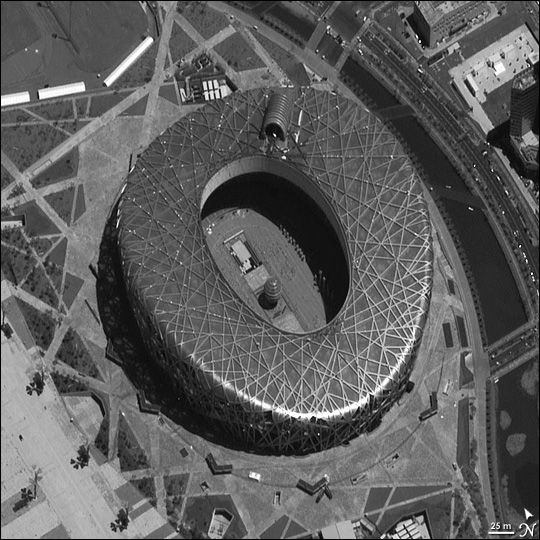
Of course, we are now told that the Cultural Revolution is a rather unpleasant memory and that we should just ignore that and focus on how great and glorious the nominally communist dictatorship of today is. The problem with this is that it has simply replaced the old ugliness with a new ugliness. Again, if we are to regard the lack of an emperor as a benefit, we must see some improvement over what was. We must see the “New China” doing things to surpass the old. What could these be? The technological improvements are those allowed in from outside and, as has been stated, required no revolution to accomplish it. Japan modernized long ago without a revolution and without wiping out everything native to the Japanese culture. So, what about the cultural achievements of this post-imperial China? Where are the great architectural marvels to top the magnificent monuments such as the Great Wall, the Ming Tombs or the Forbidden City itself? Certainly not the Great Hall of the People which is hardly distinguishable from the box-like architecture of Stalinist Russia or Nazi Germany. Perhaps the “Bird’s Nest” Olympic stadium? Sorry folks, the thing looks like a giant bed pan. Judging these things may be subjective but I do not see Chinese people walking around in jeans and t-shirts as an improvement over exquisitely embroidered silk robes.

On the contrary, the current China sans-empereur has absolutely nothing to offer and even continues to do harm. They may not be as blatantly attacking traditional Chinese culture to the extent as in the Mao era but the government acts as a pimp, selling access to the beautiful masterpieces of the Chinese heritage to foreign tourists with money to spend. It is true that once China was the land of discovery and innovation, first developing many of the basic inventions from which all others have flowed. Of course, that was Imperial China, today the much-vaunted economic powerhouse of China consists of building cheap what foreigners invent or ripping off foreign products and mass-producing them at rock bottom prices. Even after the last Emperor of China had been deposed, but was still around, basic traditional Chinese customs and values were preserved and honored. Today, God help me, there is a Starbucks inside the Forbidden City. In many ways, I think that says it all. China has been one hundred years without an emperor. I hope the stooges in Peking are proud.

Wednesday, May 9, 2012

The Crown Passes to Umberto II


It was on this day in 1946 that, with the abdication of HM King Vittorio Emanuele III, the Italian throne passed to his son, the last to occupy it, HM King Umberto II. He had already served some time as effective head-of-state since his father had semi-retired and made the Prince of Piedmont the "Lieutenant General of the Realm". In that capacity he had worked well with the Allied commanders on the scene, who were impressed by his devotion to his country and his diligence. However, most of the Allied governments were opposed to him and to the continuation of the Kingdom of Italy to varying degrees. He appointed new ministers, bringing in representatives from every level of society. Because the question of whether Italy would remain a monarchy or become a republic had not been settled, in an effort at even-handed fairness, King Umberto II did not require his new ministers to take the usual oath of allegiance to him, though Ivanoe Bonomi chose to do so anyway. In an interview he said that, after the fascist era, Italy would have to move to the left but that the monarchy was needed to stabilize the country during such a shift and warned that a republic could lead to a presidential dictatorship. He also pledged considerable reforms to the Italian constitution.

However, the Allied powers were not receptive to the efforts of King Umberto II to encourage friendship and closer cooperation. He supported Italy becoming a fully independent member of the western alliance, already envisioned at that time because of the growing communist force in the east and hoped that by showing good faith the Kingdom of Italy would be allowed to keep her colonies (gained before the Fascists came to power) and be given a fair and just frontier with Yugoslavia. All of these efforts were blocked, partly because of the attitudes of the Allies themselves and partly because of pressure brought on them by their Soviet partners. They refused to permit the printing of monarchist newspapers and when the King asked British Prime Minister Churchill for a message of support for the Italian Crown he was met only with silence. The other powers proved unwilling to grant the slightest favor to the side which had turned Italy from an enemy into an ally, even though previously great promises had been made to Mussolini if he would only have done the same. It is ironic that what had been offered to the Duce by his enemies would not be granted to the King who had always opposed him. Whereas Mussolini had been offered the restoration of all pre-war Italian territory and even territorial gains in the Balkans if he would abandon the Axis, after the King did just this, Italy was to gain nothing, maintain nothing and lose everything.


King Umberto II came to the throne with a great deal more support, among Italians at least, than he is usually given credit for. He was very popular with the army (most of whom would not be allowed to vote in the upcoming referendum), those on the right and the moderate left supported him (the center was ambiguous) and he was well liked by the Vatican because of his sincere Catholic faith. The biggest obstacles to his short reign were the communists, whose partisan bands re-emerged as soon as the Fascist threat had passed, and the die-hard Fascists of Mussolini's puppet Social Republic. It would certainly have been better for Italy and for the Allies themselves to have supported the King in standing opposed to these revolutionary factions. With the country under occupation, there was very little the King could do to support his own cause so long as the Allies remained opposed or at best indifferent to him. The referendum went ahead, rigged though it was, and King Umberto II agreed to abide by the outcome, knowing it had been unfair, because he refused to see his already war-torn country thrown into conflict again. Today we can see very well the results of his exile and the downfall of the monarchy. Italy is deeply in debt thanks to a political class that buys votes (and are the most lavishly paid in Europe), the country is divided, an un-elected Prime Minister runs the government and a communist is President. HM King Vittorio Emanuele III had predicted that a republic would be the ruin of Italy and that only the communists would benefit from it. His foresight could not have been more accurate.

Sunday, September 11, 2011

Remembering 9-11

It doesn't seem possible that ten years have gone by already, but, checking back, I see I said the same thing last year and the year before. I remember very well waking up to the news that some jet had had an accident and flown into one of the WTC towers. Then, I watched along with millions of others as the second jet liner hit the other tower, proving to all that America was under attack. I had to drive up to the city that day for a dentist appointment (Monarch Dentistry -no joke) and although I was a little shaken up I thought there was no safer place to be considering the number of air force bases in the neighborhood. I remember in the immediate aftermath how jumpy everyone was, our sense of security had been shattered. Was this only the first wave? New York had been hit, the Pentagon, the Capital was targeted, what would be next? The following day someone called in a bomb threat on the Lincoln-Juarez bridge and the border with Mexico was shut down. It was the first time I had ever seen armed National Guardsmen on the U.S. side of the border and checkpoints. That was also the day when the 'Stars & Stripes' began to appear everywhere. Everyone had a flag. Businesses which had previously flown the U.S., Mexico and Texas flags now flew three U.S. flags. Where they had flown the six flags of Texas they flew six U.S. flags instead. It was as if the whole country were crowned with red-white-blue. It was a tragedy like none I had ever lived through before, making things like Oklahoma City and the Challenger pale in comparison. However, it also brought out feelings of solidarity, teamwork and patriotism and -no matter how often it is misused- I have always considered patriotism a good thing. The attacks also awoke America to a problem that had been brewing for some time but which most of the world had been content to ignore. The final outcome of that situation, remains to be seen.

Tuesday, March 15, 2011

Beware the Ides of March!

Even more than 2,000 years after the fact the infamous “Ides of March” are still burned into the collective memory of the western world. People still mention it and, even more shocking, a fair number of people know what it was all about. That was when Julius Caesar was assassinated. Especially in the English-speaking world much of this is due to the pervasiveness of Shakespeare. I know people who have never read a word of it, who know absolutely nothing about Roman history and yet they still know, “It was Greek to me”, “Et tu Brute” and “Friends, Romans, countrymen, lend me your ears”. That is the extent to which a political murder 2,000 years ago has permeated our culture. What is more, the divisions that existed in the twilight of republican Rome around the death of Caesar are still with us today. Some still view Brutus, Cassius and company, but Brutus in particular, as heroic champions of liberty. Others still view Brutus as the arch-betrayer, his name synonymous with treason against a friend, a benefactor and a father figure. Some still view Caesar as a tyrant and the symbol of tyranny while others view him as a heroic leader, a visionary determined to save and restore his country and one of the greatest men in history. As we have discussed here recently, so much of that period, from so long ago, is still with us today.

It is no secret where my own sympathies lie on that occasion and I would find it rather hard to grasp why any monarchist would take the side of the conspirators though I suppose there are some who do. For myself, there can be no justification, politics aside, of men like Cassius and Brutus in particular for murdering their duly elected dictator. It helps that I see no terror in the idea of his becoming a monarch as they did. However, I can see them as nothing other than the most despicable of villains, again, regardless of politics, for a very simple reason. In the civil war between Caesar and Pompey, Brutus took the side of Pompey against Caesar, who had been like a father to him (indeed some have speculated Caesar may have been his actual father) and yet Caesar gave strict orders that Brutus was not to be harmed and once Caesar was victorious he quickly forgave Brutus when he could easily have killed him, embraced him again and even appointed him to high office in his efforts to bring about reconciliation. In the same way Cassius had fought fiercely against Caesar in the civil war yet, when Caesar captured him, he spared his life and also appointed him to high office.

In short, they quite literally owed their lives to Caesar. He had every opportunity and reason to kill them. They were at his mercy and yet he spared their lives only to have them conspire against him and finally assassinate him. They could have opposed him for political reasons, agree with them or not, and fought him with all of their strength. However, to give up, seek his pardon, accept his mercy and benefit from Caesar only to then turn against him and murder him is, to me, far beyond the pale and blackens them no matter what sort of ideals they claimed to be advancing in doing so. If they truly felt that strongly about it they should have fought on to the death or refused to cooperate with Caesar, refuse his hand of friendship and accept execution if necessary. The fact that republican revolutionaries ever since have lionized these men, of course, does little to recommend them in my sight either. Rather, on the Ides of March, I think of how the murderers ultimately paid for their crime, eventually, with their own lives, how Caesar was honored and became even greater after his death and the new era that came after him. As the famous New Zealand historian of ancient Rome Sir Ronald Syme said, “Pietas prevailed, and out of the blood of Caesar the monarchy was born.”

Again this year I also cannot help but mention that it was the Ides of March that marked the downfall, though not the death, of another great man called Caesar and that was Czar (Caesar) Nicholas II, Emperor of Russia who was forced to abdicate on this day, marking the end of the Romanov reign in Holy Russia. Beware the Ides of March indeed and may the martyred Czar pray for us and the restoration of his beloved country.


(A note on this one: I liked this series though there were of course many inaccuracies, such as here -Caesar was not killed in the "Senate House" but the Theatre of Pompey and he did not die immediately but lingered for several hours.)

Sunday, March 13, 2011

Italian Unification

The celebrations have been going on for some time now in honor of the 150th anniversary of the unification of Italy. This is an issue I have very mixed feelings about. On the one hand, I love the Italians and the Kingdom of Italy. I love Italian culture and the House of Savoy has not been without truly great and admirable figures over their long history. Indeed, they are one of the great royal houses of Europe. I despise how the kingdom was made the scapegoat for Italian missteps at the time of World War II and I regard the “referendum” (which had precedent in Italian politics only in the manner of its blatant unfairness) which brought down the monarchy as one of the (many) positively terrible events to come out of post-war Europe. On the other hand, the way unification came about was through extremely underhanded and disingenuous methods. Effectively it came to this: a monarchy making a deal with the revolutionary devil to undermine and eventually cannibalize the other monarchies on the Italian peninsula. It saddens me that any of these principalities were lost and probably the Papal States and the Kingdom of the Two Sicilies most of all. It also pains me because it did not have to happen that way.

In the end, the unification of Italy was not so much the voluntary union of all Italians but, with republican help, the effective conquest of the Italian peninsula by the Kingdom of Piedmont-Sardinia under the House of Savoy. Although this was the eventual method, the vision of Italian unity had been around for some time and many other ideas had been discussed. Such a vision could not but have arisen given the unparalleled glory of the history of the Italian peninsula from the time of the Roman Empire to the magnificence of Renaissance Italy; be it the economic empire of the Republic of Venice, the artistic splendor of Florence or the cultural flowering of Papal Rome. There had been greatness before and it was only natural that the desire arise to be great again. How to achieve that was a matter of debate. One idea which, though dismissed by many as unworkable, would have held more appeal for me, was the neo-Guelph plan.

This plan, at least one version of it, was put forward in the massive book “Il primato morale e civile degli Italiani” by Father Vincenzo Gioberti who had once been the chaplain of King Carlo Alberto of Sardinia. He too looked back longingly on the past glories of Italy but totally rejected the anti-clerical views of the radical liberals like Mazzini and Garibaldi. Gioberti took the view that it was the Papacy alone which could best accomplish the national unity which the pan-Italian nationalists most desired. The neo-Guelphs were mostly moderate, educated people, considered to be at least somewhat liberal by the standards of the day, who supported Italian unification but only through traditional authorities and under the sovereignty of the Roman Pontiff. Their basic goals were for some progressive reforms in the Italian states but with the intention of supporting rather than undermining the legitimate rulers. They called for an Italian federation which would be ruled by a college of the Italian princes under the overall reign of the Pope who would act as the primary source of unity for the new country. They called for representative assemblies in the various states, but whose sole purpose was to advise the monarch rather than to govern. Each state would be able to maintain their local autonomy and unique differences with the Pope acting as a sort of president, however not over a republic, but a “federation of consultative monarchies”.

Historians, such as the biographer of Pius IX, E.E.Y. Hales have noted that this basic idea was not totally new. For a long time it would have been considered simply common sense. During the history of Italy, since even before the fall of the Roman Empire, the Church had been the constant force, the most important institution, the greatest source of art and culture and the best illustration of Italian achievement on display. It therefore seemed natural that any move towards Italian unity would have to happen under the general guidance and leadership of the Church. In a country so entirely Catholic as Italy, who else but the Pope would be entitled to the place of honor in any coalition of governments? This was to have been a unity based on Christian brotherhood and local autonomy rather than conquest. However, as we know, it did not come about as the leaders on both sides were rather distrustful of how it would work in practice.

Another idea that failed to get off the ground was a similar model which called for a union of the existing states with overall national leadership going to the King of Sardinia, the Pope or the King of the Two-Sicilies but, again, no one accepted the offer because no one wanted to rock the boat with so many republican revolutionaries causing trouble throughout the region. Those who finally took the lead were far from being exemplary figures despite the fact that they have been cheered and romanticized ever since. The two most associated with the revolutionary wing were Giuseppe Mazzini and Giuseppe Garibaldi, both of whom were radical liberals, republicans, men who had been exiled for subversion and both were freemasons who enjoyed the support of the “enlightenment” Masonic elites in Great Britain and the United States. Mazzini, incidentally, was one of the first advocates of a “United States of Europe” and Garibaldi was a professional revolutionary who did very little else and even dressed his troops in red shirts -rather interesting. Eventually the Kingdom of Piedmont-Sardinia made common cause with these scoundrels under the leadership of the Prime Minister Count Camillo Cavour, a rather scheming character who called Garibaldi a “savage” but who nonetheless made use of he and his red shirts when it came to taking down those who stood in the way of Piedmont-Sardinia; namely the princely states.

We have touched on some of these here before, such as the case of Leopold II, last Grand Duke of Tuscany, and the last Queen of the Two-Sicilies. The Kingdom of the Two-Sicilies is regarded by most history books as the most religious, reactionary and backward region of Italy and thus it is no surprise that the Two-Sicilies holds a special place in my heart. The truth is that the Two-Sicilies had a slight higher literacy rate than Sardinia, it had the first railroad and the first telegraph system in Italy and was the only state with a balanced budget and the security of some gold reserves in the bank. Those who dismiss the kingdom as primitive and backward, frankly, don’t know what they are talking about and are simply repeating the propaganda of the liberal nationalists and republican revolutionaries. Of course, wherever the nationalists went they carried out the farcical show of having a plebiscite but these were never legitimate. There was no secrecy allowed, Sardinian troops guarded the polling places and flagrant intimidation was used as well as simple lies.

In the Papal States, when Sardinian troops invaded to “keep order” (how many conquerors have used that excuse) even though no disorder existed, they held plebiscites in which many refused to participate and some wrote in the name of the Pope or even St Peter. Nonetheless, the nationalists declared victory. In the Two-Sicilies they claimed a ridiculous 99% vote in favor of union with Italy. The fact that this was a total lie (if the number was not enough) is the fact that Piedmont-Sardinia had to keep 120,000 troops in the Two-Sicilies for more than a decade afterwards to put down the constant rebellions and uprisings against Italian rule. Yet, these were the people who Cavour, Garibaldi and others claimed were yearning for freedom from the Bourbon yoke! As many as 60,000 Sicilians were arrested for their opposition to unification and many towns and villages completely destroyed for refusing to submit to the new order. The southern part of Italy once the Kingdom of Two-Sicilies has suffered economically ever since, despite being on firm footing when independent. To this very day southern Italians make less than half of what their northern counterparts do. And this is what they called “progress”?

The Kingdom of Piedmont-Sardinia was greatly helped in this campaign of conquest, early on, by the French, particularly the second French Empire. Napoleon III has started his political career amongst the Italian revolutionaries and he thought he could weaken Austria by supporting the Italians against the Austrian presence in Italy and conquering those states ruled by Hapsburg princes. This worked out a little better than Napoleon had counted on. He tried to backtrack and support the Pope in holding on to Rome at least but, his previous weakening of Austria allowed the Prussians to displace them as the leader of the Germans and when Prussia and her German allies came knocking at the door in 1870 the French had to pull out their forces from around Rome to rush to the defense of France (ultimately unsuccessful) and Italian unification was complete with Savoyard troops marching into Rome and the Pope withdrawing inside the walls of the Vatican for what would be many years of political stand-off.

Facts like these are not pleasant to look at, but the truth must be told and it is partly because I do like Italy that I think they should be remembered. I think it is at least in part why the Kingdom of Italy remained rather shaky and did not long survive. The unification of the peninsula was not a natural thing, it was based on an unholy alliance of opportunists and revolutionaries who had very little in common beyond their shared wish for a united Italy. The revolutionaries were never happy with the final result and viewed the Kingdom of Italy as simply a stepping stone toward the secular, revolutionary, Republic of Italy that they really had wanted all along. As we are all only too well aware, this is what they finally gained and the House of Savoy, who led the way in making a united Italy possible, were ultimately thrown away and even today receive scarce praise or credit for their part in the creation of modern Italy. As the old saying goes, ‘He who sups with the Devil must have a long spoon’. For the House of Savoy, it seems their spoon was not quite long enough.

Tuesday, February 8, 2011

Anniversary of a Tragedy

Today marks a tragic anniversary in the history of monarchy, at least in the western world. It was on this day, 424 years ago that Mary Queen of Scots was executed by order of her cousin Queen Elizabeth I of England, allegedly for involvement in plots against the English queen but, it is generally recognized today, the fundamental reason was that her own claim to the throne of England was a threat to Elizabeth I that she and her government were not willing to tolerate. She was, of course, not the first monarch or even the first Scottish monarch to be killed by a rival -sadly. Yet, the regicide of the Queen of Scots had very far-reaching effects. In fact, in some ways, the world we live in today, so generally hostile to the very concept of hereditary monarchy, was shaped by the regicide of Mary of Scots. The reason for this, why her death has such a special significance, is the manner of it.

For one monarch to be killed by another over a contested succession would have been nothing new. The Tudor dynasty in England began when King Richard III was killed at the battle of Bosworth Field in 1485 and his throne claimed by King Henry VII. However, what made the death of Queen Mary different was the veil of legality. The test of battle had long been accepted as a means of settling disputes, trusting that God would ensure that the righteous would prevail. It was quite another thing for one sovereign to undertake the death of another by means of the law. We are today so far removed from the sanctity with which the sovereign was once treated that it is hard for us to understand how significant this act was. Queen Elizabeth actually forced Mary Queen of Scots to answer to a court made up of Elizabeth’s own English subjects. A monarch, of much the same royal blood as their own Queen, was actually to be judged by the subjects of another. The verdict being a foregone conclusion, the sovereign of another independent kingdom was then to actually be put to death as a criminal.

This was shocking for the world at the time and sent waves of indignation all across Europe, particularly the Catholic royal courts. Religion certainly played a part in the whole affair. It was the English Catholics who most supported Mary of Scots as their own Queen, seeing Elizabeth I as illegitimate and thus it was the Protestants who most viewed her as an enemy. However, it is worth noting that, at the time, there was greater religious freedom in Scotland under the Catholic Queen Mary than in England under the Protestant Queen Elizabeth. To be fair though, such tolerance was the exception rather than the rule in those days and not viewed as the good, liberal ideal that it is today. Queen Mary (a devout Catholic) inherited a kingdom where Protestantism held most of the power and a policy of toleration for all was an effort on her part to avoid civil war (of course other reasons were found). In England, on the other hand, the Protestants were the base of power for Elizabeth I and one of the things they most expected in seeing her become their Queen was to get rid of the Catholics and restore the rule of the Protestant establishment. For Elizabeth to have shown toleration for Catholics would have been to alienate her staunchest supporters in favor of a group which did not view her as legitimate in the first place.

Given all of that, I would suggest that religion be put aside just for a moment in considering the ramifications of this tragedy. It cannot be put aside from the act itself for if the Queen of Scots had not been a Catholic she almost certainly would not have been executed; for that matter she may not have been forced out of Scotland and into the captivity of England in the first place. The evidence of the case against her can and has been endlessly debated, as has the religious aspects. In the same way people can argue whether or not the English were acting out of a justified strategy of defense or if the meddling in a Scottish civil war (which were far from uncommon) was more malicious. What cannot be debated was the unprecedented nature of the trial and execution of the Queen of Scots and the consequences this had for subsequent generations in Great Britain and to some extent the western world as a whole. Whether it was trial and regicide of King Louis XVI in the French Revolution or the trial and regicide of King Charles I in the English Civil War, both batches of regicides could look back to the case of Mary of Scots for precedent.

In the past, as stated, disputes between monarchs were decided on the battlefield. In some cases diplomacy was used and, before the rise of Protestantism at least, disputes between kings would be sent to Rome with both agreeing to submit to the judgment of the Pope; the only man on earth generally recognized by everyone as outranking a monarch. Taking the legitimate sovereign of a country to be judged in a court of law was something totally groundbreaking. Here was a monarch, someone of royal blood, not being judged by God, not by the Vicar of Christ or even by the nobility of her own country but being judged by a committee of noblemen who were the subjects of another queen. This was exacerbated by the fact that the Queen of Scots had come to England for refuge, had already been imprisoned for quite a few years and in the eyes of many her execution seemed unwarranted and vindictive, regardless of the evidence produced. She was already a prisoner, completely within the power of the English queen after all. Why on earth would one Queen strike a blow against the sacred nature of monarchy and royal blood by executing another Queen, her own cousin, who was already her prisoner?

If one can grasp just how outrageous this was considered by most of the crowned heads of Europe, it becomes a little more understandable that King Philip II of Spain launched his famous Armada against England the very next year. There were of course other and long standing reasons for the antagonism between England and Spain but it is nonetheless easy to view the regicide of the Queen of Scots as the last straw for Philip II, generally regarded as the Catholic royal champion of Europe in his day. That could have changed the course of history in a big way but, thanks to the weather and the English navy it did not have much of an impact. However, from the immediate reactions to it to the long-term consequences for the house of Stuart and the royal families of Scotland, England and France the regicide of Mary Queen of Scots set a very dangerous precedent indeed. This act sent a message that monarchs, even among themselves, could not take for granted their sacrosanct status and from that point on other peoples would look to royals, even their own, and say, ‘you can be judged’.

Friday, January 14, 2011

Congratulations to Denmark

Congratulations to Her Majesty Queen Margrethe II of Denmark, one of my favorite reigning monarchs today. It was on this day in 1972 that Margrethe II, daughter of King Frederick IX of Denmark, ascended the throne of the oldest monarchy in Europe. For 39 years she has devoted herself to her country and remains surely the most beloved figure in national life. I admire her, as much for her many good deeds and humanitarian projects, for her independent attitude. Long criticized for her smoking habit she has consistently refused to give in to the new anti-smoking fashion (note* The Mad Monarchist does not advise anyone to start smoking) and has stated on more than a few occasions that it is nobody else's business if she smokes. She has also been known to wear fur on occasion and when once criticized for doing so while on a visit to Britain, the bold and dazzling Danish Queen said pointedly that in her country people were free to wear what they liked. I loved that answer.

The Queen, who is also a great artist in her own right, has suffered a great deal over the years from arthritis but she has never showed any sign that anything could get the better of her. She ruffled some feathers (and brought a smile to my face -that's usually how it works) when she addressed the recent increase in non-Danish and non-European immigrants living in Denmark and stressed the need for assimilation, the preservation of the Danish identity and once even suggested that Denmark might not be the right country for everyone to run to if they are not prepared to adapt to the prevailing culture. She has been a treasure and Denmark is fortunate to have her. She is also the first Danish monarch named Margrethe since the time of the Kalmar Union in 1412. Her motto is quite appropriate: God's help, the love of The People, Denmark's strength. Queen Margrethe II has done an admirable job and The Mad Monarchist sends her and all her people heartfelt congratulations on the anniversary of her accession. Long live the Queen!

Wednesday, December 15, 2010

A Royal Anniversary

It was on this day in 1960 that one my favorite modern monarchs, HM King Baudouin of the Belgians married his blushing Spanish bride Queen Fabiola. The Cross of Laeken reports on this occasion and the Belgie Royalist has a (Spanish language) video clip of the happy day. To my mind the late King Baudouin and Queen Fabiola represent the best of what modern constitutional monarchs can be; dignified, devoted to their duty but strong in their convictions, bearing hardship privately and the embodiment of the most noble ideals of their country. The world of monarchy could use more such couples.

Thursday, December 2, 2010

Today in Imperial History

It was today in 1848 that Francis Joseph became the Kaiser of Austria, starting what would be one of the longest reigns in European history. Emperor Francis Joseph is one of my favorites and it rather pains me that his decades on the thrones of Austria and Hungary are often described in such simplistic terms. However, he was a tower of strength in an empire that very much needed one. His was a man extremely devoted to his duty and (a big part of the reason why he is one of my favorites) to maintaining the authority and respect for the monarchy among the people. He was very careful to avoid anything that could damage the prestige of the monarchy and this was certainly not due to any personal pride or vanity (the man slept on an army cot for Pete's sake!) but because he understood the spiritual and political place of the monarchy as being central to the life of the empire. With all of its diversity it was essential that the reverence toward the monarchy be preserved. He went through many trials in his political career and even more in his private life. He made some mistakes on the political field but none of them were immoral mistakes. Although many dismiss his reign of stagnation, that was certainly not the case just because he opposed political change for the sake of change alone.

It was also on this day, in 1852, that Louis Napoleon Bonaparte became Emperor of the French as Napoleon III. Most monarchists, understandably, have some serious "issues" with the entire Bonaparte dynasty but few would deny that they were a step up from the chaos of republicanism. My own views on Napoleon III are rather mixed. First and foremost, like most royalists, I do not consider him legitimate. That being said, I prefer a Bonaparte monarch to no monarch at all and overall he was not a "bad" monarch. Like his uncle he had radical roots that I would oppose absolutely and even as Emperor of the French he did alot of 'right' things for the wrong reasons. However, like the first empire, his second empire did restore French pride and prestige for a good number of years and, unlike the first empire, he did so without plunging all of Europe into war against the existing monarchial order. He had the good sense to stay on good terms with the British Empire so that French influence in the world expanded rather than shrank during his reign and although his motives in the invasion of Mexico may have been suspect, his support for the restoration of the monarchy there, backed up by French troops, gave Mexico their best government since independence. Again, despite suspect motivations, he did intervene to defend the Pope and to defend Christians in the Middle and Far East.

Finally, it was on this day in 1908 that Aisin-Gioro Pu-Yi became the last Emperor of China. He was little more than two years old and was never given a chance to rule his country on his own and his efforts to restore himself later were always troubled by the alliances he had to forge to make this possible. In a way this is one of the most tragic things about the nominal reign of Emperor Xuantong. Revolutionaries turned the public against him despite the fact that he was never given the chance to prove whether he would be an effective monarch or not. It was certainly no fault of his that he was never given an opportunity to prove himself. From what we can tell from his memoirs and those who knew him, there was at least a possibility he could have been just what China needed at the time; a traditional figure who held his position sacred but who recognized the need for considerable reforms to put China on an equal footing with the other great powers of the world. Had his reign been allowed to continue and traditional institutions (topped by the monarchy) been upheld, China could have been spared the internal divisions, gruesome civil war and Marxist tyranny that she suffered. Unfortunately, the opportunity represented by his enthronement was not grasped and China became the first of many Far East nations which turned their back on their own heritage and ended up killing each other on an epic scale over competing foreign ideologies.

Thursday, November 18, 2010

Tibetan Anniversary

Yesterday marked the 60th anniversary of the XIV Dalai Lama officially taking up his duties as the temporal monarch of Tibet. His accession came earlier than usual due to the crisis with China.

Sunday, October 10, 2010

Today in History

Today in 732 AD the Frankish forces of Charles "the Hammer" Martel defeated an invading Muslim army at the battle of Tours, 12 miles northeast of Poirtiers. It was Charles Martel's grandson who would later go on to become the first Holy Roman Emperor as Charlemagne (Charles the Great). Nowadays no one can agree on how many soldiers were involved on each side, but this was certainly no small accomplishment. The Muslim forces invading France represented the most powerful empire in the western world at that time; the Umayyad Caliphate which, at its height, stretched from India-Pakistan, across Persia, the Middle East, Turkey, North Africa and almost all of Spain. The Muslim commander, Abdul Rahman Al Ghafiqi, was killed in the battle, which was in itself quite a blow to the Islamic forces as he was known in his role as a governor for being fair, upright and magnanimous. Charles Martel was born in what is now Belgium, the son of Duke Pepin II, he had won extensive victories against the Germans before moving to consolidate his hold on France. His actions, and his victory at Tour, paved the way for the creation of the Carolingian Empire, the feudalistic society of the Christendom of the Middle Ages and the Holy Roman Empire which was to be the central political body in Europe for many, many centuries to come.

Tuesday, October 5, 2010

MM Video: Remember Portugal


It was on this day in 1910 that the Republic of Portugal was officially proclaimed, HM King Manuel II having been driven into exile the day previous. Thus, it was on October 5 that legitimate government effectively ended in Portugal. It saw the birth of the republican usurper state which was also, in the opening years, a single-party effective dictatorship under the Portuguese Republican Party (later the National Republican Party). Although there were efforts, most strongly in 1912, to restore the monarchy, led by such heroes as the recently covered “Paladin” of Portugal, none were to be ultimately successful. A restoration was planned by the corporatist “New State” under Salazar but never came to fruition. There had, of course, been problems in the period of the late kingdom but the change to a republic certainly brought no improvements and within the first ten years of its existence the republic was rocked by civil war following Portuguese involvement in World War I which cost many lives and gained the country nothing but a small patch of worthless land in Africa. The last one hundred years of illegitimate republic rule have been an almost continuous downward spiral for Portugal.

What has the republic ever done to inspire pride and patriotism? The Kingdom of Portugal fought for independence against the Moors, became a beacon of exploration, blazed a trail for others to follow all around the world, discovered the Cape of Good Hope, a sea route to India, first visited Japan and opened Europe up to the possibilities of a wider, bigger world. That was the glorious history embodied in the Kings of Portugal. That is what the republic turns its back on. There is absolutely nothing wrong with aspiring to greatness and Portugal should be proud of her history but put that pride into action. Portugal was great once, it can be great again and the most significant symbol for such a change in attitude and a new era to restore that greatness would be the renunciation of the unjust and illegitimate republic and the restoration of the Portuguese monarchy. Viva Portugal!
Related Posts Plugin for WordPress, Blogger...