Showing posts with label Emperor. Show all posts

Wednesday, January 18, 2017

Monarch Profile: Emperor Valentinian II

The history of the Roman imperial monarchy is complete with stories of every kind; dramatic, bizarre, occasionally comic and tragic. The story of Emperor Valentinian II is one of the tragic ones. To set the scene, a good place to establish the background of this unfortunate monarch is with the glorious reign of Emperor Constantine the Great. As most know, it was Emperor Constantine who reunited the Roman Empire under one emperor, built the second capital city of Constantinople, established a policy of religious freedom for Christians and who was, at the end of his life, the first Christian Emperor of Rome. He also established a dynasty that carried on into the 360’s with his last male descendant being Emperor Julian, better known as “Julian the Apostate” who tried to revert Rome back to paganism rather than Christianity. A new imperial dynasty was then established, in the west, by Emperor Valentinian I, a man who rose from humble origins in Pannonia in what is today Croatia. He was a staunch Christian, a military-minded man who established the Valentinian dynasty, ruling the west himself while his younger brother Valens ruled as Emperor of the East.

Emperor Valentinian I
Valentinian I was succeeded by his son, Emperor Gratian, the man who would hand over the title of “Supreme Pontiff” to the Bishop of Rome. However, Emperor Gratian ruled only from 367 to 383 AD when he was assassinated at Lyons with most of the empire north of the Alps left in the hands of a renegade general named Magnus Maximus. However, he died in 388, a year after invading Italy. The young man who was in charge, or at least who was supposed to be, was Emperor Valentinian II. The son of Valentinian I by his second wife, Justina, he was only four years old when he came to the throne on November 22, 375 AD and had inherited a perilous position. The generals loyal to his father had proclaimed him emperor immediately upon the death of his father, taking no account of his half-brother Gratian or his uncle Valens. It is often assumed that the Frankish commander of the Roman forces in Pannonia, Merobaudes, intended to disregard Gratian, whom many in the military distrusted, in favor of Valentinian II who was, obviously, too young to rule and could not oppose them.

Emperor Gratian was thus left with what is now France, Britain and Spain while the nominal Emperor Valentinian II reigned over Italy, most of the Balkans and Africa. His imperial court was in Milan but tensions were thick. The most influential figure in his life was his mother Justina, an adherent of the Arian heresy, who clashed with the preeminent religious authority, St Ambrose, Bishop of Milan and prefect of Liguria and Emilia who was an adamant opponent of Arianism. This was a dangerous combination as the young Valentinian II became the pawn of those wishing to push their own agendas. Justina used his authority to try to suppress the orthodox Christians in favor of the Arians, though St Ambrose had the local populace on his side. Magnus Maximus, who was trying to claim the throne for himself, also used Arianism as his tool, casting himself as a champion of orthodoxy in order to take power from Valentinian II or, more precisely, those who ruled in his name. After Emperor Valens in the east came the reign of Emperor Theodosius the Great who was also opposed to Arianism and so would be of no help.

Emperor Valentinian II
When Maximus crossed the Alps into Italy, Justina and the teenage Emperor Valentinian II fled to Thessalonica (Greece) from which they obtained the support of Emperor Theodosius to restore Valentinian II in the west by offering in marriage his sister Princess Galla. In 388 AD Emperor Theodosius dutifully launched a military campaign that saw Maximus defeated and Valentinian II restored and though he would begin to establish his own dynasty through his sons Arcadius and Honorius, Emperor Theodosius remained faithful to his agreement with the last of the Valentinian dynasty. However, the young monarch’s troubles were far from over. While Theodosius held court in Milan, Valentinian II was installed in Vienne (in France) with Emperor Theodosius acting as his guardian since Justina had died around 391. As the East Roman Emperor had plenty to keep himself busy, he delegated his duties as guardian to his Frankish general Arbogast.

Emperor Valentinian II occupied himself with peaceful pursuits in Vienne while Arbogast marched off to fight the Germans along the Rhine in his name. However, it was clear that Arbogast was the real ruler in the west, not Valentinian II who he jealously guarded. Though nominally answerable to Emperor Theodosius, it is likely that the Eastern Emperor would not have approved of his tyrannical treatment of Valentinian. Anyone who became too close to the isolated young man could be expected to meet an unhappy end, always with the justification that the person had been guilty of some crime. Harmonius, for example, was a friend of Valentinian who was murdered by Arbogast personally and in the presence of the young emperor himself. Arbogast justified this by asserting that Harmonius had been guilty of taking bribes, but then as now many suspected that he simply wished to keep Valentinian isolated and under his power.

All of this, naturally, greatly disturbed Valentinian who was, by then, certainly more than old enough to be ruling on his own without a “guardian”. He saw an opportunity when word came that barbarians were preparing to attack Italy. Valentinian II planned to lead an army into Italy himself, no doubt hoping that he could establish a source of military strength for himself that would enable him to stand on his own. However, Arbogast could see where that might lead as well as anyone and refused to allow the Emperor to leave. Valentinian II then attempted to simply dismiss Arbogast from imperial service but Arbogast openly defied him on the grounds that he had been appointed by Emperor Theodosius and Valentinian II had no authority to relieve him of his command. Emperor Valentinian II was still little more than a prisoner but did manage to write for help, appealing to St Ambrose in Milan and Emperor Theodosius that he was being overruled by a barbarian general. He also requested to get right with the Church and for St Ambrose to come to Vienne to baptize him in rejection of the Arianism of his mother.

St Ambrose of Milan
However, none of that was to happen and it may be that Arbogast was informed of what had been written in those letters for on May 15, 392 Emperor Valentinian II was found dead, hanging in his palace in Vienne. He was only twenty-one years old. Arbogast said that he had committed suicide and certainly his life had been one to encourage depression and despair. However, many people, then as now, believe that Arbogast had the young emperor murdered, with many accepting this as a matter of fact. Given what he had just written to Theodosius and St Ambrose, it does seem that, while in despair, Valentinian still held out hope for redress of his situation. The timing of his sudden death certainly points to Arbogast being the guilty party. We also know that St Ambrose eulogized him and praised him highly as a virtuous, young monarch, a Christian Roman emperor who should be an example to others. It seems highly unlikely he would have done so if he had harbored any suspicion that the Emperor had killed himself.

So it was with that air of mystery and suspicion that the reign of Emperor Valentinian II came to an end. His body was carried, with full imperial Roman pomp and ceremony, to Milan where his remains were met by St Ambrose and his weeping sisters Justa and Grata. He was buried alongside Emperor Gratian in the Basilica of San Lorenzo. Arbogast, though first claiming to remain loyal to Theodosius by proclaiming his son Arcadius emperor, eventually set up his own puppet usurper in the person of Eugenius. Emperor Theodosius came west, defeated Eugenius and Arbogast and placed his son Honorius on the throne as Western Roman Emperor.

Emperor Valentinian II
As for Emperor Valentinian II, his tragic death marked the end of his dynasty and its replacement with the Theodosian. His all too short life had been spent dominated by others, often treated as a rather well kept prisoner but thanks to St Ambrose, when he is remembered at all, he is generally remembered well, as a good-hearted young man who could have made for a great emperor if he had truly been given a chance. The account of St Ambrose is convincing given that he had no reason to distort the truth and would have gained nothing by it. During the young of Valentinian II, the two had often been at odds. Influenced by his Arian mother, orders given in his name were defied by St Ambrose and he also met Church opposition when Valentinian wished to preserve the monuments of pagan Rome, an act which caused the pagans to try to gain more, such as the restoration of the Altar of Victory in the Senate but to this Valentinian II could not agree. His eventual renunciation of Arianism seems to have been genuine and under different circumstances he may well have become one of the great lights in the twilight era of the Roman Empire. That he was not is unfortunate but, according to St Ambrose, he nonetheless set a worthy example in his own tragic life of strength of character in the face of great adversity. Seemingly drawn to tragedy perhaps, I've always had a soft spot for him.

Wednesday, June 3, 2015

Monarch Profile: Emperor Otho

Between the fall of the original Julio-Claudian dynasty and the rise of the Flavian dynasty there was a year of turmoil in the Roman Empire. 69 AD would be remembered as the “Year of the Four Emperors”. Following the downfall and death of the Emperor Nero in 68 AD the first to achieve power was Galba, a military commander in Spain put forward by a rebel governor in Gallia. One of his supporters was General Marcus Salvius Otho who had thought to succeed Galba when the old man passed away. Otho was born in Ferentium (today Ferento) in southern Eturia on April 28, 32 AD. He came from an old Etruscan family, high born but which had fallen on hard times over the generations and lost their aristocratic status. However, by faithful service to the empire their fortunes began to revive. Otho’s grandfather became a senator and his father became a consul of Rome. In his youth, Otho was a boyhood companion of the young Emperor Nero and, not surprisingly given that, was known for his lavish lifestyle. However, Otho and Nero had a falling out due to their competition for the attentions of the lovely Poppaea Sabina. Otho married her but a jealous Nero forced them to divorce and she became the second wife and Empress of Emperor Nero while Otho was sent away to be governor of Lusitanian (Portugal).

Naturally, Otho had rather mixed feelings about the downfall of Emperor Nero, last of the original Julio-Claudian Roman emperors, recalling their close friendship but then also their bitter parting. Ten years after taking up his post in Lusitania, he threw his support behind the old general Galba. As Emperor Galba had no natural heirs (his two sons having predeceased him), Otho expected to be his successor. When Galba instead adopted Piso, a young aristocrat, as his heir, Otho felt betrayed. An opportunity to seize power for himself was also clearly coming about as Galba had won few supporters with his reputation for greed and cruelty. He was certainly a harsh character but he was not so much greedy as he was foolishly parsimonious. Fiscal conservatism was needed after the extravegance of Nero but Galba was frugal beyond the point of common sense such as when he refused to pay the Praetorian Guard their expected bonus on the announcement of his adoption of Piso. Keeping the Praetorians well paid and happy was something most emperors recognized as an absolute necessity. Many Roman elites were also unimpressed with Piso as a future ruler, knowing very little about him. Otho saw his chance and seized it.

Otho was able to easily win the Praetorian Guard to his side and on the morning of January 15, 69 when Galba went to worship at the Temple of Apollo on the Palatine Hill, Otho slipped away, carried in a closed litter, to the Praetorian camp where the troops proclaimed him Emperor of Rome. Bravely or foolishly, Galba chose to go out personally to confront the rebels and he was killed by a soldier of the XV Legion in the Forum. Piso fled to the Temple of Vesta but was dragged out by Otho’s partisans and killed as well. It was a bloody but short business and the nasty spectacle rather put the senate off from the newly proclaimed Emperor Otho but, nonetheless, they confirmed his status and voted him the traditional powers and offices of the Emperor of Rome. As a ruler, he showed great ability but many seemed unwilling to give him a chance, having a negative opinion of him fixed in his mind, whether from the way he seized power, his former friendship with Nero or his reputation for being vain and extravagant as a young man. His rule was not unchallenged and would not last long, yet, it is rather unfair that he is so often overlooked and he showed considerable talent and ability as monarch.

However, those who had already made up their mind to dislike Otho were able to find fault in almost anything. He had thinning hair and so wore a wig, kept his body hairless and was always clean shaven, so many predisposed to dislike him accused him of being excessively vain. He restored the statues of Emperor Nero and appointed some of his officials to high office again, which critics took as a dark sign of a return to days best forgotten. His offer to share power with his chief rival were also portrayed as a sign of weakness. In fact, his outreach to the memory and former officials of Nero were simply an effort to maintain a sense of continuity and to win over loyalists of the late emperor (despite his current reputation, there were quite a few who fervently supported Nero). His offer to share power was likewise not a sign of weakness but a genuine effort to avoid a damaging civil war. That rival was Aulus Vitellius, a general who had been proclaimed emperor by his troops on the Rhine frontier. Most of the empire submitted to Otho but Hispania and Gallia (Spain and France) gave their loyalty to Vitellius.

In another effort to avert war, Emperor Otho proposed to marry the daughter of Vitellius but the general refused the match and with his legions marching south, Otho had to look to the defense of Italy. The problem was that the bulk of his army, the Danube legions, could not reach Italy before Vitellius did. So, Emperor Otho sent his advance guard north to try to hold the rebel legions at the Po River while dispatching another force by sea to land in southern France as a diversion. His plan was to delay Vitellius long enough for the Danube legions to arrive and then fight a hopefully victorious battle that would secure his throne. Emperor Otho left Rome on March 14 to take personal command of his forces, establishing himself at Bedriacum, about 20 miles east of Cremona. Rebel troops under Caecina entered Italian soil first and camped outside Cremona. The other rebel division under Valens arrived later and together they outnumbered the forces of Emperor Otho almost 2-to-1. His advisors urged him not to give battle until the Danube legions arrived but the rebel troops began building a bridge across the Po and Emperor Otho could not wait and do nothing while it was completed, allowing Vitellius to march directly on Rome.

On April 14, Emperor Otho sent his troops forward into the first Battle of Cremona and, not surprisingly, outmatched and greatly outnumbered, they were soundly beaten. Emperor Otho was not on the scene but at Brixellum where he received word of the defeat the following day. He was beaten and knew it. He had nothing left to resist Vitellius, the Danube legions would be too late and if he fled, Italy would be ruined by war. He decided there was no other choice, for the good of Rome, but to do the honorable thing and take his own life. That evening he called together his family and friends, told them to look to their own safety and then went to bed. He awoke the next morning, April 16, and stabbed himself to death at dawn. The three-month reign of Emperor Otho had come to an end. The nature of his death surprised many people, particularly those who had always thought of him as the self-indulgent youth he had once been. They were impressed by his sacrifice and, looking back, even critics of the monarchy in general, as Tacitus tended to be, could not but be impressed by how he had ruled and how he met his end. The famous historian wrote, “Otho, contrary to everyone’s expectation, made no dull surrender to luxury or ease; he put off his pleasures, concealed his profligacy, and ordered his whole life as befitted the imperial position”.

The loyal soldiers of Emperor Otho were very moved by how he had fallen on his own sword in order to spare Italy the horrors of civil war and when his funeral fire was lit a number threw themselves upon the flames to die alongside their emperor. It is a shame that he is not better remembered. Although not surprising, given the brevity of his reign, Emperor Otho was the victim of prejudice. He came to the purple in a violent way that was certainly out of order but does anyone truly doubt that Galba’s troops would not have killed Nero had he not done the job himself after being taken? He had brought down an unpopular emperor who had himself come to power by doing the same. Unlike his predecessor, Emperor Otho, during his brief term, ruled with considerable fairness and wisdom. When he knew the end had come, he gave up his own life rather than see others killed in a hopeless battle. In the ranks of the “lesser” Roman emperors, he deserves to be remembered as one of the good ones. His successor, Emperor Vitellius, also did not last long on the throne and made a bad impression from the start. He lasted longer than Otho did but before the year was out was defeated by the Flavian revolt, dragged out of hiding, tortured, executed and thrown in the Tiber. Emperor Otho had certainly exited in a more noble way.

Wednesday, April 29, 2015

Monarch Profile: Emperor Francis I of Austria

The man who would be the last “Holy Roman Emperor”(elect) and the first “Emperor of Austria”, Francis II and then Francis I, was born in Florence, Italy on February 12, 1768 to then Grand Duke Leopold II of Tuscany, who was the younger brother of Emperor Joseph II. Named Francis (or Franz as you please) like the founder of the Hapsburg-Lorraine family line, his mother was the Infanta Maria Luisa of Spain, daughter of His Catholic Majesty King Carlos III, he was the second of sixteen children. For little Francis, while his childhood years were happy ones, basking in the bosom of his family and the sunshine of Italy, his parents were not to be a major part of his life ultimately. The liberal-minded, autocratic Emperor had no heirs and so, Francis was obviously the one in whom the future of the House of Hapsburg and its empire would be invested. So, at the age of 16, he was plucked from his family and his uncle the Emperor took charge of his upbringing personally. The experience was one that might have made even the children of ancient Sparta gape in amazement.

Young Francis was deemed to be utterly unsatisfactory, his uncle basically describing him as spoiled, clumsy and dim. He was subjected to a vigorous regime of study and exercise to correct these problems and was shut up in isolation as a way to make him more self-reliant. The Emperor himself said that his approach toward his nephew was, “fear and unpleasantness”. The Emperor, who seemed to turn cold after the death of his beloved first wife, was a man who was beloved by the common people for the actions he took to improve their welfare. However, it would be a mistake to think that this was due to his compassionate nature. Rather, it was because Emperor Joseph II had a fixation, perhaps even obsession, with orderliness, justice and making all things reasonable and rational. Taking any sixteen-year-old boy from any background and trying to make him orderly and reasonable would seem an impossible task for most and may, perhaps, explain why the Emperor could seem such a tyrant. Nonetheless, he filled his nephew with a respect for him that would last as long as Francis lived. Francis admired his uncle with ‘fear and trembling’ and the impact he had on Francis, and which Francis subsequently had on the rest of Hapsburg history, would ensure that Emperor Joseph II would be upheld as the standard by which all Austrian emperors were judged.

When Francis was sent to join the imperial army (a regiment on garrison duty in Hungary) it was probably the least demanding part of his training for the crown. In 1790 Emperor Joseph II died and was succeeded by Leopold II whose reign was to be a very short one. He spent most of his time trying to regain the support of all those his brother had offended while simultaneously retaining most of his policies. Archduke Francis acted on his behalf while his father was engaged in those duties and within a very short time Leopold II grew ill and died. At the age of only 24 on March 1, 1791 Francis became King of Hungary, Croatia and Bohemia and was in due course (when all the formalities were attended to) was named Emperor-elect of the Holy Roman Empire of the German People, King in Germany and all the rest as Francis II. He inherited a Reich beset by threats but he was a good man to meet them. On the whole, more traditional than his uncle, he was just as, if not more, pragmatic and would make decisions he thought in the best interests of his empire, whether it cast him in a positive light or not. His first and immediate concern was France where revolution was raging and where revolutionaries were threatening to take their torches beyond their borders to set fire to the whole of monarchial Europe.

If one were to assume that the fate of the Austrian-born Queen of France, Marie Antoinette, was foremost on the mind of Emperor Francis II (Kaiser Franz II), one would be mistaken. He did not really know his aunt and was not prepared to deal with traitors in order to save her. Emperor Joseph II had concocted a scheme to rescue his little sister but, at that time, Marie Antoinette and King Louis XVI thought it precipitous and a dereliction of duty to escape the country. By the time Francis II came along, the Queen was a prisoner and while Danton was willing to negotiate for her release (though considering the character of Danton it is entirely possible he was being false in the whole matter) Emperor Francis II refused to make any concessions and in due course the tragic queen was sent to the guillotine. For Francis, the only way to deal with the French Revolution was war and his empire went to war with France the same year he came to the throne. At first, he tried to take matters into his own hands during the failed Flanders campaign but he wisely decided to leave military matters to the experts and handed the army over to Archduke Charles, Duke of Teschen. This was the right choice as the Archduke would prove to be the most formidable continental opponent of Napoleon, even if he was not quite able to best the brilliant Corsican.

The war policy of Emperor Francis was one of resistance whenever possible, peace when necessary but to always strike again when the situation seemed favorable. At the outset, Austria was defeated and Francis decided to come to an agreement with the French republic, ceding land in Germany in exchange for half of the territory of the Republic of Venice which had tried to remain neutral. In the War of the Second Coalition, Austrian troops marched against France again and again in the War of the Third Coalition but both were French victories and most critically saw France take leadership in the German states away from Hapsburg Austria. This greatly alarmed Francis II and he decided to take a drastic and unprecedented step. With the reorganization of Germany and the victorious Napoleon making no secret of his imperial pretensions, Francis feared that the Corsican would apply sufficient pressure to have himself elected Holy Roman Emperor a title which, elections aside, the Hapsburgs had come to view as their property. The idea was too terrible to contemplate so Francis II decided to abolish the empire rather than see it fall into the hands of Napoleon. He dissolved the historic institution, abdicating his throne on August 6, 1806 and became instead Emperor Francis I of Austria.

This is something which some people remain at odds about even today, which is probably unavoidable for a move which was so historic. Did Francis have the authority to do what he did? Ultimately, the whole argument is academic. So much of what had been the Holy Roman (German) Empire was rather vague to begin with, being one thing in theory but something else in fact. It came about in an odd way and survived for so long because it was so changeable. Before the Revolution it had become essentially the Austrian Empire already plus those minor states allied to them with the Kingdom of Prussia being effectively independent. No emperor had actually been fully emperor, crowned by the Pope, for centuries and the electoral nature of it had long been a mere formality. Francis simplified things and brought what existed in fact into existing in name as well. His struggle with France was certainly not over and thanks to his leadership the Austrian Empire would remain as the dominant German power in the end.

In 1809, taking advantage of what Napoleon called “the Spanish ulcer” Emperor Francis I of Austria went to war again but once again suffered a stunning defeat. What was worse, Napoleon was determined to make major changes in regards to his relationship with Austria because of this. After all, if these numerous lost wars can seem disheartening from the Austrian point of view, one must keep in mind that they were extremely damaging to Napoleon even though he was always victorious. Emperor Francis I had the land, the population, the resources and an able general to remain Napoleon’s most dangerous continental foe and Napoleon was tired of having to fight them over and over again. Finally, it seemed, Napoleon had the Austrians where he wanted them. Always a pragmatic man, the Kaiser decided he had no choice but to come to terms with l’empereur. He gave up considerable territory and even the hand of his daughter in marriage to Napoleon as well as joining the “Continental System” the French had set up in an (ultimately futile) effort to starve Britain into submission. This may have been the peak of Napoleon’s career. He seemed to have broken the back of his most powerful enemy on the continent of Europe and by his marriage to Archduchess Marie Louise he gained an heir to his throne and, what was seen anyway as, acceptance into the ranks of the established dynasties of Europe.
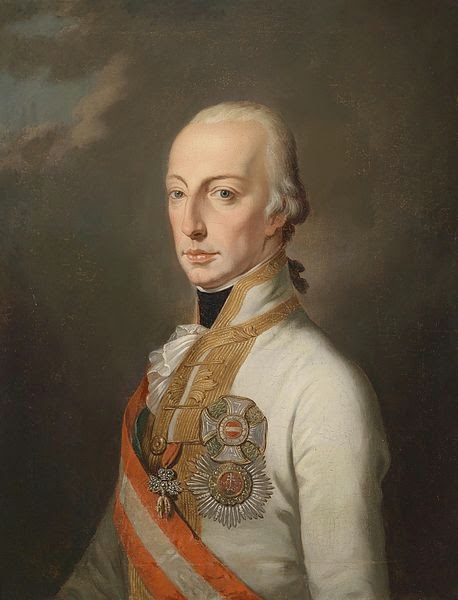
However, Emperor Francis II was simply being pragmatic and he would do what was necessary at the moment and bide his time to come out on top in the end. If it meant doing something unfortunate, so be it. The same thing occurred in relation to the great Austrian monarchist hero Andreas Hofer. At one point, the land Hofer had fought so hard for and which he had won in fair combat was handed over by the Emperor to the Bavarian allies of France. It had to be a difficult moment for the loyal Austrian patriot but the Emperor was making the hard choices that were necessary and he would ultimately get it all back. Despite the efforts of his daughter to convince him that Bonaparte was not such a bad guy, Emperor Francis had never truly accepted him as a legitimate monarch and never would. Thankfully for Austria, Napoleon could not resist overreaching and this he did with his invasion of the Russian Empire. The steppes of Russia swallowed the Grande Armee and in the aftermath a sixth coalition was formed, including Austria, to bring Napoleon down. Russian and Prussian armies pushed the French out of Germany, the Swedes hit Napoleon’s Danish ally and the British pushed up from Spain into southern France. At battles such as Kulm and Leipzig, Austrian forces played their part in a string of allied victories. Austria had a talented commander on hand in the person of Field Marshal Karl Philipp, Prince of Schwarzenberg who had actually been picked by Napoleon himself to command the Austrian contingent of the invasion of Russia.

Emperor Francis I risked everything in this war, betting all the chips that Austria had but this time Napoleon was defeated and as the allied armies closed in on Paris in 1814, the French emperor abdicated and was exiled to Elba. A short time later, he would return to make his last bid for power but met with a crushing and decisive defeat at Waterloo after which he was sent to St Helena, never to return. For Emperor Francis of Austria, this was the high point of his reign and a moment of the greatest prestige for Austria. Allied leaders met in his capitol, in the Congress of Vienna, to redraw the map of Europe and organize a new, post-revolutionary international order. The Austrian Empire benefited greatly, giving up territories such as Belgium which was distant and next to impossible to defend while regaining the Tyrol and other areas and gaining new territory in Italy and Dalmatia (what had been the Republic of Venice).

More significant though, was the pride of place that the Austrian Empire received with the creation of the German Confederation, of which the Austrian Emperor was President, and the Holy Alliance of Prussia, Austria and Russia to safeguard religion and monarchy in central and eastern Europe (though Britain, the Pope and the Turks disliked it -an odd assortment). It was a very conservative and pragmatic new order that settled over Europe and that made it very much to the liking of Emperor Francis I whose chancellor, Prince Metternich, had arranged much of it. The Emperor and Metternich understood each other and worked well together, establishing an international order in Europe based on legitimacy and periodic international congresses to resolve disputes that prevented another pan-European war for a hundred years. Perhaps their only failing in this area was in their rejection of nationalism as a whole, thinking it could be suppressed rather than taking hold of it to steer in a beneficial direction. Nonetheless, what they did do produced undeniable results and, on the whole, worked for a very long time.

As a man and as a monarch, Emperor Francis I was probably unlike what most would suppose him to be. For enemies of the Austrian Empire he is often portrayed as a harsh, reactionary tyrant, paranoid and militaristic, cold and calculating. In fact, he was a complex man who understood the enormous responsibility he had as monarch and who tried to always do what was best, not for the sake of popular opinion but as a sacred duty. It is true that he had a very active and extensive secret police and his policies would today be seen as restrictive. They were certainly illiberal but no more so than many that exist in Europe today, the only difference being who they were aimed at stopping and the fact that, unlike modern European leaders, Emperor Francis never claimed to a liberal. His network of spies and use of censorship was a reaction to the horror and world war that came with the French Revolution and he was determined to prevent such words, ideas or movements ever gaining a foothold in the Austrian Empire. Much of Europe today has laws just as restrictive but where Francis banned “revolutionary rhetoric” or “egalitarian” or “anti-religious” and “republican” talk, today what is banned is called “hate speech” or “racist” or in some way offensive and “politically incorrect” talk. His ban on all things Jacobin could be compared to the current ban in Germany on all things Nazi and would be defended on the same grounds; that some ideas are too dangerous to tolerate.

To the charge of being a reactionary (which not everyone would consider a bad thing) Emperor Francis was more nuanced than most realize. He was certainly a man of very traditional and staunchly conservative politics but neither was he a radical legitimist. He favored policies which were as conservative as possible but was never so ideologically zealous as to hinder his pragmatism. This was partly why he opposed nationalism, because it interfered with the sort of monarchial territorial horse-trading that could benefit his empire. So, he had no qualms about northern Italy being absorbed by the Austrian Empire rather than being restored to Venice and he was more supportive of the King of the French, Louis Philippe, than the very traditional King Charles X of France whose policies, though the Emperor was probably sympathetic to, he feared were impractical and could lead to another revolution and potential trouble for the rest of Europe.

Although he famously said that he had no knowledge of “the people” but only “subjects” he was not some distant, aloof sort of autocrat as he is often portrayed. Each week he set aside two half-days to meet with any of his subjects, whether high born or low, who made an appointment to see him. He would listen to their opinions or concerns and was able to converse with them in their own language, no matter what part of his polyglot realms they came from. In that way he was more accessible to the public than just about any republican president in any European country today (or most in the rest of the world at large for that matter). In a way, he inherited qualities from both of his immediate predecessors. From his father, who it was said ran the most successful secret police force in the world as Grand Duke of Tuscany, he had a talent at keeping himself well informed about what was going on within his empire and from his uncle Joseph II he had the ability to talk easily to anyone, be they prince or ploughman.

If Emperor Francis was busy with his public duties, his private life was just as eventful. He married first in 1788 to the charming Elisabeth of Wurttemberg, a bride chosen by Emperor Joseph II, but she died in childbirth in 1790, her baby girl surviving her by less than a year. Later that year he married his first cousin, Princess Maria Theresa of Naples and Sicily, who bore him twelve children, though four died young. These offspring included a future Empress of the French and Queen of Italy (while Napoleon ruled), a future Emperor of Austria, Empress of Brazil and Queen of Saxony. They had a successful marriage and mostly a happy one, though she was very lively and he very serious. She died in 1807 at only 34, no doubt thoroughly exhausted. The following year he married another first cousin, Maria Ludovika of Austria-Este, a refugee from the Napoleonic conquest of Italy, but she died in 1816 at only 28. Later that year he married Princess Caroline Augusta of Bavaria who was quite popular and who survived him.

At home, Emperor Francis I kept things calm and orderly. Trade was not much promoted and agriculture remained the primary industry of most imperial subjects. In this area, Francis can be faulted somewhat as his policy, summarized by his words, “I won’t have any innovations,” and “Let the laws be justly applied; they are good and adequate” as this allowed more business-friendly Prussia to have an economy and industry that expanded faster than Austria. The army was also neglected in terms of spending (while the overall debt continued to climb) which had negative effects for Austria later. Dissent in Hungary, however, remained as problematic for Francis as it had been for his predecessors and after a meeting of the Central Hungarian Diet in 1825 he was forced to agree not to raise taxes without their consent. In foreign matters, his primary concern was in suppressing any hints of nationalist or revolutionary sentiment in Germany and Italy. In the short-term, these were successful but in the long-term they proved fruitless. Nonetheless, Francis I was convinced that he was correct and that it only took a firm hand and a sharp eye to ensure that things remained as they were.

After ruling for 43 years, quite unexpectedly, Emperor Francis I of Austria came down with a fever and died on March 2, 1835 at the age of 67. In character to the end, his last advice was to “change nothing”. Additionally, he advised his son and heir to preserve the unity of the Imperial Family. That would be done, though after the traumas of 1848 his eventual successor, Emperor Francis Joseph I, would be forced to make some considerable changes. History, on the whole, has not been kind or very fair to Emperor Francis I, portraying him as a narrow-minded arch reactionary who liked nothing more than fiddling with his wax seals or making toffee. However, in truth, he was the driving force behind all that was Austria for nearly half a century. Metternich usually gets the glory (or the blame, depending on one’s view) but he only persisted in his position because the Emperor wanted him there. Francis I saw Europe torn apart by revolution, took a firm stand in stamping it out and did his best to ensure that it never happened again -and so long as he lived it did not. He could be short-sighted and sometimes he had to make tough decisions for the good of his empire but by his actions, the Austrian Empire survived and finally triumphed over Napoleonic France, regaining the dominant position in German affairs and central Europe. While there were problems in isolated areas, the actions and leadership of Emperor Francis prevented widespread unrest until 1848 and created a system in Europe based on facts rather than idealism, legitimacy rather than populism and established peace and stability for the better part of a century. Not a bad record that.

Saturday, February 14, 2015

Monarch Profile: Emperor Claudius II

The Roman emperor known as “Claudius the Goth” was born on May 10, 214 AD in the province of Illyricum (roughly modern Croatia) and he would be the first of several accomplished Illyrian emperors. Although he has been widely praised, at least by many secular historians, his actual record would leave more than a few wondering why. Which, of course, is not to say that he was a disaster but simply that his achievements may have been a bit exaggerated due to other motives by those penning the history books. He had a distinguished record as a soldier and earned steady promotion to major military commands during the reigns of Emperor Valerian and Emperor Gallienus. When Gallienus was assassinated near Milan in September of 268, the army considered Claudius to be the obvious choice to succeed him. There was certainly public support for such a move and the Roman senate found nothing objectionable about him. He was not far away at the time, commanding the reserves at what is now Pavia, Italy and he immediately took charge and seized Milan and executed Aureolus, commander of the Dalmatian cavalry who had defected to the enemy in the Gothic War that was being fought and who had killed Gallienus. However, as no other conspirators were punished, some have always suspected that Claudius himself may have been party to it.

In any event, measures were taken to ensure unity rather than a spirit of retribution. The newly declared Emperor Claudius II successfully petitioned the senate to deify the late Emperor Gallienus and ordered that there be no persecution of his loyalists. Emperor Claudius II remained at the front to continue the war against the Goths, though having taken Milan he had to first move north to confront another barbarian invasion, this time the Alemanni, (southern Germans) who were pouring across the Alps into northern Italy. After a decisive victory at Lake Garda, and wintering in Rome, Claudius II returned to the front and led a successful campaign against the Gothic invaders, earning the title “Gothicus Maximus”. However, there were Roman defeats as well, particularly in Thrace where the Goths won a considerable victory. However, the Roman legions were placed in a commanding position for victory due to the outbreak of a terrible plague that devastated the Gothic forces. Unfortunately for Emperor Claudius II, the spread of disease knew no preference between Roman and barbarian and the same plague claimed his life as well. Emperor Claudius II died in camp in August of 270.

During his reign, much of the Roman Empire that had fallen away was reclaimed but about as much was also lost. As Roman fortunes rose in the west, they fell in the east. Gaul had broken away previously and tried to set up a rival power under its own line of Gallic emperors and Claudius II sent Roman forces to reclaim at least southern Gaul east of the Rhone River. Hispania (Spain) had fallen to the Goths but had finally shaken off their rule and pledged loyalty to Rome once again, which was certainly a great benefit and left Claudius II well placed to launch a more ambitious campaign to restore Roman rule to the whole of Gaul. However, he was then preoccupied by the Gothic invasion and even more alarming was the news from the east where the famous Queen Zenobia had come to power (in what is now Syria) and advanced as far as Ankara in Turkey. The following year her forces conquered Egypt, cutting Rome off from its most vital source of grain. Obviously, that was a situation that left little time for dreams of Gallic conquest. The first priority of the Emperor was to secure Italy and defeat Zenobia so as to prevent food shortages in Rome that would be ruinous. However, before any of that could be done, Claudius II had departed this life.

Having no children of his own, Claudius II was succeeded by his brother who became Emperor Quintillus. According to the official history of the Roman emperors, the two also had another brother named Crispus whose daughter, Claudia, was the mother of Emperor Constantius Chlorus who was the father of Emperor Constantine the Great, the first Christian Roman Emperor. If so, this would be somewhat ironic given that one of the things Claudius II was praised for by some of the senatorial class was in being a more strictly pagan Roman emperor who began enforcing religious laws with more vigor than had previously been the case. Of course, some have also argued that this genealogical connection was a forgery, something invented by the partisans of Emperor Constantine to give him a more illustrious imperial family history. In such cases, it is virtually impossible to prove with absolute certainty which side is correct in its assertions.

One other incident occurred that makes Emperor Claudius II rather noteworthy and that concerned some trouble of a religious sort. Persecution of Christians was rather intermittent in the Roman Empire, with periods of fierce persecution being followed by long periods when anti-Christian laws were relaxed or left un-enforced. Some of these laws were being enforced in the reign of Claudius II and there was a certain Roman priest who came to the attention of the authorities. He had become well known for administering the sacraments in violation of the law, particularly it seems for secretly marrying Christian couples. He was arrested but still carried on converting people to Christianity. Severely beaten and stoned, the priest did not die and was brought before Emperor Claudius II. Rather than beg for his life, he tried to convert the Emperor to Christianity! That did not happen and due to his persistence he was ordered to be beheaded. While awaiting execution he converted the blind daughter of the governor of his prison to Christianity and while praying for her, her blindness was healed. The grateful girl would remain faithful to his memory for the rest of her life, long after the priest was martyred on February 14, 269, cherishing a last, small note he had written to her, which the healing power of Christ enabled her to read, which ended with the words, “from your Valentine”.

A happy St Valentine’s Day to all from The Mad Monarchist

Wednesday, November 12, 2014

Anniversary of the Emperor of Japan

This year marks the Silver Jubilee (as it would be called in the west anyway) of HM the Emperor of Japan who had his formal enthronement ceremony twenty-four years ago today. It was truly an historic event, coming after the 63-year reign of his father, the Showa Emperor, which was the longest reign in Japanese imperial history. Although born in the time of the Empire of Japan, the current Emperor was still only about 12-years old when Japan surrendered in 1945. He did most of his ‘growing up’ during the days of the American occupation and the post-war State of Japan. As such, things were quite different for him compared to past Japanese emperors and on his shoulders rested an immense responsibility. He would be the first monarch to reign after the war, after the empire and under the new constitution and the new place Japan found itself in on the world stage. Fortunately, he had the advantage of a long-reigning father who presided over the most dramatic changes and so the Emperor was able to be brought up in this new atmosphere and fully prepared for his position and what would be required of him by the time he came to the throne in 1989. Since then, he has proven himself to be one of the great monarchial leaders of the world and an example to his own people and to others worthy of emulation.

The past 25 years of the current imperial era have seen high points and low points for Japan but through it all, the Emperor has been exactly the monarch that the situation, and the times, needed him to be. He came to the throne at a time when Japan was undergoing astounding economic success. The country had risen from the ashes of war to become the second largest economy on earth and, for a time, it even looked as though Japan might surpass the economic powerhouse of the United States as the value of the currency rose and investment poured in. However, over-confidence, reckless spending and bad decisions by banks, businesses and the government soon caused the bubble to burst and Japan experienced the infamous “Lost Decade”, which was actually more than a decade, of economic stagnation. Over the many years of difficulties, the Emperor was a symbol of reassurance to the public as well as an example of frugality and simplicity. The Japanese monarchs have long been known for living elegantly but simply and the current Emperor has been no exception. He always set an example of being majestic and dignified without being ostentatious. The public, after the economic bubble burst, took this to heart and began to follow his example; extravagance was no longer fashionable.

On the political front, the long rule of the Liberal Democratic Party (the most conservative mainstream party) came to an end in 1993 but the coalition that replaced it soon collapsed and the LDP made its way back into politics in a bizarre coalition of its own that gave Japan its first socialist prime minister in half a century. Although most remembered today for his high profile apology to the other nations of Asia for the Japanese role in World War II, the election of a socialist prime minister was just the first in a string of disasters Japan had to deal with. His massive amounts of new regulations and entitlements did the economy no good, in 1995 a major earthquake struck Kobe and two months later a cult group carried out a poison gas attack on a Tokyo subway that killed 13 people and injured many, many more. The Emperor responded to such events with a dutiful adherence to his constitutional role and by acting in a kind and compassionate way to give comfort to his people in times of natural disasters. Both of these duties the Emperor would be called on to perform throughout his 25-years on the throne. In terms of politics, the Emperor has remained above the turmoil, never drifting to one side or the other but always on the side of Japan as a whole.

Although the Emperor is not a political figure in that he is not involved in politics or policy making, he is a leader and is undoubtedly the greatest leader Japan has and not simply by virtue of being the Emperor. He has shown more wisdom, moderation and foresight than virtually any political or social leader in Japan in his lifetime. In terms of domestic politics, the Emperor has always been scrupulous about following the rules and sticking to the constitution. This has made him an invaluable source of stability in very politically unstable times. Even when Japan was undergoing rapid turnovers of governments, one after another, there was no collapse in confidence domestically or in foreign countries. Anywhere else where governments came and went so quickly this would cause a panic but not in Japan and that is because, simply by being there, the Emperor has a calming effect. The politicians in Tokyo may bicker and feud but everyone feels that it will all be okay because the Emperor is still in his palace and all is right with the world. The Emperor, going about his duties, closing one Diet session and opening another, is a sign of survival. The Emperor is still there, just as he always has been, so Japan is still here, the country will not cease to exist because politicians cannot come to an agreement.

On the world stage, the Emperor has been, perhaps even more important over these last 25 years. His reign has seen the start of Japan reemerging as a force in world affairs and as a major military power (even if it is not, legally, a formal military). Japan deployed forces (in a non-combatant capacity) abroad for the first time since World War II, showing an increasing willingness to put the past behind them and become more self-sufficient in defense matters. Of course, this has not always been welcomed by those in other countries and bigoted elements at home and abroad (though they despise each other) have both sought to cling to memories of the war and keep Japan shackled to the past, a focus of hostile and suspicious feelings. However, so far, they have been unsuccessful thanks in no small part to the actions of the Emperor himself. In contrast to the narrow-minded chauvinism of the radicals, the Emperor has traveled the world, solidifying relations with allies, renewing old friendships and forming new and better relations with foreign countries as the embodiment of a confident, peace-loving, mature Japan. He has struck just the right note on every occasion, expressing regret for past events but honoring past heroism and sacrifice, acknowledging history but not being enslaved by it. Rather than carry on old grudges, the Emperor has set his focus on strengthening the Japan of today and tomorrow by goodwill and strong friendships in the international community. And, where Japan has been met by bigotry, the Emperor has taken the moral high ground, meeting such animosity with polite kindness, an open mind and an outstretched hand. Such warmth and dignity on his part has served more than once to highlight the immaturity of those powers which cling to bitterness.

While serving as an inspiring example at home and putting the best image of Japan forward around the world, the Emperor has also been a great comfort to his people in times of crisis. At no time was this more evident than in the worst disaster Japan has suffered since the end of the war; the earthquake and tsunami of 2011. The Emperor took the almost unprecedented step of addressing the entire nation personally in a televised message, the nearest thing to which that was ever done before being the address by radio to the people by HM the Showa Emperor in 1945. The Emperor and Empress also made numerous visits to the victims of the disaster, greeting them personally, talking to them, listening to them and comforting them. No one who experienced such a visit or even witnessed one could not have failed to be moved by the genuine sympathy and compassion the Emperor showed to every one of his unfortunate subjects at such a sad and difficult time. Once again, he set the perfect example and the people of Japan came together in a most heart-warming way to help each other, care for each other and to join in resilient determination to rebuild, recover and improve the afflicted area. With the moral leadership that the Emperor provided, everyone could see that the old values many had thought had disappeared in Japan, were still alive and could come back into focus in times of crisis for the country.

Throughout his reign, the Emperor has seen a number of natural disasters afflict his country. There has also been an increase in tension with Japan’s closest neighbors with harsh words and military scares from China, Korea and Russia. This, naturally, has led to Japan placing more emphasis on national defense and this, in turn, has provoked protests from Korea, China and Russia with China and Russia in particular clinging to the memory of World War II and wishing to, in their words, “preserve the post-World War II world order” which of course would include a powerless Japan. However, so far, their efforts to frighten other countries and divide Japan and her closest allies have proven mostly fruitless, thanks in no small part to the Emperor himself. He has always made it clear that he values nothing higher than peace, remembering the horrors and ruination of the war very well himself, and he has always been ready to reach out in friendship to any country. His actions have shown the rest of the world that any tensions, such as between China and Japan, are not being instigated by Japan but by China. The Emperor has also been of immense benefit in strengthening existing friendships with American and European powers as well as forging new and better relations with other Asian countries such as India.

The Emperor cannot keep the peace on his own, but he has set the right example, the right moral tone and been the best sort of ambassador Japan could ever have. He has spread trust and goodwill wherever he has gone and won over people in every country he has visited with his kind smile and genuine warmth. The last 25-years have, in many ways, been difficult for Japan. The country has troublesome neighbors, more national debt than any country in the world, faces a looming demographic crisis and has had to deal with many natural disasters. However, the people have also been coming together like never before, becoming more realistic and more involved in the world community and have shown the talent and creativity to overcome great problems. And through it all they have had the Emperor’s prayers to support them, the Emperor to set a matchless example for them, an Emperor to be their best public face to the world, an Emperor who has comforted them in times of crisis, congratulated them on great achievements and reminded all Japanese people everywhere of their shared history and illustrious national story. In brief, the Emperor has been, in every way, the model monarch and a matchless moral leader for his country and all his people. Congratulations on 25-years on the throne and may the Emperor reign on, until the pebbles grow to might stones. å¤©çš‡é™›ä¸‹ä¸‡æ­³! 万歳! 万歳!

Thursday, July 18, 2013

Monarch Profile: Emperor Caligula

The young Caesar known as Caligula has the reputation of being the most infamous, twisted and depraved Emperor of Rome; which is quite a statement. There are one or two others that might provide some stiff competition but, there is no doubt that Caligula, in his short reign, would be grossly excessive and set a standard for depravity that few, if any, could hope to match. He became so notorious that despite the fact that he lived 2,000 years ago, reigned for only a few years and despite the fact that the Romans themselves tried to obliterate his memory the name of Caligula is synonymous with insanity, sadism and debauchery to this very day. How many of all the lurid tales are true is open to speculation. That makes any coverage of Caligula rather difficult. There are really only around a couple of sources historians have to go on concerning Caligula and these may well be biased against him. However, the fact alone that so little information about him survived is at least some proof that not all the tales of his wickedness were invented or exaggerated. Still, it is important to keep in mind that we have very little to go on concerning Caligula, what we do have was written by political enemies and may well have been embellished. Everyone should also keep in mind that this was a real man, not a caricature and very little that we know about him can be verified.

Caligula was born on August 31, in the year 12 and his real name was Gaius Julius Caesar Germanicus. His father was the very popular Germanicus, who was the adopted grandson of Augustus Caesar and a potential heir to the throne. Caligula was, unlike his predecessor Emperor Tiberius, a blood descendant of Augustus and Julius Caesar as well as Mark Antony and his uncle was the future Emperor Claudius. He earned his nickname while accompanying his parents on military campaigns in Germany where he was adopted as the mascot of the army. His mother would often dress him in a little military uniform which, of course, included the sandals or boots that the soldiers wore and he was soon dubbed Caligula or Little Boots and the name stuck. It should also be pointed out that Caligula always hated that nickname and in later life would inflict the severest punishment on anyone who called him that. To make things more complicated he was not particularly fond of his real name, Gaius, either. Anyway, from an early age he was exposed to the violent intrigues that had long been a part of Roman political life.

It was believed that Germanicus was the heir to the throne that Augustus preferred though, since he was too young, Augustus adopted Tiberius with the understanding that Tiberius would adopt Germanicus as his heir. Not long after becoming emperor, however, Germanicus died and Tiberius took care to keep Caligula isolated and under his control. He spent many years in what can be described as rather comfortable imprisonment and isolation with only the company of his sisters Agrippina the Younger, Julia Livilla and Drusilla. In time, Caligula would have incestuous relations with all three of them but mostly a long standing affair with his most beloved sister Drusilla. In fact, many believe that his sister Drusilla was the only person Caligula ever truly loved in his life. With this background, Emperor Tiberius summoned Caligula to the island of Capri where Tiberius spent the last ten years of his life and where he was rumored to have become quite nasty and certainly very paranoid. His condition may be explained by the absence of those who had previously moderated him such as his best friend Nerva and his brother Drusus. He wanted Caligula near him both because he feared him desiring to assume the purple early and to prevent anyone else from influencing his adopted grandson and heir.

Caligula was flattering and submissive to his adopted grandfather though he later admitted nearly killing Tiberius himself but kept up his charade of being the loyal grandson because it was in his interest to do so. Tiberius, it seems, was not so totally fooled by this as Caligula might have believed. Some have suggested that he made Caligula his heir specifically because he expected him to prove such a monster that his own reputation would shine in comparison and he is alleged to have once referred to Caligula as a python he was nursing in the bosom of Rome. Certainly many believed that Tiberius would have preferred his heir to be his young natural grandson Gemellus. However, as the son of Germanicus, many believed that Caligula had a legitimate right to the throne and were anxious to see the purple return to the bloodline of Augustus and Julius Caesar, especially as Tiberius had become so unpopular for having so many senators executed. However, in private, the personal sadism of Caligula could be seen by his role in helping Tiberius carry out his duties on Capri. He was known to show great enjoyment at having slaves tortured and executed and gloried in the bloody gladiatorial games that were popular at that time.

Today, looking back, we often wonder how anyone could have actually looked forward to the reign of Caligula; but of course, we have the benefit of hindsight. To the general public of the Roman Empire he seemed like a perfectly normal young man. Many saw him in a sympathetic light because of the death of the death of the rest of his family. Tiberius was unpopular (rather unjustly so) and by then was 78 years old and preparing to die. Hoping that his favored grandson Gemellus might succeed him eventually he named him his heir alongside Caligula in his will. Poor, young Gemellus was likely doomed at any rate but this order certainly sealed his fate. The hour of destiny for Caligula came on March 16, 37 AD when the Emperor Tiberius died. Many believed that Caligula had a hand in his passing though the deed was probably done by Naevius Sutorius Macro, the Prefect of Praetorian Guard who allegedly smothered Tiberius to hasten the accession of Caligula. If reports are true and Macro did murder Tiberius, it did nothing to diminish the popularity of Caligula who the people cheered for ending the life of the man they viewed as a tyrant. With the backing of Macro and the Praetorian Guard Caligula was immediately declared heir to Tiberius and Gemellus was cast aside on the grounds that the late Caesar had been insane when he included Gemellus in his will. That may have been true but it was certainly not the legitimate reason Gemellus was cast aside in favor of Caligula.

Even more so than Caligula this was a moment of triumph for Prefect Macro who had been planning this for some time and that in itself adds credence to his murder of Tiberius. Three years earlier he had been putting himself in a position to befriend and possibly dominate Caligula by encouraging his wife, Ennia, into an affair with the young prince. He had been responsible for the downfall of the previous Praetorian Prefect Sejanus who had been the power behind the throne, so to speak, under Tiberius. Macro had supplanted him in that position and using the sexual talents of his wife now planned to hold the same favored status under the new, young, Emperor Caligula. On March 28, 37 AD the Roman Senate officially voted Caligula to the office of Princeps or First Citizen amidst much rejoicing by the public who greeted their new emperor with cheers. Caligula was also quick to put the vast treasury left by Tiberius to good use in winning greater popularity for himself. He gave the Praetorian Guard a hefty bonus, distributed money to the common people and declared a general amnesty to free all of those imprisoned by the paranoia of Tiberius. Celebrations were held constantly with hundreds of thousands of animals sacrificed in thanksgiving of the accession of the young Caesar the people called their star and their baby. They could not have known that amongst the inner circle of imperial power Caligula already had a reputation for being a great servant but a terrible master.

Nonetheless, the reign of Caligula Caesar was off to a glorious start. The empire was wealthy and at peace, their seemed to be a forgive and forget air about the city and a general feeling that the days of fear and repression were over and a new period of prosperity and kindness at the hands of their handsome, young and generous Caesar lay ahead. And, indeed it was so for the first half year more or less of the reign of Caligula. The people loved him wildly and, indeed, he was to remain very popular amongst the common people of Rome throughout all but the very end of his rather short reign. Caligula, it is often forgotten, was very politically astute and he knew that public image was important; at least as important if not more so than the support of the elite senatorial class. He did his best to appear as the ideal ruler, giving generously to those who had been taxed into poverty, expelling sexual criminals, setting aside the air of fear and paranoia that had preceded him and trying to maintain a closeness with the people through imperial pageantry and ceremony. Free elections were revived to give the people more say in government and gladiatorial games were held regularly to keep them entertained. In short, he did everything that a good Roman emperor was expected to do in order to be popular with the people.

However, Caligula could not hide his more egocentric and vindictive side totally, even at this early date. One of the fortune tellers employed by Tiberius had once said that Caligula had no more chance of becoming Emperor of Rome that he did of riding a horse across the Bay of Baiae. Caligula never forgot this and upon ascending the purple he had a massive pontoon bridge built across the bay, over two miles long, from Baiae to Puteoli. He then mounted his beloved, and soon to be famous, horse Incitatus and donned the breastplate of Alexander the Great and rode across the temporary bridge in order to show his defiance and triumph over the false prophecy that had been made of him. This should have been something of an alarm bell, but the public reacted to it with applause. They loved their Caesar, gloried in his accession and paid no attention to the rather sinister emotions that were behind this act for Caligula. It was a spectacle after all, something to entertain them, a bit outlandish perhaps, but all was well and it was a nice and rather humorous diversion.

Caligula was certainly enjoying himself as emperor. He had survived, he had beaten the odds, he was popular, his throne was secure and he was enjoying the favors of his sister Drusilla whom he totally adored as well as others such as his ongoing mistress Ennia. He adored Drusilla as he adored no other and would have liked nothing better than to marry her. In his increasingly egocentric way he viewed his sister, a blood relative, as being the only person worthy to be his wife and give him children. Obviously impossible and illegal Drusilla herself tried to discourage him as much as she did love him and there is little dispute that she did. Caligula felt safe with Drusilla and she was possibly the only consistent, moderating influence he ever had on his life. However, the blissful days of his early months on the throne came to an end in October of 37 AD. Most likely as a result of his constant swimming, drunkenness and debauchery Caligula fell extremely ill. It was so severe that he thought he would die and the Roman public was overcome with grief and fear that their beloved, young champion might be taken from them so soon.

Of course, Caligula did not die, but any inhibitions he may have had certainly seemed to. When he recovered those in his inner circle especially were to see a different and extremely horrifying Gaius Caligula than they had seen before. The mercy and generosity Caligula had earlier displayed were replaced by extremes of lust and cruelty after he recovered. One of his actions, in 38 AD, was to dismiss and execute his supposed friend Macro who had assured his accession to the throne. He began spending lavishly on wild parties and bizarre expeditions to glorify himself. He built two massive ships; one being a floating temple to the goddess Diana and the other a luxurious palace for himself. In an effort to outshine his deified ancestor Julius Caesar he embarked on an expedition to conquer Britain but got no farther than the English Channel. He then had his troops collect sea shells as spoils of his great victory and demanded a triumph upon his return to Rome. The senate refused on the grounds that he had won no victories and had conquered nothing. Caligula saw this as no excuse and held his own celebration with his subjects dressed as barbarian captives and forcing senators to run alongside his chariot. This was only the beginning of a long list of humiliations he would inflict on the senate as well as every other established institution and tradition in Rome.

His life at court went from bad to worse. He had the boy Gemellus put to death even though he had gone through the formality of adopting him as his heir. In his drive to have an heir Caligula realized he would have to be married and much as he might wish to marry his sister Drusilla, that was simply out of the question. He married and divorced three Roman noblewomen in quick succession before becoming infatuated with Milonia Caesonia, a notorious prostitute and the illegitimate daughter of another prostitute. She was, reputedly, no great beauty and she already had three daughters of her own but her moral laxity and bedroom antics impressed Caligula at several of his notorious parties and orgies and he would have no other. Many Roman nobles were outraged that the Emperor would marry a woman who was not only a commoner, but illegitimate and a prostitute. Caligula had his mind made up though and the marriage went through. Caligula delighted in shocking Rome with his personal whore and would have her parade around naked in front of his soldiers and pick out favorites for herself. He promised that he would make her empress but only if she gave him a son and heir.

Disaster struck Caligula on June 10, 38 AD when his beloved sister Drusilla died of fever that was rampant in the city. Caligula was heartbroken and went mad with grief. He declared a state of mourning for Rome and gave his sister the funeral of an empress with himself standing in the place of widower. Shortly thereafter he had her deified as the Divine Drusilla, a living representation of the goddess Venus. When, a short time later, Caesonia gave birth to a daughter Caligula named her Julia Drusilla in honor of his sister. One thing that is certain is that without the influence of his sister Caligula became even more unhinged. Human life seemed to stop having any meaning for him and he saw and used people as objects for his own amusement and nothing more. The senatorial class suffered most from his insanity. He set up and tore down consuls without consulting them. He flagrantly raped their daughters and sons and would likewise take their own wives for himself while at public parties. After having his fill of the woman in question he would return to the party and tell her husband and the other guests how she had performed in bed.

Caligula also seemed to have a rather unnatural attachment to his favorite horse Incitatus. In another humiliation for the upper class he would order the senators to hail his horse as they would a superior. He built a palace for his horse with a marble stable and a gold manger and lavished all sorts of jewels and fine garments on the animal. Most famously he once threatened to make Incitatus a Consul of Rome, however, this was not actually a serious suggestion but just another way Caligula had to humiliate the senators and denigrate them by suggesting that even his horse could do their job. This was nothing compared to his most degenerate act of defiance toward the senate. Due to his extravagance the rich treasury left behind by Tiberius was soon exhausted and in order to make money Caligula opened an imperial brothel in his palace and forced the wives of the Roman senators to employ themselves there. Were not the upper classes in utter fear for their lives this would never have worked but Caligula made it so and anyone with enough money could come to the palace and enjoy a few minutes with the wife of a Roman senator. He also levied taxes on marriage, prostitution, use of the courts and other things which began to erode his popularity among the common people of Rome.

Having trampled on such institutions as the family, the military and the republic it is no wonder that religion soon became a target of the maniacal Caesar as well. Whereas Julius Caesar and Augustus had been deified by the senate after their deaths (Tiberius specifically stated he did not want the same treatment) Caligula broke all precedent by demanding that the senate declare him a god while he was alive. The cowering senate did so and Caligula went to great lengths to emphasize his new, divine status. He insisted on the most groveling submission to his person and had the heads of the statues of the various gods in the temples replaced with his own likeness. This brought him into particular trouble with his Jewish subjects who refused to worship him and who had earlier been excused from the cult of the emperor because of their belief in monotheism and spurning of graven images. This led to some rebellions which were bloodily suppressed. Caligula was so enraged by this that he ordered a statue of himself erected in the Temple in Jerusalem, which would certainly have caused a revolution but he was eventually dissuaded after the matter was delayed for a time. Eventually, Caligula would claim that he conversed with the other gods and that he was, in fact, greater than them all, even the king of the Roman gods; Jupiter. Caligula also famously roamed the halls of his palace at night commanding the sun to rise.

By this time most people had little doubt that Caligula, the Emperor of Rome, the commander of all the Roman legions and absolute ruler of virtually the entire known world was completely insane. His orgies and debauchery became notorious and his cruelty and executions of so many nobles had the upper echelons of Roman society quaking with fear and close to their breaking point. The reign of Caligula was no longer the open and tolerant style he had started with but he had now surpassed even his feared predecessor with his tortures and the numbers of those executed for treason; real or imagined. Caligula once famously remarked that he wished all the Roman people had one neck so he could cut off all the heads with one blow. When told that he was becoming hated by his own people who had once loved him, Caligula replied, "Let them hate me, so long as they fear me". And, that they certainly did. He enriched himself by confiscating the property of anyone arrested for treason and when in need of funds he might charge any wealthy Roman with treason. He even made it law that all those who died had to leave something for him in their will. Obviously, this situation could not go on forever and many men in high places began plotting against Caligula so that his reign of terror might come to an end.

It was, remember, the Praetorian Guard which had helped ensure his succession and they had protected him from several previous plots against him but finally his erratic behavior became too much and the Praetorian itself determined to end the life of Gaius Caligula. In particular the plot was the work of Cassius Chaerea (appropriately named) who was the leader of the Praetorian Guard. Their only real opposition was the Germanic Guard who were the personal troops of Caligula and fanatically loyal to him. Otherwise, the Emperor had few friends by this time and many of the nobles, generals, equestrians and senators of Rome were well aware of the plot and supported it though of course they were too afraid to be actively involved. The end for Caligula came on January 24, 41 AD while Caligula was berating a group of actors set to perform in a celebration for the Divine Emperor Augustus. Chaerea and the other soldiers fell upon him as he cried for help, stabbing him some thirty times. This was not mere assassination however, the Praetorian intended to wipe the seed of Caligula from the earth forever and troops were dispatched to kill his wife Caesonia and his young daughter Julia Drusilla who allegedly inherited the viciousness of her father and bit and clawed at the soldiers before they smashed her head against a wall. The Germanic Guard arrived too late to save their master though they went on an enraged, murderous rampage after that killing anyone they came across, the guilty and innocent alike. With that last act of savagery, the reign of Caligula Caesar had come to an end.

The Praetorian Guard then elevated Caligula's uncle Claudius as the next Emperor of Rome as he was literally the only male member of the imperial family left alive at this point. He had been overlooked for so long because most everyone considered him a simple idiot, yet, he soon became Claudius Caesar and was a quite successful Roman emperor. As for Caligula, the Romans did their best to eradicate his memory from all public view. His statues were defaced or destroyed completely and many materials from his reign were destroyed. The nightmare was over and everyone wanted to forget as quickly and as completely as possible. Yet, in spite of the concerted effort to erase Caligula from public memory, his story remains infamous to this very day. Try as they might the world has never forgotten the bloody, perverse reign of the Emperor known as Little Boots nor is it very likely to. His misdeeds are world famous, yet he was still popular among some of the common people even at the time of his death. He is known for his madness, excess and insanity yet he was also known to be very persuasive, logical and even quite eloquent at times. More is unknown about him that what is known and that also adds to the interest there has always been concerning Caligula. Was his story a case of absolute power corrupting absolutely or was he driven insane by the deaths of so many of his loved ones? We will never know these answers but if anything is certain it is that the world will never forget the bizarre and depraved life of Gaius Caligula.
Related Posts Plugin for WordPress, Blogger...