Friday, June 15, 2012
Mad Rant: Why I Hate Socialists
Hate. I say, “hate” and I’m comfortable with it. I try not to toss that word around lightly but over the span of my life I have arrived at that firm conviction. This is not something I came to without thought. True, I was around during the Cold War when the “Union of Soviet Socialist Republics” were the big bad guys of the world. I remember emergency news bulletins about Soviet cruise missiles being moved into Eastern Europe. I remember a teacher telling us about what would happen if the Soviets hit San Antonio, Texas with a nuclear missile and I remember when the Berlin Wall came down. But, during that time, I never questioned or understood the ideological differences between NATO and the USSR, I never thought about socialism or capitalism. The Soviets were just the “bad guys” and that’s as far as it went. When I ventured into the world of higher education I had professors who sang the praises of socialism, Marxism and even communism. One admitted to being a communist and I’m sure he was not the only one; just the only one honest enough to say so. My natural inclination to go against the grain made me skeptical of their rosy picture of a socialist utopia.
After all, I could see as well as anyone how poor and miserable and oppressed people are in socialist countries like North Korea, Soviet Russia or Cuba. I was told that was because these people just didn’t understand socialism or do it correctly. That didn’t wash with me though. Surely, amongst all of the people of all the socialist movements from East Germany to Red China and the Soviet Union to Vietnam could not ALL have been mistaken or inept. I oppose socialism because socialism doesn’t work. But being opposed to something is not the same as hating something and I HATE socialists -even more than socialism itself in many cases. I have seen, as anyone can see, what effect socialism has had on countries all over the world. Their effort to make everyone “equal” is much older than Karl Marx and it has been misleading people, ruining lives and destroying countries for hundreds of years. Time after time history shows that the most murderous, totalitarian regimes in the world have had the word “socialist” in their name and promise equality, wealth redistribution and a classless society where everyone is blissfully the same.
Because of their drive for the (unobtainable) goal of “equality” socialists have historically been the avowed enemies of monarchy as well as traditional, organized religion. In just about every monarchy that has fallen in the Twentieth Century socialists of one variety or another have been at the forefront of bringing them down. Spain, Germany, Italy, Russia, Hungary, Romania, Yugoslavia, Mongolia, Vietnam, Laos, Cambodia were all instances wherein socialists brought down existing, traditional monarchies and not one of those countries improved as a result of it. Of course, some people will point to modern monarchies which are, in Europe and Japan at least, often extremely socialist and yet the monarchy survives. I say, give them time. Even in these countries where monarchy survives it is the socialists that are invariably the ones who wish it were not so and are just waiting for their chance to bring the monarchy down. If there are those who are devoted monarchists, I am certainly glad, but given the history and principles of the socialist movement I don’t think I could ever trust them. It is hard to imagine how one could reconcile being a socialist and a monarchist but if they can, while I would be pleased, it still would not make me accepting of their other policies. Too much ruination has already flowed from those ideals.
This in itself tends to work against monarchies as history and even current events have shown. The state takes from those who have to give to those who have not. Soon those who have no longer have much or have left the country and so money must be borrowed to continue giving to those who have not. Eventually the well of credit runs dry, the bills come due and there is great pain and consternation as those who have come to depend on the state being generous with the property of others fear they may be forced to do without or (God forbid) become responsible for their own welfare. This invariably leads to attacks on the monarchy with all the usual slogans and tired lines of attack. ‘Who are they to get to live in a palace and go to fancy parties while the state only pays me enough to survive without having a job?’ It happened in Russia and it happened in France. Neither the Tsar nor King Louis were causing anyone to go hungry but the royals are always easy targets for those who stir up envy and class hatred. They do not see the lifetime of service, the numerous charities or anything like that; they only see someone living better than themselves and so raise the howl of “social(ist) justice” and “wealth redistribution” and the end of the “class system”. The fact that this has never ended up working out well for the least of those in society seems to make no difference.
I also have the case of the Native Americans and there are few things that infuriate me more than what has been done to the American Indians. I have mentioned this before as long-time readers will recall but the disgusting nature of it brings me to tears. Of course, many will say that socialism was not responsible for stealing land from the Indians, moving them against their will or massacring them if they resisted. If anything, that was the fault of the opposite of socialism; capitalism, right? To a degree, probably so. However, that was not the worst thing that was done to the Indians. Those Indians were faced by a far more advanced civilization with superior weaponry and so on, that fought them for their land and they lost. That is sad, but those Indians at least had their pride. They fought like lions and there is no shame in being beaten by a superior enemy. They lost their land but they didn’t lose their dignity, they fought to the last, went down in a blaze of glory and when treaties were broken it was their enemies who were dishonored and not them. But, then socialists came along who wanted to make up for all of that and they have killed the Native Americans with “kindness”. Their socialistic policies have robbed the Indians of their dignity and their pride and turned them into perpetual dependents, waiting for the government to drop some coins into their tin cup to survive. It is heartbreaking what such proud people have been reduced to. It is a simple fact that cannot be said often enough. There is no group in the modern United States that receives more government assistance than Native Americans and there is no group of people in this entire country that is worse off than they are. It is criminally despicable what has been done to them.
Finally though, what really infuriates me the most, what gets under my skin and bugs me half to death is the flagrant hypocrisy of the rich socialists. I’m talking about people like Michael Moore, a multi-millionaire who sides with the union but doesn’t hire union workers on his films, who condemns capitalism but goes to court to keep as much of his own money as possible. I’m talking about Oprah who so supported President Obama (peace be upon him) and his “spread the wealth” campaign while moving around the country from mansion to mansion, staying just long enough to avoid paying the full tax rate on each. I might also point to multi-billionaires like Warren Buffett, who supports raising income taxes on other people which will not effect him in the least because he pays himself no salary and so has no “income” in tax but … I think you get the picture.
I’m not trying to pick on these people personally. Oprah seems like a nice lady, I thought the one actual movie Michael Moore made (“Canadian Bacon”) was funny and Warren Buffett, well, I don’t really know enough about him to like or dislike him aside from the fact that he supports higher taxes while he’s locked in a legal battle with the IRS over back taxes he refuses to pay so … he’s got nerve I’ll give him that. But this goes to something I noticed way back at university when I was being lectured by a socialist, openly Marxist professor who I know, at that time, had a whole lot more money than I did. And I am sick and tired of being preached to about the need for me to pay more to the government by people with more money than I’ll ever earn in my lifetime. If charity begins at home, why doesn’t socialism? I’m ready to be autocratic about this. I will go on record as saying that if I had the power, yes, I would take away the freedom of speech of these people. I would take away the right of anyone to argue in favor of socialism so long as they had even one penny more than anyone else.
Think about it like this: If the Ecumenical Patriarch, the Pope or Franklin Graham went around stealing, murdering and fornicating but still said these things were wrong and the government should make them illegal; would anyone take them seriously or listen to them for a second? Of course they wouldn’t. They would be dismissed as utter, rank hypocrites and rightly so. Why then doesn’t the same principle apply to the socialists? If they believe all the crap they spew about income inequality, why don’t they start writing out checks to everyone in their neighborhoods who have less than they do? They could spread their own wealth around right now. They could start sharing their wealth and lowering the “income gap” this very day! Of course, whenever someone makes this point they always say, ‘well, just me and my friends doing it wouldn’t make a difference’ so they have to have the government force everyone else to do it too (while they stash money overseas and play musical chairs with their mansions). Frankly, that’s a pretty lame excuse. If they really believed what they claim to they would do it just on principle and it would certainly help some people -right? Just take, for example, the greater Los Angeles area where there are many very poor people, many poor “undocumented immigrants” and also many multi-millionaire celebrities (not as many as there used to be for some reason). Why don’t they prove to all what socialism can do and just redistribute the wealth in that area equally?
We all know they would never do it even though if they did and the greater LA area suddenly became a bastion of blissful prosperity it would sure prove all the greedy capitalists wrong. But, they won’t and we all know they won’t. And, I think, deep down, we all know why too. Because George Clooney, with his California mansion and villa in Tuscany or Brad Pitt with his chateaux in France never turned down a multi-million dollar contract because it was more than what they needed to get by on. There is no “From each according to his ability, to each according to his need” when it comes to their own paychecks. That is why, more than anything else, that I cannot stand these people and that is why I don’t feel I should have to endure hearing them call for something and campaign for something that they would never in a hundred years actually do themselves. Until they put their millions where their mouth is I’d like them to all shut up and leave me and my bank account alone. What economic model is the best? I don’t know. I do know that socialism has been tried and it has never worked and I do know that those who are in charge never live equally with the common citizenry. They are hypocrites, they are phonies, they are monumentally ignorant or willfully deceitful and they never practice what they preach. That is who they are and who I am is … The Mad Monarchist.
Images Page
Readers may notice the new "Images" page at the top of the weblog. This will feature various images, mostly probably ones I have tinkered with, that will change from time to time according to various themes. The theme I have chosen to start with is the more recent royals of the late Kingdom of Hungary from Maria Theresa to Crown Prince Otto. I like royal portraits and photos and I like flags (as most know) so there will be alot of that. I don't know how long they will stay up but I will post a notice message whenever the existing collection will be replaced by a new batch.
Thursday, June 14, 2012
Monarchist Profile: Carl Friedrich Goerdeler
Carl Friedrich Goerdeler was another German monarchist who was a major figure in the anti-Nazi movement. If the now famous 1944 bomb plot against Hitler had succeeded, Goerdeler was expected to become chancellor of the new German government. He was born on July 31, 1884 into a conservative middle-class family of Prussian lawyers and bureaucrats in Posen (an area that is today part of Poland). He grew up in an atmosphere of close family, devout Lutheran faith and German nationalism, which included fidelity to the Prussian/Imperial German crown. He did well in school, went to university, studied law and economics, got married and had five children. During the First World War he served on the Russian front as a company officer and was particularly alarmed at the consequences for Germany of a vengeful Poland being created with Allied support. When he left the army he first entered politics by joining the right-wing DNVP (German National People’s Party) which joined the chorus of all those condemning the Versailles Treaty and for Goerdeler, given where he came from, the ceding of land to Poland was a point of particular outrage.
Nonetheless, Goerdeler was an even more committed anti-communist. When the Polish-Soviet War broke out in 1920 some dock workers in the isolated German city of Danzig wished to take advantage of the crisis by going on strike in an effort to cripple the Polish economy by shutting off imports. Goerdeler worked to stop this plan from going forward because, as much as he disliked the new Poland, he realized that the Soviets were an even greater threat and a Soviet victory over Poland would be disastrous for Germany. In 1922 he was elected mayor of Konigsberg (now Kaliningrad, Russia) and then in 1930 he was elected mayor of Leipzig, earning a reputation as a solid, determined civic official even by authorities of the Weimar Republic which he opposed. In 1931 Goerdeler was appointed Price Commissioner because of his economic expertise when Germany was going through spiraling deflation. Nonetheless, Goerdeler never wavered in his opposition to the Weimar Republic which he described as a proven failure.
More than once Goerdeler was considered as a possible Chancellor of Germany, first by General Kurt von Schleicher and later as a possible replacement for Franz von Papen. However, President Hindenburg opposed him because Goerdeler (and others in the DNVP) blamed Hindenburg for presiding over the armistice and urging the Kaiser to abdicate. In 1932 he was offered a cabinet position in the von Papen government but Goerdeler refused to have anything to do with the Weimar regime. Like many, Goerdeler originally had a favorable impression of Adolf Hitler when he and his Nazi Party first appeared on the scene, though he never joined the NSDAP. He hoped that Hitler could bridge the gap between the failed republic and a more traditional conservative government. Soon, however, he found himself increasingly at odds with the Nazi Party. As mayor of Leipzig he blocked Hitler’s Brown shirts from enforcing a boycott of Jewish businesses and he helped Jews in the city avert punitive Nazi laws against them. Goerdeler became increasingly disgusted with the anti-Semitic policies of the Nazi government.
Goerdeler worked within the law to minimize the damage of these measures but the Nazis became concerned enough to start keeping a closer eye on him. In 1934 with inflation still problematic, Hitler turned to Goerdeler and reappointed him Price Commissioner in which post he clashed with Nazi authorities over his opposition to devaluing the Reichmark. He also opposed the Nazi policy of making rearmament a priority over importing food and state control of the economy. He argued in favor of free markets and against government corruption but the Nazi Party were obviously not inclined to listen to him. Still, Goerdeler continued to make his case for closer ties with the western countries, cutting military spending, stopping state interference in the economy and the scrapping the laws that targeted Jews and controlled Churches. Naturally, the Nazi rejected his proposals completely and increasingly came to view him as an enemy of the party (which he was). When his term as mayor of Leipzig ended Goerdeler was to be offered the top spot in the financial department of the massive Krupp corporation but Hitler forced the business to drop the idea.
Goerdeler took a position at a lesser company and began to seriously devote himself to undermining and bringing down the Nazi regime which he hoped to replace with an older style Germany monarchy after the fashion of the government of Bismarck and the early German Empire. He began forming a secret circle of opponents of the Nazi regime but never relented in presenting his ideas to the government in the hope that they might see sense and change their ways. In his business capacity he traveled to many foreign countries and gave early warnings about Nazi foreign policy and tried to convince people that the Nazis were dangerous and would be the ruin of Europe. Nonetheless, as a German nationalist he did favor the return of German-populated territories to Germany but he wanted it done in a more orderly and less bellicose way. Even after the outbreak of World War II he continued to be active and considered himself the leader of “the” opposition to Hitler. Military intelligence chief Wilhelm Canaris aided him and he formed alliances with Field Marshal Gunther von Kluge, General Henning von Tresckow, General Ludwig Beck and Count von Moltke among others. Pastor Dietrich Bonhoeffer was a good friend of Goerdeler’s and although his immediate circle mostly shared his conservative views he worked with social democrats as well who wanted to see the end of Nazism in Germany.
One thing Goerdeler certainly was not though was a revolutionary and even far into the war he seemed convinced that if he could only explain things to Hitler and the Nazi high command they would have to see that he was right and reverse course. He had also spoken to foreign friends before the war and his own civilian and military contacts during the war that he hoped to see the monarchy restored. As it became clear that Hitler could not be reasoned with and would have to be removed from power by force, Goerdeler began to outline his vision for a post-Nazi Germany. He planned to have a constitutional monarchy, in somewhat the same style as Great Britain, with Prince Oskar of Prussia on the throne as the new Kaiser. Some wanted simply a complete restoration of the old German Empire but Goerdeler, though he had once wanted the same, opposed this as impractical and unlikely to be acceptable to the Allied powers. Unfortunately, not everyone agreed with Goerdeler and his circle of friends on this point and the famous Colonel Claus Graf von Stauffenberg was of the opinion that it would be unrealistic to attempt any sort of return to the monarchy and that the Soviets might make better allies than the western nations.
The anti-Nazi movement could in many ways be divided into two camps. Goerdeler was in the more traditional, wanting the monarchy restored, looking to the west and supporting free market capitalism. The other, such as many members of the Kreisau Circle, wanted a republican government, a socialist economy and looked to the east. There was also some disagreement over what to do with Hitler. Many wanted him to be assassinated at once but Goerdeler thought doing so would only make a martyr of him and reflect poorly on the plotters. Goerdeler wanted Hitler to be arrested, put on trial and then executed if found guilty (as he surely would have been). As the 1944 bomb plot was planned out, Goerdeler hoped to have Field Marshal Rommel play a prominent role in the new government but Rommel, though he stated he would accept a position in such a government, wanted nothing to do with any assassination. Instead it was decided that Colonel General Ludwig Beck would serve as President/Regent with Goerdeler as Chancellor.
Goerdeler was certain everything would work out but, just prior to the coup attempt, an order went out for his arrest and he had to go into hiding. He had only a radio to listen to in order to know if everything went as planned when the fateful day came. Of course, as we know, it did not. The bomb planted by Graf von Stauffenberg failed to kill Hitler and the attempted coup was easily suppressed by the Berlin garrison. Goerdeler managed to get out of Berlin but was arrested by the Gestapo in East Prussia. His family were sent to a concentration camp and Goerdeler, after a show trial at the People’s Court, was sentenced to death for treason. He was hanged on February 2, 1945 in Berlin, writing in his last letter, “I ask the world to accept our martyrdom as penance for the German people”.
Nonetheless, Goerdeler was an even more committed anti-communist. When the Polish-Soviet War broke out in 1920 some dock workers in the isolated German city of Danzig wished to take advantage of the crisis by going on strike in an effort to cripple the Polish economy by shutting off imports. Goerdeler worked to stop this plan from going forward because, as much as he disliked the new Poland, he realized that the Soviets were an even greater threat and a Soviet victory over Poland would be disastrous for Germany. In 1922 he was elected mayor of Konigsberg (now Kaliningrad, Russia) and then in 1930 he was elected mayor of Leipzig, earning a reputation as a solid, determined civic official even by authorities of the Weimar Republic which he opposed. In 1931 Goerdeler was appointed Price Commissioner because of his economic expertise when Germany was going through spiraling deflation. Nonetheless, Goerdeler never wavered in his opposition to the Weimar Republic which he described as a proven failure.
More than once Goerdeler was considered as a possible Chancellor of Germany, first by General Kurt von Schleicher and later as a possible replacement for Franz von Papen. However, President Hindenburg opposed him because Goerdeler (and others in the DNVP) blamed Hindenburg for presiding over the armistice and urging the Kaiser to abdicate. In 1932 he was offered a cabinet position in the von Papen government but Goerdeler refused to have anything to do with the Weimar regime. Like many, Goerdeler originally had a favorable impression of Adolf Hitler when he and his Nazi Party first appeared on the scene, though he never joined the NSDAP. He hoped that Hitler could bridge the gap between the failed republic and a more traditional conservative government. Soon, however, he found himself increasingly at odds with the Nazi Party. As mayor of Leipzig he blocked Hitler’s Brown shirts from enforcing a boycott of Jewish businesses and he helped Jews in the city avert punitive Nazi laws against them. Goerdeler became increasingly disgusted with the anti-Semitic policies of the Nazi government.
Goerdeler worked within the law to minimize the damage of these measures but the Nazis became concerned enough to start keeping a closer eye on him. In 1934 with inflation still problematic, Hitler turned to Goerdeler and reappointed him Price Commissioner in which post he clashed with Nazi authorities over his opposition to devaluing the Reichmark. He also opposed the Nazi policy of making rearmament a priority over importing food and state control of the economy. He argued in favor of free markets and against government corruption but the Nazi Party were obviously not inclined to listen to him. Still, Goerdeler continued to make his case for closer ties with the western countries, cutting military spending, stopping state interference in the economy and the scrapping the laws that targeted Jews and controlled Churches. Naturally, the Nazi rejected his proposals completely and increasingly came to view him as an enemy of the party (which he was). When his term as mayor of Leipzig ended Goerdeler was to be offered the top spot in the financial department of the massive Krupp corporation but Hitler forced the business to drop the idea.
Goerdeler took a position at a lesser company and began to seriously devote himself to undermining and bringing down the Nazi regime which he hoped to replace with an older style Germany monarchy after the fashion of the government of Bismarck and the early German Empire. He began forming a secret circle of opponents of the Nazi regime but never relented in presenting his ideas to the government in the hope that they might see sense and change their ways. In his business capacity he traveled to many foreign countries and gave early warnings about Nazi foreign policy and tried to convince people that the Nazis were dangerous and would be the ruin of Europe. Nonetheless, as a German nationalist he did favor the return of German-populated territories to Germany but he wanted it done in a more orderly and less bellicose way. Even after the outbreak of World War II he continued to be active and considered himself the leader of “the” opposition to Hitler. Military intelligence chief Wilhelm Canaris aided him and he formed alliances with Field Marshal Gunther von Kluge, General Henning von Tresckow, General Ludwig Beck and Count von Moltke among others. Pastor Dietrich Bonhoeffer was a good friend of Goerdeler’s and although his immediate circle mostly shared his conservative views he worked with social democrats as well who wanted to see the end of Nazism in Germany.
One thing Goerdeler certainly was not though was a revolutionary and even far into the war he seemed convinced that if he could only explain things to Hitler and the Nazi high command they would have to see that he was right and reverse course. He had also spoken to foreign friends before the war and his own civilian and military contacts during the war that he hoped to see the monarchy restored. As it became clear that Hitler could not be reasoned with and would have to be removed from power by force, Goerdeler began to outline his vision for a post-Nazi Germany. He planned to have a constitutional monarchy, in somewhat the same style as Great Britain, with Prince Oskar of Prussia on the throne as the new Kaiser. Some wanted simply a complete restoration of the old German Empire but Goerdeler, though he had once wanted the same, opposed this as impractical and unlikely to be acceptable to the Allied powers. Unfortunately, not everyone agreed with Goerdeler and his circle of friends on this point and the famous Colonel Claus Graf von Stauffenberg was of the opinion that it would be unrealistic to attempt any sort of return to the monarchy and that the Soviets might make better allies than the western nations.
![]() |
| Goerdeler at his "trial" |
Goerdeler was certain everything would work out but, just prior to the coup attempt, an order went out for his arrest and he had to go into hiding. He had only a radio to listen to in order to know if everything went as planned when the fateful day came. Of course, as we know, it did not. The bomb planted by Graf von Stauffenberg failed to kill Hitler and the attempted coup was easily suppressed by the Berlin garrison. Goerdeler managed to get out of Berlin but was arrested by the Gestapo in East Prussia. His family were sent to a concentration camp and Goerdeler, after a show trial at the People’s Court, was sentenced to death for treason. He was hanged on February 2, 1945 in Berlin, writing in his last letter, “I ask the world to accept our martyrdom as penance for the German people”.
Wednesday, June 13, 2012
Monarch Profile: King George VI of Great Britain, Emperor of India
He was the man who was not supposed to be king, the second son, yet he was the monarch who would lead Great Britain and the British Empire through the greatest crisis they had faced in centuries. He would see his people through the crisis but would also then reign over the decline and dissolution of the once dominant British Empire. He was Britain’s last King-Emperor. He was born HRH Prince Albert Frederick Arthur George at Sandringham on December 14, 1895 during the reign of his great-grandmother Queen Victoria. As the second son of a second son there was not the slightest thought that he would ever be called upon to take the throne. As a small child, life was not easy for the little prince everyone called “Bertie”. Neglect by a nurse left with gastric trouble, he developed an embarrassing stammer as he grew older, was forced to wear splints to correct knock knees and endured the discomfort of being broken of his natural left-handedness on orders from his father. The pomp and ceremony of royal life held no romance for him, nor did it for his older brother Prince David. But, whereas Prince David was stylish and outgoing, Prince “Bertie” was rather shy and reserved. In 1909 he went with his brother to study at Osborne and then Dartmouth where he struggled as a student but was very good at athletics. He made close friendships even though some of his classmates pricked him with pins to see if his blood was really blue.
In 1913 Prince Albert joined the fleet as a midshipman but was kept out of combat due to repeated attacks of acute gastritis. However, he did finally recover sufficiently to serve in the Mediterranean Sea (an overlooked but extremely dangerous theatre of World War I) and he served in the great battle of the Jutland in 1916, the largest naval battle of the war and the largest clash of battleships in naval history. He was a turret officer during the battle and was mentioned in dispatches for his conduct on that occasion. However, it was finally decided that his health would not permit him to serve at sea and so the following year in 1917 he joined the Royal Naval Air Service, the Royal Air Force in 1918 and after the war he qualified as a pilot in 1919. Later, in 1920, Prince Albert went to Cambridge to study at Trinity College and was given the title Duke of York. It was also at that time that he began to undertake official royal duties for his aging father. As President of the Industrial Welfare Society he became known as the “Industrial Duke” for his many visits to the factories to talk to the workers, discuss their work conditions and so on. He was very interested in their circumstances and stood on no ceremony during such tours. In 1921 he also came up with the idea of starting summer camps where boys from all walks of life could come together and build strong friendships regardless of class background.
During this time romantic matters also consumed much time for the Duke as he pursued the hand of Lady Elizabeth Bowes-Lyon, daughter of the Earl of Strathmore. And quite a pursuit it was with the young Lady Elizabeth refusing the Duke’s proposals no less than twice because of concerns of the strict limitations on her life that would go with marrying in to the Royal Family. However, the couple genuinely loved each other and finally the lady consented and the two were married in 1923. The new Duchess of York was warmly welcomed by King George V and Queen Mary and the public adored her as well for her grace, charm, Scottish ancestry and so on. Over the years she would be a strong and unfailing support to her husband and also brought in a refined musical and artistic taste to the Royal Family. The marriage of the Duke of York to a commoner (as she was regarded despite being the daughter of an Earl) was also seen as being a modernizing step for the House of Windsor. In time she would give the Duke two lovely daughters; Princess Elizabeth in 1926 and Princess Margaret Rose in 1930. Especially in contrast to the ‘fast living’ Prince of Wales, the Duke and Duchess of York were a model of traditional domestic bliss.
With his marriage drawing more attention, the King sent the Duke and Duchess on a number of tours around the British Empire to encourage unity and goodwill such as to British East Africa, the Sudan, New Zealand and Australia. During this time, as he was called upon to make more and more public speeches, the Duke of York began to receive treatment for his speech impediment. With the help of speech therapist Lionel Logue and the patient assistance of his wife the Duke was finally able to speak fluidly with only short hesitations which, delivered at the right moments, became hardly noticeable at all. He opened the Australian Parliament in Canberra in 1927 and partnered with a black tennis player in Jamaica for a game of doubles as a way of setting an example for equality and friendship between the races. During his time off he most enjoyed being with his wife and daughters and tending to his garden at the Royal Lodge in Windsor Great Park, a summer residence provided by the King for the little York family. It was a calm, happy and mostly carefree life he had until he was suddenly thrust into the spotlight by the tumultuous events of 1936.
In January, King George V died and the Prince of Wales succeeded him as King Edward VIII. However, from the very start there were problems over the new King’s relationship with Wallis Simpson, a twice-divorced American. The government was against it, the Church of England was against it and most of the Royal Family never approved of the woman either. However, Edward VIII was determined to marry her and within a year this brought about his abdication and thrust the Duke of York onto the throne in his place. No other British monarch had ever taken on such a task with so little preparation. The Duke had only three weeks notice before he ascended the throne, taking the name King George VI to show continuity with the reign of his father. The date of the coronation was not changed but a different man would be crowned and, for the first time, the event was broadcast by radio, using modern technology to bring the British Empire together for such an occasion like never before. Within a very short time Britain also had a new Prime Minister, Neville Chamberlain, and the country faced the rising threat of Nazi Germany and the possibility of yet another world war.
King George VI, from the very beginning, despised the Nazi regime and all it stood for but he also had very vibrant memories of the horrors of World War I and was as anxious as anyone to avoid conflict if at all possible and he supported, along with the vast majority of his people, the efforts by Chamberlain to keep peace in Europe. However, by 1939, confrontation had replaced appeasement as the order of the day and the King did his best to prepare for the coming conflict such as by strengthening ties with the other major English-speaking power with his visit to North America and the United States in May and June. Only a short time after his return to London the Germans had invaded Poland and King George VI took to the airwaves announcing that the British Empire was at war. The King developed a close relationship with the new Prime Minister, Winston Churchill, and took on the role of keeping the people of the empire and commonwealth united, keeping the British public calm and determined and ensuring that the war effort ran smoothly. It was a great deal to put on the shoulders of one man considering that so much of it was intangible.
The King visited the front frequently, kept himself informed and was closely involved in the planning and prosecution of the war, taking his duties as commander-in-chief very seriously. When London came under intense air attack he refused to evacuate and the Queen likewise would not leave his side and both were nearly killed during a daylight air raid when Buckingham Palace was bombed. It was not until much later that the public learned how very close the King and Queen had come to losing their lives on that occasion. However, the presence of the King in London gave the people courage and a greater sense of solidarity; that they were all “in it” together and when the King visited areas devastated by the bombing he was always well received and was much encouraged by his people as his people were encouraged by him. He visited the factories, visited Egypt to meet with Field Marshal Montgomery where the Axis tide had been turned and he visited the bombed out island of Malta and awarded the island as a whole the George Cross for their heroic endurance (an honor the Maltese still proudly display on their flag).
King George VI saw his people through the darkest days in their recent history. Axis forces came within a breath of taking Alexandria, Italy overran British Somalia, Germany captured the Channel islands, Britain was bombed heavily and in the Far East Japanese forces captured Hong Kong, Burma, Malaysia, Singapore and bombed Australia. He was present at the planning of the D-Day operation (and disagreed with Churchill who favored a landing from the Atlantic) and he was quick to visit the troops after the beachhead was secured. From their darkest days to their finest hour, the King kept his people calm, united and focused on the goal of final victory and when that day came Buckingham Palace was the focal point of national celebration. After the war, the British economy was in ruins and the Empire heavily indebted to the United States. The King was rather surprised when Churchill was voted out in favor of Clement Attlee who embarked on a rapid program of nationalization and de-colonization. His relations with the King were rather cold at first though they ultimately managed to work together. To pay for his new socialist welfare state Attlee made the decision that the British Empire would have to go and in quick succession India, Pakistan, Burma, Ceylon and Jordan were granted independence with the British Mandate of Palestine becoming the State of Israel.
Some historians have remarked that, because of this, one could view the reign of King George VI as one of the most disastrous in British royal history. Certainly no other monarch had lost so much territory and so many subjects so quickly. Yet, no one would think of attributing this to George VI himself, the last British King-Emperor. He had acted, from start to finish, as a proper constitutional monarch, doing his duty, taking advice and accepting the wishes of his peoples. Today, many people would probably be put off by him. He was a stickler for details, a man who did things ‘by the book’ and beneath his calm exterior he had a fiery temper. However, his public image was always one of solid dignity, inspiring resolve and cool courageousness. He was exactly the right monarch at the right time for the English-speaking world. However, his health, which had never been robust, suffered a great deal from the stress of the war, the abrupt way the Crown was thrust on his head and the rapid changes in the aftermath of the conflict. He had also long been a heavy smoker and that took its toll as well. Still, despite his declining health he still appeared whenever possible, saw Churchill return to power and even corrected the famous statesmen on the constitutionality of his proposal for a deputy PM.
HRH Princess Elizabeth had already taken over many royal duties but most did not know just how seriously ill the King was until the end came. He died in his sleep at Sandringham on the morning of February 6, 1952 after a day out hunting rabbits. The Princess had to be recalled from an African visit where she had first learned of the death of her father and that she was then Queen. Despite seeming rather distant and aloof to some people, King George VI was simply a formal man, a dedicated and dutiful monarch and much more warm-hearted than many realized. He so loved his daughter and successor, for instance, that he could hardly speak about her without tears coming to his eyes and he was even known to pull a prank or two. Especially in the aftermath of the Edward VIII fiasco, King George VI set just the right tone for the monarchy and just the right time. He was the very image of a solid, constitutional monarch. He projected an aura of strength, stability and calm assurance. During the greatest crisis in living memory for the British people and those of the Commonwealth, during the twilight of the empire, King George VI gave everyone the sense that he was with them, that he would endure and they would endure and that they would survive the ultimate test. As Britain’s last King-Emperor he made the monarchy just what was required for the times he lived in and ensured that the dissolution of the empire, though not attributable at all to him, was handled in a dignified, orderly and noble way. He was, “every inch a king”.
In 1913 Prince Albert joined the fleet as a midshipman but was kept out of combat due to repeated attacks of acute gastritis. However, he did finally recover sufficiently to serve in the Mediterranean Sea (an overlooked but extremely dangerous theatre of World War I) and he served in the great battle of the Jutland in 1916, the largest naval battle of the war and the largest clash of battleships in naval history. He was a turret officer during the battle and was mentioned in dispatches for his conduct on that occasion. However, it was finally decided that his health would not permit him to serve at sea and so the following year in 1917 he joined the Royal Naval Air Service, the Royal Air Force in 1918 and after the war he qualified as a pilot in 1919. Later, in 1920, Prince Albert went to Cambridge to study at Trinity College and was given the title Duke of York. It was also at that time that he began to undertake official royal duties for his aging father. As President of the Industrial Welfare Society he became known as the “Industrial Duke” for his many visits to the factories to talk to the workers, discuss their work conditions and so on. He was very interested in their circumstances and stood on no ceremony during such tours. In 1921 he also came up with the idea of starting summer camps where boys from all walks of life could come together and build strong friendships regardless of class background.
During this time romantic matters also consumed much time for the Duke as he pursued the hand of Lady Elizabeth Bowes-Lyon, daughter of the Earl of Strathmore. And quite a pursuit it was with the young Lady Elizabeth refusing the Duke’s proposals no less than twice because of concerns of the strict limitations on her life that would go with marrying in to the Royal Family. However, the couple genuinely loved each other and finally the lady consented and the two were married in 1923. The new Duchess of York was warmly welcomed by King George V and Queen Mary and the public adored her as well for her grace, charm, Scottish ancestry and so on. Over the years she would be a strong and unfailing support to her husband and also brought in a refined musical and artistic taste to the Royal Family. The marriage of the Duke of York to a commoner (as she was regarded despite being the daughter of an Earl) was also seen as being a modernizing step for the House of Windsor. In time she would give the Duke two lovely daughters; Princess Elizabeth in 1926 and Princess Margaret Rose in 1930. Especially in contrast to the ‘fast living’ Prince of Wales, the Duke and Duchess of York were a model of traditional domestic bliss.
With his marriage drawing more attention, the King sent the Duke and Duchess on a number of tours around the British Empire to encourage unity and goodwill such as to British East Africa, the Sudan, New Zealand and Australia. During this time, as he was called upon to make more and more public speeches, the Duke of York began to receive treatment for his speech impediment. With the help of speech therapist Lionel Logue and the patient assistance of his wife the Duke was finally able to speak fluidly with only short hesitations which, delivered at the right moments, became hardly noticeable at all. He opened the Australian Parliament in Canberra in 1927 and partnered with a black tennis player in Jamaica for a game of doubles as a way of setting an example for equality and friendship between the races. During his time off he most enjoyed being with his wife and daughters and tending to his garden at the Royal Lodge in Windsor Great Park, a summer residence provided by the King for the little York family. It was a calm, happy and mostly carefree life he had until he was suddenly thrust into the spotlight by the tumultuous events of 1936.
In January, King George V died and the Prince of Wales succeeded him as King Edward VIII. However, from the very start there were problems over the new King’s relationship with Wallis Simpson, a twice-divorced American. The government was against it, the Church of England was against it and most of the Royal Family never approved of the woman either. However, Edward VIII was determined to marry her and within a year this brought about his abdication and thrust the Duke of York onto the throne in his place. No other British monarch had ever taken on such a task with so little preparation. The Duke had only three weeks notice before he ascended the throne, taking the name King George VI to show continuity with the reign of his father. The date of the coronation was not changed but a different man would be crowned and, for the first time, the event was broadcast by radio, using modern technology to bring the British Empire together for such an occasion like never before. Within a very short time Britain also had a new Prime Minister, Neville Chamberlain, and the country faced the rising threat of Nazi Germany and the possibility of yet another world war.
King George VI, from the very beginning, despised the Nazi regime and all it stood for but he also had very vibrant memories of the horrors of World War I and was as anxious as anyone to avoid conflict if at all possible and he supported, along with the vast majority of his people, the efforts by Chamberlain to keep peace in Europe. However, by 1939, confrontation had replaced appeasement as the order of the day and the King did his best to prepare for the coming conflict such as by strengthening ties with the other major English-speaking power with his visit to North America and the United States in May and June. Only a short time after his return to London the Germans had invaded Poland and King George VI took to the airwaves announcing that the British Empire was at war. The King developed a close relationship with the new Prime Minister, Winston Churchill, and took on the role of keeping the people of the empire and commonwealth united, keeping the British public calm and determined and ensuring that the war effort ran smoothly. It was a great deal to put on the shoulders of one man considering that so much of it was intangible.
The King visited the front frequently, kept himself informed and was closely involved in the planning and prosecution of the war, taking his duties as commander-in-chief very seriously. When London came under intense air attack he refused to evacuate and the Queen likewise would not leave his side and both were nearly killed during a daylight air raid when Buckingham Palace was bombed. It was not until much later that the public learned how very close the King and Queen had come to losing their lives on that occasion. However, the presence of the King in London gave the people courage and a greater sense of solidarity; that they were all “in it” together and when the King visited areas devastated by the bombing he was always well received and was much encouraged by his people as his people were encouraged by him. He visited the factories, visited Egypt to meet with Field Marshal Montgomery where the Axis tide had been turned and he visited the bombed out island of Malta and awarded the island as a whole the George Cross for their heroic endurance (an honor the Maltese still proudly display on their flag).
King George VI saw his people through the darkest days in their recent history. Axis forces came within a breath of taking Alexandria, Italy overran British Somalia, Germany captured the Channel islands, Britain was bombed heavily and in the Far East Japanese forces captured Hong Kong, Burma, Malaysia, Singapore and bombed Australia. He was present at the planning of the D-Day operation (and disagreed with Churchill who favored a landing from the Atlantic) and he was quick to visit the troops after the beachhead was secured. From their darkest days to their finest hour, the King kept his people calm, united and focused on the goal of final victory and when that day came Buckingham Palace was the focal point of national celebration. After the war, the British economy was in ruins and the Empire heavily indebted to the United States. The King was rather surprised when Churchill was voted out in favor of Clement Attlee who embarked on a rapid program of nationalization and de-colonization. His relations with the King were rather cold at first though they ultimately managed to work together. To pay for his new socialist welfare state Attlee made the decision that the British Empire would have to go and in quick succession India, Pakistan, Burma, Ceylon and Jordan were granted independence with the British Mandate of Palestine becoming the State of Israel.
Some historians have remarked that, because of this, one could view the reign of King George VI as one of the most disastrous in British royal history. Certainly no other monarch had lost so much territory and so many subjects so quickly. Yet, no one would think of attributing this to George VI himself, the last British King-Emperor. He had acted, from start to finish, as a proper constitutional monarch, doing his duty, taking advice and accepting the wishes of his peoples. Today, many people would probably be put off by him. He was a stickler for details, a man who did things ‘by the book’ and beneath his calm exterior he had a fiery temper. However, his public image was always one of solid dignity, inspiring resolve and cool courageousness. He was exactly the right monarch at the right time for the English-speaking world. However, his health, which had never been robust, suffered a great deal from the stress of the war, the abrupt way the Crown was thrust on his head and the rapid changes in the aftermath of the conflict. He had also long been a heavy smoker and that took its toll as well. Still, despite his declining health he still appeared whenever possible, saw Churchill return to power and even corrected the famous statesmen on the constitutionality of his proposal for a deputy PM.
HRH Princess Elizabeth had already taken over many royal duties but most did not know just how seriously ill the King was until the end came. He died in his sleep at Sandringham on the morning of February 6, 1952 after a day out hunting rabbits. The Princess had to be recalled from an African visit where she had first learned of the death of her father and that she was then Queen. Despite seeming rather distant and aloof to some people, King George VI was simply a formal man, a dedicated and dutiful monarch and much more warm-hearted than many realized. He so loved his daughter and successor, for instance, that he could hardly speak about her without tears coming to his eyes and he was even known to pull a prank or two. Especially in the aftermath of the Edward VIII fiasco, King George VI set just the right tone for the monarchy and just the right time. He was the very image of a solid, constitutional monarch. He projected an aura of strength, stability and calm assurance. During the greatest crisis in living memory for the British people and those of the Commonwealth, during the twilight of the empire, King George VI gave everyone the sense that he was with them, that he would endure and they would endure and that they would survive the ultimate test. As Britain’s last King-Emperor he made the monarchy just what was required for the times he lived in and ensured that the dissolution of the empire, though not attributable at all to him, was handled in a dignified, orderly and noble way. He was, “every inch a king”.
Tuesday, June 12, 2012
Monday, June 11, 2012
Royal Profile: Prince Pierre of Monaco
HSH Prince Pierre of Monaco, Duc d’Valentinois was born Pierre Marie Xavier
Raphael Antoine Melchior Comte de Polignac in Kerscamp on October 24, 1895. His
father was the French Maxence Melchior Comte d’Polignac and his mother was the
Mexican lady Susana Maria de la Torre y Mier. His family was one of the oldest
and most elite aristocratic families in France. One of his ancestors was a
sister of Madame de Montespan and another was Yolande de Polastron, Duchesse de
Polignac, one of the favorite friends of Queen Marie Antoinette. Described as
charming, sensitive, suave and elegant the multi-lingual aristocrat was a common
feature at elite parties in France and Monaco where he attracted the attention
of Princess
Charlotte of Monaco, the only child of Prince
Louis II.
HSH Prince Albert I took an interest in the count as a possible husband for Charlotte as it seemed likely she would become Sovereign Princess of Monaco and he was rather concerned about history repeating itself with the story of the only other Sovereign Princess in Monegasque history Louise-Hippolyte. A prenuptial agreement was reached which would limit the role of the count should his wife ever take the throne. The legal haggling done Charlotte and Pierre Comte de Polignac were married in a civil ceremony on March 18 followed by a religious ceremony on March 19, 1920 at Marchais. The count officially became HSH Prince Pierre Grimaldi, Comte de Polignac, of Monaco. After the marriage he was also given the title of Duke of Valentinois.
At first things went well and nine months later Charlotte and Pierre had their first child, Princess Antoinette, on December 18, 1920. However, from the very start Pierre had a bad relationship with his formidable father-in-law Prince Louis II. The crusty military man viewed Prince Pierre as “a society dandy”. When Louis II succeeded to the throne relations only worsened as he insisted on keeping his family close around him and father and son-in-law could not have been more different. On May 31, 1923 Princess Charlotte gave birth to a son, Prince Rainier, and as far as Louis II was concerned, with the arrival of male heir, Prince Pierre was no longer necessary.
Princess Charlotte and Prince Pierre had been having problems almost from the start. Princess Charlotte adored her father but the presence of Prince Pierre came between them. In time, relations between husband and wife deteriorated further. Princess Charlotte began to complain that Prince Pierre was distant and something of an elitist while others found him eminently likeable. Finally, in 1929 the couple separated with the approval of Louis II. Later they were divorced (though the marriage was never annulled) and Louis II banned Prince Pierre from Monaco. Relations between husband and wife went from bad to worse with the children caught in the middle.
In the divorce settlement Prince Pierre had insisted on keeping control of the education of his son Prince Rainier and sent him to a very harsh boarding school in Britain. Rainier was so miserable he tried to run away and Princess Antoinette fought so fiercely with Prince Pierre that she accused him of being abusive (something few would believe). All of this was enough for Prince Louis II to take charge of his grandchildren himself. Pierre tried to take his case to court but there was little he could do against the Sovereign Prince of Monaco and Louis II won the day.
Over time Prince Rainier became quite upset with his mother and grandfather for keeping him away from his father for so long. Rainier and Prince Pierre wrote to each other and became as close as possible through correspondence. Prince Rainier became quite fond of him, finding him a completely different person from the image of Pierre that his mother and grandfather had and missed his presence in his life. He was quite worried when their correspondence stopped during World War II which, he later discovered, was because Prince Pierre was aiding the Free French underground; something which might have surprised his ex-father-in-law.
When Louis II died and Rainier III became Sovereign Prince of Monaco he immediately lifted the ban against his father and Prince Pierre was able to return to the principality to attend the most important events in the life of his son. Princess Antoinette would have no reconciliation with her father but Rainier worked to put the past behind them and rehabilitate the reputation of his father in Monaco. Prince Pierre remained very close to his son and a trusted advisor and confidant when needed until his death on November 10, 1964. He did at least live long enough to see his son marry the lovely Princess Grace and start enjoying the close-knit and happy family life that he had never had.
Sunday, June 10, 2012
Saturday, June 9, 2012
Royal News Roundup
It has been all about the Queen this week, meaning of course HM Queen Elizabeth II of the UK and Commonwealth and the celebration of Her Majesty’s Diamond Jubilee. The only other time this milestone has been reached, back in the days of Queen Victoria, the Diamond Jubilee was a celebration of the British Empire, a time to showcase the imperial splendor of that vast realm from North America to Africa to Asia and Australia where the Union Jack waved. There was none of that this time of course but just imagine colorful colonial subjects being replaced by colorless, blockheaded celebrities and you should get the picture. Not to fear though, there were still celebrations that even the horrendous coverage of the BBC and typically soggy English weather could not dampen. The Queen and Royal Family sailed down the Thames in a colorful river parade, street parties were big and loud and British rail was swamped by people traveling to attend it all. The London Philharmonic Orchestra gave a special performance but when it came time to wave from the balcony at Buckingham Palace the Queen, unfortunately, had to go it alone as HRH the Duke of Edinburgh had to be taken to hospital for a minor malady (we hope he recovers soon). Beacons were lit all across the Commonwealth from Tonga to New Zealand and Australia and around the world and there was a picnic in the garden at Buckingham Palace. HRH the Prince of Wales also paid a touching tribute to his mother. The Queen herself gave a special message to thank those who worked so hard behind the scenes to make all the celebratory events possible. Which is exactly the sort of thing she would do. God Save the Queen!
Other royal news for the House of Windsor seems pretty minor in comparison to all of that. The Queen visited her prince consort in the hospital, the Duchess of Kent (who no longer uses her title) made a rare public appearance at the Jubilee celebrations because of her great affection for the Queen. The Duchess converted to Catholicism in 1994, dropped her “HRH” ceased carrying out any royal duties and became a music teacher. HRH the Duchess of Cambridge said that Prince William is working on his dance moves in preparation for an upcoming visit to the Solomon Islands. The Cambridge couple met with the Governor-General of the islands at the luncheon prior to the Jubilee service at St Paul’s Cathedral. The Duke of Cambridge also officially qualified this week to command a Royal Air Force search and rescue helicopter. Previously he had been restricted to the role of co-pilot and HRH the Princess Royal Anne became the first chancellor of the newest university in the UK which is the University of the Highlands and Islands. Her installation was held at Inverness Cathedral.
In other news, HM King Juan Carlos of Spain tried to spread some optimism on Monday during a royal visit to Brazil saying that Spain still had “solid” economic foundations and that the measures being taken to deal with the current economic crisis “will not take long to bear fruit”. He also noted that the public debt in the Kingdom of Spain is smaller than in some other EU countries and he assured the President of Brazil that, “Spain is working with its European partners to stabilize financial markets, cut public debt and bolster the euro”. He also stressed the importance of the economic ties of his country with Brazil with the Spanish being the second largest source of foreign investment to the Portuguese-speaking country.
Also some sad news from Japan this week as the Imperial Palace announced that the Emperor’s cousin, HIH Prince Tomohito, died on Wednesday at the age of 66. The Prince admitted in the past to struggling with alcoholism and passed away from complications after a long battle with cancer of the larynx. Amongst the very silent and serene Japanese Imperial Family, HIH Prince Tomohito was known for being comparatively outspoken when the subject of changing the rules of succession came up, the Prince zealously defending the existing rules of male preference even if that meant resurrecting the practice of having concubines. He was also known for his love of sports and promoting sports for those with physical and mental disabilities. Our condolences go out to the Imperial Family on his sad passing.
Other royal news for the House of Windsor seems pretty minor in comparison to all of that. The Queen visited her prince consort in the hospital, the Duchess of Kent (who no longer uses her title) made a rare public appearance at the Jubilee celebrations because of her great affection for the Queen. The Duchess converted to Catholicism in 1994, dropped her “HRH” ceased carrying out any royal duties and became a music teacher. HRH the Duchess of Cambridge said that Prince William is working on his dance moves in preparation for an upcoming visit to the Solomon Islands. The Cambridge couple met with the Governor-General of the islands at the luncheon prior to the Jubilee service at St Paul’s Cathedral. The Duke of Cambridge also officially qualified this week to command a Royal Air Force search and rescue helicopter. Previously he had been restricted to the role of co-pilot and HRH the Princess Royal Anne became the first chancellor of the newest university in the UK which is the University of the Highlands and Islands. Her installation was held at Inverness Cathedral.
In other news, HM King Juan Carlos of Spain tried to spread some optimism on Monday during a royal visit to Brazil saying that Spain still had “solid” economic foundations and that the measures being taken to deal with the current economic crisis “will not take long to bear fruit”. He also noted that the public debt in the Kingdom of Spain is smaller than in some other EU countries and he assured the President of Brazil that, “Spain is working with its European partners to stabilize financial markets, cut public debt and bolster the euro”. He also stressed the importance of the economic ties of his country with Brazil with the Spanish being the second largest source of foreign investment to the Portuguese-speaking country.
Also some sad news from Japan this week as the Imperial Palace announced that the Emperor’s cousin, HIH Prince Tomohito, died on Wednesday at the age of 66. The Prince admitted in the past to struggling with alcoholism and passed away from complications after a long battle with cancer of the larynx. Amongst the very silent and serene Japanese Imperial Family, HIH Prince Tomohito was known for being comparatively outspoken when the subject of changing the rules of succession came up, the Prince zealously defending the existing rules of male preference even if that meant resurrecting the practice of having concubines. He was also known for his love of sports and promoting sports for those with physical and mental disabilities. Our condolences go out to the Imperial Family on his sad passing.
Friday, June 8, 2012
The Pope, the King and the Lateran Treaty
It was yesterday in 1929 that the Lateran Treaty was ratified between the Holy See and the Kingdom of Italy which finally ended the stand-off known as the “Roman Question” that existed since the forces of the Kingdom of Italy occupied and annexed the city of Rome in 1870 at which point the Pope withdrew inside the walls of Vatican City, refusing to recognize the united Italy in a self-imposed “exile” of sorts which lasted from that time until the Lateran Accords were signed. During that time the Popes refused to set foot outside the Vatican, banned (or attempted to ban) Catholic participation in Italian politics and refused to recognize the legal existence of the Kingdom of Italy. This split the Roman nobility into two rival camps; the “White Nobility” around the King and the “Black Nobility” around the Pope. Ordinary Italians, the vast majority of whom were solidly Catholic, mostly accepted the new political realities whether they welcomed them or not. Even Catholic clergy had to walk a thin line, remaining loyal to the Pope in keeping with their vow of obedience but also continuing to administer the sacraments even amidst the most difficult of circumstances. For example, since 1870 the Holy See had withdrawn Catholic chaplains from the Royal Italian Army yet in World War I many Catholic clerics volunteered to serve, many quite heroically, even accompanying troops as they charged into enemy machinegun fire to administer the last rites and attend to soldiers who were wounded.
![]() |
| Bl. Pius IX and King Victor Emmanuel II |
The Popes, of course, were standing on principle and protesting against the seizure of the Papal States over which they had long ruled as the local monarchs. However, the Italian occupation of Rome was not as detrimental to the Church as many feared and, indeed, ultimately proved beneficial in some ways. To be sure, the fear of a loss of independence on the part of the Pope was real and well founded. The Pope had to have freedom of action and not be under the control of or subject to any sort of pressure by any foreign power. Yet, in truth, the Papal States had never had that sort of independence which would have required the Pope to have sufficient land and people to match any of the major powers of Europe. Even when the Papal States existed the Popes were constantly shifting in political alliances between (usually) France and Germany/Austria to try to prevent any one power from dominating the Italian peninsula and thus threatening Rome. Pope Leo X, for example, joined in a league with the German Emperor and King of England against France when France and Venice looked to be dominating northern Italy. Later, when the Emperor (also King of Spain) looked to be too powerful, the Pope sided with France and his hesitancy in dealing with the outbreak of the Protestant movement is often attributed to his political fear of the German Emperor.
Papal Rome had, of course, been occupied many times by invading forces and probably none were so humane and respectful toward the Church as the Italian Royal Army. In 1083 the Holy Roman (German) Emperor Henry IV besieged Rome and the Pope called on the Normans for help. When they arrived the following year they cleared out the Germans but then sacked the city of Rome themselves. In 1527 German and Spanish troops of Emperor Charles V ransacked the city, butchered the Swiss Guard and besieged Pope Clement VII in Castel Sant Angelo. In 1798 French revolutionaries seized Rome, took Pope Pius VI prisoner and sent him to France, declaring the city a French allied-republic. After Napoleon came to power he annexed Rome and the Papal States as part of the French Empire and Pope Pius VII signed a concordat with him and presided at his coronation. The Congress of Vienna restored the Papal States but in 1849 republican revolutionaries took over, forced the Pope to flee the city and it took a French army sent by Napoleon III to restore the Pope to his proper throne. On the other hand, when the army of the Kingdom of Italy captured Rome, order was maintained, property was protected and the Pope was not hindered or harmed in any way. In fact, the initial offering the King of Italy made to the Pope was far more generous, in terms of the territory to be left under papal control, than in the Lateran Accords the Holy See ended up agreeing to many decades later.
![]() |
| King Victor Emmanuel III visits the Vatican |
![]() |
| Pope Pius XII visits the Quirinale |
![]() |
| Mussolini at the Vatican |
There was nothing more historically natural than for the Catholic Church and the Kingdom of Italy to be reconciled. A united Italy under one monarchy had been in peace and accord with the Catholic Church from the reign of Emperor Constantine the Great until the fall of the Roman Empire in the west. The House of Savoy had a long history of being staunch defenders of Christendom. The family ranks included the likes of crusaders and clerics; of Blessed Umberto III and Blessed Amedeo IX, the Savoy were the guardians of the Holy Shroud of Turin and the Kings of Piedmont-Sardinia had been ardent supporters of a strong Church and a strong monarchy and viscerally opposed the principles of the so-called “Enlightenment” and the subsequent French Revolution. Today, the loyal faithful should strive equally for the restoration of the Kingdom of Italy as a truly and officially Catholic monarchy and to strive to put back the Lateran Treaty to the original status it had when it was first signed 83 years ago today.
Thursday, June 7, 2012
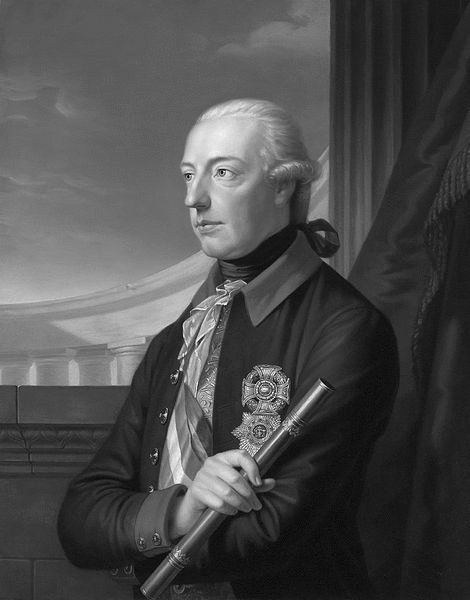
Still Explaining Joseph II
There are certain monarchs who I cannot help but having a great deal of mixed feelings about. More often than not, these involve monarchs from the “Enlightenment” era. In some cases, it is figures who I know I should like more for practical reasons yet I just cannot bring myself to do it. A perfect example of this is King Carlos III of Spain. He did a great deal of good for the Spanish empire, restoring it to some of its former glory, winning back some areas that had been lost, yet his “Enlightenment” policies of state centralization and restrictions on the Church put me off. Also, much of the gains he made for Spain was done by effectively allying with the American revolutionaries against Great Britain -understandable but a monarchist never enjoys seeing a monarchy side with republicans against another monarchy- and (faint-hearted hide your eyes) I will never be able to forgive the man for abolishing bullfighting. In somewhat the same way I have often described the great King Louis XIV of France as a monarch impossible to like but equally as impossible not to admire. Much of that, I will confess, simply comes down to style. The man exuded greatness and grandeur and glory. He was also a scheming, licentious libertine and part-time anti-clerical. But, at the same time, oh how glorious he was.
Another that comes up frequently, mostly because of his family name, is the Holy Roman Emperor Joseph II. I have noticed that, when compared to other royal houses, the Hapsburgs seem to have a larger number of extremely devoted adherents. Oftentimes these people are not even from any country over which the Hapsburgs ever held sway but they are always Catholic and usually devote much of their praise for the House of Hapsburg because of the (real, not simply perceived) devotion of that house to defending Catholicism. Yet, devotion to the Hapsburg monarchy often extends to such lengths that even on those occasions (not many but certainly numerous) that the Pope and the Hapsburg Emperor were at odds the defenders of the Hapsburgs will side with the Emperor rather than the Pope. As an example, there was the horrific sacking of Rome by the troops of Emperor Charles V in which Pope Clement VII was almost killed. The faithful will still defend the Emperor. It is true, he did not order the pillage, he was not present and he was horrified when he learned of it. However, it would be hard for me to imagine another monarch being extended the same benefit of these considerations rather than being castigated for having sent his armies against the Pope in the first place.
I point this out only because the reason often given for supporting the Emperor over the Pope (on the part of Catholics) is that, in these certain cases, they will argue that it was actually the Emperor who was looking out for the best interests of Christendom whereas the Pope had more narrow and self-serving interests. However, in spite of such attitudes, in my experience, the case of Emperor Joseph II is the one that is totally beyond the pale and even the most devoted admirers of the House of Hapsburg seldom have one good thing to say about the man. This is because, of course, of his rather anti-clerical policies and his “Enlightenment” effort to make religion more “reasonable”. Because of these attitudes I am often compelled to explain myself when it comes to my opinion of Emperor Joseph II because he is another one of those who manages to be on my “best” and “worst” lists at the same time. There are plenty of reasons for old fashioned Catholics (the best kind) to dislike the man, aside from the fact that he was not, personally, a very likeable fellow. All of these I would agree with and his religious policies are ones I cannot condone or overlook and would certainly never approve of. Yet, I also cannot help but think that some of the criticism of Joseph II goes a bit overboard and that there was also quite a bit to recommend him. As I said, I frequently feel the need to “explain” Joseph II.
When it comes to the things I like about Emperor Joseph II, near the top of the list must be (and I’m not ashamed to admit it) his ambition. He wanted the Hapsburg lands, what eventually became the Austrian Empire, to be the most powerful European state. Given that the subsequent Hapsburg emperors were all pretty good and given how history turned out (and admitting that I like the Hapsburgs and Austria) I tend to think this would have been a good thing and worked out to the benefit of Europe as a whole. In pursuit of this goal (and it often seems to me that his Catholic critics tend to gloss over it) Emperor Joseph II was energetic in his military campaigns against the Prussians to the north and the Ottoman Turks to the south. Like his mother, of course, Joseph II had the misfortune to be up against the great Frederick of Prussia who was one of the greatest military leaders Europe has ever produced. He also shared much of the Emperor’s “Enlightenment” sympathies and, after meeting him on the battlefield, came to have a degree of healthy respect for Joseph II. His wars against the Turks were frustrating affairs, carried out to a large extent because of his friendship and admiration for Imperial Russia. Little was gained, but at least the Turkish threat, which had once threatened Vienna, was kept at a safe distance. His real ambition was in Germany and the hope of gaining Bavaria. He brought in Transylvania and did begin crucial developments in the south to the benefit of the Croats and Serbs.
Had the Hapsburg empire become the strongest in Europe, I think things may well have worked out for the better (who can ever know for sure) and part of this involved, for Joseph II, German consolidation. His court was a very cosmopolitan one as was usual for Hapsburg Vienna, but Joseph II considered Germany the core of strength for his empire and one of his more controversial ideas was his effort to make German the common language of the Hapsburg domain. This is something some people have a problem with and I can certainly understand the fear of losing ethnic languages and the encroachment of dull uniformity. However, lest we forget, the nominal “state” of which Joseph II was Emperor was the “Holy Roman Empire of the German People”. The Roman part was historical, the legacy of Charlemagne and all of that but there was never any doubt that the core lands of this empire was Germany, not the Italian peninsula and the people who made up the bulk of the population were Germans and not Latins who mostly spoke a variety of German dialects rather than a variety of Italian ones and, of course, no longer Latin though it remained fairly widespread amongst the educated class. Given all of that, it does not seem entirely unreasonable that German be enforced as a common language. Of the multitude of languages spoken in the Hapsburg lands, there would be a greater justification for making German the official language rather than any of the others. This would also not mean (necessarily) that other minority languages would be abolished, only that in addition to your ethnic language everyone would be required to know (probably) High German. The diverse nature of the empire, ethnically and linguistically, is appealing but it was also a detriment in terms of administration, trade and the military, as was seen increasingly in the future, when everything had to be written in such a vast array of different languages. I cling to the archaic idea that a common language is not always necessary for a successful state but I do recognize that it usually helps.
Another fact I have often noticed, particularly in reading Catholic history books which most strongly criticize Emperor Joseph II, is the allocation of credit to later (and more Church-friendly) monarchs for policies which originated under Joseph II. One of the best examples I have seen of this is the oft-reported tolerance shown to the Jewish minority in late Austria-Hungary by Emperor Francis Joseph I. All of which is completely true. They had special provision made for them, even in the military, to be exempt from labor on the Sabbath and to have kosher meals. It is also usually mentioned (and truthfully so) that the Jews referred to the Emperor as the “King of Jerusalem” because of their affection for him. This was one of the many titles claimed by the Austrian Emperor, though also by the heir of the Two-Sicilies, the King of Spain and the King of Italy. I would certainly never object to Emperor Francis Joseph being praised for his kindness (I have a soft spot for him as well) but the fact remains that the same books which credit him for his broad-minded attitude toward the Jews neglect to mention that there was not religious freedom for the Jews, or any other group, until Emperor Joseph II made it so (which I cannot imagine the Holy See being very happy about at the time). For myself, I have observed that granting religious freedom does not always work out well but it seems unfair to credit later monarchs for upholding the policy while criticizing the one who enacted it in the first place. All credit where credit is due.
In similar fashion I have seen Francis Joseph I credited for his humility, displayed by sleeping on an army cot and preferring to wear a uniform as his usual attire. Yet, Emperor Joseph II also normally wore an army uniform rather than an elaborate civilian costume and, despite his often disagreeable personality, was known for opening up the parks to the entire public rather than just the aristocracy who complained somewhat over having to share their afternoon walks with peasants. The Emperor famously remarked that if he insisted on associating only with those of equal rank to himself, as Emperor, he would have to spend all his time in the imperial crypt. There are also numerous stories of Joseph II and his comical interactions with commoners who he would pick up in his carriage and give a ride to, revealing his lofty identity only well into the trip. On one such occasion he picked up a peasant who, after traveling for a little while, sought to pass the time by asking the Emperor to guess his occupation. They played that little game and then Joseph II asked the man to guess his occupation. The man looked him over and guessed he was a soldier. The Emperor said no, but that he did have a connection with the army. He asked if he was a government worker and the Emperor said no, but that he did have a connection with the government. After several wrong guesses the man asked in exasperation, “Well, who are you then, the Emperor?!” to which Joseph II responded in the affirmative. The man was horrified, dropped to his knees and begged to be let out of the carriage but the Emperor persuaded him to stay, saying that each then knew who the other was and they could continue on just as friendly as they had been when they first met.
The objectionable aspect of Joseph II was, of course, his religious policies and there is no denying the fact that they were disastrous. Some, today, might not find them so outrageous but many did at the time and I certainly consider them outrageous myself. This is an explanation and not a defense by any means. He expelled the Jesuits (a very fashionable thing to do at the time), closed down many convents and monasteries, reallocated Church lands, suppressed many popular devotions, processions and such things and determined to make the Church subservient to the state. This was rather standard procedure in Protestant countries but in Catholic countries it was an entirely different story as it invariably brought about a question of whether the loyalty of clerics belonged to the Pope in Rome or to their monarch. It was, perhaps, because of the very loyal image of the House of Hapsburg toward the Catholic Church that the actions of Joseph II stand out more than they might otherwise. His attitude toward the Church was certainly considerably different from his extremely pious and devout mother Empress Maria Theresa. In fact, it led to some tension between the two when Francis I died and Joseph II succeeded him as Holy Roman Emperor. For instance, when Joseph II expelled the Jesuits from all his lands, his mother was quick to give them refuge on her own properties. However, the actions of Joseph II should be kept in context and the reasons behind his atrocious religious policies should at least be understood.
Some have tried to compare Joseph II to one of the previous Holy Roman Emperors, the “Wonder of the World” Frederick II of the House of Hohenstaufen. This is, all in all, rather unfair. Whereas Frederick II truly seemed to be something of a skeptic, keeping his own harem, incurring excommunication and at times being openly at war with the Pope and once so arousing the Roman nobles against him that the Pope was driven out of Rome. He also tried to gather a council to depose the Pontiff. Joseph II, on the other hand, had no desire to conquer Italy, never went to war against the Pope or sought to have him removed and, despite his occasional skeptical comments, heard mass every morning of every day of his life. To say he was a better Catholic than Frederick II is, of course, not saying much but it at least shows that his problems with the Church certainly did not rise to the level of Frederick II or even a number of his other predecessors on the imperial throne. His own Hapsburg ancestor Charles V, known as a champion of Catholic Europe, fought against the Pope and his troops (quite without imperial knowledge or approval) devastated Rome itself on a level more gruesome than any of the barbarians of ancient times had ever done. Things were, of course, different in the times when Popes were political figures and engaged in wars and alliances with and against various powers, usually shifting between Catholic France and Catholic Austria for fear of either one becoming too powerful and thus threatening Papal Rome. The actions of Joseph II could more justly be compared to those of King Louis XIV of France who also was at odds with the Pope over his effort to bring the Catholic Church in France under royal control. Where Joseph II differed from the “Sun King” was in the conduct of his personal life. In that regard, Joseph II was as far from the amorous, philandering Bourbon king as the east is from the west.
It is also true, as was the case more often than one would think, that the Emperor got some of his first encouragement in asserting state control over the Church from a high-ranking cleric, the Auxiliary Bishop of Trier from whom the term “Febronianism” is derived, due to his pen-name. The intent of his work was to deny that the papacy is a monarchy (which most Catholics today seem to do anyway) in an effort to bring Protestants back into the Catholic Church by uniting around the secular monarch at the head of the state. As it happens, the actual Prince-Archbishop Elector of Trier (and the last) was a cousin of Joseph II. The Prince-Archbishop himself did not agree with everything the Emperor did but also himself suppressed certain traditional practices. The point behind everything he did, which justifies nothing but helps to understand why he did it, was “reason”. These religious policies, despicable as they were, and I think they were, did not, in my opinion, originate in any malice on the part of Joseph II. He wanted the Church to be practical and “reasonable” and he also wanted to centralize everything under his own control, in secular and spiritual matters. That was why he wanted all the bishops to take an oath of allegiance to him as Emperor. Today this is commonplace and expected but, at the time, it was very controversial for a bishop to swear allegiance to anyone other than the Pope. Even that was nothing new, but combined with government supervision of seminaries, the state deciding where tithe money would go and all the rest, it all served to infuriate the Catholic hierarchy against the Emperor.
Joseph II wanted things to be simple and practical. His closure of about a third of the monasteries and convents (not all of them) was because he saw no practical value in people living cloistered lives of contemplation. He closed churches but also built a great many of them (using the money from confiscated Church properties) so that parishes would be more evenly distributed throughout the empire rather than scattered about. So, we have the picture of a man who drastically cut down the number of holy days (since these reduced productivity by giving people so many days off work) but who also wanted all of his subjects to have to travel no more than about an hour to reach a church. This is why, as much as I oppose his religious policies, I cannot see him as having a malicious intent behind them in the way that the French Revolutionaries did later. Similarly, whereas they eventually invaded Rome and carried off the Pope as a prisoner, Pope Pius VI felt comfortable enough with Emperor Joseph II to leave Rome willingly to pay him a visit. The Emperor treated the Pontiff with all due respect and behaved in every way as a good Catholic should have toward him but, showing his famous single-mindedness and authoritarian nature, refused to change any of his policies after hearing the arguments of the Pope. An unfortunate thing to be sure, but two men meeting in a palace and stating their opposing cases is quite a far cry from troops besieging Castel Sant Angelo or someone standing barefoot in the snow for days on end. Even the Catholic Encyclopedia, both before and after listing all the “problems” Joseph II had with the Church says that, “Joseph undertook his reforms with the best intentions”.
In the end, most of what he attempted ended up being more trouble than it was worth. As his contemporary and battlefield opponent Frederick the Great famously said, ‘he tries to take the second step before the first’. Despite the “Enlightenment” origins of many of his ideas, he was nonetheless and extremely ardent monarchial absolutist and was horrified by the growing French Revolution and determined to save his sister Marie Antoinette from their clutches, though he died too soon. His reforms created division and dissension rather than uniting the empire as he wished (or Austria at least) but many of his efforts would, I think, have been beneficial had they been fully carried out just as many others should never have been tried. People may have complained that his poor houses looked like army barracks but his court attracted some of the greatest artists and musicians in the world and he showed them sufficient favor to be known in artistic circles as the ‘musical Kaiser’. There was a great deal of cultural achievements alongside the drab government housing, there were some things he did that were entirely terrible and there were things he did or tried to do that would have been quite beneficial had they been carried out and continued. All of this is why I cannot give him unqualified praise but still cringe when he is harshly criticized and why he is one of those few monarchs who can appear on both my “best” and “worst” lists at the same time.
Subscribe to:
Posts (Atom)


.jpg)