Showing posts with label Joseph II. Show all posts

Thursday, June 7, 2012

Still Explaining Joseph II


There are certain monarchs who I cannot help but having a great deal of mixed feelings about. More often than not, these involve monarchs from the “Enlightenment” era. In some cases, it is figures who I know I should like more for practical reasons yet I just cannot bring myself to do it. A perfect example of this is King Carlos III of Spain. He did a great deal of good for the Spanish empire, restoring it to some of its former glory, winning back some areas that had been lost, yet his “Enlightenment” policies of state centralization and restrictions on the Church put me off. Also, much of the gains he made for Spain was done by effectively allying with the American revolutionaries against Great Britain -understandable but a monarchist never enjoys seeing a monarchy side with republicans against another monarchy- and (faint-hearted hide your eyes) I will never be able to forgive the man for abolishing bullfighting. In somewhat the same way I have often described the great King Louis XIV of France as a monarch impossible to like but equally as impossible not to admire. Much of that, I will confess, simply comes down to style. The man exuded greatness and grandeur and glory. He was also a scheming, licentious libertine and part-time anti-clerical. But, at the same time, oh how glorious he was.

Another that comes up frequently, mostly because of his family name, is the Holy Roman Emperor Joseph II. I have noticed that, when compared to other royal houses, the Hapsburgs seem to have a larger number of extremely devoted adherents. Oftentimes these people are not even from any country over which the Hapsburgs ever held sway but they are always Catholic and usually devote much of their praise for the House of Hapsburg because of the (real, not simply perceived) devotion of that house to defending Catholicism. Yet, devotion to the Hapsburg monarchy often extends to such lengths that even on those occasions (not many but certainly numerous) that the Pope and the Hapsburg Emperor were at odds the defenders of the Hapsburgs will side with the Emperor rather than the Pope. As an example, there was the horrific sacking of Rome by the troops of Emperor Charles V in which Pope Clement VII was almost killed. The faithful will still defend the Emperor. It is true, he did not order the pillage, he was not present and he was horrified when he learned of it. However, it would be hard for me to imagine another monarch being extended the same benefit of these considerations rather than being castigated for having sent his armies against the Pope in the first place.

I point this out only because the reason often given for supporting the Emperor over the Pope (on the part of Catholics) is that, in these certain cases, they will argue that it was actually the Emperor who was looking out for the best interests of Christendom whereas the Pope had more narrow and self-serving interests. However, in spite of such attitudes, in my experience, the case of Emperor Joseph II is the one that is totally beyond the pale and even the most devoted admirers of the House of Hapsburg seldom have one good thing to say about the man. This is because, of course, of his rather anti-clerical policies and his “Enlightenment” effort to make religion more “reasonable”. Because of these attitudes I am often compelled to explain myself when it comes to my opinion of Emperor Joseph II because he is another one of those who manages to be on my “best” and “worst” lists at the same time. There are plenty of reasons for old fashioned Catholics (the best kind) to dislike the man, aside from the fact that he was not, personally, a very likeable fellow. All of these I would agree with and his religious policies are ones I cannot condone or overlook and would certainly never approve of. Yet, I also cannot help but think that some of the criticism of Joseph II goes a bit overboard and that there was also quite a bit to recommend him. As I said, I frequently feel the need to “explain” Joseph II.

When it comes to the things I like about Emperor Joseph II, near the top of the list must be (and I’m not ashamed to admit it) his ambition. He wanted the Hapsburg lands, what eventually became the Austrian Empire, to be the most powerful European state. Given that the subsequent Hapsburg emperors were all pretty good and given how history turned out (and admitting that I like the Hapsburgs and Austria) I tend to think this would have been a good thing and worked out to the benefit of Europe as a whole. In pursuit of this goal (and it often seems to me that his Catholic critics tend to gloss over it) Emperor Joseph II was energetic in his military campaigns against the Prussians to the north and the Ottoman Turks to the south. Like his mother, of course, Joseph II had the misfortune to be up against the great Frederick of Prussia who was one of the greatest military leaders Europe has ever produced. He also shared much of the Emperor’s “Enlightenment” sympathies and, after meeting him on the battlefield, came to have a degree of healthy respect for Joseph II. His wars against the Turks were frustrating affairs, carried out to a large extent because of his friendship and admiration for Imperial Russia. Little was gained, but at least the Turkish threat, which had once threatened Vienna, was kept at a safe distance. His real ambition was in Germany and the hope of gaining Bavaria. He brought in Transylvania and did begin crucial developments in the south to the benefit of the Croats and Serbs.

Had the Hapsburg empire become the strongest in Europe, I think things may well have worked out for the better (who can ever know for sure) and part of this involved, for Joseph II, German consolidation. His court was a very cosmopolitan one as was usual for Hapsburg Vienna, but Joseph II considered Germany the core of strength for his empire and one of his more controversial ideas was his effort to make German the common language of the Hapsburg domain. This is something some people have a problem with and I can certainly understand the fear of losing ethnic languages and the encroachment of dull uniformity. However, lest we forget, the nominal “state” of which Joseph II was Emperor was the “Holy Roman Empire of the German People”. The Roman part was historical, the legacy of Charlemagne and all of that but there was never any doubt that the core lands of this empire was Germany, not the Italian peninsula and the people who made up the bulk of the population were Germans and not Latins who mostly spoke a variety of German dialects rather than a variety of Italian ones and, of course, no longer Latin though it remained fairly widespread amongst the educated class. Given all of that, it does not seem entirely unreasonable that German be enforced as a common language. Of the multitude of languages spoken in the Hapsburg lands, there would be a greater justification for making German the official language rather than any of the others. This would also not mean (necessarily) that other minority languages would be abolished, only that in addition to your ethnic language everyone would be required to know (probably) High German. The diverse nature of the empire, ethnically and linguistically, is appealing but it was also a detriment in terms of administration, trade and the military, as was seen increasingly in the future, when everything had to be written in such a vast array of different languages. I cling to the archaic idea that a common language is not always necessary for a successful state but I do recognize that it usually helps.

Another fact I have often noticed, particularly in reading Catholic history books which most strongly criticize Emperor Joseph II, is the allocation of credit to later (and more Church-friendly) monarchs for policies which originated under Joseph II. One of the best examples I have seen of this is the oft-reported tolerance shown to the Jewish minority in late Austria-Hungary by Emperor Francis Joseph I. All of which is completely true. They had special provision made for them, even in the military, to be exempt from labor on the Sabbath and to have kosher meals. It is also usually mentioned (and truthfully so) that the Jews referred to the Emperor as the “King of Jerusalem” because of their affection for him. This was one of the many titles claimed by the Austrian Emperor, though also by the heir of the Two-Sicilies, the King of Spain and the King of Italy. I would certainly never object to Emperor Francis Joseph being praised for his kindness (I have a soft spot for him as well) but the fact remains that the same books which credit him for his broad-minded attitude toward the Jews neglect to mention that there was not religious freedom for the Jews, or any other group, until Emperor Joseph II made it so (which I cannot imagine the Holy See being very happy about at the time). For myself, I have observed that granting religious freedom does not always work out well but it seems unfair to credit later monarchs for upholding the policy while criticizing the one who enacted it in the first place. All credit where credit is due.

In similar fashion I have seen Francis Joseph I credited for his humility, displayed by sleeping on an army cot and preferring to wear a uniform as his usual attire. Yet, Emperor Joseph II also normally wore an army uniform rather than an elaborate civilian costume and, despite his often disagreeable personality, was known for opening up the parks to the entire public rather than just the aristocracy who complained somewhat over having to share their afternoon walks with peasants. The Emperor famously remarked that if he insisted on associating only with those of equal rank to himself, as Emperor, he would have to spend all his time in the imperial crypt. There are also numerous stories of Joseph II and his comical interactions with commoners who he would pick up in his carriage and give a ride to, revealing his lofty identity only well into the trip. On one such occasion he picked up a peasant who, after traveling for a little while, sought to pass the time by asking the Emperor to guess his occupation. They played that little game and then Joseph II asked the man to guess his occupation. The man looked him over and guessed he was a soldier. The Emperor said no, but that he did have a connection with the army. He asked if he was a government worker and the Emperor said no, but that he did have a connection with the government. After several wrong guesses the man asked in exasperation, “Well, who are you then, the Emperor?!” to which Joseph II responded in the affirmative. The man was horrified, dropped to his knees and begged to be let out of the carriage but the Emperor persuaded him to stay, saying that each then knew who the other was and they could continue on just as friendly as they had been when they first met.

The objectionable aspect of Joseph II was, of course, his religious policies and there is no denying the fact that they were disastrous. Some, today, might not find them so outrageous but many did at the time and I certainly consider them outrageous myself. This is an explanation and not a defense by any means. He expelled the Jesuits (a very fashionable thing to do at the time), closed down many convents and monasteries, reallocated Church lands, suppressed many popular devotions, processions and such things and determined to make the Church subservient to the state. This was rather standard procedure in Protestant countries but in Catholic countries it was an entirely different story as it invariably brought about a question of whether the loyalty of clerics belonged to the Pope in Rome or to their monarch. It was, perhaps, because of the very loyal image of the House of Hapsburg toward the Catholic Church that the actions of Joseph II stand out more than they might otherwise. His attitude toward the Church was certainly considerably different from his extremely pious and devout mother Empress Maria Theresa. In fact, it led to some tension between the two when Francis I died and Joseph II succeeded him as Holy Roman Emperor. For instance, when Joseph II expelled the Jesuits from all his lands, his mother was quick to give them refuge on her own properties. However, the actions of Joseph II should be kept in context and the reasons behind his atrocious religious policies should at least be understood.

Some have tried to compare Joseph II to one of the previous Holy Roman Emperors, the “Wonder of the World” Frederick II of the House of Hohenstaufen. This is, all in all, rather unfair. Whereas Frederick II truly seemed to be something of a skeptic, keeping his own harem, incurring excommunication and at times being openly at war with the Pope and once so arousing the Roman nobles against him that the Pope was driven out of Rome. He also tried to gather a council to depose the Pontiff. Joseph II, on the other hand, had no desire to conquer Italy, never went to war against the Pope or sought to have him removed and, despite his occasional skeptical comments, heard mass every morning of every day of his life. To say he was a better Catholic than Frederick II is, of course, not saying much but it at least shows that his problems with the Church certainly did not rise to the level of Frederick II or even a number of his other predecessors on the imperial throne. His own Hapsburg ancestor Charles V, known as a champion of Catholic Europe, fought against the Pope and his troops (quite without imperial knowledge or approval) devastated Rome itself on a level more gruesome than any of the barbarians of ancient times had ever done. Things were, of course, different in the times when Popes were political figures and engaged in wars and alliances with and against various powers, usually shifting between Catholic France and Catholic Austria for fear of either one becoming too powerful and thus threatening Papal Rome. The actions of Joseph II could more justly be compared to those of King Louis XIV of France who also was at odds with the Pope over his effort to bring the Catholic Church in France under royal control. Where Joseph II differed from the “Sun King” was in the conduct of his personal life. In that regard, Joseph II was as far from the amorous, philandering Bourbon king as the east is from the west.
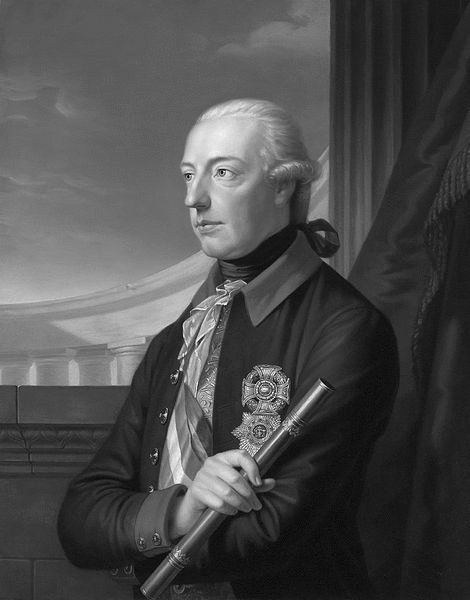
It is also true, as was the case more often than one would think, that the Emperor got some of his first encouragement in asserting state control over the Church from a high-ranking cleric, the Auxiliary Bishop of Trier from whom the term “Febronianism” is derived, due to his pen-name. The intent of his work was to deny that the papacy is a monarchy (which most Catholics today seem to do anyway) in an effort to bring Protestants back into the Catholic Church by uniting around the secular monarch at the head of the state. As it happens, the actual Prince-Archbishop Elector of Trier (and the last) was a cousin of Joseph II. The Prince-Archbishop himself did not agree with everything the Emperor did but also himself suppressed certain traditional practices. The point behind everything he did, which justifies nothing but helps to understand why he did it, was “reason”. These religious policies, despicable as they were, and I think they were, did not, in my opinion, originate in any malice on the part of Joseph II. He wanted the Church to be practical and “reasonable” and he also wanted to centralize everything under his own control, in secular and spiritual matters. That was why he wanted all the bishops to take an oath of allegiance to him as Emperor. Today this is commonplace and expected but, at the time, it was very controversial for a bishop to swear allegiance to anyone other than the Pope. Even that was nothing new, but combined with government supervision of seminaries, the state deciding where tithe money would go and all the rest, it all served to infuriate the Catholic hierarchy against the Emperor.

Joseph II wanted things to be simple and practical. His closure of about a third of the monasteries and convents (not all of them) was because he saw no practical value in people living cloistered lives of contemplation. He closed churches but also built a great many of them (using the money from confiscated Church properties) so that parishes would be more evenly distributed throughout the empire rather than scattered about. So, we have the picture of a man who drastically cut down the number of holy days (since these reduced productivity by giving people so many days off work) but who also wanted all of his subjects to have to travel no more than about an hour to reach a church. This is why, as much as I oppose his religious policies, I cannot see him as having a malicious intent behind them in the way that the French Revolutionaries did later. Similarly, whereas they eventually invaded Rome and carried off the Pope as a prisoner, Pope Pius VI felt comfortable enough with Emperor Joseph II to leave Rome willingly to pay him a visit. The Emperor treated the Pontiff with all due respect and behaved in every way as a good Catholic should have toward him but, showing his famous single-mindedness and authoritarian nature, refused to change any of his policies after hearing the arguments of the Pope. An unfortunate thing to be sure, but two men meeting in a palace and stating their opposing cases is quite a far cry from troops besieging Castel Sant Angelo or someone standing barefoot in the snow for days on end. Even the Catholic Encyclopedia, both before and after listing all the “problems” Joseph II had with the Church says that, “Joseph undertook his reforms with the best intentions”.

In the end, most of what he attempted ended up being more trouble than it was worth. As his contemporary and battlefield opponent Frederick the Great famously said, ‘he tries to take the second step before the first’. Despite the “Enlightenment” origins of many of his ideas, he was nonetheless and extremely ardent monarchial absolutist and was horrified by the growing French Revolution and determined to save his sister Marie Antoinette from their clutches, though he died too soon. His reforms created division and dissension rather than uniting the empire as he wished (or Austria at least) but many of his efforts would, I think, have been beneficial had they been fully carried out just as many others should never have been tried. People may have complained that his poor houses looked like army barracks but his court attracted some of the greatest artists and musicians in the world and he showed them sufficient favor to be known in artistic circles as the ‘musical Kaiser’. There was a great deal of cultural achievements alongside the drab government housing, there were some things he did that were entirely terrible and there were things he did or tried to do that would have been quite beneficial had they been carried out and continued. All of this is why I cannot give him unqualified praise but still cringe when he is harshly criticized and why he is one of those few monarchs who can appear on both my “best” and “worst” lists at the same time.

Tuesday, May 25, 2010

Enlightened Despot: Emperor Joseph II

Known as one of Europe's "Enlightened Despots" was Joseph Benedict Augustus John Anthony Michael Adam von Habsburg-Lothringen. The son of Maria Theresa, over whom the War of Austrian Succession was fought, Joseph II broke with the devoutly Catholic policies of his mother to embrace the sweeping trend of the so-called "Enlightenment" which viewed traditional Europe as a place of injustice and intolerance. In fact, of all the so-called "Enlightened Despots", Joseph II was the only one not to be titled "the Great" despite the fact that he certainly lived up to the ideals to an infinitely greater degree than many others who were. His reign saw an increase in the German culture, Austrian dignity, and unheard of advances in social and religious toleration. In many ways he was a monarch years ahead of his time. Yet, his reign also saw the destruction of many of the core Catholic principles which had held the Holy Roman Empire together for a long time. I tend to think some Catholic writers have been rather too hard on Joseph II, but there is no doubt that he was not a friend of the favored position of the Church in Austria.

After the death of his father Joseph became, in name at least, Emperor of the Romans, King of Germany, Jerusalem, Hungary and Bohemia, Archduke of Austria, Grand Prince of Transylvania, Grand Duke of Tuscany, etc, etc. However it was not until the death of his mother that he became absolute ruler of Austria. Upon his ascension he gave his large inheritance to ease the national debt and ordered his brother to do likewise. He cut government spending, built the first truly public parks, charged the Church with caring for the sick and destitute and granted religious toleration to Jews and Protestants. He abolished such traditional Catholic devotions as the Rosary and religious processions, expelled the Jesuits and seized a great deal of Church property. Yet, throughout his reign, whether in Vienna or on the battlefield, he heard mass every morning and was an enemy of Protestant Prussia (though both monarchs had a great deal of respect for the other's abilities). It was under Joseph II that Wolfgang Mozart rose to fame, though his music was a little too extravagant for the very simple Joseph. Nevertheless his support of Mozart & his contemporaries earned Joseph the nickname, "The Musical King".
This taste in music corresponded with the rest of his reign, whether religious or political. He was very German, he favored always simplicity and efficiency. It was said that his poor houses and government buildings looked like army barracks. He himself usually wore a military uniform rather than the latest fashions and he despised court ceremony and lavish Church rituals. The fact that his cold relationship with the Church would probably not be so notable were it not for the fact that he was the Holy Roman Emperor, and the son of Maria Theresa, expected to be the Church's first defender. However, he was often disdainful of the ecclesiastical leadership, just as he was of the elites of society, whom he saw as contributing nothing to the good of the nation.

For all of these things Joseph was adored by the common folk but despised by the aristocracy and high clergy. Certainly the Emperor had his share of heartaches and trouble. His beloved first wife died early on and Joseph never recovered from the loss. Victory over Prussia's Frederick the Great constantly escaped him and his sister was the famous Marie Antoinette who was murdered by French revolutionaries. In the royal community of Europe, most of whom were also adherents of the "Enlightenment", Joseph was consistently held in very high regard. Czarina Catherine the Great of Russia was greatly impressed with the young monarch who oddly insisted on wearing an Austrian army uniform rather than lavish costumes, and Prussia's Frederick the Great never ceased to express his admiration for Joseph even when they faced each other in battle. In fact, it was partly the high esteem in which Joseph held the Prussian king that led to his desire to emulate his victories in the field.

Emperor Joseph viewed it as his duty, as an absolute monarch, to protect and serve his nation and all of his people, regardless of their religion or class. He was beloved by his people, but, perhaps unwittingly, removed some of the key supports of his empire. Yet, in the sense of helping the common people of his country, setting aside his anti-Church policies, he was probably the only "Enlightened Despot" who actually did improve the lives of his subjects.

Wednesday, March 24, 2010

Consort Profile: Maria Josepha of Bavaria

Maria Josepha of Bavaria was the second wife and Empress consort of the Holy Roman Emperor Joseph II. She was born Marie Josephe Antoine Walburga Felicitas Regula in Munich, Bavaria on March 30, 1739. Her father was the Holy Roman Emperor Charles VII, of the House of Wittelsbach, Prince-Elector and Duke of Bavaria. Her mother was Maria Amalia of Austria. She married Archduke Joseph of Austria, King of the Romans on January 23, 1765 in Vienna. It may have looked like a good match, the daughter of Emperor Charles VII marrying the heir of Empress Maria Theresa of the Holy Roman Empire, but in fact it was ill-fated from the start and there was little Maria Josepha could do about the situation.

Joseph had previously been married to Isabella of Parma who had died in 1763, who he had adored, as had most everyone. The rather difficult “enlightened despot” was heartbroken and had not wanted to remarry at all but Empress Maria Theresa was adamant that her son take another wife and produce an heir to the Hapsburg throne. Maria Josepha came to Austria in the shadow of Isabella and she could never hope to take her place. Going into the marriage reluctantly, Joseph criticized his new wife for her weight and her bad teeth but also admitted that her character was “irreproachable”, that she did love him and that she had many admirable qualities. Yet, Joseph declared it a pity for all of that as he simply had no love for her in return.

If Maria Theresa had pushed the marriage to obtain an heir she was to be disappointed. Joseph always kept Maria Josepha at a distance and it is doubtful that their marriage was ever even consummated. He went to considerable lengths to stay apart from her and avoid even having to see her. Maria Josepha suffered on under these conditions which did not improve in 1765 when her husband became Emperor Joseph II and she became Holy Roman Empress beside him. Whereas ordinarily she would have the place of ‘first lady’ in Vienna, that post was still very much filled by the formidable Empress Maria Theresa, a very religious and conservative woman, who distrusted the more liberal “enlightenment” tendencies in her son.

It would be tempting to think that Joseph II and Maria Josepha could have, over time, grown closer and perhaps had at least some sort of workable relationship. Alas, it was not to be as after being married for only about two years the Holy Roman Empress Maria Josepha died of smallpox, the very same disease that had taken the life of Archduchess Isabella. At the same time Empress Maria Theresa was sick with the disease, though thankfully she survived. Sadly, even in her final days the Emperor did not visit his stricken wife. It would be pleasant to think that Joseph II was too overcome with grief due to memories of his previous wife to deal with it, but the obvious answer cannot be ignored; that he had never desired Maria Josepha as his wife nor did he ever really accept her as such. She died on May 28, 1767 and in the aftermath Joseph II (who did not attend her funeral) claimed part of Bavaria on the basis of his marriage to the late Bavarian princess which led to the War of Bavarian Succession.
Related Posts Plugin for WordPress, Blogger...