
Wednesday, March 16, 2011
The Emperor Addresses the Nation
Statements such as this, from the Emperor, are *extremely* rare and underscores the severity of the crisis Japan is facing. The Emperor said he was "deeply concerned" about the damaged nuclear reactors and called for continued national solidarity. He asked the Japanese people to pray for the victims as he would be doing.
"An earthquake of 9 degrees has never happened in Japan. Do not know yet the number of victims, but I pray it will save the greatest number possible," the Emperor said. He encouraged the people and thanked the people from around the world who have sent their sympathies to Japan.
"I sincerely hope that the people will overcome this unfortunate time to care for each other," the Emperor said. Thanks to The Radical Royalist for bringing this to my attention.
With all of our prayers I am sure.
God bless Japan
Long live the Emperor

Favorite Royal Images: Paying Homage to the Emperor
 I hope somewhere in the depths of the nether-regions Brutus was forced to watch
Defending the Belgian Monarchy
 The Cross of Laeken takes up the cause of the much-maligned King Leopold III in Defending the Saxe-Coburgs: Part III. And, of course, if you have not already, I highly recommend reading up on Part I and Part II. Crown Prince Philippe of Belgium is probably my favorite royal heir at the moment and I onced asked around why so many have a negative view of him when the poor man had really never 'put a foot wrong' as the Brits would say. I was told that the enemies of Belgium wanted to destroy the monarchy as a way of destroying Belgian unity but found little success at this because the Belgian royals were so popular. Hence they have started to make personal attacks to lower the respect people have for the royals themselves, the King and Prince Philippe in particular. As you can see reading through these posts, this tactic is not entirely new and King Leopold III has certainly suffered unjustly in the 'court of public opinion'.
Tuesday, March 15, 2011
Beware the Ides of March!

Even more than 2,000 years after the fact the infamous “Ides of March” are still burned into the collective memory of the western world. People still mention it and, even more shocking, a fair number of people know what it was all about. That was when Julius Caesar was assassinated. Especially in the English-speaking world much of this is due to the pervasiveness of Shakespeare. I know people who have never read a word of it, who know absolutely nothing about Roman history and yet they still know, “It was Greek to me”, “Et tu Brute” and “Friends, Romans, countrymen, lend me your ears”. That is the extent to which a political murder 2,000 years ago has permeated our culture. What is more, the divisions that existed in the twilight of republican Rome around the death of Caesar are still with us today. Some still view Brutus, Cassius and company, but Brutus in particular, as heroic champions of liberty. Others still view Brutus as the arch-betrayer, his name synonymous with treason against a friend, a benefactor and a father figure. Some still view Caesar as a tyrant and the symbol of tyranny while others view him as a heroic leader, a visionary determined to save and restore his country and one of the greatest men in history. As we have discussed here recently, so much of that period, from so long ago, is still with us today.
It is no secret where my own sympathies lie on that occasion and I would find it rather hard to grasp why any monarchist would take the side of the conspirators though I suppose there are some who do. For myself, there can be no justification, politics aside, of men like Cassius and Brutus in particular for murdering their duly elected dictator. It helps that I see no terror in the idea of his becoming a monarch as they did. However, I can see them as nothing other than the most despicable of villains, again, regardless of politics, for a very simple reason. In the civil war between Caesar and Pompey, Brutus took the side of Pompey against Caesar, who had been like a father to him (indeed some have speculated Caesar may have been his actual father) and yet Caesar gave strict orders that Brutus was not to be harmed and once Caesar was victorious he quickly forgave Brutus when he could easily have killed him, embraced him again and even appointed him to high office in his efforts to bring about reconciliation. In the same way Cassius had fought fiercely against Caesar in the civil war yet, when Caesar captured him, he spared his life and also appointed him to high office.
In short, they quite literally owed their lives to Caesar. He had every opportunity and reason to kill them. They were at his mercy and yet he spared their lives only to have them conspire against him and finally assassinate him. They could have opposed him for political reasons, agree with them or not, and fought him with all of their strength. However, to give up, seek his pardon, accept his mercy and benefit from Caesar only to then turn against him and murder him is, to me, far beyond the pale and blackens them no matter what sort of ideals they claimed to be advancing in doing so. If they truly felt that strongly about it they should have fought on to the death or refused to cooperate with Caesar, refuse his hand of friendship and accept execution if necessary. The fact that republican revolutionaries ever since have lionized these men, of course, does little to recommend them in my sight either. Rather, on the Ides of March, I think of how the murderers ultimately paid for their crime, eventually, with their own lives, how Caesar was honored and became even greater after his death and the new era that came after him. As the famous New Zealand historian of ancient Rome Sir Ronald Syme said, “Pietas prevailed, and out of the blood of Caesar the monarchy was born.”
Again this year I also cannot help but mention that it was the Ides of March that marked the downfall, though not the death, of another great man called Caesar and that was Czar (Caesar) Nicholas II, Emperor of Russia who was forced to abdicate on this day, marking the end of the Romanov reign in Holy Russia. Beware the Ides of March indeed and may the martyred Czar pray for us and the restoration of his beloved country.
It is no secret where my own sympathies lie on that occasion and I would find it rather hard to grasp why any monarchist would take the side of the conspirators though I suppose there are some who do. For myself, there can be no justification, politics aside, of men like Cassius and Brutus in particular for murdering their duly elected dictator. It helps that I see no terror in the idea of his becoming a monarch as they did. However, I can see them as nothing other than the most despicable of villains, again, regardless of politics, for a very simple reason. In the civil war between Caesar and Pompey, Brutus took the side of Pompey against Caesar, who had been like a father to him (indeed some have speculated Caesar may have been his actual father) and yet Caesar gave strict orders that Brutus was not to be harmed and once Caesar was victorious he quickly forgave Brutus when he could easily have killed him, embraced him again and even appointed him to high office in his efforts to bring about reconciliation. In the same way Cassius had fought fiercely against Caesar in the civil war yet, when Caesar captured him, he spared his life and also appointed him to high office.
In short, they quite literally owed their lives to Caesar. He had every opportunity and reason to kill them. They were at his mercy and yet he spared their lives only to have them conspire against him and finally assassinate him. They could have opposed him for political reasons, agree with them or not, and fought him with all of their strength. However, to give up, seek his pardon, accept his mercy and benefit from Caesar only to then turn against him and murder him is, to me, far beyond the pale and blackens them no matter what sort of ideals they claimed to be advancing in doing so. If they truly felt that strongly about it they should have fought on to the death or refused to cooperate with Caesar, refuse his hand of friendship and accept execution if necessary. The fact that republican revolutionaries ever since have lionized these men, of course, does little to recommend them in my sight either. Rather, on the Ides of March, I think of how the murderers ultimately paid for their crime, eventually, with their own lives, how Caesar was honored and became even greater after his death and the new era that came after him. As the famous New Zealand historian of ancient Rome Sir Ronald Syme said, “Pietas prevailed, and out of the blood of Caesar the monarchy was born.”
Again this year I also cannot help but mention that it was the Ides of March that marked the downfall, though not the death, of another great man called Caesar and that was Czar (Caesar) Nicholas II, Emperor of Russia who was forced to abdicate on this day, marking the end of the Romanov reign in Holy Russia. Beware the Ides of March indeed and may the martyred Czar pray for us and the restoration of his beloved country.
(A note on this one: I liked this series though there were of course many inaccuracies, such as here -Caesar was not killed in the "Senate House" but the Theatre of Pompey and he did not die immediately but lingered for several hours.)
Monday, March 14, 2011
Dalai Lama "Abdicates"

The Tibetan government-in-exile today announced that HH the XIV Dalai Lama of Tibet has submitted his abdication or resignation from his political role as the monarch of Tibet, head of the government based in Dharamsala, India. Speaker of the Parliament Penpa Tsering read out the letter from the fourteenth incarnation of Kundun asking the government to relieve him of his position in politics.
"I want to acknowledge here that many of my fellow Tibetans, inside and outside Tibet, have earnestly requested me to continue to give political leadership at this critical time," the letter stated.
"My intention to devolve political authority derives neither from a wish to shirk responsibility nor because I am disheartened."
"My intention to devolve political authority derives neither from a wish to shirk responsibility nor because I am disheartened."
The Dalai Lama reiterated his long-term goals for the Tibetan people and encouraged them to continue to press for "meaningful autonomy" from the People's Republic of China. Communist China had ruled Tibet for 52 years, most of the lifetime of the 75-year old Dalai Lama.
"It is extremely important that we ensure the continuity of our exile Tibetan administration and our struggle until the issue of Tibet has been successfully resolved," the letter continued.
"If we have to remain in exile for several more decades, a time will inevitably come when I will no longer be able to provide leadership. It is necessary that we establish a sound system of governance while I remain able and healthy, in order that the exile Tibetan administration can become self-reliant rather than being dependent on the Dalai Lama."
"If we have to remain in exile for several more decades, a time will inevitably come when I will no longer be able to provide leadership. It is necessary that we establish a sound system of governance while I remain able and healthy, in order that the exile Tibetan administration can become self-reliant rather than being dependent on the Dalai Lama."
In Tibet the Dalai Lama was the temporal and spiritual ruler of Tibet, an absolute monarch effectively, though the current Dalai Lama had planned for reforms at the time of the Chinese invasion. In exile he continued to lead the government but in 2001 the prime minister, Lobsang Tenzin or Samdhong Rinpoche, has effectively had the final word in political affairs.
Additional note: It is not a sure thing, according to the prime minister, that this resignation will be accepted. He also warned of a political dead-lock being a possibility over this between those more traditional and religious forces and those supportive of a more "modern", secular and totally democratic government.
Monarch Profile: Emperor Constantine XI

Monarchy is full of symbolism and monarchs are partly symbolic things and there are few better illustrations of this than the life and death of Emperor Constantine XI Palaiologos. How is this? From his rise to his fall he was never effectively much more than the over-titled commander of a single city surrounded by a sea of foreign enemies. The world did not change much because of his downfall, but it had a significance out of all proportion due to the fact that it was a tragedy that had been so long in coming. He was the last Eastern Roman Emperor and that mattered, that gave him and his tragedy great significance. For all intents and purposes the East Roman Empire had fallen long before with Byzantine greatness being reduced to the city of Constantinople and a few isolated enclaves. However, just as the fall of Rome was significant to the west even though the Emperor resided primarily at Ravenna, so too did the fall of Constantinople send shock waves across the Christian world. As long as that city and its emperor remained all did not seem lost. Therefore, when it was lost, it was a crushing blow to the moral of the western world and an unparalleled triumph for the still rising Ottoman Empire.
Constantine was born on February 8, 1405 in Constantinople, the son of Emperor Manuel II and a Serbian princess. He did not venture much from the city during his youth and became intimately aware of the workings of the city and the political situation. During the reign of his elder brother, Emperor John VIII, it was Constantine who acted as regent on his behalf when the Emperor was in Rome working out a (temporary) reunion of the eastern and western churches. Constantine received a greater trial by fire when he became Despot of Morea (the Peloponnesus). Always an active and zealous ruler he built up the fortifications of the area and expanded it, to the consternation of the Ottoman Turks who were the overlords of the area. Sultan Murad II led an army in a punitive expedition against Constantine, devastating his fortifications with their new, heavy bombards and Constantine only narrowly escaped. He had seen first hand the metal of his primary foe.
In 1449 he succeeded to the throne as Emperor Constantine XI but it was, as usual in the Byzantine Empire, not an entirely smooth transition. His brother Prince Demitrios opposed him, standing against the reunion of the Catholic and Orthodox Christians as his base of popular support. Ironically enough it was Sultan Murad II who was called upon to arbitrate the dispute and, despite their earlier conflict, he took the side of Constantine who was finally crowned East Roman Emperor in 1449 but not in Constantinople. Patriarch Gregory III, seeing Constantinople surrounded by an Ottoman sea, supported the Catholic-Orthodox reunion and this made him very unpopular with most of the clergy who seemed to prefer risking Islamic rule over Constantinople rather than joining hands with Rome once again. This made a grand coronation in the capital rather impolitic. Constantine XI came to his city and began to rule but it was an isolated position, personally as well as politically. He had married twice but both wives died not long into their respective marriages, a third attempt fell through and there would not be time to arrange another. Without a wife and without children, all hopes for Constantinople rested solely on the shoulders of their new Emperor alone.
With little time to settle in to the role a massive threat was soon confronting the new emperor. Sultan Mehmed II came to the throne of the Ottoman Empire and, despite his youth, made it clear that he was a force to be reckoned with and vowed to at last conquer Constantinople and make the Hagia Sophia a mosque. In the spring of 1452 the Sultan took the first steps of besieging the city and Constantine XI was faced with a nearly hopeless position. He had only a relative handful of soldiers with which to defend a massive city against a Turkish army possibly numbering over a hundred thousand. Moreover, the decline of Byzantine civilization was very noticeable in the lackluster nature of the defending force. The fact that only as few as 5,000 men from a city as populous as Constantinople, upwards of 100,000, does not speak well for the fighting spirit of the public at this stage -and three-fifths of those men were soldiers from the Latin west, largely Italian -from Genoa and Venice. Many seemed to have viewed the empire as a lost cause and refused to make much of an effort to defend themselves and many were also more concerned with carrying on the Catholic-Orthodox/west-east feud than they were with defending against the Muslim invasion.
Emperor Constantine, unlike others, made defending the city his paramount concern, reaffirming the Catholic-Orthodox reunion and calling upon the Latin west for help. He was extremely energetic in seeing to the provision of his army and the populace, overseeing the defenses of the city and the distribution of his meager military forces. The Sultan, at the outset, offered the Emperor his life if he would surrender the city but the Emperor bravely refused and fought courageously throughout the siege. He constantly exposed himself to the enemy, defending the walls alongside his soldiers, fighting alongside them, encouraging them and inspiring them. He also showed himself to be an able diplomat and a clear-minded leader in smoothing over the bickering between the Genovese, Venetian and Greek factions of his army and their proud commanders. In this ultimate trial he proved himself worthy to the overwhelming task that confronted him.
 However, it was, of course, ultimately a lost cause. The Ottomans, with their modern artillery of German design, battered down the walls and swamped the tiny band of defenders. Emperor Constantine remained true to form. In the final attack on May 29, 1453 legend has it that he stripped off the symbols of his imperial rank, grabbed his sword and led the last desperate charge into the onrushing enemy horde. The exact nature of his death remains unknown. Some say he was so mutilated in battle that his body was never identified. Others say that his body was found and that his head was cut off and carried back to the Ottoman court as a trophy. In any event, his heroic fall marked the final end of the ancient East Roman Empire, with no wife and no heirs there would be no continuation of the Palaiologos dynasty in his line. Constantinople was taken, eventually becoming the Ottoman capital and true to his word the Sultan turned the Hagia Sophia into a mosque, which it remained until fairly recently when it was converted to a museum. The recovery of Constantinople would become the unobtainable goal for western Christendom (at least the Catholic powers) for centuries to come.
Today the legacy of Constantine XI remains in Eastern Europe. Many Orthodox Christians and Greek Catholics regard him as a saint. His name was invoked in the Greek war for independence and the numerous Balkan conflicts. Also, much like King Arthur in England, Emperor Frederick I in Germany or Genghis Khan in Mongolia, Emperor Constantine XI became the great legendary monarch of history for the Greeks with the same story emerging that an angel had rescued him from death and turned him into marble, preserving him so that when his people most needed him, the Emperor could rise again to lead them to glory. The legend of the “Marble Emperor” is itself a testament to what an impression he made on his people during his short reign and his heroic downfall.
Constantine was born on February 8, 1405 in Constantinople, the son of Emperor Manuel II and a Serbian princess. He did not venture much from the city during his youth and became intimately aware of the workings of the city and the political situation. During the reign of his elder brother, Emperor John VIII, it was Constantine who acted as regent on his behalf when the Emperor was in Rome working out a (temporary) reunion of the eastern and western churches. Constantine received a greater trial by fire when he became Despot of Morea (the Peloponnesus). Always an active and zealous ruler he built up the fortifications of the area and expanded it, to the consternation of the Ottoman Turks who were the overlords of the area. Sultan Murad II led an army in a punitive expedition against Constantine, devastating his fortifications with their new, heavy bombards and Constantine only narrowly escaped. He had seen first hand the metal of his primary foe.
In 1449 he succeeded to the throne as Emperor Constantine XI but it was, as usual in the Byzantine Empire, not an entirely smooth transition. His brother Prince Demitrios opposed him, standing against the reunion of the Catholic and Orthodox Christians as his base of popular support. Ironically enough it was Sultan Murad II who was called upon to arbitrate the dispute and, despite their earlier conflict, he took the side of Constantine who was finally crowned East Roman Emperor in 1449 but not in Constantinople. Patriarch Gregory III, seeing Constantinople surrounded by an Ottoman sea, supported the Catholic-Orthodox reunion and this made him very unpopular with most of the clergy who seemed to prefer risking Islamic rule over Constantinople rather than joining hands with Rome once again. This made a grand coronation in the capital rather impolitic. Constantine XI came to his city and began to rule but it was an isolated position, personally as well as politically. He had married twice but both wives died not long into their respective marriages, a third attempt fell through and there would not be time to arrange another. Without a wife and without children, all hopes for Constantinople rested solely on the shoulders of their new Emperor alone.
With little time to settle in to the role a massive threat was soon confronting the new emperor. Sultan Mehmed II came to the throne of the Ottoman Empire and, despite his youth, made it clear that he was a force to be reckoned with and vowed to at last conquer Constantinople and make the Hagia Sophia a mosque. In the spring of 1452 the Sultan took the first steps of besieging the city and Constantine XI was faced with a nearly hopeless position. He had only a relative handful of soldiers with which to defend a massive city against a Turkish army possibly numbering over a hundred thousand. Moreover, the decline of Byzantine civilization was very noticeable in the lackluster nature of the defending force. The fact that only as few as 5,000 men from a city as populous as Constantinople, upwards of 100,000, does not speak well for the fighting spirit of the public at this stage -and three-fifths of those men were soldiers from the Latin west, largely Italian -from Genoa and Venice. Many seemed to have viewed the empire as a lost cause and refused to make much of an effort to defend themselves and many were also more concerned with carrying on the Catholic-Orthodox/west-east feud than they were with defending against the Muslim invasion.
Emperor Constantine, unlike others, made defending the city his paramount concern, reaffirming the Catholic-Orthodox reunion and calling upon the Latin west for help. He was extremely energetic in seeing to the provision of his army and the populace, overseeing the defenses of the city and the distribution of his meager military forces. The Sultan, at the outset, offered the Emperor his life if he would surrender the city but the Emperor bravely refused and fought courageously throughout the siege. He constantly exposed himself to the enemy, defending the walls alongside his soldiers, fighting alongside them, encouraging them and inspiring them. He also showed himself to be an able diplomat and a clear-minded leader in smoothing over the bickering between the Genovese, Venetian and Greek factions of his army and their proud commanders. In this ultimate trial he proved himself worthy to the overwhelming task that confronted him.
 However, it was, of course, ultimately a lost cause. The Ottomans, with their modern artillery of German design, battered down the walls and swamped the tiny band of defenders. Emperor Constantine remained true to form. In the final attack on May 29, 1453 legend has it that he stripped off the symbols of his imperial rank, grabbed his sword and led the last desperate charge into the onrushing enemy horde. The exact nature of his death remains unknown. Some say he was so mutilated in battle that his body was never identified. Others say that his body was found and that his head was cut off and carried back to the Ottoman court as a trophy. In any event, his heroic fall marked the final end of the ancient East Roman Empire, with no wife and no heirs there would be no continuation of the Palaiologos dynasty in his line. Constantinople was taken, eventually becoming the Ottoman capital and true to his word the Sultan turned the Hagia Sophia into a mosque, which it remained until fairly recently when it was converted to a museum. The recovery of Constantinople would become the unobtainable goal for western Christendom (at least the Catholic powers) for centuries to come.
Today the legacy of Constantine XI remains in Eastern Europe. Many Orthodox Christians and Greek Catholics regard him as a saint. His name was invoked in the Greek war for independence and the numerous Balkan conflicts. Also, much like King Arthur in England, Emperor Frederick I in Germany or Genghis Khan in Mongolia, Emperor Constantine XI became the great legendary monarch of history for the Greeks with the same story emerging that an angel had rescued him from death and turned him into marble, preserving him so that when his people most needed him, the Emperor could rise again to lead them to glory. The legend of the “Marble Emperor” is itself a testament to what an impression he made on his people during his short reign and his heroic downfall.
Sunday, March 13, 2011
Italian Unification

The celebrations have been going on for some time now in honor of the 150th anniversary of the unification of Italy. This is an issue I have very mixed feelings about. On the one hand, I love the Italians and the Kingdom of Italy. I love Italian culture and the House of Savoy has not been without truly great and admirable figures over their long history. Indeed, they are one of the great royal houses of Europe. I despise how the kingdom was made the scapegoat for Italian missteps at the time of World War II and I regard the “referendum” (which had precedent in Italian politics only in the manner of its blatant unfairness) which brought down the monarchy as one of the (many) positively terrible events to come out of post-war Europe. On the other hand, the way unification came about was through extremely underhanded and disingenuous methods. Effectively it came to this: a monarchy making a deal with the revolutionary devil to undermine and eventually cannibalize the other monarchies on the Italian peninsula. It saddens me that any of these principalities were lost and probably the Papal States and the Kingdom of the Two Sicilies most of all. It also pains me because it did not have to happen that way.
In the end, the unification of Italy was not so much the voluntary union of all Italians but, with republican help, the effective conquest of the Italian peninsula by the Kingdom of Piedmont-Sardinia under the House of Savoy. Although this was the eventual method, the vision of Italian unity had been around for some time and many other ideas had been discussed. Such a vision could not but have arisen given the unparalleled glory of the history of the Italian peninsula from the time of the Roman Empire to the magnificence of Renaissance Italy; be it the economic empire of the Republic of Venice, the artistic splendor of Florence or the cultural flowering of Papal Rome. There had been greatness before and it was only natural that the desire arise to be great again. How to achieve that was a matter of debate. One idea which, though dismissed by many as unworkable, would have held more appeal for me, was the neo-Guelph plan.
 This plan, at least one version of it, was put forward in the massive book “Il primato morale e civile degli Italiani” by Father Vincenzo Gioberti who had once been the chaplain of King Carlo Alberto of Sardinia. He too looked back longingly on the past glories of Italy but totally rejected the anti-clerical views of the radical liberals like Mazzini and Garibaldi. Gioberti took the view that it was the Papacy alone which could best accomplish the national unity which the pan-Italian nationalists most desired. The neo-Guelphs were mostly moderate, educated people, considered to be at least somewhat liberal by the standards of the day, who supported Italian unification but only through traditional authorities and under the sovereignty of the Roman Pontiff. Their basic goals were for some progressive reforms in the Italian states but with the intention of supporting rather than undermining the legitimate rulers. They called for an Italian federation which would be ruled by a college of the Italian princes under the overall reign of the Pope who would act as the primary source of unity for the new country. They called for representative assemblies in the various states, but whose sole purpose was to advise the monarch rather than to govern. Each state would be able to maintain their local autonomy and unique differences with the Pope acting as a sort of president, however not over a republic, but a “federation of consultative monarchies”.
Historians, such as the biographer of Pius IX, E.E.Y. Hales have noted that this basic idea was not totally new. For a long time it would have been considered simply common sense. During the history of Italy, since even before the fall of the Roman Empire, the Church had been the constant force, the most important institution, the greatest source of art and culture and the best illustration of Italian achievement on display. It therefore seemed natural that any move towards Italian unity would have to happen under the general guidance and leadership of the Church. In a country so entirely Catholic as Italy, who else but the Pope would be entitled to the place of honor in any coalition of governments? This was to have been a unity based on Christian brotherhood and local autonomy rather than conquest. However, as we know, it did not come about as the leaders on both sides were rather distrustful of how it would work in practice.
 Another idea that failed to get off the ground was a similar model which called for a union of the existing states with overall national leadership going to the King of Sardinia, the Pope or the King of the Two-Sicilies but, again, no one accepted the offer because no one wanted to rock the boat with so many republican revolutionaries causing trouble throughout the region. Those who finally took the lead were far from being exemplary figures despite the fact that they have been cheered and romanticized ever since. The two most associated with the revolutionary wing were Giuseppe Mazzini and Giuseppe Garibaldi, both of whom were radical liberals, republicans, men who had been exiled for subversion and both were freemasons who enjoyed the support of the “enlightenment” Masonic elites in Great Britain and the United States. Mazzini, incidentally, was one of the first advocates of a “United States of Europe” and Garibaldi was a professional revolutionary who did very little else and even dressed his troops in red shirts -rather interesting. Eventually the Kingdom of Piedmont-Sardinia made common cause with these scoundrels under the leadership of the Prime Minister Count Camillo Cavour, a rather scheming character who called Garibaldi a “savage” but who nonetheless made use of he and his red shirts when it came to taking down those who stood in the way of Piedmont-Sardinia; namely the princely states.
We have touched on some of these here before, such as the case of Leopold II, last Grand Duke of Tuscany, and the last Queen of the Two-Sicilies. The Kingdom of the Two-Sicilies is regarded by most history books as the most religious, reactionary and backward region of Italy and thus it is no surprise that the Two-Sicilies holds a special place in my heart. The truth is that the Two-Sicilies had a slight higher literacy rate than Sardinia, it had the first railroad and the first telegraph system in Italy and was the only state with a balanced budget and the security of some gold reserves in the bank. Those who dismiss the kingdom as primitive and backward, frankly, don’t know what they are talking about and are simply repeating the propaganda of the liberal nationalists and republican revolutionaries. Of course, wherever the nationalists went they carried out the farcical show of having a plebiscite but these were never legitimate. There was no secrecy allowed, Sardinian troops guarded the polling places and flagrant intimidation was used as well as simple lies.
In the Papal States, when Sardinian troops invaded to “keep order” (how many conquerors have used that excuse) even though no disorder existed, they held plebiscites in which many refused to participate and some wrote in the name of the Pope or even St Peter. Nonetheless, the nationalists declared victory. In the Two-Sicilies they claimed a ridiculous 99% vote in favor of union with Italy. The fact that this was a total lie (if the number was not enough) is the fact that Piedmont-Sardinia had to keep 120,000 troops in the Two-Sicilies for more than a decade afterwards to put down the constant rebellions and uprisings against Italian rule. Yet, these were the people who Cavour, Garibaldi and others claimed were yearning for freedom from the Bourbon yoke! As many as 60,000 Sicilians were arrested for their opposition to unification and many towns and villages completely destroyed for refusing to submit to the new order. The southern part of Italy once the Kingdom of Two-Sicilies has suffered economically ever since, despite being on firm footing when independent. To this very day southern Italians make less than half of what their northern counterparts do. And this is what they called “progress”?
The Kingdom of Piedmont-Sardinia was greatly helped in this campaign of conquest, early on, by the French, particularly the second French Empire. Napoleon III has started his political career amongst the Italian revolutionaries and he thought he could weaken Austria by supporting the Italians against the Austrian presence in Italy and conquering those states ruled by Hapsburg princes. This worked out a little better than Napoleon had counted on. He tried to backtrack and support the Pope in holding on to Rome at least but, his previous weakening of Austria allowed the Prussians to displace them as the leader of the Germans and when Prussia and her German allies came knocking at the door in 1870 the French had to pull out their forces from around Rome to rush to the defense of France (ultimately unsuccessful) and Italian unification was complete with Savoyard troops marching into Rome and the Pope withdrawing inside the walls of the Vatican for what would be many years of political stand-off.
 Facts like these are not pleasant to look at, but the truth must be told and it is partly because I do like Italy that I think they should be remembered. I think it is at least in part why the Kingdom of Italy remained rather shaky and did not long survive. The unification of the peninsula was not a natural thing, it was based on an unholy alliance of opportunists and revolutionaries who had very little in common beyond their shared wish for a united Italy. The revolutionaries were never happy with the final result and viewed the Kingdom of Italy as simply a stepping stone toward the secular, revolutionary, Republic of Italy that they really had wanted all along. As we are all only too well aware, this is what they finally gained and the House of Savoy, who led the way in making a united Italy possible, were ultimately thrown away and even today receive scarce praise or credit for their part in the creation of modern Italy. As the old saying goes, ‘He who sups with the Devil must have a long spoon’. For the House of Savoy, it seems their spoon was not quite long enough.
In the end, the unification of Italy was not so much the voluntary union of all Italians but, with republican help, the effective conquest of the Italian peninsula by the Kingdom of Piedmont-Sardinia under the House of Savoy. Although this was the eventual method, the vision of Italian unity had been around for some time and many other ideas had been discussed. Such a vision could not but have arisen given the unparalleled glory of the history of the Italian peninsula from the time of the Roman Empire to the magnificence of Renaissance Italy; be it the economic empire of the Republic of Venice, the artistic splendor of Florence or the cultural flowering of Papal Rome. There had been greatness before and it was only natural that the desire arise to be great again. How to achieve that was a matter of debate. One idea which, though dismissed by many as unworkable, would have held more appeal for me, was the neo-Guelph plan.
 This plan, at least one version of it, was put forward in the massive book “Il primato morale e civile degli Italiani” by Father Vincenzo Gioberti who had once been the chaplain of King Carlo Alberto of Sardinia. He too looked back longingly on the past glories of Italy but totally rejected the anti-clerical views of the radical liberals like Mazzini and Garibaldi. Gioberti took the view that it was the Papacy alone which could best accomplish the national unity which the pan-Italian nationalists most desired. The neo-Guelphs were mostly moderate, educated people, considered to be at least somewhat liberal by the standards of the day, who supported Italian unification but only through traditional authorities and under the sovereignty of the Roman Pontiff. Their basic goals were for some progressive reforms in the Italian states but with the intention of supporting rather than undermining the legitimate rulers. They called for an Italian federation which would be ruled by a college of the Italian princes under the overall reign of the Pope who would act as the primary source of unity for the new country. They called for representative assemblies in the various states, but whose sole purpose was to advise the monarch rather than to govern. Each state would be able to maintain their local autonomy and unique differences with the Pope acting as a sort of president, however not over a republic, but a “federation of consultative monarchies”.
Historians, such as the biographer of Pius IX, E.E.Y. Hales have noted that this basic idea was not totally new. For a long time it would have been considered simply common sense. During the history of Italy, since even before the fall of the Roman Empire, the Church had been the constant force, the most important institution, the greatest source of art and culture and the best illustration of Italian achievement on display. It therefore seemed natural that any move towards Italian unity would have to happen under the general guidance and leadership of the Church. In a country so entirely Catholic as Italy, who else but the Pope would be entitled to the place of honor in any coalition of governments? This was to have been a unity based on Christian brotherhood and local autonomy rather than conquest. However, as we know, it did not come about as the leaders on both sides were rather distrustful of how it would work in practice.
 Another idea that failed to get off the ground was a similar model which called for a union of the existing states with overall national leadership going to the King of Sardinia, the Pope or the King of the Two-Sicilies but, again, no one accepted the offer because no one wanted to rock the boat with so many republican revolutionaries causing trouble throughout the region. Those who finally took the lead were far from being exemplary figures despite the fact that they have been cheered and romanticized ever since. The two most associated with the revolutionary wing were Giuseppe Mazzini and Giuseppe Garibaldi, both of whom were radical liberals, republicans, men who had been exiled for subversion and both were freemasons who enjoyed the support of the “enlightenment” Masonic elites in Great Britain and the United States. Mazzini, incidentally, was one of the first advocates of a “United States of Europe” and Garibaldi was a professional revolutionary who did very little else and even dressed his troops in red shirts -rather interesting. Eventually the Kingdom of Piedmont-Sardinia made common cause with these scoundrels under the leadership of the Prime Minister Count Camillo Cavour, a rather scheming character who called Garibaldi a “savage” but who nonetheless made use of he and his red shirts when it came to taking down those who stood in the way of Piedmont-Sardinia; namely the princely states.
We have touched on some of these here before, such as the case of Leopold II, last Grand Duke of Tuscany, and the last Queen of the Two-Sicilies. The Kingdom of the Two-Sicilies is regarded by most history books as the most religious, reactionary and backward region of Italy and thus it is no surprise that the Two-Sicilies holds a special place in my heart. The truth is that the Two-Sicilies had a slight higher literacy rate than Sardinia, it had the first railroad and the first telegraph system in Italy and was the only state with a balanced budget and the security of some gold reserves in the bank. Those who dismiss the kingdom as primitive and backward, frankly, don’t know what they are talking about and are simply repeating the propaganda of the liberal nationalists and republican revolutionaries. Of course, wherever the nationalists went they carried out the farcical show of having a plebiscite but these were never legitimate. There was no secrecy allowed, Sardinian troops guarded the polling places and flagrant intimidation was used as well as simple lies.
In the Papal States, when Sardinian troops invaded to “keep order” (how many conquerors have used that excuse) even though no disorder existed, they held plebiscites in which many refused to participate and some wrote in the name of the Pope or even St Peter. Nonetheless, the nationalists declared victory. In the Two-Sicilies they claimed a ridiculous 99% vote in favor of union with Italy. The fact that this was a total lie (if the number was not enough) is the fact that Piedmont-Sardinia had to keep 120,000 troops in the Two-Sicilies for more than a decade afterwards to put down the constant rebellions and uprisings against Italian rule. Yet, these were the people who Cavour, Garibaldi and others
 claimed were yearning for freedom from the Bourbon yoke! As many as 60,000 Sicilians were arrested for their opposition to unification and many towns and villages completely destroyed for refusing to submit to the new order. The southern part of Italy once the Kingdom of Two-Sicilies has suffered economically ever since, despite being on firm footing when independent. To this very day southern Italians make less than half of what their northern counterparts do. And this is what they called “progress”?
The Kingdom of Piedmont-Sardinia was greatly helped in this campaign of conquest, early on, by the French, particularly the second French Empire. Napoleon III has started his political career amongst the Italian revolutionaries and he thought he could weaken Austria by supporting the Italians against the Austrian presence in Italy and conquering those states ruled by Hapsburg princes. This worked out a little better than Napoleon had counted on. He tried to backtrack and support the Pope in holding on to Rome at least but, his previous weakening of Austria allowed the Prussians to displace them as the leader of the Germans and when Prussia and her German allies came knocking at the door in 1870 the French had to pull out their forces from around Rome to rush to the defense of France (ultimately unsuccessful) and Italian unification was complete with Savoyard troops marching into Rome and the Pope withdrawing inside the walls of the Vatican for what would be many years of political stand-off.
 Facts like these are not pleasant to look at, but the truth must be told and it is partly because I do like Italy that I think they should be remembered. I think it is at least in part why the Kingdom of Italy remained rather shaky and did not long survive. The unification of the peninsula was not a natural thing, it was based on an unholy alliance of opportunists and revolutionaries who had very little in common beyond their shared wish for a united Italy. The revolutionaries were never happy with the final result and viewed the Kingdom of Italy as simply a stepping stone toward the secular, revolutionary, Republic of Italy that they really had wanted all along. As we are all only too well aware, this is what they finally gained and the House of Savoy, who led the way in making a united Italy possible, were ultimately thrown away and even today receive scarce praise or credit for their part in the creation of modern Italy. As the old saying goes, ‘He who sups with the Devil must have a long spoon’. For the House of Savoy, it seems their spoon was not quite long enough.
Saturday, March 12, 2011
Royal News Roundup

The big, immediate news is the massive earthquake and resulting tsunami that hit Japan on Friday. I happened to be watching the Asian news in the early morning hours when it hit (in the afternoon in Japan) and the video was positively beyond description. The earthquake was an 8.9 and messages of support and promises of assistance have been coming in constantly. HM Queen Elizabeth II of the UK & Commonwealth send a message to His Majesty the Emperor saying, “I was saddened to hear of the tragic loss of life caused by the earthquake which has struck northeast Japan today. Prince Philip joins me in extending our heartfelt sympathy to your Majesty and the people of Japan. Our prayers and thoughts are with everyone who has been affected by the dreadful disaster”. Other royals have also been quick to respond. Using her Twitter account, Dowager Queen Noor of Jordan said, “My heart goes out to all affected by quake & tsunami in Japan including my beloved child who works there. God bless & protect all”. Princess Raiyah bint al-Hussein is currently attending university in Japan. Queen Rania also used Twitter to say, “Awestruck by devastating power of nature in Japan. Thoughts & prayers are with those who lost loved ones & those who wait in uncertainty. A truly humbling reminder of our vulnerability, as humans in the end, we only have each other and our faith”.
Japan is a truly breathtaking country (and those who see only Tokyo are missing a great deal) and one of the, if not the, great success stories of East Asia. No other country has achieved what they have and no other country in the world has had to deal with the adversity that the Japanese have had to deal with. Let us hope no one else does. I am at a loss for words to describe the magnitude of the horror I have seen on the news. I know that everyone here at The Mad Monarchist will join me though in sending our sincerest sympathies, condolences and prayers to His Majesty the Emperor and all the people of Japan. お大事に
Staying with Asia for a moment, it seems that the XIV Dalai Lama is closer to retirement/abdication that previously thought. The exiled ‘god-king’ of Tibet has talked of stepping down before, at least as political leader of the Tibetan government-in-exile, but has never completely done so. His role in recent years has been greatly reduced but the ratification of his retirement could come as early as Monday. Such a move would be quite unprecedented but it is thought the move could be made to give more attention to the elected leadership and prime minister (and in the upcoming elections all three possible prime ministers, for the first time in Tibetan history, are not monks) and perhaps make things easier in dealing with Communist China which continues to view the Dalai Lama as the author of all of their misfortunes in Tibet. If this was not enough of a change, there has also been talk (as there has been in the past -this is not totally out of the blue- of the Dalai Lama choosing his successor or possibly having the next Dalai Lama elected or simply having no Dalai Lama at all. Ugh. This has had the strange effect of putting the Red Chinese government on the side of tradition as they have loudly protested that the Dalai Lama must be chosen in accordance with Tibetan religious traditions (and as they control Tibet they will ‘ensure’ that a loyal communist is chosen, as they did with the Panchen Lama). If the position of Dalai Lama is ended completely this will almost certainly cause a huge religious divide in Tibetan Buddhism as the long-held belief has been that the Dalai Lama will continue the cycle of birth and rebirth so long as life exists to help all beings attain enlightenment.
Moving on to the Middle East, tensions remain high. A planned protest in Saudi Arabia never really got off the ground though there was some rioting in the eastern Shiite parts of the country, easily suppressed by government forces. Royal authorities warned potential protestors than any disturbances would not be tolerated and that these violated the Quran. Some protestors also called off their planned demonstrations because of the intention of religious protestors to also take advantage of the occasion. Unlike the more liberal dissidents, these people wanted to voice their disapproval of measures recently undertaken by the royal government which they consider too liberal, too western and un-Islamic (such as allowing a woman to serve in government for the first time). The liberal demonstrators refused to share their stage with these more fundamentalist dissidents and did not want their cause associated with them. Over in the north African Kingdom of Morocco there was public displays of happiness to greet an announcement from King Mohammad VI that there will be constitutional reforms in that country. The King said he was committed to a “strong push” for political reform, whether it will go as far as those who want a totally ceremonial monarchy remains to be seen.
The visit of the Dutch Queen, Prince consort and Prince of Orange to the Gulf states of Oman and Qatar went off without incident, despite the very vocal opposition of the Party for Freedom, Green Left Party and the Labour Party (part of the Socialist International and PES). On Monday Sebastián Piñera, President of Chile, and the First Lady made their first state visit to Spain where they met with TM King Juan Carlos I and Queen Sofia as well as the Prince and Princess of the Asturias. The visit was meant to build closer ties between Spain and Chile and these are the sort of visits I like to see. I would hope that all of the Latin American republics can come to have a closer relationship with each other and the Kingdom of Spain. It has been announced, by some sources at least, that HH Pope Benedict XVI will be visiting Ireland in 2012 for the Eucharistic Congress. Any official announcement from the Vatican will probably come early next year. The Pontiff also expressed his sorrow over the latest wave of religious persecution in Africa with a number of Christians being killed in Egypt and a wave of Church burnings in Ethiopia by Muslims.
Ireland is a popular place to visit these days. HRH Prince William and Kate Middleton made their first official visit to Northern Ireland on Tuesday though the trip was not made public until afterwards due to security concerns (I know, I know, at this point it is more embarrassing than anything else). They met with local officials and charitable organizations and even spent some time flipping hotcakes at a benefit for the Northern Ireland Cancer Fund for Children. There has also been increasing talk lately of a state visit to the Ireland by HM the Queen which would be the first time a British monarch has ever visited the republic. The prime ministers of both countries have agreed to the idea in principle. The Irish President has been working on such a move and says it could happen next year. Buckingham Palace had no comment. The republican-traitor crowd in Britain have also been pleasingly depressed lately due to all the excitement over the upcoming wedding and the utter failure of their efforts to arouse opposition to the happy occasion. However, they are not giving up and are biding their time until the accession of the Prince of Wales who they consider an asset to the republican cause. One even went so far as to call His Royal Highness had a, “reactionary, anti-Enlightenment sensibility”. Really? The Prince of Wales? Prince Charles? The man who shakes hands with rappers, grows organic food and lectures everyone on environmentalism? That Prince Charles? Give us a break…
Japan is a truly breathtaking country (and those who see only Tokyo are missing a great deal) and one of the, if not the, great success stories of East Asia. No other country has achieved what they have and no other country in the world has had to deal with the adversity that the Japanese have had to deal with. Let us hope no one else does. I am at a loss for words to describe the magnitude of the horror I have seen on the news. I know that everyone here at The Mad Monarchist will join me though in sending our sincerest sympathies, condolences and prayers to His Majesty the Emperor and all the people of Japan. お大事に
Staying with Asia for a moment, it seems that the XIV Dalai Lama is closer to retirement/abdication that previously thought. The exiled ‘god-king’ of Tibet has talked of stepping down before, at least as political leader of the Tibetan government-in-exile, but has never completely done so. His role in recent years has been greatly reduced but the ratification of his retirement could come as early as Monday. Such a move would be quite unprecedented but it is thought the move could be made to give more attention to the elected leadership and prime minister (and in the upcoming elections all three possible prime ministers, for the first time in Tibetan history, are not monks) and perhaps make things easier in dealing with Communist China which continues to view the Dalai Lama as the author of all of their misfortunes in Tibet. If this was not enough of a change, there has also been talk (as there has been in the past -this is not totally out of the blue- of the Dalai Lama choosing his successor or possibly having the next Dalai Lama elected or simply having no Dalai Lama at all. Ugh. This has had the strange effect of putting the Red Chinese government on the side of tradition as they have loudly protested that the Dalai Lama must be chosen in accordance with Tibetan religious traditions (and as they control Tibet they will ‘ensure’ that a loyal communist is chosen, as they did with the Panchen Lama). If the position of Dalai Lama is ended completely this will almost certainly cause a huge religious divide in Tibetan Buddhism as the long-held belief has been that the Dalai Lama will continue the cycle of birth and rebirth so long as life exists to help all beings attain enlightenment.
Moving on to the Middle East, tensions remain high. A planned protest in Saudi Arabia never really got off the ground though there was some rioting in the eastern Shiite parts of the country, easily suppressed by government forces. Royal authorities warned potential protestors than any disturbances would not be tolerated and that these violated the Quran. Some protestors also called off their planned demonstrations because of the intention of religious protestors to also take advantage of the occasion. Unlike the more liberal dissidents, these people wanted to voice their disapproval of measures recently undertaken by the royal government which they consider too liberal, too western and un-Islamic (such as allowing a woman to serve in government for the first time). The liberal demonstrators refused to share their stage with these more fundamentalist dissidents and did not want their cause associated with them. Over in the north African Kingdom of Morocco there was public displays of happiness to greet an announcement from King Mohammad VI that there will be constitutional reforms in that country. The King said he was committed to a “strong push” for political reform, whether it will go as far as those who want a totally ceremonial monarchy remains to be seen.
The visit of the Dutch Queen, Prince consort and Prince of Orange to the Gulf states of Oman and Qatar went off without incident, despite the very vocal opposition of the Party for Freedom, Green Left Party and the Labour Party (part of the Socialist International and PES). On Monday Sebastián Piñera, President of Chile, and the First Lady made their first state visit to Spain where they met with TM King Juan Carlos I and Queen Sofia as well as the Prince and Princess of the Asturias. The visit was meant to build closer ties between Spain and Chile and these are the sort of visits I like to see. I would hope that all of the Latin American republics can come to have a closer relationship with each other and the Kingdom of Spain. It has been announced, by some sources at least, that HH Pope Benedict XVI will be visiting Ireland in 2012 for the Eucharistic Congress. Any official announcement from the Vatican will probably come early next year. The Pontiff also expressed his sorrow over the latest wave of religious persecution in Africa with a number of Christians being killed in Egypt and a wave of Church burnings in Ethiopia by Muslims.
Ireland is a popular place to visit these days. HRH Prince William and Kate Middleton made their first official visit to Northern Ireland on Tuesday though the trip was not made public until afterwards due to security concerns (I know, I know, at this point it is more embarrassing than anything else). They met with local officials and charitable organizations and even spent some time flipping hotcakes at a benefit for the Northern Ireland Cancer Fund for Children. There has also been increasing talk lately of a state visit to the Ireland by HM the Queen which would be the first time a British monarch has ever visited the republic. The prime ministers of both countries have agreed to the idea in principle. The Irish President has been working on such a move and says it could happen next year. Buckingham Palace had no comment. The republican-traitor crowd in Britain have also been pleasingly depressed lately due to all the excitement over the upcoming wedding and the utter failure of their efforts to arouse opposition to the happy occasion. However, they are not giving up and are biding their time until the accession of the Prince of Wales who they consider an asset to the republican cause. One even went so far as to call His Royal Highness had a, “reactionary, anti-Enlightenment sensibility”. Really? The Prince of Wales? Prince Charles? The man who shakes hands with rappers, grows organic food and lectures everyone on environmentalism? That Prince Charles? Give us a break…
Friday, March 11, 2011
Defending the Belgian Monarchy
 Blog member EBR recently posted this interview with Lord Keyes talking about his book which reveals how the Belgian King Leopold III was unjustly slandered as a scapegoat for Allied failures in the early days of World War II in the west. Also, blog member Matterhorn at The Cross of Laeken has been posting an excellent series defending the good name of the Belgian kings and refuting the many false and slanderous accusations made against them and the Royal Family at large over the years. I urge everyone to read Defending the Saxe-Coburgs Part I and Part II. As we can see with the current political crisis in Belgium there are many people who have made it their goal in life to destroy the kingdom and a key tool in that is to undermine respect for the Belgian monarchy which has traditionally been the one thing that united all Belgians (and we support the united Belgium). Long live the united Belgium and long live the King!
Royal Profile: Prince Cuong De
 Born in 1882 as Prince Nguyen-Phuc Hong Dan, the royal descendant of HIH Crown Prince Canh was later given the official title “Ky-Ngoa-Hau” or “outside the capital marquis”. He was a descendant of the fourth generation of His Majesty Emperor Gia Long, founder of the Nguyen Dynasty, by the line of his eldest son, Crown Prince Canh. The Crown Prince was the grandfather of Marquis Cuong De.
He was living comfortably by the An-cuu River when he was visited by the anti-French nationalist and (at the time) loyal monarchist leader Phan Boi Chau and his friend Nguyen Thiep in the Year of the Hare (1903). It was then that the Prince and Phan Boi Chau made a pact to join together in fighting against French Colonial rule in Viet Nam. As a member of the Nguyen Imperial Dynasty and a descendant of Emperor Gia Long, Marquis Cuong De was to be a focus for patriotic loyalty and a symbol of the national history and culture. As such, he was made symbolic head of the Viet-Nam Modernization Society of Phan Boi Chau when that movement was initially founded.
Early on in 1906 Marquis Cuong De went to Japan to study at Shimbu Gakko and later at Waseda University. In 1909 he was forced to leave Japan when the Japanese and French governments became more closely associated and the Japanese wished to disassociate themselves from any connection to the enemies of France. Prince Cuong De then moved to Hong Kong, Thailand, and China before returning to Nam-Ky (Cochinchina/South Vietnam) from Singapore in 1913 to meet with resistance leaders and raise funds for the struggle. While he had been in China, His Majesty Emperor Thanh Thai had tried to reach him to join the resistance movement but was arrested by the French and deposed.
After the trip back to Viet Nam Prince Cuong De was arrested in Hong Kong but managed to escape and travel to Europe. In 1915 he returned to Japan where he was given promises of support for Vietnamese independence. Even when the Chinese influence changed the direction of many of the nationalist efforts Prince Cuong De remained in the most honored position. In the south, which was cut off by the French from the rest of Viet Nam, Prince Cuong De was supported by large numbers of Vietnamese patriots. In 1943 the prophet and leader of the Hoa Hao religion, Huyn Phu So issued many statements calling for freedom from the French, support for Cuong De and loyalty to the Nguyen Dynasty he represented. The prophet wrote, "How can one live with joy and pleasure at a time when the King is seperated from his subjects. Catholics and the Cao Dai patriots also supported Prince Cuong De and the principle of an independent monarchy in Viet Nam.
 Many thought that after the Japanese occupation of Indochina the Marquis Cuong De would oppose the new government of His Majesty Emperor Bao Dai. However, on May 20, 1945 Prince Cuong De stated in a letter that his goal had always been to restore the independence of Viet Nam and that he had never had any desire to take power for himself but honored the declaration of independence and was loyal to Emperor Bao Dai and the legitimate government. After independence had been declared his goal had been achieved. Later Emperor Bao Dai invited Prince Cuong De to accept an important place in the new nationalist government and a large welcome ceremony was planned in Saigon by the Cao Dai leader Tran Quang Vinh. However, the chaos of the war forced the Prince to remain at home. The Communist Revolution in August, 1945 ensured that the Marquis Cuong De would never see his country again and the independent monarchy came under attack by the Communist forces. The revolutionary prince died in Tokyo on April 5, 1951.
 Thursday, March 10, 2011
Monarch Profile: Chief Guyasuta of the Seneca

Chief Guyasuta of the Seneca was one of the most significant American Indian leaders throughout the period of the French and Indian War, the subsequent rebellion of Pontiac and the Revolutionary War. He was born sometime around 1725 in New York but moved with his family to the Ohio area when he was still quite young. During his youth the Iroquois Confederacy was officially neutral in the colonial rivalry of Britain and France but the Senecas in the native land of Guyasuta tended to be more positive toward the French. Their effort to fortify the area to stop British encroachments sparked the French and Indian War and, many years later, an elderly George Washington recalled Guyasuta being employed as a scout on his mission to the area. Later, Guyasuta was part of the French and Indian attack on the doomed expedition of General Edward Braddock who was marching on Fort Duquesne (now Pittsburgh, Pennsylvania) only to be ambushed and decimated by a small Franco-Indian force. He later went to Montreal to negotiate the official alliance between the Senecas and the French with Governor Vaudreuil.
The French and their Indian allies dominated the early part of the war, against all odds, but ultimately were overpowered and defeated by the British. In the immediate aftermath of the conflict the heavy-handed approach of the British under General Amherst toward the Indians prompted the outbreak of Pontiac’s Rebellion. Guyasuta was heavily involved and though he had not planned the actual uprising he was well known as one of the most hawkish leaders in urging his people to come together to fight the British from Detroit to the Mohawk Valley. When fighting broke out Guyasuta served with the Delaware besieging Fort Pitt (formerly the French Fort Duquesne) and a number of other engagements in the conflict. Once again though, Guyasuta was on the losing side and when it was clear that victory was no longer possible he was one of the first to accept the fact, make his peace with the British and then accept their offer to act as a mediator to try to convince his countrymen to do the same. Thanks to his intervention more than 200 British captives were released (though some would have rather remained with their “captors”). This became something Guyasuta was known for and he was employed on similar missions afterwards. He helped negotiate and end to hostilities, the release of other prisoners and acted as an intermediate for the British for quite some time.
British Crown officials came to value him greatly and the western Indians relied on him to make their case when they had grievances against the British government or British settlers. Usually these complaints involved unfair business policies by local merchants or the ruinous effect of alcohol on the native tribes. He also served as a guide and a geographical expert because of his vast knowledge of the local terrain and the various tribes of the region. One of his last diplomatic missions was an effort by the British to relocate the fearsome Mingos which Guyasuta was ultimately unable to do. This lack of success was unusual for Chief Guyasuta but his diplomatic duties were interrupted by the outbreak of the Revolutionary War. Once again he and his people were being called upon to choose sides in a conflict between the European settlers of North America.
The Continental Congress sent representatives to meet with Chief Guyasuta and other Native American leaders in 1775. They were anxious to win his sympathy and, if possible, induce him to join the war on their side. However, despite his past fights against the British, Guyasuta was too astute to buy what they were selling. He could see that the various political leaders were not united and thus their promises would likely be unreliable. He and the Six Nations tried to remain neutral and Chief Guyasuta tried to convince the Mingos to do the same, a fact which earned him a silver gorget and the rank of colonel in the Continental Army which regarded it as preferable to keep the Indians out of the war for fear they might join the British. However, it was to no avail as the continued American encroachment on Indian lands finally persuaded most of the Indians to join the war on the British side. In 1777 the decision was made by the Six Nations and Chief Guyasuta joined in the fight for his people and the Crown.
Guyasuta was among the many Indian warriors who accompanied Lt. Colonel Barry St Leger to Ft Stanwix. When a column of revolutionary militia moved in to relieve the fort the Indian warriors wiped them out at the battle of Oriskany. In retaliation, the Continental Army launched a massive raid up the Allegheny River destroying every Seneca village in their path. Guyasuta tried to defend the area but the hard-pressed British forces, already outnumbered could spare no one to help. Chief Guyasuta later served on another diplomatic mission to the Indians of the Midwest before leading a raiding campaign around modern-day Rochester, Pennsylvania. In 1781 he took up more peaceful duties again but, the following year, was back on the war path, despite his advanced age and poor health, burning Hannastown, Pennsylvania and attacking Wheeling, Virginia (now West Virginia). When the war ended in an American victory Guyasuta was forced to make his peace with the United States and there were efforts to make use of his diplomatic talents again in making peace between the U.S. and the native populations but he was unable to do much before his death in 1794.
The French and their Indian allies dominated the early part of the war, against all odds, but ultimately were overpowered and defeated by the British. In the immediate aftermath of the conflict the heavy-handed approach of the British under General Amherst toward the Indians prompted the outbreak of Pontiac’s Rebellion. Guyasuta was heavily involved and though he had not planned the actual uprising he was well known as one of the most hawkish leaders in urging his people to come together to fight the British from Detroit to the Mohawk Valley. When fighting broke out Guyasuta served with the Delaware besieging Fort Pitt (formerly the French Fort Duquesne) and a number of other engagements in the conflict. Once again though, Guyasuta was on the losing side and when it was clear that victory was no longer possible he was one of the first to accept the fact, make his peace with the British and then accept their offer to act as a mediator to try to convince his countrymen to do the same. Thanks to his intervention more than 200 British captives were released (though some would have rather remained with their “captors”). This became something Guyasuta was known for and he was employed on similar missions afterwards. He helped negotiate and end to hostilities, the release of other prisoners and acted as an intermediate for the British for quite some time.
British Crown officials came to value him greatly and the western Indians relied on him to make their case when they had grievances against the British government or British settlers. Usually these complaints involved unfair business policies by local merchants or the ruinous effect of alcohol on the native tribes. He also served as a guide and a geographical expert because of his vast knowledge of the local terrain and the various tribes of the region. One of his last diplomatic missions was an effort by the British to relocate the fearsome Mingos which Guyasuta was ultimately unable to do. This lack of success was unusual for Chief Guyasuta but his diplomatic duties were interrupted by the outbreak of the Revolutionary War. Once again he and his people were being called upon to choose sides in a conflict between the European settlers of North America.
The Continental Congress sent representatives to meet with Chief Guyasuta and other Native American leaders in 1775. They were anxious to win his sympathy and, if possible, induce him to join the war on their side. However, despite his past fights against the British, Guyasuta was too astute to buy what they were selling. He could see that the various political leaders were not united and thus their promises would likely be unreliable. He and the Six Nations tried to remain neutral and Chief Guyasuta tried to convince the Mingos to do the same, a fact which earned him a silver gorget and the rank of colonel in the Continental Army which regarded it as preferable to keep the Indians out of the war for fear they might join the British. However, it was to no avail as the continued American encroachment on Indian lands finally persuaded most of the Indians to join the war on the British side. In 1777 the decision was made by the Six Nations and Chief Guyasuta joined in the fight for his people and the Crown.
Guyasuta was among the many Indian warriors who accompanied Lt. Colonel Barry St Leger to Ft Stanwix. When a column of revolutionary militia moved in to relieve the fort the Indian warriors wiped them out at the battle of Oriskany. In retaliation, the Continental Army launched a massive raid up the Allegheny River destroying every Seneca village in their path. Guyasuta tried to defend the area but the hard-pressed British forces, already outnumbered could spare no one to help. Chief Guyasuta later served on another diplomatic mission to the Indians of the Midwest before leading a raiding campaign around modern-day Rochester, Pennsylvania. In 1781 he took up more peaceful duties again but, the following year, was back on the war path, despite his advanced age and poor health, burning Hannastown, Pennsylvania and attacking Wheeling, Virginia (now West Virginia). When the war ended in an American victory Guyasuta was forced to make his peace with the United States and there were efforts to make use of his diplomatic talents again in making peace between the U.S. and the native populations but he was unable to do much before his death in 1794.
Wednesday, March 9, 2011

Centrality of the Roman Empire

I have often been asked (usually by those quickly sorry they did) just what is so significant about the Roman Empire. Some monarchists have even argued (hard to believe I know) that the Roman Empire was not really a monarchy anyway and so is unworthy of much consideration. Perish the thought! The Roman Empire is, of course, significant to everyone in the western world and any part of the globe touched by western civilization. The legacy of Rome permeates modern society to this very day in everything from language to politics to architecture to sports to religion and on and on. However, restricting myself to addressing monarchists here, I could easily argue that, not only was the Roman Empire a monarchy but it was, in a way, the monarchy of the western world. Throughout the vast majority of the history of western civilization the central institution, in one form or another, has been the Roman Empire. Referring to Rome as the “Eternal City” is no idle boast.
 Consider just how long the Roman Empire has endured. The Western Roman Empire came to an end in 476 AD when Emperor Romulus Augustus was deposed. At the same time, the Eastern Roman Empire managed to endure, even briefly retaking much of the west, until the fall of Constantinople and the death of Emperor Constantine XI in 1453. However, that was still not really the end. In 800 AD the Roman Empire in the west was revived as the Holy Roman Empire when Charlemagne, King of the Franks, was crowned Emperor of the Romans in the Eternal City by Pope St Leo III. This upset the East but, at the time, Constantinople had only an Empress and no Emperor and the West was going to have none of that. Besides which, the East Roman or Byzantine Empire simply could not be an effective force in the west. So, the Imperial Roman title fell to Charlemagne of the Franks, ruler of most of western Europe. After passing from his family the title went in a German direction, eventually settling on the Archdukes of Austria.
 The Holy Roman Empire was the central core of western Christendom and the Holy Roman Emperor, though he certainly did not rule all of the west, was viewed as the preeminent monarch amongst the royal hierarchy of the Christian nations. Based out of Aachen originally, finally ending up in Vienna, the Holy Roman Emperors never ruled from Rome (which was the domain of the Pope) nor did they very frequently visit it. Focused largely on Germany the Emperors did rule much of Italy for lengthy periods of time but never permanently. Nonetheless, they represented the heirs of the Caesars of old and carried on the legacy of the Roman Empire. Otto the Great reestablished the empire that had broken up somewhat after the death of Charlemagne and he campaigned far into southern Italy. There was Emperor Henry II whose piety was so remarkable that he was later declared a saint and there was Emperor Frederick I who, for a time at least, forced the loose confederation of German states to become a more centralized empire. Emperor Charles V, also King of Spain, ruled the first empire upon which it was said that the sun never set.
 In 1806 the Holy Roman Empire officially came to an end when Emperor Francis II of the Romans became simply Emperor Francis I of Austria. Thus, with one major and one minor interruption, there had been a Roman Emperor from Augustus in 27 BC to Francis II in 1806 AD. And yet, once again, it did not totally end there. In the east, Imperial Russia, and later even Bulgaria and others, claimed to be the heirs of Constantinople, taking the title of “Tsar” or “Caesar” for their monarchs. Moscow was declared to be the “third Rome” (Constantinople itself being the second) but it was never quite the same with Constantinople being in the hands of a different people, a different culture and a different religion; a fact which remains unchanged. In the west, the Holy Roman Empire may have ended but others were still determined to carry on the legacy of Imperial Rome. Napoleon Bonaparte imitated ancient Rome in a big way in building up his Empire of the French. Classical styles were revived, imperial eagles topped French standards, Napoleon referred to his soldiers as his legions and even wore a laurel crown like the Caesars of old.
 The centrality of the Roman Empire and the Roman imperial legacy is impossible to ignore. For Catholic monarchies it is absolutely central, for Orthodox monarchies probably even more so. In the west the empire was revived by the Pope and the Holy Roman Emperor was the special protector of the pontiff. There was, in fact, no Catholic monarchy that was not at some point a part of the Holy Roman Empire or in some lesser way united to it. Likewise, in Great Britain, which was not part of the Holy Roman Empire and eventually not Catholic, the legacy of the Roman Empire (of which Britain was a part) can still be seen today and the influence was extensive. It can be seen in everything from architecture to traditional Anglican vestments to the style of the monarchy and numerous symbols. The coronation, the sword, the orb and so many other symbols and traditions come down, ultimately, from the Roman Empire. Even monarchies in Scandinavia, which were never part of the Holy Roman Empire or even hardly known by the original Roman Empire, have still been heavily influenced by the Roman cultural legacy.
 The ties may not always be direct or unbroken but there is a discernable line in western history from Augustus to Constantine to Charlemagne to Otto the Great to Charles V to Francis II and then from the successor states down to some extent to Archduke Otto of Austria today. Much of the importance of this for monarchists, and certainly Christian monarchists, is because of religion, whether Catholic or Orthodox and even, though to a much lesser extent, Protestant Christians. Christ was born in the Roman Empire (which we must accept as intentional), early Christians were commanded by the apostles to ‘honor the emperor’ and the Roman Empire was the vehicle by which Christianity spread throughout the entire known world of the time. It would seem to be quite impossible, certainly for Catholics and the Orthodox, for a Christian monarchist not to understand the significance of the Roman Empire and just how much we owe to that empire and to fail to honor that legacy. The whole idea of church-state relations and what eventually became the concept of cross and crown or throne and altar goes back to the teaching of Christ, in the Roman Empire, to “render unto Caesar the things that are Caesar’s and unto God the things that are God’s”. The Caesar spoken of, at that time, was the Emperor Tiberius and the role of Caesar, the Emperor, was always extremely important in the Latin Church and if anything even more important in the Eastern Church.
 The whole concept of the social Kingship of Christ, of having a sacred monarchy, a society with Christ and Christian teaching at the center of it all goes back to when the Roman Empire first accepted Christianity (Emperor Constantine) and finally made Christianity the official religion of the empire (Emperor Theodosius). In fact, the first ecumenical councils of the Church, for a thousand years, were called by the Roman Emperor and presided over by the Roman Emperor. Many of these were in response to some divisive movement and it shows how, from the very beginning, in the Roman Empire, the Emperor was expected to defend the Church and defend the religion of the empire, just as later kings and princes were also expected to do.
 It would be possible to go on at length but, again, the pervasiveness of the Roman legacy for all westerners and monarchists in particular (and certainly Christian monarchists) makes it rather hard to single out certain aspects from such a flood of possible examples. However, whether it was Emperor Justinian and his reform of Roman law which became the foundation of virtually all law in continental Europe up until the revolutionary era, or the inestimable significance of Charlemagne for Western Europe, the foundation of what became known as the Holy Roman Empire around which all Christian monarchies revolved (though not always closely or peacefully) we can see how central the Emperor of the Romans has always been from Augustus Caesar in 27 BC to the abdication of Francis II in 1806. You can still go and visit the Crown of Charlemagne in Vienna, based on the Roman imperial tradition and see paintings of the Holy Roman Emperors wearing their traditional vestments which were all Roman in origin. There is no getting away from it and that is why I say that, not only was the Roman Empire a monarchy, the Roman Empire was, in many ways, THE monarchy.
 Consider just how long the Roman Empire has endured. The Western Roman Empire came to an end in 476 AD when Emperor Romulus Augustus was deposed. At the same time, the Eastern Roman Empire managed to endure, even briefly retaking much of the west, until the fall of Constantinople and the death of Emperor Constantine XI in 1453. However, that was still not really the end. In 800 AD the Roman Empire in the west was revived as the Holy Roman Empire when Charlemagne, King of the Franks, was crowned Emperor of the Romans in the Eternal City by Pope St Leo III. This upset the East but, at the time, Constantinople had only an Empress and no Emperor and the West was going to have none of that. Besides which, the East Roman or Byzantine Empire simply could not be an effective force in the west. So, the Imperial Roman title fell to Charlemagne of the Franks, ruler of most of western Europe. After passing from his family the title went in a German direction, eventually settling on the Archdukes of Austria.
 The Holy Roman Empire was the central core of western Christendom and the Holy Roman Emperor, though he certainly did not rule all of the west, was viewed as the preeminent monarch amongst the royal hierarchy of the Christian nations. Based out of Aachen originally, finally ending up in Vienna, the Holy Roman Emperors never ruled from Rome (which was the domain of the Pope) nor did they very frequently visit it. Focused largely on Germany the Emperors did rule much of Italy for lengthy periods of time but never permanently. Nonetheless, they represented the heirs of the Caesars of old and carried on the legacy of the Roman Empire. Otto the Great reestablished the empire that had broken up somewhat after the death of Charlemagne and he campaigned far into southern Italy. There was Emperor Henry II whose piety was so remarkable that he was later declared a saint and there was Emperor Frederick I who, for a time at least, forced the loose confederation of German states to become a more centralized empire. Emperor Charles V, also King of Spain, ruled the first empire upon which it was said that the sun never set.
 In 1806 the Holy Roman Empire officially came to an end when Emperor Francis II of the Romans became simply Emperor Francis I of Austria. Thus, with one major and one minor interruption, there had been a Roman Emperor from Augustus in 27 BC to Francis II in 1806 AD. And yet, once again, it did not totally end there. In the east, Imperial Russia, and later even Bulgaria and others, claimed to be the heirs of Constantinople, taking the title of “Tsar” or “Caesar” for their monarchs. Moscow was declared to be the “third Rome” (Constantinople itself being the second) but it was never quite the same with Constantinople being in the hands of a different people, a different culture and a different religion; a fact which remains unchanged. In the west, the Holy Roman Empire may have ended but others were still determined to carry on the legacy of Imperial Rome. Napoleon Bonaparte imitated ancient Rome in a big way in building up his Empire of the French. Classical styles were revived, imperial eagles topped French standards, Napoleon referred to his soldiers as his legions and even wore a laurel crown like the Caesars of old.
 The centrality of the Roman Empire and the Roman imperial legacy is impossible to ignore. For Catholic monarchies it is absolutely central, for Orthodox monarchies probably even more so. In the west the empire was revived by the Pope and the Holy Roman Emperor was the special protector of the pontiff. There was, in fact, no Catholic monarchy that was not at some point a part of the Holy Roman Empire or in some lesser way united to it. Likewise, in Great Britain, which was not part of the Holy Roman Empire and eventually not Catholic, the legacy of the Roman Empire (of which Britain was a part) can still be seen today and the influence was extensive. It can be seen in everything from architecture to traditional Anglican vestments to the style of the monarchy and numerous symbols. The coronation, the sword, the orb and so many other symbols and traditions come down, ultimately, from the Roman Empire. Even monarchies in Scandinavia, which were never part of the Holy Roman Empire or even hardly known by the original Roman Empire, have still been heavily influenced by the Roman cultural legacy.
 The ties may not always be direct or unbroken but there is a discernable line in western history from Augustus to Constantine to Charlemagne to Otto the Great to Charles V to Francis II and then from the successor states down to some extent to Archduke Otto of Austria today. Much of the importance of this for monarchists, and certainly Christian monarchists, is because of religion, whether Catholic or Orthodox and even, though to a much lesser extent, Protestant Christians. Christ was born in the Roman Empire (which we must accept as intentional), early Christians were commanded by the apostles to ‘honor the emperor’ and the Roman Empire was the vehicle by which Christianity spread throughout the entire known world of the time. It would seem to be quite impossible, certainly for Catholics and the Orthodox, for a Christian monarchist not to understand the significance of the Roman Empire and just how much we owe to that empire and to fail to honor that legacy. The whole idea of church-state relations and what eventually became the concept of cross and crown or throne and altar goes back to the teaching of Christ, in the Roman Empire, to “render unto Caesar the things that are Caesar’s and unto God the things that are God’s”. The Caesar spoken of, at that time, was the Emperor Tiberius and the role of Caesar, the Emperor, was always extremely important in the Latin Church and if anything even more important in the Eastern Church.
 The whole concept of the social Kingship of Christ, of having a sacred monarchy, a society with Christ and Christian teaching at the center of it all goes back to when the Roman Empire first accepted Christianity (Emperor Constantine) and finally made Christianity the official religion of the empire (Emperor Theodosius). In fact, the first ecumenical councils of the Church, for a thousand years, were called by the Roman Emperor and presided over by the Roman Emperor. Many of these were in response to some divisive movement and it shows how, from the very beginning, in the Roman Empire, the Emperor was expected to defend the Church and defend the religion of the empire, just as later kings and princes were also expected to do.
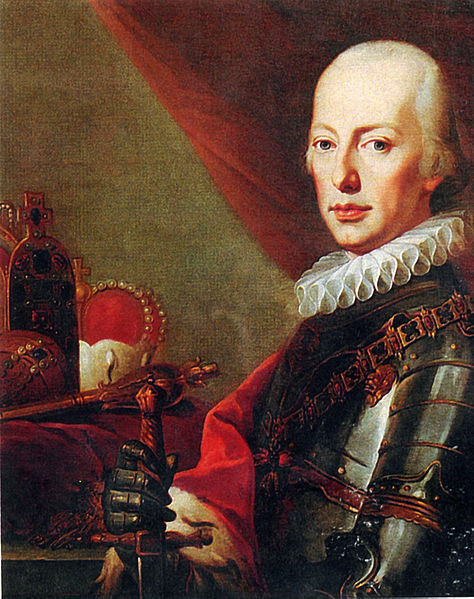 It would be possible to go on at length but, again, the pervasiveness of the Roman legacy for all westerners and monarchists in particular (and certainly Christian monarchists) makes it rather hard to single out certain aspects from such a flood of possible examples. However, whether it was Emperor Justinian and his reform of Roman law which became the foundation of virtually all law in continental Europe up until the revolutionary era, or the inestimable significance of Charlemagne for Western Europe, the foundation of what became known as the Holy Roman Empire around which all Christian monarchies revolved (though not always closely or peacefully) we can see how central the Emperor of the Romans has always been from Augustus Caesar in 27 BC to the abdication of Francis II in 1806. You can still go and visit the Crown of Charlemagne in Vienna, based on the Roman imperial tradition and see paintings of the Holy Roman Emperors wearing their traditional vestments which were all Roman in origin. There is no getting away from it and that is why I say that, not only was the Roman Empire a monarchy, the Roman Empire was, in many ways, THE monarchy.
Tuesday, March 8, 2011
Favorite Royal Images: Philippe II of Orleans
 In honor of 'Fat Tuesday' we have my favorite portrait (another classical pose) of Duke Philippe II of Orleans, later regent of France, for whom the famous city of New Orleans was named.
Monday, March 7, 2011
Congratulations Are In Order
 Last night my right-hand-man "Teapot" and his lovely wife welcomed their baby girl, Rhys Leighann, into the world. The little bundle is seen above with her proud papa and her possibly even prouder aunt (my dear red Robin who is the best of all us misfits) -had a shown a picture of her mother you humble blogger would likely not be long for this world. But, she was a real trooper and followed my directions exactly. I told her some time ago that she should have the baby on March 6th so I could more easily remember the date and she did as she was told perfectly. How thoughtful is that? Anyway, we are all as pleased as we can be, busting buttons left and right. This little girl was a long time coming and not without considerable difficulty so we are all ecstatic that she has finally arrived. Happy birthday Rhys!
Hip, hip, Huzzah!
Hip, hip, Huzzah!
Hip, hip, Huzzah!
Remembering the Alamo
 Texas author & blogger Celia Hayes has posted some great photos of the Alamo reenactment held this weekend, marking the 175th anniversary of the battle for the "Shrine of Texas Liberty". Hosted by the San Antonio Living History Association (of which I was a member more years back than I'd like to admit). They seem to have come quite a long way since then, in those days we were not so numerous. The first time I participated there were a fair number of Texians but only about seven Mexicans!
Sunday, March 6, 2011
Storming the Alamo
 Today marks the 175th anniversary of the fall of the Alamo. There has been a great deal of 'historical revision' in recent years about that most famous event in Texas history. Pretty soon, at the rate things are going, it will be the Texans who had the Mexicans outnumbered. However, the basic facts cannot be changed. Both sides fought with amazing heroism and both had legitimate reasons for their position. With the rise of the politically correct tyranny, even in Texas some things have gotten out of hand. Mexican ethnic pressure groups once forced a baseball team to change their name from "1836" (an odd name for a team anyway) because they deemed the year 1836 "racist" against Mexicans. No, I'm not joking -it is that silly. As for myself, and I would think any honest observer, I can see that both sides had some right on their side and likewise both had their black marks. However, when I look at how I live here and now and then I look at the crime, poverty and constant drug violence in Mexico just a few miles away, I thank God that things worked out the way they did. May the defenders R.I.P.
Subscribe to:
Posts (Atom)
