Showing posts with label French Revolution. Show all posts

Monday, June 19, 2017

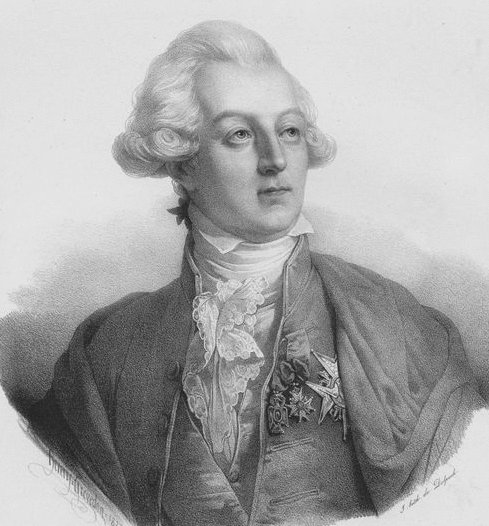
The Duc de Lauzun, a Life Lesson

The life of Armand Louis de Gontaut, Duc de Lauzun, better known in the Revolutionary period as Biron as he had by then become Duc de Biron, offers a great many lessons even for people today. He was a leading Freemason in France, a known proponent of the values of the “Enlightenment” and was very much a figure of the fashionable left, well known and quite popular with the elite ‘chattering class’ of high society people who loved flattering themselves, competing for radical credentials and discussing revolutionary ideas in their salons. The Duc de Lauzun was born in Paris on April 13, 1747 and grew up as a figure of the anti-traditional aristocracy. He married and was very popular in leftist high society, though it was not known as “the left” at the time of course. Like most of his friends, he still thought very highly of France in an abstract, civic way but spent his time pouring scorn on the traditions of France, never taking into account that, as an aristocrat, his very fate was bound up with those traditions he was undermining. It was, however, in the service of France, that he had his first real profession which was as a soldier.

Soldiers of Lauzun's Legion
In the aftermath of the disastrous French & Indian War (Seven Years’ War for Europeans), the French military was reformed in a major way. All too often historians today ignore how King Louis XVI of France had improved and revitalized the French army which Napoleon was later to lead to so many victories. Training, tactics, weapons and equipment were finally standardized, military academies were established, purchasing commissions was stopped, one light and one heavy company was added to each infantry regiment of the line, Prussian order tactics were adopted and so on. A group of eight new units were created, known as legions, of Volontaires étranger de la Marine for overseas service. These units were made up of Poles, Germans, Hungarians and exiles from Ireland and were combined arms formations with each having two fusilier, one grenadier and one chasseur companies as well as artillery and cavalry (hussars) in their own independent companies. The idea was to have units that could move quickly, pack a punch and be able to respond to any given situation with their own infantry, cavalry and artillery components. The British were set to do the same with such units as the Queen’s Rangers or the British Legion. A more modern example of something similar would be the battle groups of World War II.

Lauzun's Legion
The Duc de Lauzun gained some attention for capturing a British fort in Africa, Fort St Louis in Senegal, in early 1779 but it was the second of these foreign, marine legions that Lauzun raised and was given command of, along with the rank of brigadier in the corps overall. His unit soon became known as Lauzun’s Legion and was included with the French corps under the Comte de Rochambeau which was sent by King Louis XVI to aid the rebel colonists in America, led by George Washington, against the British during the American War for Independence. A lack of sufficient transportation forced Lauzun to leave many of his men behind but he was able to take several hundred infantry, cavalry and gunners who would make something of a name for themselves in the climactic Yorktown, Virginia campaign. A particular moment of glory was the action at Gloucester Point on October 3, 1781 when Lauzun’s Legion met and bested a British force under the fearsome Lt Colonel Banastre Tarleton, probably the best British cavalry officer of the war. Colonel Tarleton and the Duc de Lauzun almost engaged in personal combat but Tarleton was brought down when his horse was wounded and was taken away by some of his own men, narrowly avoiding being captured by the French. It was the largest cavalry engagement of the war and the British had been forced to retreat.

Not surprisingly, the Duc de Lauzun, after the surrender of the British at Yorktown and subsequent recognition of the independence of the United States of America, returned home to great fanfare as a genuine war hero. King Louis XVI promoted Lauzun to maréchal de camp for his exploits. However, Lauzun started on a new career in politics after the King, reluctantly, recalled the Estates-General. The Duc de Lauzun was chosen to be a deputy for the nobility of Quercy and, not surprisingly, became an outspoken advocate of the Revolutionary cause. When the French Revolution began, despite all of its ridiculous egalitarian thundering, the Duc de Lauzun was an ardent supporter. That is important to understand as he was not simply going along to get along as many other cowardly aristocrats did when the disaster came, he was taking his earlier political views to their logical conclusion and was just as devoted to the cause of the Revolution as he was to eradicating any who opposed it. In 1791 he was trusted with taking the oath of the French army of Flanders and was subsequently given command of that army. The following year he was given command of the Army of the Rhine to stand guard against the Austrians.

Badge of the Vendee' royalists
In every way, the Duc de Lauzun was a devoted revolutionary. After one year of watching the Rhine, he was assigned to deal with internal enemies, taking command of the army at La Rochelle in May of 1793. It was in this capacity that he aided in crushing the counter-revolutionaries of the Vendée, the heroic Catholic royalists who had risen up in the name of their faith and their monarchy. Lauzun, or Biron as he was then, was not the most brutal in suppressing these faithful people but he was certainly zealous. He gained credit for taking Saumur (site of a royalist victory in June) and winning the Battle of Parthenay. However, his troops had become increasingly disorderly and his superiors, in their typical revolutionary paranoia, began to have greater fears and suspicions about their accomplished duke. They subjected him to numerous questions, interference in his command and other harassment until he finally resigned his command. In spite of it all, the only thing they could actually accuse Lauzun of was being insufficiently vicious in his treatment of the counterrevolutionaries. He had never shown any lack of support for their cause but the charge that he was too lenient, too soft, on the enemies of the Revolution would haunt him.

The aristocrat, Duc de Lauzun, had sided against his class to support the Revolution but, in the end, he discovered that this would not save him. The barbaric firebrand Jean-Baptiste Carrier accused Lauzun of treason or “lack of civic virtue” in the revolutionary parlance and in July of 1793 he was stripped of all rank and offices and imprisoned. After a quick show trial by the Revolutionary Tribunal he was taken to the guillotine and beheaded on December 31. His wife was also subsequently arrested and she too went to the guillotine the following summer. So it was that the story of the Duc de Lauzun came to a tragic end, yet, it is hard to imagine anyone feeling much sympathy for him. Here was a man who was a traitor to his king, his country, his religion, his class and the entire civilization that birthed these things. In the end, he was also condemned as a traitor by his fellow traitors and that at least provides a valuable lesson, even for people today.

Biron, the revolutionary general
Although the French Revolution is usually portrayed as a mass uprising of the common people against the monarchy and a corrupt, decadent aristocracy, we must remember that, in terms of numbers, it was the common people who suffered the most from it. Whether out of conviction, as seems to have been the case with Lauzun, or mere self-preservation, not a few aristocrats decided to take the side of their natural enemies and join the Revolution. It should also not be forgotten that no small number of clergymen did as well in what was rather like the “liberation theology” of its day. They were, in their own way, no different from many of the so-called conservatives we see today who go along with the liberals either because they are dishonest and are fervent liberals themselves or because they think that the goodwill and cooperation they show the liberals will be returned to them. As we see in the case of the Duc de Lauzun or, to take a more lofty example, the Duc de Orléans, “Philippe Égalité” who voted for the death of his first cousin the King only to ultimately be sent to the guillotine himself also in 1793.

The revolutionary fervor of these men did not save them from being consumed by the flames they helped to fan in the first place. The drivers of the Revolution, with all of their egalitarian rhetoric, were happy to have the help of aristocrats like the Duc de Lauzun to gain power but they turned on them in the end since, no matter what their opinions, words or actions were, *who* they were, the very blood that was in their veins, made them the enemy. The Duc de Lauzun was obviously a man of talent, an aristocrat who, as such, was a natural leader. His military victories show what great deeds he was capable of and yet he could not or would not grasp the simple facts that his own revolutionary cohorts could; that a prince and a peasant are two different things that can never be the same, no less than a Swiss and a Saracen or a man and a woman. Aristocrats like the Duc de Lauzun, clergymen or even princes of the blood would never be more to the revolutionaries than what Stalin referred to as “useful idiots”. Some, like the famous Marquis de Lafayette, were able to survive but revolutions tend to ultimately feed on themselves and the Duc de Lauzun, as with most others who did not manage to escape the country, fell victim to the forces he had helped unleash. One can but wonder if, on his way to the guillotine, he did not have the awareness to regret the terrible path in life he had chosen to take. His life and his death should be a warning to anyone who thinks they can make common cause with the forces of darkness, posing as the forces of “enlightenment”.

Monday, September 8, 2014

Monarchist Profile: General Niklaus Franz von Bachmann

One of the most famous Swiss soldiers in history, Niklaus Franz von Bachmann was a notable monarchist, all the more so for coming from a country which, after the Napoleonic Wars in which he served, was the only patch of land outside of the Americas which was not presided over by a monarch. He was born Niklaus Leodegar Franz Ignaz von Bachmann in the canton of Glarus, Switzerland on March 27, 1740 to an aristocratic family with a long tradition of military service, particularly in the Swiss Guard employed by the King of France. His father was a baron and attained the rank of marshal and it was his older brother who, in fact, commanded the Swiss Guard at the time of their horrific massacre at the hands of the French Revolutionaries. By both background and the experience of his own blood he was, of course, naturally inclined to despise revolutionary republicanism and everything it stood for. It took no great soul-searching for Bachmann to determine that he would spend the rest of his life and commit his military career to opposing the forces of the Revolution and to the defense of his native Switzerland. He had a Catholic education of the highest quality before going to France in 1756 to join the Swiss regiments that had long served within the French army.

The service of Bachmann to the royal French army was certainly not inconsequential. He introduced the rigors of Prussian drill to the French forces and was responsible for training the soldiers sent overseas to aid the Americans in their war for independence from Great Britain. That these troops served with such distinction is, in part, to the credit of Bachmann. He earned steady promotion while serving with several different regiments and was made a knight of the Order of St Louis in 1778. However, the outbreak of the French Revolution changed his life forever. The massacre of the Swiss Guard would have been outrage enough but on top of that, his elder brother was sentenced to death and sent to the guillotine simply for doing his duty and defending King Louis XVI. The French monarchy was abolished and all agreements with the cantons of Switzerland were abrogated. Bachmann was staunchly loyal to the monarchy of France and disgusted by all the ignominious acts of the revolutionaries. He left the country and returned home to Switzerland but he was certainly not giving up. On the contrary, he was more determined than ever to fight the forces of the revolution and to devote all of his wealth and talents towards that aim. He would have a new employer but his purpose would remain constant.

Bachmann used his own resources to recruit and organize a new regiment of his own in Switzerland to fight the revolutionaries under another flag. For employment, he turned to the venerable House of Savoy in 1793. It was a logical choice. King Victor Amadeus III of Piedmont-Sardinia had declared war on the French Republic the previous year and was doing everything in his power to strengthen his army, which would be vastly outmatched in any event. His son and heir, the Prince of Piedmont, was married to the sister of the late King of France and Turin had become a haven for exiled French royals and royalists fleeing the persecution of the revolutionaries. Bachmann proved his worth to the House of Savoy very quickly, thwarting republican forces in the Aosta Valley and within a year earning promotion to Lieutenant General. It was very much a personal fight for the Swiss general and he never referred to his enemies as republicans or revolutionaries but as “the Regicides” for their heinous murder of the King of France (as well as the Queen, Dauphin and so many others). For his skillful and zealous service, the Savoy King made him a knight of the Order of Sts Maurice and Lazarus and granted him the hereditary title of count in the Piedmontese aristocracy.

Unfortunately, no amount of military skill was sufficient to stop the overwhelming numbers of the French revolutionary forces and eventually the Piedmontese were overwhelmed, Italy was invaded and Turin was captured. The Royal Family fled to Sardinia and Bachmann returned home to Switzerland though, just like his former employers, he was not admitting defeat but simply waiting for the opportunity to arise to carry on the fight. When the Second Coalition was formed by Great Britain and Austria, Bachmann was ready again to strike back at the French Republic alongside them. With his excellent war record, he was given command of all the Swiss regiments serving with the Allies and it must have appeared like a truly national force as he is also remembered for bringing back the traditional flag of the Swiss Confederation for his troops to carry into battle, the Swiss flag we are all familiar with today. During this time, of course, the French republicans had tried to export the revolution to Switzerland too, as with all other neighbors, and establish the Helvetic Republic. It never had widespread support and in 1802 the real Swiss government appointed Bachmann commander-in-chief of the Swiss army.

The veteran commander was assigned the task of destroying the forces of the pro-French Helvetic Republic and this he did successfully until the intervention of Napoleon with his overwhelming forces. Napoleon claimed to be acting to restore order in Switzerland though it was only because of French revolutionary agents that any disorder existed in the first place. Nonetheless, thanks to Napoleonic military might, the French were firmly in control of Switzerland and the staunchly monarchist General von Bachmann was instantly out of favor with the new ruling class and forced into retirement. Yet, as usual, he did not regard his situation as permanent and when Napoleon fell from power, only to reclaim it again after escaping from the island of Elba, Bachmann was appointed commander of the Swiss army again in 1815 and he led his troops in an invasion of France. Of course, the decisive battle was fought in Belgium where Napoleon was decisively beaten and the Kingdom of France restored again.

By that time, there was no doubt that Niklaus Franz von Bachmann was the most distinguished Swiss soldier of his day and one of the most respected military commanders in the world. The Swiss government honored him and the French, Italian and Austrian monarchs all sent him high honors as well. King Louis XVIII offered him the post of Inspector General of all Swiss regiments in the French service but Bachmann declined the offer, feeling too old to be of further service and retired to his home in Switzerland. He had fought tirelessly against the forces of the revolution and had carried on the struggle until the revolutionaries were defeated, his own country was secure and the French monarchy was restored. He had fought the good fight, he had finished his race. Niklaus Franz von Bachmann died in 1831 at the age of 91 after a lifetime of service in a righteous cause.

Thursday, July 31, 2014

Republican Brutality on Guadeloupe

One of the most reprehensible figures of the West Indies in the French Revolutionary Wars was Victor Hugues. A native of Marseille, his family moved to Santo Domingo but fled back to France because of the Haitian Revolt. Victor Hugues got in good with the Jacobin Club, was appointed to the Committee of Public Salvation in La Rochelle and finally in 1794 was sent to be governor of the island of Guadeloupe with orders to carry out the abolition of slavery passed by the revolutionary regime. This was, not surprisingly, opposed by the planter class and they, along with any other French royalists, quickly allied themselves with the British in trying to hold back the forces of the revolution. The British, as soon as war broke out with France, was intent on seizing control of as much of the West Indies as possible and not simply because of an effort at a land-grab. French revolutionary forces in the region enlisted privateers to prey on British shipping and in 1795 King Carlos IV of Spain was pressured into an alliance with the First French Republic, making almost every part of the West Indies a real or potential threat to British security in the region. Throughout the French Revolutionary and Napoleonic Wars, British forces undertook a number of operations in and around the West Indies which often started out as brilliant successes but proved extremely costly due to the prevalence of disease in the islands.

First Earl Grey
As part of a wider operation against other islands in the neighborhood, British forces under the overall command of General Charles Grey landed on Guadeloupe in April of 1794 and joined in cooperation with the French royalists there. This was in fulfillment of the terms of the Whitehall Accord signed by the British and the French royalists representing Guadeloupe, Martinique and Saint-Domingue by which the French royalists offered financial support in exchange for British military protection against the revolutionaries. Backed up by Royal Navy forces led by Admiral Sir John Jervis, the British made short work of the local defending forces and within a matter of days had the island under their control. With most local matters left in the hands of the royalist French planters, life returned to what it had been before the outbreak of the revolution. However, little more than a month later, a French fleet arrived with Victor Hugues and a relatively small number of French troops. While the British army was being decimated by yellow fever, Hugues rallied local republicans and a large force of Blacks and mulattos attracted by his proclamation of the abolition of slavery. These reinforced the 1,500 French troops he had brought with him and while his forces grew stronger, those of the British and French royalists grew only weaker due to the ravages of disease.

Today, Victor Hugues is most remembered for his carrying out of the abolition of slavery in accordance with the order of the National Convention, however, the image of the liberating revolutionary opposing the wicked slave-holding royalists backed up by Britain is an extremely misleading one. Hugues, it should not be forgotten, was typical of the Jacobins he aligned himself with. These were people who espoused lofty, liberal sentiments but who used the most brutal and barbaric methods to push forward their cause. These were the people who instituted the Reign of Terror in France and Hugues had no hesitation in using the same methods on Guadeloupe. Similarly, his abolition of slavery was not the great liberation most people think. In typical Jacobin fashion, it ultimately proved to be a mere matter of rhetoric that bore no relation to actual reality. In fact, slavery was not abolished by the revolutionaries at all but simply renamed. The end result was that, while no one was technically a slave, the supposedly liberated people were still subject to forced labor as the governor saw fit to employ and he employed a great deal of it in the pursuit of his goal to crush the royalists and drive the British from the island. For the Black residents of Guadeloupe, nothing fundamentally changed other than that, instead of being forced to work without pay for the benefit of private owners, they were forced to work without pay for the benefit of the revolutionary government.

Hugues' proclamation ending slavery
However, thanks more to rampant disease than any brilliance on the part of the opposition, Hugues was ultimately victorious over the British. The force at Barville was obliged to surrender which included about 800 French royalist émigrés and 900 Black soldiers. Once again, though it is not often talked about, the true character of the French Revolution and its supporters was on full display when, after the surrender, Hugues carried out a horrific bloodbath, massacring 865 French royalists as well as some of the other prisoners. Sadly, such brutality was not unique to Guadeloupe. Whereas most people know about the horrific cruelty of the French Revolution in France with the September Massacres, the butchery in western France, the regicide and so on, few remember that the same sort of things happened on a smaller scale in the French colonies and they were no less brutal and, at times, even more so. The true legacy of the French Revolution, in the West Indies as elsewhere, was not “liberty, equality and fraternity” but rather the delusion that all injustice can be remedied by mass executions and that if one claims a lofty-enough sounding ideal, the most vile and despicable depths of cruelty and brutality can be justified. In rejecting the revolution and embracing monarchy, this mentality is also rejected; the idea that perfection in this life can be achieved by means of human extermination.

As for Guadeloupe, while the British did send reinforcements to the West Indies for a new offensive led by the talented General Sir Ralph Abercromby, that island was never retaken and it became a paradise for pirates and smugglers throughout the period in question. Eventually, Napoleon Bonaparte sent troops to bring the island under his control and during the subsequent occupation about 10,000 inhabitants were killed. In 1810 the British did return and retake the island, holding it until 1816. During that time, from 1813, it was under the nominal jurisdiction of the Kingdom of Sweden before being ceded back to France in 1814. Slavery returned with the troops sent by Napoleon and was not actually abolished for good until 1848 through the efforts of Victor Schoelcher. In 1946 Guadeloupe became an overseas department of France which it has remained ever since.

Wednesday, May 14, 2014

Monarchist Profile: Louis Francois Perrin de Precy

Louis Francois Perrin, Count of Precy, was born in Anzy-le-Duc on January 14, 1742. He came from a family well connected with the French royal armed forces and it was no surprise when, as a young man, he decided on a military career. In 1755 he doubtless benefited by some family ties when he joined the Regiment of Picardy in which his uncle served as a battalion commander. He participated in the Seven Years War (French & Indian War in America) but did not have too much excitement, being mostly confined to garrison duty. In 1774 he was posted to the island of Corsica (which was still not exactly enthusiastic about French rule) and was promoted to captain. He had a distinguished military career, performing his duties well and in 1784 was awarded the Cross of St Louis and was later promoted to lieutenant colonel in the Regiment of Chasseurs (light infantry) des Vosges. Precy and his men were posted to Lyon from 1787 to 1789 and then to Collioure. For his continued meritorious service, in November of 1791, he was appointed to the King’s Foot Guards but that unit was disbanded the following year.

Siege of Lyon
The dissolution of the Guards was, of course, due to the rising tide of the French Revolution which was gaining strength after breaking out, more or less, with the storming of the Bastille on the fourteenth of July 1789. Precy, who was ever loyal to His Most Christian Majesty King Louis XVI, was not looked on kindly by the increasingly powerful revolutionary elite and on August 10, 1792 he retired from military service and withdrew to his estate of Marcigny. However, his service in Lyon was not forgotten in that important city, particularly by the loyal people there who were becoming increasingly alarmed by the radicalism of the French revolutionary government. Finally, the royalists of Lyon rose up in opposition to the convention (the revolutionary body ruling France) and sent emissaries to ask Precy to come and take command of the army defending Lyon. Willing to serve, Precy agreed and threw himself into the defense of Lyon with zeal, establishing fortified lines, strong points and organizing artillery support from Chenelette. He was not in an enviable position, with few resources and a population that was divided. The anti-revolutionary forces in Lyon included royalists as well as many Girondists who were republicans but who felt the revolution had gone too far (the massacre of the Girondists by the radical Jacobins marked the start of the Reign of Terror).

The army defending Lyon, however, was also largely moderate republicans but the officer corps was predominately royalist, including of course Precy and very aristocratic. They were united only by their common opposition to the radical regime in Paris. The convention took action, diverting the Army of the Alps from its invasion of Savoy and on August 9, 1793 the siege of Lyon began. The Count of Precy was outnumbered roughly three-to-one but he put up a stiff resistance in spite of the heavy bombardment from the revolutionary forces. However, the overwhelming strength of the enemy took its toll and despite repeated counter-attacks by the cavalry (until there were none left) every time they advanced, the situation seemed hopeless as the protecting forts fell one by one. Eventually, the political divisions inside the city began to take their toll and civic leaders proposed making a negotiated peace. Precy, certainly speaking for his fellow royalists, opposed this and wished to carry on the fight. Given what had already happened in France, no one could realistically hope to survive a capitulation to the revolutionaries. Nonetheless, the decision was made to surrender and a truce was declared on October 7 for negotiations to begin.

Knowing what the revolutionaries thought of honoring agreements and what they considered “justice”, Precy would have no part in the proceedings. He gathered together the like-minded survivors of his army, about 1,000 infantry and 200 cavalry and on the morning of October 9 managed to break out of Lyon and escape. However, they were attacked every step of the way by the revolutionary forces as they pushed through St-Cyr-au-Mont-d’Or, Poleymieux, les Cheres, Alix, Theize, Oingt and to St Romain de Popey. Sadly, by that point, almost the entire force had been wiped out but Precy survived, protected by his loyal men, the few that survived and he was hidden in Ste Agathe-en-Donzy for 15 months before escaping across the border to Switzerland disguised as a jockey.

In 1795 the count made his way to Turin in the Kingdom of Piedmont-Sardinia and two years later married the widow of a cousin of his who had died at the guillotine in Lyon named Jeanne-Marie de Chavannes. From Turin he eventually moved to Vienna and lived there in Austria until 1811 when he was finally able to come home to his beloved France. Precy took up residence in Dijon and after the restoration of the monarchy, the devoted old royalist was able to have his moment of glory when, in August of 1814, he returned to Lyon as commander of the National Guard there. Of course, it was not quite over yet and when Napoleon returned during the “Hundred Days” the count was placed under house arrest. However, once that episode was passed, he returned to his duty, faithfully serving his King and France until his retirement. He died on August 25, 1820 and the following year his remains were moved to a special memorial in Lyon.

Tuesday, April 22, 2014

MM Video: The Politically Incorrect Truth About the French Revolution

(sorry about the buzzing in the background, after so many complaints of previous videos being hard to hear I turned everything up all the way and that was the result, so -hard to hear or buzzing appear to be the options)

Part I: King Louis XVI


Part II: Queen Marie Antoinette


Part III: The Revolution Itself

Monday, July 15, 2013

Monarchist Profile: The Marquis de Bouille

Although not as famous or even as active as many other ardent French royalists at the time of the Revolution, the Marquis de Bouille holds a unique distinction of being the only counterrevolutionary to be singled out by name in the French revolutionary anthem “La Marseillaise”. It is curious that, while other royalists were promptly forgotten, the Marquis de Bouille remained a quite prominently hated figure in the republican revolutionary ranks, probably in large part due to his being singled out by name in “La Marseillaise”. It is truly a shame that such should be the case for a man who served his country with such distinction, who helped win great victories for France and who was faithfully loyal to his King in the darkest days of the Revolution. Were justice to prevail he would be celebrated for his many achievements and for standing firm on his principles in spite of the tremendous cost and against such terrible odds. He was a true patriot in the legitimate sense of the word and it pained him greatly to end his life cut off from the land of his birth, from the France he so dearly loved and devoted his life to serve.

Francois Claude Amour, marquis de Bouille was born at Chateau Cluzel in what is now Mazeyrat-d’Allier, Haute-Loire on November 19, 1739. Orphaned at a young age he was raised by his mother’s brother who was First Almoner or the chaplain who distributed money to the poor for His Most Christian Majesty King Louis XV. A very bright young man, he was given a quality education by the Society of Jesus and one that reinforced the family ties to the Catholic Church and the French monarchy. When he was sixteen his uncle purchased him a commission in the French army, not at all an unusual age to become an officer in those days, and he joined a company of dragoons. In pre-Revolutionary France it was the cavalry that was preferred by the aristocracy and this was the primary reason for that branch of service being singled out for particular scrutiny with the Revolution did come. For the Marquis de Bouille it was the beginning of a very distinguished military career.

In 1758 the marquis was sent with his regiment to Germany during the Seven Years War (that is the French and Indian War to those in North America) and soon gained notice for his courage, quick eye and devotion to duty. During this offensive against the Prussians and the British/Hanoverians the marquis particularly distinguished himself at the battle of Gruenberg on March 21, 1761. He played a key part in this stunning French victory which saw the Prussians and their allies defeated, thousands of men and 18 regimental standards captured and which forced the Duke of Brunswick to lift the siege of Cassel. Because of his actions in the fight, he was chosen to take the captured flags, prized war trophies, back to Paris to lay before the King. Louis XV was immensely pleased and gave the marquis a brevet promotion to colonel and command of a regiment of his own. However, it was only a few years later that he was made governor of Guadeloupe where he earned high praise from the Governor-General of the French West Indies who recommended him for his own job.

In 1777 Marquis de Bouille was given an expansion to his authority as he was also made governor of Martinique and St Lucia with special instructions to take charge of all French West Indies forces in the event of a war with Britain, something which seemed likely with the outbreak of the American War for Independence. The Marquis took this duties seriously and did his usual masterful job. When war came in 1778 he was fully prepared and launched a surprise attack on the British before they even knew there was a war on, capturing Dominica on September 7 for a cost of only 40 men killed or wounded. In 1782 he captured the Dutch island of Sint Eustatius which had been taken by the British the year before and he was involved with the Spanish governor of Louisiana, Don Bernardo de Galvez, in planning the conquest of Jamaica. It had to be canceled due to a French naval defeat but, as an aside, Galvez went on to become Viceroy of New Spain and there is a street in New Orleans and an island in Texas named in his honor.

When the war was over the Marquis de Bouille returned to France where King Louis XVI decorated him with the Order of the Holy Spirit for his many achievements. He was also very warmly received in Great Britain when he visited the island a short time later. The British respected him as a gallant and worthy opponent and appreciated his fairness and kind treatment of British prisoners-of-war. It was a mark of the humane and selfless nature of the marquis who also refused to take any compensation from the King of France for his military expenses during the war. Although the cost was immense, he paid for everything on his own and never took money from the state, knowing full well how cash-strapped the French government was. It was also a point of honor for him that he fought for his King and his beloved France out of sacred duty and not for pay. His chivalry and generosity were often remarked upon by all those who knew him. These attributes, along with his love of country and sincere devotion to his monarch make him stand out as an example of what an ideal French aristocrat was supposed to be.

Unfortunately, times were coming with these traits would not be appreciated but scorned or even punished. In 1787 he was appointed governor of the prince-bishoprics of Metz, Toul and Verdun and he served in the Assemblies of Notables called by the King in response to the growing crisis. As a staunch royalist whose loyalty could be trusted, his governorship was extended and his authority increased when the Revolution broke out. He first gained the intense hatred of the treasonous mob for suppressing revolutionary forces in Metz and the Nancy Mutiny. When it became clear that the very lives of the Royal Family were in danger the Marquis de Bouille was ready, willing and able to rush to the rescue. Within his own command he was careful to keep only royalists in the top positions who he could trust and along with some other loyalists he helped work out a plan to take the Royal Family out of Paris, traveling through areas under the authority of the marquis where he could protect them, to a place where they would be safe from the rebel mob. He sent his own son to inform the King of the plan but King Louis, apprehensive for the safety of his family, decided that he and his family should all travel together rather than splitting up. He also chose to go a different way, through areas less secure, possibly in the thought of avoiding suspicion but none can be sure.

The marquis deployed his troops in an effort to protect the route the King and Royal Family would take, claiming to be standing guard over the road because of an incoming money transfer. Unfortunately, while he had been able to be selective with his top officers, not all of his troops were trustworthy and he simply did not have enough men he could absolutely rely on. The public became suspicious about the cavalry being deployed and rumors began to fly. Sadly, the result was that the Royal Family was found out and arrested at Varennes by the revolutionaries. The treasonous mob was enraged and the marquis could no longer remain in France and went into exile in Pillnitz, near Dresden, Germany where Austrian, Prussian and other forces opposed to the French Revolution were gathering. As a senior French army commander with a high reputation there were many countries that offered him high rank in their own armies but the marquis was reluctant to serve anyone other than the King of France to whom was always his first loyalty. Ultimately he did serve as an advisor to King Friedrich Wilhelm II of Prussia and took part in the early campaigns against revolutionary France, none of which, as we know, were entirely successful. He was offered command of the French royalists in the Vendee but refused the position, believing (rightly as it turned out) that the people, poorly armed and untrained, would be slaughtered. Nonetheless, he moved to England and continued to give the benefit of his military advice to the allied cause in the ongoing war against revolutionary France. It was extremely painful to him as a man who sincerely loved France and he was deeply torn by being forced into the camp of foreign countries fighting against his homeland. His depressed state was noticed by many but he carried on as best he could, faithful to his King and country to the very end. The Marquis de Bouille died in London on November 14, 1800 as one of the true heroes of the revolutionary period, a loyal subject of his King and a devoted son of France in war and peace.

Monday, August 20, 2012

Monarchist Profile: Augustin-Joseph de Mailly

Augustin-Joseph Comte de Mailly, marquis d’Haucourt and baron of Saint-Amand was born on April 5, 1708 in Villaines-sous-Luce into a very old noble family. Always close to the monarchy he served as a page boy to the King when he was very young and decided on a military career early in life. In 1726 he began his service as a musketeer before transferring to the gendarmerie and rose rapidly in rank. In 1743 he was promoted to brigadier general, in 1745 to marechal de camp and in 1748 to lieutenant general. The following year he was appointed inspector general of cavalry and dragoons and later director-general of all the armies of France. He fought with the Chevalier de Belle-Isle in the War of Austrian Succession and helped fend off Provence from invasion. He gave valuable service at the battles of Pavia, Piacenza and Tidon. In 1749 he was made governor of Roussillon and in this capacity held to more precisely define the Franco-Spanish border, though, like many elites of his time he was a member of the Freemasons and played a large part in the advancement of Freemasonry in Catalan. He also greatly developed the area of Roussillon with the building of factories, hospitals, churches, a military academy and a restoration of the local university.

When King Louis XVI succeeded to the French throne, he wished to restore French naval power and foreign trade. Toward that end, the Comte de Mailly oversaw the construction of a new port to be a center of trade with far corners of the world and a base for warships to defend against the Barbary pirates. This was Port-Vendres which Mailly wanted to incorporate all of his “Enlightenment” ideas to be what has been described as a model “Masonic” city (as horrible as that sounds) and, of course, it included the first great monument to King Louis XVI. Unfortunately, it was not all great achievements for Comte de Mailly. His feuding with Marshal de Noailles resulted in his command being revoked in 1753 and the following month Jean-Baptiste de Machault Arnouville persuaded the King to have him exiled. Part of this involved his mistress and her husband speaking out against the King and this pair was also expelled.

However, this did not dampen the loyalty or patriotism of the count and when the Seven Years War broke out he rejoined the army to lead French troops in the campaign in Germany. He was badly wounded by a sword blow to the head at the battle of Hastenbeck in 1757 which left him unconscious. He was then captured and held prisoner by his fellow “Enlightenment” enthusiast King Frederick the Great, the two becoming good friends. After two years as a “guest” of the Prussians he was released and returned home something of a war hero. He went on to lead other, more successful campaigns, and the past unpleasantness was forgotten. The end of hostilities brought an end to his military career but he was once again placed in command of Roussillon and in 1771 was given command of the French forces guarding the Pyrenees and the Mediterranean coast. The count received a number of honors for his services, including the Order of the Holy Spirit and in 1783 the King awarded him the supreme rank of Marshal of France. He had reached the pinnacle of military accomplishment and his civilian work was also recognized by his admittance to the Academy of Sciences, Letters and Arts of Amiens.

In many ways, the old Marshal was typical of many of the French aristocracy of his time, a firm believer in the old order but one who liked to dabble in what were, frankly, dangerous ideas. When the Revolution began to come to a boil he was horrified by the very idea of a France where the nobility and clergy were to be effectively kicked off the national stage, and the King as well were he to make any trouble. Because he was so opposed to the new direction France was taking, some advised him to emigrate but this he adamantly refused to do, having shed his blood and shed the blood of others in defense of France, he would never abandon it. Although he was quite advanced in age by this time, good loyal men were hard to find and in 1790 King Louis XVI appointed him to command one of the four new armies organized by the National Assembly. However, when the Assembly demanded that the old Marshal take an oath to defend the principles of their new regime he refused and instead offered his resignation.

As ever the faithful old soldier, loyal to his King, when the Marshal heard that King Louis and Queen Marie Antoinette were being threatened at the Tuileries Palace, he went there immediately to defend their personal safety himself if necessary. The King was touched by this display of loyalty and he appointed Mailly to command his royal guard, the Swiss guard, and it was he who was in command the next fateful day, August 10, 1792, when the mobs attacked and stormed the Tuileries. Unfortunately, the King had held back his troops from taking necessary precautions out of his loathing to shed the blood of his own subjects. The result was that the palace was overrun and the brave Swiss guards were massacred. The Marshal himself only escaped the same fate with outside help but he did not remain at liberty for long. He was quickly denounced by the revolutionaries only a few days later and sent to l’Abbaye prison. Had he not been known as such a champion of the “Enlightenment” and had liberal friends then in relatively high places he likely would have met his demise in the September massacres. As it was, he was released and returned with his family to his estate near Abbeville. Yet, with the Revolution turning more radical and bloodthirsty by the day, again, he did not remain at liberty for long. He was again arrested, with his family and was finally sent to the guillotine at Arras on March 25, 1794 at the age of 87. His last words before his execution, shouted out, were, “I remain faithful to my king, as my ancestors have always been”.

Saturday, July 14, 2012

Bastille Day - The Farce


In some ways, Bastille Day is a very appropriate holiday for a republic to have. Republics, after all, tend to be based on a minority telling lies to the majority, pretending to be looking out for their best interests, and the majority pretending to believe them, going along with the charade even though they know perfectly well they are being lied to. One side pretends to care, the other pretends to believe them and all go along with it because they want to believe the narrative and don’t wish to be confused with the facts. In the same way, Bastille Day is, like Napoleon himself said about history, “a set of lies agreed upon”. The official story is that the storming of the Bastille on July 14 was a symbolic assault on tyranny, officially marking the beginning of the French Revolution as a heroic struggle for liberation from the “bondage” of traditional authority (the monarchy, the aristocracy and the clergy) and traditional moral values which upheld such authority. Monarchists know, and everyone else should too, that the facts are very far from this ideal narrative which is celebrated today as the national French holiday.

The Kingdom of France was, undoubtedly, at a low point at the time. The economy was in shambles, hunger and poverty were widespread, too many in the aristocracy were living lives of indulgence far away from the people they should have been looking after and many in the clergy were more concerned with their own comfort than with administering the sacraments and teaching their people. However, the two young people at the pinnacle of power in France, His Most Christian Majesty King Louis XVI and Queen Marie Antoinette, were not blind or uncaring to these problems. Both had each been working in their own way to solve the immense problems they had so recently inherited. King Louis XVI enacted many common sense policies to alleviate the suffering of his people. He cut expenses at Versailles, cut government expenditures overall, refused to go deeper into debt and refused to raise taxes. He ended the government monopoly on grain which allowed for lower prices that more people could afford. He taxed wealthy landowners for the first time and, though he was not required to, paid his own share as any other landowner would. Likewise, Queen Marie Antoinette helped to educate poor children, had her own kitchen opened to the poor, cut down on lavish parties (yes, despite all you’ve probably heard) and simplified her own wardrobe in an effort to make frugality chic.

Unfortunately, the accumulated problems of decades could not be overcome quickly and the radical firebrands were doing everything possible to mislead, misinform and radicalize the public while spreading the most vicious lies they could think up about their King and Queen. For example, partly in an effort to pay for the war against Great Britain on behalf of the United States, King Louis XVI enacted a tax reform which raised revenues but lowered taxes for the poor. Revolutionary propagandists played their game of misinformation, only telling people that the King would be collecting more money (not less from the poor) and implying or stating outright that this was all for his own enrichment rather than paying for the needs of the country. King Louis had done everything in his power to be reasonable and accommodating. Early in his reign he had encouraged local parliaments and he recalled the Estates-General. However, the firebrands only increased their agitation, whipping the mob into a frenzy and blaming the King for ills he had absolutely no control over. Finally, someone pointed to the prison-fortress of the Bastille as the imposing symbol of absolute royal power that had to be wiped out.

On July 14, 1789 a Parisian mob stormed the Bastille, which was actually nothing like what they had been told or what most people today think it was. Naturally, it looked very harsh and foreboding from the outside, but inside the prison conditions were not terrible, certainly no worse than any other prison of the time and probably better than most. The fact was that there was practically no one in the Bastille. The popular portrayal would have one believe that the Bastille was crowded with the poor, tortured victims of an autocratic monarch. In fact, it was almost empty of prisoners. The only people present to be liberated were four forgers, two lunatics and a pervert who had been locked up at the request of his own family. The real victims were the unfortunate men who just happened to be doing their job guarding the prison. All 120 soldiers were brutally massacred by the hatchet-wielding mob and the governor had his head cut off and stuck on a pike. This was the bloody and inglorious start of the horrific bloodbath known as the French Revolution.

The episode is so ridiculous that it would almost be an occasion to laugh were it not for the death and horror involved. The Bastille was not a ghastly torture-chamber full of unfortunates to be saved by the rebel mob. It was a run-down bastion holding a couple of crazy people and a few petty criminals. The real victims were the men wearing the King’s coat who were savaged by a mob who had not found what they expected. They also later demolished the Bastille and so it is that the ridiculous charade continues as tourists from all over the world come to Paris expecting to see the famous Bastille only to be told no such place exists or has for centuries. Again, rather fitting for a celebration that is a farce, based on a lie about a period of history that was more gory than glorious, that was more about licentiousness than liberty, more about evil than equality and more about fratricide than fraternity. What could be a better holiday for the French Republic when you think about it?

Of course, the real cause for celebration will be when France rejects the lies and illusions of the Revolution and returns to the path of God, glory and the Ancien Régime.

Vive le Roi!

The Mad Monarchist

Friday, October 21, 2011

Royal Profile: Princess Elisabeth of France

One of the most tragic but most spotless, pious and saintly royal figures who became a martyr of the French Revolution was Princess Elisabeth of France. She was born in Versailles on May 3, 1764, the youngest child of the Dauphin Louis, making her the granddaughter of King Louis XV and the sister of His Most Christian Majesty King Louis XVI of France. Along with her siblings she was raised by Madame de Marsan, the royal governess and she was given a good education as well as becoming an accomplished rider and artist. Her father died only the next year after she was born and she was only about three years old when her mother died. However, her parents (a lovely couple) passed on to her a deep sense of devotion to the Catholic Church and the venerable monarchy of France. Princess Elisabeth and her siblings were a very close-knit little family and the Princess grew into a very religious, very royalist and very devoted young lady. Being the youngest, she remained at home longer than any other while her older siblings went on to other positions, marriages and so on.

Princess Elisabeth remained with her brother, King Louis XVI, and was very attentive to him. There was some talk of her being married to the Austrian Emperor Joseph II but nothing came of it. It might have been better for her if she had ultimately, but as things stood at the time the Princess was wise to refuse as the Emperor was of a fairly different mindset from Elisabeth. The Emperor was a very modern-minded man, an “enlightened despot” who favored greater state control over the Church. Elisabeth was a very traditional conservative and a very devout Catholic who put her faith first and above all else. She was considered, along with her brother the Count of Artois (the future King Charles X) to be the most pro-Church and staunchly royalist member of the family. She was also a very strong-willed and determined woman. As a girl those traits had made her a little difficult but, as she grew up, her growing faith turned these into admirable qualities and gave her a great moral strength with firm and uncompromising principles. She turned away from any thought of marriage to devote herself to caring for her brother, the Royal Family, the French people and one would be hard pressed in any event to find a husband worthy of her.

Madame Elisabeth (as she was known) was also an extremely kind and compassionate woman who, rather than the glamorous life of a royal princess or even consort, would have preferred the life of a simple Carmelite nun. She would have taken vows at once but, King Louis XVI said he could not do without her. So, she set an example for charity and piety from the palace at Versailles. She had great love and respect for her eldest brother and even the younger Count of Artois (who was known for his rather wild ways) who she adored and tried to gently pull back to the straight and narrow. She also cared deeply for the poor (and despite popular perceptions she was not alone in that), even starting a dairy to provide free milk to poor children. Yet, she was not some dour, grim, puritanical sort of figure either. Madame Elisabeth enjoyed life, enjoyed art and beautiful things, enjoyed music and loved to dance. Of course, as with others, none of these admirable qualities were enough to save her when the horror of the Revolution descended on France. In fact, the revolutionaries, necessarily, poured out their deepest hatred on the purest and most upright individuals who represented all that was best about the old, glorious, Christian Kingdom of France.

When the Revolution came, usually dated with the storming of the Bastille on July 14, 1789 the King was concerned for the safety of his family and had several sent abroad. Madame Elisabeth, however, refused to abandon her post and she disagreed with her brother compromising in any way with the revolutionaries. There was, it is often forgotten, a brief period in which France was a constitutional monarchy as Louis XVI was forced to give in to the demands of the revolutionaries. All of this Madame Elisabeth staunchly opposed. She always supported her brother of course but, with her strength of will and character, she was against any concessions or coming to any agreement with a movement that was wicked in its very core. It was not simply an effort on her part to maintain royal authority but also to maintain the independence of the Church from the revolutionary laws to bring the Church under state control totally. This, of course, made her all the more hated by the revolutionaries who regarded her as one of the ultra-royalist, reactionary faction they correctly identified as their greatest enemies. Unfortunate, perhaps, but true. The Revolutionaries and Madame Elisabeth represented two completely opposite and irreconcilable positions one of which would have to perish for the other to survive.

Madame Elisabeth remained with King Louis and Queen Marie Antoinette in their darkest hour. Her status as a leading enemy of the revolution was confirmed when the National Assembly intercepted a letter she sent to the Count of Artois in which she supported foreign monarchs sending troops to rescue the Royal Family, crush the revolution and restore royal authority. Still, even when the mob stormed the Tuileries, Madame Elisabeth bravely confronted them with some in the crowd mistaking her for Marie Antoinette. With the rest of the Royal Family she was taken into custody by the revolutionaries and originally imprisoned with the Queen but the two were later separated. Although she did not know it, Marie Antoinette addressed her last letter to her beloved sister-in-law. Locked away, Madame Elisabeth knew about the execution of her brother the King but was kept in the dark about the murder of the Queen. In her confinement she tried to comfort her niece Marie-Therese, daughter of the late King and Queen, even though she was constantly being insulted and tormented by her captors.

When the time came for her show-trial she was as calm and determined as ever as she was accused of aiding the King in his effort to escape, supporting the royalists abroad and counterrevolutionaries in France. When the King was slanders as a bloody tyrant, Madame Elisabeth, who had advised him to take a more hard-line approach, defiantly told the court, “If my brother had been what you call him, you would not have been where you are, nor I where I am”. Which was perfectly true as the King could have ordered his troops to shoot down the mobs in the streets but had refused to do so. Nonetheless, the verdict was pre-determined and on May 10, 1794 Madame Elisabeth was taken to the guillotine at the Place de la Revolution and executed. In her final moments she had offered her life to God as a sacrificial victim for all her country was enduring. Even in her final moments she helped others on the way to their execution and guided them in saying their prayers, a saintly princess from start to finish and a credit to the Royal House of France. Although there is no cause underway for her canonization, no less a figure than Pope Pius VII said he considered her a saint as do most French royalists. She was a martyr, martyred for her royal blood and her opposition to the godless forces of the Revolution.

Thursday, July 28, 2011

Hurrah - Justice is Served

Just a quick note to give every monarchist something to smile about today. This is the 217th anniversary of the day Maximilien Robespierre the revolutionary, regicide, mass-murderer and all-around hate-filled republican hypocrit got a taste of his own poison as he was sent to the "national razor" by his own terrified comrades. Madame Guillotine never did better service. Long live the King!

Tuesday, June 7, 2011

Ann Coulter Defends the Martyred Queen

I know plenty of people will get uptight about my saying anything at all nice about Ann Coulter. "She's a republican!" True, but she has also said that a monarchy is not always bad -and coming from an American that's something at least. "She's a Neo-Con!" Maybe, I've heard so many people of such a variety called that as an insult that I'm not even sure what it's supposed to mean anymore. But, one thing I have always liked about Ann Coulter is that she infuriates all the right people. She has also done something I never thought anyone in "mainstream" political discourse would ever do: condemn the French Revolution. In her latest book, "Demonic: How the Liberal Mob is Endangering America", Miss Coulter does that and actually tells the TRUTH about the martyred Queen Marie Antoinette who has suffered more unjustly in the popular culture than just about any other royal figure. Now, I am not trying to paint a rosey picture here, she takes her swipe at the French monarchy too, no doubt about it, but she does speak of the Revolution as the true horror that it was and condemns past and present efforts to portray it as some sort of righteous crusade for liberty and freedom. She also relates how it resulted in the exact opposite and, as I said, she puts the lie to the many false rumors about Marie Antoinette.

I admit, I was surprised to see any American political commentator telling the truth about the Queen when even those who know the truth cannot pass up an opportunity to add to the popular misconception of her. In chapter six of her book, "The French Revolution: When Liberals Attack" She states that the Queen was not some cold woman, living in lavish luxury and delighting in the plight of the masses but rather compares her to Audrey Hepburn in Roman Holiday. She relates how the Queen was simple in her tastes, concerned about the poor and even broke down some of the class-structure rules at Versailles and invited poor children to the palace to have dinner with her own. She also makes clear that the Queen never said, "Let them eat cake" -a truth which cannot be repeated often enough. Miss Coulter also demolishes other popular misconceptions, such as the storming of the Bastille actually accomplishing anything or that liberty and freedom were actually the result of the Revolution and she spares no details in telling of the many and grotesque horrors visited upon France by the Revolutionaries.

Can I recommend her book? That would be a silly thing to do in speaking to a monarchist audience. I'm sure those inclined to agree with Ann will read it and those who are not will avoid it like the plague. I simply point it out and applaud her for telling the truth in this area of history where the lies have been so cemented in place over the centuries by republicans of every stripe.

Tuesday, September 21, 2010

A Sad, Sad Day

It was on this day in 1792 that the National Convention officially abolished the monarchy and made France a republic, after stripping the monarchy of most of its powers, ending over a thousand years of uniterrupted royal rule and tradition. For all generations past and all generations to come this was, possibly, the greatest act of murder of what was to be a very murderous regime. For France, 'Eldest Daughter of the Church', the abolition of the monarchy was a crime of the highest order, tearing out the beating heart of the embodiment of French history, values and culture. Subsequent generations would know war, terror, chaos, unspeakable cruelty and a succession of governments that would live and die by the same disease that brought down the ancien regime. Despite efforts at restoration, some successful for a time, this remains a crime that has yet to be put right. The flame of hope that it might remains burning, as it always has, though the prospects for success remain dim. Let us hope that one day the facts will be looked at in the face, that the horrors of revolutionary republicanism will be rejected for the evil they are and that France will one day return to its rightful and most noble state. Vive l'Roi!

Wednesday, July 28, 2010

Killing the Executioner

It was on this day in 1794 that the French revolutionary Maximilien Robespierre, the primary driving force behind the regicide of His Most Christian Majesty King Louis XVI, was sent to the guillotine to be executed at the Place de la Revolution by his own former comrades grown weary if his tyranny and paranoid bloodlust. Couldn't have happened to a nicer fella. Vive l'France! On this occasion justice truly was served.

Sunday, September 6, 2009

Monarchist Profile: Charles Merchior-Arthus Bonchamps

Charles Merchior-Arthus Bonchamps was born on May 10, 1760 in Anjou at the Chateau of the Crucifix. Once grown, Bonchamps journeyed to India in the regiment of Bailli de Suffren. He first saw battle fighting with the French forces in the American War for Independence and was promoted to captain in the grenadiers after his return. A staunch royalist, he resigned his position and retired when he did not like the direction the country seemed to be taking. After having been retired for some time before the revolution broke out, Bonchamps feared for his King and country and so requested to be reinstated. He was in the area when the Paris mob stormed the Tuilieres and helped to hide other notable royalists like La Rochejaquelein and Charles d'Autichamp from the revolutionaries.

In September he returned to Anjou and was denounced by the Jacobins. He was forced to stand trial at the tribunal at Maine-et-Loire but was acquited. The following year, in March of 1793, a group of peasants who were rising against the republicans requested that Bonchamps come and serve as their leader. He gladly accepted and joined the counter-revolutionary forces. Due to his courage and intellect, Bonchamps quickly began to assert himself as a great tactician in the Catholic & Royal Army. The people of the Vendee chose him as their leader and he was able to secure a great deal of supplies and weapons that would be essential for the counterrevolution.

Bonchamps was a hero in many battles and led his troops to many great victories. He participated in the capture of Bressuire, Thouars and Fontenay-le-Comte where he was wounded but managed to recover. However, the struggle was coming apart due to a lack of a unified command and at the cause seemed to lack direction. Many of the soldiers would often leave after a victorious battle to look after their families and farms. Disaster came on October 17, 1793 at the battle of Cholet. The heroes of the Vendee were defeated and Bonchamps was mortally wounded.

He was taken away and lingered for another day. His loyal soldiers wanted to kill the 5,000 republican prisoners they had taken whom they blamed for the death of their champion but Bonchamps refused to allow such a thing and pardoned them. There, on his death bed, Bonchamps stated that he was glad to have served his God, his King and his Country. The death of Bonchamps has been called the greatest victory for the republican forces. Bonchamps was arguably the best tactical leader in the Vendeean army and defeating him gave the blue army a huge morale boost. Bonchamps was and is a hero for the forces of the Christian monarchy, and was even admired by many of the revolutionaries. His success and natural class made him admired by both friends and enemies alike.

Tuesday, July 14, 2009

14 July: A Sad Day for All Monarchists

Today is a dark day for monarchists, royalists, traditionalists, anyone who is religious, anyone with an ounce of decency, dignity and a respect for the sacred. It is the national holiday of the French Republic; Bastille Day. It was on this day in 1789 that Parisian mobs stormed the prison-fortress, the Bastille, freed the prisoners, killed guards, beat the governor half to death, cut his head off and put it on a pike. It came to be seen as the first violent strike of the horrific French Revolution. First, however, there are, as with many things involving the French Revolution, some myths that need to be constantly opposed. Despite what is widely believed the Bastille was not some horrible chamber of tortures. It looked rough and imposing from the outside, but it was not that bad. Furthermore, it was hardly being used. All the revolutionary mob did in storming the Bastille was to kill some innocent men such as the guards and governor and liberate a mere handful of petty criminals and some lunatics. Such was the "glorious" start of the Revolution.

Ever since Bastille Day has been used to celebrate the French Revolution and the first step on the road to the destruction of the Ancien Regime. It is no overstatement to say that this was a calamity for all of Europe and even for the entire world. The French were the first to suffer but they were certainly not the last. First of course there was the revolution itself, the regicide of the King and Queen, the horrible, slow death of the poor, little Dauphin and the Reign of Terror in which tens of thousands of people had their heads cut off. Also remember that this was not directed only at the aristocrats, it was the common people who suffered the most. It began with the persecution of the nobility but many of them fled or even joined the Revolution and the majority who were killed were ordinary people swept up in the bloodlust. In the wars that followed the Old Order of Europe was shaken to its very foundations, the Holy Roman Empire fell and Christendom would never be the same again.

The roots of the French Revolution ran deep but the effects have been greater than probably any other revolution anywhere in the world. It can be seen even in the 20th Century with the Bolshevik Revolution and the formation of the Soviet Union. They used many of the same names as the French Revolutionaries used and even adopted the Marseilles as an official song alongside the Internationale. The French Revolution model of massacring royals, killing off all resistance, declaring war on religion and trying to remake all of society along some artificial, ideological pattern was one that would be followed across Europe, Africa, the Americas and even East Asia. It is very safe to say that had the French Revolution never happened, or had it failed, the world we live in today would be very different and, without a doubt in my mind, very much for the better. As just one example of how far-reaching the French Revolution was, in 1945 when the Communist-led August Revolution was sweeping across French Indochina, the last Emperor of Vietnam was urged to escape to the Imperial Tombs and try to maintain himself there, but the
Emperor pointed out the fate of the tragic King Louis XVI and asserted that it would be the death of them all if he stood opposed to the revolution.

On the 14 of July every monarchist should be French, and if you have a flag pole, let the lillies of France fly and let everyone know why. The French Revolution is bigger than France alone and all monarchists of every background should not rest until it is known and rejected for the utter horror that it was. Vive l'Roi!

Sunday, May 24, 2009

Monarchist Profile: Jacques Cathelineau

Jacques Cathelineau, known as the Saint of Anjou, was one of the leaders of the great royalist counterrevolution in the Vendee region of France. The revolutionaries like to speak of themselves as the champions of the "common man" against elitist tyranny and yet it was the common people who suffered most from their bloodlust and it was often common people who were prominent in fighting against the horrors of the revolution. Jacques Cathelineau was one of them. He was born in what is now Maine-et-Loire and he was a well known peddler or what we might call a travelling salesman in Anjou. He was known for being very physically strong, very handsome and popular but also extremely pious.

When the revolution broke out and the First Republic was established Cathelineau rallied a small, ragged army of peasants and waged a guerilla war against the revolutionaries. As time went on his strength grew and soon his forces were capturing villages and castles in some of the most fierce fighting. His troops fought out of loyalty to the monarchy and the Church and also out of righteous anger caused by the horrid, absolutely grissly atrocities committed by the republicans against the innocent people of the Vendee; including women, children, the elderly and even animals. They left nothing alive. Actions such as these, over time, prompted some of Cathelineau's men into reprisals but former salesman himself always behaved with the utmost gallantry.

As Cathelineau's successes grew he joined forces with other counterrevolutionary leaders and was ultimately made their commander as generalissimo of the Catholic and Royal Grand Army. However, Cathelineau put himself in great danger by the very bravery that so inspired his troops. In the summer of 1793 while he and his men were storming the city of Nantes the heroic general was shot down by a republican sniper. Without his leadership the royalists were defeated and soon they broke up into different factions. After the Bourbon restoration, in honor of the heroism and sacrifices of the "Saint of Anjou" the Cathelineau family was given noble rank. One of his grandsons served as an officer in the French Imperial Army during the Franco-German War of 1870.

Wednesday, May 6, 2009

Monarchist Profile: Francois de Charette

The French Revolution is rightly considered one of the pivotal events in world history and for monarchists there can be few events so especially horrific. However, as bad as revolutionary leaders like Marat and Robspierre were there were royalist counterrevolutionaries who were as noble and inspirational as their enemies were destructive. One of these heroes was Francois Charette de la Contrie a leader of the royalist uprising in the Vendee. An aristocrat who had served in the French navy during the American War for Independence he also defended Louis XVI and Marie Antoinette from the mob at the Tuileries. Following the outbreak of the French Revolution and the birth of the First Republic the people of the Vendee rose up in opposition to the revolutionary regime in 1793 and appealed to Charette for leadership. He was aware of the gravity of the situation and the odds against them but was persuaded and joined the mostly peasant army of Jacques Cathelineau, styled the "Grand Catholic and Royal Army" to fight the republican forces.

After the break-up of the initial campaign Charette led his forces in a guerilla campaign in the lower Vendee with numerous victories but was finally suppressed by a lack of munitions and was taken prisoner. However, he was soon back on the battlefield again in an aristocratic uprising launched with British support. He was given the rank of lieutenant general by the Comte d'Artois but refused to make common cause with the Orleanists because of their earlier collaboration with the revolutionaries. He finally met his final defeat at Quiberon where he was taken prisoner. Charette was then moved to Nantes where he was executed by firing squad in 1796. His bright but short career was over, yet he left a lasting legacy of principled loyalty to his God, his King and France and a family name and tradition that would live on long after him. A hundred years later another Charette followed in his footsteps fighting in the Papal Zouaves defending Pope Pius IX from the Italian nationalists.

Related Posts Plugin for WordPress, Blogger...