Showing posts with label saint. Show all posts

Thursday, July 13, 2017

Royal Saints and the Catholic Church

I recently had an exchange online (not the usual unpleasant sort) which I thought worth bringing to these pages as others may find it interesting. The question put to me was why, in the long history of the Roman Catholic Church, have relatively so few royals been raised to the status of recognized sainthood by the Church. Is it harder for monarchs to achieve sainthood? Is something blocking their way? My short answer was that it comes down to a little of column “A” and a little of column “B”. For one thing, the Catholic Church hierarchy today holds a vastly different broad view of politics than in the past. Whereas the historic Catholic Church held that, as Pope Pius VI said, monarchy is the best form of government, the Catholic Church of today is all about liberal, representative democracy, or at least so they claim. It would certainly be difficult to imagine His Holiness Pope Francis being very praiseworthy of any monarch as an ideal Christian ruler. Loyalty and obedience are not so popular as diversity and human rights nowadays. Yet, this was not always the case.

St Louis IX w/Crown of Thorns
Most Catholics, and indeed most western Christians of any sort know of some saintly monarchs as these tend to date from before the Protestants came to be. Most will have at least heard of one king-saint from most countries that have been around a long time. There is King St Louis IX of France, King St Ferdinand III of Castile, King St Edmund the Martyr of East Anglia, King St Stephen of Hungary, King St Olaf II of Norway and so on. However, given the huge number of kings over thousands of years of Christian history, most of that history being dominated by monarchies and practically nothing else, their ranks can seem rather thin. Why is this? As stated at the outset, my immediate response is both that of royal worthiness as well as political machinations that would block the causes for the canonization of royals. In each case, human frailty plays the dominant part I would say. In the first place, monarchs are usually figures of wealth, power and prestige and, as such, they doubtless face a greater degree of temptation than an ordinary person would. In this way, yes, it is probably harder for a monarch to be worthy of canonization than a lesser person would be.

It would, however, be absurd to think that politics does not play a part in this either and not simply today when monarchy is the exception rather than the rule and traditional monarchies are frowned upon as being ‘backward’ and ‘authoritarian’. Christian monarchs, unfortunately, have a long history of fighting with other Christian monarchs and this applies to Catholics just as much if not more so than to Protestants. When one considers the monarchs who have been recognized as saints, such as those mentioned above, I direct your attention to who their enemies were. In most cases, their enemies were non-Christians; pagans or Muslims and the opinion of pagans and Muslims tended to hold little weight in the Catholic Church in those days. If, however, the Catholic Church had moved to canonize someone like King Henry VI, a monarch who was once considered saintly by a great many people in England, one could expect the French to protest against this vociferously as Henry VI had not only claimed the French Crown (as many English monarchs did) but was the only one to actually be crowned King of France in Paris. Likewise, being of the House of Lancaster, the notables of the House of York might have opposed it too. For a time, it seemed that the Tudors might have pushed for his canonization but then the break with Rome over the marriage of King Henry VIII brought all of that to a total halt.

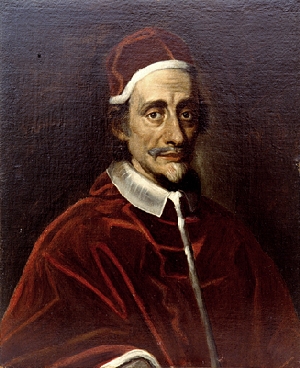
Blessed Innocent XI
So, you can see how this would play out. Try to canonize a French monarch, you upset the Germans. Try to canonize a German monarch, you upset the French. This also applied to the Roman Pontiffs themselves. Pope Innocent XI, for example, was beatified centuries after his death but his cause never progressed beyond that point and the reason for this is well known to those familiar with his case. At the time of his pontificate, the most powerful Catholic monarch was King Louis XIV of France and, as we have discussed before, the Popes tended to oppose whichever Catholic monarch was the strongest in their time and Pope Innocent XI was very much opposed to King Louis XIV of France. As such, when his cause for canonization came up, French clergymen blocked it from going forward and it was not until the 1950’s that he was beatified and his cause has not progressed since for, while there is no longer a French monarchy to oppose it, there are few who feel strongly about pressing it either. Doubtless there have been other, similar cases. Now, as I have also mentioned before, contrast this with the sudden flurry of papal canonizations. Since the Second Vatican Council, every deceased pope has either been canonized or is at some point along in the process of being canonized (John XXIII, Paul VI, John Paul I & John Paul II). A few have pointed out, particularly given how poorly the Catholic Church has fared in this era, that this looks like an effort to ‘canonize the council’.

The person who raised this issue also pointed out that out of 46 (or 47 depending on how you count them) Holy Roman (German) Emperors, only one, Emperor Heinrich II, is recognized as a saint. Once again, it would be foolish to think that the long history of rivalry and antagonism between the popes and the German emperors played no part in this being the case. All of the most famous German emperors could expect heavy opposition to any consideration of their piety. Even someone as widely admired as Emperor Otto the Great would likely be opposed given that he was quite strict about the Church in his lands being answerable to him. Emperor Frederick Barbarossa is possibly the most famous of the Medieval German monarchs yet, as far as the Catholic Church is concerned, he was a villain and, to be fair, from the standpoint of the Church, it is just as legitimate that they view him as such as it is for the Germans to view him as a hero for his victories. Even an emperor most Catholic monarchists admire perhaps more than any other, Emperor Charles V, would be an almost impossible case. It would be hard to imagine the Catholic Church canonizing a monarch who waged war against the Pope, regardless of the circumstances.

Empress Maria Theresa
There are also those monarchs who might have been more easily canonized in the past than today. Queen Isabella I of Castile, for example, has a small but fervent following who wish for her to be canonized, yet such a cause could expect to attract immense criticism upon the Church from Jewish, Muslim and Native American groups and advocates. Such criticism is basically groundless and shouldn’t have any impact but realistically it should be expected and not surprising that the Church would wish to avoid the whole subject and everything it would bring up from the establishment of the Spanish Inquisition to the voyage of Columbus. The Austrian Empress Maria Theresa, Queen of Hungary, would also, I think, be worth consideration for canonization, yet she too would attract a great deal of opposition due to her attitude toward the Jews and such a cause might also generate political opposition from Poland. Again, such cases would bring up issues that the Church would rather not deal with.

Of course, canonizations are much more common among the ranks of the clergy. Not only are they less susceptible to political objections but, even among the hierarchy where the temptations associated with power and prestige are more common, they are also the ones who determine whether a cause goes forward or not which makes things much easier of course. This is not to imply that the system is out or order of course, only that any system consists of human beings and human frailty applies to the clergy as well as the laity. It also cannot be denied that even among the clergy, political opposition can still cause complications. The cause of Saint Josemaria Escriva, for example, was the source of considerable controversy because of his association with the regime of Generalissimo Franco in Spain or the cause of Blessed Aloysius Stepinac who was imprisoned by the communists and martyred after World War II for complicity with the Axis regime of the Independent State of Croatia. This sparked immense opposition and it remains to be seen if his cause will progress further. The cause to canonize Pope Pius XII himself is also very well known for the political opposition it has aroused due to accusations that he was insufficiently zealous in opposing the Nazi and Fascist government all the way to accusations of sympathy and collaboration with them, all of which has aroused considerable debate and acrimony. To date he has reached the status of “venerable”.

King Baudouin of the Belgians
Unfortunately, the enemies of traditional authority are also not always the only source of opposition to royal saints. For example, I would think that the Belgian monarchs King Albert I and King Baudouin worthy of examination but of course the mainstream types will not push for causes for them, because they were monarchs and held traditional moral views, yet there are likewise intransigent types on the right who will neither take up their cause because of their opposition to a Belgian monarchy existing in the first place (though this is absurd given that Belgian independence came at the expense of a Protestant monarch and their previous, failed, bid for independence was against a Catholic, Habsburg monarch who far-right Catholics heartily despise). King Baudouin has been talked about more than others, particularly by the Pro-Life, anti-abortion community given his public stand on that issue. However, that would also then invite opposition from leftists everywhere and no doubt they would also take issue with his words of praise for King Leopold II at the granting of independence to the Congo. The (now retired) Cardinal Godfried Daneels, while praising King Baudouin, said some years ago that a cause for canonization was “not going to happen”.

There is also the fact that, sadly, for a great many people Catholic monarchies in particular are seen as a source of division rather than unity, nothing but an open door to trouble that is best avoided. In Spain, France and the former Italian states (basically an all Bourbon problem) there continues to be intense internal dynastic disputes which are unrelenting and which the Church, as with most others, would certainly wish to avoid getting in the middle of. The left is content to let the feuding monarchists focus on fighting each other and the right would prefer not to get caught in the crossfire and look for other, non-royal alternatives. Even if there was a worthy candidate, the Church would have to show considerable courage to canonize someone in such a position, given the intense opposition it would immediately attract from the opposing faction of the various Bourbon family branches.

Blessed Maria Cristina di Savoia
However, while all of this must seem grim to Catholic monarchists, and it is certainly far from ideal, if one is prepared to not be partisan on the subject, there is still room for hope. Royal canonizations are rare but they are certainly not unheard of, even today. The most prominent example, of course, is the beatification of Emperor Charles of Austria and a French bishop did, in 2009, open a cause for his wife Empress Zita of Bourbon-Parma which it would be hard to imagine anyone objecting to and, while extremely rare certainly, saintly royals who are husbands and wives are not without precedent. There are also currently a number of potential royal saints under consideration within the historic ranks of the Italian royal House of Savoy. Maria Cristina of Savoy, Queen of the Two-Sicilies, was beatified in 2014 (being a Savoy means taking neither side in the feuding branches of the Bourbon-Two Sicilies dispute), Princess Maria Clotilde of Savoy has a cause open, making her a “Servant of God” and Queen Elena of Italy (wife of King Victor Emmanuel III) is, last I heard, under consideration for a cause of her own. All of this is good to see, though I would caution that the Italian Royal Family has a history of royals being beatified but not going on to sainthood. Still, there are royal causes being pressed which I fully support and am grateful for.

Blessed Charles of Austria
Certainly, there are many others that I would think certainly at least worthy of consideration and some I think should have been canonized long ago. Speaking of the House of Savoy, almost every recent royal consort would be worthy of consideration, Maria Pia of Savoy, Queen of Portugal, King Charles Emmanuel IV and his Bourbon bride would both be worth looking into I think. On the subject of the Bourbons, I think it odd that King Louis XVI and his Habsburg bride Queen Marie Antoinette have not been canonized already. The Dauphin, Louis XVII, would seem to be a child martyr to me and his sister Marie-Therese would seem more than worthy of consideration I think. There are others of course but, much beyond that, in France or Spain or Italy, with the Bourbons you start running into the dynastic disputes that make them all untouchable without kicking off a firestorm of acrimony. King Baudouin of the Belgians is, I think, deserving and I have been told that there has at least been talk of a potential cause for Queen Astrid. There are also others among the ranks of the Habsburgs who I would think would be possibilities given that the current family leadership has, since the days of Archduke Otto, become ‘acceptable’ to the powers-that-be and considering that, thankfully, the followers of the Habsburgs have shown more loyalty and adaptability than those of the Bourbons so that it remains one of the few Catholic dynasties that is not at the center of any serious inheritance disputes.

Clearly, there are obstacles and plenty of difficulties but hope remains and there are plenty of causes worth pursuing. Certainly, nothing will happen if no one at least tries.

Wednesday, May 23, 2012

Royal Saint: Princess Elizabeth of Hesse

The lady now known as Saint Elizabeth Romanova began her life as Her Grand Ducal Highness Princess Elisabeth Alexandra Louise of Hesse and by Rhine. She was born on November 1, 1864, the fourth child of Grand Duke Ludwig IV of Hesse and by Rhine and Princess Alice of Great Britain. She was a granddaughter of Queen Victoria (like a great many European royals at the time) and was never after St Elizabeth of Hungary. She was known as “Ella” among her family growing up. She was raised in very modest surroundings compared to what most people today imagine for royals in the 19th Century. She swept her own floors, wore homemade clothes and so on. Because of her mother, her first language was English and also because of her mother she was exposed, at a very early age, to caring for others. During the Franco-Prussian War of 1870 her mother took the little Princess with her to military hospitals to care for the wounded soldiers and she was impressed early on with the understanding that, as a royal and simply as a Christian, she had a duty to care for those around her.

As she grew older Princess Elizabeth became known as one of the most famous beauties of the royal world. In no time at all royal bachelors from all across Europe were practically standing in line to call on her. The future German Kaiser Wilhelm II was positively crushed with grief when she did not return his affections. She was a very religious, serious young lady, kind and not taken at all with splendor, grandiosity or big talk. The man she finally did fall for was Grand Duke Sergei Alexandrovich of Russia, who was a good match, being rather shy, humble and a devotedly pious son of the Orthodox faith. The two had known each other for years as they would often accompany their mother, Empress Maria Alexandrovna, on her visits to Germany to see her Hessian relatives, including Princess Elizabeth who was the Empress’ great-niece. In their youth, the Princess had not been greatly impressed by Grand Duke Sergei who seemed aloof to the charming girl, but when the Princess matured she certainly caught the attention of the young Romanov and the boy who had once seemed cold and distant became a handsome young man whose sincerity and deep faith impressed Elizabeth.

The two became close after the tragic deaths of Empress Maria in 1880 and Emperor Alexander II in 1881. Princess Elizabeth had lost her mother to diphtheria in 1879, so she could sympathize with what Sergei was enduring. Each understood the pain of the other, comforted each other and were drawn closer together because of it. They had similar cultural interests, a mutual love of art and each respected the religious faith of the other. Still, it took more than one proposal before the Hessian princess consented to marry the Romanov Grand Duke. The two were married on June 15, 1894 at the Winter Palace in St Petersburg. There were no laws requiring that royal brides take the faith of their husbands and, in their first years of marriage, the new Grand Duchess Elizabeth Feodorovna of Russia continued to be a Lutheran. She was not the sort of person to abandon Lutheranism for the sake of appearances; she sincerely believed in it. However, over time, certainly with the example of her husband helping, she became convinced of the beauty and authenticity of the Orthodox faith and in 1891 decided to formally convert and join the Russian Orthodox Church. The rest of her life would be an example of sincere Orthodox devotion, leaving positively no room for speculation as to her motivations.

Grand Duchess Elizabeth and Grand Duke Sergei were very happy together, all the more after being fully united in the Orthodox faith. However, the couple were unable to ever have any children but they made up for the lack of children of their own by caring for those of others. They served as foster parents for their niece and nephew Grand Duchess Maria Pavlovna (who later married into the Swedish Royal Family) and Grand Duke Dmitry Pavlovich (who was later involved in the death of Rasputin). The couple also frequently hosted parties at their estate for local children. This was, likely, not only due to their lack of children of their own but also because they refused to associate with much of the fashionable high society because of their disapproval of the immoral way in which so many of these people behaved. Still, they were very popular with Tsar Alexander III and Tsarina Maria, the represented the Romanov dynasty at the Golden Jubilee celebrations for Queen Victoria and undertook other official travels for the imperial court.

It was a happy and very well ordered life the Grand Duchess had when tragedy struck in 1905 when a socialist revolutionary assassinated Grand Duke Sergei with a bomb. It was the most gruesome scene imaginable with most of the body being destroyed completely. Grand Duchess Elizabeth, ever the dutiful royal, suppressed her emotions at first, remaining calm and seemingly in a daze while visitors came to offer their sympathies. Finally, however, her grief came pouring out and many feared she would suffer a complete emotional breakdown. Thankfully, this did not happen, and in such a time of intense trial, the Grand Duchess turned herself completely over to God. She forgave the murderer of her husband and was concerned only that he repent of his crime, offering to intercede with Tsar Nicholas II on his behalf if only he would do so. He did not. The Grand Duchess decided to enter the religious life. She became a vegetarian, sold off all of her worldly possessions and built the Convent of Saints Martha and Mary in Moscow in 1908, becoming its abbess. Her hope was to found a new religious order for women from all walks of life who would be devoted to prayer and serving the poor.

The Grand Duchess was a tireless angel of mercy, taking in and caring for local orphans, visiting the most destitute districts of Moscow and giving aid to the least of society wherever there was need. In quick succession in the following years her growing order built a hospital, orphanage and pharmacy on the convent grounds. All who came in contact with her were touched by her charity and selfless compassion. During World War I the Grand Duchess and her sisters worked tirelessly nursing wounded Russian soldiers, earning the affection of all, but doing so for the glory of God. They carried on their work of mercy as revolution swept away the Russian Empire and as the Bolsheviks swept away the provisional government that replaced it. Finally, the end came in 1918 when the new Soviet dictatorship determined to wipe out every Romanov they could get their hands on. Lenin ordered her arrest and she was taken away along with other prisoners by the Soviet secret police. A short time later, on July 18, 1918 the group was thrown down a pit near a mine some 20 meters deep. A grenade was tossed down after them to ensure no one survived. However, guards reported hearing the Grand Duchess leading the others in singing an Orthodox hymn after which another grenade was tossed into the pit but the singing still continued. Finally brush was piled over the top of the pit and set on fire.

A short time later the forces of the White Army arrived and recovered the remains of the Grand Duchess and her fellow victims. Incredibly, but not surprisingly, they found proof that the Grand Duchess had survived the fall for she had been bandaging one of the others, Prince Ioann Konstantinovich, before her death. Even in her very final minutes of life she had been comforting others. Her remains were taken out of Russia and buried in Jerusalem, which she had visited previously, in the Church of Maria Magdalene. It was a tragedy but not quite the end of the story. In 1926 the Convent of Sts Martha and Mary was closed down by the Communist authorities but in 1981 the Russian Orthodox Church outside Russia canonized the Grand Duchess as a saint. In 1992 her status as a martyr was also recognized by the Patriarch of Moscow. In 1992 the chapel she built to Sts Martha and Mary was reopened and in 1994 her convent and order was reestablished and continues to do good works today, now also training nurses as part of their mission. In this way the pious example and works of mercy of St Elizabeth Romanova live on and she is venerated around the world by Orthodox Christians for her shining example of duty, devotion, courage and compassion. May she be an example to us all.

Wednesday, April 20, 2011

King Baudouin a Saint?

It is not a pressing subject, not much in the news and not even much talked about in most circles but it does come up just often enough to keep me from forgetting about it. I am speaking of the idea of a cause for the canonization of the late King Baudouin of the Belgians. Personally, and this will be no surprise to anyone, I would be totally in favor of such a campaign. King Baudouin was always known as a very devout man of faith and is said to have considered becoming a priest but, due to the situation regarding the unfortunate abdication of his father, King Leopold III, it was prevailed upon him that two abdications in a row could be the end of the Belgian monarchy and for the good of the country he remained a layman. The Church played a major part in everything he did and he was also associated with the charismatic renewal movement in the Church. However, I don’t think there is any doubt that what made King Baudouin stand out was his refusal to grant royal assent to a bill legalizing abortion in Belgium. Faced with a deadlock, government officials came up with the solution of basically deposing the King until they enacted the bill themselves and then placing him back on the throne.

Thus, it is not surprising that those I have found praying to King Baudouin already are those in the pro-life movement who see him as a great hero in the struggle against what Pope John Paul II called “the culture of death”. HH Pope John Paul II himself (whose cause for canonization is well underway) paid great tribute to the late King of the Belgians. In fact, King Baudouin was the last living member of the Supreme Order of Christ, the most rare and prestigious papal honor since the honor system was revised by Pope St Pius X in 1905. Pope John Paul II visited the tomb of King Baudouin, along with HM Queen Fabiola and four witnesses and later spoke in the highest terms of the late King of the Belgians as a man who put Christ at the center of his life and as a monarch who defended God and human rights, including the rights of the unborn. Some, of course, have said that such efforts did not really matter as the law was passed anyway and so, ultimately, King Baudouin accomplished nothing.

My easy response to that is; fine, but who did more? What more could he have done? The King could not change the hearts and minds of the politicians nor could he change popular opinion. The only thing he could do was sign the bill or not sign it and he did all that it was in his power to do: he refused to sign. What other monarch in Christendom did as much? He risked a great deal for his moral stand and that should not be shrugged off. It should also be kept in mind that it was not the King who found the legal “loophole” to enact the bill without royal assent. That was the politicians at work. However, even then, I look at someone like the celebrated English statesman St Thomas More. Does anyone say that the refusal of More to swear to the First Succession Act was meaningless because his refusal did not stop the act altogether? In fact, More openly looked desperately for any “loophole” at all that would allow him to obey his King and his God yet no one thinks less of More. How is it then that King Baudouin should be criticized for not being able to single-handedly turn the tide of liberal secularism in the western world?

Recently, on the anniversary of the death of King Baudouin, the subject of his possible cause for canonization was brought up. There seems to be no doubt that the issue is or has been looked into but HE Godfried Cardinal Danneels said that, as far as canonization goes, it was ‘not going to happen’. He went on to say that one does not have to be a saint to set an example for others and all of that stuff. However, a saint is simply someone who has gone to Heaven and, thankfully, it is not Cardinal Danneels (a man who has spoken against Catholic doctrine on occasion and covered up sexual abuse in his jurisdiction) who decides who does or does not get into Heaven. That is up to the King of kings and Lord of lords and no one else. For myself, I would be more confident of King Baudouin having a place in Heaven than I would the Cardinal (may God bless and keep His Eminence etc, etc). I believe King Baudouin is in Heaven and, in that regard, I consider him a saint already. Whether the Catholic Church chooses to recognize that or confirm it is, well, up to the Pope ultimately. However, if a more formal, concerted effort is launched for the cause of King Baudouin, I would certainly support it wholeheartedly and encourage others to do the same.

Sunday, April 3, 2011

The Cause of Empress Zita

The cause for the canonization of HRIM Zita, Empress of Austria and Queen of Hungary, is well under way. As I'm sure everyone knows her husband has already been beatified as Blessed Charles of Austria. Below is the official prayer for the intercession of Empress Zita:
God our Father, you redeemed the world by the self-abasement of your Son, our Lord Jesus Christ. He who was King became the Servant of all and gave his life as a ransom for many, therefore you have exalted him.

We ask you that your servant Zita, Empress and Queen, will be raised upon the altars of your Church. In her, you have given us a great example of faith and hope in the face of trials, and of unshakeable trust in your Divine Providence.

We beseech you that alongside her husband, the Blessed Emperor Charles, Zita will become for couples a model of married love and fidelity, and for families a guide in the ways of a truly Christian upbringing. May she who in all circumstances opened her heart to the needs of others, especially the poor and needy, be for us all an example of service and love of neighbour.

Through her intercession, grant our petition (mention here the graces you are asking for). Through Christ our Lord. Amen.”


Friday, February 4, 2011

Favorite Royal Images: Royal Saint

King Saint Louis IX of France, who I have been thinking of lately with all of the current problems in Egypt.

Saturday, May 15, 2010

Happy St Dymphna Day

Today the Roman Catholic Church celebrates the feast of St Dymphna, patroness of those suffering from nervous and mental illnesses. She is also a member of the select club of "royal saints" being an Irish princess. She was martyred at Gheel, near Antwerp, Belgium.

Tuesday, March 2, 2010

Saintly Royal Profile: Empress Helen of Constantinople


One of the most honored monarchs of the early Christian era is certainly the Empress Saint Helen or Helena, mother of Constantine the Great, the first Roman Emperor to become a Christian. It is not known exactly when or where Helena was born; some placing her birthplace in modern Turkey while other legends claim she was the daughter of a British king born near modern-day Colchester. The year of her birth has been estimated as sometime between 240 and 250 AD. Nevertheless at some point she met and married the general and future Roman Emperor Constantius I. Whether she was a full wife or a concubine is unknown but sometime after giving birth to their son Constantine (probably in what is now Serbia), Constantius divorced Helena and for a time she lived alone with only her son to comfort her. She never remarried and Constantine grew up very attached and devoted to his mother.

In 306 AD Constantine became Emperor of the Roman Empire. He is famous for reuniting the two halves of the empire and for making Christianity legal. No doubt a leading influence on his life in this direction was his mother Helena who Constantine gave the title “Augusta” in 325. That same year, with official access to the authority that went with that title, she embarked on a pilgrimage to Jerusalem to recover what Christian relics she could. Along the way she had a church built in Egypt in honor of the burning bush on Mt Sinai. At Jerusalem she had the Temple of Venus torn down that had been built near the tomb of Christ.

During the excavations involved with this and the founding of a new church on the site she discovered the relics of the True Cross and the nails used in the crucifixion which she carried back to Rome. At the site of her discovery her son later had built the Church of the Holy Sepulchre. She venerated the relics she had found in the private chapel of her palace which was later converted into the Basilica of the Holy Cross in Jerusalem. Among the other relics she found were the Holy Tunic and pieces of the rope which suspended Christ on the cross. She founded a number of churches and monasteries and contributed relics to a number of sites around the Mediterranean world.

St Helen, Empress of Rome, died in 330 AD with her son Constantine beside her. Her sarcophagus can still be seen in the Vatican museum. During her life St Helen was a source of great strength and affection for her son, and her spirituality was doubtless a source of inspiration to him. She was also greatly beloved by the ordinary people for her kindness, her generosity to the poor, the prisoners she liberated and her habit of worshipping with the rest of the Christian community with no finery or special treatment. Both the Roman Catholic and Eastern Orthodox Churches recognize Empress Helen as a saint.
Related Posts Plugin for WordPress, Blogger...