Showing posts with label religion. Show all posts

Thursday, October 26, 2017

Church and Empire

Today, liberals love to talk about the “separation of church and state” as being something great, something which ended religious wars in the western world and which they take sole credit for. The more atheistic liberals think this is good because it prevents the state being dominated by organized religion and the religious liberals like it because it prevents the churches from being dominated by the government. In this regard, the religious liberals have a powerful arsenal to defend their case by pointing to the state churches of northern Europe which preach a pale, so watered down as to barely qualify as Christian form of Christianity and which practically no one attends as opposed to the United States where, while still rapidly declining, church attendance is comparatively robust. However, the problem with both arguments, though the atheistic liberals in particular, is that no separation of church and state really exists in the western world, even in America. To go even further, such a thing has rarely existed even from the beginnings of Christianity.

In virtually every major religion, church and state have almost always been very closely linked if not, in some cases, one and the same. This is true in Confucianism, Shinto in Japan, Buddhism in places from Mongolia and Tibet to Thailand and of course it is also true in Islam. Traditionally, it was true of Judaism, in a way even more so than in Islam as it was a religion, a way of life and a people. For Christianity the proponents of the separation of church and state usually point to Christ’s command to, “render unto Caesar the things that are Caesar’s and to God the things that are God’s” as some sort of “proof” that Christianity uniquely requires a separation of church and state. Of course, that is both silly and nonsensical as religion tends to be about setting standards for what is right and wrong, what is good and evil and obviously no one is going to be okay with thinking that the way they do things is good but that the way the government does things is evil. In historical terms, Christianity did not remain separate from the state in the slightest for very long at all.

Emperor Constantine the Great
Christianity first became a legal religion, recognized and tolerated by the state, when Emperor Constantine the Great issued the Edict of Milan in 318AD. One only had to wait until 380AD for Christianity to become the official state religion of the Roman Empire by the order of Emperor Theodosius I. Yet, even before that happened and to be a Roman was to be a Christian, church and state were not kept separate at all. Emperor Constantine the Great, the first Christian Roman emperor, saw Church “interference” in the state with the Emperor changing Roman laws to reflect Christian morality such as by abolishing death by crucifixion, ending gladiatorial games and making Sunday a day of rest. Likewise, the Emperor also intervened in religious matters, most significantly by calling the First Council of Nicaea which famously produced the Nicene Creed which provided a simple definition of what Christianity was and what all Christians were expected to believe. It is also important to remember that all of this was done well before Emperor Constantine had actually been baptized as a Christian himself (something he waited to do until he was on his deathbed).

It is evidence of how far modern Christianity has drifted from its original, traditional, roots that all of this is mostly unknown to modern Christians but the Roman emperor was seen as an extremely significant, even essential, figure for the Christian religion. The early Christians and Medieval Christians certainly understood this which is proven by the long tradition, today almost completely unknown, of prophecies, visions and other miraculous events concerning the Roman emperors. Regular readers will know as I have talked about these before such as the Emperor Augustus being revealed a vision of the birth of Christ, the Emperor Tiberius being moved to forbid any persecution of the Christians or the Emperor Marcus Aurelius putting a halt to such persecutions after witnessing a miracle in battle called down by Christians within his army. There was even a legend in the Middle Ages that Pope St Gregory the Great had momentarily resurrected Emperor Trajan in order to baptize him and spare this model ruler from the torments of Hell.

Emperor Basil I
As I have said before, whether one believes these stories or not is irrelevant to the central point. If you do believe them, obviously the Roman emperors had a spiritual significance for Christians from the very beginning, of both the Roman Empire and the Christian religion. However, even if you do not believe them and think they were invented later, that they were invented still shows just how significant the Christians of the early Church and Middle Ages considered the imperial line to be. The emperors were not seen as purely secular figures with no connection to religious matters. It is worth remembering that, after the Council of Jerusalem, the first seven Ecumenical Councils of the Church were called not by the Pope or some eminent Patriarch but by the Roman Emperor, indeed, all seven were called by the Eastern Roman Emperor. Likewise, the eighth Ecumenical Council was called by Emperor Basil I as well as the Pope, the ninth (Lateran I), called by the Pope after the “Investiture Dispute”, dealt with the imperial role in appointing bishops so that, even when church-state relations had been bad, there was still no getting around the fact that the emperors were major figures in the Christian religion. Lateran I was also attended by the King of France whose position, likewise, was inseparable from the faith of his country.

The fact that the Investiture Dispute happened in the first place is evidence of the fact that church and state were not separate and that no one could imagine them fully being so. This occurred during the imperial reign of the Salian Dynasty but was to come up again, in a way, during the subsequent reign of the Hohenstaufen Dynasty. Emperor Frederick I (Frederick Barbarossa), feeling himself affronted by Pope Alexander III, earned the eternal wrath of the Catholic Church by taking the side of Anti-Pope Victor IV against him. However, he had initially tried to remain neutral, advised the bishops in his lands to do the same and refused to recognize either papal claimant, calling for a council to be summoned to decide the matter. When Alexander III refused on the grounds that the pope cannot be subject to the decisions of a council (and being rather unpopular likely fearful of the outcome), it was only then that Emperor Frederick gave his support to Victor IV. He did this because of the long history, again, going back to Constantine, of the Emperor being so significant a figure in the Church. In his view, if the Church could not sort out its own problems, the Emperor must step in to decide the issue.

The coronation of Charlemagne
This was the root of the problem, however, as the popes did not wish to be subject to a council or any other authority, nor did the emperors wish to agree to the idea that they owed their crown to the pope who could then take it from them if the pope so wished. Unfortunately but not surprisingly, such disputes, were effectively political and not of a religious nature really. In the earlier times when councils were called by the Roman Emperor, and when even the popes were regarded by the eastern emperors as being one of their subjects in secular terms, these councils dealt with heresies or other questions of a religious nature. For the Roman Pontiffs and the German monarchs of the “Holy Roman Empire”, on the other hand, politics was usually at the root of the issue. That being said, any political dispute could always be cast in a religious light even if for no other reason than that it came down to a question of authority and as the pope could always cite that the law of God was above the law of man and that he was the sole arbiter of the law of God, his ruling on any matter at all had to prevail and so he made any issue a religious issue simply by being involved in it.

Although doctrinal disputes certainly exist, it is also true that a major foundational reason for the very existence of two distinct versions of the Christian religion, one eastern and one western, is due to the fact that the Western Roman Emperor was eliminated and only the Pope remained whereas, in the east, the Emperor carried on being the one expected to maintain discipline in the Church, summon councils and so on as had been the case before. When a new version of the empire was revived in the west, with the coronation of Charlemagne, it was initiated by the pope and later disputes arose because what the pope had given, the pope felt entitled to take away, in addition to the fact that he had gained land, subjects and political power and was thus a political player for the first time. The popes, though they tried, could never have the same sort of disputes with the eastern emperors given that their reign extended back to the original Roman Empire, predated the papacy and was not therefore in the gift of the pope to give or to take away. What neither ever did was to presume you could have one or the other and still have traditional Christianity as it had been handed down to them.

Emperor Justinian
Even when Pope Gelasius I (492-6) first tried to define the limits of the two powers, “which govern the world: the sacred authority of the bishops and the imperial power” it was at a time when the western half of the Church was displeased with the eastern half and while this was later used in the Middle Ages to bolster the papal case against the German rather than Byzantine emperors and could be considered a prototype of the ‘separation of the church and state’ argument, the fact which should be most obvious is that the pope was admitting that the imperial authority was a given, that it had its limits as he saw them, but it was there nonetheless and could not be denied or disregarded. Not long after, the issue of imperial authority was at the root of one of the earliest, if not the very first, contested papal elections with one faction more loyal to the Emperor in Constantinople and wanting reconciliation and the other more comfortable with the Gothic kings and wishing to maintain their ground in the east-west dispute. Many of the Roman/Italian nobility wanted to reconcile with the east while the lower classes tended not to. This was all the more noticeable when the Latin and westward-looking Justin came to the throne in 518, followed by his nephew Justinian in 527, who brought back the flavor of the old Roman Empire and served to highlight the Germanic origins and habits of the Gothic kings.

This period, specifically because it was so troubled, inadvertently highlights the importance that the imperial monarchy had for the Church. Whereas the Gothic west had largely fallen under the sway of the Arian heresy, King Theodoric the Great being an Arian, the east remained more solidly of the old faith. Pope John I, though old and frail, was dispatched to Constantinople to persuade the Emperor to stop being so harsh and discriminatory toward the Arians. Imagine that for a moment, the Roman Catholic Pope went to the Byzantine Emperor to plead the case of the Arian heresy! How successful he was seems to be somewhat in dispute, some accounts saying he did get the Emperor to back off the Arians somewhat, others saying Justinian committed to nothing substantial and sent him home. In any event, it did Pope John little good for King Theodoric had him arrested soon after returning, fearing that he had been plotting with the Emperor against him to retake Italy and the frail, old pope died in captivity. Nonetheless, there was some balance, there was recourse if one side got out of line.

Coronation of Emperor Otto the Great
The benefits of this arrangement were certainly seen in the time leading up to and around the year 1000 when the Church, certainly in the west, had become infamous for its corruption and depravity, yet this was also when great monarchs provided an impetus to change. It was the time of High King Brian Boru of Ireland, King St Stephen of Hungary, Emperor Otto the Great of Germany, St Vladimir the Great the Grand Prince of Kiev who converted the Russians, King Canute the Great of Denmark and King St Olaf II of Norway. At a time when the papacy had sunk to its lowest point, it was the pressure of Emperor Otto III which brought a pious and determined man to the Petrine Throne (Sylvester II, also the first French pope). Had it been left solely up to the clerical leadership of the time, Christendom would likely not have survived as so many of them had become far too weak and corrupted. Some may, perhaps, find something familiar about this situation.

I have said before and will go on saying that for the majority of Christian history none of the faithful would have been able to imagine having Christianity without an emperor as an integral part of the picture. I am also firmly convinced that it is no coincidence that Christianity is in such a sad state today when an emperor or even anything of the sort has been absent for so long. The enemies of all I hold dear about western civilization certainly recognized that taking down the imperial power would aid in taking down the spiritual power as well. This is not, however, to say that they are solely responsible. If everything had been working as it should have been, I don’t think they would have stood a chance. In the west, the papacy certainly did a great deal of damage to the traditional hierarchy for the sake of politics only to find that not long after the empire ceased to exist in any way other than a name the papacy itself no longer had much real influence either, having frittered it away by constantly shifting positions. Now the spiritual authority of Christianity is, I think, in real danger of being lost and there is no emperor to come to the rescue as in the days of Otto III.

Emperor Valentinian II
Hopefully, the above will demonstrate one more reason why Christians should take monarchy seriously and not see it as something set apart from religion. Even if your monarch is far from the Christian ideal (as most are these days), rest assured that this is nothing new. Even when Julian “the Apostate” tried to restore Rome to paganism, it did not cause Christians to abandon the idea of having an emperor. Christianity was a product of the Roman Empire, Christ was born in the reign of Augustus, died and was resurrected in the reign of Tiberius, and so it went with His followers. St Paul preferred to appeal to Nero rather than place his fate in the hands of the Jews and, according to Josephus at least, Nero’s wife may have been a Christian. The religion won recognition under Constantine and became the official religion of the empire under Theodosius. For some, reading the funeral oration of St Ambrose of Milan for Emperor Theodosius or Emperor Valentinian II may be enough. We can see there and in numerous other ways that from the beginning, Christianity, born of the empire, was seen as being inseparable from it and the empire inseparable from the faith. If those early Christians were right, it can only then mean that the majority today are very wrong to say otherwise.

More along these lines:
The Tiburtine Sybil & Imperial Prophecy
Christ and the Emperor Tiberius
Christian Empire

Thursday, October 12, 2017

A Brief Word on Faith & Frederick Barbarossa

The German emperors tend to have a rocky history when it comes to Church-state relations, partly because, in their time, anything involving the popes were also state-state relations. For some reason I have yet to fully understand, some modern Catholics are willing to be more understanding regarding some emperors than others. So, Emperor Frederick I (Barbarossa), who found himself at odds with the pope is still reviled by many today while Emperor Charles V, who waged war against the pope, is celebrated. I hasten to add that this does not mean Charles V should be vilified, those who defend him are correct inasmuch as his problems with the pope were political and not religious, however, I am saying that one could be more consistent in applying such understanding in regards to the Hohenstaufen kaiser as one is with the Habsburg. The fact that it is not is, in my view, unfortunate and helps to further religious division, particularly for Germans, and that division has led only to widespread religious indifferentism. If, as any monarchist should, one wishes the German people to get back in touch with their monarchical roots, Frederick Barbarossa is a figure that cannot be ignored and should not be dismissed. He was one of the most important German emperors ever, I would say easily among the top three, and the Holy Roman Empire of the German Nation cannot be fully understood without him.

Did Emperor Frederick I have problems with the Church in his time? Most would say, "yes" but I would add that his problems were more with the papacy than with the Church as a whole. Problems there certainly were though and ultimately this stemmed from the fact that the First German Reich, referred to officially as the "Holy Roman Empire" had a very different beginning than the original Roman Empire which preceded it. It all came down to the fact that this new entity had begun with the Pope, St Leo III, crowning Charlemagne "Emperor of the Romans" and, as such, the papal view was that the imperial crown was theirs to give and theirs to take away. Emperor Frederick I, as with many of his fellow kaisers, needless to say, did not tend to share this view. There was also a territorial dispute which originated from, basically, the Pope giving land to the King of Sicily which Frederick regarded as being part of the empire without checking with the emperor first and after the Emperor had signed an agreement with a previous pope that promised there would be no such agreement between the Emperor and the King of Sicily without papal approval, so it seemed like a double-cross to the Germans.

When Pope Alexander III was challenged by a rival in the person of anti-Pope Victor IV, the rather bad relations between Frederick and Alexander meant it was no great surprise that the Emperor recognized Victor IV as the rightful Bishop of Rome. Yet, even then, it seems to have been purely political as Emperor Frederick had first conveyed to Pope Alexander that if he would agree to see things his way, Frederick would remain with him but when the Pope refused, the Emperor sided with his rival. When Victor IV was succeeded by another anti-pope, Frederick supported him as well until he was defeated and driven from Rome by Alexander III. The Emperor mounted a last major invasion of Italy but met with a stunning defeat at the hands of the Italians at the Battle of Legnano. After this, Emperor Frederick I finally gave up on his ideas of empire, resigned to contenting himself with Germany and (this is important) formally and publicly patched things up with Pope Alexander III. So, yes, the Pope and the Emperor had their "issues" but, in the end, they kissed and made up. The dispute was always of a political nature and not really about doctrine or dogma.

Especially in these dishonest and disjointed times we live in, I think it is important to keep a few things in mind before being too hard on Emperor Frederick. He was one of the few German emperors to actually be crowned by the Pope (in 1155) with his troops killing off the Roman republicans who had been antagonizing the pontiff while he was there. Emperor Frederick, though he was excommunicated along with anti-Pope Victor IV, only had a problem with that because from his first day to his last he considered himself a staunch Roman Catholic and never considered being anything else. Indeed, he was widely considered a very devout and pious man who wanted the papal and imperial powers to work together but did insist that the pope recognize the imperial power which he wielded in secular matters. He was not some raving, unorthodox, heretic who was, for example, trying to argue that mothers could kill their children or that two men can get married. Finally, it is also worth remembering that even after all of his trials and difficulties, Emperor Frederick I died while going on Crusade to retake the Holy Land from Islam. In short, while not denying or covering up the very real differences Frederick Barbarossa had with the papacy, I think Catholics should not be too hard on him. The first view of him that comes to mind should not be that of a villain.

It is only my opinion, and I may well be wrong, but I cannot help but think that such attitudes probably played into the hands of someone Catholics should oppose much more; Martin Luther. I can imagine it being a great gift to him and his portrayal of the pope as a corrupt, Italian prince who lorded over the Germans that their most celebrated national heroes among the emperors tend to be the ones most condemned by the Catholic Church. In some cases, there were legitimate grounds for such condemnations with emperors who were clearly in need of some "correction" but I do not think Frederick Barbarossa was really one of them and I think some distinction should be made between those who had religious differences with the Church itself and those who had political disputes with the papacy at a time when, for good or ill, the pope was a political figure and acted as such. Again, Frederick Barbarossa was crowned emperor by the Pope, it was in his reign that the empire was first referred to as the "Holy" Roman Empire, he took his position as the secular leader of Christendom very seriously and died on crusade. I think Catholics should stop with the knee-jerk evaluation of him as an enemy to be immediately condemned at every opportunity.

Thursday, July 13, 2017

Royal Saints and the Catholic Church

I recently had an exchange online (not the usual unpleasant sort) which I thought worth bringing to these pages as others may find it interesting. The question put to me was why, in the long history of the Roman Catholic Church, have relatively so few royals been raised to the status of recognized sainthood by the Church. Is it harder for monarchs to achieve sainthood? Is something blocking their way? My short answer was that it comes down to a little of column “A” and a little of column “B”. For one thing, the Catholic Church hierarchy today holds a vastly different broad view of politics than in the past. Whereas the historic Catholic Church held that, as Pope Pius VI said, monarchy is the best form of government, the Catholic Church of today is all about liberal, representative democracy, or at least so they claim. It would certainly be difficult to imagine His Holiness Pope Francis being very praiseworthy of any monarch as an ideal Christian ruler. Loyalty and obedience are not so popular as diversity and human rights nowadays. Yet, this was not always the case.

St Louis IX w/Crown of Thorns
Most Catholics, and indeed most western Christians of any sort know of some saintly monarchs as these tend to date from before the Protestants came to be. Most will have at least heard of one king-saint from most countries that have been around a long time. There is King St Louis IX of France, King St Ferdinand III of Castile, King St Edmund the Martyr of East Anglia, King St Stephen of Hungary, King St Olaf II of Norway and so on. However, given the huge number of kings over thousands of years of Christian history, most of that history being dominated by monarchies and practically nothing else, their ranks can seem rather thin. Why is this? As stated at the outset, my immediate response is both that of royal worthiness as well as political machinations that would block the causes for the canonization of royals. In each case, human frailty plays the dominant part I would say. In the first place, monarchs are usually figures of wealth, power and prestige and, as such, they doubtless face a greater degree of temptation than an ordinary person would. In this way, yes, it is probably harder for a monarch to be worthy of canonization than a lesser person would be.

It would, however, be absurd to think that politics does not play a part in this either and not simply today when monarchy is the exception rather than the rule and traditional monarchies are frowned upon as being ‘backward’ and ‘authoritarian’. Christian monarchs, unfortunately, have a long history of fighting with other Christian monarchs and this applies to Catholics just as much if not more so than to Protestants. When one considers the monarchs who have been recognized as saints, such as those mentioned above, I direct your attention to who their enemies were. In most cases, their enemies were non-Christians; pagans or Muslims and the opinion of pagans and Muslims tended to hold little weight in the Catholic Church in those days. If, however, the Catholic Church had moved to canonize someone like King Henry VI, a monarch who was once considered saintly by a great many people in England, one could expect the French to protest against this vociferously as Henry VI had not only claimed the French Crown (as many English monarchs did) but was the only one to actually be crowned King of France in Paris. Likewise, being of the House of Lancaster, the notables of the House of York might have opposed it too. For a time, it seemed that the Tudors might have pushed for his canonization but then the break with Rome over the marriage of King Henry VIII brought all of that to a total halt.

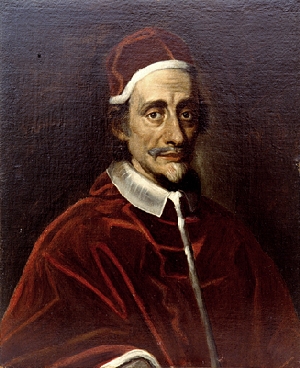
Blessed Innocent XI
So, you can see how this would play out. Try to canonize a French monarch, you upset the Germans. Try to canonize a German monarch, you upset the French. This also applied to the Roman Pontiffs themselves. Pope Innocent XI, for example, was beatified centuries after his death but his cause never progressed beyond that point and the reason for this is well known to those familiar with his case. At the time of his pontificate, the most powerful Catholic monarch was King Louis XIV of France and, as we have discussed before, the Popes tended to oppose whichever Catholic monarch was the strongest in their time and Pope Innocent XI was very much opposed to King Louis XIV of France. As such, when his cause for canonization came up, French clergymen blocked it from going forward and it was not until the 1950’s that he was beatified and his cause has not progressed since for, while there is no longer a French monarchy to oppose it, there are few who feel strongly about pressing it either. Doubtless there have been other, similar cases. Now, as I have also mentioned before, contrast this with the sudden flurry of papal canonizations. Since the Second Vatican Council, every deceased pope has either been canonized or is at some point along in the process of being canonized (John XXIII, Paul VI, John Paul I & John Paul II). A few have pointed out, particularly given how poorly the Catholic Church has fared in this era, that this looks like an effort to ‘canonize the council’.

The person who raised this issue also pointed out that out of 46 (or 47 depending on how you count them) Holy Roman (German) Emperors, only one, Emperor Heinrich II, is recognized as a saint. Once again, it would be foolish to think that the long history of rivalry and antagonism between the popes and the German emperors played no part in this being the case. All of the most famous German emperors could expect heavy opposition to any consideration of their piety. Even someone as widely admired as Emperor Otto the Great would likely be opposed given that he was quite strict about the Church in his lands being answerable to him. Emperor Frederick Barbarossa is possibly the most famous of the Medieval German monarchs yet, as far as the Catholic Church is concerned, he was a villain and, to be fair, from the standpoint of the Church, it is just as legitimate that they view him as such as it is for the Germans to view him as a hero for his victories. Even an emperor most Catholic monarchists admire perhaps more than any other, Emperor Charles V, would be an almost impossible case. It would be hard to imagine the Catholic Church canonizing a monarch who waged war against the Pope, regardless of the circumstances.

Empress Maria Theresa
There are also those monarchs who might have been more easily canonized in the past than today. Queen Isabella I of Castile, for example, has a small but fervent following who wish for her to be canonized, yet such a cause could expect to attract immense criticism upon the Church from Jewish, Muslim and Native American groups and advocates. Such criticism is basically groundless and shouldn’t have any impact but realistically it should be expected and not surprising that the Church would wish to avoid the whole subject and everything it would bring up from the establishment of the Spanish Inquisition to the voyage of Columbus. The Austrian Empress Maria Theresa, Queen of Hungary, would also, I think, be worth consideration for canonization, yet she too would attract a great deal of opposition due to her attitude toward the Jews and such a cause might also generate political opposition from Poland. Again, such cases would bring up issues that the Church would rather not deal with.

Of course, canonizations are much more common among the ranks of the clergy. Not only are they less susceptible to political objections but, even among the hierarchy where the temptations associated with power and prestige are more common, they are also the ones who determine whether a cause goes forward or not which makes things much easier of course. This is not to imply that the system is out or order of course, only that any system consists of human beings and human frailty applies to the clergy as well as the laity. It also cannot be denied that even among the clergy, political opposition can still cause complications. The cause of Saint Josemaria Escriva, for example, was the source of considerable controversy because of his association with the regime of Generalissimo Franco in Spain or the cause of Blessed Aloysius Stepinac who was imprisoned by the communists and martyred after World War II for complicity with the Axis regime of the Independent State of Croatia. This sparked immense opposition and it remains to be seen if his cause will progress further. The cause to canonize Pope Pius XII himself is also very well known for the political opposition it has aroused due to accusations that he was insufficiently zealous in opposing the Nazi and Fascist government all the way to accusations of sympathy and collaboration with them, all of which has aroused considerable debate and acrimony. To date he has reached the status of “venerable”.

King Baudouin of the Belgians
Unfortunately, the enemies of traditional authority are also not always the only source of opposition to royal saints. For example, I would think that the Belgian monarchs King Albert I and King Baudouin worthy of examination but of course the mainstream types will not push for causes for them, because they were monarchs and held traditional moral views, yet there are likewise intransigent types on the right who will neither take up their cause because of their opposition to a Belgian monarchy existing in the first place (though this is absurd given that Belgian independence came at the expense of a Protestant monarch and their previous, failed, bid for independence was against a Catholic, Habsburg monarch who far-right Catholics heartily despise). King Baudouin has been talked about more than others, particularly by the Pro-Life, anti-abortion community given his public stand on that issue. However, that would also then invite opposition from leftists everywhere and no doubt they would also take issue with his words of praise for King Leopold II at the granting of independence to the Congo. The (now retired) Cardinal Godfried Daneels, while praising King Baudouin, said some years ago that a cause for canonization was “not going to happen”.

There is also the fact that, sadly, for a great many people Catholic monarchies in particular are seen as a source of division rather than unity, nothing but an open door to trouble that is best avoided. In Spain, France and the former Italian states (basically an all Bourbon problem) there continues to be intense internal dynastic disputes which are unrelenting and which the Church, as with most others, would certainly wish to avoid getting in the middle of. The left is content to let the feuding monarchists focus on fighting each other and the right would prefer not to get caught in the crossfire and look for other, non-royal alternatives. Even if there was a worthy candidate, the Church would have to show considerable courage to canonize someone in such a position, given the intense opposition it would immediately attract from the opposing faction of the various Bourbon family branches.

Blessed Maria Cristina di Savoia
However, while all of this must seem grim to Catholic monarchists, and it is certainly far from ideal, if one is prepared to not be partisan on the subject, there is still room for hope. Royal canonizations are rare but they are certainly not unheard of, even today. The most prominent example, of course, is the beatification of Emperor Charles of Austria and a French bishop did, in 2009, open a cause for his wife Empress Zita of Bourbon-Parma which it would be hard to imagine anyone objecting to and, while extremely rare certainly, saintly royals who are husbands and wives are not without precedent. There are also currently a number of potential royal saints under consideration within the historic ranks of the Italian royal House of Savoy. Maria Cristina of Savoy, Queen of the Two-Sicilies, was beatified in 2014 (being a Savoy means taking neither side in the feuding branches of the Bourbon-Two Sicilies dispute), Princess Maria Clotilde of Savoy has a cause open, making her a “Servant of God” and Queen Elena of Italy (wife of King Victor Emmanuel III) is, last I heard, under consideration for a cause of her own. All of this is good to see, though I would caution that the Italian Royal Family has a history of royals being beatified but not going on to sainthood. Still, there are royal causes being pressed which I fully support and am grateful for.

Blessed Charles of Austria
Certainly, there are many others that I would think certainly at least worthy of consideration and some I think should have been canonized long ago. Speaking of the House of Savoy, almost every recent royal consort would be worthy of consideration, Maria Pia of Savoy, Queen of Portugal, King Charles Emmanuel IV and his Bourbon bride would both be worth looking into I think. On the subject of the Bourbons, I think it odd that King Louis XVI and his Habsburg bride Queen Marie Antoinette have not been canonized already. The Dauphin, Louis XVII, would seem to be a child martyr to me and his sister Marie-Therese would seem more than worthy of consideration I think. There are others of course but, much beyond that, in France or Spain or Italy, with the Bourbons you start running into the dynastic disputes that make them all untouchable without kicking off a firestorm of acrimony. King Baudouin of the Belgians is, I think, deserving and I have been told that there has at least been talk of a potential cause for Queen Astrid. There are also others among the ranks of the Habsburgs who I would think would be possibilities given that the current family leadership has, since the days of Archduke Otto, become ‘acceptable’ to the powers-that-be and considering that, thankfully, the followers of the Habsburgs have shown more loyalty and adaptability than those of the Bourbons so that it remains one of the few Catholic dynasties that is not at the center of any serious inheritance disputes.

Clearly, there are obstacles and plenty of difficulties but hope remains and there are plenty of causes worth pursuing. Certainly, nothing will happen if no one at least tries.

Wednesday, June 28, 2017

Christian Churches and Monarchy Today

Recently, some clerics of the Church of Sweden made headlines by writing an editorial in a Swedish newspaper that condemned the celebration of Sweden’s “National Day”, the official national holiday of the Kingdom of Sweden. They come from a very immigrant-heavy area of southern Sweden and their editorial was riddled with all the most popular left-wing buzzwords of our time, saying that, “Patriotism has its roots in the patriarchal thinking that celebrates traditional masculinity as strength, competition, inequality, and reduced men to soldiers, and women to mothers. It goes without saying that this does not create good conditions for a world without borders.” Clerics of the Church *of Sweden* said that the Church of Sweden has become too “synonymous with being Swedish”. Imagine that. Some historian might remind them that this was rather the point. They also said that for Swedish Christians (and presumably all Christians), “nationalism and patriotism must be swept away and replaced with internationalism and solidarity”. Thankfully, most Swedes expressed opposition to this article though I’m not sure what the view of the lesbian Bishop of Stockholm was, the woman who removed the crosses from a church in her diocese so that Muslim immigrants could use it as a mosque effectively.

The Church of Sweden is not alone, sadly, among the Protestant state churches which have forgotten why they were founded in the first place: to be *national* churches. The Archbishop of Canterbury, primate of the Church of England, has twice referred to Britain leaving the European Union and becoming independent again as “poison” and repeatedly urged the Prime Minister to appoint a cross-party commission to advise her on how best to, presumably, minimize the effects of this terrible poison which somehow never managed to kill Britain in all the centuries prior to January 1, 1973. One cannot but stand aghast at the sight of clerics of legally established, national churches which first came into being, at least in large part, by wanting to be free of an Italian pontiff in Rome, now condemning the idea of national independence or the very idea of nationality at all, at least in terms of their own people. All of these state Protestant churches were based, to varying degrees, on the idea that there should be no earthly power set above their national monarch. Now they are arguing the exact opposite.

Protestant churches have, at various times and in various places, been both opposed to monarchy and supportive of it, depending on the situation. Originally, the teachings of Martin Luther sparked widespread opposition to the idea of any traditional authority at all, secular or spiritual, which was manifested in the “Peasant’s Revolt” in Germany. Luther himself, who was sheltered by a German prince, quickly tried to make amends by calling on the princes to slaughter the disloyal peasants and the Protestant cause soon came to be wedded to the monarchies of the various nations which embraced it. In England, for example, Protestantism came into power in a rather round-about way. It started very much with loyalty to the Crown being paramount above all else and this meant what was largely a continuation of Catholicism but with the King (Henry VIII) rather than the Pope at the head of it. It was only later, during the regency of the unfortunate King Edward VI, that the Church of England actually became Protestant. From the time of Queen Elizabeth I onward, Protestant Christianity and the monarchy seemed to be inseparable. The same could be said for countries such as Denmark or Sweden.

The Netherlands is also an interesting case. Originally, the cause for independence from Spain had little to do with religion at all. The Princes of Orange did not start out as Protestants and, indeed, even after the Dutch War for Independence was well underway, there were Princes of Orange who were still Catholic. However, the Dutch took up the Protestant cause, some doubtless from conviction, others because they wanted to attract the support of the Protestants in Germany and England to support them in their fight against Catholic Spain. Something similar also happened in France, though this is not always remembered today. The French Protestants, the Huguenots, were very anti-monarchy in the time of King Charles IX and have been credited by some with the idea of “popular sovereignty” (though, personally, I would say, “blame” rather than “credit” would be appropriate phrasing). This did change somewhat with the Edict of Nantes but, to a large degree, Protestants who had not left France became reconciled to the monarchy but they were always rather suspect and thus it came as no great surprise when King Louis XIV revoked the Edict of Nantes and insisted that France would have one faith and that faith would be Catholic (though, it is worth pointing out that the leader of the Catholic Church, the Pope, opposed both Louis XIV and the revocation of religious tolerance for the Protestants).

This was, of course, in a country that was largely Catholic and in Protestant countries, the bonds between the Crown and the national church generally went on proudly together. The break between the established Protestant churches and the cause of monarchy came relatively quite recently. In some ways, these churches remained at least nominally monarchist even longer than they remained at least nominally Christian. There were even a number of news stories this year that, after a long period of precipitous decline, attendance at the Church of England was growing along with the revived sense of national pride and patriotism that grew up around the “Brexit” referendum. However, given the reaction of the Anglican hierarchy to the outcome of that vote, I would not be too hopeful about this continuing. These established Protestant churches remain, today, officially supportive of the monarchy in its current, purely ceremonial form, but they are increasingly abandoning any pretense of actual Christianity and embracing, even championing ideas which run directly in opposition to the very fundamental idea of monarchy. Of course, the monarchies themselves have been poked, prodded and cajoled into going along with this trend which works directly against the long-term survival of the monarchical institution.

I know many disagree with me on this, but I will go back to one of my pet-peeves which is the recent trend, now embracing almost every monarchy in Europe, for ending male primogeniture. This necessarily rejects the Christian notion of family, that it is the wife who becomes part of the family of her husband rather than the reverse. As such, not only do we now have royals marrying commoners as the rule rather than the exception but you also have, by traditional Christian standards, royal dynasties giving way to common ones. The Swedish Royal Family will likely not change its name but, by the old standards, will be the Westling dynasty rather than the Bernadotte dynasty after the passing of the current King. Britain, Norway and Denmark are not quite in the same position as they have had male heirs born first in any event, Queen Elizabeth II is old enough to have still married an actual royal and Queen Margrethe II, while not marrying royalty, did not quite go full ‘common’ as her husband is, as I recall, from very minor French nobility or some sort of aristocratic background.

Why do I bring this up? Because it undermines the idea that royals are set apart, that their bloodline matters and it seems to go hand in hand with the other changes in society, the borderless, internationalist world the Swedish pastors are so fond of in that Europeans seemed to have stopped caring about the bloodline of their royals at the same time they stopped caring about their own. It all feeds into the narrative of the egalitarians that we are all the same, we are all interchangeable, “everyone is special” which means that no one actually is. It is simply an unavoidable fact that monarchies are being dragged along with this revolutionary, egalitarian mindset. To say that male primogeniture is “unfair” is true, in the terms of the egalitarians, but it is no less “unfair” than saying the firstborn is heir rather than the second or third. By these standards, *monarchy* is unfair and they will always see it as such. Likewise, it would be absurd to argue that a monarch must be a descendant of a certain bloodline, a lineage with historic roots in the country, but that the people of said country could be anyone from anywhere. This is obviously not conducive to monarchy nor is it in line with Biblical Christianity which Protestants once prided themselves on. Even a cursory reading of the Bible will show immediately just how important genealogy, bloodlines and national history was to the Christian religion.

Now, of course, the Catholics have to get theirs too. The Catholic record in regard to monarchy is not terribly different than the Protestant one, albeit for very different reasons. Going back to the very beginning of the Catholic/Orthodox Church, loyalty to the Roman emperors prevailed even when those emperors were pagans who persecuted Christians. A pagan emperor could be disobeyed if he commanded something contrary to the faith, but he was not to be rebelled against, not to be overthrown, he was to be converted and this eventually happened. Things began to change, however, with the fall of the Western Roman Empire which created a power-vacuum filled by the Pope and, at which time, the Pope also became a temporal ruler which meant that the papacy and the monarchy became rivals. This did not happen in the East Roman Empire since it both survived for much longer and the clerics remained subjects of the Emperor and had only their own spiritual fortitude to fall back on to keep the faith, there was no equivalent of the Papal States in Eastern Christianity. Catholic Christianity, on the other hand, developed the “two swords” approach with the Pope having the spiritual sword and the Emperor having the temporal sword but with the Pope also saying that his sword was bigger than the Emperor’s sword and that, naturally, led to a great deal of trouble.

As the popes became real or potential rivals for power with the emperor and lesser monarchs, the papal attitude toward monarchy tended to shift depending on the situation. An important distinction was that the popes tended not to be anti-monarchy, simply anti-whoever was the strongest monarch. So, the Pope would ally himself with the republican city states of northern Italy because they were not a threat to him while the Emperor in Germany was powerful enough to be so. Later, the popes, as we have discussed previously, tended to alternate between the Germans and French depending on who was the least threat to them. So, for example, when the German Emperor became the most powerful Catholic monarch, the Pope would support the King of France against him and, alternately, when the King of France became the most powerful Catholic monarch, the Pope would throw his support behind the Emperor in Germany. This was generally a successful strategy in maintaining papal control over central Italy but it also meant that any time a Catholic monarch emerged who was strong enough to unite Christendom, the Pope would be working to undermine him, even, ultimately, if that placed him on the same side as the Protestants such as during the time of papal opposition to King Louis XIV of France and by extension his Stuart cousins in Britain.

Papal support for the cause of monarchy was attractive to monarchs but, needless to say, the papal claim to total supremacy over them in exchange was not. King Charles I in Great Britain, for example, was a High Anglican married to a devout Catholic and an ardent defender of absolute monarchy and the “Divine Right of Kings”. He seemed very inclined to take the plunge and convert to Catholicism but could not and would not accept the idea that the Pope had the power to take his crown from him. He likely could have, and in his conscience perhaps did, accept that the Pope had supreme authority in spiritual matters but could not countenance the notion that his crown would be owed to the Pope rather than to God directly. Ultimately, over the centuries, monarchs thus began to slowly concern themselves less and less with the political wishes of the popes, which was often unfortunate as the popes quite often called for good things, like everyone uniting to retake Constantinople, which they never did. By the time of the French Revolution, the papacy had lost most political influence however that unhappy event did, albeit briefly, bring about a change in the papal attitude best illustrated by the admirably reactionary Pope Gregory XVI. Good Pope Gregory opposed any innovation of any kind and opposed all rebellion against traditional authority regardless of the circumstances. This meant that he not only locked up secular Italian revolutionaries in Rome but he also condemned Irish Catholics rebelling against a Protestant British king and Polish Catholics rebelling against the Russian Orthodox Czar. Gregory XVI was nothing if not consistent.

However, that era ended with him after which the world got its first, short-lived, taste of a liberal pope. When Blessed Pius IX came on the scene he reversed all of his predecessor’s policies. He not only let the revolutionaries out of prison but appointed them to high office under a new constitution that brought laymen into the government of the Papal States. He championed the cause of Italian nationalism and urged the Emperor of Austria to withdraw his armies from Italian soil so that all his children might live happily in their own national territory. Then he was ousted by a republican mob and instantly reversed himself in every regard, allying himself with a Bonaparte President-turned-Emperor to maintain his rule over Rome. Ultimately, history proved that Pius IX had attached himself to a falling star and with the downfall of Napoleon III, Papal rule over Rome ended too and Rome was once again the capital city of a united Italian peninsula. However, it would take some time before the papacy would count as lost what had been lost and this would lead to some unusual situations such as Pope Leo XIII making peace with Protestant Prussia and allowing French Catholics to participate in republican politics while still refusing to deal with the Catholic King of Italy or allowing Italian Catholics to participate in politics in the Kingdom of Italy.

The Church also diminished its own influence by taking sides in Catholic dynastic disputes and, unfortunately, tending to take the side that ultimately lost meaning that things were rather awkward in dealing with the winners. Inexplicably, the otherwise admirable Pope Pius XI also undercut the Catholic royalist cause in France just at the time when it seemed capable of success. The reasons for this are still debated today, some saying it was because the unofficial leader of the movement was not a believing Catholic, others that it was because the movement favored the Orleans branch of the French Royal Family while the Church remained committed to the senior branch, while more recently others have argued that it was because of righteous papal indignation at the anti-Semitism that prevailed in French royalist circles. Whatever the cause, it happened and even when it was later undone, history had moved on. Oddly enough, the last time the Catholic Church really took up the monarchist cause on a level beyond praising individual (and usually deceased) monarchs was prior to the Italian referendum of 1946 in which, rather belatedly to say the least, the Church awoke to the fact that it faced a choice between a Catholic monarchy and a secular republic and so, as strongly as possible while still maintaining a modicum of detachment, urged Italians to support the House of Savoy. Unfortunately, we all know how that turned out.

Nonetheless, in theory or in terms of general concepts, the Catholic Church remained pro-monarchy throughout all but its recent history. It would be wrong to heap all blame for changing on the Second Vatican Council (aka ‘when the hippies took over’) as the creep had started before that but it does represent the most visible break with the traditional teachings of the Church of Rome of the past. Democracy, freedom of conscience, separation of church and state etc, all once condemned by the Church suddenly became embraced as good things. Attitudes which were once lauded as being devout and pious have recently been criticized as being rigid and dogmatic. Holding fast to sacred traditions was previously considered a divine commandment only to now be regarded as Pharisaical and putting ‘form’ ahead of ‘substance’. What was once considered being reverent is now considered exclusionary and un-Christian. It should come as no surprise that even while the current Roman Pontiff has received glowing praise from the secular elites, mass attendance and religious vocations have continued to decline rapidly. A lukewarm faith doesn’t seem to be winning many converts, indeed those in the most heavily Catholic part of the world, Latin America, are either moving to the very Protestant United States (with the encouragement of the Church) or are converting to Evangelical Protestantism in their own countries brought by American missionaries.

The one group of the “big three” to stand out in regards to monarchy is the Eastern Orthodox Church(es). As previously stated, they started out in the same boat as the Catholics but kept their Emperor after the West lost theirs and had only the Pope. Today, it is quite popular for Christians in the west to speak rather condescendingly of “Caesaropapism” in the east, implying that Christian leaders in the east put their loyalty to the Emperor above and before their loyalty to God. This is rather unfair. The Emperor was certainly more important in the East than in the West after the fall of the Western Roman Empire as the West, firstly, had no emperor and, secondly, when they did it was one created by the Pope. Eastern clerics could and did oppose the monarchical power when they judged it to be in the wrong but, as stated previously, like the first popes but unlike most later Bishops of Rome, they had no independent state of their own to protect them from possible imperial domination. They had only the strength of their faith to rely on to prevent them from becoming no more than imperial chaplains. Anyone can look at how tradition and orthodoxy have been maintained in the east to judge whether or not their faith was more reliable than the armies and political maneuverings of their western counterpart. As with each, there were wins and losses.

Much has also often been made of the national character of Eastern Orthodoxy after the fall of the Byzantine Empire, the lack of unity and nationalist attitude of the various churches often being compared, unfavorably, to those united with Rome. Again, however, this can be rather unfair and, upon reflection, I think may be exaggerated by those eager to have something over the Orthodox. After all, for much of the history of Eastern Christianity, most of these national churches were under the rule of Muslim conquerors and surely that would have contributed to nationalistic attitudes more than the administrative divisions of their Church. The divisions of Eastern Christianity may have also actually been beneficial in at least one way. Since their entire outlook on how the Church was supposed to work required a unity that did not exist, it meant that no one had the power to change things or mess things up as, I think it would be hard to argue, did happen in the West. Furthermore, while Orthodox Christians have often opposed each other, the same could be said for Catholics and Protestants as well. For that matter, one could simply point to the very existence of Protestantism in the West, which the papal office did not prevent (and, indeed, at times exacerbated) whereas no similar division of such magnitude ever happened in the east where Church and Crown were more firmly on the same side.

One could also argue that the Eastern Christians, because of history, were forged in a more intense fire than the Western Christians. The West certainly had plenty of problems but most had nothing like the centuries of living under Islamic rule that the Greeks, Armenians, Bulgarians, Serbians and others had. They did not have to live under the rule of Mongol conquerors like the Russians had and, indeed, for many Eastern Christians, it was hardly the blink of an eye in historical terms from the time they had been persecuted by Muslim rulers to the time that they were persecuted by atheistic Marxist rulers. It does seem to be the case that religious beliefs are never more strongly reinforced than when they are subject to persecution. The British tried to pound the Catholicism out of the Irish for centuries without success only for Ireland to practically abandon it on their own within mere decades of becoming independent of Great Britain. If it is true that, ‘that which does not kill you, only makes you stronger’ then the Eastern Christians have every reason to be quite robust indeed. While Catholics rulers fought each other over where the border would be between France and Germany, whose family would rule which country or how much of Italy they could control, Orthodox Christians were fighting for their very survival, both as Christians and as distinct people.

It cannot escape notice, however, that while Christian monarchs still reign in the west, none do so in the east. However, that is not very significant when one considers how this came about. Catholic France was already on her third republic by the time the monarchy fell in Russia and the Orthodox monarchies in Romania, Bulgaria and Yugoslavia were not overthrown by their own people but conquered and demolished by the invading Soviets. It also says something about the strength of monarchist sentiment in the east that the idea of a limited, ceremonial monarchy always remained rather alien to them. The Czar of Russia remained an absolute monarch practically until he was overthrown and the Romanian, Bulgarian and Yugoslav monarchs all were effectively absolute monarchs as late as just prior to World War II with the “King’s Government” of Boris III in Bulgaria in 1935, the “January 6 Regime” of Alexander I in Yugoslavia in 1929 and the “National Renaissance Front” of Carol II in Romania in 1938. Even the “August 4 Regime” in Greece under George II of 1936 was somewhat similar. The point is that, monarchy in these Orthodox countries not only survived but was quite robust up to the very end.

Whereas today Christian leaders in the west, whether Catholic or Protestant, tend to stick to the usual liberal platitudes and practically never praise monarchy as an institution, indeed as the *only* political institution endorsed by Christianity itself, such Christian leaders can be found in the east. There are not enough of them to be sure and, in some ways, the Ecumenical Patriarch was Pope Frank before Pope Frank was cool, but high ranking Orthodox clerics from Serbia to Georgia have openly called for the restoration of monarchy and spoken of monarchy as the proper form of government for Christian civilization. It would, needless to say, be most significant if such efforts were coming from Russia, the largest and most powerful Orthodox country, but they have been so far hesitant to be so bold, though they did finally join their overseas brethren in recognizing the piety of the last Czar and his family but this is hardly equivalent to calling for a restoration. Pope St John Paul II beatified the last Emperor of Austria but he certainly did not openly call for a restoration of the Habsburgs. Unfortunately.

What has been done is significant though and I think worthy of praise. It would be great if Protestant and Catholic leaders would follow the example of the Orthodox in this regard because the Orthodox leaders who speak out in favor of traditional authority are, as such, the only ones offering a viable and proven alternative to the liberal malaise of modern times. Western Christian leaders are, sadly, not doing this and, indeed, are moving ever further from genuine Christianity in favor of a “social justice gospel”. It is, for this reason, not surprising that while right-wing dissidents in the east rally around the Church, similar dissidents in the west have begun rallying around a sort of neo-paganism. That would be unfortunate enough from a Christian point of view and yet, worse than that, it seems to invariably be a neo-paganism of the Celtic or Germanic variety which has little to offer. As I recently pointed out, if you are of European descent, unless your lineage is Greek or Italian, your pagan ancestors were not much to write home about. They became some of the most advanced and outstanding civilizations the world had ever seen in the Christian era, but as far as non-Christians go, the Egyptians who built the pyramids, the Jews who built the Temple of Solomon or the Babylonians who built the hanging gardens could rightly ask the worshippers of Odin and Thor just what they had ever done that was so impressive.

Yet, Christian leaders can hardly be very critical of people inventing their own religion given what they have been doing for the last few decades, becoming increasingly worse all the time. They offer no clear vision, no sense of identity and increasingly not even any hope for survival. If church leaders are telling people that they must give up their homes, give up their countries, give up a future for their children in order that others, more worthy than they, can have these things, they should not be surprised when people turn away and start looking for a belief system that, to put it bluntly, cares about them and will allow them to live. This is not authentic Christianity. Authentic Christianity says to remember your lineage and your national story, it says not to be “unequally yoked”, it says to remember the rock out of which you were carved and the hole you were dug out of, it says to take care of your own kind before taking care of others, its says we are not all the same, not interchangeable and it says the majority will usually do what is wrong rather than what is right. Authentic Christianity says it is evil for everyone to do what is right in their own eyes and it says to “fear God and honor the emperor”. Christianity is a fundamentally monarchical religion and it cannot be reconciled with liberalism. Many have tried for a very long time and the only result has been that liberalism dominates while so-called Christianity surrenders. Emperor Theodosius of Rome, Vladimir the Great of the Kievan-Russ, Harald Bluetooth of the Danes or Clovis of the Franks would not recognize what passes for Christianity today and, I dare say, would want no part of it for themselves or their peoples.
Altar and Crown, both must be restored.

Saturday, September 10, 2016

Christ and the Emperor Tiberius

Although largely ignored or forgotten today, there was existed in Christianity a strong tradition of reverence for the imperial throne and a deeply held belief that the Roman emperor was, while not divine himself (as many were held to be by the pagans) but certainly part of God’s divine plan for the world and the Christian religion. This can be seen in the retention of certain Roman imperial traditions by the Germans, the emphasis placed on the baptism of Emperor Constantine, the reverence for his mother St Helena of the Cross and popular myths such as that Pope St Gregory the Great resurrected the pagan Emperor Trajan in order to baptize him into the Christian faith. It can be seen, as was discussed here this past August, in the stories surrounding the prophecies of the Roman sybils concerning the birth of Christ and Emperor Augustus, going all the way back to the very beginning of Christianity, or even slightly before in that regard. Again, today, none of this is talked about and doubtless very, very few Christians are even aware of these traditions or would consider them significant if informed about them. However, I find them fascinating and, in all honesty, an integral part of what I would consider the ideal for western civilization. So, I will talk about them and today the focus will be on the often notorious Roman Emperor Tiberius Caesar.

History has not been terribly kind to Emperor Tiberius. He is generally regarded as a cold, cruel man at best, a “bloody tyrant” at worst and one who ended his life in a self-indulgent pool of unspeakable depravity. As usual, I will be a contrarian on this point as I have always had a much more positive opinion of Emperor Tiberius than most people, thanks in no small part to the late papal Latinist Father Reginald Foster who, while admitting that Tiberius got “a little nasty” toward the end, repeatedly asserted that, “he was not a bloody tyrant, he was a hard man” who had plenty of good points. Christians, in centuries past anyway, would likely have agreed. I first discovered this long lost tradition when writing up a long article on the “Popes and Caesars” and that tradition was that Emperor Tiberius was considered to be something of a crypto-Christian by what we might today call the pop-culture of early Christendom. For people who are familiar only with the version of Tiberius seen in movies and on television, this would certainly come as a shock and yet, for a very long time there was a widely held belief that the second Emperor of Rome was almost a Christian in his conscience.

The story, handed down from historians such as Eusebius Pamphilius and Tertullian is that the Roman governor Pontius Pilate sent reports to the Emperor about the activities of Jesus Christ and His disciples. Tiberius was, of course, the emperor when Christ conducted His ministry, was crucified, died and resurrected and it was Tiberius whom Christ referred to when He said, “render unto Caesar” and so on. According to these Christian historians, when Emperor Tiberius learned about Jesus, his heart was rather moved by the accounts and he raised the issue of deifying Christ and including him among the Roman pantheon. This, however, was refused by the Roman Senate which held that it was only by their vote that someone could become a god and this worked perfectly well with the Christians who, of course, held that the divinity of Christ was not dependent on a vote by Roman politicians. That having failed, Emperor Tiberius still insisted that the Christians not be persecuted, nor even “accused” and, these historians assert, it was this decision which enabled Christianity to grow and spread in its early, formative years when it could have most easily been suppressed.

We can see then, an assertion by these early Roman, Christian historians that a divine plan was at work, involving the Roman Emperor, by which God touched the heart of Caesar in order that Christianity could flourish and eventually convert the Roman Empire and, by that body, the whole of western civilization, to the true Faith. Later, secular, historians, of course, have a very different view. While most agree that Pontius Pilate did report on the life of Christ to Emperor Tiberius, as such would have been perfectly normal procedure, they do not agree that there is any significant evidence that Tiberius Caesar was at all sympathetic to the Christians or tried to champion their cause. The lack of initial persecution of Christians is explained away, by these secular historians with the, admittedly reasonable, assertion that in those early days the Christian religion was simply too inconsequential for the Roman authorities to bother with, a sort of passing religious trend that would come and go as others had before. Again, such a view is not unreasonable but, personally, I prefer the Christian version of events. Taken on its own, this story can certainly be discounted but, as mentioned in the previous article about the sybils, when seen in the wider context, I think it becomes much more difficult to dismiss as entirely fanciful. One could just as easily see evidence of a divine plan at work.

Eusebius Pamphilius summarized it this way:
“Tiberius, therefore, under whom the name of Christ made its entry into the world, when this doctrine was reported to him from Palestine, where it first began, communicated with the Senate, making it clear to them that he was pleased with the doctrine. But the Senate, since it had not itself proved the matter, rejected it. But Tiberius continued to hold his own opinion, and threatened death to the accusers of the Christians. Heavenly providence had wisely instilled this into his mind in order that the doctrine of the Gospel, unhindered at its beginning, might spread in all directions throughout the world.”

Today, as mentioned, all of this is discounted, however, even if one does, it still makes a very powerful point about what Christians considered important in the days of and immediately following the original, Christian, Roman Empire. Whether true or not, this story illustrates the centrality of the imperial monarchy in Christian thinking. Romans, after all, remained Romans even after becoming Christian and their loyalty to the empire and to Caesar did not change, nor could it have been expected to since both Christ Himself and His apostles commanded obedience to the imperial authorities. The story of the Tiburtine Sybil foretelling the birth of Christ to Emperor Augustus, the story of Emperor Tiberius being sympathetic to Christianity, the story of Emperor Marcus Aurelius and the “Thundering Legion”, the story of Emperor Commodus and his Christian mistress, the story of Emperor Constantine’s vision before the Battle of the Milvian Bridge, dismiss them all as a pack of fables if you like but the very fact that they were once so widely told makes a very profound point about the priorities and the ideals of the original Christians.

This is part of an entire tradition that Christians today are totally ignorant of and I think that is a shame. Christians today have forgotten that the earliest church councils were called by the Emperor rather than a churchman, that the imperial coronation was often referred to as “the eighth sacrament” or that the custom of anointing monarchs with holy oil at their coronation is a custom that goes back to the Eastern Roman Empire, drawing upon even more ancient traditions dating all the way back to the anointing of King Saul by the Prophet Samuel. The climax of the ceremony was the Roman Emperor taking communion and all the assembled senators and clergymen bowing prostrate before him. The imperial monarchy was thus so central to Christianity that, putting historical accuracy aside, it would have been perfectly natural for Christians to interpret events in terms of a divine plan involving the Roman emperors, the monarchs of western civilization, all the way back to the very origins of the faith and to interweave the history of the Roman emperors with the overall unfolding conversion of the west from paganism to Christianity, incorporating the figures of the pagan past into the Christian present and future rather than trying to forget everything that had come before.

In practical terms, this can also allow one to better understand why there was such an emphasis placed on the sacred nature of the imperial monarchy in the east, all the way up to the end of the Russian Empire in 1917 as well as helping to explain the often contentious relationship between the popes and the German emperors in the west. The more important something is, the more likely that it will be fought over. This was a tradition so central in fact that it survived the fall of the Western Roman Empire, was imitated by the First German Empire and by other monarchies that grew up in western Europe such as in England (where more of these traditions survive than anywhere else) and in France where the tragic King Louis XVI, heir to his own sacred royal traditions, called for, “one King, one law, one faith”, he was hearkening back, wittingly or not, to that original, united and finally Christian imperial realm with a Roman Caesar at its head. So, in the end, whether Emperor Tiberius was truly sympathetic to the cause of Christ or whether modern-day Christians would even wish to claim him (I would, but I recognize the vast majority would be horrified by the very idea), is not finally the point. The point is that such stories are either true and thus illustrate the divine guidance of the imperial monarchy from the beginning, or they are not true and thus illustrate how important the imperial monarchy was to early Christians who wished them to be so. Either way, we are inevitably drawn back to the fact, the idea and the ideal of The Empire.
Related Posts Plugin for WordPress, Blogger...