Showing posts with label review. Show all posts

Tuesday, May 3, 2016

Royalist Reflections on “Code Geass: Lelouch of the Rebellion”

Warning: (because I know from past Facebook posts how much some people hate this stuff) This article deals with an *anime* and was written as a way of returning a favor. If you do not like this sort of thing, if you detest anime no matter what it is about or what genre it falls into, turn back now, don’t whine about it later.

“Code Geass: Lelouch of the Rebellion” is a tragic-science fantasy-mech anime that debuted in Japan in 2006. As the name makes clear, it follows the story of Lelouch vi Britannia, a discarded prince living under an assumed identity in Japan, later known as “Area 11” after it is conquered by the overwhelming might of the Holy Britannian Empire and his rebellion against said empire and his father the Emperor. As to the show in general, I do not recall what prompted me to watch it originally but I am glad I did. I found it very entertaining, very engaging and just overall very well done. Based on how often it comes up so many years later, it seems to have made quite an impression and I think I am probably among the majority in giving it a ‘thumbs up’. The story was very clever and though there are some things I could nitpick, it would be just that; nitpicking.

Probably the one thing that stands out the most for me was how every episode kept you coming back for more, building upon what came before it to make you eager to know what happens next. And, it was not like some shows that have many cliffhangers followed by no satisfying pay-off. No, in “Code Geass” things actually happen. So, overall, I approve. You liked the characters you were supposed to like, hated the characters you were supposed to hate and most major characters were quite complex so that eventually you see that our “hero” Lelouch has his dark side and many of the villains are not without their good points either. Even if you still believe them to be very much the “bad guys”, you can at least understand how they see themselves as something totally different. Except for Suzaku. Everybody hates Suzaku. And everybody should. Anyway, down to the business of politics.

In the alternative version of history in which this story is set, the world is dominated by three major powers. One, about which the least is said, is the European Union or at least some sort of alternate version of it which, we are led to believe, operates along democratic republican lines. The second-largest power is the Chinese Federation which is a nominal monarchy though, we are led to believe, is still rather communist or socialist in economic terms. Finally the most powerful of the three is the aforementioned Holy Britannian Empire which is a capitalistic, aristocratic, militaristic absolute monarchy. From a famous speech given by the ruler of this empire fairly early in the series, Emperor Charles zi Britannia, this super-state seems to be based on royal absolutism and social-Darwinian capitalism. I have joked before that Emperor Charles could seem like the bastard child of King Louis XIV and Ayn Rand. At one point in the series we briefly hear a schoolteacher talking about the battle in which the last British monarch was defeated and from maps we see that Great Britain itself is part of the European Union while the Holy Britannian Empire is based on North America and North America is referred to by Britannians in Area 11 (Japan) as “the homeland”. So, it seems as though the Holy Britannian Empire, the “bad guys” is probably intended to represent the United States of America.

What I took from the show (and there is not much detail about this sort of background material as it is not really pertinent to the story) was that the American War for Independence either never happened or was won by the British and the British were later driven from the British Isles and so North America became the capital of the British Empire which eventually became the more grandiose ‘Holy Britannian Empire’. It seems to combine the false but stereotypical view of Britain and America by combining an entrenched aristocracy with cut-throat capitalism. Neither of these is reality of course, in Britain these days the hereditary peerage has no power and seems to be tolerated only because people cannot be bothered to do away with it. America, likewise, while widely viewed as the epitome of free market capitalism, particularly by those who view it as heartless and exploitative, has of course never been purely capitalist and has become increasingly less so ever since probably the Gilded Age, with big anti-capitalist shoves coming from Woodrow Wilson, Franklin D. Roosevelt, Lyndon B. Johnson and lately Barrack Obama (and the Bush bailouts so as not to let the Republicans off without a mention).

The defenders of the Holy Britannian Empire are certainly the “bad guys” in this show but I have something of a history of being sympathetic toward if not outright siding with the “bad guys” in any number of movies and television shows. Of course, as the villains, the Britannians do plenty of horribly cruel things throughout the series, to say nothing of what the ultimate secret plan of the Emperor is, which actually turns out to have nothing to do with politics or global domination really. They treat subject peoples horribly (our story is set in Japan but we are to assume that what we see is standard procedure in other conquered territories), rob them of their rights, stamp out their national identity, segregate them and sometimes massacre them. However, there is also another aspect which many people may find surprising which is that the Britannians are also very meritocratic. Suzaku, “an 11” (as Japanese people are called) is able to rise to the highest rank in the empire simply by his own ability. We see other characters who seem to be of different races (it can sometimes be hard to tell in an anime) who have risen to important positions by their own talents and are treated as is appropriate for whatever rank or station they hold. Likewise, some of the aristocrats we see are corrupt buffoons while all those holding positions of real importance show that they have talent to justify their being there.

Prince Clovis finds peasants such a bother
All of this is in keeping with the values of the empire as presented in the speech given by Emperor Charles at a funeral. He speaks of the basis of the empire in very Darwinian terms, that in Britannia people compete and the cream rises to the top, that on the world stage they conquer, plunder and dominate because they are stronger and they are stronger because they are continuously evolving by this competition which weeds out the weak and dull and advances the strong and clever. “Inequality is not wrong,” the Emperor booms out to the audience, “Equality is!” At which point, he goes on to pour scorn on the other major powers, referring to the democratic EU (which of course the actual EU is certainly NOT) as a place that grants power on the basis of a popularity contest and the Chinese Federation which believes in wealth redistribution to promote equality as a system that has created a population of “lazy dullards”. All of which stands in stark contrast to the Holy Britannian Empire where the successful rule and the unsuccessful are ruled by them. The members of the Imperial Family are all deferred to and aristocrats treat common people contemptuously but even if you are a commoner you can earn advancement into the ranks of the aristocracy and even a foreigner of a conquered people can, with enough achievement, reach lofty positions. It is survival of the fittest.

As the villains of the series, though Lelouch himself is a Britannian prince, the Holy Britannian Empire does receive the most attention but I was also intrigued by what was told about the next largest rival of the empire on the world stage which was the Chinese Federation. Rather like how Britannia combines high-tech weapons and modern economics with barons, knights and sword play, the Chinese Federation seems to combine aspects of ancient as well as modern China. The nominal ruler is the childlike Empress (Tianzi) Jiang Lihua however, hearkening back to the days of the Han and Tang dynasties, it is the top court eunuchs that actually rule the federation. The empress herself is a mere figurehead who the eunuchs, we ultimately see, have no real reverence or even regard for at all, viewing her as ultimately dispensable. This is in stark contrast to Britannia where the Emperor is very much an absolute monarch and it is he who rules, usually through the persons of his many children.

The Chinese Empress
No back story is given for the Chinese Federation but it seemed to me to be a sort of representation of what could happen if the communist party remained in power for a sufficient period of time that traditional China would start to absorb the current People’s Republic of China. Stranger things have happened (see North Korea). After all, we have an imperial monarchy, we have court eunuchs, we have a sort of stylized version of traditional Chinese costumes and yet we also have a socialist economic system. I thought it also telling that the heart and center of power for the Chinese Federation was referred to as the “Vermillion Forbidden City” which is only a few shades different from the actual Purple Forbidden City but with more of a reddish tint to its name. What I imagined was that in this timeline, something like the current People’s Republic of China existed but lasted for so long that eventually the leadership came full circle and began to revert back to traditional Chinese ways, the dictator-president becoming the emperor and the party apparatchiks becoming the eunuchs. Red (or vermillion) is the new Imperial Yellow. This was, for me, a fascinating subject to ponder given how the communist revolutions that succeeded in East Asia tended to dance along the border, rather uncomfortably, with their imperial predecessors.

All of this is not far-fetched when one considers that Chairman Mao’s fourth wife, Jiang Qing, once had several imperial gowns made for herself in preparation for a visit by Imelda Marcos, First Lady of The Philippines, though she ultimately decided not to wear them as Mao disapproved. In North Korea we have seen the establishment of a Marxist political dynasty, complete with mystical folklore and even in Vietnam there was once talk of the current regime as a sort of new “Ho dynasty” (there was an actual one though it produced only two emperors) and at times have been efforts to portray successive presidents (who are not always the real rulers of the country) as some sort of reincarnation of Ho Chi Minh who has been raised to mythic, near god-like status. In the show, it is also interesting to note that the egalitarian, socialist policies of the Chinese Federation are implied to be praiseworthy but also shown to be quite ineffective with the federation being a generally impoverished country. We also see the monarchy being portrayed in a rather positive way with the little empress being a good, just and kind-hearted girl but who is being held prisoner by her corrupt and traitorous attendants. Similarly, while Emperor Charles of Britannia is certainly the main villain of the piece, we see that not everyone in the Imperial Family is so cruel, though there are those who are, if anything, even more devious.

I shall not spoil the ending for anyone who has not seen the series and may wish to but suffice it to say that, while the show certainly (and not surprisingly given modern sensibilities) promotes egalitarianism, it does not directly attack monarchy itself. We see a malevolent emperor, a benevolent empress, an emperor who pretends to be bad to accomplish a greater good and are left with another, presumably, benevolent empress. We see princes and princesses that are bad and good and some that seem to be the one but turn out to be the other in due time. There are also plenty of contradictions as almost every main character, be it Lelouch, Emperor Charles or Suzaku hold to the belief that the ends justify the means and so each do things which they claim to deplore in order to accomplish their ultimate aim which, each believes, will change things for the better. As for what became of the Japanese monarchy in this alternate timeline, I cannot say as it is never mentioned in the series and that is not uncommon in such Japanese works where, in my experience, the Emperor and Imperial Family tend to be a taboo subject. We do hear of Japan having a prime minister so, we can, perhaps, presume that the Imperial Family remains and somehow survives, hidden away somewhere, all of the earth-shattering events of this series.

In the end, from a monarchist perspective, I found nothing too objectionable about it. The setting and nature of the series tends to make me more tolerant since it is all so ‘make believe’ and detached from the real world. As stated at the outset, I found it an engrossing and entertaining show, intelligent, with plenty to “chew on” (as I like to describe such things), giving viewers much to ponder, discuss and debate whether one agrees or disagrees with any particular aspect or premise. If you are open to this sort of thing and not put off by all things anime (there is fan service, giant robots and at least one ‘magical girl’ so this is as ‘anime’ as it gets) then I would recommend watching it if you can. Whether you come away liking or disliking it, I think it will at least prove stimulating. If you are as twisted as I am you might even find yourself thinking that the Holy Britannian Empire doesn’t sound so bad in some ways but then, that should probably be cause for concern. Some characters will impress you, some will frustrate you, some will make you laugh (*cough* Lloyd *cough*), and some will make you sympathetic. And, if in spite of all their horrible deeds, you hear Emperor Charles’ speech and jump up shouting with the crowd, “ALL HAIL BRITANNIA!” then you just might be a … Mad Monarchist.

Monday, December 31, 2012

2012 - The Year in Review


How has the cause of monarchy fared around the world in 2012. As is often the case, it has been something of a mixed bag. In Sweden, HM King Carl XVI Gustaf came under fire for some bad behavior and unsavory company that caused quite a lot of embarrassment. However, it was shuffled off the front-page by happier news with the birth of a future queen when Crown Prince Victoria and Prince Daniel welcomed their daughter Princess Estelle into the world in February. Later, in October, Princess Madeleine of Sweden announced her engagement to live-in boyfriend Chris O’Neill of New York. Across the border in Norway, the Royal Family went about their duty with no fuss or major problems. A poll taken found the King of Norway with an approval rating of 93%, a feat no politician could ever hope to match.

Many royals had problems in 2012. In April His Catholic Majesty King Juan Carlos I of Spain broke his hip while on a hunting trip in Botswana and rather than an outpouring of sympathy from his people he was met with a tirade of anger and abuse -because he had been hunting. Things reached such a fever pitch that the King himself had to issue a formal apology to the nation. Things were also made difficult by the allegations of wrong-doing aimed at the King’s son-in-law and HM Queen Sofia was denied permission to attend the Diamond Jubilee festivities in London because of lingering Anglo-Spanish tensions over Gibraltar. All in all, 2012 was not a good year for the House of Bourbon. We can only hope this year will be better.

There were scares and tragedies for others as well. In February, Prince Johan Friso of The Netherlands was buried in an avalanche while skiing in Austria, was nearly killed, and his been mostly comatose ever since. Doctors have hinted to the family to prepare for the worst but at other times seemed more encouraging. Twice during the year HRH Prince Emanuele Filiberto of Italy had to be hospitalized to have cancer removed though thankfully he has bounced back after each procedure. On the other side of the world, His Majesty the Emperor of Japan underwent heart bypass surgery in February, came through it well enough, was released but later had to return to the hospital to have fluid drained from his chest. His duty schedule was shortened as a result with HIH Crown Prince Naruhito happy to take on more work to ease the burden on his father. There was more tragedy for the Imperial Family when the colorful and often out-spoken Prince Tomohito of Mikasa passed away in June.

One of the most prominent and ever-present royal figures in Southeast Asia departed this life when HM King-Father Norodom Sihanouk of Cambodia passed away in October after many years of worsening health. Most Cambodians alive today cannot recall a world without him. In Europe, 2012 was a year of re-burials in the Balkans. In October the late Prince-Regent Paul of Yugoslavia was moved from France to be reburied in Serbia and in November, also coming from France, the remained of Ahmed Zog, the President-turned-King of Albania was brought home for a formal reburial in his native land. One could certainly not call any burial or reburial a happy occasion but such ceremonies do serve to remind the people of their royal history and give a little taste of the traditions that have been lost with the politicians republics that exist today.

However, there was happy news as well, thankfully, and for monarchists nothings is better than weddings and coronations. In October HRH Hereditary Grand Duke Guillaume of Luxembourg was married to Belgian Countess Stephanie de Lannoy, and even the United States got in on the royal wedding scene in September when HIRH Archduke Imre of Austria married Kathleen Walker in Washington DC at a very traditional but low-key traditional Catholic ceremony (“traditional” as in Latin, the language of God and the Caesars). And, on the other side of the world, in April HM Sultan Abdul Halim Mu’adzam Shah of Kedah was (for the second time) formally enthroned as the King of Malaysia or “Yang di-Pertuan Agong” (He Who Is Made Lord) with all appropriate pomp and ceremony. Wedding bells will also soon be ringing again in the Principality of Monaco as in June Andrea Casiraghi (eldest son of Princess Caroline) announced his engagement to long-time girlfriend Tatiana Santo Domingo who later announced her own pregnancy. Okay, so they didn’t get it in the proper order but happy news all the same. Monarchists also smiled when the Prince of Monaco sued French newspapers for libel over their effort to ruin his wedding with their gossip-peddling (good for him) and in some really great news for monarchists, in July the good people of Liechtenstein voted by a margin of over 70% that their Sovereign Prince should retain his power to veto legislation. Hoech! Hoech! Hoech!

And of course, for the English-speaking world at least, it is the House of Windsor that always tends to dominate royal news and this was entirely appropriate for 2012 as not only was there a great deal going on but it was also the year of the Diamond Jubilee with HM the Queen celebrating 60 years on the British throne and the thrones of all the other Commonwealth Realms. The Queen visited Northern Ireland in June, opened the Olympics in July (“parachuting” in with James Bond -I’m sorry I still think that was tasteless) and taking in a river parade for her anniversary celebrations that went well despite the botched coverage by the BBC. The Duke and Duchess of Cambridge, as well as the Prince of Wales visited Australia and New Zealand, Prince Harry made a splash in the Caribbean in March and then in August caused a tempest in a tea pot by his partying in Las Vegas (I hear there was gambling going on too!) but this only brought about a wave of popular support for the picked on party animal. HRH the Duchess of Cambridge was announced to be “with child” and politicians eager for distraction embraced the cause of changing the law of succession to allow royals to marry Catholics and to replace gender discrimination with age discrimination. Not too thrilled about that but, on the whole, 2012 was a good year for the House of Windsor I think with the Olympics and the Jubilee stirring up a little healthy patriotism and the Queen, the Duke and Duchess of Cambridge and Prince Harry as popular as ever. Even the Prince of Wales seems mostly in the good graces of the public, even if he still thinks the environment is going to kill us all.

The Diamond Jubilee certainly was the biggest royal-related story of the year and helped bring a great deal of more positive coverage in a year that, otherwise, saw a great deal of problems. Hopes for restorations in North Africa were not fulfilled, the Kings of Sweden and Spain came under unprecedented criticism, agitation and riots throughout the year troubled the Kingdom of Jordan and several Gulf monarchies, there was a tragedy for the House of Orange and monarchs struggling with fragile health in Saudi Arabia, Thailand and Japan. However, at least in those countries support for the monarchy remains strong and there was good news of weddings, weddings to come, babies to be born and, because of the Diamond Jubilee, a number of royal visits by members of the House of Windsor to realms around the world and there is nothing like a royal visit to make royalist sympathy stronger. So, all in all, it was a good year for some, a rather terrible year for others but, on the whole, I would say a little more into the positive zone. Other years have certainly been worse but we can hope that 2013 will be better and that we will have nothing but good news to talk about. No harm in hoping.

And, as always, my thanks to everyone for reading and keeping up with The Mad Monarchist in 2012. I hope you have found it of some benefit and I hope you will all be back next year, though it may be a slow start this time. I appreciate your reading, and your patience and hope you all have a happy new year and the best of 2013.
-The Mad Monarchist

Saturday, December 31, 2011

2011 The Year in Review

What sort of year has 2011 been for the world of monarchy? Overall, I am pleased to say, I think it has been a good year. That is not to say, of course, that there were no problems, but on the whole it seems as though the good news has outnumbered the bad. The biggest royal domination in the news has been in the field of romance; one of the few things these days everyone still mostly agrees to be a good thing. We saw pomp and pageantry on display (by the monarchy that tends to do it best) with the wedding of the Duke and Duchess of Cambridge. One would be hard pressed to find almost anyone in the world who missed that event. And from the biggest monarchy in the world we say another wedding in just about the smallest monarchy in the world when Prince Albert II and Princess Charlene of Monaco were married in an event that was very Monegasque -small but stylish. We also saw the marriage of the heir to the Prussian and German thrones, Prince Georg Friedrich to Princess Sophie von Isenberg, and there were flags, gongs and Buddhist dancers galore out in force for the wedding of the King of Bhutan. And, after their own wonderful wedding, Crown Princess Victoria and Prince Daniel of Sweden announced the upcoming birth of a new heir to the Swedish throne. All very happy occasions and all generally well received by the public.

There were, sadly, some unfortunate royal events as well. At the top of that list would have to be the passing of His Imperial Royal Highness Archduke Otto of Austria, heir to the thrones of Hungary, Bohemia etc and a long-time force in European politics. He was followed in death later in the year by his brother, Archduke Felix, the last surviving child of Emperor Charles I and Empress Zita of Austria-Hungary. This year also saw the passing of Princess Antoinette of Monaco, Baroness of Massy, the 90-year-old sister of the late Prince Rainier III. Also leaving this life was Leka Zogu, son and heir of the self-proclaimed King of Albania from 1928 to 1939. Although a republic, Albania allowed a state funeral for the occasion. In May, Tran Le Xuan, better known as Madame Nhu, former unofficial First Lady of South Vietnam and a great-granddaughter of Emperor Dong Khanh (and thus a cousin of the last Vietnamese Emperor) passed away in Rome on Easter Sunday at the age of 86. Princess Bui Mong Diep, one of the concubines of the last Vietnamese Emperor also died this year. In perhaps the most tragic loss, in January Prince Ali-Reza of Iran killed himself at his home in Boston after a long struggle with depression. And yet, other royal figures reached milestones of longevity in 2011. King Michael I of Romania and Prince Philip, Duke of Edinburgh, both turned 90-years-old.

There have also been some royal scandals that have been rather painful, Sweden has been particularly hard hit this year with the father of the Queen being accused of having Nazi connections (disproven) and King Carl XVI Gustaf was implicated in some rather unsavory activities that have significantly lowered the public approval of the Swedish monarchy. In Spain, King Juan Carlos underwent knee surgery and later surgery on his heel, which slowed him down a bit though the Queen put to rest any ideas of a potential abdication. However, corruption allegations surrounding the Duke of Palma, husband of Infanta Cristina, caused a PR-problem for the monarchy in Spain, exacerbated no doubt by the debt crisis, which has caused a drop in popular approval for the monarchy though personal support for the King remains high. The always controversial King of Swaziland in southern Africa had to deal with accusations of holding a wife captive (again) and is still criticized for living too well in a poor country while complaining that Swaziland deserves a bailout from the international community.

In the wider cause of monarchy as a whole there have been some troubling issues but no great disasters and some cause for hope. The Italian Royal Family was front-and-center at a number of events commemorating the 150th anniversary of the unification of Italy, unfortunately none of them were “official” government events -rather odd considering the event they were celebrating would not have happened without the Savoy royals. Sultan Abdul Halim became King of Malaysia for the second time in another royal transition for that country. In the Netherlands some politicians began calling for a reduction in the role of the Queen in the Dutch government, which is troubling, yet Queen Beatrix and her son and heir the Prince of Orange made a very successful tour of the Dutch Caribbean islands. At a meeting for the heads of government of the (British) Commonwealth of Nations, UK Prime Minister “Call Me Dave” Cameron announced changes in the royal succession to do away with male preference and the ban against marrying Catholics. As part of the so-called “Arab Spring” the treasonous tyrant Colonel Muammar Gaddafi of Libya, who had seized power in a coup against King Idris, was overthrown and killed, opening up at least some hope for a royal restoration there. The King of Jordan began championing democracy and the Kingdom of Morocco became a more limited monarchy. The small, often forgotten Balkan nation of Montenegro even extended official recognition to their former Royal Family, coming about as close as one can to a restoration of the monarchy without actually taking the plunge.

And yet, royal influence could still be felt in some of the most unexpected places. In the Principality of Monaco an over-intoxicated Frenchman was sentenced to six days in jail for insulting Prince Albert II. Prince Alois of Liechtenstein stood up for life and threatened to use the princely veto against efforts to legalize abortion in his tiny country. And showing how vital even limited constitutional monarchs can be, King Albert II of the Belgians managed to shepherd his feuding people through the longest stretch of time any country has gone without a government which was finally ended when Walloon socialist Elio Di Rupo became Prime Minister of Belgium. Overall though, it is pleasing that royal romance has been the dominant theme of 2011 and that all of the marriages have been, on the whole, so well received. The biggest, in terms of both media attention and sheer splendor was, of course, the marriage of the Duke and Duchess of Cambridge. The joining of a dashing young prince and a blushing bride gorgeous enough to cause traffic accidents was made-to-order for a country and a commonwealth which had otherwise had nothing to focus on but looming debts, economic disaster and the occasional riot. The popularity of the handsome young couple has caused many republicans to throw up their hands in despair. And that is just the sort of thing we like to see.

Here is hoping that 2012 will be a year of more birthdays, and given the recent number of royal weddings, perhaps the year of a royal baby boom. Naturally, we also hope 2012 sees some royal restorations. Montenegro now seems a likely candidate, Serbia continues to keep me on the edge of my seat, Portugal has all the right ingredients and although I was hopeful for a time about Russia, I am becoming somewhat less so. Putin seems willing to take monarchists to the ball, but reluctant to ask them to dance. Perhaps some other country will give us a pleasant surprise. I would also like to thank everyone who has followed along here in 2011. This year we passed 360 members, 2,000+ subscribers and have around 2,000 people a day checking in to have a look around (the madness continues to spread). I hope everyone comes along in 2012, that you all had a good 2011 and will have an even better New Year.

Thanks again, to you all,
Your resident mad man,
The Mad Monarchist

Wednesday, May 4, 2011

MM Movie Review: Elizabeth

There have been few films such as the celebrated 1998 bio-pic "Elizabeth" which are as brilliant as they are atrocious. As filmmaking goes, "Elizabeth" deserves every honor it was given and certainly Cate Blanchett was deserving of her Golden Globe Award for Best Actress in her role as the "Virgin Queen". However, "Elizabeth" also deserves to be known as yet one more contender for the position of the most horrific excuse for a historical film ever produced on the Tudor era of England. It is a very competitive field (even before television got into the act). How can I say this without sounding too hysterical? Well, put it this way: history is thrown out the window, run over by a truck and then stomped on. Get the idea?

The story is certainly an attractive one. It follows the young Elizabeth, starting in the final days of the reign of her sister Queen Mary I (who, as usual, is ugly and villainous less modern Brits fail to recognize her), following her through her own reign as she faces constant harassment from Scotland, France, Spain and even the dastardly Pope while dealing with a stressful romance with the Earl of Leicester. The problem is certainly not in the acting, which is superb. The cast contains some of the best in the business, masters of their craft and even a living legend or two. The characters are interesting, deep and well done in every way aside from the occasional cartoonish villain but these are pretty much restricted to Catholic clergy so everyone else, hero or villain, is in pretty good shape.

Catte Blanchett is Queen Elizabeth I, the young innocent who must overcome and find her inner strength; Geoffrey Rush is Sir Francis Walsingham, the unscrupulous, loyal, bisexual spymaster and secret police chief; Christopher Eccleston is the imperious, duplicitous and finally traitorous Duke of Norfolk; Joseph Fiennes is the tempestuous, lusty and frustrated Earl of Leicester, Sir John Gielgud appears as the murderous Pope (Pius V, I presume) and Lord Richard Attenborough is the faithful, fatherly and stressed Sir William Cecil. So, again, it is a superb cast and they have a truly epic period of history to work with, tailor-made for great filmmaking. As a film, it is lavish, dramatic, gripping, visually stunning and immensely entertaining. As anything even pretending to be history it is absolutely insulting to the name.

I knew I was in trouble as soon as I saw the opening scene: the wicked Catholic Bishop Gardiner having some saintly Protestants burned alive for heresy on order from "Bloody Mary", who is herself depicted as a vile, raving tyrant. In fact, the records show Mary I was the least of all her dynasty in having people executed. Moreover, Bishop Gardiner had no one in his own diocese executed, had opposed the Queen marrying Philip II of Spain and was generally considered a moderate. However, the historical lies in this movie are far too many to record every one. The Earl of Leicester is shown frolicking with Elizabeth at the start when he should have still been in the Tower for treason. The Duke of Norfolk is shown as one of Elizabeth's earliest enemies in a Catholic conspiracy, which he was not. His anti-Elizabeth actions came much later in the plot surrounding Queen Mary Stuart, and he was always vague about his religion but never declared himself to be anything other than an Anglican. In fact, he is shown urging Queen Mary to have her sister killed to keep her off the throne when, in truth, Mary was not thrilled with the thought of this herself and was persuaded to allow Elizabeth's succession only by her husband, King Philip II of Spain (who, again, is portrayed as a horrible villain so as not to confuse the Brits).

Keep up, there’s more. William Cecil is portrayed as an elderly and ready to retire statesman when in fact he was a robust, young man when Elizabeth came to the throne. Sir Francis Walsingham is depicted as a scheming, murderous homosexual whereas, while certainly scheming, he never killed anyone himself and was a happily married family man and a devout Protestant - certainly not a homosexual. The Duc d'Anjou is shown as a bizarre, cross-dressing pervert whom Elizabeth finds abhorrent, yet another fabrication. In fact, the Duc d'Anjou never came to England and the Queen was quite taken with him and considered him very seriously to be her husband or at least pretended so to annoy the Spanish. There is also at least a possibility that the romance with Lord Robert, Earl of Leicester was never sexual, and Elizabeth may well have been a 'real' "Virgin Queen". I tend to doubt it and in these day and age it seems positively unbelievable but, in fairness, I have to say that a case can be made for the Queen being as good as her title.

Leicester was also certainly not involved with any kind of plot against the Queen, nor was there a great falling out between the two, and contrary to the film, his marriage was a well known fact at court and Elizabeth met with him many, many times before her death. (let me catch my breath) It is also untrue that Leicester ever had affairs with the Queen's ladies-in-waiting, whom she kept a close eye on and no one ever sent the Queen a poisoned dress. The plot at the center of this film also never happened in anything like the way it was portrayed. It seems the filmmakers simply took all of the schemes against Elizabeth, invented some intrigue of their own, and put them all together, stuffed them in a blender and hit “mix”. Much of it seems to be connected to the historical trap set for Queen Mary Stuart, yet, she is never seen or mentioned in the film.

Who is mentioned is her regent, the Queen Mother of Scotland Marie d'Guise, played by the captivating Fanny Ardant. The part was, to me, one of the most interesting of the film and Ardant gives a spectacular performance of an intriguing character. Yet, fond as I am of devious, warrior-queens, there is no truth in any of this. Queen Marie d'Guise was no scheming zealout, never a threat to England (though Protestant England was certainly a threat to her) and it is a total fabrication that she was poisoned by Sir Francis Walsingham after a night of passion. Marie d'Guise died of natural causes while trying to reconcile the feuding Scots. At the time of her death, she bore no resemblance to the character on film. Instead of Fanny Ardant's attractive, mature woman look, imagine an older, heavier woman with swollen extremities and a case of dropsy. I'm a fan of Marie d'Guise, but as much as I would rather picture her as seen in the movie, it is simply not accurate. Not at all.

However, the film as a whole, as good as the look of it was, that look was totally inaccurate. Most of the sets look like they should be in a movie about the Middle Ages rather than Renaissance, Tudor England. The palaces all seem dark, dank, dreary (insert dungeon-like metaphor here). That may do for scenes in the Tower of London, but the court of Queen Elizabeth lived in much more splendid and cheerful mansions and palaces. The dingy, Gothic sets have about as much to do with Elizabethan England as the assassination attempt on the river barge (yet another fabrication).

Believe it or not, I could go on, but I think you get the picture. Still, I cannot overstate how much talent was shown in this movie, and how entertaining it was. Yet, as excellent as it was in the art of cinema it was absolutely horrific in the history department and paints a distorted view of the Tudor era and Queen Elizabeth. It opened with a lie and, fittingly enough, ended with one as well: although it is a powerful scene, Elizabeth did not start wearing white makeup and portraying herself as the statue-like "Virgin Queen" until well into the latter part of her reign. Oh, the humanity...

Thursday, April 7, 2011

MM Movie Review: Queen Christina

For some reason, I feel the need to repeat in blatant fashion what most of you who have read my reviews probably already know. I am an admittedly biased reviewer. There are some topics and genres that I just *like* and thus I can enjoy watching a movie that is pretty bad even while noting the many things wrong with it. That is not to say that “Queen Christina” is a bad movie, in fact I think it is a pretty darn good movie, but there is also a great deal wrong with it in the historical department. However, I like royal-themed movies (especially about the lesser known figures) and finding a well made, well done royal bio-pic about someone other than the usual English monarchs like Henry VIII or Elizabeth I means that I am willing to overlook some glaring historical inaccuracies -though I cannot help but note them and get a little worked up about them when they (invariably) happen. But, on to the film:

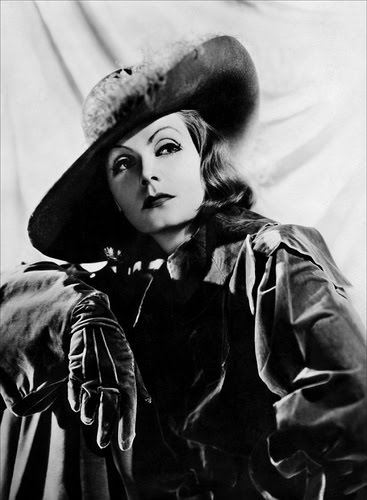
“Queen Christina” is the story of the reign of the controversial Queen Christina of Sweden. The film was made in 1933 and stars Greta Garbo in the title role. The director was Rouben Mamoulian of “Dr Jekyll & Mr. Hyde” fame (I also liked “Blood & Sand” but I’m *very* biased on that one). To say that “Queen Christina” is based on the life of the famous Swedish queen would probably be going way too far. It might be more correct to say ‘vaguely inspired by’. I have a hard time with this one because the history is so terrible you almost have to just overlook that whole aspect. It is as if they really were not even trying. At all. It also helps that Greta Garbo is spectacular in this, absolutely at her best (and how fitting to have a Swedish actress play a Swedish queen -sometimes I’ve been tempted to think Hollywood had some sort of rule against that). She is stunning, she is totally convincing and shows herself to simply be a great actress. That goes a very long way as well.

We are first introduced to Christina as a little girl who, upon the death of her father; the Protestant champion of the Thirty Years War Gustavus Adolphus, is ushered in amongst the notables of Sweden to be crowned ‘king’. I don’t know who the child actress was there but she did a good job too. The film lets you know that this is when Sweden was at the top of her game, the dominant power in northern Europe but also stretched dangerously thin, getting by on sheer skill and determination. The coronation scene was one of my favorites -as such usually are, and the little actress was very winning as she delivered her speech, proudly and rather annoyed when she forgot a certain line. From there we flash forward to Queen Christina all grown up and racing through the Swedish countryside on horseback, wearing masculine attire -which is perfectly historically accurate. That, at least, the film does get right.

Sweden is still at war, the pressure for a royal wedding is growing and the strain on the public is evident, to the Queen if no one else. Again, this part the film does pretty much get right. The Queen was fond of riding horses, did dress like a man and was very interested in art, philosophy, the sciences and so on. She was reportedly not nearly so attractive as Greta Garbo, but we can forgive that. In the film, the Queen is distressed at how much the ongoing war is costing, both in lives and treasure, and she sees no end to it. She deplores wasting lives, talent and money on destruction rather than more artistic and intellectual pursuits and she becomes determined to make peace. This does not go over well, but the Queen is adamant and fears that if the war continues the Swedish peasantry will be wiped out and they will have to hire foreign mercenaries to fight their battles. The Queen is also in no hurry to marry. She is frustrated by the constant constraints her royal position places on her and fears that marriage will only take even more freedom from her. However, her ministers are adamant that she must marry and Prince Charles, her cousin and a hero in the war against the Catholics, is the preferred choice.

If you feel like you’ve seen this before, you probably have. The story of the overwrought royal longing for personal freedom is a story we have all heard before and, I must confess, it does wear on me. I always detected a hint of republicanism in such portrayals; the idea that royals need to be “rescued” from the monarchy. In any event, this is where the movie takes a dramatic u-turn away from historical reality. A suave, debonair ambassador arrives to convey a message from the King of Spain and unknowingly meets the Queen when his carriage becomes stuck in the snow. Thinking, by her attire, she is a local nobleman the two become fast friends at a local inn where she questions him about the great Spanish painters, life in a foreign country and all the rest. How anyone could ever mistake Greta Garbo for a boy is quite beyond the realm of possibility but we will invoke the suspension of disbelief on that one. Forced to share a room the ambassador finally learned the gender of his new buddy and the two spend several days at the inn completely infatuated with each other.

Nothing of the sort ever happened of course, Queen Christina never had any affairs that we know of, but now the film has an illicit romance to carry it through. The ambassador is rather shocked and displeased when he learns that his new best girl is actually the Queen of Sweden when he finally appears for an audience. To make matters worse there is an unscrupulous courtier who also had his hat set for the Queen and he makes the ambassador his inveterate enemy. He whips up an angry mob to howl for the blood of the Spaniard and in one of the most memorable scenes of the film the Queen confronts her unhappy subjects and through her courage and charm turns their angry protests into loyal cheers. However, her beau is captured by the courtier and threatens to kill him if the Queen does not send him away. Forced to do so, immediately thereafter the Queen announces her abdication, to the great sorrow of her people, and plans to run away with the ambassador to live happily ever after at his coastal hacienda in Spain.

Again, this is complete fiction. The actual reason that Queen Christina abdicated was in order to become a Catholic, something not even hinted at in the movie, and it was not a spur of the moment decision. In fact, the Queen prepared long in advance for her abdication in order for there to be a smooth transition and as little fuss as possible. She left her country out of conviction, not romantic infatuation. The ending of the movie, I will spare the details so as not to ruin it for those yet to see it, left me frankly shocked and a little bewildered. The acting is good, the story moves along nicely, there are a number of fantastic shots but it simply has very, very little to do with the actual Queen Christina who once ruled Sweden. The movie is also a little risqué in parts (a warning to the people of Kansas) as this was before the era of the MPAA Production Code and filmmakers could get a way with more. There is no nudity or bad language of course, but naughty behavior is implied that would not have been allowed in later years.

The filmmakers actually hired an expert to ensure that nothing in the film would offend the current Swedish Royal Family though they seem to have completely ignored his advice. However, the queen portrayed in the film is portrayed, I think, in a very positive way. She genuinely cares for her country and her people (at least until leaving them in the name of love) and come across as a very sympathetic character. This has, I think, more to do with Greta Garbo than anything else and the film is certainly better at showing off her skills as a great actress than it is in telling the real story of Queen Christina. The movie does get some aspects of her character right but, overall, pretty well misses the point of what Queen Christina was all about. That being said, I cannot help but like the movie. It is well cast, well shot, well directed and has some great dialogue in it and Greta Garbo gives a masterful performance. It has that air about it of being a “classic”. I simply think that the same cast and crew could have made an even better movie had they stuck to the true story of the most controversial Swedish Queen who once said, “I love the storm and fear the calm”. Indeed.

Tuesday, February 22, 2011

MM Movie Review: Gladiator

The 2000 Ridley Scott film “Gladiator” was a box office success that is widely credited with reviving the “sword and sandal” historical epics (though given some that came later one might be tempted to use the word “blame” rather than “credit” sometimes). What is the story? Well, as with so many movies these days “Gladiator” is a little light on story. It pretty much boils down to a quest for revenge though they try to spice it up with some other plot points but they really make no sense. Russell Crowe stars as General Maximus Decimus Meridius who we meet in the opening scenes leading his armies to victory over some German barbarians. I don’t know how accurate the battle sequence is, but it is certainly impressive. In almost any Roman-era movie the “barbarians”, be they Germans, Celts or anyone else are all portrayed the same way: very hairy, very primitive and wearing lots of animal skins. The battle is won by Maximus under the watchful eyes of Emperor Marcus Aurelius (played by veteran actor Richard Harris). His son and daughter arrive just as the fighting is over and we move on to my first really (*really*) big problem with this movie.

The great Emperor Marcus Aurelius, an old man about to die, says that he’s really not a fan of the whole “empire” thing and wants Rome to go back to being the ideal, virtuous republic that it once was. Yes, this tired line again. You know, that glorious Roman Republic ruled by a handful of feuding elite politicians which spent its last hundred years killing its own people in civil wars driven by men with more ego than brains and more vanity than patriotism…yes, that one. Of course that was so much better than the peace, prosperity and cultural revival that came with the establishment of the monarchy by Emperor Augustus. Now, considering the fact that Marcus Aurelius is a very old man by this time, one is tempted to ask why, if he so detested the empire, did he not immediately abdicate all his powers to the Senate long ago? Why wait till now when you know you are about to die and must know that this is going to cause sufficient upheaval that you want your best general to step in as military dictator to oversee the transition? Such questions are never answered. Roman film fans will remember that this was the set-up for the epic movie, “The Fall of the Roman Empire” which was also based around Marcus Aurelius wanting to deny the throne to his son in favor of handing power over to a trusted general. Were the makers of “Gladiator” really at such a loss for ideas that they had to rip off the falsities of past films?

So, Emperor Marcus Aurelius wants to be the last Roman Emperor and he wants Maximus to take charge in Rome during the transition back to being a republic. He says that his own son, Commodus, is pretty much an evil jerk and cannot be allowed to assume power. Maximus, humble and un-ambitious of course as all heroes are expected to be, does not want to take power but the Emperor tells him that is precisely why he is the only man for the job. Forgive me, but this really takes dramatic license way, way too far. Contrary to what they say, Rome was not “founded as a republic”. It had originally been a monarchy. That monarchy was overthrown and Rome became a republic. I am a fan of Roman civilization in general and I don’t like to bash the Roman Republic but I really get tired of the constant over-romanticism of the republic at the expense of the empire. The Roman Republic fell because it failed, it could no longer function and the Romans, who were a very practical people, by and large understood that when one thing doesn’t work you try something else. They also, even after the elevation of Augustus, considered themselves a republic -just a republic with an Emperor who held final authority. Moreover, we know that Marcus Aurelius was not the last Roman Emperor and that the Empire went on for a very long time after him so, who are they trying to fool? Additionally, not only did Marcus Aurelius not want to exclude his son from power he actually made Commodus a sort of partner alongside him some time before he died. The real Marcus Aurelius actually went above and beyond to make it known that his son would succeed him and that the succession would be peaceful.

Well, not in this movie, which in this early scene immediately takes on a decidedly anti-monarchist tone (which is a shame because it is such a well made, entertaining film for the most part). Marcus Aurelius is the “good Emperor” only because he doesn’t want to be Emperor at all (yet he kept the job all these years) and the goal is to see the monarchy abolished and senatorial rule restored. However, when he announces to his son Commodus (played with villainous excellence by Joaquin Phoenix) that he will not be emperor but instead his general will take charge and turn power over to the Senate, believe it or not, Commodus is rather unhappy with the news. In a fit of rage he kills his father and assumes power. Which, we know of course, is pure myth as in actual history Marcus Aurelius died of sickness. In any event, it is done here and other commanders are loyal to Commodus and Maximus is arrested and soldiers are sent to kill his wife and children. The general escapes but is captured by slave traders bound for Africa.

Maximus is bought by Proximo (played by the late great Oliver Reed) who makes him a gladiator, eventually instilling in him a will to live and to use his status as a gladiator to rise to fame, earn his way to fight in Rome and get close to the Emperor. In the meantime, Commodus returns triumphantly to Rome and promptly angers the Senate. He would like to do away with them entirely but his sister, Princess Lucilla (played marvelously by Danish actress Connie Nielsen) dissuades him on the grounds that the people need their traditions. Just to reiterate what a bad guy Commodus is we are quickly shown that he’d like nothing better than to crush his sister’s smokes (yep, a time-honored insult for Roman emperors if ever there was one -incest is best, everything’s relative! Oh boy…) and she also fears angering her brother for the sake of her son Lucius. Commodus decides to overcome the opposition of the Senate by winning over the public which he does with a campaign of generosity and 150 days of gladiatorial games in the Coliseum. I will add here that the soundtrack on the movie is pretty spectacular but my favorite musical note was the fanfare when the Emperor arrives in the ‘royal box’. And, although I couldn’t swear as to the accuracy, the costumes all look magnificent to me. I thought Rome itself was done well though I know some have complained about the CGI. All I can say to that is, if you think the CGI in this movie is terrible -I can only envy you as I have seen much, much, much worse.

Maximus (known as “the Spaniard” in gladiatorial circles) finally arrives in Rome but, being the proper, virtuous republican that he is, cannot resist denouncing the spectacle of blood sports. He says that Marcus Aurelius had a vision of Rome and that the blood sport of the coliseum was “not it”. Well, sorry to burst your bubble there general but gladiatorial combat had been going on in Rome for a very, very long time before Marcus Aurelius was ever a twinkle in his father’s eye. Just as with his condemnation of the empire and glorification of the idyllic republic that never existed, I say again, if the Emperor had a problem with gladiators fighting to the death he could have just stopped it. He was the Emperor. He would have been seen as a wussy, puritanical kill-joy by the Roman people but he could have done it. There are few things that turn me off more than people, real or fictitious, who gripe and moan about things that they have every power to change but for some reason never do so. For a real life example witness Thomas Jefferson and his numerous and vociferous condemnations of slavery and keep in mind that this man owned hundreds of slaves and never gave any of them their freedom. Sorry to digress, but that sort of thing just really annoys me.

Maximus triumphs in the arena against all odds and finally comes face to face with the Emperor. Commodus is shocked and horrified to find him alive but Maximus had won the crowd over and so the Emperor cannot kill him without angering the mob. Maximus, meanwhile, enters into a conspiracy with Lucilla and some senators to have the Emperor assassinated after which time Maximus will be able to carry out his last order and have his revenge against Commodus all at the same time. A great plan right? Well, it would have been except that for some reason some idiot seems to have let the little boy Lucius in on their plan to have Maximus “save” Rome and overthrow his uncle who just happens to be the most powerful man on earth and holds all of their lives in the palm of his hand. Again, Emperor Commodus is rather upset by this and in a very chilling scene lets his sister know that he is on to them and that if she does anything to displease him her son will be the first to die. Well done to whoever told the kid, brilliant move there.

The only other problem I have with this is that we are just supposed to take for granted that Emperor Commodus is an unpopular and terrible tyrant. Yet, we never actually see him do anything to the people to warrant that judgment. We see him be perfectly evil of course but only to his own family and to Maximus who was standing in the way of his inheritance and knew the truth about the fictional last wishes of his father. We never see him tyrannizing the people, being cruel to them or advancing himself in any undue way. The real Commodus was considered more odd than anything else, more of a nut job than anything else, naming months after himself and walking around wearing a lion skin and carrying a club -totally unlike the Commodus in this movie. On the contrary, as far as the Roman people are concerned all we ever see is the Emperor being good to them, feeding them, entertaining them and worrying over how well the people love him. From what we see on screen, so long as you did not cross him or were not related to him you would probably think he was a pretty great monarch. But that doesn’t seem to matter. He is the bad guy, Maximus is the good guy and Commodus has to find some way of getting rid of him without just executing him which would upset the public.

Finally, Emperor Commodus decides that the only way to deal with Maximus is to kill him himself in the arena in gladiatorial combat (after stabbing him in the side of course to ensure his victory). A wounded, bleeding to death Maximus against the wicked Emperor Commodus, yes, we all know how that is going to end. That’s right, they both die. Maximus kills the Emperor, has his revenge and then promptly drops dead. The Praetorian Guard does nothing, the crowd does not react -nothing. One would think this sort of thing happened every day. Someone just killed the Emperor of Rome in front of thousands of witnesses and absolutely no action is taken. Maximus is given all the honors of death while the Emperor is just left to lay there in the dirt. Did I miss something? Seriously, THAT was the end? That is what we have been building toward all this time; they both die, end of story, roll credits? Huh?!?

At the end of the day I could not figure out just exactly what the point of “Gladiator” was supposed to be. The hero does not really ‘win’ other than accomplishing the fact of killing the ‘bad guy’. However, as we have already seen, we never see the ‘bad guy’ do anything that bad in the grand scheme of things beyond how he ruined the lives of a few individuals. I know we are led to believe that the farcical last wish of Marcus Aurelius was fulfilled and the Roman Republic was restored -but we all know that did not happen. The Roman Empire marched on for a long, long time to come after the actual death of the real Emperor Commodus. So, again, I wonder what really was the point of it all? What is this movie supposed to be telling us? The only moral I could find was that if someone does you wrong, don’t give up, just be patient and wait until the time is right to take your revenge and even if it kills you it will still be worth it if your enemy dies with you. Not exactly uplifting I suppose. However, I will say again though that the movie is very entertaining, the fight scenes are realistic and exciting, I thought it looked spectacular, the actors all gave first rate performances (I loved the announcer by the way), the sound was good and it was pretty well paced. It was, on the other hand, very inaccurate, rather absurd at times regarding the story and did not really have any depth to it. That and it was very anti-monarchist from where I was sitting.

Friday, December 31, 2010

MM Video: Royals We Lost in 2010

Mad Monarchist 2010 Year in Review

Starting with a former monarchy dear to my heart, in January the Romanov Imperial Family of Russia stated by what terms they would consider returning to Russia; a legal residence and the legal rehabilitation of their name. On August 20, HIH Grand Duchess Maria Vladimirovna established the Imperial Women’s Order of St Anastasia to honor the Great Holy Martyr St Anastasia and the first queen of the Romanov dynasty. Moving west among the Slavic lands, in June, HM King Michael of Romania announced the elevation of his grandson Nicholas to the status of Prince and third in-line for the Romanian throne, though Romania sadly remains a republic. HM King Constantine II of Greece turned 70 this year and in August witnessed the marriage of his second son Prince Nikolaus to Tatiana Blatnik on the Greek island of Spetses. In September the Crown Prince and Princess Alexander of Serbia celebrated their 25th wedding anniversary in Belgrade with the royals of Romania, Bulgaria and Greece in attendance.

Royal news from across the Adriatic included some good, some sad and some rather lewd. In August, HRH Prince Carlos-Hugo Duke of Bourbon-Parma died at the age of 80. After a postponement, because of this, Prince Carlos V (son of Prince Carlos Hugo) of Bourbon-Parma had his religious wedding in Brussels, Belgium to Annemarie Van Weezel. In September the always controversial Italian Royal Family (Savoy) caused a stir when Princess Clotilde of Venice and Piedmont, wife of Prince Emanuel Filiberto of Piedmont, appeared in a *very* off color burlesque show in France. Ah, the Savoys, I love them but why is it that this did not exactly shock me to my foundations? However, moving to the more pious section of Rome, in September HH Pope Benedict XVI, after visiting Portugal and Cyprus earlier in the year, made an historic state visit to Great Britain where he met with the Queen, Prince Philip, the Archbishop of Canterbury and numerous government and religious officials. In October the Pope ordered the formation of a new Pontifical Council to focus on the re-evangelization of Europe and traditionally (but now largely formerly) Christian countries. In November the Pontiff visited the Kingdom of Spain, meeting with the Royal Family and encouraging resistance to the trend of secularism.

Speaking of the Iberian Peninsula, in April those mischievous but always inspiring Portuguese monarchists replaced the republican flag at the Edward VII park with a big blue-white Kingdom of Portugal flag in another show of royalist opposition to the current regime. A Mad Monarchist salute to them -royalists after my own heart. Across the border in Spain, HM King Juan Carlos had a minor medical procedure to remove a benign lesion from one of his lungs, which put him out of action for a while, later on the feast of St James he prayed for unity among the regions of Spain. In November His Majesty Juan Carlos I celebrated marked the 35th anniversary of his proclamation, by the Cortes, as King of Spain following the death of Chief of State Francisco Franco.

Moving north, across the Pyrenees, on the French royal front, in May HRH Prince Louis Alphonse, Duke of Anjou and his wife became parents to two healthy twin boys in New York City. In December, French researchers announced that they had uncovered the remains of the celebrated King Henri IV whose tomb had been desecrated during the French Revolution. He will be reburied in grand style in the Basilica of St Denis next year. In June the Princely Palace announced that HSH Prince Albert II of Monaco is engaged to marry longtime girlfriend Charlene Wittstock of South Africa. In November, Charlene was alongside her husband-to-be as Albert II celebrated his fifth anniversary of Sovereign Prince of Monaco. In December the senior member of the Grimaldi dynasty, Princess Antoinette, turned 90-years old.

On the other side of the Channel, the House of Windsor got off to a high note in January when HRH Prince William visited Australia to great acclaim. In March long-time Irish republican embarrassment Gerry Adams announced he would be retiring from his leadership of Sinn Fein. The Prince of Wales visited British troops in Afghanistan and in May the Duchess of York was captured on video offering to sell “access” to her ex-husband for $720,000. After a general election David “Call me Dave” Cameron became Her Majesty’s Prime Minister in a Tory-LibDem coalition government. In June Cameron issued a formal apology for the shootings of “Bloody Sunday” in Derry, Northern Ireland, in 1972 after the end of the government investigation into the matter. Also in June HRH Prince Harry of Wales visited New York, visiting the Big Apple and training with U.S. Army officer cadets at West Point. This summer HM the Queen also visited New York City, paying her respects at Ground Zero and speaking to the UN on her way back to the UK from a very successful cross-country tour of Her Majesty’s Dominion of Canada. Even the notoriously boring PM Stephen Harper was moved to remark on the importance of the Canadian monarchy on such an occasion. It was in November, however, that the biggest British royal news came when Prince William announced his engagement to longtime girlfriend Kate Middleton.

Moving to the Low Countries, in the Netherlands celebrations for National Day and the state opening of Parliament this year were both marred by minor disturbances, the Royal Family, thankfully were unharmed in both events. In October the Prince and Princess of Orange journeyed to the Dutch possessions in the Caribbean to oversee the formal dissolution of the Netherlands Antilles. The controversial PVV party in the Dutch parliament also expressed their wish that the Queen be removed from any role in government. Across the border, Belgian Prime Minister Yves Leterme resigned and fears of split raised their ugly heads again, not lessened by the fact that Belgium has been unable to form a government since then. On June 30, Their Majesties King Albert II and Queen Paola of the Belgians were on hand for the celebrations of the anniversary of Congolese independence. Fifty years earlier the King’s elder brother and predecessor had visited Leopoldville for the formal handover of independence to the former Belgian colony. In September the Crown Prince visited Mexico to attend the festivities for the 200th anniversary of the call to arms in 1810 that led to Mexican independence. We recall, of course, that the last Empress of Mexico was a Belgian princess.

Finally, the far north, in Scandinavia, in January HM King Harald V of Norway celebrated his 19th anniversary as reigning monarch. Things have been going so relatively smoothly for the Kingdom of Norway that there has been little of great significance to report on this year. However, to the south, Crown Princess Mary of Denmark endured some ridicule in the media after being photographed with a criminal at a party and when a senior official with her charitable foundation assaulted an escort worker. However, there was better news in August when it was announced that the Danish crown princely couple are expecting twins. Across the Baltic, Princess Madeleine of Sweden broke off her engagement to Jonas Bergstrom after he was found fooling around with a snow bunny. In June, however, there was happier news as HRH Crown Princess Victoria of Sweden was married to longtime beau Daniel Westling. This year the Swedish Bernadotte dynasty celebrated their 200th anniversary on the throne after their forefather, a former French marshal, was elected King of Sweden.

Jumping over to the lands of “Eternal Asia” sad news came in January when two Iranian monarchists were put to death by the Islamic Republic regime during an overall crackdown against all dissent. Farther over in the Middle East, in July HM King Abdullah II of Jordan met with the Prime Minister of Israel to discuss the peace process based on a “two state” solution. President Obama also hosted talks including the King, the PM and Palestinian leaders. The Israeli PM later complimented the King of Jordan for his commitment to a peaceful solution to the Israeli-Palestinian conflict. In neighboring Saudi Arabia HM King Abdullah II angered some religious hard-liners by putting restrictions on Muslim clerics regarding the issuing of fatwas and appointing the first woman to high government office in Saudi Arabia. Human Rights Watch, in October, reported that, while the situation was still unacceptable, human rights in Saudi Arabia had improved during the reign of the current monarch.

Finally, in the Far East, the communist bandit government in China announced that they would choose the successor of the XIV Dalai Lama of Tibet upon his passing. The exiled Tibetan monarch and religious leader said any such choice would be invalid. This was followed later in June by another communist crackdown in Tibet. Malaysian Prince Fakhry of Kelantan sued his wife for libel after she fled and accused him of torture and treating her like a slave. The Prince was awarded over a million dollars though the family of the bride (an Indonesian teenage supermodel) refused to pay. In June the Sultan of Brunei divorced one of his wives, a former journalist from Malaysia. In Thailand a state of emergency was declared after red-shirt rioters forced their way onto the grounds of parliament. Violence broke out and the Royal Thai army was called in to pacify the situation which finally ended in May.
On behalf of myself and the Mad Monarchist Brain Trust, I hope everyone had a good 2010 and will have all the best in 2011.

Monday, August 23, 2010

MM Movie Review: The Messenger

Good monarchist movies are hard to find, very few are done and even fewer are done well. Alas the 1999 Luc Besson film, “The Messenger: The Story of Joan of Arc” is no exception to this generality. It was to be expected but, at the time, I had no idea that this movie about one of the most famous monarchists in history and a Christian saint revered by millions was directed by an avowed atheist. In my ignorance I was excited when “The Messenger” came out and eager to see the life of Joan of Arc brought to the screen with more money, more filmmaking wizardry and so on than was available in past attempts. Oh, how disappointed I was. Overall it is actually soul-crushingly bad. Painful bad. Horrid. More than that it is downright insulting to virtually every group connected with the story portrayed. However, I am getting ahead of myself and should try to start by saying something kind.

As is usual with Hollywood (yes, a French-made movie but I think you know what I mean) these days, the technical side of the movie is great. Some have complained about it but I thought the look, the sets, the battle scenes, the special effects and so on were good or at least good enough. Granted, there was only one really big battle portrayed in the movie (lifting the siege of Orleans). Also, unlike some others, I thought the actors all did a pretty good job, even Milla Jovovich as Joan of Arc. That is not to say that the part was good but I will get to that in a minute. One thing I did like was the greater realism than seen in other films (though this has more to do with when the film was made) and that carried to Jovovich’s Joan of Arc. I liked the level of emotion on display. I never could imagine St Joan riding serenely through the butchery of battle, untouched by the chaos around her. That is certainly not the case with this movie. Joan gets frustrated, she gets inspired, ecstatic, angry and anguished. She is very emotionally involved to say the least. Again, on the whole, I thought the acting was good and it was certainly not a list of no-names on the bill of players.

However, that being said, the big, huge, gargantuan, behemoth problem with this movie is how history was cut to ribbons to pursue an agenda. The word “inaccurate” does not begin to describe it. Spiteful, libelous, atrocious, insulting and even downright blasphemous would not be going too far. From the very start the Joan in this movie is portrayed as suffering from some sort of obsessive-religious disorder. She is not shown as anything that could be described as devout by any stretch but as a compulsively religious maniac, swept up in ecstatic religious visions one moment and then terrified to the point of paranoia the next over divine judgment. Then enter the English. Since the filmmakers seem incapable of believing that someone could go off on a mission to liberate their country and restore their rightful king based purely on religious devotion and pious patriotism they have to give Joan a motive. In this case it is watching in horror while her older sister is killed and raped (yes, in that order) by an English soldier. It is possibly the most disgusting scene of the entire movie and seems to serve no other purpose than to rob Joan of pure motives in her quest but to hold on in her mind to be brought up in the end that it was all about hatred and a thirst for revenge on her part tied to feelings of guilt that her sister had died after giving up her hiding place to Joan.

This ends up being rather central to the story as Dustin Hoffman (my least favorites character by far) appears at the end listed in the credits as “the conscience” and basically relates that Joan had been driven by vengeance, vanity and that her visions were nothing more than delusions she chose to interpret as divine instructions to serve her own ends. That overall theme is the largest insult of the movie but it is certainly not the only one. No opportunity is lost to take cheap shots at virtually anything Joan of Arc or the people of her time held dear. Further, these were all completely needless insults that did nothing to advance the story but simply serve to make the viewer feel worse and destroy any possibility of anyone in this movie coming away with a good reputation. There was Yolanda of Aragon replacing the Holy Oil of Clovis that had “run out” and calling it a “miracle”, the scene of that same Queen Yolanda and her son King Charles VII deliberately betraying Joan to the Burgundians and the (thankfully unseen) rape of Joan in prison.

Absolutely no one comes away looking good in this movie and it is a common problem with spiteful, bleeding-heart liberal filmmakers of today. Everyone is bad, everyone has wicked motives, Joan of Arc is a phony, the French are a bunch of sniveling, back-stabbers, the churchmen are all corrupt and self-serving and the English are crude, sadistic barbarians. Not surprisingly the reviews for this movie when it was released were predominately bad. There is no hero, no one for the uninformed audience to root for and if you do the director ensures you will feel guilty for doing so by the time it is all over. It is a movie that brings audiences down plain and simple. What frustrates me the most is the obvious talent that is on display. This could have been a great movie, it easily could have been the quintessential bio-epic of St Joan of Arc. The historical narrative is one tailor-made to thrill, uplift and inspire audiences. That this movie could have done that but the filmmakers chose to do the opposite infuriates me more than anything else. They had everything needed to make a magnificent film about Joan of Arc, and you even get glimpses of it now and then, but they simply chose not to. They chose to insult and slander.
Related Posts Plugin for WordPress, Blogger...