The 1939 film "Juarez", a biopic of Mexico's most famous president, is well worth looking at for monarchists, even if that seems odd. Juarez is upheld as the 'Abraham Lincoln of Mexico' and this point is driven home hard in the film to the extent that Juarez is rarely seen on-screen without a portrait of Lincoln in the background. It is a love letter to Benito Juarez and makes no apologies for that. However, it does not vilify Emperor Maximilian and Empress Carlota either. Being all about deifying Juarez, it certainly is against the monarchy and their very presence in Mexico, however, it spares the idealistic couple and focuses its wrath on the French Emperor Napoleon III. From the perspective of this film, Napoleon was the real villain, a wicked tyrant on a mission to eradicate democracy and republicanism in the New World whereas the handsome young couple, Maximilian and Carlota, are pitiable dupes; good people tricked into an "evil" enterprise by a manipulative Frenchman. Because of this, the Emperor actually comes off as a rather sympathetic figure. For a broad overview of the film, you can read a review of it here.
For me, one part of the film, two scenes, really stand out as being worthwhile, though they will be of most benefit only to those who know their history and in light of the events of our own time. In the first, Emperor Maximilian comes to meet with the captured rebel General Porfirio Diaz in his prison cell, in an effort to convince him to take a message to his president, offering to make Juarez the Prime Minister of the Mexican Empire. Emperor Maximilian has some very good lines as he makes the case for having a free and liberal society with a benevolent monarch at its head as a sort of safety valve. He presents such a good case that he seems to have won Diaz over and convinced him that the Emperor is a man of sincerity who wants the same things for Mexico that Juarez wants and Diaz goes to deliver this message to the President along with his offer to make Juarez his premier and allow him to run the government of Imperial Mexico. The next scene is Juarez, with kindly bemusement, listening to the naive, young general who has been duped by Maximilian. Juarez then starts preaching the republican gospel to Porfirio and showing him the error of his ways.
This scene, coming after the heartfelt speech of Emperor Maximilian in the previous one, is enough to make any monarchist who is familiar with the history of republicanism, and Mexico in particular, roar with laughter at how Hollywood inadvertently shows just how painfully wrong Juarez was in all of his speechifying on the glories of democracy. In the first place, they make much about the constitution that Juarez wrote, however, any honest historian of the period knows that Juarez himself violated the constitution he wrote on numerous occasions. Part of what makes constitutions ultimately worthless is that they can only do good if they are adhered to voluntarily, which could be done without them, and they have no power on their own to prevent anyone from violating them. Even the United States is proof of that and it has a record better than most republics in that regard.
Juarez explains to poor, ignorant, Porfirio that Maximiliano duped him. When Diaz explained how honest and sincere the Emperor was, Juarez responds that, "virtue is a powerful weapon in the hands of an enemy" which is meant to sound "wise" but is absurd if you think about it for more than a second. It essentially says that Maximilian is wrong regardless of whether he is wicked or virtuous. He says that the unbridgeable gulf between himself and Maximilian is "democracy" and that this is the right of men to rule themselves. He explains that since a man never rules himself into bondage, freedom flows from democracy like the rivers flow from the mountains, just as naturally and serenely. This is, of course, quite hilarious given that Mexico itself democratically voted itself into bondage more than once. The PRI, for example, held tyrannical control over Mexico for the better part of the last century. Yet, the current President of Mexico was the leader of the PRI, voted back into power after a break of only two non-PRI presidents. It is also extremely laughable in the context of Juarez, a man who came to the presidency not by election, speaking to Porfirio Diaz who would go on to lead a rebellion against Juarez, then run for president himself, winning on the promise that he would serve only one term, only to then rule as dictator of Mexico for the next 35 years!
It is quite a howl that virtually everything Juarez and Diaz talk about in these scenes as being the major problems of their country; too much land owned by too few, a privileged elite prospering while the masses are impoverished, freedom of speech being suppressed, even selling out to foreign influences (such as the French) are ALL accusations made by many against General Diaz himself during his hold on power from 1877 to 1911 (with a small break in there). At the end of the scene, Juarez says, again -so profoundly, that when a monarch misrules, he changes the people but when a presidente misrules, the people change him. A perfect ending really, given that the liberal-democratic leaders of North America and Western Europe are doing precisely what Juarez said the wicked monarchs do, they are changing out their peoples for a new batch that will keep them in power. Irony doesn't begin to describe it. And yet, what is the final cherry on top of this heaping bowl full of republican hypocrisy? The fact that Juarez, the native Mexican fighting against an Austrian Emperor, was played by Paul Muni, real name Friedrich Meshilem Meier Weisenfreund, a Jew from Galicia in what was then Austria-Hungary. So, yes, instead of giving the part to a Mexican actor, Benito Juarez was played by an actor from Austria.
Oh Hollywood, you really are too much sometimes...
Saturday, March 10, 2018
Wednesday, March 7, 2018
The Democratic Farce, A Personal Account
Yesterday was the nation's first primary, right here in the state of Texas. This is not usually the sort of thing I bother with but many have argued that local elections are the most important of all and, regardless of that, I had a cousin on the ballot who would be very cross if I didn't drag my bones to town and vote for him (he's bigger than me). So, I went to town, marched into the parish hall and voted in the Democrat primary. They "warn" you on the ballot that you must be a registered Democrat to do this and are not allowed to vote in any other primaries (meaning the Republican one). You may have already noticed the first absurdity in this farce we call the democratic process. Why on earth would someone as radical-far-right-wing reactionary as yours truly be voting for the most leftist of the "two" American political parties? The short answer is; because they are the only game in town. The longer answer is; because demographics have consequences, even more than elections as it turns out. If you want democracy, these are the facts you are going to have to deal with.
Even in the supposedly "deep red" state of Texas, which everyone regards as a bastion of conservatism, pretty much all the urban areas are solidly Democrat and pretty much anywhere up to and including 100 miles of the Mexican border is also solidly Democrat and I would fall deep within that particular area. Because of the demographics of where I live, the vast majority of the population votes Democrat in every election, no matter what the circumstances are, no matter who is on the ballot. This has been the case for so long that the Republicans do not even bother to run candidates anywhere near where I live as it would simply be a waste of resources. This area is lost to them, they know it and they know it is not coming back. Because of this, you also have to be a Democrat in order to run for local office and appear on the ballot. This applies to my cousin who had to run as a Democrat despite being to the right of Rush Limbaugh. If you're not a Democrat, don't even bother trying. So, where I live, thanks to demographics, you have the "freedom" to vote for the Democrat...or the Democrat when it comes to local elections.
For anyone in an area such as this, who is a typical American conservative, it means you will be allowed no part in choosing who the candidate should be for the party you are certain to be voting for in the general election. This actually annoyed me somewhat this time as I would've liked to vote against George P. Bush just to be on the record about that, however, I could only vote for who is Democrat opponent will be and because of the demographics where I live that vote will count for absolutely nothing as it will be a proverbial drop in the bucket, a single grain of sand on the shore. I should probably also point out that the vast majority of Democrats on the ballot, again, because of the demographics of the area, had no opposition. They were not running against anyone, so it was really a waste of paper at the very least. For those keeping score, that means that you have a "choice" of only one party and a "choice" of only one candidate. I suppose those leftist protesters who are always chanting, "This is what democracy looks like!" might have a point, because what goes on at the polls in my area certainly doesn't look like democracy. The damning thing about the entire liberal model is that none of this is out of order, it is all perfectly legal.
Being well acquainted with this farce, I long ago stopped taking any of this seriously. The liberal model is supposed to be well-informed voters making sober decisions based on the merits of the candidates and their own rational self-interest. Human nature, however, doesn't work that way and so you get what we have in south Texas which is tribal voting. And who can say it shouldn't be? With a "choice" between candidates that each belong to a party I despise, neither of whom, in most cases, I know anything about and do not care to, why not simply vote for the name that sounds most similar to my own? You cannot realistically say you expect otherwise. Deep down, everyone knows this I think. Imagine, for example, a voter in southern California who is a Vietnamese-American. The candidates on the ballot are:
Even in the supposedly "deep red" state of Texas, which everyone regards as a bastion of conservatism, pretty much all the urban areas are solidly Democrat and pretty much anywhere up to and including 100 miles of the Mexican border is also solidly Democrat and I would fall deep within that particular area. Because of the demographics of where I live, the vast majority of the population votes Democrat in every election, no matter what the circumstances are, no matter who is on the ballot. This has been the case for so long that the Republicans do not even bother to run candidates anywhere near where I live as it would simply be a waste of resources. This area is lost to them, they know it and they know it is not coming back. Because of this, you also have to be a Democrat in order to run for local office and appear on the ballot. This applies to my cousin who had to run as a Democrat despite being to the right of Rush Limbaugh. If you're not a Democrat, don't even bother trying. So, where I live, thanks to demographics, you have the "freedom" to vote for the Democrat...or the Democrat when it comes to local elections.
For anyone in an area such as this, who is a typical American conservative, it means you will be allowed no part in choosing who the candidate should be for the party you are certain to be voting for in the general election. This actually annoyed me somewhat this time as I would've liked to vote against George P. Bush just to be on the record about that, however, I could only vote for who is Democrat opponent will be and because of the demographics where I live that vote will count for absolutely nothing as it will be a proverbial drop in the bucket, a single grain of sand on the shore. I should probably also point out that the vast majority of Democrats on the ballot, again, because of the demographics of the area, had no opposition. They were not running against anyone, so it was really a waste of paper at the very least. For those keeping score, that means that you have a "choice" of only one party and a "choice" of only one candidate. I suppose those leftist protesters who are always chanting, "This is what democracy looks like!" might have a point, because what goes on at the polls in my area certainly doesn't look like democracy. The damning thing about the entire liberal model is that none of this is out of order, it is all perfectly legal.Being well acquainted with this farce, I long ago stopped taking any of this seriously. The liberal model is supposed to be well-informed voters making sober decisions based on the merits of the candidates and their own rational self-interest. Human nature, however, doesn't work that way and so you get what we have in south Texas which is tribal voting. And who can say it shouldn't be? With a "choice" between candidates that each belong to a party I despise, neither of whom, in most cases, I know anything about and do not care to, why not simply vote for the name that sounds most similar to my own? You cannot realistically say you expect otherwise. Deep down, everyone knows this I think. Imagine, for example, a voter in southern California who is a Vietnamese-American. The candidates on the ballot are:
- Alfredo Gutierrez
- Pedro Ramirez
- Juan Gonzales
- Nguyen Van Sam
- Alberto Garcia
Do you really think there is much doubt about which one he is most likely to vote for? It is a farce, a farce designed to fool people into thinking they have greater control over the government than they would with, oh, say, a king for example. After all, where I live, as you can see, demographics make all the difference and that demographic change was one which neither myself nor any previous generation here was ever asked to vote on. That, I think, says it all.
Sunday, March 4, 2018
Is America at Fault for the State of Mexico?
This question came up some time ago, attracting a string of insults directed at your humble mad man for daring to suggest that the Mexicans are responsible for the sad state of Mexico, just as Americans are alone responsible for the sad (in other ways) condition of the United States. Recently, I was pushed on the subject again and it does seem to come up more and more lately and I have no doubts as to why. Immigration is possibly the most contentious issue in America today and the leading source of immigrants to the United States is Mexico, and has been for some time. With one side demanding open borders or, basically, no borders at all; and the other demanding to “build a wall and make Mexico pay for it”, this is obviously something people can get worked up about. The idea that America is at fault for the state Mexico is in has become the argument of last resort for the American advocates of open-borders. First, they denied the problem, arguing that the border was secure and that illegal immigration to the U.S. was practically non-existent. Then, they had to admit that it did exist but that this was not a problem but a benefit. When pressed for evidence on this point, they now often take a sort of punitive view of it, essentially saying that “we” ruined Mexico and so must hand over the United States in compensation. VIVA LOS ESTADOS UNIDOS MEXICANOS DEL NORTE!
You could call this the, “you break it, you bought it” approach to international relations. The United States ruined Mexico and so now owns Mexico and the wellbeing of all Mexicans is the responsibility of the American people and their elected representatives. This may be good policy for the local five and dime but it is obviously absurd as national policy as it would condemn almost everyone guilty against everyone else, an endless cycle of victim-hood pandering. As it happens, it is also untrue, at least if one considers the population of Mexico capable of reason and responsibility. Because, that is what this all comes to; responsibility. Are the Mexicans responsible for their own decisions or is the United States responsible? This is important because, the ‘America First’ crowd does have to swallow a hard fact about something the ‘blame America first’ crowd is not entirely wrong about. This is that, if you consider the several most pivotal moments in Mexican history, the United States was consistently on the side of the leftists or the revolutionaries or the “progressives” as you please to call them. This is simply a fact of history.
The “blame America” crowd will say that this was part of a concerted effort to keep Mexico weak, impoverished and helpless. Others will no doubt say that this was the work of ideologues who believed they were helping Mexico, who wanted to push for policies which were long established in the United States to work their “magic” on Mexico. Things like an American-style constitution, republicanism, states rights, separation of church and state were all things American agents pushed for in Mexico. Now, if these were all inherently bad ideas that brought Mexico to ruin after slowly adopting them over time, one would have to wonder why the United States, which had them longer, is not in the same condition as Mexico? All the same, whether these ideas were good ones or not (and, just for the record, almost all of them were not), America would still not be responsible unless the United States alone forced Mexico to embrace them against the will of the Mexicans themselves, assuming they have free will of course which seems to be up for debate at the moment.
This issue matters to us here because at least two of the pivotal events in which the United States came down on the wrong side of Mexican history involved the two efforts to establish a local monarchy in the country. The U.S. was ambivalent toward the first and openly hostile toward the second. However, in every case, the U.S. was backing existing Mexican factions. In fact, this predates the existence of Mexico as an independent country. The land-grabbing schemes by ambitious Americans toward the Spanish empire were invariably done in conjunction with Mexican revolutionaries. The 1812 invasion of Texas associated with former U.S. Army Lieutenant Augustus Magee was a joint expedition. Magee himself had been recruited by the Mexican revolutionary Bernardo Gutierrez de Lara who was the original leader of the enterprise. He executed the local Spanish officials and he declared himself president of Texas. The 1819 filibuster invasion of Texas was, likewise, formed through the partnership of Dr. James Long and Jose Felix Trespalacios, an anti-Spanish, Mexican revolutionary (who, by the way, was released from prison by Emperor Agustin de Iturbide, given rank and eventually made governor of Texas).
All of these schemes failed and Spain had been doing a good job at keeping Mexico within the empire until bitter divisions in Spain itself caused the traditional conservatives in Mexico, led by Agustin de Iturbide, to make common cause with their former republican, revolutionary enemies, to break away from the Kingdom of Spain. The result was the short-lived First Mexican Empire. In explaining why this empire was so short-lived, the “blame America” crowd point to the U.S. envoy to Mexico, Joel Roberts Poinsett of South Carolina, a man with extensive experience in Europe, particularly the Russian Empire and South America. He actually had accepted the rank of general and fought against the Spanish in Chile. He was also a Freemason, a strong supporter of the Monroe Doctrine and firmly convinced that liberal republicanism was the answer to the woes of Latin America. Was he truly to blame for the downfall of Iturbide? Hardly. If a single American envoy was sufficient to bring down the First Mexican Empire, any strong gust of wind could have done the same. His influence was damaging to be sure, but not decisive.
Poinsett established ties with Mexicans already ill-disposed toward Iturbide, encouraged the further spread of (Scottish rite) Freemasonry and was no doubt a malign influence on the country. However, the division in Mexico between the imperialists and the republicans, the animosity between the uneasy coalition of the former royalist Iturbide and the republican revolutionary Vicente Guerrero, joined later by the man who would become the first Mexican president, Guadalupe Victoria. All of this long predated the arrival of Poinsett and ensured that the Mexican Empire rested on a very unstable foundation. The revolutionaries had been unable to win against the royalists in their drive for independence. Events in Spain, however, prompted the Mexican conservatives to break with Spain and join with the revolutionaries in seeking independence with the plan being that they would be in charge and have a Mexican monarchy that retained all of the best aspects, as they saw them, of Spanish rule. As it turned out, however, the revolutionaries, who had failed to drive out the Spanish, basically used the Mexican conservatives to do it for them and then, promptly, turned on the conservatives to bring down their empire and create the Mexican republic that the revolutionaries had always wanted.
Poinsett did not create the division between Guerrero and Iturbide, he did not create the many factions that forced Iturbide to take strong measures to rule the country, he did not introduce Freemasonry to Mexico (a false claim often repeated, it had existed in Mexico since at least the previous century), he did not force Iturbide to raise taxes on his core supporters, he did not win the battles for Antonio Lopez de Santa Anna against the forces of Iturbide and he did not force the officials to abandon Iturbide when Santa Anna approached. He certainly had nothing to do with the Central American republics breaking away nor was he holding a gun to the head of Iturbide, forcing him to recall Congress and present them with his abdication. Indeed, many have puzzled ever since why Iturbide gave up and went into exile when he did when so many Mexicans demonstrably remained supportive of him. Poinsett certainly did not help the situation, he was certainly not impartial and what influence he did have was negative. However, it would absolutely absurd to credit him with bringing down the abortive monarchy of Iturbide rather than the long-standing animosities and rivalries of men like Guerrero, Victoria and Santa Anna.
In the chaos that followed, Mexican history was subsequently dominated by several figures in succession, between intermittent contests for power. There was Santa Anna, then Benito Juarez, then Porfirio Diaz and finally the decades long tyranny of the Institutional Revolutionary Party (PRI). As far as Santa Anna is concerned, he was a vain, duplicitous and cruel man but, nonetheless, was in his time practically the only option for a patriotic Mexican to support. His downfall, again, can hardly be blamed on the United States. The Anglo-American colonists in Texas had originally been supportive of him and, under the leadership of Stephen F. Austin, loyal to the Mexican government. When another filibuster invasion was launched in 1826, the Fredonian Rebellion, Austin rallied his colonists to fight against them in support of Mexico. Later, when tensions rose, culminating in the outbreak of the Texas War for Independence, Austin again urged his fellow Texans to demand their constitutional rights but remain loyal to Mexico. He had supported the candidacy of Santa Anna and went to Mexico City to negotiate a peaceful resolution of the crisis in 1834. He was arrested and thrown in prison for more than a year without ever being charged with a crime or given a trial. It was only after that that Austin agreed that war was the only solution.
As it happened, Austin, Colonel Travis of Alamo fame and General Sam Houston all had at least one thing in common with Santa Anna; they were all Freemasons. In any event, the United States was hardly out to ‘take down’ Santa Anna. Poinsett, still around at the time of Santa Anna’s defeat by the Texans, had previously been an ardent supporter of his. He lived in the United States for a time and when Mexico and the United States went to war over the Republic of Texas voting to join the U.S. it was the American government that plucked Santa Anna from exile and returned him to Mexico. The idea was that he would arrange a peace favorable to American interests. Instead, he led the war against the United States but ultimately failed. Yet, even this, the one time the United States actually dominated Mexico, controlling its ports and occupying its capital, might have been avoided if not for the inadvertent aid the Mexicans themselves gave the Americans.
The Mexican-American War is a fascinating conflict (one I have tried to come up with an excuse for covering here but to no avail) and not at all the way most people think. Today, because of modern attitudes, it is portrayed as an overpowering America crushing a poor, weak, Mexico under its boot heel, a sort of armed parade with battles fought like the occasional swatting of gnats. In fact, the American victory was no sure thing and not easily gained at all. Mexico had a far larger army than the United States, many combat veterans, a cavalry rated by European observers as among the best in the world and they would be fighting defensively on their own ground with the Americans considerably outnumbered in every engagement. The battles were extremely hard fought and most American victories were narrowly won. Some battles, such as San Pasqual in California, were Pyrrhic victories, the Battle of Monterrey, while technically an American victory, was actually more like a stalemate. Under Santa Anna himself, at the Battle of Buena Vista, the U.S. forces were excruciatingly close to being totally defeated and routed from the field. Yet, the fight at Buena Vista ended in an American victory because of the internal divisions among the Mexicans themselves. Santa Anna received word that an uprising was under way in Mexico City and he quickly broke off to deal with this unrest in his capital.
Had it not been for the internal divisions of Mexico, Santa Anna might well have defeated the Americans and won the war. Similarly, it was Santa Anna, restored to power by the clerical party, who sold more land to the United States (the Gadsden Purchase) before he was overthrown by the group that soon coalesced around Benito Juarez. In the next major fight, which was probably the most decisive in Mexican history, the United States was more involved than probably at any other point and this was the fight between Benito Juarez and the French-backed Emperor Maximilian, each of whom offered very distinct visions of how Mexico should be organized and what the future of the country would be. The United States was, from the outset, very clearly on the side of Juarez and absolutely opposed to Emperor Maximilian and French Emperor Napoleon III. However, because this struggle coincided with the American Civil War, there was nothing the United States could do about it until late 1865 and forward. From that point though, the U.S. did everything short of massive military intervention which proved unnecessary anyway.
The United States applied pressure to stop the Austrian Empire from reinforcing Mexico and to push Napoleon III from withdrawing French military forces from the country. The U.S. then sent Juarez every type of assistance from logistical support, loans, weapons, ammunition, equipment, uniforms and even allowed several thousand U.S. Army soldiers (predominately Black troops) to “desert” to Mexico to fight alongside the Juaristas. All of this certainly helped Juarez to win, however, the fact remains that it was the U.S. supporting *Mexican* opposition to the French which had been there from the beginning. It was not the U.S. Army which took city after city, not the Americans who besieged Maximilian at Queretaro and it was not an American firing squad that sent him to his eternal rest. In fact, the United States wanted Juarez to spare Maximilian as their whole narrative had been that he was a puppet ruler, the hapless dupe of the sinister Napoleon III and thus not responsible for everything that had gone on. It also happened he was a genuinely kind and well meaning person but Juarez would not be dissuaded and Maximilian was shot by the Mexican government just as Iturbide had been shot by the Mexican government decades earlier.
If, therefore, Mexico is in a terrible state because of the downfall of Iturbide and Maximilian in turn, it cannot be the responsibility of the United States of America. The U.S.A. had next to nothing to do with Iturbide, preexisting forces obviously brought him down as his reign lasted less than a year. Likewise, with Maximilian and his downfall, the United States certainly helped Juarez but it is an obvious, logical fact that this was only possible because Juarez was there to help. His faction and the conservative faction had been battling for decades. Juarez had won, then the French came in to support the conservatives and Juarez lost, then the French withdrew and America helped Juarez to win. But, that is the point; that the U.S. helped Juarez and those Mexicans who followed him, not that the U.S. took down Maximilian themselves and gave Mexico a republic and forced them to submit to it. On the contrary, despite his efforts to totally sell out Mexico and effectively make the country a U.S. protectorate (which offer was turned by the U.S. by the way), Juarez is still upheld by the vast majority of Mexicans as a great, national hero; the plucky, little Indian who defeated the “evil” Austrian Emperor and his French invaders.
To look at it another way, to say the U.S. is to blame for this is to say that, “the Devil made me do it” is a valid defense and, going further, that the Devil didn’t even make me do it but assisted me in doing it at my own request. I doubt such a defense would hold up before the Almighty and it does not here either. Even aside from Juarez and his faction, there are numerous other factors that one would have to discount entirely in order to say the U.S. is responsible. In the end, one of the key factors in bringing down Maximilian was one of his original supporters: the Catholic Church. After he refused to restore their all of the Church’s property and make Catholicism the only legal religion, the Church turned on Maximilian and for more information on that, those interested can look back at this article on The Catholic Church and the Mexican Empire. Who do you suppose had more popular support among the Mexican people in 1866, the Catholic Church or U.S. President Andrew Johnson? The answer seems obvious. It is not very different to those who blame the U.S. for the rise of the P.R.I. tyranny in Mexico, mostly based on the U.S. brokering the negotiations that ended the heroic Cristero Rebellion in 1929. However, setting aside the support of American Catholics for the Cristeros and the safe haven given to fleeing Mexican bishops in the U.S., it is simply absurd to believe that the U.S. government was responsible for the terms of the cease-fire, for both sides agreeing to it and that the U.S. had more influence in bringing this about than the hierarchy of the Catholic Church itself which even went so far as to excommunicate those Cristeros who refused to lay down their arms.
The bottom line for all of this is the issue of free will, which exists for nations as well as individuals. The people who push this line, as stated at the outset, generally fall into two categories; they either wish to blame America as a justification for open borders or because they think Mexicans are simply irresponsible people who cannot be held accountable for their own decisions. It is certainly not my position that America has been blameless in all of this, far from it. The difference is that America is to blame for what America does, not for what Mexico does and the state of Mexico is the responsibility of Mexicans, not Americans just as the state of the United States of America is the responsibility of Americans and not Mexicans. It is all the more pertinent if America has been consistently in the wrong in the entire history of U.S.-Mexico relations. “The Devil made me do it” is not a valid defense, just ask Eve, and, to quote a line from a famous film, “Who’s the more foolish; the fool or the fool that follows it?”
You could call this the, “you break it, you bought it” approach to international relations. The United States ruined Mexico and so now owns Mexico and the wellbeing of all Mexicans is the responsibility of the American people and their elected representatives. This may be good policy for the local five and dime but it is obviously absurd as national policy as it would condemn almost everyone guilty against everyone else, an endless cycle of victim-hood pandering. As it happens, it is also untrue, at least if one considers the population of Mexico capable of reason and responsibility. Because, that is what this all comes to; responsibility. Are the Mexicans responsible for their own decisions or is the United States responsible? This is important because, the ‘America First’ crowd does have to swallow a hard fact about something the ‘blame America first’ crowd is not entirely wrong about. This is that, if you consider the several most pivotal moments in Mexican history, the United States was consistently on the side of the leftists or the revolutionaries or the “progressives” as you please to call them. This is simply a fact of history.
The “blame America” crowd will say that this was part of a concerted effort to keep Mexico weak, impoverished and helpless. Others will no doubt say that this was the work of ideologues who believed they were helping Mexico, who wanted to push for policies which were long established in the United States to work their “magic” on Mexico. Things like an American-style constitution, republicanism, states rights, separation of church and state were all things American agents pushed for in Mexico. Now, if these were all inherently bad ideas that brought Mexico to ruin after slowly adopting them over time, one would have to wonder why the United States, which had them longer, is not in the same condition as Mexico? All the same, whether these ideas were good ones or not (and, just for the record, almost all of them were not), America would still not be responsible unless the United States alone forced Mexico to embrace them against the will of the Mexicans themselves, assuming they have free will of course which seems to be up for debate at the moment.
This issue matters to us here because at least two of the pivotal events in which the United States came down on the wrong side of Mexican history involved the two efforts to establish a local monarchy in the country. The U.S. was ambivalent toward the first and openly hostile toward the second. However, in every case, the U.S. was backing existing Mexican factions. In fact, this predates the existence of Mexico as an independent country. The land-grabbing schemes by ambitious Americans toward the Spanish empire were invariably done in conjunction with Mexican revolutionaries. The 1812 invasion of Texas associated with former U.S. Army Lieutenant Augustus Magee was a joint expedition. Magee himself had been recruited by the Mexican revolutionary Bernardo Gutierrez de Lara who was the original leader of the enterprise. He executed the local Spanish officials and he declared himself president of Texas. The 1819 filibuster invasion of Texas was, likewise, formed through the partnership of Dr. James Long and Jose Felix Trespalacios, an anti-Spanish, Mexican revolutionary (who, by the way, was released from prison by Emperor Agustin de Iturbide, given rank and eventually made governor of Texas).
All of these schemes failed and Spain had been doing a good job at keeping Mexico within the empire until bitter divisions in Spain itself caused the traditional conservatives in Mexico, led by Agustin de Iturbide, to make common cause with their former republican, revolutionary enemies, to break away from the Kingdom of Spain. The result was the short-lived First Mexican Empire. In explaining why this empire was so short-lived, the “blame America” crowd point to the U.S. envoy to Mexico, Joel Roberts Poinsett of South Carolina, a man with extensive experience in Europe, particularly the Russian Empire and South America. He actually had accepted the rank of general and fought against the Spanish in Chile. He was also a Freemason, a strong supporter of the Monroe Doctrine and firmly convinced that liberal republicanism was the answer to the woes of Latin America. Was he truly to blame for the downfall of Iturbide? Hardly. If a single American envoy was sufficient to bring down the First Mexican Empire, any strong gust of wind could have done the same. His influence was damaging to be sure, but not decisive.
![]() |
| The embrace of Iturbide & Guerrero |
Poinsett did not create the division between Guerrero and Iturbide, he did not create the many factions that forced Iturbide to take strong measures to rule the country, he did not introduce Freemasonry to Mexico (a false claim often repeated, it had existed in Mexico since at least the previous century), he did not force Iturbide to raise taxes on his core supporters, he did not win the battles for Antonio Lopez de Santa Anna against the forces of Iturbide and he did not force the officials to abandon Iturbide when Santa Anna approached. He certainly had nothing to do with the Central American republics breaking away nor was he holding a gun to the head of Iturbide, forcing him to recall Congress and present them with his abdication. Indeed, many have puzzled ever since why Iturbide gave up and went into exile when he did when so many Mexicans demonstrably remained supportive of him. Poinsett certainly did not help the situation, he was certainly not impartial and what influence he did have was negative. However, it would absolutely absurd to credit him with bringing down the abortive monarchy of Iturbide rather than the long-standing animosities and rivalries of men like Guerrero, Victoria and Santa Anna.
In the chaos that followed, Mexican history was subsequently dominated by several figures in succession, between intermittent contests for power. There was Santa Anna, then Benito Juarez, then Porfirio Diaz and finally the decades long tyranny of the Institutional Revolutionary Party (PRI). As far as Santa Anna is concerned, he was a vain, duplicitous and cruel man but, nonetheless, was in his time practically the only option for a patriotic Mexican to support. His downfall, again, can hardly be blamed on the United States. The Anglo-American colonists in Texas had originally been supportive of him and, under the leadership of Stephen F. Austin, loyal to the Mexican government. When another filibuster invasion was launched in 1826, the Fredonian Rebellion, Austin rallied his colonists to fight against them in support of Mexico. Later, when tensions rose, culminating in the outbreak of the Texas War for Independence, Austin again urged his fellow Texans to demand their constitutional rights but remain loyal to Mexico. He had supported the candidacy of Santa Anna and went to Mexico City to negotiate a peaceful resolution of the crisis in 1834. He was arrested and thrown in prison for more than a year without ever being charged with a crime or given a trial. It was only after that that Austin agreed that war was the only solution.
As it happened, Austin, Colonel Travis of Alamo fame and General Sam Houston all had at least one thing in common with Santa Anna; they were all Freemasons. In any event, the United States was hardly out to ‘take down’ Santa Anna. Poinsett, still around at the time of Santa Anna’s defeat by the Texans, had previously been an ardent supporter of his. He lived in the United States for a time and when Mexico and the United States went to war over the Republic of Texas voting to join the U.S. it was the American government that plucked Santa Anna from exile and returned him to Mexico. The idea was that he would arrange a peace favorable to American interests. Instead, he led the war against the United States but ultimately failed. Yet, even this, the one time the United States actually dominated Mexico, controlling its ports and occupying its capital, might have been avoided if not for the inadvertent aid the Mexicans themselves gave the Americans.
![]() |
| Battle of Buena Vista |
Had it not been for the internal divisions of Mexico, Santa Anna might well have defeated the Americans and won the war. Similarly, it was Santa Anna, restored to power by the clerical party, who sold more land to the United States (the Gadsden Purchase) before he was overthrown by the group that soon coalesced around Benito Juarez. In the next major fight, which was probably the most decisive in Mexican history, the United States was more involved than probably at any other point and this was the fight between Benito Juarez and the French-backed Emperor Maximilian, each of whom offered very distinct visions of how Mexico should be organized and what the future of the country would be. The United States was, from the outset, very clearly on the side of Juarez and absolutely opposed to Emperor Maximilian and French Emperor Napoleon III. However, because this struggle coincided with the American Civil War, there was nothing the United States could do about it until late 1865 and forward. From that point though, the U.S. did everything short of massive military intervention which proved unnecessary anyway.
The United States applied pressure to stop the Austrian Empire from reinforcing Mexico and to push Napoleon III from withdrawing French military forces from the country. The U.S. then sent Juarez every type of assistance from logistical support, loans, weapons, ammunition, equipment, uniforms and even allowed several thousand U.S. Army soldiers (predominately Black troops) to “desert” to Mexico to fight alongside the Juaristas. All of this certainly helped Juarez to win, however, the fact remains that it was the U.S. supporting *Mexican* opposition to the French which had been there from the beginning. It was not the U.S. Army which took city after city, not the Americans who besieged Maximilian at Queretaro and it was not an American firing squad that sent him to his eternal rest. In fact, the United States wanted Juarez to spare Maximilian as their whole narrative had been that he was a puppet ruler, the hapless dupe of the sinister Napoleon III and thus not responsible for everything that had gone on. It also happened he was a genuinely kind and well meaning person but Juarez would not be dissuaded and Maximilian was shot by the Mexican government just as Iturbide had been shot by the Mexican government decades earlier.
If, therefore, Mexico is in a terrible state because of the downfall of Iturbide and Maximilian in turn, it cannot be the responsibility of the United States of America. The U.S.A. had next to nothing to do with Iturbide, preexisting forces obviously brought him down as his reign lasted less than a year. Likewise, with Maximilian and his downfall, the United States certainly helped Juarez but it is an obvious, logical fact that this was only possible because Juarez was there to help. His faction and the conservative faction had been battling for decades. Juarez had won, then the French came in to support the conservatives and Juarez lost, then the French withdrew and America helped Juarez to win. But, that is the point; that the U.S. helped Juarez and those Mexicans who followed him, not that the U.S. took down Maximilian themselves and gave Mexico a republic and forced them to submit to it. On the contrary, despite his efforts to totally sell out Mexico and effectively make the country a U.S. protectorate (which offer was turned by the U.S. by the way), Juarez is still upheld by the vast majority of Mexicans as a great, national hero; the plucky, little Indian who defeated the “evil” Austrian Emperor and his French invaders.
![]() |
| The surrender of Maximilian |
The bottom line for all of this is the issue of free will, which exists for nations as well as individuals. The people who push this line, as stated at the outset, generally fall into two categories; they either wish to blame America as a justification for open borders or because they think Mexicans are simply irresponsible people who cannot be held accountable for their own decisions. It is certainly not my position that America has been blameless in all of this, far from it. The difference is that America is to blame for what America does, not for what Mexico does and the state of Mexico is the responsibility of Mexicans, not Americans just as the state of the United States of America is the responsibility of Americans and not Mexicans. It is all the more pertinent if America has been consistently in the wrong in the entire history of U.S.-Mexico relations. “The Devil made me do it” is not a valid defense, just ask Eve, and, to quote a line from a famous film, “Who’s the more foolish; the fool or the fool that follows it?”
Tuesday, February 27, 2018
The Limits of Tolerance
It was on this day in 1594 that Henri IV was crowned King of France at Chartres Cathedral, about 50 miles southwest of Paris. He is remembered as a tolerant king, one who was vilified by the intolerant of his own time but more respected after his death as people became more dispassionate and, perhaps, more tolerant themselves. For those who are not experts in French history, if they know at least the basic facts, they will recall that King Henri IV is most famous for having been a Protestant but who converted to Catholicism in order to be king, supposedly saying that, “Paris is worth a mass”. I cannot help but think that part of his popularity in recent times is due to his reputation for not taking religion very seriously. This is, needless to say, completely wrong. First of all, I would not swear on the Gospels that Henri IV ever said that nor do I think his conversion was driven entirely by ambition or political concerns. I may not swear to it either but I think it is at least highly possible that his conversion, even if prompted by politics to a degree, was genuine.
What earned King Henri IV his reputation for tolerance was that, even after his conversion to Catholicism, he issued the Edict of Nantes which granted freedom of religion to French Protestants. Needless to say, there were Catholics who were upset by this but, then again, one can also still find Catholics who are critical of King Louis XIV for revoking the Edict of Nantes. For many, whether tolerance is a positive or a negative seems to be a rather subjective question. In the case of France, tolerance seemed to be the only solution to their problem. The edict came at the end of the long and brutal Wars of Religion in France, the last being known as the “War of the Three Henries”. This saw Henri (IV) of Navarre and the Protestants battling against Henri Duc d’Guise and the Catholics with King Henri III in the middle, all fighting against each other, none being strong enough to defeat the other two. France was being shredded by these conflicts and since there seemed to be no end, tolerance was the answer Henri of Navarre found. In order to be king, he would become Catholic but he would also insist that Protestants be free to worship as they pleased so long as they remained loyal to the king and loyal to France, which in those days were taken to be the same thing.
One reason that Protestantism was able to take hold in France was because of the degree of tolerance that existed in the Catholic leaders of the country such as the famous King Francis I who tolerated the Protestants at first only to later come to regret it as a faction, primarily aristocratic Protestants, began to aim their opposition at the monarchy. There were similar problems across Europe as Protestantism spread throughout the continent. However, one will notice that similar wars of religion did not occur in places such as Spain or Italy. It is interesting to look at the realms of the House of Habsburg in this time which included both Spain and Germany. In Spain, the rather unfairly notorious Inquisition made sure that Protestant ideas never found a firm foothold, whereas in Germany, ruled by the same monarch but under a very different political system, this was not possible. The decentralized nature of the first German Reich meant that Martin Luther was able to defy the German Emperor and King of Spain right to his face at the Diet of Worms and freely walk away without being arrested thanks to the protection of his local prince Frederick III, Elector of Saxony.
The result was that while Spain had no wars of religion, Germany had plenty of them, culminating in the disastrous Thirty Years War which left central Europe in ruins for decades. The fact that tolerance can make things worse instead of better was not lost on the Protestants themselves. Despite their persecution at the hands of intolerant Catholics, for what they called, ‘following the dictates of their conscience’, once in power they were not prepared to fully embrace tolerance themselves. In countries such as England or The Netherlands, while the Church of England or the Dutch Reformed Church had special status, they were generally tolerant of Protestants who did not adhere to these churches but that freedom of religion did not extend to Catholics. It is obvious to see why. Such tolerance would lead to division which would lead to conflict, sometimes decade after decade of ruinous conflict that could devastate entire nations. Today it often seems necessary to repeat the obvious; differences cause problems. Differences about the fundamental nature of society, the world, loyalty and so on can certainly cause very, very serious problems.
These lessons are not only to be drawn from the monarchies of the Old World. They were seen just as often in the United States of America. On the religious front, Maryland was founded as a Catholic colony but not enough Catholics wanted to move there, so they were tolerant and allowed Protestants in as well. As soon as the Protestants became a majority, they decided to be tolerant of everyone except Catholics. In the political sphere, when the thirteen original colonies won their independence, they were not prepared to be very tolerant of those hated loyalists who had taken the side of the King in London. As I have proposed before, I think this was one reason why the United States did not suffer the same chaotic fate as Mexico post-independence. In America, the people who were different were gotten rid of so that everyone who remained were basically in agreement on the fundamental, republican, nature of the new country. Thus there were no royalist coups in America. Other differences and thus other problems arose in due time and there was not an abundance of tolerance. The concept of the rights of the states in America was based on tolerance, a ‘live and let live’, almost libertarian sort of attitude. Yet, just as those opposed to slavery would not tolerate it in another state, so too with a long list of successive issues all the way up to gay “marriage”. Making it legal in their own state was never enough, ALL states had to make it legal and if the people would not do it willingly, the courts would do it by force.
This all underlies a fundamental point I have tried to impress upon people many times. Tolerance is rare and tolerance on the part of governments is practically non-existent. No ruling power ever has or ever will tolerate anything which is a direct challenge to them. They will not tolerate any sort of attack on that which they hold most dear. In Muslim countries, this means that anything anti-Islamic will not be tolerated. It is why, in Germany or Austria, questioning the Holocaust is not tolerated. It is why the Soviet Union, Nazi Germany or Fascist Italy would not tolerate opposition to their ruling parties. It is why Thailand does not tolerate disrespect toward the monarchy, because that is the foundation of their society. Liberal regimes today, be they republics or monarchies, tend to think they are immune from this. Not so. The rulers of Great Britain, for example, allow republican groups to attack the monarchy because the monarchy is not fundamental to their world view at all. Most European countries, the United States, Canada and so on do not have something so obvious as Islam in Iran or the King in Thailand but they very clearly have a narrative that is fundamental to their worldview and they will tolerate no opposition to this narrative.
Because of liberalism, they have to be more duplicitous about this than Chairman Mao on the left or General Franco on the right but they are just as intolerant as either of those examples were. They must show some restraint in order to maintain their charade but we have all seen the truth. If you challenge the narrative, you will be vilified, lose your job, perhaps even face criminal penalties. Your life can be destroyed for doing this because when it comes to that which they hold most dear, they are just as intolerant as any Spanish inquisitor, Soviet secret policeman or Nazi Gestapo agent. This is a fact of human nature. We can be tolerant but generally only for select periods of time and when all other options have failed. Even then, the tolerance doesn’t really stay but rather becomes unnecessary. The reason for this is that when something is tolerated for long enough, it generally becomes accepted and, even when it is not, the ultimate end is that people stop believing such differences matter and replace them with new ones. Religious tolerance did not lead to Protestants and Catholics truly respecting each other. It led to people just giving up on Christianity altogether. Monarchies which tolerate republicans has not led to republicans embracing the monarchy out of gratitude but rather an increasing number of people being indifferent to their monarchy.
Tolerance is a lie and, all too often, a fatal one.
What earned King Henri IV his reputation for tolerance was that, even after his conversion to Catholicism, he issued the Edict of Nantes which granted freedom of religion to French Protestants. Needless to say, there were Catholics who were upset by this but, then again, one can also still find Catholics who are critical of King Louis XIV for revoking the Edict of Nantes. For many, whether tolerance is a positive or a negative seems to be a rather subjective question. In the case of France, tolerance seemed to be the only solution to their problem. The edict came at the end of the long and brutal Wars of Religion in France, the last being known as the “War of the Three Henries”. This saw Henri (IV) of Navarre and the Protestants battling against Henri Duc d’Guise and the Catholics with King Henri III in the middle, all fighting against each other, none being strong enough to defeat the other two. France was being shredded by these conflicts and since there seemed to be no end, tolerance was the answer Henri of Navarre found. In order to be king, he would become Catholic but he would also insist that Protestants be free to worship as they pleased so long as they remained loyal to the king and loyal to France, which in those days were taken to be the same thing.
One reason that Protestantism was able to take hold in France was because of the degree of tolerance that existed in the Catholic leaders of the country such as the famous King Francis I who tolerated the Protestants at first only to later come to regret it as a faction, primarily aristocratic Protestants, began to aim their opposition at the monarchy. There were similar problems across Europe as Protestantism spread throughout the continent. However, one will notice that similar wars of religion did not occur in places such as Spain or Italy. It is interesting to look at the realms of the House of Habsburg in this time which included both Spain and Germany. In Spain, the rather unfairly notorious Inquisition made sure that Protestant ideas never found a firm foothold, whereas in Germany, ruled by the same monarch but under a very different political system, this was not possible. The decentralized nature of the first German Reich meant that Martin Luther was able to defy the German Emperor and King of Spain right to his face at the Diet of Worms and freely walk away without being arrested thanks to the protection of his local prince Frederick III, Elector of Saxony.
The result was that while Spain had no wars of religion, Germany had plenty of them, culminating in the disastrous Thirty Years War which left central Europe in ruins for decades. The fact that tolerance can make things worse instead of better was not lost on the Protestants themselves. Despite their persecution at the hands of intolerant Catholics, for what they called, ‘following the dictates of their conscience’, once in power they were not prepared to fully embrace tolerance themselves. In countries such as England or The Netherlands, while the Church of England or the Dutch Reformed Church had special status, they were generally tolerant of Protestants who did not adhere to these churches but that freedom of religion did not extend to Catholics. It is obvious to see why. Such tolerance would lead to division which would lead to conflict, sometimes decade after decade of ruinous conflict that could devastate entire nations. Today it often seems necessary to repeat the obvious; differences cause problems. Differences about the fundamental nature of society, the world, loyalty and so on can certainly cause very, very serious problems.
These lessons are not only to be drawn from the monarchies of the Old World. They were seen just as often in the United States of America. On the religious front, Maryland was founded as a Catholic colony but not enough Catholics wanted to move there, so they were tolerant and allowed Protestants in as well. As soon as the Protestants became a majority, they decided to be tolerant of everyone except Catholics. In the political sphere, when the thirteen original colonies won their independence, they were not prepared to be very tolerant of those hated loyalists who had taken the side of the King in London. As I have proposed before, I think this was one reason why the United States did not suffer the same chaotic fate as Mexico post-independence. In America, the people who were different were gotten rid of so that everyone who remained were basically in agreement on the fundamental, republican, nature of the new country. Thus there were no royalist coups in America. Other differences and thus other problems arose in due time and there was not an abundance of tolerance. The concept of the rights of the states in America was based on tolerance, a ‘live and let live’, almost libertarian sort of attitude. Yet, just as those opposed to slavery would not tolerate it in another state, so too with a long list of successive issues all the way up to gay “marriage”. Making it legal in their own state was never enough, ALL states had to make it legal and if the people would not do it willingly, the courts would do it by force.
This all underlies a fundamental point I have tried to impress upon people many times. Tolerance is rare and tolerance on the part of governments is practically non-existent. No ruling power ever has or ever will tolerate anything which is a direct challenge to them. They will not tolerate any sort of attack on that which they hold most dear. In Muslim countries, this means that anything anti-Islamic will not be tolerated. It is why, in Germany or Austria, questioning the Holocaust is not tolerated. It is why the Soviet Union, Nazi Germany or Fascist Italy would not tolerate opposition to their ruling parties. It is why Thailand does not tolerate disrespect toward the monarchy, because that is the foundation of their society. Liberal regimes today, be they republics or monarchies, tend to think they are immune from this. Not so. The rulers of Great Britain, for example, allow republican groups to attack the monarchy because the monarchy is not fundamental to their world view at all. Most European countries, the United States, Canada and so on do not have something so obvious as Islam in Iran or the King in Thailand but they very clearly have a narrative that is fundamental to their worldview and they will tolerate no opposition to this narrative.
Because of liberalism, they have to be more duplicitous about this than Chairman Mao on the left or General Franco on the right but they are just as intolerant as either of those examples were. They must show some restraint in order to maintain their charade but we have all seen the truth. If you challenge the narrative, you will be vilified, lose your job, perhaps even face criminal penalties. Your life can be destroyed for doing this because when it comes to that which they hold most dear, they are just as intolerant as any Spanish inquisitor, Soviet secret policeman or Nazi Gestapo agent. This is a fact of human nature. We can be tolerant but generally only for select periods of time and when all other options have failed. Even then, the tolerance doesn’t really stay but rather becomes unnecessary. The reason for this is that when something is tolerated for long enough, it generally becomes accepted and, even when it is not, the ultimate end is that people stop believing such differences matter and replace them with new ones. Religious tolerance did not lead to Protestants and Catholics truly respecting each other. It led to people just giving up on Christianity altogether. Monarchies which tolerate republicans has not led to republicans embracing the monarchy out of gratitude but rather an increasing number of people being indifferent to their monarchy.
Tolerance is a lie and, all too often, a fatal one.
Saturday, February 24, 2018
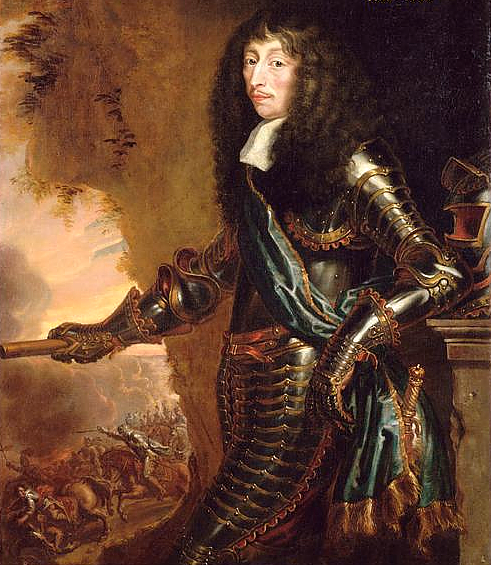
Battlefield Royal: Louis II de Bourbon, Prince de Condé
The way French military prowess is routinely denigrated, it is no wonder that the ignorant often say scoffingly that, in terms of great military leaders, the French would have nothing without Napoleon. And Napoleon wasn’t even really French. This attitude, however, derives almost entirely from World War II and is an exaggeration even if only looking at that unfortunate conflict. Rest assured, that even without Napoleon, France boasts a number of military giants, not only in French history but in the history of the world at large and one of those was most certainly Louis II de Bourbon, Prince de Condé. He was a colorful character to be sure, alternately regarded as a war hero, a traitor and the savior of his country. His achievements warrant his inclusion, not just on any list of great French military commanders but amongst the most remarkable and influential captains in world history (and he would not be the sole Frenchman on such a list).
A “prince of the blood”, Louis was born the Duke of Enghien on September 8, 1621. As such, his was a childhood of wealth and privilege. Despite their august and semi-sacred status, many Bourbon royals could still be shy, withdrawn or even possessing of a degree of humility. Condé, however, was not one of them. He was proud, arrogant and could be extremely condescending. Yet, he was one of those rare personalities who, to the frustration of some, had as much talent as he had vanity. Entrusted, because of his birth, with a military command at the age of only nineteen, Condé nonetheless quickly proved that he more than merited such a position. He was no listless lord, no idle aristocrat, not at all one of those puffed up princes of popular fiction who is all glamour and no substance, the sort in any story we all wait to receive his comeuppance. On the contrary, Condé was driven to excel, possessed immense determination and real bravery. He also learned the art of war very quickly and very well. He became a master at evaluating the enemy and exploiting the slightest weakness.
He displayed so much talent that within three years he was given command of the French army and posted to the frontier to defend against an invasion from the Spanish Netherlands. However, standing still on the defensive was not his style. Condé went on the offensive himself and intercepted the Spanish army at Rocroi on May 19, 1643. This was no small affair. The Spanish infantry formations of pikemen and musketeers were rightly regarded as the best in the world in those days, a powerful combination of powder and steel that seemed unstoppable. The vaunted tercios, however, had met their match in the Prince de Condé. He concentrated his artillery to blast the Spanish lines, outflanked their cavalry with his own and then crushed the Spanish from both sides as his own infantry charged from the front and his cavalry from the rear. It was one of the most spectacular victories in French history. While losing only 2,000 men, Condé had wiped out 20,000 Spaniards, destroyed their army and in so doing also destroyed 150 years of Spanish military dominance in Europe. He had correctly evaluated his enemy and brilliantly exploited their weaknesses. It was his specialty and he won a victory that would never be forgotten.
The Battle of Rocroi, however, was only the beginning for the Prince de Condé. He next shifted to Alsace to meet the Bavarians. Although he did not destroy their army totally as he had the Spanish, in three sharp battles he forced the Bavarians to quit French soil and retreat back across the Rhine. When they returned the following year, Condé, along with another giant of French military history, Turenne, again defeated the Bavarians and forced them to withdraw. Time and again, over the next decade, Condé was called upon to chastise the enemies of France but with each victory he also gained enemies at court where jealously about the young man who so dominated the battlefields was not uncommon. The greater his popularity, the greater the envy many felt towards him. He did have his setbacks as well. In 1647 he was dispatched to Spain and met with a bitter loss at Lerida, a failure of logistics rather than battlefield tactics. Nonetheless, it was an aberration and he still succeeded in carrying out the occupation of Catalonia.
1648 saw the Prince de Condé rushed to command the French army in Flanders, the target of the Spanish forces of Archduke Leopold Wilhelm. Condé concocted a cunning trap for the Archduke, feigning a retreat to draw the Spanish out of their defenses at Lens on August 20. The enemy took the bait and as they came out Condé again used his cavalry to outflank them and rolled them up like a blanket. This additional success was welcome but it came at a time of great turmoil in France. “The God-given” Louis XIV was officially King of France but it was his mother, Queen Anne of Austria, who ruled as regent. She, however, had handed actual power over to Cardinal Mazarin and rumors about the two were rampant. Soon, leading aristocrats in France were preparing to rise up in revolt against the Queen-regent and Cardinal Mazarin. To lead this rebellion, the “Fronde”, the elites recruited the Prince de Condé. More controversial still, he made common cause with his former Spanish enemies to bring down the Queen Mother.
In 1658, at the head of a largely Spanish army, the Prince de Condé met the loyalist forces of his old comrade-in-arms, the great Turenne. The resulting battle was short but decisive and it was Turenne who emerged victorious. Condé retreated, having already been sentenced to death in absentia for treason in 1654. The situation in France stabilized after 1659 when the war ended with the Treaty of the Pyrenees and the Prince began to use his connections to lobby for his pardon and return home. Many, obviously, were not enthusiastic about this but the enemies of France persisted and it proved impossible to leave so talented a captain in exile. In 1668 Condé finally succeeded in being brought home and given command of another French army. Some distrusted him and always would but his immense talents had not abandoned him and after a smashing victory over the Dutch at Arnhem in 1672 and later another triumph over the Prince of Orange at Seneffe in 1674, his loyalty seemed well proven and his critics were largely silenced.
The success at Seneffe, however, would prove to be his last victory. Although only in his mid-fifties, that was a more advanced age for the time than it is today and Condé was suffering from a variety of ailments ranging from gout, the common affliction of the upper class, to the simple effects of old age and so many years campaigning. He was simply no longer physically capable of taking to the battlefield and so, after more than thirty years of leadership, retired to his palatial home, devoting his remaining years to his family, study and of course, living as lavishly as he could. The great Condé died at Fontainebleau on December 11, 1686 at the age of sixty-five.
The Prince de Condé was one of the most remarkable figures France has ever produced and one of the most brilliant tacticians the world has ever seen. Coming from the very elite of the elite, Condé was nonetheless a “hands on” commander, a general who led from the front and who had the scars to show for it. During his many years of battles he had numerous horses shot out from under him and was wounded in action on multiple occasions. His courage was beyond question and his skill was obvious for all to see. He had a very quick mind, remarkable powers of observation and almost always found some fault in his enemy that he could exploit, in the heat of battle, to win the day. In his own time, Turenne was probably the only commander more influential than he and of course it helped that Turenne was never branded a traitor. Yet, even in that, Condé proved himself capable of snatching victory from the jaws of defeat in his own life. Widely regarded as the greatest war hero in France, he was condemned as a traitor, sentenced to death and yet, in a time of crisis, came back and smashed the Dutch to be celebrated as the savior of his country. In any listing of the great captains of history, from all around the world, one will surely find the name of Louis II de Bourbon, Prince de Condé.
![]() |
| The young prince |
![]() |
| The Prince at the Battle of Rocroi |
The Battle of Rocroi, however, was only the beginning for the Prince de Condé. He next shifted to Alsace to meet the Bavarians. Although he did not destroy their army totally as he had the Spanish, in three sharp battles he forced the Bavarians to quit French soil and retreat back across the Rhine. When they returned the following year, Condé, along with another giant of French military history, Turenne, again defeated the Bavarians and forced them to withdraw. Time and again, over the next decade, Condé was called upon to chastise the enemies of France but with each victory he also gained enemies at court where jealously about the young man who so dominated the battlefields was not uncommon. The greater his popularity, the greater the envy many felt towards him. He did have his setbacks as well. In 1647 he was dispatched to Spain and met with a bitter loss at Lerida, a failure of logistics rather than battlefield tactics. Nonetheless, it was an aberration and he still succeeded in carrying out the occupation of Catalonia.
![]() |
| The Prince at the Battle of Lens |
![]() |
| The Prince received at Versailles |
The success at Seneffe, however, would prove to be his last victory. Although only in his mid-fifties, that was a more advanced age for the time than it is today and Condé was suffering from a variety of ailments ranging from gout, the common affliction of the upper class, to the simple effects of old age and so many years campaigning. He was simply no longer physically capable of taking to the battlefield and so, after more than thirty years of leadership, retired to his palatial home, devoting his remaining years to his family, study and of course, living as lavishly as he could. The great Condé died at Fontainebleau on December 11, 1686 at the age of sixty-five.
The Prince de Condé was one of the most remarkable figures France has ever produced and one of the most brilliant tacticians the world has ever seen. Coming from the very elite of the elite, Condé was nonetheless a “hands on” commander, a general who led from the front and who had the scars to show for it. During his many years of battles he had numerous horses shot out from under him and was wounded in action on multiple occasions. His courage was beyond question and his skill was obvious for all to see. He had a very quick mind, remarkable powers of observation and almost always found some fault in his enemy that he could exploit, in the heat of battle, to win the day. In his own time, Turenne was probably the only commander more influential than he and of course it helped that Turenne was never branded a traitor. Yet, even in that, Condé proved himself capable of snatching victory from the jaws of defeat in his own life. Widely regarded as the greatest war hero in France, he was condemned as a traitor, sentenced to death and yet, in a time of crisis, came back and smashed the Dutch to be celebrated as the savior of his country. In any listing of the great captains of history, from all around the world, one will surely find the name of Louis II de Bourbon, Prince de Condé.
Wednesday, February 21, 2018
Clash of Monarchies: The Third War of Italian Independence
The last of the three wars to secure the unity and independence of the Kingdom of Italy requires more than the usual background information. The preliminaries took longer than the war itself. The Second War of Italian Independence had seen the Austrian Empire beaten by the French and Italians at the bloody Battle of Solferino in 1859. Austria was forced to cede Lombardy to the King of Piedmont-Sardinia as well as the conquest of Modena, Parma, Tuscany and most of the Papal States in 1860 which were united with the rest of the northern half of the peninsula under the House of Savoy of the Kingdom of Piedmont-Sardinia. However, the French ultimately won few friends and, by the time the smoke had cleared, came to be seen as duplicitous by both the Austrians and many Italians. Moreover, the Prussians had mobilized during the conflict but had not taken part. They too were pursuing a nationalist goal of reunifying all of the German states into one empire (Reich). Austria, rather than lead, stood opposed to this and the war in Italy was used by the Prussians as proof of both Austrian weakness and a greater concern for maintaining their rule over non-Germans than for resuming leadership of the German nation on the part of Austria.
All of that was simmering and would ultimately come to a boil when Bismarck was to provoke Austrian Emperor Franz Joseph into a war (just as Napoleon III had done in 1859 and others would do yet again). In the meantime, however, the unification of the Italian peninsula continued apace and in a shocking way. The famed Italian nationalist, Giuseppe Garibaldi, renowned for his exploits in South America and his defeat of the French in front of Rome in 1849, was as eager as ever to go on the attack. In 1849, Garibaldi, a lifelong republican and Freemason, had fought for the radical republicans of Giuseppe Mazzini. However, he had seen them prove totally incapable of governing and witnessed how easily they were defeated. Since then, he had seen King Vittorio Emanuele II and his royalists, deliver actual victories for the nationalist cause and Garibaldi was that rare case of a nationalist who did not put his own ideology before all else. If the republicans, who he favored, could not get the job done, he would fight his battles on behalf of a monarch if that meant the furtherance of the nationalist cause. However, given his background, his politics and his aggressiveness, the government of King Vittorio Emanuele II, led by Count Camillo Cavour, had to be careful in how it dealt with Garibaldi, to make use of him while not being seen too blatantly to make use of him in case his far-fetched scheme might fail.
The scheme he had in mind was nothing short of the conquest of the Kingdom of the Two-Sicilies, ruled, at that time, by the cadet branch of the Spanish Royal Family. In May of 1860, with only a thousand volunteers, Garibaldi sailed out to take on the Bourbon monarchy which possessed a large army and a bigger navy than Piedmont-Sardinia. He and his little force of men, garishly dressed in red shirts, landed in Sicily, the garrison of which had been reinforced from 21,000 to 40,000 men when word of Garibaldi’s plan reached Naples. Garibaldi should have had no chance at all, however, he was a master at misdirection and the Kingdom of the Two-Sicilies proved far less formidable in fact than it appeared on paper. Particularly in Sicily, the repeated rebellions of the previous decades had taken their toll and the King, Francesco II, had wiped out his Swiss mercenaries, his best troops, when they went on strike over better pay and conditions.
Garibaldi could never have conquered Sicily with only a thousand men but many Sicilian peasants rushed to join his cause and more reinforcements would be arriving by ship later on. The first decisive action was the Battle of Calatafimi on May 15, 1860. If the Neapolitans had beaten Garibaldi there, he would have been ruined and his local support would have melted away. Yet, though outnumbered 3-to-1, Garibaldi managed to win, or at least not lose which was good enough for his purposes. Emboldened by this, and attracting a little over a thousand more local volunteers in the aftermath, Garibaldi launched a direct assault on the coastal fortress city of Palermo. He let prisoners out of jail which enlarged his forces and had little trouble rousing the city to rebellion (Palermo had a history of this) but the Neapolitan general, the elderly Ferdinando Lanza, managed to drive them back after which he and his offshore naval support shelled the city for three days, killing hundreds of civilians. This, obviously, did nothing to help the Bourbon cause in the long-run. Many have since accused Lanza of having been paid off by the British but I would be hesitant to believe such a thing without hard evidence. He did surrender the city to a force smaller than his own and which was practically out of ammunition but he did so only after his own counter-attack had failed. The enemy were in the city and it seemed impossible to dislodge them. He also had permission from his King to withdraw and on July 7 the Neapolitan army did just that.
Earlier that month King Francesco II had granted a(nother) constitution but it did him no good. Those who wanted one no longer believed the Bourbon monarchy trustworthy on this subject while the more reactionary supporters of the monarchy were put off by it. After Garibaldi’s forces won another victory at Milazzo, the Neapolitan commander surrendered the key fortress city of Messina less than a week later. The remaining Neapolitan garrisons on the island surrendered soon after. Garibaldi was master of Sicily and controlled access to the mainland. The next month he and his forces crossed over to Calabria, against the direct wishes of Cavour who had conspired with Garibaldi to make the invasion of Sicily possible. In Calabria there was little effective resistance as the large Bourbon armies simply melted away, many simply deserting and not a few even crossing over to join Garibaldi. In the meantime, the Piedmontese had invaded the remaining Papal States on the pretext of suppressing disorder. Pope Pius IX deployed his own army but held them back, certain that France or Austria would come to his aid. Neither did. Further south, the gallant, young, King Francesco II barricaded himself inside the coastal fortress of Gaeta with his few remaining loyal troops. The Piedmontese army and the army of Garibaldi linked up with Garibaldi handing all of his conquests over to King Vittorio Emanuele II of Italy. The siege of Gaeta dragged on to its inevitable conclusion, showing at least what an inspiring leader King Francesco II was and what he might have accomplished if he had taken to the field to defend his kingdom personally.
After 100 days of resistance, Francesco II surrendered and went into exile, the south was reunited with the north for the first time since the fall of the Roman Empire and Vittorio Emanuele II was proclaimed King of Italy. Of the major Italian territories, only Rome and Venice remained out of reach. Rome was occupied by the French and Venice by the Austrians. Peaceful efforts to gain these came to nothing. The new King of Italy offered to purchase Venice from Emperor Franz Joseph, but was refused. Likewise, Pope Pius IX refused to hear of the offer of Cavour for absolute sovereign immunity for the pope and total power for him in all Church matters. The status quo, however, could not endure as the nationalist movement which had taken hold in Italy would never abide separation from Venice and Rome. Not long after, Count Cavour suddenly died and though the King had never liked him much, the two had learned how to work together and a period of some political instability ensued. Garibaldi, seeing his work still unfinished, recruited some more volunteers and made to attack Rome. The French and Austrians both threatened war if he was not stopped and so the Italian army did the job, halting the nationalist volunteers at the Battle of Aspromonte in August of 1862, even wounding Garibaldi himself in the process.
This was what we would call today a public relations nightmare for the Italian government and to an extent broke the nationalist-monarchist coalition. The royalists accused the nationalists of being rash and foolhardy while the nationalists accused the King of caring more for the Pope than for Italy, taking the side of the French occupiers over the Italian people. All of this added pressure on the new Kingdom of Italy to take any chance that presented itself to regain its nationalist credentials. The government saw hope for regaining Venice when, also in 1861, Otto von Bismarck became chancellor of the Kingdom of Prussia. Bismarck was well known as a man who was determined to have a united Germany and if Austria would not lead, he would push them out of the way and Prussia would assume leadership. However, when Napoleon III proved not so positive toward Prussia and negative toward Austria as Bismarck had hoped, Prussia and Austria renewed ties under the German Confederation (just in time for a war with Denmark). Italian hopes for an alliance were dashed, but the reunion did not last long.
Conflict began to bubble up over disagreements between Austria and Prussia over the administration of the lands taken in the war with Denmark. Among German nationalists, there had also been a long standing division over whether or not the united Germany would include Austria due to the fact that Austria also ruled over so many non-German peoples that German nationalists cared nothing about. With the Austro-Prussian dispute, that matter was settled; Austria would be excluded and, as far as Bismarck was concerned, could go on having fun in her ‘majority minority’ empire. If Prussia were to take on Austria, there would be no better time as Habsburg foreign policy had managed to alienate just about everyone by this stage. Austria was sore at the French for allowing the incorporation of the central Italian states into the Kingdom of Italy and so, naturally, the French were sore at Austria in return. The Italians, naturally, wanted Venice back and so were certainly not going to take the side of Austria and, most importantly, the Russians were still furious at Emperor Franz Joseph for threatening to side against them in the Crimean War, effectively forcing them to concede defeat. The Prussians had also stood by the Russians in a recent rebellion in Poland, whereas the Austrians had not. The British, for their part, had no great love for either side and had no reason to care who won.
Bismarck had only to prod Austria with the right words for Emperor Franz Joseph to demand a resolution of the Holstein issue by the German Imperial Diet which violated a treaty between Austria and Prussia, which was all Bismarck needed to go to war. Many have since pondered why the Austrian Emperor did such a thing after having been previously baited into a failed war with France and Piedmont-Sardinia not so long before. The most common explanation is that Austria was still not really looking toward the German states so much as the other ethnicities within the Austrian Empire, which were rather restive. The Hungarians, who had come under much more strict control since the Revolution of 1848, were looking particularly troublesome. The Emperor may have been hoping that a war with Prussia and Italy would unite the ethnic groups behind Austrian leadership and strengthen the empire.
In any event, on June 14, 1866 the war began with Prussian troops marching into Saxony and Bohemia. The Prussian army had mobilized rapidly thanks to the adept leadership of war minister Graf von Roon and the army commander Graf von Moltke. The Italian Royal Army was less well prepared, with elements of the north and south still not having coalesced very well. Some of this was due to personality issues, some due to organizational differences and sometimes simply the differences between the dialects of Turin and Naples. The Italian war plan was for the army of General Alfonso La Marmora to strike while the army of General Enrico Cialdini remained on the defensive. They would have superior numbers but the Austrians, with their powerful fortress cities of the Quadrilateral, would be able to concentrate their troops against any threat. The Italians, in typical fashion, came straight on with a bold offensive by the troops of La Marmora, accompanied by King Vittorio Emanuele II himself, who loved nothing better than being on campaign.
The Austrians were led by Archduke Albrecht, Duke of Teschen, the Emperor’s cousin and a veteran of Radetzky’s victorious army from the First War of Italian Independence. He was not content to remain on the defensive but moved his army around to the north in an effort to get behind the Italians, cut them off from their base of operations and assault them from the rear. As it happened, the Italian army turned at just the right moment and the two sides collided at the Battle of Custoza on June 24. It was a very confused fight. The Austrian cavalry charged in, were mostly wiped out but spread confusion that stymied a sizeable number of Italian units. The Austrians drove the Italians out of Oliosi and seemed to be winning the day, yet were then met by an Italian division that exploited the gaps in their lines and refused to be dislodged, repelling fierce and repeated Austrian attacks at Monte Croce. The Austrians thought they were beaten, yet the Italians did not immediately reinforce Monte Croce and finally the forces there began to fall back. When reinforcements were sent and the Austrians moved to match them, the Austrians left another gap in their lines but the Italians failed to exploit it.
Each army believed they had been beaten, though neither actually had been. However, it was La Marmora who was the first to take action on this mistaken assumption and he ordered a retreat. As his forces moved back to secure the bridges over the Mincio, gaps in the Italian lines opened up which the Austrians were quick to exploit and Italian losses were heavy. By the end of the day, the Italians had retreated across the river after losing 8,147 men compared to losses of 5,650 for the Austrians. However, Archduke Albrecht did not follow up to destroy the Italian army, viewing his army as too bloodied and too exhausted to continue. As it was, most of the Italian losses had been men who were captured, as far as the number of dead and wounded alone went, Austrian losses were considerably higher. The Archduke retired to Verona, fearful of exposing his forces in case the French decided to get involved. Emperor Franz Joseph had advised him to ignore any political consideration and focus on annihilating the Italians, however, Archduke Albrecht seemed more concerned in not repeating the disaster that had befallen Franz Joseph himself at Solferino. As it was, Austria had won a solid victory and removed itself from immediate danger on the Italian front.
In fact, the Austrian Empire seemed to be doing exceedingly well in the opening weeks of the conflict. They had defeated the Italians at Custoza and soon after halted the Prussians at Trautenau and the Austrian-allied forces of the Kingdom of Hanover also defeated the Prussians at Langensalza. However, at that point, everything began to go wrong. Only two days later the Hanoverians surrendered and the Prussians bested the Austrians at Gitschin on June 29. Most devastating of all for Austria was the decisive Prussian victory at the Battle of Koeniggraetz (Sadowa) on July 3. Subsequent defeats followed and in Italy, a small force under Giuseppe Garibaldi, who was still full of fight, was on the attack in the Trentino while the Italian high command planned their own counter-offensive. On July 21, Garibaldi and his “Hunters of the Alps” were attacked by two Austrian columns led by Major General Franz Baron von Kuhn at the town of Bezzecca. The Italians immediately counter-attacked and though they took heavier losses, managed to drive the Austrians out, providing a much needed morale boost for the Italian forces.
The Italian war effort seemed to be on the rebound. General Cialdini was on the advance, this time with La Marmora holding back to cover the Austrian fortresses, Garibaldi had won a hard fought victory at Bezzecca and the Italian navy, widely regarded as the vastly superior force, was preparing to land troops on the Adriatic island of Lissa off the Dalmatian coast. However, it was then that everything was spoiled by the greatest disaster of the war for Italy. To the surprise of all, the much smaller Austrian fleet of Admiral Wilhelm von Tegetthoff, attacked the Italian fleet while they were preparing to land their forces. The Italian commander, Admiral Count Carlo di Persano, was caught off guard and seemed totally bewildered. Two Italian ironclad warships were sunk while the Austrians lost none of their own, though one unarmored steamer was badly damaged. The Italians retreated and the Austrian sailors cheered. Ironically, most of the “Austrian” sailors were actually Italians, from Venice. It was a humiliating blow for Italy which was not helped by the fact that Persano first reported that he had won a great victory. This made it very awkward, needless to say, and all the worse when the truth came out.
The outcome of the war had, for all intents and purposes, mostly been decided at the Battle of Sadowa with the Prussians crushing the Austrian army there. However, the Austrian reinforcements on their way to Italy, combined with the stunning loss at Lissa, prompted Italy to come to the peace table too, in spite of the advances of Garibaldi and Cialdini and the hopes riding on them to make good on the loss at Custoza. It was not the glorious victory that had been hoped for, nor would the resulting peace treaty be easy for anyone. Italy was on the winning side but Prussia had been the ones to force Austria to the negotiating table. Even then, it was only thanks to the intransigence of Bismarck as most of the Prussian officers wanted to carry on and capture Vienna and perhaps more. Bismarck would not hear of it. All he wanted was a war to shove Austria out of the way so that Prussia could create a united Germany. He had no desire to see Austria humiliated or destroyed.
However, the Austrians were still Austrian and while they could grudgingly accept being beaten by Prussia, they would still insist on being condescending to the hated Italians. They refused to concede anything to Italy, yet Prussia was bound by their alliance not to make peace unless Venice was restored to Italy. However, the Austrian Empire refused to budge on this and so Prussia and Italy had to turn to Emperor Napoleon III of the French, who had been on side but taken no part in the conflict. The result was rather ridiculous. Austria finally agreed to make peace but by ceding Venice to the French Empire at which point the French then handed Venice over to the Kingdom of Italy. In a way, however, it was rather fitting given that Austria had first acquired Venice by originally dividing the Venetian territories with the first French Republic. So it was that Prussia proved to the minor German states that Austria would not be looked to for leadership and, after the appropriate referendum, Venice was annexed to the Kingdom of Italy.
An unfortunate result of the Austrian intransigence during the peace process was to perpetuate the false impression that Italy had accomplished nothing during the war. The Italians had won battles and the naval engagement of Lissa was the only truly embarrassing loss. The battle of Custoza was two armies that basically fought each other to exhaustion, both thought they had lost and the Italians were simply the first to do anything about it and as they began to pull back the Austrians pounced. Garibaldi had won a hard fought victory in the north, the Italians had not been destroyed and were in the process of counter-attacking, were advancing back into Venetia, when the crushing victory of the Prussians brought the war to a close. The Austrians had not ‘run away with it’ so to speak. In any event, Italy had at least regained Venice, leaving only Rome still under foreign occupation. Prussia was clearly established as the leading German state, only one further step away from unification whereas the Austrian Empire had been humbled and was soon thereafter forced to make vast concessions to the Hungarians, leading to the compromise which turned the Austrian Empire into the “Dual Monarchy” of Austria-Hungary.
![]() |
| Franz Joseph, Wilhelm I, Vittorio Emanuele II |
The scheme he had in mind was nothing short of the conquest of the Kingdom of the Two-Sicilies, ruled, at that time, by the cadet branch of the Spanish Royal Family. In May of 1860, with only a thousand volunteers, Garibaldi sailed out to take on the Bourbon monarchy which possessed a large army and a bigger navy than Piedmont-Sardinia. He and his little force of men, garishly dressed in red shirts, landed in Sicily, the garrison of which had been reinforced from 21,000 to 40,000 men when word of Garibaldi’s plan reached Naples. Garibaldi should have had no chance at all, however, he was a master at misdirection and the Kingdom of the Two-Sicilies proved far less formidable in fact than it appeared on paper. Particularly in Sicily, the repeated rebellions of the previous decades had taken their toll and the King, Francesco II, had wiped out his Swiss mercenaries, his best troops, when they went on strike over better pay and conditions.
![]() |
| Battle of Calatafimi |
![]() |
| Garibaldi & the King meet at Teano |
After 100 days of resistance, Francesco II surrendered and went into exile, the south was reunited with the north for the first time since the fall of the Roman Empire and Vittorio Emanuele II was proclaimed King of Italy. Of the major Italian territories, only Rome and Venice remained out of reach. Rome was occupied by the French and Venice by the Austrians. Peaceful efforts to gain these came to nothing. The new King of Italy offered to purchase Venice from Emperor Franz Joseph, but was refused. Likewise, Pope Pius IX refused to hear of the offer of Cavour for absolute sovereign immunity for the pope and total power for him in all Church matters. The status quo, however, could not endure as the nationalist movement which had taken hold in Italy would never abide separation from Venice and Rome. Not long after, Count Cavour suddenly died and though the King had never liked him much, the two had learned how to work together and a period of some political instability ensued. Garibaldi, seeing his work still unfinished, recruited some more volunteers and made to attack Rome. The French and Austrians both threatened war if he was not stopped and so the Italian army did the job, halting the nationalist volunteers at the Battle of Aspromonte in August of 1862, even wounding Garibaldi himself in the process.
![]() |
| King Wilhelm I & Bismarck |
Conflict began to bubble up over disagreements between Austria and Prussia over the administration of the lands taken in the war with Denmark. Among German nationalists, there had also been a long standing division over whether or not the united Germany would include Austria due to the fact that Austria also ruled over so many non-German peoples that German nationalists cared nothing about. With the Austro-Prussian dispute, that matter was settled; Austria would be excluded and, as far as Bismarck was concerned, could go on having fun in her ‘majority minority’ empire. If Prussia were to take on Austria, there would be no better time as Habsburg foreign policy had managed to alienate just about everyone by this stage. Austria was sore at the French for allowing the incorporation of the central Italian states into the Kingdom of Italy and so, naturally, the French were sore at Austria in return. The Italians, naturally, wanted Venice back and so were certainly not going to take the side of Austria and, most importantly, the Russians were still furious at Emperor Franz Joseph for threatening to side against them in the Crimean War, effectively forcing them to concede defeat. The Prussians had also stood by the Russians in a recent rebellion in Poland, whereas the Austrians had not. The British, for their part, had no great love for either side and had no reason to care who won.
![]() |
| Bismarck, von Roon & von Moltke |
In any event, on June 14, 1866 the war began with Prussian troops marching into Saxony and Bohemia. The Prussian army had mobilized rapidly thanks to the adept leadership of war minister Graf von Roon and the army commander Graf von Moltke. The Italian Royal Army was less well prepared, with elements of the north and south still not having coalesced very well. Some of this was due to personality issues, some due to organizational differences and sometimes simply the differences between the dialects of Turin and Naples. The Italian war plan was for the army of General Alfonso La Marmora to strike while the army of General Enrico Cialdini remained on the defensive. They would have superior numbers but the Austrians, with their powerful fortress cities of the Quadrilateral, would be able to concentrate their troops against any threat. The Italians, in typical fashion, came straight on with a bold offensive by the troops of La Marmora, accompanied by King Vittorio Emanuele II himself, who loved nothing better than being on campaign.
![]() |
| Archduke Albrecht |
![]() |
| The Battle of Custozza |
![]() |
| Battle of Bezzecca |
![]() |
| Battle of Lissa |
The outcome of the war had, for all intents and purposes, mostly been decided at the Battle of Sadowa with the Prussians crushing the Austrian army there. However, the Austrian reinforcements on their way to Italy, combined with the stunning loss at Lissa, prompted Italy to come to the peace table too, in spite of the advances of Garibaldi and Cialdini and the hopes riding on them to make good on the loss at Custoza. It was not the glorious victory that had been hoped for, nor would the resulting peace treaty be easy for anyone. Italy was on the winning side but Prussia had been the ones to force Austria to the negotiating table. Even then, it was only thanks to the intransigence of Bismarck as most of the Prussian officers wanted to carry on and capture Vienna and perhaps more. Bismarck would not hear of it. All he wanted was a war to shove Austria out of the way so that Prussia could create a united Germany. He had no desire to see Austria humiliated or destroyed.
![]() |
| King Vittorio Emanuele II enters Venice |
An unfortunate result of the Austrian intransigence during the peace process was to perpetuate the false impression that Italy had accomplished nothing during the war. The Italians had won battles and the naval engagement of Lissa was the only truly embarrassing loss. The battle of Custoza was two armies that basically fought each other to exhaustion, both thought they had lost and the Italians were simply the first to do anything about it and as they began to pull back the Austrians pounced. Garibaldi had won a hard fought victory in the north, the Italians had not been destroyed and were in the process of counter-attacking, were advancing back into Venetia, when the crushing victory of the Prussians brought the war to a close. The Austrians had not ‘run away with it’ so to speak. In any event, Italy had at least regained Venice, leaving only Rome still under foreign occupation. Prussia was clearly established as the leading German state, only one further step away from unification whereas the Austrian Empire had been humbled and was soon thereafter forced to make vast concessions to the Hungarians, leading to the compromise which turned the Austrian Empire into the “Dual Monarchy” of Austria-Hungary.
Sunday, February 18, 2018
Monarch Profile: Emperor Bokassa I of Central Africa
The cause of monarchy in modern Africa has been a difficult one. In most of sub-Saharan Africa the tribal system of government persisted throughout the colonial period and still persists today under the surface of most regimes. Today, the only sovereign monarchies which exist in Africa are the Kingdom of Morocco and the small kingdoms of Lesotho and Swaziland which are, essentially, dependencies of South Africa. Previously, the only major Black African sovereign monarchy was the Empire of Ethiopia, restored by the British colonial and imperial armed forces during World War II and which was brought down by a communist coup in 1974. Many people in the African Diaspora (not quite so many in Africa itself) had looked to Ethiopia as the example they should aspire to. The same would not be said for the new imperial monarchy which sprang up thanks to one Jean-Bedel Bokassa of the Central African Republic which to many, then as now, strike most as farcical at best.
Jean-Bedel Bokassa was born in Ubangi-Shari in what was then French Equatorial Africa on February 22, 1921. Orphaned at a young age, he was educated in Catholic missionary schools, part of what the French proudly termed their ‘mission to civilize’ the primitive parts of the world. The young Bokassa proved himself to be not without ability, joining the French colonial army in 1939 as a private soldier. During World War II, he fought to secure the colony for the Free French forces from those of the Vichy regime and later fought on other fronts, including in southern France itself before the ultimate defeat of Nazi Germany. He remained in the army, deciding to make that his career when a new conflict soon arose with the outbreak of war against the communist revolutionaries of French Indochina. Unlike America later, France never sent French conscripts to Vietnam and so relied heavily on native troops, the Foreign Legion and colonial soldiers from other parts of the French empire. Bokassa earned the Legion of Honor and the Cross of War before the French withdrawal from Vietnam, the young African private had become an officer and risen to the rank of captain. He had also married a Vietnamese girl and had a child before his tour ended but he abandoned them both. Were they still around when the North Vietnamese concluded the war, their fate could not have been a happy one.
The idea that such service was evidence of any great loyalty to the French colonial empire was, however, a false one and in Africa, as in Indochina, the movement gained strength for the independence of the French African colonies and the dissolution of the French colonial empire. In 1960 Ubangi-Shari was granted independence from France as the Central African Republic, led by President David Dacko, a distant cousin of Bokassa. Like most who would come to power in post-colonial Africa, Bokassa was the son of a tribal chief and had aspirations for leadership which did not include playing subordinate to his distant relative. President Dacko gave Bokassa, no doubt because of his military record with the French as a company officer, command of the armed forces of the new republic. Granted those armed forces amounted to only 500 men but it was something Bokassa took very seriously and it was totally in keeping with local custom in post-colonial Africa for new national leaders to stock the government with their relatives.
Soon, because of his obvious ambition, people in the Dacko administration began to fear Bokassa. Most, however, dismissed him as a vain and silly man who was not clever enough to be a real challenge to them. Bokassa worked to expand the army and his own prominence (because of the size of the army his rank was only colonel). However, the situation in the C.A.R. worsened quickly after independence. The economy stagnated and then began to decline, the bureaucracy totally broke down and foreign guerilla groups routinely violated C.A.R. territory. Dacko reached out to Communist China for help and soon communist propaganda was spreading throughout the country. The Chinese also made large loans to the Dacko government but most of this went into the pockets of government officials and the economy continued to decline. Bokassa began to make noise about stepping up to save the country from financial ruin and communist subversion and this finally caused Dacko to take notice. When Bokassa went to France for Bastille Day, Dacko refused to allow him to return until President Charles de Gaulle demanded that Dacko reinstate him, speaking of Bokassa as his “comrade in arms” from World War II.
This was done but, obviously, there was no longer any trust or loyalty between the two and Dacko began taking steps to replace Bokassa and disperse his supporters. However, he was not very subtle about this and Bokassa soon saw what was going on and decided to get rid of Dacko before Dacko could get rid of him. In the early hours of January 1, 1966, in what was called the Saint-Sylvestre coup d’etat, Bokassa and his chief subordinate Captain Alexandre Banza, seized control of the capital and, in due course, his forces captured and arrested President Dacko. Once in power, Bokassa promised a new era of equality for all, abolished the constitution and ruled through a Revolutionary Council. He promised that after his forces had eliminated corruption and communism, allowing the economy to stabilize, new elections would be held for a new national assembly and a new constitution. He banned opposition parties, outlawed begging and made employment mandatory. Anyone without a job could be imprisoned. However, he also banned polygamy and female circumcision, established a bus line in the capital, a ferry service on the Ubangi and used government funds to establish two national orchestras. He also broke off diplomatic relations with Communist China. In short, he did make some positive changes.
The new regime was troubled by the slowness of foreign powers to recognize them, particularly the French. The economy also showed no signs of improvement and when Captain Banza pointed out that the lavish spending of Bokassa was not helping, he was immediately demoted. Banza then began planning his own coup to unseat Bokassa but his actions were reported by a loyalist and he was arrested and executed after being beaten nearly to death. This caused a degree of disgust in France but French recognition did finally come. Colonel Gaddafi in Libya lent support to Bokassa, subtly at first, and a strange sort of normalcy finally seemed to settle. In 1972, having previously promoted himself to general, Bokassa declared himself president for life. This still was not good enough and General Bokassa was rather frustrated at the situation in his country. It was not as grand and prosperous as it should be and he felt he was not receiving the full respect of the international community that was his due. Ultimately, he seemed to believe that if he could make the C.A.R. look like a great power, it would become a great power. So, he decided to give himself another, major, promotion. He would become a Napoleonic-style monarch and make the Central African Republic the “Central African Empire”. He envisioned an advanced, dazzling, empire in the heart of Africa that would entrance the world and inspire Africans everywhere. And he was serious.
At the end of 1976, Bokassa dissolved his government, proclaimed the country the Central African Empire, issued a new constitution and, having previously converted to Islam, converted back to Catholicism. On December 4, 1977, to mark this shift, he held a lavish coronation ceremony for himself. He had designer robes and gowns, a diamond-encrusted crown and a huge throne made of gold as well as 19th Century Napoleonic style French uniforms made for his soldiers, most of which was all imported from France. The cost was a staggering $20 million, the entire French aid package for that year or one third of the entire annual budget. It was, he claimed, the will of the people that he be elevated to “Emperor Bokassa I” and also that this would gain the respect of world leaders, raise the status of his country in the international community and bring global attention to Central Africa. In that last regard, he was certainly successful as he did get the attention of many people around the world with this spectacle but almost no world leaders attended his coronation and most were convinced that the man was completely insane.
The situation in the new Central African Empire did not immediately improve with the change in style and Emperor Bokassa came under ever increasing criticism. Stories began to emerge of violent repression of dissent, torture and accusations that Emperor Bokassa practiced cannibalism. Such accusations, it must be said, were quite common at the time (and not unknown even now) for African leaders. Though, to be fair, it must also be said that this does not disprove such allegations as cannibalism was most widespread in the area of central Africa and this does tend to be where such accusations are most prevalent. His love of titles, uniforms covered in medals and the allegations of cannibalism caused many in the western press in particular to compare Emperor Bokassa with the Ugandan dictator Idi Amin Dada who had also proclaimed himself, “Conqueror of the British Empire” and, famously, King of Scotland.
In 1979 what little tolerance in the international community that Emperor Bokassa had been shown began to erode. Key elements of this were the emergence of his partnership with the notorious Libyan dictator Gaddafi and the massacre of a large number of people protesting against rising food prices and a considerable lack of food at any price in Bangui. The French, on whose assistance Central Africa continued to depend, began to waver and the French government began to wish for President Dacko to return. The “last straw” for many was the repression of a student protest in 1979. As part of his campaign to make the Central African Empire look affluent and modern, Emperor Bokassa had ordered all students to wear school uniforms with his portrait on them which were rather expensive and, some might argue, rather crass and tacky. When the students protested, about 100 were killed by government forces with Emperor Bokassa accused of severely beating several of the children himself.
This episode was publicized all over the world and brought down a torrent of condemnation on Emperor Bokassa, prompting the French government to intervene in their former colony. In September of 1979 the French government dispatched the First Marine Infantry Parachute Regiment of their special forces to topple Bokassa and restore President Dacko to power. Flying in from Chad, the French had little difficulty in seizing control as the operation had been timed to coincide with Emperor Bokassa being out of the country on a visit to Libya. Dacko was reinstalled as President and he announced the end of the empire and restoration of the Central African Republic. Bokassa first fled to the Ivory Coast but was later granted exile in France due to his being a veteran of the French army (for which he also continued to draw a pension). He wrote a book during these years but it was banned by the French government due to allegations he made about sharing women and giving lavish gifts to President Giscard d’Estaing.
Tried and sentenced to the death in absentia for repression and the murder of political rivals, Bokassa nonetheless returned to the Central African Republic in 1986. He was immediately arrested and charged with a long list of crimes including treason, murder, corruption and cannibalism. He pled not guilty and at his trial denied all charges made against him, often attributing the crimes to others in the government or denying them completely. He was finally found “not guilty” of cannibalism but “guilty” on all other counts and sentencing him to death. However, in 1988 the then-President Kolingba, commuted Bokassa’s execution and shortening his sentence to 20 years in 1989. In 1993 Bokassa was released as part of a general amnesty. His remaining years were not long but just as ‘colorful’ as his time in power had been. He added to his accumulated 17 wives and estimated 50 children, proclaimed himself to be the thirteenth apostle of Jesus Christ and said that he regularly met in secret with the Pope. He died of a heart attack on November 3, 1996 at the age of 75. In 2010 he was legally rehabilitated by President Francois Bozize and praised for the stability of his years in power and his love of country.
To date, no other African leader has tried to follow his example and in my experience most monarchists regard him as a despicable figure who made the institution of monarchy look ridiculous by his antics. That is probably true, however, his crimes were not that an unusual by the standards of post-colonial Africa were dictatorial leaders with big ambitions and no tolerance for opposition have been the rule rather than the exception. There were certainly others who were far worse.
Jean-Bedel Bokassa was born in Ubangi-Shari in what was then French Equatorial Africa on February 22, 1921. Orphaned at a young age, he was educated in Catholic missionary schools, part of what the French proudly termed their ‘mission to civilize’ the primitive parts of the world. The young Bokassa proved himself to be not without ability, joining the French colonial army in 1939 as a private soldier. During World War II, he fought to secure the colony for the Free French forces from those of the Vichy regime and later fought on other fronts, including in southern France itself before the ultimate defeat of Nazi Germany. He remained in the army, deciding to make that his career when a new conflict soon arose with the outbreak of war against the communist revolutionaries of French Indochina. Unlike America later, France never sent French conscripts to Vietnam and so relied heavily on native troops, the Foreign Legion and colonial soldiers from other parts of the French empire. Bokassa earned the Legion of Honor and the Cross of War before the French withdrawal from Vietnam, the young African private had become an officer and risen to the rank of captain. He had also married a Vietnamese girl and had a child before his tour ended but he abandoned them both. Were they still around when the North Vietnamese concluded the war, their fate could not have been a happy one.
The idea that such service was evidence of any great loyalty to the French colonial empire was, however, a false one and in Africa, as in Indochina, the movement gained strength for the independence of the French African colonies and the dissolution of the French colonial empire. In 1960 Ubangi-Shari was granted independence from France as the Central African Republic, led by President David Dacko, a distant cousin of Bokassa. Like most who would come to power in post-colonial Africa, Bokassa was the son of a tribal chief and had aspirations for leadership which did not include playing subordinate to his distant relative. President Dacko gave Bokassa, no doubt because of his military record with the French as a company officer, command of the armed forces of the new republic. Granted those armed forces amounted to only 500 men but it was something Bokassa took very seriously and it was totally in keeping with local custom in post-colonial Africa for new national leaders to stock the government with their relatives.
Soon, because of his obvious ambition, people in the Dacko administration began to fear Bokassa. Most, however, dismissed him as a vain and silly man who was not clever enough to be a real challenge to them. Bokassa worked to expand the army and his own prominence (because of the size of the army his rank was only colonel). However, the situation in the C.A.R. worsened quickly after independence. The economy stagnated and then began to decline, the bureaucracy totally broke down and foreign guerilla groups routinely violated C.A.R. territory. Dacko reached out to Communist China for help and soon communist propaganda was spreading throughout the country. The Chinese also made large loans to the Dacko government but most of this went into the pockets of government officials and the economy continued to decline. Bokassa began to make noise about stepping up to save the country from financial ruin and communist subversion and this finally caused Dacko to take notice. When Bokassa went to France for Bastille Day, Dacko refused to allow him to return until President Charles de Gaulle demanded that Dacko reinstate him, speaking of Bokassa as his “comrade in arms” from World War II.
This was done but, obviously, there was no longer any trust or loyalty between the two and Dacko began taking steps to replace Bokassa and disperse his supporters. However, he was not very subtle about this and Bokassa soon saw what was going on and decided to get rid of Dacko before Dacko could get rid of him. In the early hours of January 1, 1966, in what was called the Saint-Sylvestre coup d’etat, Bokassa and his chief subordinate Captain Alexandre Banza, seized control of the capital and, in due course, his forces captured and arrested President Dacko. Once in power, Bokassa promised a new era of equality for all, abolished the constitution and ruled through a Revolutionary Council. He promised that after his forces had eliminated corruption and communism, allowing the economy to stabilize, new elections would be held for a new national assembly and a new constitution. He banned opposition parties, outlawed begging and made employment mandatory. Anyone without a job could be imprisoned. However, he also banned polygamy and female circumcision, established a bus line in the capital, a ferry service on the Ubangi and used government funds to establish two national orchestras. He also broke off diplomatic relations with Communist China. In short, he did make some positive changes.
The new regime was troubled by the slowness of foreign powers to recognize them, particularly the French. The economy also showed no signs of improvement and when Captain Banza pointed out that the lavish spending of Bokassa was not helping, he was immediately demoted. Banza then began planning his own coup to unseat Bokassa but his actions were reported by a loyalist and he was arrested and executed after being beaten nearly to death. This caused a degree of disgust in France but French recognition did finally come. Colonel Gaddafi in Libya lent support to Bokassa, subtly at first, and a strange sort of normalcy finally seemed to settle. In 1972, having previously promoted himself to general, Bokassa declared himself president for life. This still was not good enough and General Bokassa was rather frustrated at the situation in his country. It was not as grand and prosperous as it should be and he felt he was not receiving the full respect of the international community that was his due. Ultimately, he seemed to believe that if he could make the C.A.R. look like a great power, it would become a great power. So, he decided to give himself another, major, promotion. He would become a Napoleonic-style monarch and make the Central African Republic the “Central African Empire”. He envisioned an advanced, dazzling, empire in the heart of Africa that would entrance the world and inspire Africans everywhere. And he was serious.
![]() |
| Bokassa at his coronation |
| Idi Amin and Bokassa |
In 1979 what little tolerance in the international community that Emperor Bokassa had been shown began to erode. Key elements of this were the emergence of his partnership with the notorious Libyan dictator Gaddafi and the massacre of a large number of people protesting against rising food prices and a considerable lack of food at any price in Bangui. The French, on whose assistance Central Africa continued to depend, began to waver and the French government began to wish for President Dacko to return. The “last straw” for many was the repression of a student protest in 1979. As part of his campaign to make the Central African Empire look affluent and modern, Emperor Bokassa had ordered all students to wear school uniforms with his portrait on them which were rather expensive and, some might argue, rather crass and tacky. When the students protested, about 100 were killed by government forces with Emperor Bokassa accused of severely beating several of the children himself.
This episode was publicized all over the world and brought down a torrent of condemnation on Emperor Bokassa, prompting the French government to intervene in their former colony. In September of 1979 the French government dispatched the First Marine Infantry Parachute Regiment of their special forces to topple Bokassa and restore President Dacko to power. Flying in from Chad, the French had little difficulty in seizing control as the operation had been timed to coincide with Emperor Bokassa being out of the country on a visit to Libya. Dacko was reinstalled as President and he announced the end of the empire and restoration of the Central African Republic. Bokassa first fled to the Ivory Coast but was later granted exile in France due to his being a veteran of the French army (for which he also continued to draw a pension). He wrote a book during these years but it was banned by the French government due to allegations he made about sharing women and giving lavish gifts to President Giscard d’Estaing.
Tried and sentenced to the death in absentia for repression and the murder of political rivals, Bokassa nonetheless returned to the Central African Republic in 1986. He was immediately arrested and charged with a long list of crimes including treason, murder, corruption and cannibalism. He pled not guilty and at his trial denied all charges made against him, often attributing the crimes to others in the government or denying them completely. He was finally found “not guilty” of cannibalism but “guilty” on all other counts and sentencing him to death. However, in 1988 the then-President Kolingba, commuted Bokassa’s execution and shortening his sentence to 20 years in 1989. In 1993 Bokassa was released as part of a general amnesty. His remaining years were not long but just as ‘colorful’ as his time in power had been. He added to his accumulated 17 wives and estimated 50 children, proclaimed himself to be the thirteenth apostle of Jesus Christ and said that he regularly met in secret with the Pope. He died of a heart attack on November 3, 1996 at the age of 75. In 2010 he was legally rehabilitated by President Francois Bozize and praised for the stability of his years in power and his love of country.
To date, no other African leader has tried to follow his example and in my experience most monarchists regard him as a despicable figure who made the institution of monarchy look ridiculous by his antics. That is probably true, however, his crimes were not that an unusual by the standards of post-colonial Africa were dictatorial leaders with big ambitions and no tolerance for opposition have been the rule rather than the exception. There were certainly others who were far worse.
Subscribe to:
Posts (Atom)