Showing posts with label medici. Show all posts

Wednesday, September 28, 2016

The Knights of St Stephen of Tuscany

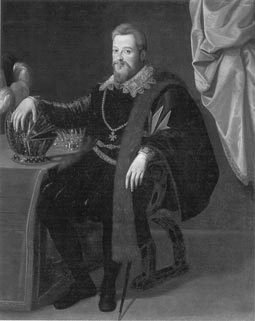
In the old days of Christendom, there were religious military orders subject to the Roman Pontiff, such as the Templars, as well as religious military orders subject to a particular dynastic house. One of these was the Order of St Stephen of the Italian Grand Duchy of Tuscany. Officially, the “Holy Military Order of St Stephen Pope and Martyr”, it was founded on October 1, 1561 by the first Grand Duke of Tuscany, Cosimo I de’ Medici with the permission of Pope Pius IV. This could be seen as part of the normalization of the transition in Tuscany to monarchy, away from the city-state Republic of Florence, taking on more of the trappings associated with monarchy as Florence became the seat of power of a hereditary Grand Duke rather than a republican leadership. The order was named for Pope St Stephen the Martyr because his feast day (August 2) corresponded with the victories that Grand Duke Cosimo had won at the Battle of Montemurlo (August 2, 1537) against republican insurgents who wanted to restore the Florentine republic and the Battle of Marciano (August 2, 1554) in which the Medici grand duke had conquered the city-state Republic of Siena.

Cosimo I
Grand Duke Cosimo had actually been trying to establish such an order for some time and more than one attempt was thwarted by Church opposition, largely for political reasons which was typical of the period in which Italy was divided among feuding states. That, however, finally changed with the reign of Pope Pius IV who was a Medici. The primary purpose of the order was to combat the Islamic pirates who were raiding the Mediterranean at will and who had increasingly threatened the Tyrrhenian Sea where Grand Duke Cosimo had built a new, modern port at Livorno. He also wished to demonstrate his support for the cause of Christendom and to unite his people, including the more recently conquered regions such as Siena and Pisa, against a common, non-Italian and non-Christian enemy. The Grand Duke also hoped it would add prestige to his newly established grand duchy, standing alongside other dynastic orders and adding fame to the name of Tuscany and the House of Medici for fighting on the front-lines against the forces harassing Christendom.

Based on the religious rule of St Benedict, the order took as its symbol a red eight-point cross on a white background, incorporating the red and white colors of Florence, with a heraldic lily flower in between the arms of the cross, again using a symbol associated with Florence as well as that of the House of Medici due to their ties with the Royal House of France. Grand Duke Cosimo served as the first Grand Master of the order and, as it was a dynastic order, this would be passed on to every subsequent Grand Duke of Tuscany. The headquarters of the order were originally in Portoferraio but later moved permanently to the city of Pisa where one can still find the magnificent Palazzo dei Cavalieri and the church of Santo Stefano dei Cavalieri. The knights focused primarily on coastal defense but also took the fight to the enemy in cooperation with larger allies. The first of three, broad “campaigns” that the Knights of St Stephen fought was done in cooperation with the Spanish in their fight against the Ottoman Turks in the Mediterranean.

One of the order's war galleys
The Knights of St Stephen, with their own war galleys, fought alongside the Spanish (and other allied Italian states) at the siege of Malta in 1565 and the Battle of Lepanto in 1571. They also participated in the attack and capture of Annaba in Algeria in 1607 under Admiral Jacopo Inghirami in which the city was devastated. This phase in their campaigning was, such as at Malta and Lepanto, defensive and focused on stopping major Turkish offensives against southern Italy. However, once that was done, low level harassment on the part of Turkish and, more often, Barbary pirates remained a problem and the Order of St Stephen focused its second campaign on dealing with this problem. They also concentrated on areas closer to home with raids on the Turkish-held islands of the Aegean as well as launching attacks on Islamic forces in Dalmatia, Negroponte and the island of Corfu. These were successful enough that offensive military operations by the Knights of St Stephen decreased, their last major campaign, coming around the year 1640, during the reign of Grand Duke Ferdinand II, focused on coastal defense and aiding the Republic of Venice in their on-going struggle against the Ottoman Empire.

Ferdinand III
The year 1719 saw the last time that the Order of St Stephen was used in combat by Grand Duke Cosimo III. Later, in 1737, a major change came when the House of Medici was supplanted by the Austrian dynasty of Hapsburg-Lorraine. The second Hapsburg grand duke, Peter Leopold I, formally ended the military aspect of the order and reorganized it as an order that would focus on education for the elites of Tuscany. It became more a feature of social status and no longer an order focused on war and military defense. The Order of St Stephen lost its fighting capacity under the Hapsburgs but things soon became even worse. In 1791 Emperor Leopold II abdicated the throne of Tuscany in favor of his son Ferdinand III who has the dubious distinction of being the first monarch to recognize the revolutionary First French Republic. However, that was not enough to save him. French expansion continued and the Austrians eventually agreed to hand over control of northern Italy to the French Republic in exchange for half of the territory of neutral Venice. The Grand Duchy of Tuscany was occupied by the French, the Grand Duke was forced to abdicate and the Order of St Stephen was suppressed.

Leopold II
Thankfully, that situation did not endure. In due time Napoleon was defeated and the Grand Duke of Tuscany was put back in his place in 1814 and, the following year, the Order of St Stephen was restored. It was, however, restored in its reformed form, not a military order but became more of a sign of favor with the grand ducal family. The French experience also seemed to have an affect on the Italian populace as so many years of division, feuding and foreign rule or foreign occupation prompted the growth and spread of a new Italian nationalism. It was an unfortunate period for the Grand Dukes of Tuscany, who were good men of good motives and intentions but their natural inclination to support their Austrian relatives was not matched by their subjects and many deserted the forces of Tuscany to join the Piedmontese and the Italian national movement in fighting to expel the Austrians from Italian soil. Grand Duke Leopold II, a noble and tragic figure, made the mistake of so many of his contemporaries in granting constitutional government, only to later revoke it and he was forced to abdicate. Grand Duke Ferdinando IV, his successor, ruled for only about a year before he too was forced out in 1859 by the Italian nationalists. In 1860 Tuscany was formally annexed to the Kingdom of Italy.

Neither the Kingdom of Italy nor the current Italian republic officially recognize the Order of St Stephen, though it does still exist but as a purely private organization under the leadership of the Hapsburg-Lorraine heirs of the former grand duchy. Prince Sigismund, Archduke of Austria, is the current Grand Master and the order is considered, by the Catholic Church, as a “public association of the faithful” with historic papal foundations. The Knights of Malta still recognize it but membership is extremely limited, mostly to close friends and family. One must have extensive documented proof of aristocratic ancestry to even be considered for membership and the costs required, as with most such orders today, ensure that only quite wealthy people could ever hope to be invited. Nonetheless, what exists today is a valuable reminder of what a glorious and formidable military-religious order the Knights of St Stephen once were and one can still see their educational facility and naval war college in Pisa, a testament to their past as one of the major forces on the front lines of defending Christendom in the Mediterranean area.

Tuesday, March 1, 2016

Alessandro de' Medici, Duke of Florence

One of the most unfortunate members of the Medici family to rule over Florence was Duke Alessandro, the recognized only son of Lorenzo II de‘ Medici. There has been some speculation as to his actual parentage and the identity of his mother is not known for certain at all. In any event, he was the recognized son and heir of Lorenzo II, Duke of Urbino which, as far as the law was concerned, is all that matters. He was born on July 22, 1510 but though he was the first to come to rule Florence based on heredity, as a monarch, that did not happen immediately after the death of his father in 1519. Rather, power effectively passed to the Medici who held the highest office of all Pope Clement VII who appointed Alessandro’s cousin, Ippolito de’ Medici, to rule Florence on his behalf. It was also Pope Clement who had arranged the marriage of Alessandro’s (legitimate) half-sister Catherine to King Henri II of France. Many accounts describe Alessandro as unprepossessing but not in a flattering way and he was the focus of a great deal of criticism both from within his own family as well as the republican and overall anti-Medici forces in Florence.

The papal representatives sent to oversee the boy were extremely unpopular with the anti-Medici faction as well as, again, elements within the family such as Clarice Strozzi, daughter of Piero di Lorenzo (“the Unfortunate”), who railed against Alessandro as being unworthy of the Medici family name and against his papal guardians as well. There would also be tensions between the cousins, Alessandro and Ippolito, when, later in life, Alessandro caught Ippolito in the arms of his half-sister Catherine as the two had a forbidden romance which was ended with her being sent to France and Ippolito into the service of the Church. The status of Alessandro as Gran maestro of Florence was largely nominal but wider events taking place in Italy would soon see him raised to a higher status but not before enduring quite an ordeal. For the time being, the power of Pope Clement VII kept him safe at home but the threat of an alliance between the Pope and the King of France invited the opposition of the formidable German Emperor Charles V, also King of Spain, who dispatched a powerful Spanish-German army to invade the Papal States and attack Rome to ‘teach the Pope a lesson he would never forget’.

That campaign culminated in the 1527 “Sack of Rome” which must rank as one of the most horrific acts of rampant savagery and horror in all of human history. The accounts are numerous and often too lurid to repeat such that the imagination itself would be overwhelmed in describing the barbarity that occurred. The Emperor himself, who was not present of course, was shocked but not so shocked as to fail to take advantage of the situation and force the Pope into submission. Likewise, in the city of Florence, the anti-Medici elements saw the sacking of Rome and the violent destruction of the power of the Pope as their great moment of opportunity. They took to the streets shouting slogans and singing songs in thanks to the downfall of the Pope. The papal envoy, Cardinal Silvio Passerini, took the Medici family and children, Alessandro as well as Ippolito, but leaving little Catherine behind for some reason, and quickly fled Florence for safer environs. An effigy of Pope Clement VII was torn to pieces in the street and a republican government was restored under a new anti-Medici leader.

This was not the first time that the effort at a Medici monarchy had been undone by a republican restoration in Florence (Piero di Lorenzo had presided over that dubious honor) and those with cool heads did have reason to hope. They had only been overthrown, after all, because the imperial troops had conquered Rome but the fact was that Pope Clement VII was still alive and, after having been put in his place by the Emperor, would have what amounted to German support rather than opposition so long as he did nothing to displease the Hapsburg monarch. Indeed, Florence was never far from the thoughts of Pope Clement VII and as soon as he and Emperor Charles V concluded the Treaty of Bologna by which the Pope absolved the imperial forces for their actions in Rome, agreed to crown Charles V “Emperor of the Romans” by his own hand and, it went without saying, promising again not to take sides with the French against Charles. In return, the Emperor gave the Pope territory taken from the Republic of Venice and agreed to help restore the Medici family to power in Florence.

That was good news for Alessandro, but he looked likely to have been in for a soft landing in any event as Emperor Charles V had entertained another ducal throne for him. The Sforza Duke Francesco II of Milan had been appointed to that position by the Emperor when the Emperor’s Spanish forces had driven out the French in the Italian Wars. However, Francesco II had turned against the Emperor in the latest unpleasantness, allying with Florence, Papal Rome, the French and so on. As a result, once his forces were victorious, the Emperor had considered placing Alessandro de’ Medici on the ducal throne of Milan but the Republic of Venice objected to the idea and, after paying the Emperor a considerable bribe, Francesco II was allowed to return. So, it was back to Florence after all for Alessandro but he would have an equal rank anyway. First, of course, was the detail of actually taking the city which was the last of the Italian states still holding out in opposition to the Emperor.

The siege of Florence began on October 24, 1529 when the German, Spanish and assorted Italian forces paid by the Pope all under the command of the Prince of Orange set to work building fortifications, bringing up artillery and shelling the city. The republican forces were considerable but not in the best frame of mind. Many of the well-to-do citizens had fled at the first sign of trouble and a number of the troops employed by the Florentine government deserted rather than face the imperial forces. After a time a relief army tried to come to the aid of Florence but was defeated by the Prince of Orange (though he was killed in the battle) and the fate of the city was sealed. On August 10, 1530 the city surrendered and the restored republic was promptly dismantled. For Alessandro de’ Medici it was his moment of glory, returning to power and being given the title “Duke of Florence” by Emperor Charles V. His enemies were executed or exiled, at least the most vocal and prominent ones, and the future looked promising for the frizzy-haired nineteen-year old. In fact, his uncle the Pope had also bought for him the title “Duke of Penne” from Charles V and hoped that he might pull off another advancement for the House of Medici by marrying Alessandro to the Emperor’s illegitimate daughter Margaret.

At first, Duke Alessandro acted with the advice of elected councils, trying to calm the nerves of the defeated republicans. However, he soon showed that he was not about to forget all that had transpired. He disarmed the populace, confiscating all weapons even if they were purely ornamental, and built a large new fortress to help ensure that he would not be chased out of town again. The large bell which had symbolized the republic in Florence (Americans might think of it as being in the same vein as the Liberty Bell in Philadelphia) was melted down and, you have to love this, cast into medals showing the figures and symbols of the House of Medici. The republican opposition, needless to say, became increasingly furious and just exactly what sort of man Duke Alessandro was depends almost entirely on whose side of the story you choose to believe.

Some wanted to assassinate him but the fear of another war which might be sparked by such a thing dissuaded the hot-heads and so the enemies of the Duke decided to send a representative to Emperor Charles V to implore him to give Florence justice by removing the man he had just set over them. To carry out this mission they chose Alessandro’s own cousin, with whom he was constantly feuding, Ippolito, by then a cardinal. However, he had not gone far when he fell ill and died which, of course, many attributed to poison given to him by Duke Alessandro. In any event, other delegates were dispatched and they made their case to Emperor Charles V. They described Alessandro de’ Medici as the most horrible tyrant, trampling their rights, killing their men, raping their women and just about every crime one could imagine. However, that Charles V might hear both sides of the story, one of Alessandro’s advisors, Francesco Guicciardini was on hand to paint a very different picture of the Duke. He said that he would not try to make reply to every horrific accusation made by the complainants, “but His Excellency’s virtue, his fame, the opinion of him held throughout the city, of his prudence, of his virtuous habits, are a sufficient reply”.

Historians have, themselves, debated which image of Alessandro is more correct. Emperor Charles V, if deemed a sufficient judge of character, seems to have found no merit in the accusations made by the critics of Alessandro. Not only were their charges not accepted but the Emperor fulfilled the wish of the late Pope Clement and agreed to have his fourteen-year old daughter Margaret married to Duke Alessandro; an illegitimate Hapsburg for an illegitimate Medici. The two were married in 1536 and, based on her later life, she might have been just the sort of woman Alessandro needed. However, the two would not have a long, married life together. As far as his private life was concerned, Alessandro had one mistress who gave birth to his three children, and was allegedly lured away by the promise of a romantic rendezvous with a famously beautiful widow, Laudomia, by her brother, Lorenzino de’ Medici (a distant cousin of Alessandro) who then assassinated Alessandro on January 6, 1537. He was only 26-years old but had lived quite a colorful life. Lorenzino said he had done the deed to restore the republic but, if genuine, it certainly did not work and he was killed in Venice several years later.

The ducal throne passed to Cosimo I de’ Medici, son of the famous “Giovanni of the Black Bands” who had died fighting against the imperial invasion on behalf of Pope Clement VII and the Italian states. The recently married and recently widowed Margaret of Austria was promptly married to the Farnese Duke of Parma (grandson of Pope Paul III) the following year. She was later put in nominal control of the Netherlands by her half-brother King Philip II of Spain and had he taken her advice might have averted rebellion there. As for Alessandro de’ Medici himself, again, an assessment of him is difficult as the most prominent accounts of him come from his enemies who describe him as harsh, incompetent and licentious yet this is to be expected. Historians, trying to take a more impartial view have argued back and forth as to what sort of man he really was with some concluding that he was a much better ruler than his detractors have claimed. However, he was certainly significant as the first Medici to be Duke of Florence and though his time in power was tumultuous the Medici would go on to solidify themselves and ultimately unite the surrounding region into the Grand Duchy of Tuscany.

Thursday, January 3, 2013

Consort Profile: Duchess Eleanor of Toledo


It is probably a debatable point, but Eleanor of Toledo, Duchess consort of Florence, is usually pointed to as woman who set the standard for “First Ladies” all the way up to the present day. Eleanor was born in 1522 in Alba de Tormes, Salamanca, the second daughter of Don Pedro Alvarez de Toledo, Marquis of Villafranca who was the Viceroy of Naples on behalf of the Holy Roman Emperor Charles V aka King Carlos I of Spain. At the age of seventeen she was married to Cosimo I de’ Medici, Duke of Florence who, in 1569, would become the first Grand Duke of Tuscany. It was an arranged marriage with Eleanor’s father expecting his daughter to gain some of the Medici wealth (which was more apparent than real) and the Medici hoping to gain some status and security by marrying someone highly placed in the Spanish aristocracy and related to the Hapsburg Holy Roman Emperor. With Spain dominating Florence and much of the surrounding area in Italy at that time, being on good terms with the House of Hapsburg was a necessity. Part of the agreement for the marriage was that it would be a show of loyalty to the Hapsburg Emperor sufficient enough to allow for the removal of the Spanish garrison.

However, arranged or not, the marriage was certainly a success as far as what was most required of royal couples; ensuring the survival of the Medici family by producing heirs. There was certainly no problem in securing the succession and Duchess Eleanor gave her husband eleven children between 1540 and 1554, two of whom would succeed their father as Grand Dukes of Tuscany in the future. Given the less than ideal birth status of the previous leaders of the House of Medici, Duke Cosimo was intent to present a new public image of respectability, stability and traditional values. His own large family would be the centerpiece of this new look and Duchess Eleanor was the most important part of it. As far as her public image went, there could not have been a better choice. Not only was Eleanor quite the fertile myrtle, she also had a lovely but reserved appearance which gave the impression of strength and stability to those who saw her. She was also quite religious and a patron of the Society of Jesus, still relatively new at that time. At first the people were inclined to dislike her because of her Spanish origins, and given what so many Italians had been through, that is hardly surprising, but her patronage of the Church, the arts and charitable causes soon won everyone over.

Duchess Eleanor was as conscious as anyone of putting her best face forward and took great care about her appearance, which included sitting for portraits as the prim and proper consort (and later mother of an heir to the throne) as well as wearing lavish gowns. This cannot be dismissed as mere vanity. It was an effort to inspire confidence among the people and visiting dignitaries as to the wealth, stability and power of the Medici monarchy. Nor was it merely an act. Duchess Eleanor was a serious and intelligent lady who ruled Tuscany as regent on behalf of her husband when he was absent. She was also sincerely pious and her devotion to the Church inspired her many acts of charity as well as her donations that allowed for building a number of new churches and her encouragement in bringing the Jesuits into Florence. There was more to her than her public face though and in private she was known for her great (if sometimes low-brow) sense of humor, great personal determination and love for games of chance. And, of course, she was always the perfect hostess, gracious, charming as well as being a close unofficial advisor to her husband in his rule of the duchy and later grand duchy.

Only relatively recently have researchers discovered what a tremendously tough woman Duchess Eleanor was. Studies done on her remains have shown that she suffered from a severe calcium deficiency that must have caused her immense pain. From the results we can surmise that her teeth must have given her a great deal of trouble and that her bones would have caused her incredible agony (she may have even shrank quite a bit over her life). Given all that she was going through, in addition to giving birth to eleven children and still always remaining the ideal consort, public figure, national hostess and even running the government when necessary, Duchess Eleanor emerges as an extremely remarkable woman. Sadly, her life was cut all too short when, at the age of only 40, she died on December 17, 1562 in Pisa during a malaria epidemic that also took the lives of two of her sons.

Wednesday, October 10, 2012

Monarch Profile: Grand Duke Ferdinand I of Tuscany


The third member of the House of Medici to hold the title of Grand Duke of Tuscany was born on July 30, 1549 to Grand Duke Cosimo I of Tuscany and Eleanora di Toledo, the daughter of the Spanish Viceroy of Naples. He was the fifth son to be born to the couple, though only the third to survive and, as such, he was not expected to ever take the grand ducal throne. However, there was always the need to keep up the family presence in the Sacred College, so young Ferdinand was expected to take on a religious vocation and was educated accordingly. In 1562, at the age of 14, he was elevated to the rank of Cardinal by HH Pope Pius IV (Giovanni Angelo Medici, a distant relative). Teenage cardinals were far from uncommon at the time and in those days a cardinal was not necessarily an ordained man. As it turned out, Ferdinand Cardinal Medici displayed remarkable organizational and administrative skills while working for the Church in Rome. In typical Medici fashion he was also a great patron of the arts and accumulated a remarkable collection at his home, called Villa Medici (now the home of the French Academy in Rome and owned by France). Most assumed that would be where Ferdinand would spend his life.

However, Grand Duke Cosimo I suffered many tragedies with the early deaths of his boys but he was succeeded by his eldest, Grand Duke Francis I. However, the only son of Francis died while still a boy and so when he passed away in 1587 it fell to his younger brother the cardinal to become the third Grand Duke of Tuscany. He packed up his art treasures and returned to Florence though he remained a Cardinal in the Church for the next two years until his marriage to Christina of Lorraine (daughter of Charles III of Lorraine and actually a granddaughter of Catherine de’ Medici) in 1589. Their wedding was a colossal and magnificently colorful occasion. Grand Duke Cosimo I, married to a Spanish lady, had been very close to Spain and the Hapsburg Empire and Queen Catherine de’ Medici had pushed for the marriage of Christina to Grand Duke Ferdinand to restore the House of Medici as allies of France rather than Spain and the Empire. There were lavish banquets, dances and even mock naval battles in a flooded courtyard. The wedding would influence the art of entertaining in royal courts across Europe for many years to come.

Grand Duke Ferdinand I brought about something of a revival in Tuscany. He and Grand Duchess Christina had five children over the years; two boys and three girls, and he worked to detach Tuscany from the influence of Spain and the empire. This made him very popular as the public had previously been taxed heavily to pay for contributions to the empire and their own laws had often been superseded by foreign statutes. Grand Duke Ferdinand reestablished the traditional justice system, took a great interest in the well being of his people and enacted many changes that boosted economic development. He established freedom of religion in Tuscany which caused many Jews and Protestants to flock to Livorno in particular and their industry was also a boost to the economy. Harbor improvements helped promote trade, irrigation projects improved agriculture and Florence became a center of banking with branches all across Europe. He took a similarly broad-minded approach to foreign policy but, in that area, was less successful.

To ease out Spanish and imperial influence and draw closer to France, he supported King Henri IV of France against the Catholic League of Guise family and the more belligerent Protestants after the assassination of King Henri III. King Henri IV was greatly helped by the money the Grand Duke loaned him and Ferdinand urged him, for the peace and stability of France as well as for his own good, to convert to the Catholic faith. He also used his connections in Rome to urge the Pope to accept a conversion on the part of the King of France, welcoming him into the Catholic fold. This, King Henri IV eventually did do, famously saying that, “Paris is well worth a mass” which has caused some to claim that his conversion was not genuine. However, there is ample evidence that his change of heart was sincere. However, King Henri IV returned no favors to Grand Duke Ferdinand who backed away from France after that point, maintaining the neutrality of the House of Medici which he thought paramount to secure their independence.

Unlike some, Grand Duke Ferdinand was not willing to ally with non-Catholic powers against those of his own faith. Despite his unwillingness to be ruled by Spain or the empire he still supported the Spanish in their war in Algeria, led by King Felipe III, against the Moors and he supported Hapsburg Emperor in his ongoing conflict with the Turks in eastern Europe. In fact, the war galleys of Tuscany won several crucial victories against the Muslim Barbary Pirates operating out of North Africa during his reign, though this commitment to the defense of Christendom did not come without cost and necessitated the raising of taxes, something the Grand Duke had not wanted to do. Nevertheless, he was always a man of vision who favored big ideas, ingenuity and entrepreneurship. His first thought was to follow up the victory of his fleet with the establishment of a domain for Tuscany in North Africa, however, this did not work out. Still, he remained eager to embrace other possibilities. Toward the end of his reign he commissioned the one and only official effort by an Italian state to colonize the Americas. In 1608 Grand Duke Ferdinand commissioned the English Captain Robert Thornton to lead an expedition to the coast of South America, around northern Brazil.

The ships reached the New World, explored the area and took on some native passengers before returning to Italy. The plan was to follow-up with the establishment of a colony around what is now Cayenne, to reach down to the Amazon and make the area a source of timber exports to Italy and a place of colonization for Italian settlers. A few decades later this area would be claimed and colonized by France, named French Guiana and it remains an overseas department of France to this day. The voyage was a success and Captain Thornton returned without losing a man. Unfortunately, he returned to find that Grand Duke Ferdinand I had died on February 17, 1609 at the age of 59. He prepared to launch the planned follow-up voyage but the new monarch, Grand Duke Cosimo II (Ferdinand’s son) saw no need for an Italian colony in America and called off the enterprise. Nonetheless, the reign of Ferdinand I is a bright spot in the history of the Medici family and the Grand Duchy of Tuscany. He was a capable monarch who defeated his enemies, aided his allies and left his state more prosperous, more developed and more free and independent than he had found it.

Wednesday, September 26, 2012

Consort Profile: Queen Catherine de' Medici

The popular image of Catherine de Medici is one of the quintessential ‘wicked woman’. At a time when the French monarchy was in grave danger and France itself was violently divided between opposing religious forces, Queen Catherine is one figure both sides today seem to be mostly in agreement on with Protestants viewing her as the very embodiment of evil itself while most Catholics disavow her completely and even believe her to have been a witch and a Satanist. Those unfamiliar with her story and how history has treated her may be shocked by what is written about her. Her defenders are, unsurprisingly, few and most of those who do speak up on her behalf do so very guardedly and only up to a certain point, arguing that she may have had good intentions for doing terrible things or was being forced by events beyond her control to make difficult choices, though hardly anyway would deny that those choices included the unspeakably cruel. There is also no denying that she had little to no choice in the general direction that her life would take. The course of her life was set at a fairly young age by the political maneuverings of two powers.

Caterina Maria Romula di Lorenzo de’ Medici was born on April 13, 1519 in Florence, Italy to Lorenzo II who had been made Duke of Urbino by HH Pope Leo X (his uncle) and his wife Madeleine de La Tour d’Auvergne who was from a well placed French noble family. She was adored by her parents but within weeks her mother died of puerperal fever and a few days later Lorenzo II died of syphilis. Pope Leo X had arranged the match of her parents to secure a Franco-Italian alliance against the Hapsburg Emperor Maximilian I and intended little Catherine to marry within the Medici family, when the time came, to secure the family hold on Florence (in those days, stability was a precious commodity). Catherine was raised by her grandmother and later by an aunt. The family fortunes struggled a bit when Pope Leo X died but rose again with the election of another Medici to the Throne of St Peter; Pope Clement VII. She learned the rough world of Italian politics at a very young age when she was taken hostage by a rival family bent on ending Medici rule over Florence. It says a great deal that Catherine, held in a convent, found this the most calm, peaceful and happy period of her life. After Italy was invaded and Rome itself devastated by imperial troops, Pope Clement VII was obliged to formally crown the Holy Roman Emperor Charles V to enlist his help in securing Florence for the House of Medici as well as the liberty of young Catherine.

During the siege Catherine was under the greatest threat imaginable but survived unhurt to be delivered to Pope Clement VII in Rome who wept with joy upon seeing her, so great was his relief that she had been safely rescued. Immediately, the Pope determined to arrange a lofty marriage for the girl and, as usual, there were political considerations to be made as well. To counter the German domination in Italy of Emperor Charles V, the Pope turned to his erstwhile ally King Francis I of France who was also looking to shore up his position on the Italian peninsula. A marriage agreement was soon made between Catherine de Medici and the younger son of King Francis; Henri, Duke of Orleans. Both were only 14-years old and were married at Marseille on October 28, 1533. At first everything went well. Catherine was well treated at court, said to be bright and friendly but it all came crashing down when Pope Clement VII died and was succeeded by Pope Paul III who immediately broke off the French alliance in favor of closer ties with the Germans and refused to pay the dowry for Catherine agreed to by his predecessor. For Catherine, her warm welcome quickly turned to a cold shoulder. Prince Henri gave her little notice and enjoyed a string of mistresses while the childless Catherine was shamed for not producing a son for the House of France (which really required the cooperation of Henri).

Things became more intense when her brother-in-law Francis, Dauphin of France, died in 1536 making her husband Henri heir to the throne. As Dauphine of France, the pressure was greater than ever for Catherine to have a son. Nothing seemed to work and many advised the King to have his son divorce Catherine and find another wife. This drove Catherine to desperate measures, everything from prayers, fasting and pilgrimages to some truly disgusting home remedies said to increase fertility. For quite a while, nothing seemed to work but then, it all changed. Most attribute this to the inexplicable ways of nature, others to the advice of her doctor who told her and the Dauphin how to ’do things’ properly but still others say that Catherine turned to witchcraft and became a Devil-worshiper and it was after that point that she finally became pregnant in 1544 and had roughly a child every year thereafter. Be it the doc or the devil, Catherine was finally a mother, her position was secured and the means by which she would frequently be the effective ruler of France established. In 1547 she was crowned Queen consort alongside her husband who became King Henri II. However, he still lived mostly apart from her and generally treated his favorite mistress better than Queen Catherine.

Queen Catherine had a less than happy time as consort. The King rarely paid any attention to her other than to father more children and even this ended in disaster when the Queen suffered a terribly traumatic incident giving birth to twin girls. Catherine nearly died, one of the babies died in the womb and the other died short afterward and the Queen was never able to have children again. The only high point was finally ending the Italian Wars with the Holy Roman Empire when one of Catherine’s daughters was married to King Philip II of Spain. However, during the festivities, which included jousting, King Henri II was mortally wounded and died on July 10, 1559 nursed to the end by the wife he had always neglected. Catherine’s 15-year old son then became King Francis II of France but there was immediately a coup of sorts which saw real power go to the House of Guise. France was quickly becoming divided during this time by a 3-way struggle for power between the Protestants (led by the Bourbon family) on one side, the Catholics (led by the Guise family) on the other and the royal court in between. The Guise faction were quick to move against the Protestants but Queen Catherine (and many in the Catholic Church) promoted tolerance and reconciliation. King Francis II, however, did not live long enough to ever become a force of his own and Queen Catherine struck a deal with the Protestants to ensure that she would hold power in the name of her younger son who became King Charles IX in 1560 at age nine.

The Queen first tried to bring the Protestant and Catholic leaders together to work out a peace but was unsuccessful and soon the infamous Wars of Religion were raging across France. The Queen tried to appease the Protestants by enacting religious toleration and ‘toning down’ Catholic practices they found most objectionable (with the approval of the Pope) but it was not enough to stop each side from attacking the other. She also pressed the Church for more money to keep the Protestants in check and even tried to make a deal with the Ottoman Sultan to relocate French and German Protestants to Eastern Europe but the Sultan declined the offer. More powers became engulfed in the conflict. When the Protestant brought in German mercenaries to continue the fight, Queen Catherine brought in the Swiss but no side seemed strong enough to totally defeat the other two. Queen Catherine was, officially, on the Catholic side but stuck to trying to make peace and even allowed Protestants to hold high places at court and marry into the Royal Family. Gaspard de Coligny, a Protestant, soon became the top advisor to King Charles IX and he wanted to invade The Netherlands to fight the Spanish. The Catholics, naturally, opposed this and Catherine saw Coligny replacing her as the primary influence on the King. Coligny had to go. An assassination plot was arranged but Coligny survived and the Protestants were infuriated.

The King was outraged at the near murder of his friend and believed that the Guise family were responsible. But, the Queen assured him that if the Protestants took Paris it would not be only the Guise men who died but the Royal Family and the King himself as well. It was then that the plot was hatched to strike first and suddenly by killing Coligny themselves, a terrible blow to the Protestant leadership. When she threatened to leave France for the safety of Italy the King finally gave in and agreed but, in a parting comment, said that if Coligny was to die they would have to kill every other Protestant as well for if any were left alive they would surely want their revenge on him. So, on August 23, 1572, St Bartholomew’s Day, the massacre of Protestants began. For a week in Paris and other areas across France Protestants were killed though the actual number of victims in unknown, ranging from thousands to tens of thousands. Queen Catherine was undoubtedly involved as she made sure that those Protestants she favored were spared. It was not the only massacre of the religious wars of course, and there had been Protestant massacres of Catholics, but it was the St Bartholomew’s Day massacre that would become the most infamous episode of the Wars of Religion in France and the blackest mark against Catherine.

Prior to this, some Protestants had viewed Catherine de Medici as the reasonable member of the Royal Family, the voice of peace and moderation. After St Bartholomew’s Day she was portrayed by the Protestants as the “wicked Italian Queen” who conducted her affairs in the style of Machiavelli, callous, cruel and unprincipled. Less than two years later King Charles IX died and his brother became King Henri III (a rather odd fellow if ever there was one) with the Queen mother Catherine again named as regent. This was only because he was, at the time, serving as King of the Polish-Lithuanian Commonwealth but he was soon back in France. Henri was Catherine’s favorite son but he did little right in her eyes. Still, he followed her course of reconciliation and made numerous concessions to the Protestants but the wars continued. This is what is sometimes known as the war of the three Henrys; King Henri III, Henri of Guise for the Catholics and Henri Navarre of the Protestants. King Henri III had Hanri of Guise killed and Queen Catherine was horrified and died on January 5, 1589 sorrowful and asking for prayers for her misguided son. She could not have a traditional royal burial as Paris was in the hands of her enemies and later, during the French Revolution, her remains were tossed in a mass grave with other royals. She had been called the most powerful woman in the world of her time and her time in power has been called the ‘Age of Catherine de’ Medici’ yet few, then or now, have a kind word for her.

Epilogue

This was a rather difficult profile to do. No matter the subject, I generally try to find something positive to say about the person in question, partly out of habit and partly because there is no shortage of those quick to condemn any royal figure, good or bad, and that library of work does not need added to. However, in the case of Catherine de’ Medici, this was a difficult task and, perhaps surprisingly, Catholic sources tended to be more critical of her than Protestant ones. The Protestant historians were no less condemnatory, castigating her as the author of their misfortunes and the butcher of St Bartholomew’s Day but it was the Catholic sources which accused her of extorting protection money from the Church and being a devil worshiper -not an everyday accusation. Her entry in the Catholic Encyclopedia, for example, describes her as, “Dictatorial, unscrupulous, calculating, and crafty” as well as being superstitious, egotistical and who even when serving the interests of the Church and malicious motives, putting the survival of the Crown before the cause of the Catholic forces. However, if she truly was as terrible as virtually everyone says she was, Catherine certainly paid considerably for her misdeeds even before what awaited her in the afterlife.

Forced into a loveless marriage she did not want, she was constantly being ridiculed, pushed aside and truly treated as nothing more than a ‘baby machine’ and not a terribly reliable one at that. She was faced with a divided country and a 3-way division which is the worst kind as no faction is hardly ever strong enough to defeat the other two. She also grew up in a time and place where political survival was a cut-throat business. Her earliest years were spent in a ‘kill or be killed’ environment where you got the other guy before the other guy got you. She had a husband who never loved her, traumatic pregnancies and children which were a constant source of sorrow and seemed all to have been ill-fated. Francis was dead at 16, Isabel (consort to Philip II of Spain) died in her early 20’s, Claude who was born crippled and died at 27, Louis, Jean and Victor all dead within a year of their birth, Charles, mentally unwell and dead at 24, Hercule who was deformed at died at 30, Marguerite who was said to have been the most beautiful woman in the world but who lived a rather immoral life and was never able to have children and finally Henri who caused such grief who was assassinated at age 38.

Certainly then, Catherine endured a great deal of anguish herself. There is no doubt, based on the evidence of her own hand, that she was capable of dealing mercilessly with any enemies, real or perceived. Yet, she was also thrust into a situation not of her own making, at least initially, and few doubt that without her, the House of Valois would have come to an earlier end. Especially today it seems odd to find so many who are critical of a queen whose overriding policy was always one of negotiating a peace, yet it is hard to dispute that those efforts prolonged the conflict by granting concessions in return for bad behavior and never hesitating to resort to underhanded measures when negotiating proved fruitless. Given her patronage of the arts, to glorify the monarchy and solidify the shaky House of Valois, she may have had good intentions and there should be no doubt that she was obsessed with securing the position and future success of her children, even if they often disappointed her. However, if she was only self-serving and utterly malicious through and through, it seems that God saw to her punishment and her children with her. Usually I feel almost compelled to sympathize with anyone who is disliked by everyone else, but in this case …

Monday, July 9, 2012

Papal Profile: Pope Clement VII


Pope Clement VII must be one of the most maligned pontiffs the Catholic Church has had, and almost always unjustly so. His reputation suffers, not simply from his own actions, but from the time of his reign, at the end of the famous Italian Renaissance. The misdeeds (largely exaggerated) of some of the pontiffs of this era have caused many people to dismiss all of the “Renaissance Popes” as corrupt and worldly when, in fact, their ranks included men who were personally upright, modest and virtuous. Clement VII, however, was often criticized for his virtues rather than vices and suffered the misfortune of reigning at a time of great political danger for the Papacy under circumstances that few, if any, could have successfully mastered. However, he was diligent and did the best he could and while the threats he faced forced him to take actions which infuriated many world leaders, he also became an important and respected symbol and, for a time, a champion of Italian unity and freedom.

He was born Giulio di Giuliano de’ Medici in Florence on May 26, 1478, the natural son of Giuliano de’ Medici and thus the nephew of the famous Lorenzo the Magnificent. He was always serious, studious, intelligent and loved learning and intellectual conversation. In his youth he was made a Knight of Rhodes but his real rise began after his cousin, Giovanni de’ Medici, was elected to the Throne of St Peter as Pope Leo X. He was a very close and trusted advisor to the Pope and became Archbishop of Florence, the Medici stronghold that was always first in their hearts. In 1513 he was created Giulio Cardinal de’ Medici and was widely praised for his good judgment and sound advice to Leo X. The Medici Pope was himself very popular with the Romans for his elaborate ceremonies, numerous celebrations and lavish style, all of which provided people with much gainful employment. When Leo X was succeeded by the Dutch Pope Hadrian VI things were different and much more strict and austere. Needless to say, Hadrian VI was a very pious man but very unpopular with the Romans who longed for another Medici on the papal throne.

The next conclave was a long and hard one with the mob becoming increasingly impatient for a new Bishop of Rome. Finally, an agreement was reached and on November 19, 1523 Giulio de’ Medici was elected, taking the name of Pope Clement VII. He enjoyed a high reputation as a diplomat and statesman and must have seemed like just the right man for the job. Yet, giving advice and being responsible for making decisions are very different things and the new Pope was confronted with a world of dangers and would be faced by problems on almost every side. Still, none doubted his personal faith. He cut back papal spectacles and worked hard to save money (which was essential as the Papacy he inherited was nearly bankrupt) but rather than praise his frugality and good sense, he was criticized for being stingy. Instead of court entertainers, he preferred long discussions with imminent scholars and would even have the latest intellectual works read to him as he took his meals. He was a patron of the arts and building, at least as much as his limited finances would allow, and he could discuss aqueducts with an engineer as well as doctrine with a theologian.

Political concerns dominated the papacy of Clement VII, though that is certainly not what he wanted. An early example was the effort of King Henry VIII of England to divorce his wife Catherine of Aragon. Clement VII valued the King of England for his hitherto staunch support of the Church, his condemnation of Lutheranism and his cooperation with Rome on the world stage. The last thing the Pope wanted was to see England lost to the Church over a marriage. What Henry was seeking was also not entirely unprecedented. However, Queen Catherine was a spotless figure and she was also the aunt of the King of Spain and Holy Roman Emperor Charles V who had supported the election of Clement VII (who had been pro-Spanish as a cardinal) and the Emperor was prepared to put all the pressure at his disposal on the Pope to find in favor of Catherine. The Pope put off a decision as long as possible but in the end, the combination of imperial pressure and the personal case of Catherine herself, meant that Henry VIII was denied his annulment and the offended King took his country out of the Catholic Church.

Everything in his reign was exacerbated by the conflict between King Francis I of France and Emperor Charles V, ruler of Spain, the Low Countries and Germany. Everyone expected Clement to support the Emperor but despite his own history, the Pope feared the imperial domination of Italy and made an alliance with France. Unfortunately for the Pope, King Francis I was defeated by the imperial forces at the battle of Pavia and taken prisoner which forced the Pope to hastily come to terms with Charles V. The Emperor was not a man to trifle with. When he first learned that Clement had allied with the French, he was so infuriated that he wondered for a moment if Luther might have been correct about the papacy after all. However, he was also a practical man and once France was defeated and northern Italy was under his direct control, he preferred to have the Pope on his side instead of making him a defeated, embittered enemy. Clement VII signed a treaty of alliance with the Emperor that was practically identical to the one he had negotiated with France. But the threat of imperial domination over Italy, and thus Rome and the Papal States as well, remained the paramount concern of Clement VII. An effort was made to get the imperial commander on side by offering him the Crown of Naples but the general reported this to the Emperor immediately and the result was that the Sforza family lost their duchy, Spanish troops occupied Milan and the region came even more tightly under imperial control. Pope Clement was desperate to undo this situation.

The threat posed by the Emperor was real enough to Clement VII. Charles V was genuinely concerned about the new Protestant movement in Germany and also annoyed that the Pope would support the French against him. He made thinly veiled threats about calling a council, ostensibly to deal with the Lutheran problem, but which Clement and most others believed would result in Clement being deposed and replaced by a Pope who would be a loyal supporter of the Emperor. A council would be needed to deal with the Protestant question and reform in the Church was very much in need but by making such a council a threat to the Pope himself, Clement VII was determined to avoid a council at any cost. When King Francis I of France was released from captivity, Pope Clement VII quickly arranged another alliance with him against the Emperor. It was to be France, Milan, Venice and Papal Rome against the combined Spanish-German forces of the Holy Roman Empire. Even the “Warrior Pope” Julius II, who fought throughout his reign to drive the “barbarians” out of Italy, never attempted so ambitious a campaign and, unfortunately for the Church, Clement was no Julius II.

Still, this became a popular and patriotic cause throughout Italy as Clement VII had taken leadership of a movement to expel the foreign conquerors and, it seemed very possible, to unite the various states of the Italian peninsula under papal leadership so that their country would no longer be the battleground for German, Spanish and French armies. It was an early version of an ideal for an independent Italy consisting of the Italian states joining in common cause under the leadership of the Pope. Machiavelli suggested calling up a pan-Italian militia to replace the usual armies of foreign mercenaries to cement the people together in the coming struggle but Clement VII held back from such action, not wishing to provoke a fight with the Emperor if it could be avoided. Instead, he urged Machiavelli to look to improving the fortifications of his beloved Florence.

What was hoped to be a great papal-led war for the liberation of Italy quickly turned into a disaster. Under pressure from Venice, Clement VII appointed the Duke of Urbino commander of the papal armies, a man who held a grudge against the Medici family and did nothing while Milan was devastated, weakening the alliance. Then, Cardinal Pompeo Colonna, a long-time rival of the Medici and a supporter of the Emperor, marched on Rome. Some urged Clement to flee but he was determined to ‘die on the throne’ if necessary and called upon the Romans to defend him. No one seemed to care but they were soon sorry because the Colonna family army pillaged and ransacked the Leonine City, finally forcing the Pope to agree to a cease-fire. So, for four months the Pope was obliged to take no action while the armies Emperor Charles V marched down the Italian peninsula from Germany, most of whom were Lutheran landsknechts, and an imperial fleet crowded with Spanish troops landed on the coast. Giovanni de’ Medici and his “Black Bands” offered determined resistance in the north but the vital promised help from France was not forthcoming. The Italian forces may have been able to stop the Germans on their own had not a lucky shot killed Giovanni. The Pope began to be abandoned by his allies who looked to their own interests rather than staying united together.

After some last minute attempts at negotiation, the situation fell apart and the imperial troops, who were enraged at their lack of payment, mutinied and on May 6, 1527 fell upon Rome in a savage attack. The hasty defenses fell quickly and the imperial forces stormed into the city while Pope Clement VII, who was nearly killed, was rushed over to Castel Sant’Angelo while his Swiss Guards fought to the death, buying time for his escape. The Pope and as many Roman citizens as possible took shelter on the fortress while outside the most horrific and savage devastation in history took place. The tales of murder, torture, rape and sacrilege are truly too awful to even repeat. The fact that the Christians had surpassed even the pagans of old in their cruelty toward the Eternal City was not lost on even those at the time. Such barbaric cruelty had not been seen since the sacking of Constantinople, another Christian-on-Christian atrocity. A veteran of the wars against the Muslims in the south, even with all the fervor of a crusader, noted that the Turks never behaved with such viciousness toward a conquered enemy. Tens of thousands were slaughtered and the acts of disgusting cruelty were truly unspeakable. Even the Emperor, who had condemned the Pope in the harshest language, was shocked.

Naturally, for the rest of his reign Clement VII had no choice but to be as agreeable as possible with Charles V. At times he tried to induce the Emperor to take a firm hand against the Protestants but all the Emperor had to do was mention calling a council and the Pope would retreat into silence. Clement VII wore a beard for the rest of his reign as a sign of his mourning for the horrific sack of Rome. Emperor Charles V was not nearly as harsh with the Pope as he might have been, he restored most of the Papal States to the Church and used his armies to put the Medici back in control of Florence but there was no doubt that a power-shift had occurred and while the troops who perpetrated the sack of Rome had acted on their own, the Emperor had sent them to Italy to make war and subjugate the Pope, no doubt about it. In a famous painting showing the Emperor flanked by his defeated enemies, included among them is a portrayal of Pope Clement VII. Needless to say, it was after this that the Pope formally found against King Henry VIII of England and excommunicated the monarch along with Father Thomas Cranmer. The Pope also officially crowned Charles V "Emperor of the Romans" in the last such ceremony ever held. Pope Clement VII died not long after on September 25, 1534.

Pope Clement VII is often listed amongst the “bad popes” of Catholic history and this is really quite unfair. He was a very upright man, devout and not at all licentious, lavish or cruel as so many of his fellow “Renaissance Popes” are often thought of as being. He was simply caught in a terrible position and where his actions were often accused of being deceptive and himself untrustworthy, in each case it was because the Pontiff was trying to spare his people the suffering of war and to ensure his own freedom, which was the freedom of the Church. Even in his final days there were signs that he was contemplating another alliance with France to free Rome and the Italian states from the imperial grip. He was a patron of Raphael and Michelangelo (one of the few things he spent money on) and while Rome suffered more terribly during his reign than in any other period, it was precisely to avoid such a catastrophe that he had done everything in his power to keep foreign armies out of Italy. He also saw the Medici restored in Florence, joined to the great powers through marriage alliances and, despite all the misfortunes of his reign, he would not be the last Medici to occupy the papal throne.
Related Posts Plugin for WordPress, Blogger...