Showing posts with label enemy. Show all posts

Thursday, August 30, 2012

Enemy of Monarchy: Charles James Fox

Many British politicians today still hold the late Foreign Secretary and MP Charles James Fox in high regard. Traditionally it was the liberals who did so, but today it is just as likely to be conservatives since old fashioned Whigs are today insufficiently radical for the socialists of the modern left. However, Fox was a man that absolutely no proud or even halfway decent Briton should view with anything other than utter contempt. He was a contemptible antagonist opposed to everything that the United Kingdom, at least then, was based on and never passed up an opportunity to take the side of an enemy against his own King and country. There is no better evidence of just how far from being any kind of absolute or tyrannical state was Great Britain during the reign of King George III than that Fox was never hauled away and executed as a traitor. He was a man of limited and simplistic thoughts. Unlike Cromwell, who strove to overthrow the King and rule as he pleased, Fox condemned the King for any exercise of power, yet when his turn came, he had little idea of what to actually do with it. He was all for championing the downfall of great monarchies but, like many republicans today, had little idea of what to replace them with.

Charles James Fox was born in London on January 24, 1749 to fairly well-to-do parents. His father was a baron and his mother was the daughter of the Duke of Richmond. As a boy he was sent to a prestigious private school, then to Eton and when, as a teenager, his father took him on his first trip to Europe he taught him how to gamble and paid for his visit to a prostitute. He was only nineteen when his father bought him a seat in the House of Commons, representing Midhurst. Today his admirers speak only of his great gift for making speeches but little of his actual conduct. He was a thoroughly dissolute young man who was handed several high offices only to resign them when things did not go entirely to please him. Thoroughly selfish, he took the exact opposite of his later position because it served his own ends and only fell out with the statesman Lord North when his family were passed over for a promotion in the peerage. He only began to espouse any sort of coherent ideology after being taken under the wing of the towering Whig politician Edmund Burke and this was particularly seen after the move towards and outbreak of the revolutionary war in America.

Fox's enemy: King George III
It was during the conflict with the American colonies that Fox’s treasonous streak was first on full display. Yet, despite his growing ideological bent, a large part of his public positions remained personal. He simply disliked King George III, never passing up an opportunity to denounce him as a tyrant who was working all the time toward the goal of restoring royal absolutism in Britain, and the feeling was mutual. In Fox, the King, quite correctly, saw a spoiled young man who never took his government duties seriously, was totally untrustworthy, who never appreciated any of the favors which had brought him to the top of his career and who lived a scandalously immoral life. This was all completely true, from his shockingly indulgent childhood to his dissolute private life, Fox was a thoroughly disgusting individual. His drunkenness was legendary, he was known to lose tens of thousands of pounds gambling at one sitting (which kept him constantly in debt), he seldom washed, dressed slovenly, was known for spitting on the carpets and was utterly treasonous in his comments about the King. He did not limit himself to condemning the policies favored by the King but would refer to the monarch himself as “Satan” and on numerous occasions hoped for his death. He was an utterly vile man who even his own political allies could seldom tolerate.

When the war in America broke out, Fox was outlandish in his support for the enemies of his country. He was pen pals with Thomas Jefferson, met Benjamin Franklin in Paris, doing his best to boost the morale of the rebel public by saying that Britain could not go on fighting much longer and, most famously, he and his friends took to wearing the blue and buff colors of the Continental Army, celebrating every colonial victory and mourning every British success. All too often people today look at this as being rather comical and indeed at the time Fox seemed to regard the whole thing as a purely political debate over some grand game of chess. However, even if he had not a shred of loyalty to his King and country, these rebels he cheered so enthusiastically were killing his own countrymen, making new widows and orphans and ruined families for each redcoat they shot down. And he was best pleased when as many of his own countrymen were slaughtered as possible to give the colonials victory. The fact that he remained free and at large, even holding government office while carrying on in this fashion should have been ample evidence enough that the King he was living under was no arbitrary tyrant. Certainly those loyalists in America who dared to oppose the revolutionary government were not tolerated in the same way but assaulted, driven from their homes, imprisoned, their property taken and oftentimes even killed.

This, of course, put Fox even further at odds with the King who was the most ardent of his countrymen that the war in America had to be pursued to the utmost until final victory was achieved. He was, sadly, joined in his antagonism toward the King by the Prince of Wales and this furthered the personal animosity between the two as the King blamed Fox for influencing his son toward his lifestyle of excess. The Prince actually needed little encouragement but the King was not without cause in blaming Fox for the corruption of his eldest. It was then with the greatest reluctance that the King countenanced a coalition government, formed out of necessity, between the bitter enemies Lord North and Charles Fox. It didn’t last long and despite his claim to be a popular champion it was the people who largely opposed Fox for his determination to interfere with the prerogatives of the King and the British constitutional monarchy as it was established. As usual, Fox had few original ideas of his own and it says something that he would come to be seen as the father of radical liberalism in Britain as he was seemingly always against everything and for nothing.

The King was finally able to be done with North and Fox and replaced his old enemy with William Pitt who henceforth became the primary target of Fox’s limitless wrath. Of course, his contempt for his monarch never slackened and it is no wonder that when King George III began to go “mad” (suffering from porphyria) that many believed Fox had poisoned the monarch in order to replace him with the Prince of Wales who he regarded as his creature. Fox, of course, lacked the courage to take such drastic action himself, despite his having railed against the monarchy for so long in favor of “popular sovereignty” such as existed in the new United States. However, Fox was nothing if not consistent in always doing what was in his own best interests at the time and when news came that the King was incapacitated, he immediately became the biggest champion of royal power in London because he assumed that once the Prince of Wales had taken over things it was he would become the real ruler of Britain. Fortunately, Pitt was able to drag the legal debate out long enough for the King to recover and put to rest any talk of his throne being usurped by his son and Mr. Fox.

Not surprisingly, when the French Revolution broke out, Fox rejoiced against at the violence, bloodshed and rebellion. Again, like so many utopians, he seemed to totally disregard the ramifications and intense human suffering that accompanied the ideology he so championed. It was also during this period that he showed his hypocrisy again in taking up the cause of, among other things, Catholic emancipation. This in spite of the fact that, during the war in America, he had sympathized with the mob in the Gordon Riots which flared up as a result of easing the legal discrimination against Catholics. But, of course, Fox had proven throughout his career that there was no cause he would not hesitate to betray and no policy he condemned which he would not later champion if it served his purpose in opposing the Crown and the King’s government. And, even when the French Revolution degenerated into the orgy of murder known as the Reign of Terror, he still defended the blood-soaked republic as preferable to the monarchy that preceded it, setting a course still followed by republican historians to this day.

Fox as the serpent on the Tree of Liberty
Fox did finally rise to a place in the government, owing to the tolerance of the monarch he so often portrayed as a tyrant. Although the King had once vowed never to accept Fox even if it meant civil war, when presented with the situation, he agreed with sorrow and reluctance. Fox, by championing the French Revolution with all its disastrous consequences, opposing any kindness showed to French royalists, and so on finally caused a popular clamor against him with cartoonists portraying him as a British Jacobin and people finally denouncing him as a traitor. However, his own unpopularity and the great and growing popularity of the King may have had an effect on Fox as once he became Foreign Secretary he became much more conciliatory and declined to take up any measures that were sure to annoy his sovereign. King George III lived long enough to see his lifelong enemy in his grave, though he took no pleasure in it, as Fox died on September 13, 1806 still as opposed as ever to monarchy and religion, though he agreed to have prayers said at his bedside simply to please his wife. Today, many carefully pick their facts about Charles James Fox to portray him in the most positive light possible as a champion of liberty. However, throughout his life he was contradictory, arguing for the rights of Parliament and then against them as it suited his interests. Even the plaudits he is given for opposing slavery seems rather unfair when, at the same time, his King was portrayed as a pinchpenny for boycotting sugar over his disgust at the slave trade. Taken as a whole, Fox was simply a horrible man; a man of disgusting habits, gross immorality, arrogance, selfishness and who never missed an opportunity to take the side of the enemies of his own country. That so many republicans today regard him as a hero says a great deal about the cause they champion.

Monday, May 28, 2012

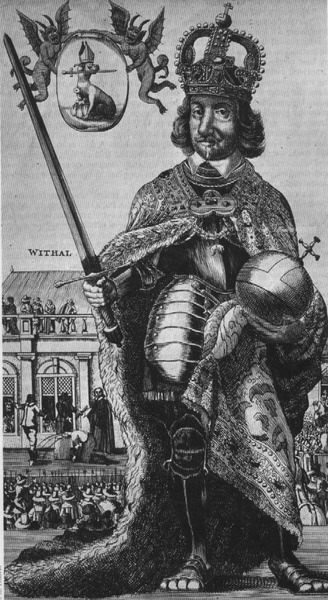
Enemy of Monarchy: Oliver Cromwell


Oliver Cromwell occupied a very unique place in British history and, of course, English history in particular. He was never very well liked (to put it mildly) in Scotland or Ireland but in England, although he was far from universally popular by the end of his life, even today many still admire him. He was undoubtedly a gifted military leader, a man of strength and determination. Most of those today who admire Cromwell, however, do not admire him as a great English general, oh no -they admire him because he’s the man who killed a king, brought down the monarchy and is to date the only non-royal to ever hold the highest seat in the land over England, Scotland and Ireland. They admire him for being the only successful republican (so far) in English history and tend to sweep any other details about the man safely under the rug. One could find amongst those sweepings the fact that Cromwell was also a megalomaniac religious fanatic, a military dictator and a mass murderer on a scale that is (fortunately) unique in the British Isles. This man was no champion of liberty as anyone today or even then would understand it and in his career illustrates that absolute tyranny is the inevitable result of an overthrow of monarchy. There was truly never a more depressing period of British history than during the rule of Oliver Cromwell.

Cromwell was born on April 25, 1599 in Huntingdon into the landed gentry, most known for being related to the Tudor statesman Thomas Cromwell who was beheaded by King Henry VIII for presenting him with an unsuitable wife. Oliver Cromwell was generally a failure as a youth, known for getting into trouble and being rather petulant and arrogant. When a local dispute went against him, he sold off his property and moved away in a huff and fell in with a radical religious crowd. Down on his luck, despised by many of his neighbors, his arrogance convinced him that these religious extremists were right and that he was one of the chosen “elect” destined to purify his country of all he considered evil. He muddled on through life, becoming a zealous Puritan but remaining a failure at pretty much everything else he pursued in life, including efforts at furthering his education which came to nothing. He did, however, manage to land a beneficial marriage that provided him with new properties, a great many children and new contacts in the growing merchant community. This crowd tended to be very wealthy, very religious (in the Puritanical, ‘we are the elect of God because we’re rich’ way of thinking) and very opposed to any authority beyond themselves and their own bottom lines.

In his life thus far, Cromwell had been a depressed, unsuccessful loser on just about every level. However, once he inherited some valuable property from a late uncle and made an advantageous marriage, everything seemed to turn around. He became wealthier, more prominent and easily fit in to the Puritan crowd that deemed wealth and prosperity as a sure sign of divine favor. This did not mean that his abilities increased though and even when he was first elected to the House of Commons in 1628 (through the influence of powerful friends) he was a lackluster politician. Still, he spent his time in Parliament working for his own advancement, forging alliances with those inclined toward his religious and political views; specifically to restrict the power of the monarchy, press for religious “toleration” (for those Protestants who dissented from the established Church of England) and to abolish bishops. Of course, he opposed King Charles I who stood for everything that he, and the powerful elite who supported Cromwell, most opposed. They wanted a more Puritanical Church of England, the King wanted more elaborate and traditional forms of worship. They wanted more power for Parliament (which they could easily dominate -it was a very restricted franchise in those days), the King believed in absolute monarchy. The King wanted to have bishops in Scotland as well as England, they wanted to keep them out of Scotland and even hoped to get rid of them in England. They also adamantly opposed the efforts of the King to raise money to carry out the duties entrusted to him as monarch because the taxes levied by the King would fall most on the shoulders of these wealthy businessmen.

When civil war broke out between the King and Parliament, Cromwell was a nonentity with his only military service being a brief stint in the local county militia. However, his inheritance, marriage and business contacts had brought him some money and he was able to purchase himself a command. He gained some notice for what amounted to simple banditry but missed out on the major early engagements. However, he began to build his career in a number of mostly minor actions and he proved to be a quick learner and to have a natural military talent. He finally gained genuine fame for his part in the battle of Marston Moor in 1644 which won the Parliamentarians a dominant place in northern England. During his service he showed himself to have a natural military talent but also a great deal of arrogance, self-righteousness and, what we might call, an inability to work well with others. However, his superiors were thwarted by the fact that Cromwell and his motley army of Protestant dissenters won battles and through victory his star began to rise. After a number of changes, Cromwell came to dominate the military forces of Parliament and he reorganized them to create the famous “New Model Army”.

Cromwell was an arrogant and self-righteous commander but, it must be said, also a naturally talented if authoritarian one. He forbid looting, swearing and generally all “ungodly” behavior and also took care of the logistical side of war, drawing on the funds provided by the wealthy merchant class who made up the backbone of Parliamentarian support, to ensure that his men were the best armed, the best equipped and paid in a timely fashion. He also emphasized discipline, often an extremely harsh discipline, and rigorous drill and training until his New Model Army was the best in the British Isles. His was the first really large professional army in British history and, incidentally, the first to wear red uniforms (it was the cheapest color available). He played a critical role in the crushing Parliamentary victory at the battle of Naseby in 1645 and won a number of smaller victories afterwards, gaining a reputation for natural military talent and, for the first time, ruthlessness against his enemies. He played a large part in bringing the First Civil War to a successful conclusion for Parliament, though he was often at odds with the political leadership, the anti-royalist factions lacking much real unity.

When the Second Civil War broke out, Cromwell won some minor victories in Wales before achieving a stunning victory over a much greater Scottish army fighting on behalf of the King as the Scots had begun to fear that the forces of Parliament would be an even greater terror to their cause than the King had been. It was during this time that Cromwell really seemed to develop a ‘Messiah complex’, quoting obscure Biblical passages and preaching about himself and his men as the instruments of God and the true “chosen people”. Just as health, wealth and prosperity was taken by many Puritans as signs of divine favor and that one was a member of the “elect”, so Cromwell believed that his victories had proven that God was on his side. Thus, the King and the royalists were not only political enemies in the mind of the increasingly fanatic general, but also enemies of God to whom no mercy should be shown. When the Scots were defeated and the King was handed over to Parliament for “trial”, Cromwell made sure that there would be nothing at all fair or just about the proceedings, vowing from the beginning to see his monarch killed. Cromwell and his troops occupied London and physically prevented any members of Parliament suspected of opposing their wish to see their monarch murdered from taking their seats. It was a show trial by any standard of judgment but this made no difference to Cromwell who believed himself to be the instrument of God, and the wrathful Old Testament God at that. He signed the death warrant and King Charles I met the death of a martyr on January 30, 1649.

Cromwell used his military command to advance his political power and despite all of his previous grand talk about the rights of the people, ruthlessly suppressed all those in his ranks who supported the idea of popular sovereignty. Cromwell was determined that only the elites, such as himself, would be able to vote or hold office in the new republican Britain. Anyone who dissented from this was promptly shot and Cromwell had many of his own men massacred for refusing to follow his political wishes. However, even more brutality was to come when the royalists reorganized themselves in alliance with the Confederates of Ireland. This joint threat of both English royalists and Irish Catholics represented the very worst fears of Cromwell brought to life and embodied everything he most despised: Catholicism and monarchy. In his mind, the two were practically inseparable for he blamed the Catholic Church, with its hierarchy and high ceremony, as being responsible for the rise of absolute monarchies in the first place. And, intolerant enough among his own countrymen, Irish Catholics making common cause with the royalists could expect no mercy at the hands of Cromwell.

In August of 1649 Cromwell and his formidable army landed at Dublin and in September stormed the Catholic and royalist stronghold of Drogheda. The result was one of the worst atrocities in Irish history. Cromwell captured the place, having his enemy outnumbered by about 4 to 1 and the proceeded to execute those who had surrendered and massacre innocent civilians. Cromwell himself had ordered that no prisoners be taken and his troops vandalized churches and butchered women and children in a show of just how truly “equal” all were in this new version of the British Isles without a king. Despite the efforts of his apologists to cover up or explain away the atrocity, the massacre of Drogheda was seared into the Irish Catholic consciousness and has never been forgotten. After three days of slaughter only 30 men out of 3,000 were left alive and no one could count the number of women and children. As Cromwell and his seemingly unstoppable army advanced across the island they left a trail of atrocities behind them; 2,000 men and 1,500 helpless civilians were killed in Wexford, including 300 women who had taken shelter beneath the Celtic high cross in the town marketplace. After eight months Ireland was subdued and was brought under the most brutal occupation in her history thanks to the first republican leader of the British Isles with many tens of thousands more being killed, driven off their land and starved to death or sold into slavery.

Cromwell could not tarry long in Ireland though for he soon learned that the young King Charles II had landed in Scotland and was rallying the disaffected Scots to his side in a bid to restore the legitimate monarchy. Cromwell rushed to meet them in May of 1650, showing much greater mercy to the predominately Protestant Scots, though he was still arrogantly condescending toward them, viewing them as good God fearing people, but essentially simple-minded fools easily led astray. He smashed the Scottish army at the battle of Dunbar, occupied Edinburgh and finished them off at the battle of Worcester. He was not as brutal as he had been in Ireland, but captured men fighting on the royalist side could still expect to be sold into slavery in the New World. At Dundee his forces carried out another massacre and under his tyrannical rule Scotland was permanently occupied by an English army to ensure that none might regret turning against their King and wish for the House of Stuart to return.

Cromwell returned to England as the military dictator of the whole of the British Isles, the only non-royal to ever have the highest seat in the land and the only man of any kind to ever hold total, absolute and arbitrary power over the three kingdoms. Many may have come to regret their decision to betray the King, abolish their ancient monarchy and entrust themselves to the power of the mightiest sword. Despite all of their hypocritical preaching about rights and limits to power and the sacrosanct nature of Parliament, Cromwell proved even less tolerant of that body than the King when it refused to bow to his wishes. He brought soldiers in to secure Westminster and evict the members, saying to them, “You have been sat too long here for any good you have been doing. Depart, I say, and let us have done with you. In the name of God, go!” After that, Cromwell ruled the British Isles himself as a military dictator, the three kingdoms divided up into districts under the authority of a local army officer. He did not rule for long, only about five years as “Lord Protector” of the Commonwealth but it was five years that left a very lasting impression on Great Britain and Ireland.

There is not much that needs to be said about the five years that Cromwell and his Puritan military dictatorship ruled the British Isles. Most people have heard about what it was like, even if they do not take it very seriously these days. Some may even think the stories are exaggerated. They are not. To be fair, there was religious tolerance of a kind under Cromwell; Protestant dissidents were of course given freedom of religion, the Jews were allowed back in England with freedom of religion all privately of course yet even Anglicans were persecuted, as were Catholics. This was because, according to the tastes of Puritans like Cromwell, even the Presbyterians were “too Catholic”. The British Isles had never known such a restrictive, totalitarian state as during those years when there was no king on the throne. Yes, it is true, Christmas was indeed banned. The theatres which were so famous were closed (yes, Cromwell is the Englishman who banned Shakespeare) and there was to be no dancing, no playing cards, no drunkenness, no flashy clothes, just dour, silent, miserable republican Puritanism. Those who cry for individual liberty and a libertarian society might be surprised to know that in English history prior to Cromwell, even under the “divine right” absolutists of the House of Stuart, casinos, brothels and bear-baiting were all perfectly legal.

The people no more approved the taxes of Cromwell than they had those of the King. Parliament even tried at one point to make Cromwell the king -specifically because the powers of a King were limited by tradition whereas a “Lord Protector” was absolute and arbitrary. However, the army would have none of that and Cromwell remained a dictator rather than a monarch. Remember that after the death of the King, Parliament had abolished the monarchy on the grounds that having any king at all was burdensome, unnecessary and dangerous, even to the point of trying to remove the word “king” from the English dictionary. Only a few years later the Parliament tried to push a crown on Oliver Cromwell in a desperate attempt to limit his harsh and arbitrary rule. What a difference a few years of republicanism makes. Whereas the King had been bound by ancient tradition, Cromwell ruled by might with no checks on his powers at all. Whereas the King had been opposed for trying to raise money to fight the Scots, Cromwell extracted far greater sums to wage his wars of subjugation against Scotland and Ireland as well as his vindictive wars throughout his time in office to eliminate Dutch commercial competition and punish the House of Orange for the sympathy they gave their Stuart relatives.

The rule of Cromwell and his generals was so oppressive and odious, banning gambling, horse racing, play acting, swearing and even closing down the pubs that the public was desperately unhappy and longed for the return of the monarchy like the sinner longs for salvation. When Cromwell died of malaria on May 3, 1658 his republican regime, for all intents and purposes, died with him. His son briefly tried to succeed him but the people had had quite enough of Puritan tyranny and soon King Charles II was back on the throne of his father, the monarchy restored and “Merry England” along with it. In subsequent English history there have been rebellions and even one “Glorious Revolution” but Cromwell and his tyrannical rule left such a bitter taste in the mouths of the ordinary people that the country has never been without a monarch ever since. The fact that some now contemplate such an idea proves that the true horrors of Cromwell have begun to be forgotten. That is, forgotten or simply hidden.

Today, it seems, when every aberration is tolerated, Cromwell has become a nostalgic figure in some circles. Indeed, many people far and wide across the English-speaking world regard him as a “great man”, one of the masterful captains of history, even a champion of freedom, which truly makes about as much sense as saying Adolf Hitler was a civil rights pioneer. There can be no denying that Cromwell had some immense talents, although they were decidedly hidden for most of his life. He was a natural and gifted military leader and on the battlefield had accomplished what no King ever had; the total subjugation of the whole of the British Isles under his rule. However, his campaigns were brutal bloodbaths driven by religious fanaticism. His power was based solely on the barrel of a musket and the point of a pike. No King ever had or ever would have as much pure, arbitrary power as Cromwell exercised and no King had or would butcher and tyrannize his own people as Cromwell did. Monarchists should be familiar with his record and make it known to republicans today who ignorantly think their situation would be bound to improve if the monarchy was done away with. Learn from history, Britain tried that and the result was not more freedom; it was less. The result was not a more accountable government but a totally unaccountable one. The result was not a classless society but a tyranny by the armed over the unarmed and the most oppressive political dictatorship in British history. Cromwell was no hero, he was without question the most harmful ruler the British Isles have ever had.

Thursday, February 16, 2012

Enemy of Monarchy: Antonio Lopez de Santa Anna

Perhaps the most well known name in Mexican history north of the Rio Grande is that of Antonio Lopez de Santa Anna, the man they called "the Eagle". Despised by the English-speaking people of North America as a blood thirsty and cowardly despot, Santa Anna has alternately been seen by Mexicans as both a patriotic hero and an incompetent dictator who lost or signed away more than half of the national territory of Mexico to save and enrich himself. In some circles today though, the name of Santa Anna has recovered somewhat among those who see the people of the United States as the cause of all Mexican troubles and who defend him simply for being an enemy of America rather than out of any appreciation for his actual accomplishments. The truth, of course, is that Santa Anna was quick to sell out his country to the United States on more than one occasion. He was not the most stridently enemy of monarchy to ever rule Mexico, in fact he seemed favorably disposed toward the idea of a monarchy at times. Yet, he was a republican when it mattered most. One thing is certain, he is almost as controversial a figure now as he was in his own time; being a soldier, loyalist, revolutionary, liberal, conservative and becoming President of Mexico on seven different occasions.

Antonio de Padua Maria Severino Lopez de Santa Anna y Perez de Lebron was born on February 21, 1794 in Xalapa to a Spanish colonial bureaucrat and a woman from France. A native of Mexico of pure European blood he was of the criollo class and in 1810, when the first revolutionary uprisings were breaking out in Mexico he joined the Spanish royalist army and served with distinction in Texas under General Joaquin de Arredondo who crushed a republican invasion known as the Magee-Gutierrez Expedition. He later said this was the campaign which taught him that one had to deal with rebels and invaders (also called filibusters or land pirates) mercilessly, but it is hardly a defense for his later actions considering that in this case the filibusters began by being cruel to their own enemies and were only reaping what they had sewed. However, Santa Anna was not to remain a loyal Spanish soldier for long and when the political winds shifted against the Crown of Spain, in 1821 he changed his coat for the first of many times in his life as he joined forces with "The Liberator" General Don Agustin de Iturbide who freed Mexico from Spain and became her first Emperor after King Fernando VII refused the crown of an independent Mexico.

Santa Anna was absolutely effusive in his praise and protestations of loyalty to the first Emperor at this time. Most saw him as one of Iturbide’s top men. At times, there is no doubt that Santa Anna could display considerable military ability and in 1821 he captured the Spanish held port city of Veracruz, a remarkable accomplishment and one for which Iturbide promoted him to the rank of General. Not long after pledging his absolute allegiance and loyalty unto death to Emperor Agustin though, Santa Anna became upset when Iturbide refused to take his side in a personal dispute with another officer. Sensing another wind shift, he changed his coat again and joined the ranks of the liberal supporters of the Plan of Casa Mata to oust the Emperor and make Mexico a republic. In fact, Santa Anna and Guadalupe Victoria (soon to be famous as Mexico’s first President) were the key originators of the plan. However, though both had originally supported Iturbide, Victoria was known to be a republican whereas the betrayal of Santa Anna was more spontaneous and self-serving.

Not surprisingly, Santa Anna was no more faithful to his new found republican principles than he had been to the idea of monarchy once the Emperor was out of the picture as he was involved in the coups which overthrew President Vicente Guerrero and President Manuel Pedraza as well. However, he still kept up a good public image, winning his greatest fame when Spain attempted to “re-conquer” Mexico with 2,600 soldiers whom Santa Anna defeated at Tampico in 1829. In actuality, Spain could have never made much progress in Mexico with so few troops, and though they did have Santa Anna outnumbered, most of the Spanish soldiers were incapacitated by yellow fever. Nonetheless, the battle was celebrated as a great victory with a medal struck to honor it and Santa Anna rose to the level of a national hero by glorifying himself as the "Hero of Tampico" and the "Savior of Mexico".

Santa Anna then decided it was time that he cashed in on this reputation and entered politics when the conservative General Anastasio Bustamante, an old supporter of Emperor Agustin, overthrew President Vicente Guerrero. Santa Anna deposed Bustamante, seized power and claimed the presidency after a trumped up election in 1833. Santa Anna tried to pose as a comparative conservative, but his Vice President, Valentine Gomez Farias, was an outright liberal and as Santa Anna left the actual business of government to him, traditional elements in the country were soon outraged by the Santa Anna administration. Trying to cast himself as the national savior once again, Santa Anna turned on his deputy and dismissed Farias, taking absolute power himself. Originally Santa Anna had posed as a federalist, or an advocate of strong state governments, but now he switched sides again to become an avowed centralist. Declaring that Mexico was not ready for democracy, he dismissed the Congress, tore up the original American-inspired Constitution of 1824 and centralized all power in his hands. Some of the conservatives applauded him for this, but numerous rebellions quickly arose.

General and President Santa Anna crushed these rebellions in San Luis Potosi, Queretaro, Durango, Guanajuato, Michoacan, the Yucatan and Jalisco. The most serious was the rebellion in Zacatecas led by Francisco Garcia who commanded a well armed and organized militia. Santa Anna suppressed them with considerable brutality, defeating them on May 12, 1835, massacring those who surrendered and allowing his troops to pillage the city of Zacatecas for 48 hours. It was also in 1835 that the most significant rebellion, and one of the most crucial events of his life, broke out in the northern province of Texas. Texas rebels had taken control of all the major posts in the region and had defeated and forced the surrender of the Mexican garrison in San Antonio commanded by General Martin Perfecto de Cos, who was the brother-in-law of Santa Anna. The President and Generalissimo was not prepared to let this stain on his family honor go unpunished and he soon set out on an expedition to crush the rebellion, restore Mexican rule and annihilate or drive out all of the Anglo population of Texas.

Santa Anna commanded a formidable army and the Texans were surprised by the speed with which Santa Anna drove his men forward, arriving in San Antonio in late February of 1836. On March 6, 1836 he stormed the Alamo, the old Spanish mission in which about 185 Texans had barricaded themselves. The Texans asked for no mercy and Santa Anna showed none, killing or executing every Alamo defender. His own losses were immense and some of his more upright officers commented on what a waste the battle had been and how little concern Santa Anna showed for his own men. He had taken no priests or medical corps with him and dismissed his casualties, asking, “what are the lives of soldiers but so many chickens?” Later, on March 27, 1836 Mexican troops at Goliad massacred some 400 Texan prisoners on orders from Santa Anna which further enraged the Texans, shamed his better officers and cast Mexico in the role of villain in the court of world opinion. By this time, the independence of the Republic of Texas had been declared and Santa Anna threw caution to the wind, driving his forces onward to drive out the Anglo colonists and capture the Texan government.

So far, his forces had been everywhere successful and the vain Generalissimo, who liked to call himself the "Napoleon of the West" became overconfident and sloppy. Allowing himself to be separated from his main army, he camped in an easily isolated area with the enemy out of sight. Texas General Sam Houston seized the opportunity and surprised Santa Anna with a sudden attack at San Jacinto on April 21, 1836 which smashed the Mexican army which had been relaxing without so much as a single sentry posted to keep watch for an attack. Santa Anna had been dallying with a local mulatto girl when the Texan attack came. In cowardly fashion, Santa Anna abandoned the field, fleeing for his life and when captured tried to pass himself off as a common soldier before the salutes of his own men gave him away. In exchange for his own life Santa Anna ordered the rest of his army to withdraw from Texas and later signed the Treaty of Velasco which recognized the independence of the Republic of Texas, after which he was released and went to the United States. The government in Mexico, however, declared Santa Anna deposed and refused to recognize the treaty he had signed.

The following year Santa Anna returned to Mexico and was able to recover his reputation when he lost a leg in the 1838 Pastry War with France. Cashing in on his injury he once again overthrew Anastasio Bustamante to become President of Mexico, acting as usual more as a dictator than a democratic executive. Those who went along with him thought a dictatorship would at least solve the problem of chronic instability that had stagnated all progress in Mexico virtually since independence. However, Santa Anna was never a stabilizing force. His harsh policies and high taxes led to the establishment of the Yucatan republic (which was aided by the Republic of Texas Navy and Marine Corps) as well as the short-lived Republic of the Rio Grande based in Laredo, Texas in a region which was still claimed by both countries. Having seen the loss of Texas when Santa Anna had been in power before, opposition rallied as the fear grew that more losses were coming. The duplicitous dictator was forced out of power once again, Santa Anna was captured and went into exile in Venezuela and later Cuba.

To speak for a moment of the private life of Santa Anna, it was as equally scandalous as his professional one. He married Ines Garcia with whom he had five children, but throughout his life was known to have a number of mistresses, frequented prostitutes and fathered a small army of illegitimate offspring. As mentioned earlier, though he was already married, he desired the favors of a young San Antonio girl named Melchora Barrera during the siege of the Alamo. Her pious mother would not allow her daughter to see him unless they were married, Generalissimo or not, so he had one of his officers pose as a priest and perform a mock ceremony so he could honeymoon while his artillery shelled the Texan garrison. He later sent her to Mexico City where she gave birth to his child. Santa Anna said he intended to save her for his old age. When his first wife died in 1844 Santa Anna was remarried only a month later to Maria Dolores de Tosta, though she was only 15 and he was an old man of 50. Nonetheless he fathered numerous children with her, one of whom, Santa Anna III, became a Jesuit priest in 1897. For himself, Santa Anna never obviously never took religion very seriously. Like everyone who was anyone in Mexico at the time he was a Freemason yet more often than not the clerical “party” was on his side, mostly because he usually seemed the least objectionable of the available choices.

In 1846, following the American annexation of Texas which prompted the U.S.-Mexican War, Santa Anna offered his services to his homeland and promised that he had no political aspirations. It was a lie of course, and the government should have known better as the sitting president was Gomez Farias who Santa Anna had already betrayed once. However, with the war going badly, Santa Anna was allowed to return though unbeknownst to the Mexican people, the duplicitous Santa Anna was simultaneously negotiating with the United States as well, promising to give up vast tracts of Mexican territory in exchange for a considerable bribe. Loyal to no one, once Santa Anna was allowed through the U.S. blockade and given command of Mexican troops by his own government, he declared himself President of Mexico again and began fighting the United States as hard as he could. It was to no avail however and the Mexican forces were steadily pushed back and defeated until the United States occupied Mexico City itself. Santa Anna was overthrown, the southwest was sold to the United States and in 1851 the old Caudillo went into exile again.

Always a survivor, in 1853 Santa Anna was back again as part of a rebellion by Mexican conservatives which restored him to power. Santa Anna, as usual, spent most of his time feathering his own nest and sold additional territory to the United States. He tried to keep favor with the conservatives by showing favor to the Church, restoring some relics from the imperial past but also making himself dictator with the title of "His Most Serene Highness". Even he seemed to possibly realize that political instability was ruining Mexico. Even simple relations with foreign governments were often impossible since by the time diplomats arrived in Europe the government which had sent them had usually been overthrown. Many began to seek a change in the form of government rather than simply the occupants of the National Palace.

In short, many Mexicans began to desire a monarchy as a way of establishing long-term stability in place of the almost constant anarchy. Santa Anna dispatched Jose Maria Gutierrez de Estrada to Europe to look into the possibility of inviting a European (presumably Spanish) prince to Mexico to perhaps assume the throne. How serious Santa Anna was about this, we will never know. Initially there was reason to hope that the cause would be taken up in Madrid, however, the chance of restoring a Spanish monarch to the heart of their former New World empire was dashed by the inability of the Spaniards themselves to agree on who their own monarch should be. The on-going civil war in Spain destroyed any chance of a branch of the Spanish monarchy returning to America and, as usual, it was not long before Gutierrez de Estrada found himself representing a government no longer in power. Back at home, with the increasing respect being shown to the memory of the Mexican Empire and the man he had first betrayed, Emperor Agustin, some wondered if Santa Anna perhaps intended on making himself Emperor of Mexico. Perhaps his hints of inviting a foreign prince were undertaken knowing they would fail so that Santa Anna could, like Iturbide, assume the throne himself? No one would ever know as after losing some of his conservative support, Santa Anna was again overthrown by the leading Mexican liberals Ignacio Comonfort and Benito Juarez in 1855.

Santa Anna was in exile in Cuba during the confrontation between the radical liberals and the pro-Church party as well as the ultimate liberal victory which saw Benito Juarez become President of Mexico and enact a new constitution. However, Gutierrez de Estrada had gone on with his mission even after Santa Anna was overthrown, as he personally believed nothing but a monarchy would save Mexico. With Spain having frittered away the opportunity, he turned to France and was finally able to obtain the support of Emperor Napoleon III. He was also joined by some of the most respected generals who had served with Santa Anna in the war with Texas such as Adrian Woll and Juan Almonte. As we know, with the backing of France, they ultimately offered the Crown of Mexico to HIRH Archduke Maximilian of Austria.

When, in 1864, the Archduke and his Belgian bride were crowned Emperor Maximilian and Empress Carlota of Mexico in Mexico City, Santa Anna wrote to the new Emperor to congratulate him and offer his support to the new regime. He was effusive in his praise of Maximilian and took care to point out that he had “always” been in favor of such a restoration and really deserved the credit for getting the idea off the ground. As always, he stood ready to serve. Thankfully, Emperor Maximilian and his Mexican supporters had enough sense to realize that Santa Anna was hopelessly untrustworthy and refused him permission to return to Mexico. Lest anyone suspect he might have been sincere, Santa Anna thereafter embraced the cause of Juarez (the very man who had earlier overthrown him) and his old friends in the United States. He claimed that he had been opposed to the monarchy all the time and explained away his letter of support by saying that he had only been trying to return to fight against Maximilian (a double-cross just as he had done during the war with the United States). Whether this was true or if he was simply trying to win favor with the victorious Benito Juarez is speculation. He had changed his coat so many times, finally, no one was willing to believe anything he said.

While he was frequently in exile Santa Anna lived a lavish lifestyle, traveled, continued to feed his passion for cockfighting and supposedly invented but failed to profit from chewing gum. After an amnesty was granted in 1874 he returned to Mexico, but by that time he had been largely forgotten and the vast sums of money he had lined his pockets with while in power had long since been spent. He died a poor, ignored, embittered and almost blind old man on June 21, 1876. Throughout his life Santa Anna had proven that he had considerable ability, he was a matchless survivor, could organize and drive an army like few others and could at times show some talent as a battlefield commander. However, he was also inherently untrustworthy, committed to nothing and no one but himself, ambitious, dishonest and excessively vain. In short, he represented all of the worst aspects of republican leadership in Mexico. His treason against the first Mexican Emperor was a major instigator of the downward spiral into anarchy that took Mexico from being the most advanced and powerful country in North America to being the poorest. The atrocities he carried out will never be forgotten, and though he was sadly probably not the worst leader Mexico ever had, his reputation will always be that of a man who in the course of his career betrayed almost everyone several times over and who presided over the worst defeats in Mexican history. The most that can be said for him is that he occasionally brought a glimpse of Napoleonic grandeur to Mexico and that many Mexican leaders were actually worse than him. However, the brief surges of pride he brought to his country were invariably followed by even greater sorrows and all because of his vanity, selfishness and ambition. If he had simply been loyal to his Emperor when it mattered, how different Mexican history might have been.

Wednesday, November 9, 2011

Enemy of Monarchy: Adolf Hitler

The way Adolf Hitler is constantly portrayed as a figure of the political “right” is astounding. The idea that anyone could perceive the leader of a group called the National Socialist German Workers Party as anything close to being a “conservative” defies belief. And yet, many seem to do just that. Of course, Hitler was not a conservative, not a member of the political right and Hitler himself would have considered such a classification deeply insulting. He despised everything that the traditional, right-wing conservatives of Germany stood for. This included Christianity, the aristocracy and, of course, monarchy. Hitler was, and always considered himself, a revolutionary and a socialist; he was simply a national socialist whereas the communists were international socialists. By his own admission, Hitler was a “little revolutionary” from his very boyhood, growing up in the Dual-Empire of Austria-Hungary and, he makes it perfectly clear in his own autobiography that he had nothing but contempt for the Imperial House of Hapsburg.

Hitler accused the Hapsburgs of favoring the Slavic peoples over the German-Austrians and even said it was the “hand of the goddess of eternal justice” which caused the Archduke Franz Ferdinand to be shot as he had been prominent in advocating greater outreach to the Slavs. He even found room to criticize the Austrian alliance with Germany, saying, “The Hapsburg hypocrisy, which enabled the Austrian rulers to create the outward appearance that Austria was a German state, raised the hatred toward this house to flaming indignation and at the same time - contempt.” He went on to refer to Austro-German friendship as an “unholy alliance” and, as we all know, when World War I broke out the young Adolf Hitler would not fight for the Hapsburg empire but instead crossed over into Bavaria to volunteer to join the more “pure” army of the German Empire. Indeed, a great deal of the first part of his book Hitler devotes to pouring scorn on Austrian history and the House of Hapsburg in particular. In fact, one of his complaints about the Bavarian people, after arriving there, was that they continued to view the Austrian monarchy as German and a reliable friend. Hitler viewed such people, as he viewed most other than himself, as hopelessly stupid.

He did remark on the loyalty of the Bavarian people toward their royal family, the House of Wittelsbach, but his anger was turned on them fiercely after his failed coup on November 8-9, 1923. Hitler tried to enlist the support of the still widely respected Crown Prince Rupprecht of Bavaria, well known not only for his royal position but as a highly successful army group commander on the western front in World War I, but the Crown Prince would have nothing to do with him and denounced the Nazi Party from start to finish. Hitler had been trying to imitate the success of Mussolini’s black shirts and their “March on Rome” the year before. However, whereas Mussolini had widespread support and ended up leading the government, Hitler had relatively little support, bolted with his men after the first shots were fired against them and he ended up in prison. While there he poured out his hatred against the late monarchy and the old order on the pages of his book, dictated to Rudolf Hess. Taking the socialist line, he denounced the aristocracy for being too cozy with wealthy financiers (universally Jewish in his mind) and he opined that in his “New Germany” the only aristocracy would be the aristocracy of race and that all class distinctions would be abolished. He criticized Kaiser Wilhelm II for allowing parliamentary democracy at all and for giving “cover” to those who had stabbed Germany in the back. At the time, few took his mindless ravings seriously.

However, he eventually did become a powerful political force, as we know, and had to reach out to some of the same groups he had earlier condemned. However, there was no doubt on either side as to where he stood from the perspective of the old, conservative monarchists. The most prominent figure in this group was probably the President himself, the aging but revered Field Marshal Paul von Hindenburg who scoffed at the suggestion of making Hitler chancellor. The old Prussian aristocrat quipped that he, “wouldn’t make that Bohemian corporal postmaster much less chancellor”. Hitler tried to reach out to the conservatives of course, to further his ambitions, and even sent his most likeable deputy, former air ace Herman Göring to try to woo the exiled Kaiser over to their side. At first, a number supported the idea, but the old Kaiser had enough experience to tell fairly quickly that Hitler was not what he pretended to be and he refused to endorse him and forbid the Crown Prince from getting involved as well. When Wilhelm II died during World War II a vindictive Hitler forbid high ranking Germans from attending his funeral and refused him any state honors (but the Kaiser didn’t want them anyway).

Hitler, in his own book, let his true feelings about monarchy be known. He said on the subject of monarchy that, “If the value of this institution lay in the momentary person of the monarch, it would be the worst institution that can be imagined; for monarchs only in the rarest cases are the cream of wisdom and reason or even of character, as some people like to claim. This is believed only by professional lickspittles and sneaks, but all straightforward men - and these remain the most valuable men in the state despite everything - will only feel repelled by the idea of arguing such nonsense”. Thus, Hitler allowed himself to admire a select few monarchs while at the same time dismissing monarchy since, in his view, such worthy individuals came along at such infrequent intervals as to make having a monarchy simply not worth the trouble. Later, he hinted to the Kaiser that he might effect a restoration but, when the Kaiser saw through him to be the dishonest, power-mad politician that he was, Hitler quickly reverted to denouncing the Kaiser as a “Jew-lover”. Not all Nazis were so stridently opposed to anyone with a noble or royal title, but Hitler certainly was and in such a state it was only Hitler that mattered.

There was no difference in this attitude concerning foreign monarchs either. Hitler had rather idolized Mussolini, but when he made his first state visit to Italy he was greatly annoyed that he had to deal with HM King Victor Emanuel III, the head of state, rather than only Mussolini, the head of government. It grated on every socialist fiber of his being to have to bow his head to the King and to try to be pleasant to the Savoy royals, who he viewed as being far too friendly with the British. Hitler also commented on their perceived lack of support for Fascism, noting that the King saluted and the royal ladies bowed deeply when the flags of the Royal Italian Army passed by in review, but pretended not to notice when the flags of the Fascist black shirt militia marched by. During the war, Hitler had attached a German officer to the prisoner-King of the Belgians Leopold III. However, this man, Colonel Kiewitz, became so close to the King that Hitler came to view him as a monarchist and from that time on refused to even sit next to him. It goes without saying that he took an equally dim view of monarchs like the Queen of the Netherlands and the King of Norway who continued to oppose German occupation from exile.

Despite his writings and obvious opinions, there were German royals who, at the start of World War II, ‘rushed to the colors’ not out of any love for the Nazis but simply to defend their beloved Germany. In the same way, after the Axis invasion of the Soviet Union, many people who bitterly opposed Stalin and the communists joined the Red Army simply to defend Mother Russia and not out of any political affinity with the government in Moscow. Such patriotic displays did not change Hitler’s view of royals, aristocrats or monarchists however. One of those who volunteered to defend his country was Prince Wilhelm of Prussia, eldest son of Crown Prince Wilhelm III. He fought gallantly and was mortally wounded in France. When his funeral attracted a crowd of 50,000 people Hitler was shocked and alarmed at this display of monarchist sentiment. As a result he issued his famous ‘Prince’s Decree’ which forbid any members of the House of Hohenzollern from front-line military service so as to avoid any such repeat of sympathy for the old monarchy.

The Bavarian Royal Family went into exile in the Kingdom of Italy as soon as the Nazis came to power. In 1944 the Nazis occupied half of Italy and sent most of the family to concentration camps. Princess Mafalda of Italy, also despised by Hitler, was arrested and sent to a concentration camp where she later died. Her husband, Prince Philip of Hesse, who had even been a Nazi Party member, was also sent to a concentration camp though he survived the war. King Boris III of Bulgaria was a constant irritant to Hitler, both for his refusal to hand over Bulgarian Jews for extermination and for his refusal to join the war against Soviet Russia. The Nazi takeover of Austria had also been prompted by fears on the part of Hitler that the Austrofascist (but ardently anti-Nazi) party there intended to restore the Austrian monarchy and place the Archduke Otto on the throne. The Nazi invasion plan was even named “Operation Otto” in his “honor”. It should go without saying that Hitler was infuriated by the young King Michael of Romania who had taken his country out of the Axis camp and joined the Allies. Even before that though, Hitler had also opposed King Carol II because of his refusal to persecute minorities, his suppression of more pro-Nazi elements in the country and because he had a mistress who was Catholic by religion but Jewish by blood. There was simply no monarchy or royal house in Europe Hitler ever, in any way, viewed favorably. Everyone also remembers his famous phrase about the late Queen Elizabeth the Queen Mother of Great Britain, calling her, “the most dangerous woman in Europe”.

It should also be remembered, though it is not much talked about, that monarchists and aristocrats were involved in numerous plots aimed at removing Hitler or assassinating him. Baron Adolf von Harnier, a devoted Bavarian monarchist, was a leader in the secret opposition and, as most know, it was an aristocrat, Claus Graf von Stauffenberg, who was executed for his failed effort to kill Hitler with a bomb. Had that plot succeeded, the man who was to have served as chancellor was the monarchist Carl Friedrich Goerdeler (a former member of the monarchist DNVP) who favored the post-Hitler Germany becoming a constitutional monarchy (similar to the British model) with Prince Louis Ferdinand of Prussia assuming the throne. He had also, from fairly early on, been involved in numerous plots against the Nazi dictator and in organizing right-wing dissidents, many monarchist, in this opposition. The list of monarchists persecuted by Hitler for their opposition to him is a long one. The Bavarian Catholic Rudolf Kanzler was jailed by the Nazis for “treason” for promoting the monarchist cause. The Christian monarchist Ewald von Kleist-Schmenzin was executed for his part in the Stauffenberg plot. Another Bavarian monarchist (a Protestant one) Gustav Ritter von Kahr helped thwart Hitler’s first effort to take power and was later killed by the Nazis in the “Night of the Long Knives”.

So, it can easily be seen that Hitler hated monarchy and most monarchists felt exactly the same towards him. There would be no room for monarchs, aristocrats or traditional religion in the future Nazi Germany envisioned by Hitler. Having come from the lower classes he never got over his class envy and the bitter jealousy he felt when, as a young man, he watched Hapsburg royals dancing while he shoveled snow outside. He resented anyone who had any status or privilege which they did not “earn” as he had to (and in his case, “earn” meant to lie, cheat and kill to obtain power). Not everyone in the Nazi hierarchy was so opposed to monarchy as Hitler was, but most were and it was the opinion of Hitler that mattered. It is unfortunate that, in this regard, Hitler was so successful. The war he started would ultimately lead to the loss of the Italian, Serbian, Bulgarian and Romanian monarchies as well as stopping a near-restoration in Austria. The war would also so completely exhaust the British Empire that dominions began to fall away rapidly in the post-war years. Hitler was an enemy of everything that the “Old Europe” of Christian monarchies stood for and no one should ever forget it.

Tuesday, November 30, 2010

Enemy of Monarchy: Pol Pot

The man known to history as Pol Pot was born Saloth Sar in or around 1928 to a relatively prosperous middle class family. As a boy his family sent him to high school in Phnom Penh where his cousin was a dancer at the royal ballet. It is important to note that with the young Saloth Sar his hatred of monarchy came first and all of his later revolutionary, genocidal policies grew out of his anti-monarchism. Because of his cousin he saw the royal court and developed a very negative view of the Cambodian monarchy. Disregarding all of the circumstances the embittered youth did not see a beautiful cultural, historical institution that had been the political and spiritual heart of Cambodia for centuries (as well as providing work and an artistic outlet for people like his cousin) and instead chose to see only corrupt and idle royals doing the bidding of their French colonial masters. It was a point of view he would never really lose throughout his long life.

Saloth Sar got together with other young revolutionary enemies of the monarchy and was later sent to continue his education in France where he joined the colonial wing of the French communist party. Saloth Sar wrote his first piece of propaganda as a communist against the Cambodian monarchy, calling it a “malodorous running sore”. However, his education in Paris was a total failure and, finally giving up, he returned to Cambodia in 1954 to be a history teacher. However, he lost none of his political ardor and soon joined the Vietnamese-led Indochinese Communist Party. However, he soon became suspicious of the Vietnamese Communists who he believed (correctly) wished to unite all of French Indochina under their rule. He split off with his own faction and when France granted independence it was done through King Norodom Sihanouk; only increasing the hatred of the monarchy already held by Saloth Sar who started going under the name Pol Pot.

The organization Pol Pot led was very communist, very paranoid and thus very secretive. The people who knew of the leadership knew them only by their code names. Pol Pot was simply “Brother #1”, for most a faceless, ghost-like voice giving orders over a radio set. He envisioned a utopian society which he would create by wiping out absolutely all inequalities, destroying all foreign influences, emptying the cities and returning the entire population to the simple agrarian life of the villages. Yet, his communist propaganda earned him fairly few followers. An economic upturn and good crops brought a period of prosperity and the people gave the credit to the semi-divine intervention of their king; Norodom Sihanouk, whom Pol Pot hated more with each passing day. The King played the feuding parties against each other and tried to juggle neutrality with maintaining good relations with both the western democracies and the communist bloc. He was not entirely successful.

When U.S. forces intervened in Cambodia to wipe out communist Vietnamese bases, which King Sihanouk had unofficially allowed to be established, the Cold War came to Cambodia. King Sihanouk went off to make friends with Communist China, North Korea and the USSR and in his absence the U.S. supported a coup by General Lon Nol against him. This was a golden opportunity for Pol Pot. He now had a foreign-backed capitalist regime to wage his revolution against and a sure source of popular support in the person of the deposed monarch who had no other ally to turn to. In a blatant lie he promised Sihanouk he would restore him to his throne once his forces were victorious. Sihanouk backed the Khmer Rouge (though not Pol Pot who he never met and indeed had no idea was the one actually running the organization) and urged the people to go to the jungles and join the communist guerillas. The king’s godlike status among the faithful peasantry ensured the success of the Khmer Rouge.

Following the U.S. withdrawal from South Vietnam the republican regime in Cambodia lost its primary support and quickly collapsed. On April 17, 1975 the Khmer Rouge occupied Phnom Penh. Pol Pot declared it “Year Zero”, the start of a new era and renamed Cambodia “Democratic Kampuchea”. Despite his promise he did not restore King Norodom Sihanouk but instead placed him under house arrest. Unlike other communist dictators, there was no cult of personality around Pol Pot. Most still had no idea who he was and in the initial government organization he made one of his subordinates ‘head of state’ while taking the post of prime minister for himself. He also played no favorites, some of his closest relatives had been brutalized in vicious labor camps before seeing a photo or poster and realizing that their new dictator was their own Saloth Sar.

King Sihanouk was placed under house arrest, a number of the royal family were killed and Pol Pot unleashed a reign of terror unsurpassed even amongst the most brutal of communists dictators around the world. Anyone with any foreign ties was killed, anyone displaying overt religious devotion was killed. The disabled were killed. Anyone with any ties to a previous government was killed. Everyone was made absolutely equal and any deviation from the new norm was punishable by death. Families were abolished since words like “mother” and “father” were hierarchical and considered superior to children so everyone became “brother” and “sister”. Anyone who referred to their parents as such were killed, a woman who referred to her husband as such was killed, anyone who used any traditional form of address was liable to be killed. The educated class was wiped out, since they would be held as superior to the uneducated and even those wearing glasses would be killed as this was taken as a symbol of intellectualism. Currency was abolished and the cities were emptied as everyone was sent to work on the communal rice fields; essentially vast slave labor camps where many city dwellers who had no experience growing their own food quickly died. Hordes of people died of starvation and hundreds of thousands were executed.

Over the years Pol Pot became more paranoid and had many of his own allies, even lifelong supporters put to death as well. The notorious prison, essentially a massive torture chamber, S-21 or Tuol Sleng was set up for anyone accused of being an enemy of the regime or an agent of the CIA. People were tortured, often by electrocution, to give up names of accomplices, most of whom had never heard of the CIA or had the slightest idea what the initials meant. However, people would give any number of names to make the torture stop and these people then were arrested and given similar treatment. To save bullets most of those executed were taken to the countryside, beaten to death and buried in mass graves. It is estimated that as many as 2 million Cambodians died during Pol Pot’s reign of terror. The rest of the world was outraged at the reports that emerged from the secretive, nightmarish hell on earth that was “Democratic Kampuchea”. However, many governments in the west gave subtle support to the regime of Pol Pot and even King Sihanouk, despite being constantly kicked around by the Khmer Rouge, stuck up for them in the UN.

This was, again, all about Vietnam at the end of the day. Pol Pot had originally been part of the Vietnamese-organized “Indochinese Communist Party” but he left because he was very paranoid about the Vietnamese, even the Reds, wanting to dominate Cambodia. In this he happened to be mostly right. Vietnam’s original communist dictator, Ho Chi Minh, made no secret of the fact that his long-term goal was a communist Indochina that would include Laos, Cambodia and Vietnam. So the Khmer Rouge was quick to ally with China against the Vietnamese. The reason people like King Sihanouk and governments like the United States gave some tacit support to Pol Pot was because they viewed him as the only thing stopping Cambodia from being dominated by the Vietnamese. Just after the United States pulled out of Southeast Asia the Red Chinese even invaded North Vietnam because of their antagonism with Cambodia. However, the Vietnamese gave the People’s Liberation Army a bloody nose after which they declared “mission accomplished” and beat a hasty retreat back to China, leaving Vietnam free to deal with Cambodia.

Pol Pot made his greatest political blunder when he jumped the gun and attacked the Vietnamese. This was all the excuse Hanoi needed. In 1976 they forced a treaty on the communist regime in Laos which effectively put the country under Vietnamese domination and after increasing hostilities between the two countries the Vietnamese invaded Cambodia in 1978. The Cambodian army was soundly beaten, Pol Pot fled to the Thai border and Vietnam set up their own puppet administration. By 1979 the Vietnamese had totally driven the Khmer Rouge from power and forced them to retreat into remote strongholds in the jungle where they were mostly ineffective. The international community refused to recognize the Vietnamese imposed government and this eventually led to the United Nations taking control of the situation and this finally resulted in the restoration of King Norodom Sihanouk in a constitutional monarchy but with Hun Sen (who was supported by Vietnam) as the prime minister. Hun Sen has remained in power ever since.

His regime destroyed and country lost Pol Pot fled to Thailand where he lived for six years. When the Vietnamese army withdrew in 1989 the Khmer Rouge could set up new strongholds and Pol Pot returned home, refusing to recognize any of the succeeding administrations and nominally presiding over the guerilla war his forces continued to wage in the jungles against the ruling government. When his life-long deputy and designated successor, Son Sen, tried to negotiate a settlement with the government Pol Pot had him executed along with eleven members of his family. Some things never change. Khmer Rouge military commander Ta Mok arrested Pol Pot for this, held a show trial for him and placed him under house arrest. He died in his bed on April 15, 1998. Like most genocidal communist dictators he had escaped justice for his innumerable crimes but his memory haunts Cambodia to this day. Even alongside the likes of Joseph Stalin and Mao Zedong, in terms of the size of the Cambodian population, Pol Pot surpasses them all. By some estimates his rule led to the death of one third of the entire population of his country.

Remember that all of this started with the obsessive anti-royalist sentiment of Pol Pot. In many ways he was the ideal communist and his case should be looked to by anyone wanting to see the true face of what revolutionary communism is all about. What others only talked about doing eventually Pol Pot actually put into effect, there was no build-up, no step-by-step process, it was full, complete communism all at once. It grew out of his class-hatred and his original, life-long opposition to the Cambodian monarchy. There are still many, many people and regimes around the world that advocate the same basic principles that the Khmer Rouge under Pol Pot advocated. They should look to his example to see the unwashed, horrific truth of what those principles cause when taken to their full, logical conclusion.

Wednesday, August 18, 2010

Flagrant Treason in Australia

It is getting close to election time in Australia and, like politicians the world over, the slime is rising to the top. Prime Minister Julia Gillard of the Australian Labor Party recently said, just days before Australians head to the polls, that she is a republican and it is her deepest wish that HM Queen Elizabeth II of Australia be the last Australian monarch. Yes, yes it is political controversialism that happens all the time, but it is nonetheless *outrageous*! To repeat, Miss Gillard is the PM, Her Majesty's Prime Minister for the Commonwealth of Australia. She, upon taking office as an MP, swore an oath that she would, "be faithful and bear true allegiance to Her Majesty Queen Elizabeth the Second, Her heirs and successors according to law. So help me God!" How in the hell is she keeping her word when she embraces republicanism?! How is anyone who votes for her continued political career now anything less than a traitor to their sovereign and country? This is something few to no republics in the world would *ever* tolerate and something monarchies, back when they were more traditional and had a little righteous pride, would ever have tolerated either.

Of course, the Prime Traitor says she likes the Queen and wishes her a long life and is resigned to the fact that Australians would never become a republic while she remains on the throne. But, after Her Majesty's passing, the time would come to make Australia just another republic. Like THAT makes it better?! Sorry Miss Gillard, but the oath you swore did include the phrase, "Her heirs and successors". You might think that being the first female Prime Minister of Australia might have given Miss Gillard a little more appreciation for one of the longest-serving, most experienced and most globally respected women leaders of our time. But no, the liberal revolutionary ideology trumps all with these rats. And her pretended respect for the Queen is downright insulting. If she admits the Queen is much loved by the Australian people one would have to ask why she would deny the Prince of Wales and Prince William in turn the chance to earn that same affection from their Australian brethren? It is a lie from a leftist revolutionary republican of the most common variety.

Australia does not need a republic, it does not need another vote on the subject. What the country does need is some action taken to stop subversives from clawing their way into high office. Miss Gillard is a perfect example of the radical, revolutionary, republican foot soldier. She was secretary of the Socialist Forum, she fought to grant special status to people based on their race, gender and sexual orientation, has been an advocate for degrading the borders of Australia on immigration issues and has been radically pro-abortion. Go down the list of revolutionary republican leftists around the world and she has done everything one is supposed to do, going as radical as possible while still being able to remain in the socialist rather than Marxist camp. Readers here, of course, know that socialism is simple Marxism for slow learners. This woman has no business being PM, nor having any place in the government of the Commonwealth of Australia whatsoever. She is a traitor whose positions, on the monarchy and a number of other issues, would, if successful, mean nothing less than the death of Australia as we know it. This is treason -pure and simple.

Thursday, July 22, 2010

Enemy: Benito Juarez

(I apologize for the length but this is the edited down version -I have *real* issues with this guy, which made it all the more ironic when I recently got a load of "fan mail" from two supposedly monarchist Mexicans)

Probably no other President of Mexico has been so celebrated and deified to such an extent as Benito Juarez. To be politically correct in modern Mexico is to hold Juarez sacrosanct and anyone who questions his preeminence should be prepared to be considered a traitor. In his own time he was called (by northern Americans) the “Abraham Lincoln of Mexico” and that comparison endures to this day. However, as is often the case with celebrated republican leaders, the facts do not match the propaganda. In truth, Juarez was a duplicitous, anti-clerical, power hungry hypocrite who, despite being hailed as a champion of democracy, was never fairly elected by the majority of Mexicans and who frequently flouted his own constitution when it pleased him. Despite being upheld as the champion of Mexican sovereignty against foreign intervention he sold out the sovereignty of his country in a treaty that would be considered the most reprehensible in Mexican history if anyone bothered to remember it.

Born in Oaxaca, he first came to notoriety for his opposition to the shifty, vain, long-time strong man and frequent dictator of Mexico Antonio Lopez de Santa Anna. He helped forge the plan and movement that brought down Santa Anna and he was the driving force behind a new constitution that favored liberal goals. This was completed and implemented in 1857 under the rule of President Ignacio Comonfort who Juarez served as Chief Justice in the newly created Supreme Court. Obviously, the constitution drew heavily on the American model. It also aimed at weakening the Mexican army and the Roman Catholic Church as well as to “modernize” the country which meant becoming a capitalist, federal republic on the model of the USA, quite apart from the more corporatist pattern favored by the conservatives which preserved the traditional laws and privileges inherited from Spain. Courts martial for soldiers and canon law courts for clerics were abolished to make all subject to the liberal-dominated government courts.

The government no longer recognized titles of nobility, hereditary honors, it removed the Church from education, secularized marriage, did away with religious holidays, prohibited government officials from attending Church, confiscated vast amounts of property from the Church and the traditional nobility, removed all official support for the Church, removed its status as the state church of Mexico, abolished the death penalty and forbid the president to succeed himself once his term was over. Civil war broke out with the conservatives naming their own president and the overwhelmed Comonfort resigned, leaving the liberal presidency to Juarez. He did so and vigorously pursued the war against the conservative opposition. Therefore, though hailed as the champion of democracy, Juarez came to the presidency without election and fighting for power just as his conservative opponent had.

As Juarez was using military force to stamp out all conservative opposition to his rule, and amassing huge debts in the process, he assumed vast powers on the basis of a national emergency. He sold out to the United States by signing the often overlooked McLane-Ocampo Treaty which stipulated that the USA would pay Juarez $4million in return for perpetual rights of transit across the isthmus of Tehuantepec, protected trade routes in certain areas and ports on both coasts, the right of the US to intervene militarily at the request of Mexico if trade were threatened or even without the request or permission of Mexico if there was an “emergency”. Juarez also gave the US the right to send in military forces on this transit routes as the US saw fit, Juarez promised that no other nation would be given the same preferential treatment and Mexico would effectively be under the protection of the United States. The American plan at the time was to eventually construct a railroad across Tehuantepec or a canal and thus make vast amounts of money on the lucrative trade with and through Central America (a sort of forerunner of the Panama Canal idea). The extent of this treaty was never completely formalized but it nonetheless demonstrates something which would shock any patriotic Mexican; that is that Benito Juarez was willing to totally sell out the sovereignty of his country to the USA for $4million to ensure victory in a war he was waging for his own power against his own people.

Thus is it not surprising that the US government always supported Juarez against his conservative rivals and the Emperor Maximilian. Juarez occupied Mexico City in January of 1861 and then claimed to be the properly elected president after an election which was conveniently held under the constitution of 1852 and which was done after the conservatives had been defeated in battle and all of their leaders killed, imprisoned, forced into hiding or chased into exile; still not exactly a fair example of democracy in action. He then defaulted on the debts Mexico owed which prompted the French intervention. The conservatives allied with them and the result was, eventually, the coronation of Emperor Maximilian. One of the main supporters of intervention was the Empress Eugenie of France who supported intervention on behalf of the Catholics of Mexico of whom Juarez was an avowed enemy. Not only was Juarez a mason who had secularized the country and nationalized Church property, at one point he even attempted to set up his own government ruled church in Mexico with a pliant bishop as the national “pope” but his plan was thwarted when Pope Pius IX refused to ordain the man and forbid any Catholic to go along with such a move and even among those most inclined toward the liberals the common people were overwhelming Catholic and would not go along with outright break with Rome. Thus Mexico was soon at war again between Juarez and his liberal republicans on one side and the French and conservative Mexicans on the other.

Juarez and his forces were soon defeated by the French, but before fleeing, however, the liberal controlled Congress granted Juarez dictatorial powers for the duration of the national emergency. To the unbiased eye in might seem rather odd for the self-proclaimed champion of democracy and republicanism to be granted absolute power for the second time in an over extended presidency to which he was never fairly elected by a majority of all people. However, an even more significant action by Juarez had already taken place when he issued an order in 1862 that any foreigner taken in arms in Mexico would be shot, any Mexican opposing his regime taken prisoner armed would be shot and any Mexican citizen who gave any aid to any of these people would also be shot. Today history still condemns Emperor Maximilian for his "Black Decree" of October 1864 (which was rarely enforced as Maximilian was constantly granting pardon to captured rebels) which stated that any rebel taken in arms would be shot within 24 hours. However, very few historians are honest enough to relate that Juarez had issued a far worse decree years earlier, which violated his own constitution and which meant death not only for all prisoners of war but even for any citizen who so much as gave them food or water! This is the side of the Juarez regime that is never talked about.

Defeated, driven from his capital, Juarez fled to the barren deserts of the Mexican frontier, as close as possible to the United States. He still claimed power but he held sway only where his “government on wheels” passed and he was forced to order his troops to stop fighting pitched battles and to focus only on harassing actions to the point that the republican armies became little more than scattered groups of bandits. He appealed to the US for help but with a civil war north of the border nothing could be done for the moment. The US Congress did vote a unanimous condemnation of the French presence in Mexico and the establishment of the monarchy under Maximilian. President Lincoln also supported the formation of “republican clubs” across the northern US to raise money for Juarez and his bandit government. Juarez also spurned all offers of clemency, pardon and peace from Emperor Maximilian to end the war and reconcile the country. He even offered him the post of prime minister but Juarez refused, still claiming to be president of the whole country and unwilling to accept any lesser office.

On November 8, 1864 in yet another trampling of his own democratic propaganda, Juarez had his term in office extended because of the continuing war, even though that war had basically been reduced to raids by irregular forces and self-serving civilian bandits and brigands who merely paid lip service to the republican cause. He was, once again, violating the terms of his own constitution. Fortunately for Juarez, time was on his side as his friends in Washington DC were on the cusp of victory over their own southern enemies. 1865 was one of the darkest years for Juarez but by the spring he had the greatest victory his cause would ever have. Oddly enough, it did not take place in Mexico but in southern Virginia at a little town called Appomattox Court House where the primary Confederate army under General Robert E. Lee surrendered to Union General Ulysses Grant; effectively ending the American Civil War. By 1866 the United States used strong-arm diplomacy to block the Emperor of Austria from sending his brother additional troops and demanded that the French withdraw their forces as well. With a massive US army dispatched to the south Texas border for the intimidation factor and with problems in Europe mounting, Emperor Napoleon III felt he had no choice but to cut his losses and abandon Mexico.

So it was that just as the French were pulling out their forces from Mexico, Juarez was gaining more support than ever that same year from the United States. Officially, of course, the US was neutral but went to little effort to hide their favoritism toward Benito Juarez. Tens of thousands of rifles and artillery pieces were sent to Mexico including the most modern Henry repeating rifles and parrot rifled artillery so that the northern republican army had every advantage over their imperial enemies. Uniforms, equipment and supplies of every kind were sent to Juarez so that many of his troops were fighting in complete Union blue US Army uniforms with US stamped buckles, belts, ammo boxes and so on. Even troops were sent over, unofficially. These were men who would often be given leaves of absence on the understanding that they would go to Mexico to fight for Juarez. Others were listed as deserters who would return when the war was over and who were never punished. In all, it is estimated that some 3,000 Union army veterans served with the forces of Juarez against Maximilian. In a study undertaken by the United States roughly 109,000 US soldiers expressed their willingness to fight in Mexico if needed to ensure the victory of Benito Juarez. Surely such numbers should give any proud Mexican pause.

With all of this support, having Emperor Maximilian outmatched in every way thanks to his big brother north of the border, Juarez defeated the imperial forces at Queretaro on May 15, 1867. As we all know, soon thereafter Juarez had Emperor Maximilian executed by firing squad along with his top generals Miguel Miramon and Tomas Mejia. It is worth remembering at this point that this was yet another violation of the very constitution Juarez had enacted which had abolished the death penalty. However, just as he had continuously violated his own rules to stay in power and keep his dictatorial powers he did so again to eliminate Maximilian and his loyalists.
Of course, the brief unity enjoyed by Juarez while the Emperor lived was also cut down with the crack of rifle fire on the Hill of Bells at Queretaro and President Juarez immediately had to deal with internal rebellions with reared their head again almost as soon as Maximilian was dead. After numerous other Mexican monarchists were killed, again, all in violation of the very constitution Juarez had enacted, factions amongst the republicans began to battle for power in states as well as on the national level when General Jesus Gonzalez Ortega rose up to challenge Juarez for the presidency which he continued to hold in spite of numerous violations to his term limit.

Juarez used the dictatorial powers he still held to crush the rebellion as well as to ensure his success in a certainly unfair reelection in 1867. His former general Porfirio Diaz rose in rebellion later to challenge him for the leadership of Mexico but Juarez had already been so deified as to be almost impossible to oppose and this first bid for power by Diaz was crushed, though he would be seen again in the years to come. In 1871 Juarez was elected president again, yet another example of his violating his own constitutional term limit as well as the prohibition against a president succeeding himself which he himself had pushed to get put into law. That point cannot be stressed enough. In the end, all together, Juarez had served FIVE terms as president according to his own liberal followers who did not recognize the conservative opposition governments and the monarchy of Maximilian set up during that same period. It was all done under the authority of a constitution which Juarez himself had enacted and which said that the president was limited to one term only. In all, Benito Juarez was the professed President of Mexico for a span of 15 years.

During many of those years his power was contested and the vast majority of those years (by any legal stretch) his administration was absolutely unconstitutional according to his own constitution. Furthermore, throughout many of those years he held absolute, dictatorial power with absolutely no checks on his authority in any area under his control at the time. Does this sound like the record of a champion of democracy, republicanism and the rule of law? Looking at the entire life and career of Benito Juarez it would extremely difficult if not impossible for any dispassionate observer to conclude that he was anything other than yet another case in the long history of Mexico of a president who clawed his way to the top, assumed power at the point of lances and bayonets and who did whatever was necessary to remain in power for as long as possible. In this, he was at least more successful than most Mexican potentates in that Juarez held power until his own death in July of 1872 by a heart attack still at his desk in the National Palace in Mexico City.

Looking at the whole of his career we certainly do not see that of a great statesman. We see someone who came to power by succession and conquest rather than fair election. We see someone who nationalized private property, who championed the government taking over lands, education, marriage and even tried to assert government control of religion by his attempt to set up his own anti-pope in Mexico. We see a man who ruled absolutely to stay in power, who sold out the sovereignty of his country to the United States to stay in power, who violated his own rules to extend his term of office when it suited him, who violated his own abolition of the death penalty to kill off his political enemies and who violated his own term limits to remain in power as long as he lived. In short, Juarez was far from being a great statesman and certainly not worthy of the adulation and deification he continues to receive to this day. If there was a leader of Mexico truly worthy of such acclaim it would much more justly be applied to Emperor Maximilian rather than Benito Juarez.
Related Posts Plugin for WordPress, Blogger...