Showing posts with label empire series. Show all posts

Wednesday, July 27, 2016

The Italian Empire, A History to Take Pride In

The Italian colonial empire was a short-lived affair but one that had far more extensive roots than most people realize. As a united country, the Kingdom of Italy is often described as the last to obtain an empire and the first to lose it but Italians had been colonizers for a very long time. One need not go back to the Roman Empire when the whole Mediterranean basin was ruled from Italy but simply going back to the Middle Ages or the Renaissance shows that various Italian states had minor colonial holdings of their own. The Republic of Genoa held territory on the Crimean peninsula, the Kingdom of Sicily held Tunisia for some time and the Republic of Venice had extensive holdings down the coast of the Adriatic and in the Aegean Sea as well as controlling Crete and Cyprus. The Grand Duke of Tuscany sent a preliminary expedition to South America with the intention of establishing an Italian colony in the New World but he died before the project could be completed. Unlike virtually every other colonial power, Italians were most often not treading on new ground but simply returning to lands which their ancestors had held, sometimes for centuries, before them.

Governor's Palace in Eritrea
The colonial empire of the Kingdom of Italy had humble beginnings. It started when the Rubattino Shipping Company bought land around the Bay of Assab on the coast of the horn of Africa from the Sultan of Raheita in 1869 to establish a coaling station. This holding was later bought by the Italian government and expanded to become the first overseas colony of the Kingdom of Italy with the first Italian settlers arriving in 1880. Hearkening back to the old Roman name for the Red Sea, the Italians named the territory Eritrea. In 1888 the first railroad in the country was built and another improvement of particular pride was the Asmara-Massawa Cableway which was the longest in the world at the time (the British later dismantled it after World War II). Laws against racial mixing were imposed but no one seemed to mind much as, for the first time in their history, the local Africans had access to modern medical services, improved sanitation, transportation and improvements in agriculture. Italy lost money in the enterprise on the whole but the lives of the natives certainly improved, particularly because of the Italian colonial army which prevented raids on the country from Ethiopia, particularly from the Tigray region.

As a result, many Eritreans enlisted in the Italian colonial army and many gained quite a high reputation. Marshal of Italy Rodolfo Graziani considered the Eritreans the best of the Italian colonial soldiers and the famous cavalry officer, Amedeo Guillet, referred to them as the ‘Prussians of Africa’. During the Fascist era there was also a huge increase in industrialization in Eritrea and a subsequent boom in the population, both African and Italian. Before the outbreak of World War II, Asmara was a growing, prosperous city dotted with coffee shops, ice cream parlors, pizzerias and even its own race track. The fact that it was a “planned” city meant that it had many modern conveniences that even some cities in Italy lacked and boasted scenic wide boulevards lined with trees. These many improvements as well as the threat from Ethiopia worked together to ensure that Eritrea remained a loyal colony.

Not long after the first foothold in Eritrea was established, Italy also gained new territory on the southern side of the Horn of Africa in Somalia. In 1888 Sultan Yusuf Ali Kenadid of Hobyo made his province an Italian protectorate. The following year the Sultan of Majeerteenia did the same and the colony of Italian Somaliland was established. Here, development was somewhat slower as the Italians left local affairs in the hands of the local rulers, paid them a pension and focused on foreign relations, defense and the establishment of port facilities. In 1905 the Italian government decided to establish a formal colony in the region, partly because it was discovered that the local company had been turning a blind eye to the continued operation of the slave trade in the region. By 1908 the legal formalities were finished to establish Italian Somaliland as a formal colony. The most determined problem, early on, was the trouble caused by Muhammad Abdullah Hassan, aka “the Mad Mullah” but that violent movement was duly done away with and in the Twentieth Century development began to spread from the coast further inland.

Prince Luigi Amedeo formed an Italian-Somaliland Agricultural Society that established new, model plantations in the colony for the growing of sugar, bananas and cotton. The same year, 1920, saw the first modern bank established in Somalia when the Banca d’Italia opened a branch in Mogadishu. Surveys were done, after which more development proceeded such as the establishment of model farms, schools and hospitals. Before the end of the decade, Crown Prince Umberto had come to witness the opening of a new Catholic cathedral in Mogadishu and the region’s first international airport was established. The Sultan of Hobyo was usually very loyal to the Italians, the only problem occurring when he was excepted to allow British troops to land in his territory and Somalis tended to resent the British for their colonial rule over Somali tribes in the north (British Somaliland). After this, the Sultan was replaced by the Italian authorities and the population was disarmed but there were no major problems in the future and the Italians continued to abide by their agreements and allow the original, northern protectorates to govern themselves in their own way. Somalians were also enlisted in the Italian colonial army and included such colorful units as a corps of camel-born artillery.

The Battle of Adowa
There were, of course, bound to be setbacks. When the Italians took control of Eritrea, one of the local chieftains who had given his approval was one Sahle Maryam of Shewa. In exchange for this, Italy gave him support such as modern weapons in defeating his rivals to take control of Ethiopia as Emperor Menelik II. A treaty was signed that was supposed to ensure peace between the two, however, there was a discrepancy in the wording as it read differently in the Italian-language and Amharic-language versions. One established, essentially, an Italian protectorate over Ethiopia and the other said that Ethiopia could have Italian protection but only if and when they wanted it. Each side, of course, accused the other of changing the text in their version, Menelik II broke off diplomatic relations with Italy, effectively declaring war. A small Italian colonial army of a little over 17,500 men was later attacked by an Ethiopian army of around 100,000 and almost totally wiped out, ending, for the time being at least, any idea of Italy establishing any sort of control or influence over Ethiopia.

Italian troops landing in Libia
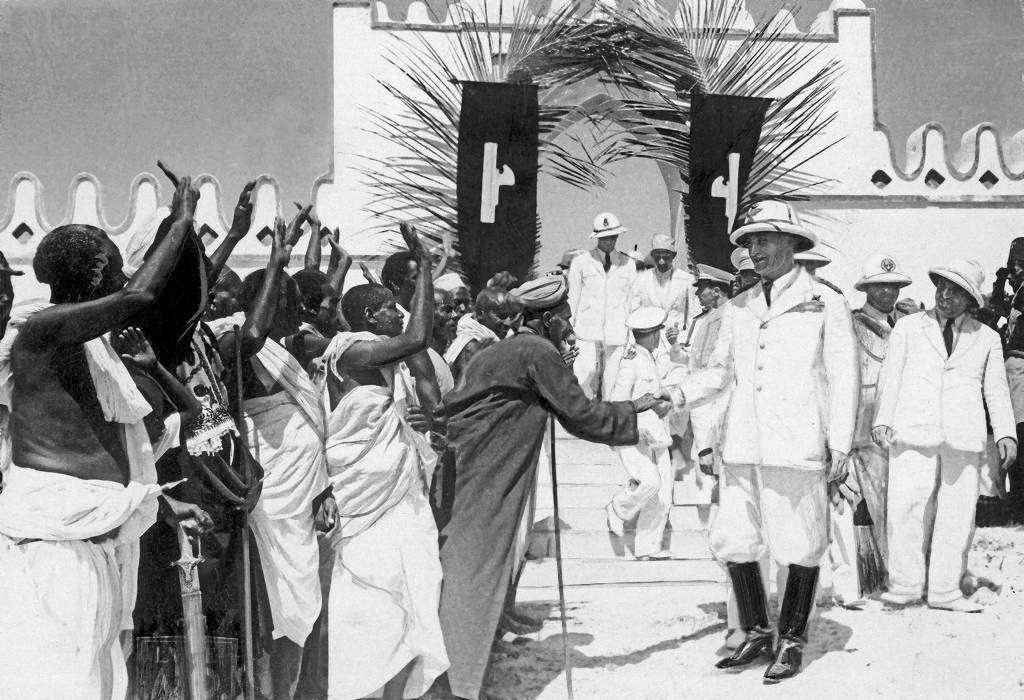
However, of all overseas territories, none seemed more near at hand to Italy than Tunisia. Not only was it extremely close, but it had a sizable Italian population that had been present for a very long time. In the “Scramble for Africa” the Italian government sat back, taking the moral high road as it were, only to see Tunisia snatched up by the French. This caused quite a backlash in Italy and a renewed effort to make sure that such a thing did not happen again with the other north African lands south of Italy, three provinces still held by the Ottoman Sultan of Turkey, known to Italians as “the fourth shore”. Determined not to let another power snatch this region away from them, the Italian government began investing in the area and when the Turkish government started to clamp down on the increased Italian interest, Italy declared war on the Ottoman Empire in September of 1911. Italian military forces landed on the coast and quickly seized control of the major ports while the Ottoman forces, largely Arab raiders with Turkish officers, fell back into the interior to strike at any Italian attempt to move south. The situation produced a stalemate as Italy had been counting on the support of the local Arab population and resources had not been allocated for a major campaign in the desert interior of the country. The Turks, likewise, could rule the desert but proved incapable of dislodging the Italians from the coast or of challenging Italian naval supremacy.

In 1912 the Turks finally agreed to come to terms with Italy, prompted by the Italian seizure of Rhodes and other nearby islands and the threat of an attack on the Dardanelles, which all powers were anxious to avoid. The former Ottoman provinces of Tripolitania, Cyrenaica and Fezzan were ceded to Italy which, in due time, merged them into one colonial administration, resurrecting the old Roman name for the region, “Libia”. Actual Italian control, however, continued to remain mostly on the coastal region and during the First World War, attacks by Islamic insurgents, backed up by Turkey and Germany in an effort to restore Ottoman Turkish control over the whole of north Africa, forced the Italians back into the major port cities as the overwhelming bulk of Italian military strength was concentrated on the critical border region with Austria. However, all of that changed after the acquisition of power by Benito Mussolini and his Fascist party. From 1923 until 1932 a fierce irregular war raged in the region, known as the Pacification of Libya. Stopping the terrorist attacks on Italian settlers and ending the insurgency took time but finally Italian forces resorted to repressive measures and the rebellion was ended, with the primary insurgent leader actually being captured by a troop of Libyan cavalry fighting on the Italian side. The first modern roads were built, port facilities were modernized and new model farming communities were established. Much progress was made under the governorship of Air Marshal Italo Balbo and when he was killed at the start of World War II, witnesses remarked that the Libyans showed more grief than the Italians at his loss because he had made things so much better.

Victory parade in the Ethiopian capital
The next colonial acquisition for Italy was Ethiopia, which, of course, was the cause of much controversy. It was sparked by an attack on an Italian outpost which was on land that the Ethiopians claimed as their own. The fact that this was not something instigated by Italy is evident enough by the amount of time it took to transfer military forces to Eritrea and Somalia to fight the actual war. The League of Nations opposed this and the issue became larger than Ethiopia but was, rather, seen by Mussolini as a struggle against the leaders of the existing international world order, embodied by the League. The fighting was harsh but, in the end, Italian forces conquered Ethiopia in seven months and merged it, administratively, with Eritrea and Somalia into “Italian East Africa”. Tensions were high at first and when the Viceroy, Marshal of Italy Rodolfo Graziani, was badly wounded in an assassination attempt, there were bloody reprisals. However, he was replaced by the Duke of Aosta under whose administration the country was at peace and began to see considerable improvements, including the abolition of slavery in the country. Plans for the modernization of the capital and other projects were ultimately canceled by the outbreak of World War II.

Italian troops enter Durazzo, Albania
The Kingdom of Albania was occupied by Italian forces with practically no opposition by the native population shortly before the outbreak of World War II, however, again, the fact that Italy joined World War II so shortly thereafter, and the Italian presence was removed after 1943, meant that the Italians were able to have very little impact on Albania. Although, it is worth pointing out, that the period of union with Italy, following the conquest of Greece and Yugoslavia, was the only time that the nationalist goal of “Greater Albania” was actually achieved, albeit for a short time. Before World War II had ended, all Italian colonial possessions were, of course, taken away and given independence or, short of that, given nominal independence under the temporary stewardship of a parent country. It is worth pointing out though that, at the time of Italian entry into World War II, there was no widespread opposition to Italian rule in any of the colonies.

The Italian presence in Albania was not entirely welcomed but not entirely opposed either and most of those in the Albanian government had previously been in the government of Ahmed Zog, the previous potentate of the country. Libya, Eritrea and Somalia were all quite calm and peaceful under Italian rule, the only place where any opposition at all existed was in Ethiopia. That is understandable given that, unlike all the others, the Ethiopians had a history as a previously independent country with their own sense of nationhood. However, even there, serious opposition had been dealt with and most accepted the change and got on with things. In fact, of all the colonial troops who served in the Italian royal army in World War II, the only native soldier to earn the highest Italian decoration for bravery was an Ethiopian. So, even there, considerable levels of support and devotion did exist. What is illustrative of the Italian colonial enterprise overall, and why Italians should not be ashamed of their short-lived period of imperialism, is the fate of the former Italian colonies after Italian rule was removed and these places became independent.

Colonial Mogadishu
The Kingdom of Albania was occupied by the Germans and then, after the Allied victory in World War II, fell to the communists of Enver Hoxha who established a Marxist tyranny, so fanatical and so murderous that it alienated Stalinist Russia, Maoist China and Tito’s Yugoslavia in turn. Albania fell into oppressive poverty and had the lowest standard of living of any European country. To this day, it has not fully recovered. Italian East Africa was occupied by the Allies (mostly British imperial troops) and broken up into the countries that exist today. Somalia was under the military administration of Britain and became nominally independent though in 1949 stewardship over the country was given to the Italian Republic until 1960 when it was joined with the former British colony of British Somaliland to create the country as we know it today. And, as we know, Somalia has become the go-to example in the world for a “failed state”, being reduced by poverty, crime and internal warfare to a state of total chaos. When one thinks of Somalia today it is only as a place of anarchy, warlords and a nest of pirates. Somalis have fled their failed independent homeland in huge numbers, going as far abroad as Minnesota and Sweden to get as far away from their nightmarish native land as possible.

Asmara station, Eritrea
In Eritrea, the first Italian colony, the British military ruled the place until 1950 because no one could decide what to do with it. One person who knew exactly what he wanted to do with it was the de-throned Emperor of Ethiopia Haile Selassie who was pushing for Allied support for the Ethiopian annexation of Eritrea even before British imperial forces had set him back on his own throne. The United Nations, in the 1950’s, finally agreed that Eritrea would be joined with Ethiopia in a “federation” with Eritrea officially remaining independent. That charade ended in 1962 when Haile Selassie dissolved the Eritrean parliament and unilaterally declared the country to be part of Ethiopia. Not surprisingly, war broke out immediately as the Eritreans fought the Ethiopians in a brutal conflict that spanned the next thirty years, only ending when the Eritreans made an alliance with a faction of Ethiopian rebels after which the UN stepped in to hold a referendum. This, of course, resulted in the Eritreans voting for their independence in 1993. Eritrea got it, established a dictatorship and haven’t had another exercise in democracy since. Needless to say, thirty years of war, terrorism and finally Marxist dictatorship have left the country an impoverished wreck.

Haile Selassie & Winston Churchill
Ethiopia, again, is really in a class by itself and cannot entirely be compared to the others. Still, the post-Italian period has not been pleasant for the country, though it would also be worse than the pre-Italian period as well. Haile Selassie was put back in control of the country and money poured in from the victorious Allies through various aid funds. Still, this did not benefit the country overall as serious divisions and problems remained which Haile Selassie struggled to deal with. He championed the cause of pan-African unity and opposition to European colonialism in Africa (even while imposing his own sort of colonial rule over the unwilling population of Eritrea) but this ultimately proved to be not so beneficial to the “Conquering Lion of Judah” as he styled himself. Most of the anti-colonial movements in Africa were communist and after some particularly hard times the communists managed to overthrow Haile Selassie in 1974. This time there was no British Empire to put him back on his throne again and he was murdered the following year. His replacement was a communist dictatorship so vicious and so oppressive that it must rank among the very worst in the entire world. Oppression, murder and misery prevailed to the point that the very name of Ethiopia became synonymous with “starvation” in the rest of the world. Again, even after the communist regime officially fell, the country has still not recovered from the decades of murderous misery the communists inflicted on it.

King Idris
Finally, we have the case of Libya. British military rule gave way to the creation of a new monarchy under the former Emir of Cyrenaica who became King Idris I of Libya in 1951. The British and Americans established close ties with the new regime, built military bases there and in 1959 Exxon discovered vast deposits of oil in the country which changed things considerably. New wealth brought greater resentment and efforts to promote unity failed, mostly because neither the King himself nor any of his people recognized him as a “Libyan” but rather as the Emir of Cyrenaica who had been imposed by western powers over the whole country. He was accused of favoring his own circle when it came to dishing out the oil revenues and of being too friendly with foreign powers and foreign oil companies. This culminated in King Idris being overthrown while on holiday by a military coup led by Colonel Muammar Gaddafi in 1969.

Gaddafi with African chiefs
Gaddafi, as we know, established a brutal and farcical dictatorship over the country, marked by tyranny at home, support for terrorism abroad and for the increasingly bizarre behavior of Gaddafi himself. Whether it was his painfully long orations at the UN, his threats of war against Switzerland or his bevy of buxom female bodyguards, no one could accuse Gaddafi of being boring. He also used the threat of floods of illegal immigrants to extort huge financial benefits as well as groveling apologies from the Italian government. In 2011 the hated dictator was overthrown, with air support from NATO, and given mob justice on the streets of Sirte. Since that time, Libya has fallen into chaos and is increasingly becoming a hotbed of terrorism, economically stagnant, politically unstable and extremely dangerous. Certainly, a far cry from what it had been during the tenure of Air Marshal Italo Balbo to be sure. And this in a country, it is worth remembering, where Italian-born Roman legions marched long before the first Arab ever cross the Sinai or the name of Mohammed was known to the world.

The wartime peak of Italian expansion
No, the historical record clearly shows that Italians have no reason to feel ashamed of their colonial past overall. Certainly there were unpleasant episodes in a couple of places but, on the whole, these parts of the world often saw their only periods of sustained stability and progress while under the Italian flag and the Crown of Savoy. Without exception, none of them have fared better after Italian rule was withdrawn. On the contrary, their record as independent states has been a record of failure. That does not mean, of course, that anyone in any of these places is nostalgic for the colonial past. National and racial awareness exists today in a way that did not exist in those days, though it is interesting to note that the Albanian government recently requested the return of the Italian military to deal with the influx of illegal immigrants (aka “refugees”) into their country, many of them fleeing former Italian colonies that have since become failed states. That, in itself, rather tells the story doesn’t it? European rule once came to Africa and, now that it is gone, Africans (and others) are now coming to Europe to live once more under their former imperial rulers.

Wednesday, March 19, 2014

The Belgian Colonial Empire

Colonial empires in general are quite controversial these days and tend to be viewed in a negative light. Most people, because of how they were educated, accept gross over-simplifications and generalizations and, to a large extent, simply issue blanket condemnations of colonialism as it existed in the past (few speak of the more hidden economic colonialism going on today). However, none are probably more criticized for their colonial past than the little Kingdom of Belgium. Controversial as it might be to say so, this is quite unfair. In the first place, the name most associated with colonial horror stories is the Belgian Congo and this is unfair since the time period most think of concerning the worst conditions in the Congo was the era of the Congo Free State when central Africa was, more or less, the personal fiefdom of Belgian King Leopold II. When the government took control of this territory, and it became the Belgian Congo, conditions improved dramatically. Secondly, although it is the most notorious, Belgian rule in the Congo was not nearly as bad as most people think. That comment alone will certainly anger many people but the fact is that things can still have been pretty bad without being quite as bad as most think since the negative aspects have, to a large extent, been grossly exaggerated. Also, the Congo was not the only Belgian colony (though it was certainly the largest) and other Belgian colonial holdings and efforts tend to be forgotten.

As most know, Belgian colonialism first came to fruition during the reign of King Leopold II. However, his father, King Leopold I, had been interested in establishing Belgian colonies and looked into several parts of the world for opportunities for his country such as in India, Hawaii, the Philippines, Africa or Sarawak but none came to be. One attempt was made in the 1840’s in Central America where King Leopold I had supported the Guatemalan independence leader Rafael Carrera. In thanks, the Guatemalan government granted a Belgian colonization company perpetual rights to the district of Santo Tomas which was also hoped to offset the influence of a similar British company in the region. However, the Belgian settlers were unable to adapt to the climate and the tropical diseases which took many lives and by 1854 the enterprise was abandoned and Leopold I died without establishing any lasting Belgian colonies. King Leopold II was more successful and it was a driving ambition of his to place Belgium among the ranks of colonial powers. When he came to the throne, France was heavily involved in supporting the restored imperial monarchy in Mexico and since his sister was the Empress of Mexico there were Belgian troops in the country and some Belgian investment. An idea was floated to establish a ‘Nueva Belgica’ colony in the Mexican state of Chihuahua but after a nasty battle wiped out most of the Belgian troops, King Leopold II did not pursue such a venture in that country.

Instead, in 1885 King Leopold II looked to central Africa. He was convinced that this would be the place where Belgium could establish a vast empire and he could also make a strong moral argument in favor of doing so to the European community because of the lucrative slave trade still going on in that region. Slaves were taken from central Africa by various tribes, sold to dealers in places such as Zanzibar and then sold from there often to the Ottoman Empire with slave rings operating throughout Sudan and parts of Arabia. Wiping out this slave trade was the stated intention of King Leopold II as well as investing in central Africa to develop the region and lift the natives out of poverty. It was a noble sounding case; spreading Christianity, the value of hard work, commerce and ending human trafficking. Of course, as we know, it did not quite work out that way and undoubtedly King Leopold expected immense benefits for himself. The fact that it would be for himself and not his country was because the Belgian government (as astonishing as this sounds today) was known for penny-pinching in those days and refused to fund any such colonial enterprises. Not to be thwarted, King Leopold II paid for it himself and he dispatched the intrepid British explorer Henry Morton Stanley to central Africa to get all the local chieftains he could find to sign treaties basically granting sovereignty to the King of the Belgians personally.

This was done and, after some negotiations with the other European powers, the colony was established as the Congo Free State with King Leopold II as sovereign. The Belgians never invaded or conquered the Congo, everything was done by treaty though most assume the African chiefs had no real idea what they were agreeing to. There were not even a great many Belgians involved in this as the mercenaries sent in to organize the military-police force of the Congo Free State came from a variety of countries, mostly from Scandinavia. The military force, the Force Publique, did fight a war against the slave traders and it was a hard fought campaign. However, one can decide how much credit is deserved for this since it later would seem that, rather than wiping out slavery in central Africa, Leopold II was simply eliminating the competition. The Congo Free State existed from 1885 to 1908 and was, without doubt, the worst period in Belgian colonial history. First, ivory was the most exploited resource but later, as bicycles and then automobiles became all the rage, wild rubber was the real cash crop. Huge numbers of Africans died or suffered other various horrors in the drive to bring in as much rubber as possible. Foreign observers and local missionaries began to complain and report these abuses but his advisors assured King Leopold II there was no truth to them and he took the issue no further. The Congo Free State, an area roughly 80x larger than the whole of Belgium, was essentially the private property of Leopold II and there was simply no way the King could oversee everything.

Some have said that a genocide occurred in the Congo under Leopold II and that is simply untrue. Others have vastly exaggerated the death toll of this era, some ranging it as high as half to the entire estimated population of the Congo. That is, quite obviously, absurd as there is no way the King could have been making any profit off the region if 50-100% of the population were killed. Few seem to realize the contradictory nature of accusing the King of both enslaving the population and killing them all off at the same time. The truth is that King Leopold did not go into the Congo to kill people, his crime was mostly one of omission. What he did was to divide up the Congo Free State into districts and hire out to companies to exploit the resources in these districts. There would be an agent over each district to oversee the harvesting of first ivory and then rubber. The problem was that these agents worked on commission, which would seem to make good business sense since the more they produced, the more they would be paid. However, there was no oversight and so these agents could resort to brutal methods to extract as much ivory or rubber as possible to gain greater rewards for themselves with no one to call them to account. That was the real source of the problems in the Congo Free State. It was not that King Leopold II was being purposely malicious as much as he was simply not sufficiently involved in what was going on. As long as the colony was profitable, he did not give it a second thought.

Eventually, however, the reports of abuses became too widespread to ignore and many other countries began to take up the cry of criticism against Leopold II. Now, it must also be said that some of this was simply driven by jealousy rather than genuine concern by those who felt that Belgium had far too great an empire for such a small kingdom. In any event, although he is seldom given credit for it, King Leopold sent a fact-finding mission to the Congo and the report they brought back after talking to officials, Catholic missionaries (originally only Catholics were allowed in) and to the Africans themselves was quite balanced and honest. It related the good things that were being accomplished in the Congo Free State but also the vicious abuses that were going on. New policies were put in place to stop these abuses but, eventually, the Congo Free State was abolished and the government took control of the region as an official colony; the Belgian Congo. Once that happened, better oversight was established and conditions improved dramatically.

Something else which made a difference was that, after Leopold II, Belgian monarchs took a much greater personal interest in the Congo and every one visited the colony, some numerous times. In other areas there was also further, though minor, Belgian colonial expansion. In 1902 King Leopold II obtained a concession in the Chinese city of Tientsin after the Boxer Rebellion and after World War I the Belgians were awarded mandates over Rwanda and Burundi which Belgian colonial forces from the Congo had conquered from German East Africa. In 1919 Belgium also gained some territory in Italy when King Albert I was ceded the island of Comacina in Lake Como for one year (it went back to Italy in 1920). Some have tried to blame the horrors of the Rwandan genocide on the colonial policies of Belgium but, again, this is quite unfair as the system in place had been inherited from the Germans and had never been problematic before. However, the Congo was and will always remain the primary focus of Belgian colonialism and its legacy. The horrors that existed have certainly been exaggerated but there were horrors nonetheless and no one can deny that. There should also, however, be fairness in evaluating the Belgian colonial period as those horrors were generally confined to one period early on and should not be used to hide the many positive aspects of Belgian rule and how the lives of the local Africans improved in numerous ways.

Modern education was brought to the Belgian Congo and, despite what some may think, these taught local languages as well as French in government-sponsored schools. A healthcare system was established and the health of the populace improved steadily. Railways, modern ports, and mines were built that provided jobs and opportunities for the natives and even after the end of the rubber boom there were large and steady increases in the production of palm oil and cotton as new industries were established. A local educated elite was being raised up, commerce was thriving and peace and order were maintained. The trouble was that these local institutions and leaders did not have time to sufficiently develop before Belgium was forced to grant independence to the Congo and the result was a disaster. Today most commerce has stopped due to constant civil wars and political corruption. Furthermore, while Belgium is still being blamed for every problem in the Congo, the country is once again being exploited but in a more dishonest way as republics like the communist regime of China have moved in to take control of the lucrative mining operations in the Congo, paying off the corrupt local officials while they take the resources and leave nothing for the ordinary people whose country is being stripped clean. In fact, it is even worse today because those doing the exploiting are giving nothing back and the failure of the native governments to maintain law and order means that charitable groups are able to do little or do not get involved at all since they are very likely to be robbed or even killed.

The colonial period for Belgium will certainly always be controversial and to an extent that is completely understandable as some very horrible things did occur. However, all of those events must be seen in context and when one looks at the wider history of Belgian colonialism as a whole, it was not that different from other colonial powers and it had positive aspects which are often ignored while only the negative aspects are highlighted and often exaggerated to ridiculous proportions. Again, just because something is exaggerated does not mean it was not bad enough on its own, but an honest and dispassionate look at the facts will show that the Belgian colonial empire was not the absolute nightmare from start to finish that so many portray it as.

Thursday, March 13, 2014

The Colonial Empire of Japan

It seems strange that the Empire of Japan, despite being only a minor colonial power and that only for a few decades, is often more controversial and generates more bitterness than European colonial empires that spanned the globe and lasted for hundreds of years. Japan only ever had two major holdings that could be regarded as colonies; Formosa (Taiwan) and Korea. Relations today between Taiwan and Japan are not terrible but a great deal of animosity certainly remains on the part of Korea. In fact, setting aside North Korea which is more like a vast slave labor camp than a country, the Republic of Korea has displayed a level of antagonism toward Japan after only a few decades of colonial rule that makes the Republic of Ireland, after centuries of English and British rule, seem positively mature and forgiving. As with all colonial empires or any time a more advanced civilization comes into close contact with a less developed civilization, there will be unfortunate events, sometimes intentional and sometimes not but regrettable in any event. However, a dispassionate look at the rather brief history of Japanese colonialism will show that, for reasons of simple efficiency, being a colony of Japan was quite beneficial when viewed in the long-term. Even today when so much has changed since the fall of the Empire of Japan in 1945, former Japanese colonies tend to be better off than other former colonies in Asia.

Japan-Korea Teamwork
Throughout most of Japanese history there was never any desire for colonial expansion. However, when Japan was last unified, in the campaign started by Oda Nobunaga, the famous warrior did envision Japan conquering on the Asian mainland once his mission of unification was complete. He did not live to see that unification but his work was completed by Toyotomi Hideyoshi and consolidated by Tokugawa Ieyasu. It was Toyotomi Hideyoshi who attempted to make good on the aspirations of his late lord and conquer the Ming Empire (and perhaps more while in the neighborhood) and seize control of the lucrative silk road trade route. The Kingdom of Korea refused to let Japan march through to get at China so there was a Japanese invasion of Korea and war between Japan on one side and Korea and Ming China on the other. The Japanese managed to conquer most of Korea, occupying Seoul and Pyongyang but attrition began to take a heavy toll and after the death of Toyotomi Hideyoshi and some considerable military setbacks the Japanese called off the war and returned home. Not long after Tokugawa Ieyasu formalized the last unification of Japan, became Shogun, establishing the Tokugawa dynasty as the holders of power in the name of the Emperor and in time Japan became isolated.

As most know, that isolation lasted until 1854 when a U.S. fleet under Commodore Matthew Perry sailed to Japan, pointed guns at them and forced them to join the rest of the international community. After some internal turmoil the Emperor was restored to power and Japan began to modernize, industrializing rapidly and learning from the countries of Europe and America. The Japanese method was to identify which country was the best in a particular field, study them and then adapt their methods to Japan, always endeavoring to do things better and more efficiently. So, in naval matters Great Britain was looked to, in army matters Prussia was looked to, for high fashion France was the example and for business it was the United States. Naturally, colonialism was not ignored either. In looking at the rest of the world, Japan saw that there were two kinds of countries; those which had colonies and those which were colonies and, naturally, Japan was determined to be one of the former. There was never any decision to “become” a colonial empire but it grew out of the rapid industrialization of Japan. This brought about a greatly increased need for resources Japan had never needed before and the prosperity that came with modernization also meant a rapidly growing population that had to be fed. One of the primary sources for raw materials and food stuffs for Japan was the Kingdom of Korea, at the time, a vassal of Imperial China.

Japan became increasingly concerned about securing this lifeline (think of the situation between Egypt and Rome in the old days) and so, to make a long story short, Japan fought a war with China to secure the independence of Korea and then, when Russia started stepping into the peninsula, fought the Russo-Japanese War to keep Korea firmly within the Japanese sphere of influence. After the victory over China; France, Germany and Russia stepped in to force Japan to give up some of the concessions won from China (which Japan naturally did not appreciate, especially when Russia subsequently took the territory rather than returning it to China) but one concession Japan did keep was the island of Formosa. That, was not as easy as a simple territorial hand-over though. The Chinese on Taiwan decided that the Qing Emperor could not give up territory he did not possess so they declared themselves an independent republic (the Republic of Formosa) and vowed to maintain Chinese rule over Taiwan in this new way. However, it did not work and Japanese forces soon arrived and conquered Taiwan, annexing it to the Empire of Japan in 1895. Some Chinese and native forces continued to resist and the campaign to suppress them was no different than similar campaigns by other colonial powers, often quite brutal. However, Taiwan also saw immense benefits in the period of Japanese rule.

The Japanese authorities cleaned up Taiwan and modernized it; quite literally. There was a massive sanitation campaign and a rapid development of infrastructure which had previously not existed. Roads and railways were built, ports were constructed, modern farming techniques were introduced and a health system based on widespread rural clinics was established that was so successful it remains in effect even today. Barbaric native practices were suppressed, mandatory universal education was introduced and agricultural production increased dramatically. The island became extremely prosperous and, in time, Taiwan became the seventh largest sugar producer in the world. Some animosity did arise, however, as time went on and Japan took steps to enforce a greater cultural uniformity on Taiwan as part of the effort to maintain the utmost in national social unity across the Empire of Japan. This meant a greater emphasis on the Japanese language and customs as well as a greater promotion of the Shinto religion. In this regard, as it concerns modern-day observers, Japan was in a no-win situation. Colonial powers which excluded subject peoples from their own customs and institutions, which endeavored to keep them strictly separate are condemned for being exclusionists, segregationists and holding themselves aloof from other people not deemed “worthy”. On the other hand, as is seen with Japan, colonial powers which do the opposite are condemned as well for forcing their ways and customs on others, destroying the uniqueness of the natives.

Japanese enter Taipei
That was the situation in Taiwan but, of course, Korea remained an area of concern after removing it from the control of China and preventing it from coming under the control of Russia. Talk turned to uniting the laws and economies of Korea and Japan. Some in Korea wanted to unite with Japan, others wanted no part of it and much the same division existed in Japan itself. Some wanted to annex Korea while others feared Korea would be too big a burden on the still growing Japanese economy. This changed when anti-Japanese forces in Korea started to make trouble and so those opposed to uniting the two countries in Tokyo were sidelined and in 1910 Korea was incorporated into the Empire of Japan. The local monarchy was retained and, along with the aristocracy, granted sufficient funds to maintain the standard of living they had become accustomed to. There was a massive Japanese investment in Korea and, of course, the influx of Japanese nationals and Japanese influence caused a backlash in Korea that was responded to with military force. There were many regrettable episodes but, also as in Taiwan, a massive change in the standard of living for Korea as well. Cities were modernized, hospitals were established, schools were built and illiteracy, which had previously been widespread in the lower classes, was virtually eradicated.

One of the reasons Japanese colonies have tended to do better even after gaining their independence can be traced back to a simple exercise in efficiency on the part of the Empire of Japan. Again, the Japanese saw how other countries ran their colonial empires and sought to improve on their methods. They saw European countries using their colonies as sources of raw materials, shipping those raw materials to the homeland for refinement and then transformation into manufactured goods (providing employment at home) and then shipped back for sale to the colonial populations (providing profit). Japan could also see that transportation costs for raw materials was enormous so Japan decided it would be smarter to establish at least low levels of industry in the colonies themselves so that raw materials could be refined before being shipped to Japan to be finished up and turned into manufactured goods. This step was taken in order to cut down on the cost of shipping but it had the result of giving former Japanese colonies a considerable advantage with a “head start” in industrialization when compared to the colonies of other empires.

A brief mention should be made of Manchuria which was never actually a Japanese colony but which is often classified as one (when not called a “puppet state” rather like the Mexican Empire). Regardless of how or why it came about the simple fact is that the Republic of China had no right whatsoever to Manchuria and the support provided by Japan in Manchuria declaring independence in 1932 and restoring the last Manchu Emperor to the throne was an action which corrected a gross historical injustice. Manchuria too benefited immensely from its restoration aided by Japan. There was rapid industrial growth so that, prior to the outbreak of World War II, the Empire of Manchuria was one of the most advanced and productive regions of Asia, eventually surpassing Japan in steel production. Coal mining, oil drilling and agriculture were major industries, ports and cities were modernized, trade and business boomed but, unfortunately, all of this infrastructure which was built up from 1932 to 1945 was stripped clean by the invading communist forces at the time of Japan’s defeat.

Like most colonial empires (and sometimes to an even greater extent) it is hard to find many today who would speak up in defense of or say anything at all positive about the former Empire of Japan. This is not helped by those in Japan who take a racial view in criticizing the colonial empires of others, accusing European powers of misdeeds while holding themselves blameless. This, combined with bitterness from World War II has made it difficult for many outside Japan to give a fair assessment (at least since the war, prior to which, and when Japan was supportive of other empires, most were positive). However, setting personal feelings aside, the success of former Japanese colonies should speak for itself. Manchuria was absorbed by Red China, Taiwan became the last bastion of the Kuomintang and Korea was split into two diametrically opposed republics, sparking another major war. However, for years both Taiwan and Korea (and more so South Korea naturally) have had far greater economic success than other former colonies because of the huge investments Japan made toward education, infrastructure and building up at least the foundations of industrial development. It may not be popular to point out such positive aspects but, nonetheless, they should not be forgotten.

Wednesday, November 20, 2013

Imperial Sweden

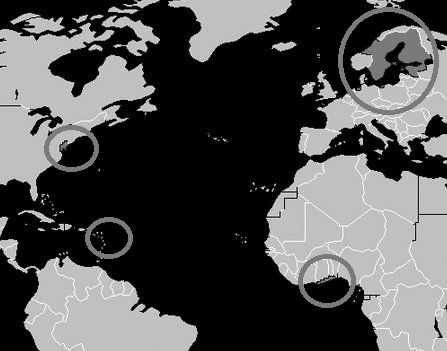
Most people today would not think of the Kingdom of Sweden as a major power. Today it is a member of the European Union with a tradition of neutrality, never having fought a war since 1814. Even in recent times, however, the Swedes have been known for having an independent streak when it comes to national defense and in the past the Kingdom of Sweden was the dominant power in northern Europe. Astute students of history will probably recall that Swedish power once stretched across Norway, Finland, the Baltic states and parts of northern Germany but perhaps fewer are aware that, at times, the Kingdom of Sweden stretched its hand out to lands far beyond the shores of Europe to establish a modest colonial empire, albeit a relatively short-lived one. Of course, the Kingdom of Sweden was never a major colonial competitor on the world scene, though if things had gone just a little differently that might not have been so and the fact that the sparsely populated Scandinavian kingdom was able to project a Swedish presence overseas at all is quite remarkable given that they had the dominant land power of Russia to the east and the dominant naval power of England (later Great Britain) to the west. And, even without formal colonies of their own, the Swedes were able nonetheless to spread their culture and traditions around the world.

Queen Christina
Under King Charles IX, Sweden became zealously Protestant and much more militaristic. Not much was accomplished right away but it was under Charles IX that divisions were eliminated and Sweden got serious about being a major power. Under his successor, Gustaf II Adolph or King Gustavus Adolphus, Sweden came down with an acute case of awesome. He forged the Swedish army into a matchless military machine, highly innovative and swept his enemies from the field, changing the course of European history by his victories in the Thirty Years War. In conflicts with Poland he extended Swedish rule over Estonia and Latvia which, combined with Finland and Swedish lands in Germany, made the Baltic almost a Swedish pond. Dominating northern Europe, after the death in battle of Gustavus Adolphus, Sweden first reached out overseas during the reign of his daughter Queen Christina. In 1638 a group of Swedish and Finnish settlers established the colony of New Sweden on the east coast of North America on land claimed by the Dutch. Fort Christina was established in what is now the state of Delaware. The idea was to get a piece of the action on all the tobacco and furs being traded in the region by the British, French and Dutch. There was also some pay-back included in it as the first governor was Peter Minuit, formerly of the New Netherland colony, who was anxious to cause trouble for his old bosses as many an embittered ex-employee would like to do. He was still a fair choice for the Swedes though as he knew the area and, at the time, very few Europeans did.

Unfortunately for Sweden, their Finno-Swedish foothold in the New World was not to last. In an effort to secure control of the Delaware Valley, in 1654 Swedish colonial forces attacked and captured the Dutch-held Fort Casimir. The Dutch got angry and retaliated, conquering New Sweden the following year. However, by that time, the Kingdom of Sweden had secured some colonial holdings on another continent. In 1650, still while Queen Christina was on the throne, a Swedish colony was founded in Africa on the Gulf of Guinea by Hendrik Carloff in what is now Ghana. The area became known as the Swedish Gold Coast and consisted of six forts and a couple of trading posts. The endeavor was backed by the Swedish Africa Company, founded in 1649 by Louis de Geer, and it obtained the land these forts and outposts were built on by a purchase from the Akan King of Futu. The Swedes were, evidently, pretty popular with many of the local Africans as they seemed to prefer dealing with Sweden over the Dutch or Danes. Several years later Ft Carlsborg (the oldest Swedish fort in the region) was captured by Denmark which prompted King Charles X Gustav to declare war on the Danes. The peace agreement made in 1660 called for the Swedish territory in Africa to be restored, however, it was discovered that the local agent in charge for Denmark (another disgruntled ex-employee but this time of Sweden) had sold the land to the Dutch and absconded with the loot to Portuguese West Africa. However, Swedish rule was restored when the local Africans rose up in rebellion against their new masters, driving them out and again offering Sweden a good deal to come back and set up shop again, which they did. Unfortunately, this situation did not last very long as only a few years later the Kingdom of Denmark seized the colony again in 1663 (though the Swedes made them work hard for it) only to ultimately lose the colony themselves to the British later on.

King Gustav III
In the next century, after things had calmed down a bit, under the reign of King Frederick, Sweden began taking another look at the American neighborhood. In 1733 a Swedish attempt to establish a colony was made on the island of Tobago. Unfortunately the local Carib natives were experienced at fighting off foreigners and the effort was a failure thanks to their fierce resistance. A more lasting Swedish presence, however, was established on St Barts starting in 1784 during the reign of King Gustav III. It was in exchange for trading privileges in Gothenburg that King Louis XVI of France traded St Barts to the Swedes and, as it turned out, Swedish ruled proved to be a great blessing for the island. The Swedish West India Company was founded, the King declared Gustavia to be a “free port” and for a time it was the sight of booming business in trade and great prosperity. The population doubled and when the Napoleonic Wars broke out in Europe, profits grew even larger through both legitimate trade as well as a lucrative market for contraband. In 1813 the Swedish presence in the Caribbean grew a little larger when King Carl XIV John was given the island of Guadeloupe in thanks for his support for the Allies against France (his former country). This did not last long though as the island went back to France only a year later though thanks to the settlement made with Britain over the deal, Sweden still received money from the “Guadeloupe Fund” until 1983!

St Barts was the most long-lasting Swedish overseas colony and it was quite a successful one. It was a very free sort of place with more personal and economic freedom that Sweden itself. An enterprising businessman could make a fortune on trade and, whereas Lutheranism was strictly mandatory in Sweden, on St Barts there was religious freedom and eventually many, many more Catholics than Lutherans. The Swedish government decided not to mess with a system that was working and so even employed a Catholic priest to visit the island. In time, however, competition increased and after the Napoleonic Wars ended and the contraband market died down, the economy on St Barts began to suffer. This was critical as trade was all the island had going for it at the time, unlike other islands in the area which usually relied on plantations for the backbone of their economy. When slavery was abolished on the island this lack of a market for manual labor meant many of the freed slaves ended up being worse off for lack of employment. The Swedish island in the Caribbean eventually lost its luster and in 1877, under King Oscar II, a referendum was held on turning the island over to France. It passed with only one contrary vote and St Barts has belonged to the French Republic ever since.

New Sweden
By that time the Swedish empire in Europe had long since receded. The Baltic states were lost to Russia as was Finland with Sweden being given Norway, taken from Denmark, as compensation. This was, however, a personal union, with Norway still being a distinct country of its own but sharing a monarch with Sweden. The last Swedish colony was given up in 1877 and in 1905, after another referendum, Norway broke away from the Swedish crown to become a totally separate kingdom with a Royal Family of its own. Still, even without many or long-lasting Swedish colonies around the world, Swedish immigrants have carried the flavor of their homeland with them to many different countries. Some moved to Argentina, many moved to Brazil during the reign of Emperor Pedro II but most moved to the United States of America with the majority settling states that are not too dissimilar from Sweden itself. From the late Nineteenth to early Twentieth centuries more than a million Swedes came to America to settle, the majority in the state of Minnesota. As a result, the Swedish culture is quite strong in many parts of the Upper Midwest and even today, long after any sizeable Swedish immigration has stopped, there are still nearly four million Swedish-Americans living in the United States and the Swedish Royal Family maintains many ties with the community. The Swedish empire may not have lasted long on the map of the world but the influence of the Swedish people is still felt in many parts of the world to this day.

Wednesday, October 16, 2013

The Portuguese Empire, First and Last

The Portuguese were the first to establish an overseas colonial empire and it was also the Portuguese empire that was the last to fall. It should come as no surprise that it was during the reign of the Kingdom of Portugal that the country experienced its greatest prosperity, prestige and the height of colonial expansion only to see it all come crashing down after Portugal became a republic. Like the history of any colonial empire, it was not always pretty, but the world at large and Europe in particular owes a great deal to Portugal for opening up so much of the world in ways that are ignored or taken for granted today. There were blemishes on the Portuguese record, as with any country, but a few things about the Portuguese colonial empire should stand out. It was driven by faith, commerce and the quest for knowledge rather than conquest and so Portuguese territories, early on, were almost exclusively restricted to coastal enclaves at port cities around the world. Although it is often denied today, many in the local populations Portugal encountered benefited from the establishment of this colonial empire and, finally, when it came to the struggle to maintain the empire at the time of its ultimate fall, Portugal was fighting the good fight against communist expansion with practically no help from the rest of the “Free World”.

After liberating itself from the Moors and making sure the Castilians kept their hands to themselves the new Kingdom of Portugal was soon striking out overseas. In 1415 the first step towards empire was taken when the Portuguese captured Cueta on the north African coast. It did not prove terribly successful and was eventually lost but it was an important first step (today Cueta is a Spanish exclave). Prince Henry, later famous as “Henry the Navigator” played a part in the conquest and he proved to be a driving force in Portugal taking to the seas to explore the African coast. Thanks to his leadership the Kingdom of Portugal became the most dynamic power in the world at that time in the fields of navigation, exploration and cartography. Intrepid Portuguese sailors brought back to Europe the first knowledge of sub-Saharan Africa and later other far flung corners of the world. The islands of Madeira and the Azores were discovered and claimed for Portugal (and they remain Portuguese to this day) and over time Portuguese footholds for trade were established all around the coasts of Africa. The great achievement in discovery came in 1488 when Bartolomeu Dias sailed around the Cape of Good Hope at the bottom of South Africa, proving that the Indian Ocean could be reached by sea. In 1498 the intrepid Vasco da Gama succeeded in reaching India. In time, Portugal established a number of trading footholds around the Indian coast.

In clashes with the Ottoman Empire, the Kingdom of Portugal established bases around the Arabian peninsula and for a time totally dominated the sea trade of the Indian Ocean. Other Portuguese explorers sailed farther, reaching the Indochinese peninsula, the Spice Island of what is now Indonesia, China and finally Japan. In fact, it was the Portuguese who first brought two great gifts to the shores of Japan; Christianity and firearms. The firearms were accepted more readily than Christianity was. In time, the only Portuguese colonial possessions remaining in East Asia would be Macau on the coast of China and half of the island of Timor. However, for some time Portugal held a near total monopoly on trade with the spice islands and this produced immense profit for Portuguese merchants and in large part because of this the Kingdom of Portugal became one of if not the most fabulously wealthy country in Europe. And, although Portuguese colonial focus was mostly on Africa and Asia, the newly discovered continents of America did not escape attention either.

It was in 1500 that the Portuguese explorer Pedro Alvares Cabral landed on the coast of Brazil and claimed it for King Manuel I. As the name suggests, brazilwood was initially the most attractive resource of the region but, in time, Brazil would become the largest and most prominent Portuguese colony in the world, covering an area not much smaller than the continental United States for comparison. Sugar cane plantations were later established and provided the economic backbone of the colony. Of course, mention must also be made of the fact that these were labor intensive industries and to provide that labor the Portuguese important large amounts of Africans from their ports on that continent to provide the slave labor that made the colony prosper. The slave trade itself was big business for Portugal and it was an extremely brutal affair. Yet, at the same time, while the treatment of slaves was often extremely cruel, the Portuguese did not hold themselves above the Africans as was often the case elsewhere. Although many Portuguese colonists came to Brazil, most were unmarried men and Portuguese women were reluctant to settle in the colonies. As a result, many Portuguese men married and had children with African women which resulted in the largely mixed-race population of Brazil today.

Relations with the natives in Brazil were also not always friendly but the Jesuit missionaries who arrived made a great effort and endured immense hardship to learn the native languages, understand and appreciate their culture and convert them to Catholicism. As was also the case elsewhere, these missionaries proved to be great champions of the natives when colonial officials wished to enslave them. They were not always successful, but they stood on moral high ground and made eloquent arguments in defense of the natives. Similar clashes occurred between missionaries and colonial officials in the Spanish empire and, for a time, the colonial holdings of Spain and Portugal were brought together when the King of Spain became the King of Portugal as well. The Portuguese empire covered a wider area than that of Spain but the Spanish held much more territory and colonial populations which resulted in the opening of extensive new markets for Portuguese merchants and traders because of the union. It also, at least for a time, helped ward off the attacks on the Portuguese colonial holdings by other powers such as The Netherlands and Great Britain. Eventually the Dutch gained control of the Spice Islands away from Portugal, took control of the coast of Ceylon and became the only western country with a lasting trade agreement with Japan. By the time Spain and Portugal separated, the colonial holdings of Portugal had been greatly reduced.

The biggest blow to the Portuguese empire was the loss of Brazil in 1822. This came about for a number of reasons; the example of the United States of America, the Napoleonic Wars in Europe and the increase in status when the Portuguese Royal Family relocated to Brazil during the period of French occupation and the desire of Brazil not to lose that status when the King returned to Lisbon. However, it was at least a peaceful separation and the ruling family of the new Empire of Brazil came from the Royal Family of Portugal. Still, it was a consequential loss for Portugal and in an effort to recoup some of that loss the Kingdom of Portugal began to consolidate and expand those Portuguese colonies that still existed. In Asia the Portuguese footholds were surrounded by lands controlled by the Dutch, British or Chinese so this expansion was mostly limited to Africa. The largest Portuguese holdings were what is now Angola and Mozambique. Originally, the Portuguese planned to link these two colonies which were on the west and east coasts of Africa and so launched expeditions into the interior of Africa. However, this put them at odds with their longtime allies in Great Britain and, in the end, it was the British that secured control of the territory between the two Portuguese colonies.

Conditions in the colonies were not always ideal but things were not much better in Portugal itself as the kingdom faced a number of problems. Corrupt politicians and power-hungry rabble rousers ultimately succeeded in creating problems and profiting by them, bringing down the Portuguese monarchy in 1910. For the time being though, the Portuguese government assumed that the empire would continue to exist. Things were not perfect but the Portuguese colonies had long been quite different from some others in the neighborhood. Slavery was abolished, over time, throughout all Portuguese possessions. First the enslavement of Chinese persons was banned in 1624, then slavery in Portuguese India was banned in 1761. In 1774 King Jose I outlawed bringing slaves to Portugal and ordered that all African children born from that time on would be free. In 1777 slavery was abolished in Madeira, the slave trade was outlawed in 1836 and in 1869 slavery was finally abolished in all Portuguese African colonies. Britain and France had done the same but what set the Portuguese colonies apart was how little racial bigotry was reflected in law. Of course, wherever there are differences there will be problems but the Kingdom of Portugal had shown no prejudice against a mixed race population and there was very little segregation in Portuguese Africa. The Portuguese colonies were considered to be part of Portugal itself and everyone in them, whether Portuguese, African or a mixture of the two were considered equal or in the process of becoming equal.

The Portuguese empire eventually fell due to communist subversion. This was certainly true in Africa where it prompted a long and costly colonial war against the communist rebels who were backed by the Soviet Union but even in India when the newly independent India launched a massive attack on the Portuguese cities it was with the support of the Soviet Union. The Soviet dictator was even in India at the time, cheering them on. Antonio Salazar, then ruling Portugal, ordered the Portuguese troops in India to fight to the last man (though they were outnumbered better than 10 to 1) but after some initial clashes they nonetheless surrendered fairly quickly. Africa was a different story as the colonial war there went on for about a decade until the economic strain brought down the corporate state in Portugal itself. Rebel forces were backed by the USSR, Communist China and even many do-gooder groups and useful idiots in the west who often had communist or at least socialist sympathies of their own. In Mozambique it was FRELIMO that led the fight and established a Marxist dictatorship over the country after Portugal conceded independence to them. The party has remained in power ever since.

In Angola the Portuguese forces were opposed by pretty much everyone except South Africa with both the United States and the Soviet Union (plus Red China, Cuba and the rest of the gang) supporting various rebel factions in their effort to ensure that the winners would bring Angola into their own sphere of influence. It probably did not help that Portugal was ruled by a corporatist regime that tended to look down on the extremes of both capitalism and socialism so it was almost equally disliked by both the United States and Soviet Union. In the end it was the MPLA that emerged victorious when Portugal gave up the fight. Again this was a Marxist movement that has held dictatorial power over Angola ever since which has been accused of numerous human rights violations. Portuguese Guinea was fought over in a war that lasted from at least 1956 to 1974 when it gained independence as Guinea-Bissau. It was the worst of all the fronts in the colonial war. The winner there was the Marxist-socialist African Party for the Independence of Guinea and Cape Verde which of course became the only legal party afterwards and held power until the 1990’s. It has a GDP among the lowest in the world and is so chaotic that no elected president has ever served a full term in office. In other words, just because the country became independent does not mean life became better for the people. Likewise, as with all too many African countries sadly, honest colonialism has simply been replaced by dishonest colonialism as resources and political influence has been purchased by foreign powers, most often the People’s Republic of China so that, in fact if not in name, these places are just as much being ruled by a foreign power as they ever were.

The last remnant of the Portuguese empire was officially given up in 1999 when the colony of Macau was handed over to the People’s Republic of China. The Portuguese had been the first European power to establish an overseas empire and theirs was the last to fall. As with all colonial empires, there will always be the critics who want to do nothing but cry and condemn, ignoring the good and exaggerating the bad. Such hysterics do not impress. The Portuguese empire was extremely important and has left a lasting legacy in the widespread use of the Portuguese language and vibrant Catholic communities from Brazil to India to East Timor (which as most know was immediately invaded by Indonesia after declaring independence). Even the unique (though very small) version of Christianity exclusive to Japan, though not what the Portuguese left behind, would not exist were it not for the Kingdom of Portugal. The legacy of slavery will always be a painful one but the vibrant, mixed-race country (and former Empire) of Brazil would not exist were it not for the Portuguese empire it sprang from. The whole world owes a great deal to the Portuguese empire for many things taken for granted today. So many built on the advances in sailing, navigation and cartography made by the Portuguese who were the trailblazers in exploration. Many people, not just in Portugal but throughout Europe and around the world, benefited from the global trade network Portugal established and to a large extent it was the Portuguese empire that introduced Europe to much of the wider world and likewise so much of the wider world to the continent of Europe.

Thursday, August 22, 2013

Empire of the Danes

It may come as a surprise to some people that the Kingdom of Denmark was once an imperial power. Sure, today Denmark is just a quiet, unassuming little country in northern Europe, but, once upon a time, the Danes were large and in charge. Denmark managed to not only gain mastery of all of Scandinavia but also to branch out and establish colonial outposts all over the world. The history of Danish conquests goes back quite a long way, though the farther back one goes, naturally, the facts become a bit harder to nail down. However, it seems that King Harald Bluetooth who united the Danes and under whose reign Christianity was first introduced, managed to conquer southern Sweden and Norway, such as it was at the time. His son, King Sven Forkbeard took on the considerable task of conquering England, which was accomplished by 1014. Conquering England was difficult but still proved easier than ruling England and the Vikings of Denmark were eventually forced out with King St Canute IV being the last Danish monarch to attack English shores. England and Denmark went their separate ways by 1035 but, after a time, Denmark came roaring back to be a major contender for power in the Baltic Sea region with the Danes conquering parts of northern Germany and Estonia though only briefly.

Queen Margaret I
Real prestige and what amounted to imperial power for Denmark came during the reign of Queen Margaret I. Through her marriage and offspring the Kalmar Union was formed which united all of Scandinavia under the Danish crown. Married to the King of Norway, who was also a relative of the soon to be late King of Sweden, and Sweden at that time ruling Finland, Queen Margaret I of Denmark was mistress of the whole of far northern Europe. On paper this was a political union and not a case of Norway, Sweden and Finland all being ruled by Denmark but (especially if you were to ask the Norwegians, Swedes and Finns at the time) it was the Danes who dominated and really called the shots. Well done Denmark, but, of course, this state of affairs was also partly why the Kalmar Union did not last for very long. The Swedes, traditionally a very independent people, proved to be the most discontented and the most formidable in seeing Danish influence pushed back inside their own borders. Sweden finally went its own separate way but Norway, while distinct from Denmark, remained solidly united under the Danish crown until the Napoleonic Wars when the Allies chastised Denmark for siding with France and took Norway away from the King of Denmark and gave it to the King of Sweden to offset the loss of Finland to the Tsar of Russia.

The religious disputes that followed the spread of Protestantism caused a setback for Danish power but new alliances were made and in time Denmark was back to being the most prosperous and powerful of the Scandinavian countries. They took a sting in the Thirty Years War and then a rather serious drubbing from Sweden. A number of subsequent wars failed to restore Danish supremacy over the region or to break Swedish power which grew considerably thanks to a number of very gifted military leaders. However, you cannot keep a good Dane down and in time Denmark was again a model of prosperity, confident enough to start looking beyond Europe for opportunities to grow. Thanks to the union with Norway the Danish Crown already held Iceland and Greenland as well as some other smaller islands in the North Sea but under King Christian IV, Denmark began looking to plant the oldest national flag in Europe on warmer shores. In 1620 the Kingdom of Denmark established its first official overseas colony in India, the subcontinent that was so attractive the Portuguese, Dutch, British and French were all competing to make claims. The Danish foothold was established at Tranquebar (now called Tharangambadi) which remained a Danish possession until 1845 when it was sold to Britain.

Ft Christiansborg in Africa
In 1671 the Danes gained their first colony in the New World with the acquisition of St Thomas island in the Caribbean, having first seized the island from the Dutch in 1666. Even before that though the Danish West India Company had an outpost there and after Danish rule became official and was extended over the whole island, development expanded rapidly. Sugar cane plantations were the primary industry as they also were on the island of St John (Sankt Jan) which was first settled by Danes in 1718. In 1733 the Danish West Indies were expanded further when Denmark purchased the island of Saint Croix from France. Of course, unpleasant as the subject is, sugar plantations in those days did not operate without widespread use of slave labor and if you were going to have sugar plantations in the Caribbean, and have them produce any profit, you were going to need slaves and this necessitated Danish colonial expansion in Africa. In 1661 Denmark purchased a fortress or castle from the Swedes on the Gold Coast of West Africa and in the following years Danish influence in the region expanded. Denmark established several other forts in the area, mostly in what is now Ghana, and the region became unofficially known as the Danish Gold Coast. In fact, one former Danish fort, Ft Christiansborg, is still used today as the residence of the President of Ghana.

Efforts were made to establish plantations in Africa but these were not successful and eventually the interior was seized by African powers hostile to Denmark and as public sentiment was eventually turning against the idea of slavery the Kingdom of Denmark withdrew from Africa and sold its forts to Great Britain in 1850. They served no purpose by that time as the slave trade had long been mostly suppressed thanks to the British and in 1848 the Kingdom of Denmark abolished the use of slave labor. The Danes had already seen that slavery could prove detrimental to the masters as well as to the slaves when there was a massive slave rebellion on the island of St John, where African slaves outnumbers Danish colonists by 5 to 1, which was only suppressed with the help of France. However, though Denmark was congratulated for the abolition of slavery this also meant that most of the plantations in the Danish West Indies went out of business and the local economy went downhill fast. Rather than being self-sufficient or profitable, the islands became a drain on the Kingdom of Denmark. So, in 1916 (when the Danish economy itself was in trouble due to World War I) there was little regret when Denmark sold the islands to the United States who wanted to use them to establish naval bases to guard against those troublesome German submarines. The following year the former Danish West Indies became the U.S. Virgin Islands.

Queen Margaret II in the Faroe Islands
This really ended the Danish colonial empire though the Crown of Denmark still reigned over Greenland, Iceland and the Faroe Islands. Danish power had been on the decline for a while by that point, having lost territory to Prussia in 1864. Norway was lost to Sweden at the end of the Napoleonic Wars but in 1905 voted to break away from the Swedish Crown and reestablish its own monarchy, electing Prince Carl of Denmark to become King Haakon VII of Norway, so Danes could probably smile on that occasion. During World War II the Kingdom of Denmark was occupied by Nazi Germany (though Danish defiance rather spoiled the German wish to showcase Denmark as the ‘model protectorate’) and in 1944 Iceland took the opportunity to break away from the Danish Crown and become an independent republic. Under the circumstances there was practically nothing Denmark could do about it, especially as the Allies were supportive simply to secure their own influence on the island. The timing seemed disgraceful and any objective observer would say it was not necessary considering that Iceland had already become virtually independent by that time anyway with the establishment of the Kingdom of Iceland in 1918 in personal union with the Crown of Denmark. Not long after the war, in 1948, the Faroe Islands were granted almost complete autonomy. Still, the islands remain under the reign of the Danish monarch as does the massive island of Greenland which was granted home rule in 1979.

With Iceland going republican, Greenland and Faroe Islands remain the only vestiges of the Danish colonial empire and these are each self-governing, autonomous members of the “Danish Realm”. In fairness it should also be pointed out that these islands were originally Norwegian possessions which came under the Danish Crown during the union of Denmark and Norway via the Treaty of Kiel of 1814. However, unassuming as the Kingdom of Denmark may appear today, there was a time when the Danes were the dominant force in far north Europe and at various times the rule of the Danish monarchy stretched across Finland, Sweden, Norway, England, northern Germany, Latvia, the North Atlantic, down to the Caribbean Sea, the Gold Coast of Africa, southern India and as far east as the Nicobar Islands in the Sea of Bengal (sold to Britain in 1869). Although today the Danish colonial empire may not be as well remembered as the more extensive realms of other colonial powers, for a time it was one that had to be taken into account with the Danish flag flying over parts of America, Africa and Asia.

Related Posts Plugin for WordPress, Blogger...