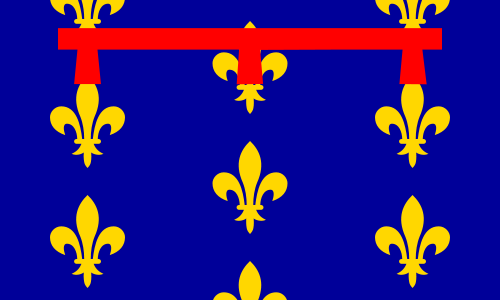
Showing posts with label Naples. Show all posts

Thursday, July 30, 2015

Monarch Profile: King Ferdinand I of the Two-Sicilies

The reign of the Spanish over southern Italy and the island of Sicily, in its last instance, can be traced back to their seizure from the Austrian Hapsburgs during the War of the Polish Succession. At that time, the son of King Philip V of Spain, Charles, was placed on the throne. He had previously been Duke of Parma before moving to Naples as part of the constant struggles and trade deals between the great powers over the states of the Italian peninsula. Eventually, he succeeded his brother as King Charles III of Spain (Carlos III) and so he passed the kingdoms of Naples and Sicily to one of his sons, Ferdinand, who had been born in Naples on January 12, 1751. He was to preside over a time of immense tumult, trepidation and transition in the history of southern Italy, ending ultimately in the creation of a new political entity called the Kingdom of the Two-Sicilies. Little Ferdinand was only in his eighth year when he became King Ferdinand IV of Naples and III of Sicily when his father became King of Spain. King Charles III was forbidden by treaty from continuing to rule over all three kingdoms personally so choosing his third son to succeed him in Naples was a way of ensuring that the Spanish Bourbon dynasty would still retain the crown.

Obviously, as a small child at the time, actual power remained in the hands of the King of Spain or those officials appointed by him to administer southern Italy. At the head of the local government was a council of regency led by Bernardo Tanucci, a native of Tuscany and servant of the King of Spain who had fully embraced the “Enlightenment” ideas that were sweeping the educated elites of society in those days. Tanucci wanted to keep power centralized in his own hands, “reform” the Catholic Church and make government and society more “rational” as he saw it. His efforts to establish state supremacy over the Church earned him an excommunication from Pope Clement XIII, which he responded to by seizing a couple of Catholic monasteries. Unfortunately, his control of the government also gave him considerable power over the upbringing of his young monarch and he was certainly not a positive influence. Because he wished to hold on to power for himself as much as possible, he made sure that King Ferdinand IV learned only what he wished him to know. He encouraged the boy to be frivolous and concentrate on indulging rather than educating himself. Tanucci did, however, make sure that the King grew up with his sense of values.

Due to this, King Ferdinand IV was more adept at sports and other pleasurable pursuits than he was at administration by the time he reached his majority in 1767. As an absolute monarch, Ferdinand IV could rule as he wished but he still kept Tanucci on his council. His first action as King of Naples and Sicily was to expel the Jesuits from his domain, an act which undoubtedly pleased Tanucci greatly. His second priority was to find a suitable wife to ensure that the Bourbon reign would continue. The choice ultimately fell on Archduchess Maria Carolina, the daughter of Empress Maria Theresa, Archduchess of Austria and Queen of Hungary (making her, of course the sister of Emperor Joseph II and Queen Marie Antoinette). More like her brother than her mother, Queen Maria Carolina was also receptive to the new ideas of the “Enlightenment” and favored what would become known in monarchial history as “enlightened despotism”. She was like her mother in that she was strong-willed and assertive. In 1768 she and King Ferdinand were married as part of an Austro-Spanish alliance and by the terms of the treaty the Queen was given a place on the governing council where she made her wishes known. This caused a clash with Tanucci, who was used to being in charge, but the Queen emerged triumphant over the old courtier.

Many came to believe that the Queen was the real ruler of Naples, a charge not without some facts to support it. King Ferdinand had been discouraged throughout his youth from taking much interest in government and was known among some of the public as il rĂ© lazzarone which, while hard to translate exactly, could be understood as the ‘peasant king’ or someone who behaves in a very low-class way. He was not known for his great virtue but he and the Queen certainly had a productive marriage if not a happy one as they had eighteen children. Rather remarkable considering that both, at various times, said they found the other unattractive and stayed together only out of a sense of duty and obligation. Still, the King could have his fun while the Queen worked to consolidate her own position of power. Naples was effectively still being ruled by the King of Spain through Tanucci until the Queen succeeded in having him dismissed over the issue of the Freemasons (Tanucci banned them, the Queen wanted the ban lifted). The Queen took her advice from her Austrian homeland, such as strengthening the navy, and took the country much closer to Great Britain through the influence of an Englishman who was one of her favorites (and about whom there was no shortage of gossip). She also tried to patch up relations with the Catholic Church.

All of this caused a great deal of bad feelings amongst the Spanish Royal Family. The Queen had appointed an Englishman to power at around the same time King Charles III was going to war against Britain alongside France and the fledgling United States. Ties with Austria and Britain increased to the extent that one could easily wonder which country really held power over Naples. For the average Neapolitan, however, none of this might have mattered. They were used to doing things their own way and would ‘keep calm and carry on’ no matter which foreign dynasty happened to be ruling them at the moment. However, the experiments with the philosophy of the “Enlightenment” undermined traditional reverence for the monarchy. In some countries, this had no immediate effect so long as the country was well governed. Unfortunately, under King Ferdinand IV, Naples was not being well-governed. The Queen’s English favorite had actually done considerable harm to the administration of the country. So it was that a perfect storm was brewing in Naples when word came of the outbreak of the French Revolution, culminating in the horrific regicide of King Louis XVI and Queen Marie Antoinette.

The effort, nominally by King Ferdinand IV, to be an “Enlightened Despot” came to a screeching halt and the King and Queen turned in a decidedly reactionary direction due to the alarming events in France. In 1793 Ferdinand IV pledged the Kingdom of Naples to the War of the First Coalition against republican France and began trying to root out any hint of republicanism or republican sympathy in southern Italy wherever it could be found. However, when he was obliged to make peace with France in 1796 revolutionary agitation at home started to increase again. Queen Maria Carolina persuaded King Ferdinand to declare war on France again in 1798 and though Neapolitan troops briefly marched north and occupied Rome, it was a complete fiasco with the army retreating at the first sign of a French advance (the Neapolitan army had a very poor reputation in this period). The revolutionary forces in Naples saw their chance and began to rise up in imitation of their radical French counterparts. The Royal Family, fearful of sharing the fate of the French King and Queen, immediately fled to Sicily with help from Britain.

Once ensconced in Palermo, King Ferdinand showed his fangs and began massacring any suspected republican he could get his hands on. However, back in Naples, the middle and upper classes that had supported him had been left to the bloodthirsty mob and so quickly called on the French for help. The result was the occupation of southern Italy by French forces and the establishment of the ridiculous contrivance known as the Parthenopaean Republic. In response to this outrage, and in an illustration of how far he had back-peddled from his “Enlightenment” days, King Ferdinand turned to one of the most dashing and fascinating characters of Italian history, the rich, religious, royalist reactionary Ruffo, that is His Eminence Fabrizio Cardinal Ruffo. I must admit here to my partiality as Cardinal Ruffo and his exploits have always been a favorite of mine. The Italian cleric landed in Calabria and raised a counterrevolutionary force of irregulars he dubbed the ‘Army of the Holy Faith’ (they were commonly known as the Sanfedisti). With artillery from Britain and some additional support from Russia, Cardinal Ruffo went after the revolutionaries Old Testament style and his cohorts of religious royalists soon had the whole of southern Italy in an uproar and eventually forced the French to agree to an armistice and wash their hands of the region. It was a glorious and unexpectedly successful operation that was also a colorful adventure, with pious as well as gruesome elements to it.

By July of 1799 King Ferdinand IV had moved from executing republicans in Palermo to executing republicans in Naples, so things were moving in the right direction. However, Napoleon was not going to permit a Bourbon monarchy to remain on the continent he wished to dominate and soon French troops were on their way back led by the Emperor’s brother Joseph. Once again, in 1806, King Ferdinand and his retinue fled to Palermo and Joseph Bonaparte was appointed King of Naples by his brother. Still, the French were constantly having to deal with guerilla attacks and were issued a stinging defeat by the British in the south though the British expedition withdrew afterwards. In 1808 Ferdinand IV received a new nemesis when Joseph Bonaparte was withdrawn to become King of Spain and replaced by Marshal Joachim Murat. He did not have much sense but he was more of a threat as he was more popular than his predecessor, mostly because of his ambition which pushed him toward Italian independence rather than French domination. This naturally led to problems with Napoleon and eventually Murat was defeated by the Austrians and after he fled to France, the Austrian Imperial Army marched in to Naples and announced the restoration of King Ferdinand IV to his throne.

During this time, the Bourbon King and Queen had been having problems of their own in Sicily. The British had given them a subsidy and a garrison to guard them and naturally expected no small amount of influence to coincide with this protection. They tried to steer the country in the direction of a Burkean constitutional monarchy, to encourage popular support for the establishment by having people invested in it rather than for fear of being shot. King Ferdinand was more of the “better dead than red” persuasion and ultimately this resulted in the Queen being exiled and the King forced to issue a classical liberal constitution and make his son regent. However, once Napoleon was defeated and the British had pulled out, King Ferdinand reversed all of that, went back to absolute monarchy, enlisted the help of Austria in regaining his throne in Naples and had Murat shot when he made a bid to restore himself.

At the Congress of Vienna, King Ferdinand IV of Naples abolished the Sicilian constitution and declared himself King Ferdinand I of the Two-Sicilies. All previous agreements were annulled, all enemies or potential enemies of the regime were executed and the Austrian army remained to garrison southern Italy and enforce his rule. He also appointed an Austrian commander-in-chief of the Neapolitan army. All of this caused increasing resentment among the populace and a growth in the revolutionary secret society known as the Carbonari. In 1820 there was a mutiny among the army and an attempted military coup led by General Guglielmo Pepe which forced King Ferdinand I to issue a constitution while at the same time sending troops to stamp down a rebellion for independence in Sicily. All of this chaos drew the attention of the great powers of the Holy Alliance who feared a revolutionary outbreak could spread. King Ferdinand repudiated, again, the constitutional concessions he had made, further damaging his credibility and winning himself no friends amongst the other crowned heads of Europe for his antics. In the end, Prince Metternich sent another Austrian army to occupy southern Italy, defeating the Neapolitan rebels and securing Ferdinand I on his throne once again.

In the end, as before, King Ferdinand abolished the constitution and tried his best to have all revolutionary elements executed but he depended on the Austrian military to sustain himself and, as before, this came at a price. By the end of his life, Austria was effectively ruling southern Italy in his name through the Austrian ambassador Count Charles-Louis de Ficquelmont. King Ferdinand I of the Two-Sicilies, at the age of 73, gave up the ghost in Naples on January 4, 1825. He had started his reign with his country being ruled from Madrid and had ended it with his country being ruled from Vienna. In the intervening years there had never been any shortage of people, all outsiders, wishing to do his job for him. At first he had been content to leave matters to his wife but the horror that swept Europe after the outbreak of the French Revolution  changed all of that. Today he is often remembered as a rather crude and brutal man, constantly being propped up by foreign bayonets to maintain himself. He is the man who ate spaghetti with his fingers at the opera and had lots of people executed. However, before judging him too harshly, one should keep in mind the fact that he was intentionally raised to be disinterested in government and not really prepared for the task. Thus, it is no great surprise that he wasn’t terribly good at it. Also, after going along with the “Enlightenment” trend, his later penchant for putting people to death was a reaction to a very real fear that what had happened to his fellow Bourbon monarch in France could happen to him. What is unfortunate is that he too often broke his own word, damaging his reputation among his subjects and the other courts of Europe. It was a tendency that would be repeated with his successors and the pattern of his reign would, unfortunately, be repeated in a number of ways until the Bourbon reign over the Two-Sicilies came to an end.

Monday, May 23, 2011

Monarchist Profile: Fra Diavolo

Michele Pezza, better known as Fra Diavolo or “Brother Devil” is one of the most famous counter-revolutionaries in Italian history and has become something of a folk hero for his resistance to French republican (later Napoleonic) rule. Michele Pezza was born on April 7, 1771 in Itri in the Kingdom of Naples. He became known as Fra Diavolo due to his mischievous behavior as a child. His family came from a modest background but were not impoverished as some later accused them of being. Fra Diavolo was no scholar but was taught to read and write which put him ahead of most other common born people of his time and place. As a young man he worked for the postal service which made him more familiar with terrain and populace between Terracina and Naples. In 1797 he was forced to join the army after killing two men in an argument over a woman.

Fra Diavolo was a good fit in the army, stationed on the northern frontier of Naples and soon became a non-commissioned officer. In 1798 he was among the Neapolitan forces that marched to the rescue of the Papal States when they were invaded by French revolutionary forces. However, the defense did not go well and they were forced to retreat with the French then invading southern Italy. Fra Diavolo was almost captured while fighting with a rear-guard action but escaped in disguise. In quick order he organized other soldiers and local irregulars to resist the French advance. Using their knowledge of the terrain, Fra Diavolo and his men harassed the French at every opportunity as they swept through the country, finally taking Naples itself and declaring a republic, planting “Liberty Trees” as they went.

However, in spite of their high-sounding ideals, the revolutionaries turned the people against them through their high-handedness, cruelty, theft and rapine. With every attack by Fra Diavolo or any other of the counterrevolutionary bands there was swift and brutal retaliation against the populace, which only served to make the republic ever more hated. Fra Diavolo was given further justification for his war when republican forces sacked his hometown, his father being among the 60 men, women and children massacred. Finally, the resistance received official sanction and support as Queen Maria Carolina (who had a rather more ‘take charge’ attitude than her husband King Ferdinand IV) appointed HE Fabrizio Cardinal Ruffo to command the counterrevolutionary forces.

British and Neapolitan ships landed 5,000 men in Calabria to support the struggle against the French. Nobles, peasants, clerics and laymen rushed to the standard of Cardinal Ruffo to join his “Army of the Holy Faith”. Fra Diavolo, who already had a force of his own and considerable experience at the business, became one the Cardinal’s top subordinate commanders. Soon, Fra Diavolo had 4,000 men from all walks of life under his command and he attacked the French incessantly, raiding their bases, disrupting their supply lines and cutting down their hated “Liberty Trees”. He did so at Fondi and the Cross he erected in its place still stands there to this day. Operating out of Ft St Andrea his forces even made attacks against the bastion of Gaeta on the coast and soon Fra Diavolo was the most feared enemy of the republican forces who put up a substantial reward in the hope that someone would betray him.

In time the enemy was driven out, Naples was retaken and Neapolitan troops went on north to liberate Rome. Fighting not only for the freedom but the life and the very soul of his country, Fra Diavolo was merciless toward his enemies, which at times put him at odds with Cardinal Ruffo, nonetheless he had been of invaluable service and the King appointed him to the rank of colonel in the royal army, made him Duke of Cassero and granted him a generous pension. In 1799, while on his way with the army to liberate Rome, he had married a teenage beauty and once peace was restored he settled down to a quiet life and had two sons.

However, war came back to southern Italy with the ascendancy of Napoleon Bonaparte who invaded the country and set his brother Joseph on the throne, the Bourbon king and queen being forced to retire again to Sicily. Fra Diavolo was recalled to service and ordered to raise a partisan unit to resist the invaders as he had before, but this time there was no opportunity. Napoleon ran an altogether ‘tighter ship’ than his republican predecessors and the French advance was so swift Fra Diavolo was barely able to escape to Sicily himself. However, he was back soon enough and was fighting the French again in March of 1806. Called back to Sicily to raise reinforcements, he was then sent to reinforce Gaeta and disrupt the French by bedeviling their supply lines. He attacked the French but was mistakenly arrested by one of his own allies and sent to Palermo. The British commander, Admiral Sir Sidney Smith, ordered his release and he was back in action, raiding coastal installations before leading another band of irregulars into Calabria.

Despite inflicting heavy losses on the French, the partisans were finally defeated. Fra Diavolo escaped but the British withdrew their support and most opposition died down. Not, however, for Fra Diavolo who continued to resist as he always had done until his forces were pinned down and all but wiped out, near his hometown, on August 28, 1806. Still, he escaped and carried on, struggling against hopeless odds until November when he was betrayed and taken prisoner by the French. They first tried to bribe him into joining their army but he refused and when Queen Maria Carolina offered 200 French prisoners in exchange for Fra Diavolo the proposal was turned down. He was hanged on November 11, 1806 for “banditry”. Nonetheless, the inspiration to resist that he provided meant that the counterrevolutionary forces continued until the French were finally driven out and the Bourbon monarchy restored.

Friday, March 4, 2011

Consort Profile: Queen Maria Amalia of Naples

Queen Maria Amalia of Naples and Sicily, consort of King Louis Philippe of the French, is an interesting historical figure and, in many ways, not the sort of person one might expect her to be. She was born Princess Maria Amalia of Bourbon-Two Sicilies at Caserta Palace on April 26, 1782 in the Kingdom of Naples/Two Sicilies. Her parents were King Ferdinand IV and Queen Maria Carolina. From her earliest education she was noted for her religious piety and sincere Catholic faith. With a mother like Queen Maria Carolina and a grandmother like the Empress Maria Theresa, she was fully expected to follow in their footsteps as a strong, involved Catholic consort. While still very young her mother and her aunt, Queen Marie Antoinette of France, planned for her to one day marry her cousin the Dauphin. Obviously, the French Revolution and the tragic death of the poor Dauphin ended that childhood dream. However, it was important inasmuch as Maria Amalia had it in her mind from a very early age that it was her destiny to be the Queen of France.

As a child she watched the horrific forces of the revolution sweep Europe, first France where her aunt and uncle were murdered, and then Italy itself which forced her to flee with her parents to Sicily on more than one occasion. She watched as her mother rose to the occasion to do whatever was necessary to save her family and maintain their kingdom. It was a very difficult time for the Neapolitan Royal Family and left quite an impression on the young princess. It was while in exile as revolutionary turmoil swept across the Italian peninsula that she first met Prince Louis Philippe of Orleans. Few would have expected an instant romance. Prince Louis Philippe came from quite a liberal background, his own father, the Duke of Orleans, having been a supporter of the French Revolution, whereas Princess Maria Amalia was a conservative Catholic of the Bourbon and Hapsburg dynasties that had most opposed the entire revolutionary movement. Nonetheless, three years later they were married in 1809 and Princess Maria Amalia became the Duchess of Orleans.

Despite their lofty titles, however, the new couple were not living in grand style. With the revolutionaries and later Napoleon ruling France the pair were constantly in exile and essentially living off of the charity of the British government. However, throughout these difficult times Maria Amalia never lost her regal bearing, her principles or the values with which she was raised. Given the, shall we say “undignified”, way in which her father often behaved, it is to her credit that she viewed being royal as a service, a duty (both to God and the people) and that as a royal she had to set an example to those around her and she always conducted herself with dignity regardless of her circumstances at the time. Ultimately, thankfully, those circumstances changed and she led the restoration and revival of the Orleans ancestral home at the Palais-Royal and she accomplished it without breaking the bank. Indeed, throughout her life, Maria Amalia was known for her generosity and Christian compassion. Even as a staunch royalist who opposed revolution and all it stood for, she never held anger against the common people whose actions may have been entirely wicked but who were often motivated by privation and concern for their families.

It was the human, moral side of things that concerned her the most, far above and beyond power politics and diplomatic chess play. This was certainly her biggest issue when she suddenly became “Queen of the French” following the July Revolution of 1830 which turned out His Most Christian Majesty King Charles X and placed her husband on the throne. This was the “July Monarchy” of France, a strange hybrid of the traditional Bourbon kingdom and the revolutionary republic. Her husband was made king but of what was known as a “popular monarchy” (very trendy at the time but a fashion that faded rather quickly) in which he was “King of the French” rather than the “King of France”. Traditional monarchists were outraged at a Kingdom of France under the revolutionary tricolor, led by a king from the House of Orleans which had been tainted by complicity in the revolution and they were certainly unimpressed when King Louis Philippe I adopted the title of “Citizen-King” to show how royalist and republican sympathies were trying to be united.

The now Queen Maria Amalia was greatly disturbed by all of this, certainly not overjoyed at her new status. As a conservative, Catholic royalist she did not approve of how King Charles X had been overthrown nor of the style of the new regime. However, she was also a devoted wife who felt bound to support her husband. Thrust into this position that she did not seek, she determined to make the best of it and to shun politics as completely as she could. She had real sympathy, even anguish, at how the previous Royal Family had been treated but, dutiful as ever, she carried on. Many monarchists since have criticized both the Queen and her husband for this, but few have ever even attempted to answer the question of what they, and certainly at least the Queen, could have done instead? Had they refused to participate at all France would certainly have simply restored the republic and become completely devoted to the revolutionary ideal once again. While there is certainly at least room for criticism of King Louis Philippe on this occasion, none can attach itself to Queen Maria Amalia who was simply responding to circumstances beyond her control. She also had an inherently stabilizing presence on France since many monarchists who were opposed to the “Citizen King” and the new popular monarchy were at least comforted by the fact that there was a traditional, Catholic Bourbon Queen of France in the best tradition of those who had gone before her.

In some ways, this goal of unity, was the one primary aim of her time as Queen. While her husband tried to bring the republicans around to accepting having any sort of monarchy at all the Queen tried to bring conservatives and the royal courts of Europe around to the idea of accepting the popular monarchy as being the only means of making the best of a bad situation. She was dutiful as ever, to her husband and her adopted homeland. Ultimately, of course, this new monarchy could not be all things to all people and in the Revolution of 1848 the last King in France was overthrown and Queen Maria Amalia had to flee with her family again, this time to Great Britain. She spent the rest of her life attending to her children (and she had always been a very good mother) and spending her time in pious reflection, prayer and daily mass. She died on March 24, 1866 and was buried in the same dress she had worn when she had her husband had been forced to leave France. She was, after all, going “home” to the ultimate restoration and made a statement even after leaving this life.

Wednesday, February 16, 2011

Consort Profile: Maria Carolina of Austria

One of those royals who was famously converted to conservatism after being confronted with the harsh realities of revolution was Maria Carolina of Austria who was the Queen of Naples. She was born Archduchess Maria Carolina in Vienna, the thirteenth child of the prolific power couple Holy Roman Emperor Francis I and Empress Maria Theresa of Austria. Her godfather was King Louis XV of France and she was said to look the most like her mother who was a very formidable and outstanding woman. Her favorite sibling was her ill-fated sister Marie Antoinette and the two girls got up to such mischief that their mother had to separate them because they were always causing trouble. Empress Maria Theresa, who was a very astute stateswoman, wanted a marriage alliance with the Bourbon Royal Family of southern Italy (the Spanish branch that ruled Naples & Sicily) to keep Austria and Spain allied. Originally it was Archduchess Maria Josepha who was supposed to marry King Ferdinand IV of Naples but when she died of smallpox the duty fell on young Maria Carolina because the only other choice was considered too old.

Maria Carolina was not too happy about this and threw a fit, saying that no good ever came to those who married into the House of Naples. Personal preference, of course, did not come into these things and Maria Carolina and Ferdinand IV were married by proxy on April 7, 1768. When husband and wife met they seemed quite different. Ferdinand was a rather simple man, more comfortable talking to a workingman on the street than elites in the palace. Queen Maria Carolina on the other hand was a very complex and complicated person. She was very kind, very intelligent, curious, generous and compassionate but she could also be imperious and ruthless toward enemies and she knew how to hold a grudge. However, in spite of their problems, the new King and Queen of Naples had 18 children so Maria Carolina was made of tough stuff, though not all of them survived, an army nonetheless. Many people sympathized with her, thinking the king rather crude and it was true that Maria Carolina was often unhappy but she did her duty like the professional royal she was, no matter how upset she would get at her husband eating spaghetti with his fingers in the royal box at the opera.

Particularly after the birth of her son Francis she became extremely influential in Naples and ran the place to large extent. She kept an eye on being a help to Austria but she was also much taken with the fashionable trend of the liberalism of the “Enlightenment”. She employed the Englishman John Acton in reforming the Neapolitan army, finances and he finally became prime minister all amidst gossip that Acton and the Queen were having an affair. She supported the work of many liberal thinkers, artists and so on and even when trouble began brewing in France she was originally supportive of many of the ideals of the revolutionaries. However, that all changed of course when the monarchy was abolished and seeing the results of the ideas she had once championed, she totally reversed herself. It became worse when poor Marie Antoinette was executed and forever after Maria Carolina carried a portrait of her sister with her and vowed to avenge her death. It was due to her influence that her husband put the Kingdom of Naples in the First Coalition of European powers against the French republic.

Of course, things did not go so well and in the wake of hostilities the local revolutionaries in Naples tried to overthrow their monarchy, which they did on the mainland at least, establishing a republic while the King and Queen Maria Carolina had to escape to Sicily to continue their opposition to the revolutionaries. The British Royal Navy helped protect them there and finally the royalist forces were able to retake Naples and Queen Maria Carolina took a leading role in bringing down the republic and meting out strict punishments to the revolutionaries. About 1,000 were charged with treason and 100 ringleaders were hanged or beheaded for their betrayal. Later, under the more able leadership of Napoleon, the French invaded the Kingdom of Naples and once again the King and Queen sailed to Sicily. In 1812 King Ferdinand abdicated, passing the throne to Francis under a regent and Queen Maria Carolina had no more influence and went home to Austria. She died there on September 8, 1814 unable to see the final defeat of France she so desired.

Queen Maria Carolina is an example of many of the “Enlightenment” characters who were shocked to their senses by the French Revolution. They imagined liberal progress occurring under the guidance of wise monarchs and the educated elite of society (such as the Freemasons which she allowed back in Naples after they had been banned before) but of course once the fire was lit nothing could stop it burning out of control and bringing down the world as they knew it. As a result she became as ardent a counterrevolutionary as one could find. She is also an example of what a real royal thoroughbred was expected to be. She never found much personal happiness but it was her duty to be the Queen of Naples and she was a zealous queen just as she did her duty in securing the succession by having plenty of children. She did her job, putting duty first and personal happiness second.

Tuesday, May 12, 2009

Consort Profile: Queen Maria Sophie

Queen Maria Sophie was the last Queen consort of the Kingdom of the Two Sicilies. The daughter of Duke Maximilian Joseph of Bavaria her older sister was the famous Empress Elizabeth of Austria who married Franz Joseph I. In 1859 she married the soon-to-be King Francis II of the Two Sicilies whose country was on the verge of extreme crisis. The Italian peninsula was in the grip of turmoil brought on by a combination of revolution, nationalism and republicanism. Before the year was out the old monarch, Ferdinand II, was dead and Marie Sophie and her husband were King and Queen of the Sicilies that were targeted for invasion by the army of revolutionary republicans led by Giuseppe Garibaldi. Toward the end of 1860 the Bourbon forces had to abandon Naples and Francis II decided to make his stand at Gaeta.
By this time the Kingdom of Piedmont-Sardinia under Victor Emmanuel II had joined the fight for Italian unification and his naval forces began to shell the city. The siege of Gaeta was the defining moment in the life and short reign of Queen Maria Sophie. She was constantly on the walls, caring for the wounded, encouraging the troops, shouting defiance at the enemy and sharing her food with the hungry soldiers. It was, however, a hopeless fight and the King and Queen were forced to give up Gaeta and go to Rome where they established a government-in-exile which was recognized by most of Europe. They were honored guests of the Papal court but the position of the Pope was under the same threat that had already befallen their own country.
The marriage of Francis II and Marie Sophie was not always without problems but things did improve somewhat following the birth of their daughter in 1869 though the child only lived a few months. When Italian nationalist troops conquered Rome in 1870, ending the era of Papal rule, the King and Queen went to Bavaria where Francis II died in 1894. However, Queen Maria Sophie continued to preside over a Two-Sicilies court-in-exile and never gave up hope for a restoration of her adopted kingdom. During World War I (not surprisingly for a Bavarian princess) the Queen sided with Germany and Austria and hoped that the defeat of Italy might to lead to the restoration of the Kingdom of the Two Sicilies. However, that was not to be but it is remarkable that the Queen generated so much respect and admiration, even from those who would be her most extreme political enemies such as the famous Italian ultra-nationalist Gabriele d'Annunzio who called her the "stern little Bavarian eagle". The Queen died still in exile in Munich in 1925 but her remains were later moved to Naples where she rests with her short-lived daughter in the Church of Santa Chiara.
Related Posts Plugin for WordPress, Blogger...