North Korea has been in the news a great deal recently and though I have addressed this before (five years ago), it is something that comes up again and again: is North Korea a monarchy? Obviously, people ask this question because the dictator of North Korea is the son of the previous dictator who was the son of the founding dictator of North Korea. Leadership in the country is hereditary and this is associated with monarchy so people tend to make the leap that the “Democratic People’s Republic of Korea” is therefore an absolute monarchy rather than the communist dictatorship it is alleged to be. The simple answer to this question is, “no”. Just because the leadership of the country is hereditary no more makes North Korea a monarchy than the fact that the Holy Roman Emperors of the German Nation were elected makes the First Reich a republic. Korea, like most countries, has its own monarchical tradition, its own style of kingship and system of traditional authority which existed prior to its annexation by the Empire of Japan. What exists in North Korea is very clearly not that and nothing at all even like it.
To understand why North Korea is the way it is, it is necessary to go back to the founding dictator of North Korea; Kim Il Sung. Sung was a communist partisan leader in the employ of the Soviet Union, fighting the Japanese at the end of World War II. When the Soviets occupied the northern half of the Korean peninsula, Sung became the communist dictator of North Korea as the protégé of the Soviet dictator Joseph Stalin. He also had ties with the Chinese Communist Party but, in those days, the Chinese communists were themselves heavily dependent on the Soviet Union and so while it was the Chinese who intervened in the Korean War against the UN and South Korean forces, the DPRK was always a Soviet satellite and received a steady flow of foreign aid from the Soviets for about as long as that regime existed, after which Communist China became the primary patrons of North Korea. Kim Il Sung, in many ways, took Stalin as his example but it is important to note that Sung outlived almost all of the other post-war communist dictators. He died in 1994 and so he had seen Stalin, Mao Zedong, Ho Chi Minh, and others go to their deaths and had witnessed the aftermath.
Kim Il Sung was not best pleased by what he witnessed in the Soviet Union following the death of Stalin. He saw Nikita Khrushchev try to put a kinder face on Soviet Communism with his admission of past mistakes and campaign of de-Stalinization. Kim Il Sung thought this was horrible and he never got along terribly well with Khrushchev because of that. It also made him determined that his work would not be undone by his successor the way Stalin’s had been. In 1980 he publicly declared that his successor would be his son Kim Jong Il. It would later be firmly established in law that the leader of the country must be a descendant of Kim Il Sung, though not strictly hereditary as the leader can choose which of his children are to succeed him. Each has taken care to choose the heir most like themselves and the least likely to change anything. All of this, of course, was seen as quite outrageous in the rest of the communist world and for the very same reason it is being discussed here; a son succeeding his father as leader seemed much too monarchical for any sort of communist regime to consider.
Nonetheless, Kim Il Sung was adamant and could easily point to the changes in other communist countries to justify his actions. How else could he be sure that another successor would not do to his image what Khrushchev had done to that of Stalin? No, far better to restrict the possible candidates to his own offspring who would be most like himself, both genetically and by upbringing. He also began to cultivate a cult of personality more grandiose than was seen in any other communist dictatorship and that too would play a part, making him, his wife and son a sort of unholy trinity for the officially atheist country. By doing this, Sung also ensured that his successors would not stray from the path he had forged for if they did, it would discredit their father and thus discredit themselves in the process. The entire concept was based on political calculations and not respect for tradition. Sung’s own wife, for example, always referred to Sung as “General” rather than “husband” because, as with any Marxist state, your individual identity is only worthy in its relation to the state, not to other people. Terms such as ‘husband’ and ‘wife’ or ‘mother’ and ‘father’ were also, particularly in Confucian societies, inherently hierarchical and thus out of step with the egalitarian ideals of communism. Pol Pot would have people killed for using such terms in his communist state in Cambodia which is why everyone referred to each other as ‘brother’ and ‘sister’ with Pol Pot famously known only as “Brother Number One”.
By the time Kim Jong Il succeeded to the dictatorship of North Korea upon the death of his father in 1994, this whole system and the mythology built up around Kim Il Sung was more firmly cemented in place than ever before. They were determined that nothing should change. They had seen the Soviet Union try to reform and collapse in on itself in the process. They had seen the dictator of Romania executed on camera and they had seen China abandon its Maoist roots under Deng Xiaoping. Nothing of the sort would happen in North Korea where the promise of Kim Jong Il was that absolutely nothing would change under his rule. He did not, however, become the President of North Korea which is another way in which North Korea does not follow any sort of monarchical pattern. He inherited leadership from his father but not the political office of his father. Kim Jong Il was never the President of North Korea because his father Kim Il Sung was the President and would always be the President (and so he still is, despite being long dead). Rather, Kim Jong Il ruled North Korea as General Secretary of the Worker’s Party of Korea (which is to say the communist party though even North Korea no longer even pretends to be communist but claim to operate on a purely unique system of their own design).
Usually, the people in North Korea simply refer to their dictators by their honorific titles. Kim Il Sung was “the Great Leader” and Kim Jong Il was “the Dear Leader”. Likewise, just as Kim Il Sung was declared “Eternal President”, allowing for none to come after him, following the death of Kim Jong Il in 2011, he was declared, “Eternal General Secretary” and his son and successor, the current dictator Kim Jong Un, was made “First Secretary”. Despite all of the “Dear Leader” nonsense, there is evidence that Kim Jong Il was never very popular in North Korea and that he himself knew that the outpourings of affectionate devotion from his people was coerced and not genuine. This seems likely given that he came to power just after the fall of the Soviet Union when the generous financial support Moscow had always provided to its client in Pyongyang suddenly stopped coming and the North Koreans were finally forced to confront the effects of their economic policies which were the height of financial stupidity.
There were also rumors (and that is often all one has to go on concerning the DPRK) that the rule of Kim Jong Il had been bad enough that, before it was over, some wanted to be rid of the “Kim Dynasty”. However, not only would the members of the family be expected to oppose this, it would also go against the wishes of their founder Kim Il Sung who had ordered that the leadership remain with his family until the revolution was “completed”, whatever that means. Kim Jong Il certainly intended things to carry on as they had done but he was presented with a problem in finding a suitable successor. His oldest son, Kim Jong Nam, was suspected of wanting to change things, to perhaps make North Korea a communist dictatorship more like the Chinese model. This was not acceptable. The second son, Kim Jong Chul, was also considered unworthy though we know very little about him other than he’s a fan of Eric Clapton and was described by the dictator’s former Japanese cook as acting “like a little girl”. So, in the end, it was the younger son, Kim Jong Un, who was deemed the most reliable and least likely to change anything. He even adopted a hair style similar to that of his grandfather, Kim Il Sung, to associate himself with North Korea’s founder and most popular dictator.
In 2011 Kim Jong Il died and power passed to his son Kim Jong Un, continuing the dynasty in this nightmarish regime which describes itself as a “thriving socialist society”. Kim Jong Un was originally described as a puppet of the military or older relatives but lately all such talk has mostly vanished, particularly after having an uncle and his own older brother killed. Whether the Kim family will carry on remains to be seen but for our purposes here, it is sufficient to understand that the hereditary nature of this regime is based entirely on pragmatic politics and nothing else. Monarchy is officially classified as a form, indeed the most common form, of “traditional authority” and there is nothing “traditional” about the rule of the Kim family, by Korean or any other standards. The succession is not strictly hereditary but rather restricted to the descendants of Kim Il Sung nor is the highest office hereditary as each dictator has assumed power with the title of a different office than the one before. It is simply a mechanism for maintaining a regime in precisely the manner envisioned by its creator, as a way to ensure that there will be no innovation, no changes and no loss of power for the leadership. In that regard, and perhaps none other, one must admit the Kim family has been successful. They have outlasted the Soviets, the Warsaw Pact countries and have remained on their own path unlike other Asian communist states like China or Vietnam. Despite what many have said about the leaders of this regime, portraying them as silly and laughable, they are not funny, they are not stupid and they know what they are doing. Were it otherwise, they would not still be here, still bedeviling countries far more powerful than their own.
Showing posts with label Korea. Show all posts
Thursday, August 10, 2017
Monday, February 27, 2017
Clash of Monarchies: The Imjin War
The Imjin War (one of many names for the conflict, chosen here for its brevity) is not very well known outside of northeast Asia, yet it was a massive and significant conflict in world history. It represented a major challenge to the prevailing world order in East Asia, marked a shift in the history of Japan and the still tense relationship even today between the Japanese and Koreans. It principally involved three powers; the Empire of Japan, the Joseon Kingdom of Korea and the Empire of the Great Ming or China. Had it ended differently, the entire history of Asia would likely have been vastly different and building on that the history of the rest of the world would have unfolded differently as well. Of the three participants, Japan was a newly united country, forged in fierce civil conflicts, proud and ambitious. Korea was under relatively new leadership, still trying to assert its own place in East Asian politics and the Ming Empire of China was at its apex and the beginning of its decline. For the initial background, we must first look to Japan.
The reunification of Japan, at the end of the “Warring States Period” is often helpfully described in terms of a house. Oda Nobunaga laid the foundation, Toyotomi Hideyoshi built the house and Ieyasu Tokugawa lived in the house. The famous warrior Oda Nobunaga had made the initial steps towards the reunification of Japan. Following his assassination, his cause was taken up by Toyotomi Hideyoshi, a man western historians would later nickname “the Napoleon of Japan”. He succeeded in uniting the warring states under his leadership though, being a self-made man of humble origins, he could never become Shogun. Nevertheless, he was given a title, sometimes translated as “Chancellor” or something similar, and he looked abroad to pursue his destiny. His dream was to conquer China and then India, taking control of the Silk Road and its lucrative trade, leading the Empire of Japan to dominate Asia. If this seems fantastic, remember that this was after Genghis Khan had taken the disparate tribes of Mongolia, united them into a single nation-state and led them to conquer China and then a larger empire that stretched from the Korean peninsula to Eastern Europe. Lord Hideyoshi, an ambitious man with many armies of samurai hardened by fierce battles among themselves, may well have thought to himself that if Genghis Khan of the Mongols could accomplish such a thing, so too could Toyotomi Hideyoshi of the Japanese.
For Japan to invade China, the only possible invasion route was the Korean peninsula where, not too long before, the Joseon Dynasty had seized power and had compensated for their lack of ancestral legitimacy by obtaining the recognition of the Ming Emperor in China as a vassal state. For the Chinese, this meant that Korea belonged to them but for the Koreans it meant nothing of the sort. They ruled their own country but, as with other neighbors of China, would pay tribute to the Ming court in exchange for trade and recognition. When the war came, Korea was ruled by King Seonjo, a man who worked to improve education and government in his kingdom. However, a diplomatic exchange of gifts with Hideyoshi gave the Japanese ruler the mistaken impression that the Koreans had voluntarily become vassals of Japan, which had not been the Korean intention. When he prepared to embark on his war against China, he invited and expected the Koreans to join him in this grand enterprise. Hideyoshi would be disappointed on this subject but King Seonjo also had other problems to deal with. Not only were there rival factions at court vying for power but the country was also divided north and south with the north worrying about the gathering strength of the Manchus and the south worrying about the growing power of Japan.
On April 13, 1592 the first elements of the Japanese invasion landed at Busan with their commander, Konishi Yukinaga, sending a subordinate ashore first to ask one last time for Korean cooperation in their war with China. He was refused and the war began with the siege of Busan. Having obtained firearms from the Portuguese some time before and with an army of veterans of the fierce fighting of the “Warring States Period” the Japanese forces were far superior to the Korean defenders. Busan, Fort Dadaejin and the city of Dongnae fell to the Japanese in quick succession. More reinforcements followed and, though this is not often remembered, the Japanese invasion of Korea represented the largest amphibious assault in world history up to that time. The other Japanese divisions spread out and soon occupied Gyeongsang Province. The Koreans mobilized to meet the invasion with an army under General Yi Il, however, his archers proved no match for the ranks of Japanese musketeers and he was outmaneuvered as well. The resulting Battle of Sangju was a crushing defeat for the Koreans. They tried to regroup and stop the Japanese at the Battle of Chungju but again, Japanese firepower was devastating and the Koreans were defeated.
The only major problem for the Japanese was that their victorious troops were advancing farther and faster than planned, causing some dissent among their commanders who accused the leaders of the initial wave of being glory hounds. King Seonjo fled from the capital of Hanseong (Seoul), which was soon captured by the Japanese and some Korean commanders, such as those charged with defending the Han River, retreated without resistance. The Koreans were forced into a massive retreat, doing their best to simply hamper and delay the Japanese as they fled north. At the Imjin River, which slowed the Japanese advance, the Japanese again called on the Koreans to stop resisting and join them in an attack on China but, once again, the Koreans refused. The King retreated to Pyongyang with the Japanese First Division pushing north behind him while other divisions fanned out to secure control of the rest of the Korean peninsula as they advanced. As city after city fell to Konishi Yukinaga of the First Division, he was joined for his advance on the northern Korean capital by the Third Division under Kuroda Nagamasa.
The Koreans tried to even the odds against them by launching a surprise night attack on the Japanese camp which was initially successful but which also exposed their position, allowing the Japanese to swing around and attack them from the rear. The escapade ended in chaos and as the Koreans retreated, the Japanese paid close attention to how they crossed the Taedong River, so they would know where to take their own forces across. When they made their advance on Pyongyang on July 20, 1592, they found that the King and remaining Korean forces had already retreated, leaving behind huge stockpiles of food and supplies. Meanwhile, the other Japanese divisions consolidated their hold on the Korean provinces, eliminating local resistance and establishing Japanese governors and administrators. Before the year was out, most of Korea had been conquered and the Japanese could look forward to their invasion of China, by way of the Jurchen territory, later known as Manchuria.
All in all, 1592 had been a year of swift and decisive victories for Japan on the Korean peninsula. The Japanese armies had totally dominated the battlefield with superior weapons, superior tactics and greater skill. However, the Koreans were not without some victories of their own, it was only that these would not be won on land. Admiral Yi Sun-sin proved to be the most brilliant naval commander of his age in East Asia and in numerous battles totally defeated the Japanese whose ship designs and tactics were not as advanced as the Koreans. This had a major long-term impact on the conflict as it severely complicated the logistical situation for the Japanese armies. Things would, at one point in particular, get very bad for the Korean navy as the force was often cannibalized to make up for losses by the army, however, the Japanese were never able to defeat Admiral Yi Sun-sin. The one thing Admiral Yi Sun-sin is most famous for, certainly beyond Korea where he is a celebrated national hero to this day, is his innovative design known as the “Turtle Ship” (or Geobukseon).
Today, any Korean will proudly tell you that the Turtle Ship was the first armored warship in the world. That, however, is an arguable point. The Japanese, namely Oda Nobunaga, had Tekkosen or “iron ships” in his naval arsenal, though these were more like armor plated floating fortresses rather than sea-going naval vessels. Before that, the Italian sailors of the Republic of Venice also had an armor plated flagship for their fleet. However, people can argue over bragging rights all they like but the armor was only one aspect of what made the Turtle Ships unstoppable. They were also completely enclosed and covered with spikes to repel borders. This was something that the Koreans had in common with the English ships who repelled the Spanish Armada. Admiral Yi Sun-sin designed his vessels to fight from a distance with naval cannon whereas other ships in those days were basically floating castles filled with soldiers which would ram each other and allow the warriors to fight for control of the vessel. The Japanese, more experienced at man-to-man combat, excelled at this and so, Admiral Yi Sun-sin wisely appreciated the strength of his enemy and had his ships fight with cannon rather than up close with swords. He would only go in for close combat against the Japanese when he had them severely outnumbered. As a result, the Koreans won battle after battle on the naval front.
On September 1, 1592 Admiral Yi and his Korean fleet launched a surprise attack on the Japanese at Busan Bay in an effort to completely cut off from the Japanese armies in Korea from their home islands. It was an overwhelming tactical victory for the Koreans but did not change the strategic situation. The Korean fleet could not sustain itself in the area and had to withdraw, leaving Japan still in control of Busan. However, it did mean that the Japanese could not use the waterways to their advantage and this basically eliminated their plan of sending over more men and supplies for a full scale invasion of China and march on Peking. The Koreans also organized a highly effective guerilla warfare movement known as the “Righteous Army” which won a number of tactical victories against the occupying Japanese forces.
By the end of 1592 the Koreans had lost their country and King Seonjo was at the northern border seriously contemplating simply handing his entire kingdom over to China if only they would come to his rescue. The Ming Emperor Wanli, for his part, was rather overwhelmed by the news and shocked that the Japanese, a people the Chinese had always despised and looked down upon, could have conquered Korea so quickly. There had been some local assistance but it was not until January of 1593 that Emperor Wanli dispatched a major army to invade Korea and push the Japanese out. The King of Siam, another tributary of China, offered to attack the Japanese home islands but the Ming court refused the offer, not wanting to complicate the situation. On January 5, 1592 a Ming army of over 40,000, including a Korean contingent, arrived to besiege the 18,000 Japanese warriors garrisoning Pyongyang. Using a massive artillery and rocket bombardment, the Chinese inflicted over a thousand casualties on the Japanese but had purposely neglected to completely encircle the city so as to allow the Japanese the chance to escape rather than fight to the death. Under cover of darkness, the Japanese finally withdrew and Pyongyang was retaken.
This made the Chinese rather overconfident and they continued their offensive south only to be met with a stinging defeat at the hands of the Japanese at the Battle of Byeokjegwan. Despite having a near 2-to-1 superiority in numbers, the Chinese were defeated and suffered heavy casualties, proving to them for the first time just how formidable a foe the Japanese were and, perhaps, making them understand why the Koreans had had so much trouble. The Japanese tried to follow this up but were themselves defeated by the Koreans at the Battle of Haengju on February 12, 1593. This was significant even if only as a morale-booster for the Koreans, proving, under the leadership of General Kwan Yul, that they could beat the Japanese in a defensive battle with carefully prepared fortifications and the proper weaponry. Later, as the Ming and Korean armies moved, more slowly and cautiously this time, south toward Seoul, a team of saboteurs were sent in who destroyed much of Japan’s military stockpiles in the city. This, combined with Korean naval pressure on their supply lines, convinced the Japanese to withdraw from Seoul and agree to negotiate for peace. The Chinese, after their bloody loss at Byeokjegwan, were also eager to end the war.
Unfortunately, each side thought the other was suing for peace and basically trying to surrender and this, naturally, was not conducive to ending the war. The Chinese thought that the Japanese had agreed to withdraw and submit again to the Ming Emperor as their overlord (Hideyoshi having previously stopped paying tribute to the court in Peking) while Hideyoshi thought that the Chinese were surrendering to him and demanded territorial concessions as well as a Ming princess to be married to the Japanese Emperor Go-Yozei. Neither was true and when each side refused the demands of the other, hostilities resumed after several years of back and forth between the two sides. However, with the resumption of hostilities, the overall strategy and goals of the war, at least for Japan, would be dramatically different than they had been originally. With the huge numbers of Chinese troops moving east, Hideyoshi realized that the conquest of the Ming Empire was hopeless, at least for the moment and so would instead focus on simply retaking and holding the Kingdom of Korea as a Japanese foothold on the Asian mainland, a tributary state and a possible base for future, more ambitious operations.
This would impact how the war was fought as previously the Japanese had made at least some effort to win over the Koreans to their side. They hoped all along that the Koreans would simply accept Japan as their new overlord and join them in the conquest of China. Now that the conquest of China was off the table and control of Korea was the only immediate goal, Japanese forces became rather less considerate, to put it mildly, toward the Koreans. It also made a difference that during the years of diplomatic exchanges between Japan and China, the Koreans worked feverishly to rebuild and improve their military capabilities. As a result, when the war resumed, the Japanese found them a much more capable opponent and a dangerous enemy is much less likely to receive mercy than an easily beaten foe. Though more limited, the fighting would often be even more intense. Unlike the first invasion force which, though estimates vary, numbered over 200,000 Japanese troops, the second invasion force would number just over 100,000 under the overall command of Kobayakawa Hideaki, the nephew and adopted son of Hideyoshi.
This invasion force, carried by a fleet of 200 ships, landed in southern Korea unopposed in 1597 and began taking control of Gyeongsang Province. The Ming Emperor Wanli gathered a relatively modest force by Chinese standards with naval support to send to Korea under the command of General Yang Hao, who would have a less than upstanding career. Along with his 75,000 Chinese troops, the Koreans would muster about 30,000 in four armies plus the naval forces. The great Admiral Yi Sun-sin was available but his success aroused jealously at court and a smear campaign of sorts was launched against him until he was dismissed by King Seonjo and replaced by Won Gyun. The new admiral immediately sought out the Japanese fleet and attacked them at the Battle of Chilcheollyang. The result was possibly the biggest and most decisive Japanese naval victory of the entire war. Won Gyun was totally defeated, was himself killed in the battle and the Korean flagship was captured. The Japanese won complete mastery of the area and were able to continue landing men and supplies for the invasion force unimpeded.
Korean morale was wounded by this disaster and their defenses began to crumble as the Japanese launched a determined offensive northward. The fortress of Namwon fell, then Hwangseoksan fortress fell with the defenders retreating almost immediately. Ming Emperor Wanli was furious that the Japanese were again advancing on Seoul, reshuffled his military high command and sent General Yang Hao to take charge of Korea. However, the situation was beginning to turn around. At the Battle of Jiksan on September 7, 1597, although the Japanese won something of a tactical victory, the Ming army was able to block their advance. Also, after the disastrous loss at Chilcheollyang, King Seonjo of Korea stopped listening to the critics and restored Admiral Yi Sun-sin to his old command and the result was a swift turnaround. At the Battle of Myeongnyang he defeated a massive Japanese fleet in what is certainly his most famous and celebrated victory. The scale of the success was incredible and was due almost entirely to the Admiral’s skillful placement of his ships and his knowledge of the local waters.
With their supply lines imperiled and the Ming armies blocking their path north, the Japanese began to fall back, almost always under harassing attacks by Chinese and Korean forces. The Japanese would give battle when necessary and were never beaten in these attacks but were steadily pushed back by them. A really decisive battle seemed in place at the Siege of Ulsan which lasted from December 23, 1597 to January 4, 1598. The Chinese and Korean forces numbered around 55,500 men whereas the Japanese garrison was only 10,000 with only 13,000 more troops near enough to come to their aid. The Japanese held off these superior forces, despite being nearly starved to death for lack of supplies due to Korean naval dominance of the coast but at the approach of the Japanese reinforcements the Ming General Yang Hao completely lost his nerve and ordered a retreat. Seeing an opportunity, the Japanese forces in Ulsan castle burst out from their fortifications to attack and the result was a humiliating panicked retreat by the Sino-Korean forces. In the disastrous battle the Chinese and Koreans had lost 20,000 men killed while the Japanese dead numbered only a little over 1,000. Later, another Sino-Korean force would try to take Ulsan castle and would again be defeated in September though there was at least no panic and the retreat was orderly.
This resulted in a prolonged period of stalemate and an ‘America in Vietnam’ type situation for Japan. Despite winning the major land battles, their loss at sea meant that supplying men and material for an offensive or even a large defensive force was simply impossible and Japanese forces began to be withdrawn from Korea. A renewed Sino-Korean offensive failed to achieve a major breakthrough but nonetheless kept up an unrelenting pressure on the Japanese whose logistics were extremely strained. At the Battle of Sacheon the Sino-Korean offensive was defeated and the Japanese again launched a successful counter-attack and likewise at the Siege of Suncheon a little under 14,000 Japanese troops under Konishi Yukinaga successfully repelled a Sino-Korean attack by 50,000 men with heavy losses, yet these victories did not change the overall strategic situation. The stalemate simply dragged on until September 18, 1598 when Lord Hideyoshi in Japan died. Everyone knew, despite his efforts to secure the succession of his son to his position, that all the daimyo would soon be fighting for power in Japan and so the ruling council ordered a total withdrawal from Korea while keeping the news of the death of Hideyoshi secret in order to preserve Japanese morale.
The only major subsequent engagement was the Battle of Noryang Point which was a tactical victory for Korea but a strategic victory for Japan in that they were still able to continue their evacuation. Worse for Korea was the death of Admiral Yi Sun-sin in this battle along with the Ming commander Deng Zilong. Negotiations for the final peace settlement would drag on for some time, long after the power struggle in Japan had been ended with the famous Tokugawa Ieyasu becoming Shogun and establishing the reign of the Tokugawa shogunate which would survive until the Meiji Restoration. Both sides were so entrenched that it took an act of deception, making the Koreans believe the Japanese had submitted to their demands when, in fact, they had not, to formally end the war and reestablish normal relations between the two countries.
In retrospect, the Imjin War was extremely significant for the course of the history of northeast Asia and beyond. It weakened the Toyotomi clan of Hideyoshi and helped enable the Tokugawa in seizing power in Japan. It solidified the place of Korea as a vassal of China and reaffirmed prejudices against Japan in their regard that would prove disastrously mistaken over the course of history. Had the war gone differently, had Hideyoshi been satisfied in his ambition to conquer the Ming empire, India and control of the Silk Road, the entirety of Asian history would have been drastically changed. All sides came away feeling rather justified in their own sense of accomplishment. The Empire of the Great Ming had retained the Sino-centric status quo of the existing international order. The Koreans had expelled the invaders of their country after a long and bitter struggle and even the Japanese could boast of having dominated their enemies on the land and withdrawn from the conflict without suffering a major, decisive defeat on the battlefield. All of these sentiments would have an impact on how these countries developed in the centuries to come.
![]() |
| Emperor Go-Yozei (left), Emperor Wanli and the standard of the King of Korea |
![]() |
| Toyotomi Hideyoshi |
![]() |
| Japanese landing at Busan |
![]() |
| Konishi Yukinaga |
The Koreans tried to even the odds against them by launching a surprise night attack on the Japanese camp which was initially successful but which also exposed their position, allowing the Japanese to swing around and attack them from the rear. The escapade ended in chaos and as the Koreans retreated, the Japanese paid close attention to how they crossed the Taedong River, so they would know where to take their own forces across. When they made their advance on Pyongyang on July 20, 1592, they found that the King and remaining Korean forces had already retreated, leaving behind huge stockpiles of food and supplies. Meanwhile, the other Japanese divisions consolidated their hold on the Korean provinces, eliminating local resistance and establishing Japanese governors and administrators. Before the year was out, most of Korea had been conquered and the Japanese could look forward to their invasion of China, by way of the Jurchen territory, later known as Manchuria.
![]() |
| Yi Sun-Sin |
![]() |
| Korean Turtle Ship |
![]() |
| Korean fleet |
By the end of 1592 the Koreans had lost their country and King Seonjo was at the northern border seriously contemplating simply handing his entire kingdom over to China if only they would come to his rescue. The Ming Emperor Wanli, for his part, was rather overwhelmed by the news and shocked that the Japanese, a people the Chinese had always despised and looked down upon, could have conquered Korea so quickly. There had been some local assistance but it was not until January of 1593 that Emperor Wanli dispatched a major army to invade Korea and push the Japanese out. The King of Siam, another tributary of China, offered to attack the Japanese home islands but the Ming court refused the offer, not wanting to complicate the situation. On January 5, 1592 a Ming army of over 40,000, including a Korean contingent, arrived to besiege the 18,000 Japanese warriors garrisoning Pyongyang. Using a massive artillery and rocket bombardment, the Chinese inflicted over a thousand casualties on the Japanese but had purposely neglected to completely encircle the city so as to allow the Japanese the chance to escape rather than fight to the death. Under cover of darkness, the Japanese finally withdrew and Pyongyang was retaken.
![]() |
| Tachibana Muneshige, Japanese commander at the Battle of Byeokjegwan (1 of 3) |
Unfortunately, each side thought the other was suing for peace and basically trying to surrender and this, naturally, was not conducive to ending the war. The Chinese thought that the Japanese had agreed to withdraw and submit again to the Ming Emperor as their overlord (Hideyoshi having previously stopped paying tribute to the court in Peking) while Hideyoshi thought that the Chinese were surrendering to him and demanded territorial concessions as well as a Ming princess to be married to the Japanese Emperor Go-Yozei. Neither was true and when each side refused the demands of the other, hostilities resumed after several years of back and forth between the two sides. However, with the resumption of hostilities, the overall strategy and goals of the war, at least for Japan, would be dramatically different than they had been originally. With the huge numbers of Chinese troops moving east, Hideyoshi realized that the conquest of the Ming Empire was hopeless, at least for the moment and so would instead focus on simply retaking and holding the Kingdom of Korea as a Japanese foothold on the Asian mainland, a tributary state and a possible base for future, more ambitious operations.
![]() |
| Kobayakawa Hideaki |
This invasion force, carried by a fleet of 200 ships, landed in southern Korea unopposed in 1597 and began taking control of Gyeongsang Province. The Ming Emperor Wanli gathered a relatively modest force by Chinese standards with naval support to send to Korea under the command of General Yang Hao, who would have a less than upstanding career. Along with his 75,000 Chinese troops, the Koreans would muster about 30,000 in four armies plus the naval forces. The great Admiral Yi Sun-sin was available but his success aroused jealously at court and a smear campaign of sorts was launched against him until he was dismissed by King Seonjo and replaced by Won Gyun. The new admiral immediately sought out the Japanese fleet and attacked them at the Battle of Chilcheollyang. The result was possibly the biggest and most decisive Japanese naval victory of the entire war. Won Gyun was totally defeated, was himself killed in the battle and the Korean flagship was captured. The Japanese won complete mastery of the area and were able to continue landing men and supplies for the invasion force unimpeded.
![]() |
| The Battle of Myeongnyang |
![]() |
| Attack on Ulsan castle |
This resulted in a prolonged period of stalemate and an ‘America in Vietnam’ type situation for Japan. Despite winning the major land battles, their loss at sea meant that supplying men and material for an offensive or even a large defensive force was simply impossible and Japanese forces began to be withdrawn from Korea. A renewed Sino-Korean offensive failed to achieve a major breakthrough but nonetheless kept up an unrelenting pressure on the Japanese whose logistics were extremely strained. At the Battle of Sacheon the Sino-Korean offensive was defeated and the Japanese again launched a successful counter-attack and likewise at the Siege of Suncheon a little under 14,000 Japanese troops under Konishi Yukinaga successfully repelled a Sino-Korean attack by 50,000 men with heavy losses, yet these victories did not change the overall strategic situation. The stalemate simply dragged on until September 18, 1598 when Lord Hideyoshi in Japan died. Everyone knew, despite his efforts to secure the succession of his son to his position, that all the daimyo would soon be fighting for power in Japan and so the ruling council ordered a total withdrawal from Korea while keeping the news of the death of Hideyoshi secret in order to preserve Japanese morale.
![]() |
| Japanese fleet |
In retrospect, the Imjin War was extremely significant for the course of the history of northeast Asia and beyond. It weakened the Toyotomi clan of Hideyoshi and helped enable the Tokugawa in seizing power in Japan. It solidified the place of Korea as a vassal of China and reaffirmed prejudices against Japan in their regard that would prove disastrously mistaken over the course of history. Had the war gone differently, had Hideyoshi been satisfied in his ambition to conquer the Ming empire, India and control of the Silk Road, the entirety of Asian history would have been drastically changed. All sides came away feeling rather justified in their own sense of accomplishment. The Empire of the Great Ming had retained the Sino-centric status quo of the existing international order. The Koreans had expelled the invaders of their country after a long and bitter struggle and even the Japanese could boast of having dominated their enemies on the land and withdrawn from the conflict without suffering a major, decisive defeat on the battlefield. All of these sentiments would have an impact on how these countries developed in the centuries to come.
Monday, July 13, 2015
Japan and Korea, Wartime Legacy
Today, relations between the Republic of Korea and the State of Japan remain relatively poor (relations between the State of Japan and the Democratic People’s Republic of Korea are all but non-existent) and most would say that this is a result of the legacy of World War II. Primarily, it is that many in Korea have a problem with Japan but trying to determine the precise reason for this can be difficult. The usual reason given, by the Koreans, is the rather vague statement that the Japanese have not “faced up” to their history and the crimes that Japan committed during World War II. How is one to answer an accusation that is so vague? What exactly is Japan supposed to do that would be accepted as proof that they have “faced up” to their history? If that sounds difficult, it is actually worse than that. The call for the Japanese to apologize for their actions in World War II has been one of the most common demands from Korea and yet the Japanese can point to an extensive list of occasions in which their leaders have apologized but which many Koreans have not accepted, sometimes because they have a problem with the wording of the apology, sometimes because the person making the apology was not sufficiently important, other times because the apology was taken to be a personal one rather than one on behalf of the entire country and so on.
This can, obviously, be extremely frustrating for anyone trying to get at the root of the problem and, as usual, both sides make some fair points. Given the number of times Japanese officials have apologized, it is perfectly understandable that many in Japan would say that it needs to stop because there is no sense in continually apologizing if the apology is never to be accepted. Yet, if arguments about wording seem pedantic, the Korean accusations are not always baseless. A case in point is the preference for many Japanese leaders to express “regret” or “remorse” for events of the past which, for them, is politically safe and seemingly sufficient. They have said, “I am sorry”. However, there is a difference between telling someone, “I am sorry your car was stolen”, and telling them, “I am sorry I stole your car”. It is on such occasions that Koreans have a valid point, putting aside the issue of whether you think Japan should be apologizing or not. To express regret at events that have happened is not the same as accepting responsibility for those events. Some Japanese have given apologies that include the acceptance of guilt but others have not and there have always been those in Japan who argue that such leaders should not have apologized and that Japan has nothing to apologize for.
That is essentially what seems to be at the root of the on-going problems between Japan and Korea. The problem is exacerbated by the fact that the populations of the two countries view the war in very different ways. In Korea, it is pretty simple and there is very little diversity of opinion on the subject; the Japanese were the bad guys. In Japan, however, things are not so simple. Many people don’t think about the war and don’t really care to. They have other priorities and this group, in my view, seems to be the majority. However, there is another group that has adopted the self-hating attitude of the liberal west that thinks Japan should be constantly apologizing and should expunge all remnants of the Empire of Japan that existed prior to 1945. This crowd is, not surprisingly, very well represented in the media and education. Finally, there is another group in Japan that takes the other extreme which does not want to apologize for anything because they firmly believe that Japan has never done anything wrong to anyone in their entire history and they focus on the period including and leading up to World War II in particular. This is the group that is most antagonistic in regards to Korea in this case.
When dealing with that particular group, the Koreans certainly have a valid case. The problem is, the Korean government and assorted pressure groups do not tend to confront the big issue head-on. The only possible reason I can come up with is some trepidation over the different way World War II is viewed in East Asia compared to the rest of the world. Instead, they tend to focus on affiliated issues that really make no sense. The most well known example is probably that of the comfort women, which has been discussed here before, as well as more general accusations of criminal and cruel behavior on the part of the Imperial Japanese Army and attacks on symbols of the Empire of Japan. None of these make much sense. If anyone gives it more than a minute of thought, such attacks are positively bewildering. Rather than making their case on an issue wherein the facts are on their side, these pressure groups and sometimes the Korean government itself, focuses on issues that result in making Korea look bad as well as Japan. After all, Korea was a part of the Empire of Japan throughout World War II. Koreans served in the Imperial Japanese military, availed themselves of the services of comfort women and were themselves often guilty of vicious behavior according to the Allied investigations after the war. Over a hundred Koreans were convicted of war crimes and 23 were sentenced to death.
Another odd habit is the constant attacks on the flag of the Imperial Japanese Navy which is, today, the flag of the Japanese Maritime Self-Defense Force. This is sometimes used as an alternative national flag simply because it is an attractive and thus popular design that is probably more recognizable than the actual national flag. Why the naval flag in particular should be singled out as offensive or symbolizing something villainous, I have never heard explained. Many who attack it have said it is the equivalent of the Nazi flag (and comparing anyone or anything you don’t like to the Nazis has really become a tired tactic in my view) but exactly how or why is never explained. Certainly the Japanese navy never committed any specifically horrendous crime against Korea and it is simply baffling that one particular flag, which happens to be popular with many people, even non-Japanese people around the world, should be singled out as offensive or more offensive than others. Again, if there is a reason for this, I have never heard it. You can hear a long list of Japanese crimes and accusations of despicable acts but never one word about how any of that relates to this one particular flag.
All of these issues relating to World War II, stand out as odd for Korea to take issue with because, again, Korea was on the side of Japan in that conflict. Most Koreans who served in the war, served in the Japanese military. The Crown Prince of Korea was a lieutenant general in the Japanese Air Force and a member of the Supreme War Council. Prince Yi Geon of Korea was the instructor of cavalry at the Japanese Military Academy and served in the war, Prince Yi Wu was a lieutenant colonel in the Japanese army, served in China and Manchuria and was killed in the nuclear attack on Hiroshima. In the case of Prince Yi Wu, his Japanese adjutant committed seppuku afterwards because of his sorrow at not being able to save the life of his commanding officer. Many thousands of Koreans served in the Japanese military and the vast majority of them were volunteers. Many more volunteered, in fact, than were accepted for military service and Koreans were not conscripted until the last two years of the conflict.
Of course, this does not mean that all Koreans were happy about their situation or supportive of the Japanese war effort. No doubt many volunteered simply to raise their social status, to have a regular salary and employment and so on. Yet, there were doubtless those who were truly loyal to the Empire of Japan as there had always been a segment of the Korean population that favored the annexation of Korea by Japan. There was no consensus on this issue just as there was never such a consensus in virtually any such similar colonial relationship. This is partly why the level of antagonism between Korea and Japan stands out so much because there are very few similar examples one could point to of relations being so bad between a former colonial subject and colonial master, even in cases in which colonial rule lasted for centuries. There may be little love lost between countries such as Ireland and the United Kingdom or Mexico and Spain but their leaders do talk to each other, they do meet and cooperate and are not consumed by arguments over historical guilt or innocence.
It is not that the Koreans have absolutely nothing in their history with Japan to complain about. The problem is that most seem to focus on the wrong issues such as ridiculous, trivial obsessions with a flag or issues such as the comfort women which the Koreans themselves were complicit in. These groups also tend to present their argument in a bad way. The oft-repeated demand that Japan should apologize is an example for this. Japan has apologized, in various ways, numerous times but what, I think, is really bothering a great many Koreans is not that Japan has never apologized but that certain segments of the Japanese population keep trying to ‘take back’ those apologies or bemoan the fact that they were ever made in the first place. Many Japanese are rightly frustrated that they keep being asked to apologize again and again but a large part of that is because one segment of their population is continuously un-apologizing. This goes back to the previous point that while there is widespread consensus in Korea about World War II and their history with Japan, there is no such consensus on the Japanese side. Some people in Japan think that their country committed great crimes in the past, others think some crimes were committed but that these were no worse than any other country and still others think that Japan has never done anything wrong to anyone and has nothing to be sorry for. So, you have one group saying, “We are sorry” while another group says, “No, we’re not” and the Koreans condemn the Japanese for being misleading and contradictory.
Without getting in to the nature of Japanese actions in World War II right now, the bottom line that needs to be understood in regard to Korean-Japanese relations is this: there is never going to be uniformity of opinion or agreement on these issues. Those in Japan who deny any and all wrong doing on the part of Japan in World War II are never going to change their view. There are no facts or no evidence anyone can present that they will not dismiss as being falsified in some way. Present them with thousands of examples of victim testimonies; they say first-hand accounts are inadmissible. Present them with Japanese documents ordering attacks on civilians or the execution of prisoners, they say they are forgeries. There is just no point to it. Likewise, their counterparts in Korea are just as oblivious to reality as they seem committed to carrying on as they are until absolutely everyone in Japan accepts their point of view and imposes the Korean view of Japanese history on the people of Japan. And that is, frankly, never going to happen. So, at the end of the day, the only way the wartime legacy of Japan and Korea is ever going to be overcome is for the bulk of the two populations to simply ignore these two groups and get on with the business of nations. Until that happens, this bickering will just go on and on with no change for either side.
![]() |
| Crown Princes of Japan & Korea |
That is essentially what seems to be at the root of the on-going problems between Japan and Korea. The problem is exacerbated by the fact that the populations of the two countries view the war in very different ways. In Korea, it is pretty simple and there is very little diversity of opinion on the subject; the Japanese were the bad guys. In Japan, however, things are not so simple. Many people don’t think about the war and don’t really care to. They have other priorities and this group, in my view, seems to be the majority. However, there is another group that has adopted the self-hating attitude of the liberal west that thinks Japan should be constantly apologizing and should expunge all remnants of the Empire of Japan that existed prior to 1945. This crowd is, not surprisingly, very well represented in the media and education. Finally, there is another group in Japan that takes the other extreme which does not want to apologize for anything because they firmly believe that Japan has never done anything wrong to anyone in their entire history and they focus on the period including and leading up to World War II in particular. This is the group that is most antagonistic in regards to Korea in this case.
![]() |
| call for Japan-Korea teamwork |
![]() |
| Targeted Japanese naval flag |
![]() |
| Prince Yi Wu of Korea |
Of course, this does not mean that all Koreans were happy about their situation or supportive of the Japanese war effort. No doubt many volunteered simply to raise their social status, to have a regular salary and employment and so on. Yet, there were doubtless those who were truly loyal to the Empire of Japan as there had always been a segment of the Korean population that favored the annexation of Korea by Japan. There was no consensus on this issue just as there was never such a consensus in virtually any such similar colonial relationship. This is partly why the level of antagonism between Korea and Japan stands out so much because there are very few similar examples one could point to of relations being so bad between a former colonial subject and colonial master, even in cases in which colonial rule lasted for centuries. There may be little love lost between countries such as Ireland and the United Kingdom or Mexico and Spain but their leaders do talk to each other, they do meet and cooperate and are not consumed by arguments over historical guilt or innocence.
![]() |
| Nationalist activists in Japan |
![]() |
| Nationalist activists in Korea |
Thursday, February 20, 2014
Assassins, Sainthood and Joan of Arc
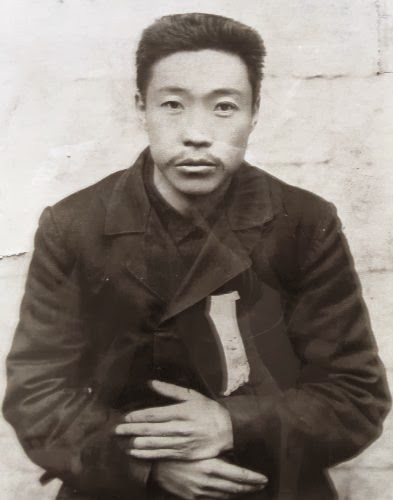
Most people in the west are probably unfamiliar with this story so a little background information is called for. Once upon a time, in the “Land of the Morning Calm”, the Kingdom of Korea, there was a man named Ahn Jung Geun. He was a Catholic and, based on his actions and writings, quite possibly not in full possession of his faculties. In 1909, a year before Korea would be annexed by the Empire of Japan, Ahn Jung Geun hid a gun in his lunchbox and slipped into the railway station in Harbin, Manchuria. When a Japanese delegation arrived after having negotiations with Russia, he opened fire, shooting four men; a South Manchuria Railway official, a Secretary of the Imperial Household Agency, the local Consul General and his primary target, who was killed, Prince Ito Hirobumi, the first Prime Minister of Japan and the former Japanese Resident-General in Korea. Ahn Jung Geun was quickly arrested by the Russians and later turned over to the Japanese. Found guilty of murder and attempted murder he was executed on March 26, 1910. Since that time, for his assassination of Prince Ito Hirobumi, Ahn Jung Geun has become the greatest national hero in modern South Korea. Great kings, generals and admirals of the past who won great victories for their country might not be remembered but this assassin has been deluged with monuments and posthumous honors. Recently, in a collaboration with communist China (you know, the regime responsible for Korea being split into two warring factions) a special “memorial hall” was opened in the VIP section of the Harbin Railway Station overlooking the place where the murder occurred.
I take for granted that this exuberant celebration of an assassin does not make sense but there is a great deal about the bad blood between modern Korea and Japan that does not make sense. That should be set aside, it is not something I am terribly interested in. However, while I consider bizarre actions by republican governments the rule rather than the exception, recently, the Catholics in the Republic of Korea have started to make this a religious issue as well and have invoked the name of one of my favorite historical figures, someone I consider a great Christian and a great example for monarchists; St Joan of Arc. Now, to step back for a moment, it should be made clear that this was not always the case. Ahn Jung Geun supposedly converted to Catholicism after being sheltered by a French Catholic priest oddly named Father Wilhelm. When Ahn Jung Geun was arrested, convicted and sentenced to death, the presiding Catholic Bishop of Korea ordered that he not be given the sacraments, including the last rites, because he had committed murder and was not in the least repentant about it. However, the story is that Father Wilhelm disobeyed the Bishop and gave him last rites anyway.
Now, we come to the present day when Ahn Jung Geun is a celebrated hero across the Republic of Supplicant Koreans, the Democratic Republic of Enslaved Koreans and the People’s Bandit Republic of China. Recently, the Catholic hierarchy in Korea began to push for the canonization of Ahn Jung Geun as a saint. The local Korean bishop said that he was a great Catholic patriot and compared him to St Joan of Arc in France. That got my monarchist blood boiling in a big way. To compare Ahn Jung Geun to St Joan of Arc is not only false and extremely arrogant but is an absolute insult to the memory of St Joan. The connection being made was that, just because Ahn Jung Geun shot a man three times and shot three more men in quick succession, that should not disqualify him from sainthood because St Joan of Arc killed people for the liberation of her country as well. Obviously, the Catholic bishops of Korea do not have a very solid grasp of the life of St Joan of Arc or of medieval French history. Allow me to highlight the great, gaping chasm of difference between the lives and circumstances of St Joan of Arc in France and Ahn Jung Geun in Korea.
First of all, although some might find it hard to believe for a soldier and a general but St Joan of Arc never killed anyone in her life. She had a sword and she wore armor but according to all that I have read, and her own testimony, she never took the life of anyone. She stated at her trial that when she rode into battle she preferred to carry her banner rather than her sword for fear that she might kill someone. The only thing she is known to have used her sword for was to use the flat of it to strike prostitutes who followed the army. In battle, she mostly preferred waving her special banner to rally and inspire the French soldiers who did the actual fighting. She was wounded, very badly wounded at times, because she was at the front, leading her soldiers and urging them onward but never did she ever actually kill anyone herself. Furthermore, St Joan of Arc did not want anyone to die, French or English. She would plead with the English before battle to leave in peace and go back home to England, she was as much concerned for the souls of her English enemies as she was her own countrymen.
However, just for the sake of argument, let us suppose that the Korean bishops are correct. Let us assume that either the trial transcripts are wrong or that St Joan was lying and that, in the heat of the moment, Joan of Arc lashed out with her sword and killed some English soldiers. We will assume that for the moment. There is still absolutely no comparison to what Ahn Jung Geun did. That was a war and if St Joan did kill anyone it was in the midst of battle, fighting armed men who were trying to kill her and her countrymen. There is a huge difference between soldiers killing each other on the field of battle and someone, hiding in wait, concealing his weapon and then gunning down a group of unarmed civilians, shooting a defenseless, elderly man three times and then exulting over it. There is a huge, huge difference. However, there is someone that might be more similar to Ahn Jung Geun who was also French (though from a part of France at the time under the rule of the King of Spain), also a Catholic and who also is known to history only because he murdered someone. That is Balthasar Gerard, the man who assassinated the Dutch rebel leader Prince Willem I of Orange (Willem the Silent).
Of course, there are still some differences. Balthasar Gerard could claim to be acting on instructions from his sovereign lord the King of Spain, at least in a way. Again, we have the difference of there being an actual war going on between the Dutch rebels and the Kingdom of Spain. During the Dutch War for Independence, King Philip II of Spain declared the Prince of Orange to be a “pest on the whole of Christianity and the enemy of the human race” and offered a reward of 25,000 crowns to anyone who dispatched this traitorous rebel, which to Spain he certainly was. Balthasar Gerard acted on this and shot and killed Willem the Silent on July 10, 1584. He was arrested by the Dutch, given a trial and condemned to death. However, whereas the Japanese simply hanged Ahn Jung Geun, Balthasar Gerard was sentenced to death by slow torture, having his right hand burned off, the flesh torn from his body, his arms and legs were cut off, he was disemboweled, had his heart cut out and shown to him before finally being beheaded. Ouch. And this was after enduring four days of other horrific tortures before his actual execution. Ahn Jung Geun fared much better. The Japanese did not torture him, helped him write the story of his life, gave him special treats for the new year celebration and his warden brought him a special set of white Korean clothes for him to be executed in as he requested.
However, both men were Catholics, both men claimed to be doing a greater good by their actions and both men had shot princes. Also, after his death, some Catholics regarded Balthasar Gerard as a hero and the Apostolic Vicar to the Dutch Mission, Sasbout Vosmeer, campaigned for him to be canonized as a saint. He took the case all the way to Rome. However, even in those days of such bitter and violent religious division, the Catholic Church declined to canonize a murderer. It also helped that democracy did not matter to anyone in those days. The fact that a large number of people in Catholic Spain and the Low Countries considered Gerard a hero did not make any difference to the papal court in Rome. Today, however, it remains to be seen if the authorities will be as unmoved by the widespread and enthusiastic support in Korea for the canonization of Ahn Jung Geun. To make him a saint would certainly be popular in both Koreas and in China where Christians are still persecuted such as those Catholics who remain loyal to Rome in spiritual matters rather than to the Communist Party. However, would it be right? Will the hierarchy of today do as it did in those supposedly more violent days long past when they said that the Church would not canonize someone for committing murder?
I find it astonishing that any Catholic, even if they are Koreans burning with national pride and eternal hatred of Japan, could propose canonizing someone who is only known to history for being an assassin. I find it deplorable that he is being compared to someone like St Joan of Arc, a spotless example of Christian compassion, virtue, heroism and loyalty, showing the sort of loyalty that stood firm even when it was not returned and I find it, frankly, disgusting that this could actually be given serious consideration. After all, even if we are to toss religious and Christian principles out the window and look only at plain, dirty, political considerations, it still makes no sense. Remember again the case of Balthasar Gerard. He was not canonized but the fact that he was so popular among some Catholics and that it was considered made Protestant leaders like Queen Elizabeth I in England extremely paranoid and this resulted in a great deal of persecution for totally innocent Catholics. Obviously the Japanese would be greatly offended to see Ahn Jung Geun canonized and the Christian minority in Japan as well (just as Ahn Jung Geun is cheered by Protestant as well as Catholic Koreans and Chinese atheists all at the same) but think of how other presidents, prime ministers and assorted national leaders will look at their Catholic citizens in the future if the Church declares a man who assassinated a prime minister to be a saint. Will this gain the Church greater acclaim or will it make every world leader, particularly those paranoid, dictatorial types, start to look at the Catholics in their populations as a threat to national security, a group of people who might decide to become a saint by murdering their leader or a foreign political leader and sparking a war?
Korea has legitimate national heroes worthy of honor and celebration and if Korea cannot celebrate a national hero without taking a swipe at Japan there are examples of successful men who met the Japanese in honorable combat (Admiral Yi Sun-shin and General Kwan Yul spring to my mind) but Ahn Jung Geun is not one of them. He was not anything at all like St Joan of Arc and it is an outrageous insult to the Maid of Orleans to even make the comparison. He was not a soldier who killed on the battlefield, he was not a martyr who died because he was Catholic. He was an assassin who murdered an unarmed man and was justly put to death for the crime he committed. His crime did not help his people or his country and it had nothing to do with religion or the Catholic Church. If his canonization goes ahead it will be a clear indication that pandering is more prevalent than piety in the Catholic hierarchy and the fact that, even as things stand now, he is so celebrated is proof of the depths republican governments will sink to in searching for a figure to unite their people in the absence of a monarch. The whole episode is disgusting and should be unworthy of both the Catholic Church and the nation of Korea.
I take for granted that this exuberant celebration of an assassin does not make sense but there is a great deal about the bad blood between modern Korea and Japan that does not make sense. That should be set aside, it is not something I am terribly interested in. However, while I consider bizarre actions by republican governments the rule rather than the exception, recently, the Catholics in the Republic of Korea have started to make this a religious issue as well and have invoked the name of one of my favorite historical figures, someone I consider a great Christian and a great example for monarchists; St Joan of Arc. Now, to step back for a moment, it should be made clear that this was not always the case. Ahn Jung Geun supposedly converted to Catholicism after being sheltered by a French Catholic priest oddly named Father Wilhelm. When Ahn Jung Geun was arrested, convicted and sentenced to death, the presiding Catholic Bishop of Korea ordered that he not be given the sacraments, including the last rites, because he had committed murder and was not in the least repentant about it. However, the story is that Father Wilhelm disobeyed the Bishop and gave him last rites anyway.
Now, we come to the present day when Ahn Jung Geun is a celebrated hero across the Republic of Supplicant Koreans, the Democratic Republic of Enslaved Koreans and the People’s Bandit Republic of China. Recently, the Catholic hierarchy in Korea began to push for the canonization of Ahn Jung Geun as a saint. The local Korean bishop said that he was a great Catholic patriot and compared him to St Joan of Arc in France. That got my monarchist blood boiling in a big way. To compare Ahn Jung Geun to St Joan of Arc is not only false and extremely arrogant but is an absolute insult to the memory of St Joan. The connection being made was that, just because Ahn Jung Geun shot a man three times and shot three more men in quick succession, that should not disqualify him from sainthood because St Joan of Arc killed people for the liberation of her country as well. Obviously, the Catholic bishops of Korea do not have a very solid grasp of the life of St Joan of Arc or of medieval French history. Allow me to highlight the great, gaping chasm of difference between the lives and circumstances of St Joan of Arc in France and Ahn Jung Geun in Korea.
First of all, although some might find it hard to believe for a soldier and a general but St Joan of Arc never killed anyone in her life. She had a sword and she wore armor but according to all that I have read, and her own testimony, she never took the life of anyone. She stated at her trial that when she rode into battle she preferred to carry her banner rather than her sword for fear that she might kill someone. The only thing she is known to have used her sword for was to use the flat of it to strike prostitutes who followed the army. In battle, she mostly preferred waving her special banner to rally and inspire the French soldiers who did the actual fighting. She was wounded, very badly wounded at times, because she was at the front, leading her soldiers and urging them onward but never did she ever actually kill anyone herself. Furthermore, St Joan of Arc did not want anyone to die, French or English. She would plead with the English before battle to leave in peace and go back home to England, she was as much concerned for the souls of her English enemies as she was her own countrymen.
| Prince Ito Hirobumi and the Crown Prince of Korea |
Of course, there are still some differences. Balthasar Gerard could claim to be acting on instructions from his sovereign lord the King of Spain, at least in a way. Again, we have the difference of there being an actual war going on between the Dutch rebels and the Kingdom of Spain. During the Dutch War for Independence, King Philip II of Spain declared the Prince of Orange to be a “pest on the whole of Christianity and the enemy of the human race” and offered a reward of 25,000 crowns to anyone who dispatched this traitorous rebel, which to Spain he certainly was. Balthasar Gerard acted on this and shot and killed Willem the Silent on July 10, 1584. He was arrested by the Dutch, given a trial and condemned to death. However, whereas the Japanese simply hanged Ahn Jung Geun, Balthasar Gerard was sentenced to death by slow torture, having his right hand burned off, the flesh torn from his body, his arms and legs were cut off, he was disemboweled, had his heart cut out and shown to him before finally being beheaded. Ouch. And this was after enduring four days of other horrific tortures before his actual execution. Ahn Jung Geun fared much better. The Japanese did not torture him, helped him write the story of his life, gave him special treats for the new year celebration and his warden brought him a special set of white Korean clothes for him to be executed in as he requested.
| Anh Jung Geun |
I find it astonishing that any Catholic, even if they are Koreans burning with national pride and eternal hatred of Japan, could propose canonizing someone who is only known to history for being an assassin. I find it deplorable that he is being compared to someone like St Joan of Arc, a spotless example of Christian compassion, virtue, heroism and loyalty, showing the sort of loyalty that stood firm even when it was not returned and I find it, frankly, disgusting that this could actually be given serious consideration. After all, even if we are to toss religious and Christian principles out the window and look only at plain, dirty, political considerations, it still makes no sense. Remember again the case of Balthasar Gerard. He was not canonized but the fact that he was so popular among some Catholics and that it was considered made Protestant leaders like Queen Elizabeth I in England extremely paranoid and this resulted in a great deal of persecution for totally innocent Catholics. Obviously the Japanese would be greatly offended to see Ahn Jung Geun canonized and the Christian minority in Japan as well (just as Ahn Jung Geun is cheered by Protestant as well as Catholic Koreans and Chinese atheists all at the same) but think of how other presidents, prime ministers and assorted national leaders will look at their Catholic citizens in the future if the Church declares a man who assassinated a prime minister to be a saint. Will this gain the Church greater acclaim or will it make every world leader, particularly those paranoid, dictatorial types, start to look at the Catholics in their populations as a threat to national security, a group of people who might decide to become a saint by murdering their leader or a foreign political leader and sparking a war?
Korea has legitimate national heroes worthy of honor and celebration and if Korea cannot celebrate a national hero without taking a swipe at Japan there are examples of successful men who met the Japanese in honorable combat (Admiral Yi Sun-shin and General Kwan Yul spring to my mind) but Ahn Jung Geun is not one of them. He was not anything at all like St Joan of Arc and it is an outrageous insult to the Maid of Orleans to even make the comparison. He was not a soldier who killed on the battlefield, he was not a martyr who died because he was Catholic. He was an assassin who murdered an unarmed man and was justly put to death for the crime he committed. His crime did not help his people or his country and it had nothing to do with religion or the Catholic Church. If his canonization goes ahead it will be a clear indication that pandering is more prevalent than piety in the Catholic hierarchy and the fact that, even as things stand now, he is so celebrated is proof of the depths republican governments will sink to in searching for a figure to unite their people in the absence of a monarch. The whole episode is disgusting and should be unworthy of both the Catholic Church and the nation of Korea.
Wednesday, January 16, 2013
Royal Profile: Bangja, Crown Princess Euimin of Korea
A very interesting royal figure of the last century, with a colorful and even inspirational life, yet who is not very well known in the wider world, was the Japanese-born last Crown Princess of Korea. She was born Princess Masako Nashimoto on November 4, 1901 to Prince Nashimoto Morimasa and Princess Itsuko in Japan. She was a first cousin to the future Japanese Empress Kojun (consort of the Showa Emperor), Princess Yoshiko (consort of Prince Yi Geon) and Princess Setsuko (consort of Prince Chichibu). She had a traditional upbringing for a Japanese girl of her day and rank and as she grew into a young woman was considered as a potential bride for Crown Prince Hirohito (one of the top three contenders), however, her family was not the most well-connected in the country and there were concerns about her fertility and so she was finally dropped from consideration. However, she had enough marks in her favor to qualify for the very best when it came to marriage considerations and soon she was singled out as a possible match for the Korean Crown Prince Euimin (or Yi Un) who had been studying in Japan since 1916.
The princess was then still attending school at the Girls’ Department of the Gakushuin Peers’ School in Tokyo, an institution that then served exclusively the aristocracy and Imperial Family (the next two emperors would be graduates). However, the marriage discussions went ahead and proved acceptable to both sides. The diplomatic and family arrangements were made and on April 28, 1920 the Princess was married to the Crown Prince of Korea at the “Korean King’s Palace” (as it was called) in Tokyo as by that time (since 1910) Korea had been incorporated into the Japanese Empire. After her marriage she became known officially as Her Royal Highness Bangja, Crown Princess Euimin of Korea. Earlier worries about her fertility proved unfounded as the following year, on August 18, 1921, she gave birth to her first child, Prince Jin, who sadly died the following year while the couple were visiting Korea, but on December 29, 1931 she produced another son; Prince Gu. By that time the Crown Princess had, officially, moved up in the world as following the death of the former Emperor Sunjong in 1926, her husband became King of Korea and she, officially, the Queen.
The Korean Royal Family was maintained by the treaty through which Korea became part of the wider Japanese Empire, only renouncing their briefly held “imperial” rather than “royal” status. However, because of the situation, her husband was never given the formal “coronation” and so most continued to refer to the couple as Crown Prince and Crown Princess rather than King and Queen as they legally were. During this time the Crown Prince was serving in the Imperial Japanese Army, eventually rising to the rank of general and, after transferring to the army air force, as commander of the First Air Army. However, the couple had time for a more settled domestic life after he took a position teaching at the Military Staff College and serving on the Supreme War Council during World War II. Through it all, the Crown Princess was a devoted and supportive wife, never forgetting her own background of course but, because of her marriage, taking a special interest and having a special care for the people of Korea who, like so many others, endured a great deal of suffering and hardships in those difficult times. As the devoted wife that she was, Korea was very much her own country as well.
Major changes, of course, came with the end of the war and the surrender of Japan in 1945 when Korea was occupied by American and Soviet forces. The northern half quickly became a communist puppet-state while in the south, while preferable to the situation in the north, the United States had no intention of maintaining the monarchy, especially given the service of Korean royals in the Japanese military; regardless of the circumstances surrounding that service. All hereditary titles were abolished and the monarchy, already reduced to a largely legal status, was simply swept aside along with the surrender in 1945. All of this was done, needless to say, without ever consulting the Korean people, many of whom still remembered their traditional ways and held a special place in their hearts for the Royal Family. It was, in fact, because of this that President Syngman Rhee refused the request by the Crown Prince, still in Japan, to bring his family home to Korea. The President feared that the people might rally to the Crown Prince and restore the monarchy -putting him out of a job.
It would be little consolation that after a long and controversial presidency, Syngman Rhee himself would end up living out his final years in exile himself in the U.S. state of Hawaii. However, these were hard years for the Crown Princess and her husband and son. Japan had been ruined by the war, all those who had formerly held some status found themselves with none. The country was also under American occupation and because, legally, Korea had always been separate from Japan, the couple did not even have the status of citizens but were simply regarded as Koreans residing in Japan even though, at that time, the Korean government was denying them as well. Still, the Crown Princess and her family endured, despite living in extremely modest conditions (some would even say impoverished conditions) and she never lost her kind attitude and compassionate nature. Considering the misfortunes that had been heaped on this couple, through no fault of their own and because of circumstances far beyond their control, anyone would have forgiven them for showing at least a little bitterness at their grossly unfair situation. However, they refused to give in to such attitudes and longed only to return to Korea to be of service in any way.
That opportunity finally came in November of 1963 when President Park Chung-hee invited the Royal Family to return. However, it was a bitter-sweet homecoming as the Crown Prince was practically comatose by that time. His health had been fading fast and he had earlier been forced to turn down an invitation by the South Korean government to be their ambassador in London because of it. The family returned and was allowed to take up residence in Changdeok Palace in Seoul but the Crown Prince was taken immediately to the hospital where he remained for what little remained of his life with the attentive Crown Princess ever at his side. He died on May 1, 1970 after which Crown Princess Bangja was on her own for the first time in her life. Still, she determined to devote herself to the service of others and devoted herself to the care and education of the handicapped and mentally disabled. In time, her work spread and she became the leader several charitable organizations dedicated to that cause, which she invariably did in the memory of her late husband. An added difficulty was the rise in anti-Japanese prejudice in Korea which caused some to resent her, seeing her as simply a Japanese woman rather than the last Crown Princess or Queen of Korea. But, to her credit, she never let that be an obstacle and to the credit of the Korean people, most judged her by her great good work.
And that work continued to prosper with the Crown Princess opening a special hospital for the deaf, mute and paralytic. Later she also opened two special schools for education of the handicapped. By that time almost all prejudices had been dropped as the Korean people adored her for her compassion and dedication and often referred to her as the “mother of the handicapped”. It was a title well-earned as the Crown Princess viewed everyone so afflicted as someone special to her and who she was determined to see be given every opportunity possible. She was a model of charity and compassion and remained so to the very last. The Crown Princess finally passed away from cancer at the age of 87 in Nakseon Hall in Changdeok Palace on April 30, 1989. Because of her great popularity and good works the South Korean government honored her with a “semi-state” funeral attended by many dignitaries, including Prince and Princess Mikasa of Japan. She was laid to rest alongside her beloved husband at Hongyureung, Namyangju outside Seoul. She was also not forgotten by her own family, the Nashimoto, who continued to support her charitable foundations after her death and some of whom made a special visit to South Korea in 2008 to pay tribute to the Crown Princess who had lost a throne in Korea but gained the hearts of a country through her dedicated service to the least of those around her. She deserves an honored place in the ranks of Korean royalty and should be an example to others of persevering in the face of adversity with kindness and compassion.
Thursday, December 20, 2012
Monarch Profile: King Seonjo of Korea
King Seonjo was the fourteenth King of Joseon in Korea. He was born Prince Yi Yeon in Seoul, the third son of the “Great Prince of the Court” Deokheung Daewongun on December 26, 1552. With the title of Prince Haseong he was chosen by the royal court to succeed the young King Myeongjong who died without an heir. King Seonjo was then only sixteen years old when he succeeded to the throne in 1567 as the ruler of Korea. Early on, his reign showed great promise but he would ultimately have to face one of the greatest tests of any Korean monarch. King Seonjo showed genuine concern for the welfare of his people, was committed to reforming the government and establishing Korea as a vibrant and powerful kingdom. He sponsored the revival of a group of scholars who had previously been persecuted and appointed many new scholar-officials to high office in an effort to replace those who had grown corrupt with a new generation.
![]() |
| Korean scholars -at a much later date of course |
Unfortunately, divisions began to arise in the kingdom in the persons of two high officials; Sim Ui-gyeom and Kim Hyowon. Sim was the conservative of the two and Kim the liberal and each gathered their own factions of supporters. Since those supporting Sim lived on the west side of Seoul and those of Kim on the east side, they became known as the eastern and western factions. King Seonjo himself struggled over favoring one side or the other. It was the beginning of a long-running feud that would eventually prove disastrous for the country. Early on, King Seonjo supported the conservative, western faction of Sim who was related to the Queen and had many supporters amongst the aristocracy. However, their slowness to embrace or even opposition to some of the reforms favored by the King gave Kim and the eastern faction a chance to rise to the top and the King moved to their side. This made enacting the reforms easier but, after a period in power, they began to have second thoughts and soon split into two sub-factions. Matters were further complicated when one of those sub-factions split into two even more radical factions of their own. Obviously, this was devastating for the smooth operation of government and became a major source of weakness for Korea.
![]() |
| Toyotomi Hideyoshi |
King Seonjo had to take a chance and he happened to choose incorrectly. The southern threat was the more serious with a major offensive by Japanese forces led by Hideyoshi Toyotomi, known to later westerners as the “Napoleon of Japan”. King Seonjo was also crippled by the factionalism at court. Those who supported concentrating on the northern front downplayed the Japanese threat while their political enemies did the same regarding the Manchurians. Fortunately for the King, whether he knew it or not, he had a winning commander in the naval genius Admiral Yi Sun-sin; known by later generations as the “Nelson of Korea” to confront the “Japanese Napoleon”. However, it was a long and painful process. Following the Japanese invasion of the south there were a string of victories for Japan. King Seonjo tried several commanders who were each defeated as the Japanese pushed north, taking Seoul and Pyongyang where the King and court had relocated to when Seoul became imperiled. Between the Korean withdrawal and the arrival of the Japanese much of Seoul, including the palace, was looted and a great deal was lost. However, the tide began to turn as Admiral Yi Sun-sin devastated the Japanese supply lines, making use of his brilliantly innovative “Turtle Ships” which were forerunners of the armored warships with diverse weaponry of later centuries. Finally, after a stunning victory for Korea at the battle of Hangju the Japanese agreed to talk peace.
![]() |
| One of the famous, formidable "Turtle Ships" |
Subscribe to:
Posts (Atom)