Showing posts with label England. Show all posts

Tuesday, November 7, 2017

Monarchist Profile: Lady Mary Bankes

The English Civil Wars produced a great many heroic figures and one of my favorites is Mary Bankes though not all that many seem to know her story. This is, perhaps, not surprising as she rather goes against the preferred narrative of modern feminists in that Mrs. Bankes was a staunch royalist. She was born Mary Hawtry in Ruislip, Middlesex, England to Ralph Hawtry, Esquire of Ruislip and Mary Altham though exactly when I cannot say. August 8 is sometimes listed as the day of her birth but the date seems very unclear as I have seen accounts of her being born as early as 1598 to as late as 1605. In any event, her early years seem to have been blissfully uneventful. In or about 1618 she was married to Sir John Bankes who would go on to become the Lord Chief Justice of the Common Pleas and Attorney-General to King Charles I of Britain. He was obviously a successful man with a fine legal career and in 1635 he purchased Corfe Castle in Dorset, with all attending manorial rights and obligations, from Lady Elizabeth Coke.

Sir John Bankes Esq.
Lady Mary was also quite successful at her task of wife and mother, giving Sir John ten children, six daughters and four sons (Ralph, Jerome, Charles, William, Alice, Jane, Mary, Joanna, Elizabeth and Arabella). However, their domestic happiness was cut short thanks to the antics of the Parliamentarians. In 1643 Sir John Bankes was called away by the King to take up arms against the enemies of the Crown at London and Oxford and so he departed, leaving Corfe Castle in the charge of his wife with their children, household staff and five fighting men for security. This would prove crucial as Corfe Castle was at the time the only armed royalist castle an the coast of Dorsetshire, having four cannons on its walls. The importance of the castle did not escape the notice of the rebel Roundheads (Parliamentarians) and not long after Sir John left about 40 Roundhead sailors appeared and demanded that the artillery be turned over to them. Well, Lady Mary was having none of that and promptly had her maids and the five men put the cannon in action and frighten the rebels away with a few shots.

That act of defiance showed what Lady Mary Bankes was made of but she also knew that it was a momentary victory and that the real importance of her position was the castle itself rather than the cannon. The enemy had retreated but were not far away and so she did, ultimately, decide to hand the guns over so that she could gather supplies which would enable her tiny household army to withstand a siege. This was very good planning indeed as not long after, in June of 1643, more Roundheads appeared, this time about 600 of them and laid siege to the castle. This went on for more than a month when the rebels began to feel rather silly being held at bay by a handful of men and some women and children so they began to attack the castle. Once again, Lady Mary, with her household, held off these trespassers by pelting them with stones and fiery embers from the castle walls until, after losing over a hundred men killed or wounded in August, the Roundheads conceded the victory to Lady Mary and pulled back.

The siege of Corfe Castle
It helped that a sizeable force of royalists was in the neighborhood as well and these came to call on the castle with Sir John even able to visit his wife and children briefly. A few more soldiers were left behind, bringing the total number of defenders up to 80 at most, but soon the situation shifted back to the way it had been before. The castle was still too important to abandon entirely and the rebel forces returned but remained at a distance. This second siege continued and continued for years. For Lady Mary, this was her darkest hour and at the end of 1644 her husband Sir John died at the age of 55, making her son Sir Ralph Bankes and the new lord of the manor. In spite of this heartache, Mary remained just as tenacious as ever and refused to surrender her fortress to the enemies of the King even as another year and another passed by. 1645 came and went and Corfe Castle still stood defiant, defended by Mary Bankes and her gallant little band. The enemy, perhaps remembering the more than a hundred casualties they had suffered trying to storm the place, simply remained at a safe distance to wait their enemy out.

The time for waiting finally ended in 1646. That year a young royalist officer, named Colonel Cromwell no less, managed to slip inside the castle with a small group of soldiers to offer Lady Mary the chance to escape. She was grateful for any help of course but refused to abandon her home to the enemy and, after all, she had been holding them off well enough for the past few years. However, this second siege would not go on for much longer, though, among her tiny force of children and scullery maids, it was one of the men of the small group of actual soldiers present who was to doom her little outpost. One of the men with her in the castle, one Lt. Colonel Thomas Pittman, slipped outside the castle walls to the enemy camp and offered to betray his King in exchange for his own safety. He persuaded the garrison commander, Colonel Henry Anketell to go to Somerset for reinforcements but the troops that came were Roundheads with their coats turned inside out. About half made it inside before Anketell suspected something and shut the small sally gate. Unfortunately, enough made it inside to secure key positions and hold them until morning when they were joined by a major Parliamentarian attack.

Modern ruins of Corfe Castle
Lady Mary Bankes, with most of her home overrun by the enemy, finally had no choice but to agree to surrender. Although, she did not do so until having her maids and children throw all the family silverware down a well so that it could not be melted down and used to fund the Parliamentarian cause. She was defiant to the very end. However, even the Roundheads were so impressed by her tenacity in holding off such superior forces for so long that they allowed her to keep the keys to the castle as a mark of respect. Not wishing to ever endure such an ordeal again, the Parliament ordered the castle demolished immediately. Lady Mary, for her part, retired to Eastcourt manor, purchased by her sons Sir Ralph and Jerome and remained there until her death on April 11, 1661. She was an extraordinary woman who earned an honored place in the pages of history for her steadfast and determined defense of her home for the sake of King and Country. Had King Charles I been blessed with a few more people with the courage and tenacity of Mary Bankes, he might just have won the war.

Saturday, October 1, 2016

A Word on "Bloody" Mary

It was on this day in 1553 that Queen Mary I of England, eldest child of King Henry VIII, had her coronation as "Queen of England, Ireland and France". She came to the throne in a rather jubilant atmosphere as the vast majority never regarded the Lady Jane Grey as legitimate in any way and her brief bid for power only lasted a little more than a week. However, since her death, Queen Mary I has been vilified to the extent that even all these centuries later she is still known as "Bloody Mary". This is really unfortunate as, despite her reputation, Queen Mary I was not a cruel or heartless woman. She was, rather, a perhaps overly zealous woman, more concerned with principle than politics and an early case of what happens when your enemies write your popular biography.

It is also unfortunate that the case of Queen Mary I is often, to this day, seen through a partisan, religious, glass. The truth is that the Tudor period was a time of intense religious zeal in Christendom and neither Catholics nor Protestants were particularly tolerant of each other. Queen Mary herself had been persecuted, not tortured by any means but certainly persecuted, for her adherence to Catholicism and her refusal to change and embrace Protestantism. Yet, her villainous reputation stems entirely from the fact that she had several hundred Protestants burned alive during her rather short reign for heresy. That is true and by modern standards it is horrific but there are a few facts people should keep in mind before being too harsh towards Queen Mary (and that includes many Catholics who blame her for the failure of their cause in England).

Queen Mary I actually began her reign with a very tolerant attitude toward those who had tried to prevent her from taking the throne, those who had persecuted her mother and the most adamant Protestants of the Church of England. It was only after this attitude of reconciliation was not returned that she likewise became more intolerant. Though often blamed, her husband King Philip II of Spain, actually urged against taking repressive measures, for political reasons of his own. It is also true that Queen Mary had fewer Protestants put to death for their religion than either her father before her or her younger sister after her would have Catholics put to death for their faith, the caveat being that Queen Mary I reigned for only a few years while Henry VIII and Elizabeth I reigned for a much longer period of time. All the same, most of those who were put to death would have or could have justly been put to death anyway for treason but the Queen decided to put them to death for heresy, by burning, rather than for treason which called for a slower and more gruesome means of execution.

Despite her reputation, Queen Mary I was not cruel or heartless. She had a very soft spot for her younger brother and predecessor King Edward VI, though he was raised a radical Protestant and, despite some frustrations, could never bring herself to be too harsh toward her younger sister Elizabeth. She was very fond of children, likely all the more so since she was never able to have any of her own, and would visit the homes of humble common people and always give money to the mothers of small children, who she invariably fussed over. Her ladies-in-waiting and all those who knew her best and spent the most time with invariably described her as kind, considerate and compassionate. It was only that, on the subject of religion, she would not bend to what was expedient. She was a firm believer that the Catholic Church was the only true church and, as such, the humane thing to do was to stamp out heresy ruthlessly so that more souls would not be lured away from the path of righteousness. She inflicted nothing on any Protestant that she would not have been willing to endure herself if the roles were reversed.

Most today would certainly regard what she did as unspeakably cruel and this is not the place to argue over that but the point is that the Queen herself certainly did not see it so. The last evidence of that is in the manner of her death. Her final hours show a woman with a clear conscience who did not dread the judgement of the Almighty. In stark contrast to her more beloved sister, Queen Elizabeth I, who died in agony, tormented by terrifying visions, Queen Mary I died calmly, peacefully, with visions of angelic children playing around her. She was a zealous woman but she was not an evil woman or a heartless woman and should not be portrayed as such.

Monday, October 27, 2014

Monarch Profile: King Richard II of England

Richard of Bordeaux (as he was sometimes known) was born on January 6, 1367. The son of the “Black Prince” and grandson of the great King Edward III, he had an illustrious lineage and impossibly big shoes to fill when the death of his father and older brother left him as heir to the throne at a very young age. History has not been kind to the monarch who, at the age of only 10-years old, came to the throne as King Richard II in 1377. How much of the criticism heaped on him over the centuries is fair and how much was due to circumstances beyond his control? It is certainly unfair to compare him to his predecessor, King Edward III, who was so exceptional; a colossus in English history. Compared to such a figure, King Richard II could never have hoped to measure up, especially given that, as great as Edward III was, he was mythologized to even greater proportions as the greatest English monarch since King Arthur (as some called him) and whose few but naturally present shortcomings tended to be ignored or even pushed forward in time to be attributed to the reign of Richard II. Lest we forget, after the glorious victories of his reign battling the French, toward the end of his life King Edward III, who had never been the best of administrators, had effectively lost control of the government of his realm to his unscrupulous mistress and self-serving advisors.

The boy-king Richard II came to the throne of a country that was already beset by divisions and mistrust. Acting on his behalf was his powerful uncle, John of Gaunt, who arranged a magnificent coronation for the boy to emphasize the sacredness of the monarchy and that the Crown was to be revered regardless of whether the one wearing it was a conquering hero like Edward III or the inexperienced youth they saw before them in Richard II. The hope was to inspire unity but it would prove to be a naïve hope and young Richard II was immediately thrust on to a scene of intrigue and danger. In the past, England had avoided feuds between the lords by going to war with France but as the former King grew old, weak and finally died, only to be replaced by a 10-year-old boy, they became a considerable domestic threat with their large private armies while across the channel, the French raided English possessions and a distrust of aristocratic and even royal leadership began to germinate in many quarters. The pomp and ceremony of the coronation was part of the reaction to this; to emphasize the unquestionable primacy of the Crown and this was a campaign that King Richard II, not unnaturally given his surroundings, was to take up with zeal. Never before and probably not until the Stuart reign was there an English monarch more devoted to the idea of the “Divine Right of Kings” that was Richard II.

The King had been raised in the care of his mother, Joan of Kent, but the greatest influence on him was the Earl of Oxford, his hereditary chamberlain. When he came to the throne a council of regency was established which was formed with great care so that no one could dominate it. Yet, the result was that, so much care was taken in that regard, that it was effectively useless and John of Gaunt continued to dominate the political scene. With war still waging on the peripheries of England, there was reason for alarm when the Peasants Revolt broke out in 1381. John of Gaunt was away in Scotland trying to arrange a peace and the army was scattered far away in France, Wales and Scotland so that the two peasant armies, one from Kent and one from Essex, had an open road to London. The regency council tried to simply stay out of their way and divert their anger away from themselves and the King who was barricaded inside the Tower of London while the peasants burned the city and took vengeance on those they blamed for their every misfortune. Finally, he could stand it no more and the 14-year old King Richard II gathered some of his supportive nobles together and rode out to Mile End to meet the leader or at least spokesman of the peasant rebels, Wat Tyler. This was to be the setting of what would probably be the most dramatic confrontation of the reign of Richard II.

Wat Tyler presented his king with the demands of the peasants, which were quite radical, the most significant being an amnesty for all the rebels, a fixed rate of low rent for all lands and the total abolition of serfdom in England. With the backing of the regency council that was prepared to agree to anything, Richard II accepted and agreed to all of these demands. This left most of the rebel army all dressed up with no place to go and, as a result, most of them declared “mission accomplished” and went back to their homes. However, as is invariably the case with these types of people, a hard core remained whose natural inclination was to never be satisfied. If the enemy agrees to every one of your demands, you simply present him with a new list of demands. This intransigent, radical element stayed in the field and continued to be a threat as there was still no way to deal with them by force. So, another meeting was arranged. After his previous victory, Wat Tyler was the picture of arrogance and treated the King with the utmost insolence. To his shock, this outrage prompted several of the King’s party to attack and kill him. The rebel mob was about to go on a rampage when King Richard II, in a display of courage he seldom gets credit for, rode right into their midst and led them from the scene.

The ringleaders were later arrested and the rest sent home. The rebellion was over, the crisis had subsided and, of course, almost none of the demands the King had agreed to were ever fulfilled. As far as the council was concerned, it had all been an effort to buy time from the beginning. The King, still a youth and impressionable, undoubtedly took from this that deception was an essential tool of politics and that the people were all loyal deep down and would follow their king no matter what the circumstances. In regards to both, these lessons would not serve him well. It also further cemented in his mind the idea that he was protected and directed by God and in the following years grew increasingly impatient to begin ruling in his own right. As he began to push more and more against those trying to restrict him, two factions emerged that represented the King and his inner court, which wanted something closer to autocracy, and the powerful nobles who wanted the aristocracy to dominate with a mostly ceremonial monarch above them. Sir Michael de la Pole was representative of the friends of the King while the Earl of Arundel was a leading example of those who opposed him.

King Richard II was a very cultured man, a great lover of art, music and also of using these tools to glorify the monarchy. When he spent money on such cultural projects he was accused of being corrupt, of funneling money to his sycophants at court and his aristocratic critics accused him of being at the center of a circle that was lazy and basically not ‘macho men’ who would deal crushing blows to the French and the Scots. Perhaps stung by this criticism, Richard II tried to take charge of a military expedition into Scotland himself but the result was a disaster and proved that, while undeniably a brave man, he was no military leader. His army stumbled around for a few days, never finding any Scots to do battle with, before the King gave up and went home, subject to even more ridicule. He quarreled some with John of Gaunt but it was never as serious as some made it out to be as the powerful uncle remained ever loyal to his nephew and King. As long as he remained, the King’s enemies knew they had little chance of success. However, that situation changed when John of Gaunt left England in 1386 to try to make himself King of Castile in Spain. No sooner had his ship disappeared from the horizon than the Arundel faction demanded that the King dismiss his friend, Sir Michael de la Pole, from his position as chancellor. Richard II reacted first with emotion, saying that he wouldn’t bend to their wishes even if it were the dismissal of a simple cook. However, when Arundel and Thomas of Gloucester began to imply that the King himself might have to go, Richard II gave in and had Pole impeached.

Naturally, he had no intention of letting that be the end of it and tried to gather his own force of loyalists while contesting the legality of the impeachment. His enemies, knowing their chances were never better, prepared for war and in 1387 Arundel, Gloucester and the Earl of Warwick gathered their forces north of London. With no sufficient force of his own, the King had no choice but to resort to appeasement, agreeing to the demand to have five of his closest friends arrested and put on trial. He agreed to the demand but did not go out of his way to actually carry them out. One, Robert de Vere, Earl of Oxford, escaped to the north and managed to gather an army loyal to the King but his force was defeated at Radcot Bridge in December. All of the friends and supporters of the King were then subject to retaliation from the rebel party who called themselves the Lords Appellant. They waged a vicious campaign against the members of the King’s household, making a farce of the law and essentially murdering anyone who had been friendly with or supportive of the King. It is no wonder they came to be known as “The Merciless Parliament” of 1388.

Seething with resentment, Richard II bided his time. First, the following year, he pushed to be allowed to rule as an adult and, at 22, no one could justly stop him. However, he did nothing to rock the boat right away. He paid lip service to the Appellants and went about his duties, reassured, perhaps, by the return of John of Gaunt from Spain. In 1394 he arranged a settlement of the situation in Ireland and in 1396 signed a truce with the French which was very successful. These achievements show that, despite what his detractors say, he was not without ability as a statesman. He also continued to glorify the monarchy with artistic endeavors, ceremony and an elaborate court. In 1382 he married Anne of Bohemia and, after her death, married again to Isabella of France. Also, all throughout this time, he was building up his own strength and quietly assembling a private army, marked by his badge of the white hart, from troops in Ireland, Wales and Cheshire. Finally, in 1397, he suddenly struck and had Arundel, Gloucester and Warwick arrested. Gloucester was killed in Calais but the other ringleaders were put on trial in a way that illustrated how the tables had turned from the time when they had done the same. Arundel was executed and Warwick, after confessing, was exiled to the Isle of Man. Other enemies were exiled and it seemed that King Richard II had triumphed brilliantly.

It was then that he began his absolute rule of England and it is from this period that probably most of the criticism of him arises. His private army kept a firm grip on the country and his own relatives oversaw affairs, paid with the large estates confiscated from his enemies. He spent lavishly, demanded the utmost submission and forced those who displeased him to pay high prices for pardons. Critics accused him and his forces, such as the Cheshire archers, of oppression and of doing away with the law in favor of royal absolutism. Things came to a head with the death of John of Gaunt in early 1399. King Richard II, rather than showing clemency, had the son of John of Gaunt, Henry of Bolingbroke (future King Henry IV), who had earlier opposed him, exiled for life and seized his property. This earned him the lasting enmity of the House of Lancaster and made all the other elites of the country nervous about their own property and standing. When Richard II left to deal with another outbreak of rebellion in Ireland, Bolingbroke returned to England to claim his inheritance. Powerful nobles rushed to support him and while the King and his supporters were in Ireland, all that remained to defend England was his hapless uncle Edmund of York. He proved a weak obstacle and Richard’s supporters melted away, his Cheshire archers tearing off their white hart badges and going home.

King Richard II rushed back to England to fight for his kingdom, landing in northern Wales where he had considerable support, but on every side he found former supporters shunning him or outright betraying him. In quick order he was left powerless and was captured and taken to the Tower of London, then Lancastrian Pontefract. Everywhere victorious, Bolingbroke decided to make himself King and thought to replicate the situation at the downfall of Edward II. However, King Richard II was not at all like Edward II and refused to simply abdicate when summoned. Even if he did so, his heir would have been the child Earl of March and not Bolingbroke. Finally, after some supporters of King Richard tried to assassinate Bolingbroke, he decided that the King was too dangerous to live and so he was killed at Pontefract Castle on February 14, 1400 at the age of only 33. He seized power and had himself proclaimed King Henry IV of England, Ireland and France but could never quite shake a sense of guilt for having ordered the regicide of an anointed monarch. It was not until the reign of the great King Henry V that the Lancasters came to terms with this deed when the King had Richard II reburied in his official royal tomb in Westminster Abbey.

It is true that King Richard II acted unwisely on a number of occasions and certainly his period of absolute power was not executed in a way so as to win the hearts and minds of his subjects. However, it is unfair to hold Richard II solely to blame for the many difficulties of his reign and the troubles that were to plague England later. He was never properly prepared for his part in life nor did he have much of an opportunity to mature into his own man. A King in name at 10, a King with power at 22 and a dead King at 33 was a short sprint. Many if not most of his negative qualities were the result of his environment and experiences and there is no doubt that his enemies acted monstrously with only their own narrow interests in mind. His reputation also suffers unfairly from the more successful, and more adult, kings that came before and after him. However, to blame him for the Wars of the Roses is a considerable exaggeration. He was not a great warrior and was all too willing to hold a grudge (though given the action of his enemies, I find it hard to blame him) but he was also very well educated, a great patron of the arts and a firm supporter of religion (acting decisively against the heretical Lollards). He had, certainly, an exalted sense of himself but his sort of absolute monarchy was really not very different from that of the Tudor era which is so often celebrated. King Richard II will probably always remain on the list of “bad” Kings of England but I have always had a bit of a soft spot for him and I think that anyone looking at the facts dispassionately would have to agree that he wasn’t all that bad or at least was not entirely to blame for his worst failings.

Thursday, July 17, 2014

Princely Profile: Thomas Cardinal Wolsey, “Ipse Rex”

Known as the personification of the problems in the Catholic Church of his time, Cardinal Wolsey was worldly, wealthy and ambitious. Yet, like most figures of the Renaissance or any period in history Wolsey had his good points as well as his failings. He rose to prominence during the reign of King Henry VII, founder of the Tudor dynasty and was a major figure at court as well as acting as an envoy to the Holy Roman Emperor Maximilian. When Henry VIII came to the throne Wolsey's star was to rise even higher, and the young king had complete trust in the clever churchman. One way this came about was mutual ambition. Henry VIII wanted power and glory and would abide no one who tried to discourage him. Wolsey realized this and was always eager to encourage the King's ambition as a way of realizing his own.

It was a policy that worked as in 1514 Wolsey was given the prestigious position of Archbishop of York. In September the following year he was elevated to the rank of Cardinal and only one month later Henry VIII made him Lord Chancellor of England. This was the apex of his career, holding the most powerful office in the kingdom and the red hat of a Prince of the Church. It was quite a rise from someone who had been born the son of a butcher. For some time their relationship was good. The King was obsessed with wars and jousts and pageantry and had no interest in the work of administration, which was therefore left in Cardinal Wolsey's capable hands. Even his worst enemy could not deny that Wolsey was committed, hard working and extremely good at his job.

Problems did not arise until that pivotal moment in English history when King Henry VIII fell for the seductions of Ann Boleyn and became determined to put away his lawful wife Queen Catherine of Aragon. Cardinal Wolsey, ever devoted to the King, did his best to solve the problem but knew that the Pope would refuse. He earned the wrath of Ann Boleyn who tried to turn Henry against him, and other than the King, Wolsey had few friends. His rise from humble origins disturbed the aristocracy, and many envied his extreme wealth, it often being said that he lived even more luxuriously than the King himself. Wolsey was also the perfect illustration of all the problems in the Church that devoted men like St Thomas More were demanding be corrected. He became very fat, extracted fees from those given posts in the Church, was absent from his see in York, had fathered illegitimate children and had done little to strop the spread of Lutheranism/Protestantism in England. When he failed to gain the annulment Henry wanted some accused him of purposely not trying hard enough because of an ambition to be elected Pope.

Because Queen Catherine was the aunt of the Holy Roman Emperor Charles V, and Cardinal Wolsey was pushing a foreign policy of closeness with France, he would have liked nothing better than to see the Queen put away. However, he did not approve of Henry marrying Ann Boleyn, who it seemed to many had cast a spell over the King and was driving him to make revolutionary changes in the kingdom simply to satisfy his lust. When the Cardinal could not get a swift judgment in Henry's favor, the king grew impatient and his enemies among the nobility and especially Ann Boleyn, closed in on Wolsey. He was dismissed as Lord Chancellor, stripped of his role as Papal legate, deprived of all offices save the archbishopric of York and was later forced to sign over all of his possessions to the King.

Later, when it was found that Wolsey had not been at fault for the king not obtaining his divorce, he was pardoned and returned to York to try to act as the shepherd he was supposed to have been. However, he had powerful enemies that would not relent and they produced forged documents claiming that the Cardinal had been in secret negotiations with the King of France and demanded that he be tried for high treason. When the King's officers came to arrest him he famously said, "Master Kingston, I see the matter against me now it is framed; but if I had served God as diligently as I have done the King He would not have given me over in my gray hairs". Cardinal Wolsey, however, was never tried or executed for the charges against him as he died before the matter could be concluded on November 29, 1530.

Wednesday, June 26, 2013

Royal Regalia: England

St Edward's Crown
When it comes to royal regalia England and Great Britain have a great deal to cover. The most significant pieces, however, are probably the St Edward’s Crown, the Imperial State Crown, the orb, sceptre and sword. The most prized is almost certainly St Edward’s Crown. It was made in 1661 for the coronation of King Charles II and is the official coronation crown of British monarchs. The name comes from the gold used to make the crown being left from the remains of the original crown of King St Edward the Confessor. Some debate remains about when exactly this crown was lost, some believing it to have been destroyed by Oliver Cromwell while others hold it to have disappeared earlier. However, it was recreated for the coronation of King Charles II and, so tradition goes, some of the materials used in the creation of the crown in the time of St Edward were left over from a crown used by King Alfred the Great. King James II and King William III were both crowned with the piece. It has not, however, been used at every subsequent coronation. The Hanoverian monarchs used a new crown made for King George I and since monarchs like Queen Victoria and King Edward VII found it too heavy and impractical, they did not use it either. However, it was the coronation crown used by King George V, King George VI (Edward VIII never having a coronation, George VI stepping in to the ceremony planned for him before his abdication) and Queen Elizabeth II. By order of Queen Elizabeth II the St Edward Crown replaced the Tudor Crown as the official symbol of the monarchy used on badges, coats of arms and the various insignia of servants of the Crown. So, it could be said that, despite being rarely used, the St Edward’s Crown is effectively “the” crown of the U.K. and Commonwealth Realms.

Imperial State Crown
The Imperial State Crown was made in 1937 to replace the crown made for Queen Victoria in 1838. It is an exact duplicate of the older crown but has been adjusted to be a better fit for Queen Elizabeth II. It incorporates two pearls once worn by Queen Elizabeth I, the Black Prince’s Ruby (which once belonged to Prince Edward of Woodstock) and the famous Cullinan II diamond or “Lesser Star of Africa”, the fourth largest polished diamond in the world. The crown is worn by the monarch after the coronation when leaving Westminster Abbey and is most often seen being worn by the monarch for the State Opening of Parliament. The Cullinan I diamond or “Great Star of Africa” is on the Sceptre with the Cross, one of two sceptres used by the British monarch at the coronation. It was made in 1661, redesigned a bit in 1910 and is carried in the right hand of the monarch during the coronation. In their left hand, he or she hold the Sceptre with the Dove, also made in 1661, representing the Holy Spirit. The Sovereign’s Orb, made in 1661, is a gold sphere bound by jewels around the center and another row across the top in the center of which is a cross to symbolize the rule of Christ over the world and the role of the British monarch as “Defender of the Faith”. It is held in the left hand when leaving Westminster Abbey.

When it comes to “the” sword, there are actually five that are used in the coronation ceremony. The one most think of as being “the” sword is probably the Great Sword of State which is carried by the Lord Great Chamberlain at the coronation and the State Opening of Parliament. It is the largest ceremonial sword of the British Crown jewels and is decorated with symbols of the constituent parts of the United Kingdom. The sword that is actually presented to the monarch during the coronation is the Jewelled Sword of Offering. It was made for the coronation of King George IV in 1821 and, as befitted that most grand and opulent of all British coronations, is reputed to be the most valuable sword on earth being covered in rubies, diamonds, sapphires and other precious stones. It is presented to the new monarch by the Archbishop of Canterbury to symbolize the royal power being used in the service of the church and true religion. Other swords used in the coronation are the Sword of Spiritual Justice, the Sword of Temporal Justice and the Sword of Mercy.

Tudor Crown (reproduction)
Another crown which is probably worth mentioning is the Tudor Crown, also called the Imperial Crown or King’s Crown. Most likely made for King Henry VII, the first monarch of the Tudor dynasty, it was used by King Henry VIII and was the coronation crown for King Edward VI, Queen Mary I, Queen Elizabeth I, King James I and King Charles I. Especially after the reign of James I, it came to be regarded as an almost sacred object. As an aside, the original Crown of St Edward was certainly regarded as such and was treated almost as a holy relic. Unfortunately, after the regicide of King Charles I in 1649 the republican potentate Oliver Cromwell had the crown destroyed, broken up and melted down as part of his eradication of all royal symbols. This was truly a great loss to the cultural legacy and history of England and Great Britain. However, because the crown had been so meticulously depicted in the many paintings of the Stuart reign (such as royal portraits) and because records still remained from the time of King Henry VIII of the jewels used in the crown, last year experts in Britain were able to recreate the crown exactly. The cost of this was paid by the HRP (Historic Royal Places) and it is now on display at the royal pew of the Chapel Royal in Hampton Court Palace.

Monday, May 13, 2013

MM Mini View: Kings of England (Part VIII)


The Hanoverians

King George I: If nothing else, one can at least say that Britain’s first German monarch was a colorful character. A distant relative thrust onto the British throne by the 1701 Act of Settlement, something which further cemented the notion that the King reigned ‘by the grace of Parliament’ rather than the grace of God. He had no burning desire to be King of Great Britain and had already proven himself a fairly competent Elector of Hanover. He is known for his mostly “hands-off” approach to governing, which gave rise to the first British Prime Minister as we would understand it today, for his mistresses, his contempt for his eldest son (a Hanoverian tradition) and his inability to speak English. Still, he understood English law and government better than most of his subjects realized, he kept a steady hand on the wheel and if his British subjects did not understand him, he likely understood them just as little. Hanover was always his home and his first concern, he hadn’t sought to be king and certainly launched no invasion to bring it about like the Prince of Orange but he nonetheless made the most of it. He was not a likeable character but was probably at least somewhat better than most think.

King George II: Like his father, there is not an overabundance with which to recommend George II. He hated his son just as his father had hated him, though he was more kind to his wife (not difficult) and the British Empire grew considerably under his reign. Still, he spent some lengthy periods in Hanover and was always more concerned with Germany than with, for instance, the British North American colonies. The 1745 Jacobite uprising gave him quite a scare but he was certainly no coward, being the last reigning British monarch to lead his troops on the battlefield. Overall, he was a fairly effective monarch, fulfilling the traditional requirements for a successful monarch; securing the succession, defending his throne, winning victories in war and enlarging his domain. Still, he tended to put Hanover before Britain, was not a very likeable person and his forces were positively brutal in Scotland in the aftermath of the ‘45. So, all in all a successful monarch but one I could never muster a great deal of enthusiasm for.

King George III: It is a shame that George III will probably always be remembered most for losing “the United States” and for going “mad”. He really deserves to be counted among the greatest of British monarchs. For the first time since Queen Anne the country had a monarch who didn’t speak with a German accent and who was as thoroughly “British” as he could be. Unlike his predecessors, he took an active role in the government of his kingdoms and far from being harsh or tyrannical was almost invariably a voice of fairness and consideration. Also unlike his predecessors, King George III was a man of upstanding moral integrity, a faithful husband, devoted father and a man of great generosity while still having enough of George II in him to appreciate a balanced budget and deplore extravagance. Still, tradition being tradition, he and his eldest son never got along very well, mostly because of the extent to which the King disapproved of the rather weak moral fiber in his son. It should not be forgotten though that while losing what became the USA, he won the wider war and although he would not forget he was able to put the past behind him without holding a grudge, establishing diplomatic relations with the United States and going to war with revolutionary France after his old enemy Louis XVI was murdered by the mob. He also certainly secured the succession (in a big way) and was, in every way, a monarch any of his subjects could be proud of.

King George IV: When it comes to character, George IV was everything his father was not; licentious, lazy and wasteful. Still, he was not a terrible monarch though certainly not a great one. He may have been extravagant but he had a tremendous sense of style and he left Britain a more grandiose country than he found it. Yes, he was a scoundrel, but also a patron of the arts, a driver of fashion and a great builder. Those are about his only redeeming qualities though, aside perhaps from reviving highland dress in Scotland. His reign (and regency) coincided with some of the greatest moments in British history, the passing of historic legislation and at least he did not manage to mess any of that up though, based on what his ministers wrote some may have suspected him of trying. He was not a monarch one could admire, though many found him likeable. He did have sense enough to realize at least to some extent when politicians were trying to take advantage of him and his political views shifted after inheriting the throne. So, not a great one, not very praiseworthy but neither can it be said that things went to ruin under his watch.

King William IV: The “Sailor King” William IV often seems to get lost in between his colorful and controversial brother and the historic reign of his niece. Overall, my impression of William IV is as a pretty good, solid monarch. In sharp contrast to his brother he was frugal, plain and blunt which was probably a good thing on the heels of the fuss and feathers of George IV. William IV could behave in ways rather lacking in “majesty” but he was a man of strong leadership, good instincts and common sense. Since the reign of his father the politicians had become more and more dominant, which mostly continued under William IV though he was the last monarch to appoint a prime minister of his own choosing. He provided steady leadership during his time on the throne and had the wisdom and fortitude to hold on to life long enough for his niece to succeed him without a regency -probably saving the country from a great deal of trouble.

Queen Victoria: In some ways, Queen Victoria can be seen as being more revered than she should be and yet, I at least cannot help but have the greatest admiration for her. She made her share of mistakes over the years but she had a presence few other English sovereigns could ever hope to match. Like Elizabeth I, she gave her name to an era and on the world stage it was the Victorian era that was far greater. The Queen deserves at least some of the credit for the great, powerful, dynamic force that the British Empire became during her reign and she was an admirable woman. A very devoted wife, a reluctant (but frequent) though dutiful mother and a woman of impeccable moral fortitude. Queen Victoria made the monarchy widely respected again as well as a force for good in society with the outreach to the poor, the working class and her strident opposition to racial bigotry. Like a few others, it is hard to separate the Queen herself from the image of the Queen but that image was so great and remains so brilliant that it seems a pity to even try. The first to made Empress of India, the British Empire may have grown larger after her time on the throne yet it is still the reign of Queen Victoria that stands out, in my mind at least, as the pinnacle of the British Empire. Plus, she really was the “Grandmother of Europe” and anyone who doesn’t love their grandmother must have something wrong with them.

Monday, May 6, 2013

MM Mini View: Kings of England (Part VII)


The Stuarts

King James I: My opinion of the first Stuart to rule England is rather mixed but overall the needle does tip slightly in the positive direction. He did not always keep his word but in general he was a fairly tolerant man so long as no one made trouble. He was renowned for his intelligence yet mocked for his odd habits, hence being called “the wisest fool in Christendom”. A better epithet for James I was “Britain’s Solomon” and his writing about monarchy was excellent and some of my favorite material. I also love his imperial style in emphasizing the unity of England, Scotland and Ireland under one monarch. He was not perfect but much of the negative things said about him may not be true and while I cannot really cheer for him, his written works make it impossible for me not to be a little positive towards him, I think they’re that good.

King Charles I: One of my all-time favorites, I like King Charles I both for what he did and for enraging all the right people. The problems he faced were not of his own making (some of the economic mess went all the way back to Henry VIII) and he should be applauded rather than criticized for his firm principles. It may have been smarter for him to have backed down but I admire him all the more for standing up for what was right, regardless of the circumstances. I admire his piety, his great devotion to his family, his fidelity to his wife (a remarkable woman) and for his courage. He met his death in a truly heroic way and, as he point out at his trial, was fighting for the rights of everyone by fighting for his own rights as king. That being said, he was not as rigid as most think and tried to be reasonable, giving in to most of the demands of Parliament but not on the most important points and he should be saluted for that. He was a man of great integrity who make have made some missteps but who was always motivated by a desire to do the right thing.

King Charles II: I cannot admire Charles II as much as I do his father, but he was certainly more successful and a very good man deep down. That being said, he was a hopeless womanizer and serial adulterer which prevents him having my unabashed admiration. However, while his court was certainly on the licentious side, after the dour years of the Puritanical Cromwell, it was probably to be expected. While lacking the unbending principles of his father, he did see the monarchy restored and that would probably not have happened if he had not been willing to compromise on some things. Still, at the end of the day, he did reach his limit and stood firm in defense of the monarchy and the monarchial principle of hereditary succession in particular, for which he can be applauded. It is easier to see the good man underneath when considering how he defended his wife and begged her forgiveness on his deathbed. One can also see his principled belief in monarchy and the importance of family in his defense of his brother in spite of the fact that he predicted disaster for him.

King James II: I have a much higher opinion of James II than most, but that’s not hard. He’s one of the most unpopular and maligned monarchs in English history and unjustly so in my opinion. Like his brother, he fell prey to the temptations of the flesh, but to a vastly lesser extent. He was a brave and capable soldier (sailor) and was a man of principle and conviction. The opposition to him was mostly hysterical rather than reasoned and while he certainly wanted to do away with the anti-Catholic prejudice then rampant in Britain, most forget that he never actually did anything to reestablish Catholicism as the state religion. Everyone was just afraid that he would and his efforts to remove laws that discriminated against Catholics and non-Anglican Protestants would today be taken for granted as reasonable and laudable. He did, however, probably go too far too fast considering how much Catholic-phobia existed in the country. Despite what many say, he was a courageous man but the fate of his father no doubt loomed large in his mind and in England and later in Ireland one cannot help but wonder if he might have maintained his throne if he had stuck it out just a bit longer. However, that he was the legitimate, hereditary sovereign of the three kingdoms cannot be denied and, for this monarchist, that matters most.

King William III & Queen Mary II: Given my sympathy for James II, I cannot but have some mixed feelings when it comes to William and Mary. Yet, while turning against your father and legitimate monarch is something I could never condone, each were very talented and remarkable individuals. William III showed immense skill and determination in fending off the French and was quite a capable military leader. Queen Mary was a dutiful wife, a capable ruler in her own right, a devout woman intolerant of sin and vice and who at least had enough of a conscious to feel rather guilty about what she and her husband had done to her father. That inclines me to be a bit more favorable toward her than I would otherwise. For William III, he set up the system of constitutional monarchy the U.K. still has today, which seems less ideal than what had existed previously to me, yet, William III was never really focused on Britain but on The Netherlands and the broader strategic situation in Europe. The changes effected under his reign, if one is inclined to dislike them, should direct most of their criticism at the men who invited William to launch his invasion and then who welcomed it with open arms rather than at the King himself.

Queen Anne: I have much the same difficulties with Queen Anne as with Queen Mary II. Her betrayal of her father (and sovereign) and spreading doubts about the legitimacy of her half-brother are things I find it impossible to overlook. There were some great national achievements during her time but little had to do with her. The Act of Union was passed, but done in a less than ideal way. On the battlefield Marlborough (“Corporal John”) proved himself to be one of the great captains of his age and one of the greatest military geniuses Britain has ever produced but there too there were problems between his family and the Queen. She was a devout Anglican, took her royal duties seriously (and was famously the last monarch to veto an act of Parliament) but overall she leaves me with the impression of a gloomy and pathetic figure, plagued by illness and a succession of miscarriages. It would be hard not to feel sorry for the poor woman but, under the new royal system, the ship of state sailed on in any event and she must be given at least some measure of the credit for Britain emerging or reemerging as a great power during her reign.

Thursday, May 2, 2013

MM Mini View: Kings of England (Part VI)


The Tudors

King Henry VII: The Wars of the Roses that had stagnated and bled England for years finally came to an end with Henry VII, founder of the Tudor dynasty. My impression of Henry VII was that of a not terribly pleasant man, not someone very flashy or inspirational but a very cautious, shrewd and talented national leader. The stability he brought was welcome though he seems to have been a bit of a control freak which opened the door for some problems but he was basically a competent and successful monarch, keeping the country on an even keel, providing for the succession and securing a marriage alliance with the emerging super-power of Spain. He was rather cold and miserly but given his life it is not surprising that he was a rather hard-nosed, unemotional sort of man who kept his eye on the prize and the bottom line. Neither great nor terrible he was a pretty solid monarch.

King Henry VIII: Oh, what a waste! One of the worst things about all of the chaos caused by Henry VIII was how unnecessary it all was. He changed the religion of a country and cut a woman’s head off just to have a son and as it turned out his most famous offspring was his youngest daughter. Henry VIII was like the schoolboy captain of the football team, fawned over in his youth and then a fat disgrace in middle age. His religious tinkering set England on the path for many, many years of turmoil and it seems so useless as he was never really a Protestant. He had great qualities, being quite the dashing warrior-king in his youth, presiding over some great achievements and he was quite intelligent and took his duties seriously. But he was also vindictive, paranoid, cruel and possibly the most selfish man to ever sit on the English throne. I approve of some of his foreign policies but by the time it was over he had undone most of the good he ever did and was just not a good man. Not one of the good ones to be sure. Others were worse in their own time but Henry gets extra demerits for setting the stage for future disasters.

King Edward VI: The boy king, or “God’s Imp” as someone called him, there is not much I can say about Edward VI because he never had a chance to prove himself and the fanaticism he displayed was the result of the guardians who raised him. In his personal dealings with people he seems to have been a sweet boy. He was certainly very gifted, extremely intelligent and might have made an exceptional monarch were he given the chance. If the religious zealotry instilled in him had remained he might have turned out to be terribly harsh and done Protestantism more harm than good, which is odd given that his mother was nothing like that. So, it was definitely environmental rather than genetic.

Queen Mary I: No other English monarch has received more bad press than “Bloody Mary”. Protestants despise her and even most Catholics consider her to have done the Church of Rome more harm than good. Nonetheless, I will always defend Queen Mary, truth be told, she was nowhere near that bad. In fact, she was quite a kind woman, compassionate, generous to the poor and very fond of children. Despite what the xenophobes claim, her marriage alliance with Spain was a smart move and while she will always be known for having 300 Protestants burned alive, she didn’t turn nasty until people started turning against her. Initially, she was prepared to forgive and forget and she actually had fewer people executed than her father or more popular sister did. Many burned for heresy could have been executed for treason anyway. For me, the biggest point to remember is that she never inflicted anything on others that she would not have endured herself. She was not, like her father, executing people just for not going along with her but because she truly believed that Catholicism was the only true faith and anything else was dangerous and even under great pressure from her father and brother she never renounced her Catholicism for the sake of convenience. Her zeal was genuine.

Queen Elizabeth I: Not one of my favorites, I must admit. Still, I will give credit where credit is due. “Good Queen Bess” was a public relations genius and totally brilliant when it came to promoting the public image of herself and the monarchy. She presided over some great cultural and political achievements but, all that being said, though I was once a fervent admirer back in my frivolous college days, I cannot say many good things about her. She failed to marry and secure the succession (a dereliction of duty in my view), she supported republican rebels in Holland fighting against their lawful sovereign, supported rebels in France and most outrageously, signed the death warrant for a fellow monarch. Yes, she agonized over it, but she still did it (she wasn’t a very decisive leader at all) and in my book that is unforgivable. Her religious persecutions seem worse to me than those of her sister because, as a Protestant historian said of her, she was both “intolerant and indifferent”. She changed her religion depending on who was in power at the moment and yet, when her turn came, put people to death for having stronger principles than she did. I know many consider it an unpardonable sin not to love Queen Elizabeth I, but I cannot, though I will readily admit that her “image” was certainly glorious.

Monday, April 29, 2013

MM Mini View: Kings of England (Part V)


The Yorkists

King Edward IV: It would be hard for anyone not to admire Edward IV. He was a tall, handsome man, a smart dresser, a veteran warrior, an able administrator and a good businessman. He was adept enough on the battlefield and at winning support that he won the crown for himself, then took it back once it was lost and he managed to win the support of Parliament. He was though a horrible womanizer and that would ultimately cause him some problems. His constant affairs with married women as often as single ones makes it hard to have a completely positive opinion of the man. He was certainly very good at his “job” but his private life left much to be desired. His secret marriage to the widow of a Lancastrian brought new intrigues and stopped a reconciliation effort with France. Still, as far as the House of York is concerned, Edward IV was nothing if not thorough, seeing the Lancastrians almost completely wiped out with the exception of Henry Tudor who was out of the country anyway. He collected a large library and was still trying to take to the field up to his death.

King Edward V: I cannot have much of an opinion on Edward V as the poor boy barely had a chance. He was only nominally the king for a few months and, I have noticed, many lists of English monarchs omit him entirely. A coronation was planned but was repeatedly put off until the boy was deposed and presumably murdered.

King Richard III: Many people have asked my opinion of Richard III and seemed surprised that I don’t have more to say. He certainly wasn’t successful, spending his reign fighting rebellions against him by both friend and foe alike. As for his guilt or innocence in the murder of Edward V, there may not be enough hard evidence to hold up in a modern court but the circumstantial evidence is fairly overwhelming. No matter how kind one tries to be, Richard III will usually come off looking pretty villainous no matter how you cut it. He certainly had some talent and early in his life was fairly well regarded but he was also undoubtedly vindictive yet it is also true that he had enemies ranging themselves against him before he ever came to power and that would tend to make one rather peevish. I give him credit for going down fighting but it just doesn’t seem that there is much to recommend the man.

Thursday, April 25, 2013

MM Mini View: Kings of England (Part IV)


The Lancastrians

King Henry IV: The House of Lancaster came to power with Henry IV, shortly before the deposed Richard II was starved to death. He spent most of his reign putting down rebellions but does have the distinction of being the only English king to entertain a visiting Byzantine Emperor. Like Shakespeare, I cannot help but view his many misfortunes as divine punishment for usurping the throne of Richard II. Still, Henry IV was an accomplished soldier and he always managed to prove equal to the tasks that confronted him. He really was a decisive, brave and talented monarch, attentive to religion and the Church and he defeated all of his enemies as they appeared but he seemed perpetually unlucky, plagued by constant civil unrest and terribly poor health, leading to his demise at a relatively young age.

King Henry V: With the second Lancastrian monarch, we have again another top contender for the list of greatest English kings of all time. To say he displayed heroic courage doesn’t begin to describe it. As a very young man he fought his first battle, carrying on until victory was won despite having been shot in the face with an arrow. He proved a capable administrator, he appreciated the necessity of a strong economy as a matter of national security and he was a very devoted son of the Church, dispatching heretics with the same zeal as he showed dispatching Frenchmen. And, that, of course, is what he is most famous for, renewing the Hundred Years War and invading France. As a battlefield commander, Henry V was second to none and his string of victories were hard fought, spectacular achievements. It is impossible for me to think of Henry V without the stirring words of Shakespeare ringing in my head. Most astounding was his great victory at Agincourt where, despite having every disadvantage, his longbows decimated the charging French knights, dealing a blow to the French nobility that was truly devastating. I fail to see how anyone with an ounce of English blood in their veins cannot experience a surge of pride when thinking about King Henry V on the field of Agincourt. He conquered Normandy, making a victorious peace and forcing the French king to recognize him as his heir. His reign was an unbroken string of masterful successes gallantly won.

King Henry VI: Another monarch with an impossibly tough act to follow, Henry VI is not often thought well of but I have a bit of a soft spot for the poor man. Only nine months old when he inherited the crown, he remains the youngest monarch to ever sit on the throne of England. During his reign most of the gains of his father were taken back, in large part due to a certain French girl from Domremy. Even when he was older his reign was not successful with reverses in France and the outbreak of the Wars of the Roses at home, but I cannot have a very negative opinion of King Henry VI. He simply lacked the personality to meet the crisis at hand, being the shy and compassionate sort. But he should not be criticized too much for these qualities. He founded Eton and King’s College but was not up to the task of dealing with disasters abroad and a continuously feuding court. The disasters were not his fault, he simply inherited them. He was also a very good man, very religious, devoutly so, generous to those around him and it says something that he has been accused of being both saintly and insane.

Monday, April 22, 2013

MM Mini View: Kings of England (Part III)


The Plantaganets

King Henry III: After the disastrous reign of King John, a recovery was called for but Henry III would not be the monarch to lead it. He was not as bad as his predecessor it is true, but he wasn’t much to write home about either. His efforts to centralize power alienated the nobles, the country was awash with mostly French exiles looking to make a quick buck and Henry III had little luck on the battlefield and ended up renouncing vast territories in France. Defeated at home by Simon de Montfort, Henry had the shame of seeing the first parliament called during his reign by the man who had bested him. Today that means Simon de Montfort is a celebrated forefather of representative government but it mostly makes me annoyed with Henry III for being unable to stop him and allowing things to get to that point. He did finally escape rebel clutches and led the royalist forces to victory, which I give him credit for, but he died not long after, not a terrible king but far from successful.

King Edward I: Now we are getting back on the right track. Scotland may still hate his guts (and they should) but Edward I was one of the greatest English kings ever. He was a brave man, a shrewd statesman, a clever military commander and just an overall inspiring figure. He improved the law code so much that he became known as the “English Justinian”, conquered Wales and subdued Scotland. When William Wallace led the Scots in revolt, Edward I crushed them and had the troublesome Scot executed. That will always make him controversial, as does his expulsion of the Jews from England (Oliver Cromwell let them back in) but from the point of view of England alone, Edward I was everything one could hope for in a monarch. Harshness in his direction regarding Scotland should be tempered by the fact that his initial involvement came at the request of the Scots themselves (again, always a bad idea) and when it came to the basic things that kings of his time were expected to do; be strong, provide decisive leadership, win victory on the battlefield, expand the kingdom and secure the succession, he did them all. He was awesome.

King Edward II: Perhaps the only thing England can fault Edward I with was fathering so lackluster a monarch as Edward II. Thankfully, his reign was merely an unfortunate interval between two of the best kings the Plantaganets had to offer. What can be said of Eddie the second? I’ll admit it is tempting to just say “colossal puff” and move on, but I tend to be suspicious of gossip be it contemporary or of Medieval vintage. He lacked all of the drive, ambition and strength of his father, seemed to care little for anything other than parties, sports and his friends. The Scots gave him a sound thrashing, undoing the victories of his father, then suffered the indignity of being defeated by his own rebellious nobles. In the end, he was brought down by his formidable wife, Queen Isabella of France, who was a much more fascinating character than her husband. Advised to abdicate, Edward II predictably cried and then did the best thing of his reign and handed the crown over to his son.

King Edward III: After the embarrassing reign of his father, Edward III was just what the doctor ordered and one of my favorite English monarchs of all time. King Edward III was like a force of nature, he started the Hundred Years War by laying claim to the French throne, led his knights into victory after victory, defeating French forces far larger than his own and even taking the French king, Jean II, prisoner. He may not have been the best administrator but his victories make up for it. His success on the battlefield was so total and so brilliant that the English army came to be seen as the premier military force of the time. He also made English the official language at court for the first time, created the Most Noble Order of the Garter and was the one who divided Parliament into the two houses of commons and peers. He had the misfortune to reign during the Black Death and were it not for that his achievements might have been greater still. Contemporaries hailed him as the greatest monarch since King Arthur and with good reason. Even if he had done nothing else, the battle of Crecy alone would warrant him being considered one of the greatest of English kings and that was one victory among many. In every way one could measure a great Medieval monarch, Edward III more than measures up.

King Richard II: Perhaps no other English king had a tougher act to follow than Richard II and it is inevitable that he fails to measure up to the lofty standard set by his father. He is blamed for being a bad ruler and even for setting the stage for the disastrous Wars of the Roses but I tend to be a little less harsh toward Richard II than most people. He won early credit with me for his courage in standing up to the Peasant’s Revolt even though he was practically a boy at the time but he dealt with those rebels solidly enough. Still, he was not very adept at keeping calm and unity in the kingdom and has been accused of tyranny then as now. However, my impression is that it is not so much what King Richard II did but how he did it that proved to be his downfall. He was not a “people person”, he bided his time, built a considerable private army (wearing a white heart as a badge, I remember that) and then struck back at his enemies after most had come to see him as a pleasure-loving weakling. Still, Richard II will probably always be remembered as a schemer rather than a leader and he was finally abandoned by most of his men and defeated.

Wednesday, April 17, 2013

MM Mini View: Kings of England (Part II)


The Angevins

King Henry II: Today, especially among Church circles, Henry II has a pretty bad reputation because of the Becket affair and that is certainly legitimate. However, I cannot have a low opinion of Henry II. He made his mistakes, sure, with most pointing to the fate of poor Becket and his invasion of Ireland. However, his Irish invasion came at local request (bad move there) and as for Becket, he didn’t actually order the murder and he did some considerable penance afterwards, something which it is impossible to imagine any modern national leader lowering themselves to do. Taken as a whole though, he was an extremely successful monarch who forged an Angevin empire that made England the most powerful country in Western Europe at the time. During the height of his reign all of England, Wales, Scotland, Ireland and western France (if not more) were either directly or indirectly under his control. No small achievement that.

King Richard I: Richard the Lionhearted is one of those traditional heroes it is popular to downplay these days. Yes, he spoke French almost exclusively, yes he spent most of his reign outside of England, but the popular image of Richard I is just too good to pass up. I cling to that image because it is so compelling and have no time for the naysayers, even if they have some facts on their side (pesky, annoying things). As a crusader, he didn’t manage to retake Jerusalem but considering the odds against him, Richard did very well and the mutual respect he and Saladin had for each other may have become legendary but it is backed up by actual history. His main failing was in being too kind and indulgent with his brother John, but it is hard to fault him too much for that. Riding into the thick of the fight, swinging his Danish battle axe it is easy to see why he became such an iconic, chivalrous figure. He did regain some of the Holy Land for Christendom, undid much of the damage that was done in his absence and died in battle, again, a great way for such a famous warrior-king to go. I cannot dislike Richard I, I’m all for him.

King John: England has been fortunate in having mostly good to great monarchs but, every now and then, just to keep the English humble, a King John comes along. Despite my best efforts over the years to find a bright side, he really was pretty much as bad as his reputation attests. He betrayed his own family, conspired with the King of France, failed at doing wrong as much as doing right (if he ever tried), brought down excommunication on himself from Pope Innocent III (who was not the tolerant sort) and ended up turning the nobility of England against him. Failing again, as usual, he was forced to sign the Magna Carta so even for fans of the “Great Charter” King John cannot be given much credit for it since it was done basically under duress. He was not bad at administration but even there his tendency to micromanage won him few friends. By the time all was said and done no one respected him and worse no one could trust him. I have to go with the crowd on this one; King John was just not good.

Monday, April 15, 2013

MM Mini View: Kings of England (Part I)


The Normans

King William I: Surprisingly, I often find myself having a higher opinion of William the Conqueror than most Englishmen, I assume because of nostalgia for Saxon England, but I tend to at least entertain the possibility that he may have been the chosen heir as he claimed, he did have the full blessing of Pope Alexander II (which mattered back then) and it wasn’t all cakes and ale in Saxon England before the Norman conquest of 1066. He seems to have been a very talented warrior, not the most upright or likeable guy in the world, but his harshness in England was provoked rather than planned. I think he would have preferred to have everyone cooperate with him but when anyone did not -they were destroyed totally. He was a harsh man who lived in harsh times, sure not to ever be a favorite, he was capable and died in battle which is usually good for a king to do.

King William II: I think better of his father than I do of “Rufus” who was still at least competent, seemed well liked by his soldiers (which was very important in those days) but whereas his father took religion seriously (even if he didn’t always live it) and enacted beneficial reforms, the court of William II was reportedly a little on the licentious side and he didn’t have much time for the Church. That does not endear me to him, nor his reputation for being heavy on the flash but light on the substance. He did not marry and never had any children which English monarchs often seem to be applauded for but which I tend to take as a dereliction of one of the most basic royal duties. I remember he died in a hunting accident (if I’m not mistaken) which might not have been entirely accidental.

King Henry I: No very strong feelings are stirred in me by Henry I. His reign, as I recall, was dominated with reconquering Normandy and the “investiture dispute” with the Catholic Church. In the final settlement he sacrificed form in favor of substance so that it was still basically the King who picked the bishops and opinion of him will be divided over whether or not one thinks that was a good thing. Personally, when it comes to choosing bishops I have not been impressed with the record of royals or popes. King Henry I doesn’t stand out much to me but sometimes some of the best monarchs are those who seem unimportant simply because they were so good at keeping the peace and maintaining calm and contented countries.

King Stephen: King Stephen “of Blah” as I like to call him, spent his reign locked in battle with Empress Matilda for control of England and he suffers in my view simply from being a less interesting character than his archrival. He stopped a Scottish invasion by negotiation rather than victory and based on how troubled his reign was King Stephen doesn’t seem to have been terribly strong or effective as a national leader. His buying off of enemies and lavish lifestyle laid the foundation for some financial problems and accompanying discontent which certainly did him no favors. About the best I can say about him was that things could have been worse and most of his rule seems to be a succession of minimizing disasters as much as possible.

Monday, October 15, 2012

Monarchist Profile: English Mistery

English Mistery (or Mystery if you prefer) is one of those topics, along a few others, I have long debated whether to bring up or not. It is one of those things few people have heard about and I am sure many monarchists would say it for the better that it stays that way. A good deal of explanation will have to go along with any discussion of English Mistery and, in this day and age, if you are explaining, you are usually “losing”. Those who had heard of English Mistery probably still know very little about them and, concerning what they do know, their thought process probably goes something like this: English Mistery = Fascism = Absolute Evil = shut your eyes, plug your ears and run for your lives. However, I cannot resist bringing up the subject, saying at the outset that there are ways in which I strongly disagree with them as well as ways in which, controversial though they may be, in which I do agree with them. English Mistery, by its very nature, was never going to be a very popular or mainstream organization but it certainly, in my opinion anyway, could have been more successful had they been organized by a more upstanding leadership and if they had cut out their more bizarre aspects and beliefs.

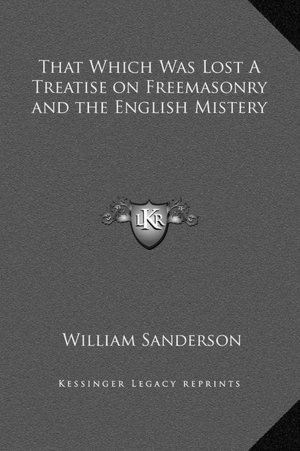
In many ways, English Mistery was as reactionary an organization as one could ever hope to find. However, it still had a revolutionary taint to it, starting with the man who founded it; a disillusioned Freemason named William Sanderson, a writer of moderate note and member of the Imperial Fascist League. Perhaps because of his background, it was always a close-knit and secretive organization and continued to regard Freemasonry as a bulwark of civilization (a rather absurd attitude to take given Masonic involvement in virtually every revolution in the western world). Sanderson founded English Mistery in 1930 to promote his view of leadership through what he called a “Masculine Renaissance”. At its inception it was predominately a discussion group and never really moved much beyond that. Areas of discussion included national politics, economics, the Anglo-Saxon race and the role of women in society. It is easy to see the drive for a “Masculine Renaissance” as a reaction to the new feminist movement, seen in Britain with the suffragettes who campaigned for the right to vote in the 1910’s and 20’s. The racial angle was tied in many ways to the economic situation as (rather ridiculously) everything from the pitfalls of capitalism to the spread of communism was blamed on the Jewish minority. They also tended to favor eugenics, which is often pointed to today as something to be ashamed of, often by people on the left, even though at the time support for eugenics was widely accepted around the world by those who put their faith in science or what passed for it at any given moment.

Another negative aspect (putting it mildly) of the group was their hostility toward Christianity. Now, it must be said, this was not as heavily stressed as many other positions and, indeed, according to some, was not an official position at all. However, there definitely was a very anti-Christian bent among the leadership of English Mistery which is rather nonsensical for a group claiming to exalt tradition. One of their leaders, and probably their most prominent ‘thinker’ was Anthony Ludovici who was extremely anti-Christian while at the same time being anti-many other things most Christians, at least back then, would have been opposed to as well such as socialism, Marxism and feminism. Much of the anti-Christian element came from the great admiration so many of the leading members had for the German philosopher Friedrich Nietzsche (who called it a “religion of pity”) and because of an understanding of Christianity as a religion commanding the self-sacrifice of ones own people in favor of others, encouraging pacifism and egalitarianism. All of which would certainly have surprised Christians of the past to be sure. Not so bad (in my book at least) was their opposition to democracy, liberalism, multiculturalism, communism and, of course, republicanism.

That is an idea of the many things English Mistery was against, but what were they for? They favored, essentially, a return to a feudal sort of society. Their rejection of egalitarianism and belief in the superiority of good, long-term breeding meant that they placed a great deal of emphasis on the aristocracy and advocated a return to a very aristocratic society in which the hereditary lords would possess much (even very much) more power and authority. This was sometimes rendered as a form of national syndicalism, but for the most part such efforts seemed to be merely an effort to put a more modernistic gloss on what was essentially the old medieval guild system-based economy. And, of course, their championing of a strong aristocracy extended to the monarchy as well and they were, officially at least, extremely royalist, advocating a restoration of the monarchy to actual power and authority in the government of the country. In that, of course, I would sympathize with them completely, though as with other such groups, I cannot help but be somewhat suspicious. I say that only because, reading their own words, I cannot help but wonder if they meant them to apply to the monarch actually on the throne.

This is my problem with many monarchists who embrace any political ideology. They talk a good game about loyalty to the king or restoring the authority of the king but often apply it only to a non-existent, imaginary king who they expect to place on the throne who will be in total agreement with them and their worldview. They may be perfectly willing to submit to a king they agree with, but not one they disagree with. Therefore, when you get down to it, they actually do not believe in loyalty at all but really place themselves above the Crown itself. However, I cannot say that is what English Mistery was all about, merely that I could not help but get that impression from them at times. They were though, in what they advocated, very aristocratic, very royalist, anti-modernity, anti-anyone or anything foreign and anti-American (and to be fair, even after getting into World War II, the U.S. was not exactly pro-British Empire either). They romanticized rural life, the English countryside, farms and lordly estates. They were also very much for maintaining the British Empire, come what may. All of which are good things in my book though they do nothing to cancel out the negative aspects of the group.

Even though I would have had some big problems with English Mistery, I find it very tiresome that they are so associated with fascism. Obviously, to some extent, this cannot be avoided. Their founder was a former member of the Imperial Fascist League and others went on to be members of the British Union of Fascists (which was guilty of many things but republicanism was not among them). However, no one today even knows what a fascist really is (even those who call themselves fascists) and I cannot help but roll my eyes whenever anyone is called that. Was English Mistery a fascist secret society? I hardly think so. For one thing, they were very anti-feminist and, believe it or not, in Britain at least, fascism was pretty darn pro-feminist. Many of those celebrated old suffragettes from the 20’s became leading members of the fascist movement in Britain. English Mistery was very aristocratic and fascists tend to be very egalitarian (at least as far as people of the same race are concerned). Hitler vowed to abolish all class distinctions, Mussolini detested the Italian aristocracy and in Britain the fascist cause tended to focus on the usual socialist line of taking from the rich to give to the poor, which makes perfect sense if you want mobs of people on your side, there tending to be many more poor people than the rich. And, of course, we have the support for monarchy. Fascism has a pretty mixed record when it comes to monarchy but the most prominent have been opposed to it or, at best, not fully committed to it. Hitler detested monarchy, Mussolini tolerated it but said he wanted to get rid of the King and the Pope eventually, Mussert and Quisling were republicans, Franco certainly was not and Salazar in Portugal claimed to be a monarchist but never did anything about it.

The only thing English Mistery seemed to have in common with fascist groups was their nationalism and perhaps their ideal economic model (if we are going to call that national syndicalism) but I can really see little else. Most would say they had racism in common but not all fascists were racists (shocking, but true). Another thing most would probably say that had in common was a love of cruelty but, though I wish it were not so, certain members of English Mistery espoused a greater love for cruelty than most fascists. There were one or two who wrote not only in defense of but actually glorifying slaughter just for the sake of slaughter really. Some may think that goes hand-in-hand with fascism but, to be fair, neither Franco, Salazar, Dollfuss in Austria or even Mussolini operated death camps or had extermination squads. The Nazis certainly did but even the Nazis, as far as I know, dealt with this as a duty and something to be carried out with emotionless, machine-like efficiency and not something to be celebrated for its own sake. It may surprise some people to know that even the infamous SS tried to weed out from their ranks men who were sadists because they tended to view such individuals as unstable. However, it should also be said that not all members of English Mistery were alike nor did the actions of every member match the words of every other member. Some members served heroically in defending the lives of various peoples in the empire during World War II. Some were even celebrated for their work in the artistic fields and in journalism.

In fact, some members of the group considered the biggest fault of English Mistery to be that it was simple a discussion circle that never actively attempted to do very much. One such man was conservative MP Gerard Wallop, later Earl of Portsmouth, who eventually left English Mistery to form, with other former members, the “more pro-Nazi” group “English Array” so, obviously, English Mistery was not altogether as terrible as some seem to think. It was after this split-off in 1936 that English Mistery effectively died a slow and quiet death as most members drifted off to other, more radical and, usually, more revolutionary (as opposed to counter-revolutionary) organizations such as English Array or the British Union of Fascists. There is plenty to criticize English Mistery on and certainly there is a great deal to criticize about many of its most prominent members. However, in regards to some of their views, such as their desire for a more rural, aristocratic society, their opposition to Marxism in all its forms, their push-back against the feminization of society and their professed ardently royalist skepticism of democracy; I cannot but agree with them. Still, the hostility of certain members toward Christianity and their support for Freemasonry are just two non-negotiable items that would not allow me to sympathize with such a group.
Related Posts Plugin for WordPress, Blogger...