The liberal democratic republican model makes great claims for itself. Even more extensive are the claims of the socialist republican model which promises a communist utopia of absolute equality for all. Liberal republicans (who truly believe in their system) will join us backward reactionaries in noting that the revolutionary, socialist republican model has utterly failed everywhere it has been tried and only persists in countries where it is supported by foreign powers or has largely abandoned its original Marxist economic principles. However, the liberal republicans are less willing to look at their own record of success in living up to the great claims they make for themselves. They, to be fair, have never promised equality of outcome as the Marxists do but they have, nonetheless, claimed to be better than any other system for organizing human endeavor which the world has ever seen in the history of existence. That is quite a claim.
Most liberal republics, however, clearly do not have much of a record of success to back up such claims as we have detailed on these pages before. The republicans of France, for example, can hardly claim to have delivered maximum human happiness and contentment for their people considering that France is currently on her fifth republican incarnation in the fairly short historical period since the French Revolution. The liberal republican model in China hardly drew its first breath before degenerating into civil war, ending only in succumbing to a communist dictatorship. The republican records of success in places such as Latin America or Africa range from fair to appalling and in Europe the most successful countries have been and still are monarchies. On the continent, the most looked-to republic has been the Federal Republic of Germany which, again, does not have much success behind it.
The Weimar republic was a degenerate disaster which easily succumbed to National Socialism and the post-war republic has been fairly prosperous in economic terms but in virtually nothing else and could hardly be said to fit the ideal liberal republican model in any event what with its constant banning of political parties and speech codes which make it clear that the German people are not to be trusted. That is what republicanism is supposed to be all about and yet, the laws of Germany show that they do not trust their people but rather firmly believe that if they are ever able to hear the arguments for National Socialism, discuss or debate such a subject, or the Holocaust, the German people will immediately rush headlong into another Nazi dictatorship. That the Germans would be in the position they are today is hardly surprising, and the idea of the democratic “will of the people” might be seen as not such a priority, given that every generation of German children since 1945 have been routinely marched to museums on a regular basis to be told how terrible there are year after year.
The Italian Republic has certainly been no roaring success. There is much to admire about Italy and people around the world will talk about how great it is (I would too) but only in cultural terms. The people, the art, the music, the food, the antiquities are all great but no one ever boasts about the government which is top-heavy, corrupt and which has buried the future of Italians in crippling regulations and massive debt. The First Spanish Republic was so incompetent that it collapsed very quickly and the Second Spanish Republic almost immediately started down the path to Marxist dictatorship and quickly degenerated into mass murder and finally a civil war which saw it destroyed. Where is the great republican success story? The countries in Europe that people point to as the most successful and the ones which more people want to move to are all monarchies; the United Kingdom, the Netherlands, Belgium, Denmark, Norway and Sweden.
However, if all else fails, liberals can always point to the one country that mesmerizes people all over the world, the one which both her friends and foes make the center of all life on the planet; the United States of America. Even in America-bashing Europe, the liberals almost invariably point to the United States and to the Founding Fathers of America as the great success story and the example for others to follow. Yet, the liberals, and the left-liberals in particular, cannot seem to get their story straight. On the one hand, they believe that America is so wonderful and so superior to all other countries in the world that it is positively cruel and inhumane to expect people to live anywhere else, while on the other hand being the ones most eager to provide skeptics like myself with the longest list of American failures or to respond to the likes of President Trump with the assertion that, “America was NEVER great!”
That America has done better than other republics, I have never denied. However, I fail to see how the USA can be claimed as the great, liberal, success story when the liberals themselves continuously redefine their measure of success. For example, liberals certainly claim to believe in democracy but, what is democracy? Does it even exist? I ask the question in all seriousness because the supporters of this ephemeral thing do not seem to have a substantive answer. Originally, in the USA, democracy meant that all landowners could vote. Then, for most of early American history it meant that all free, White, adult men could vote. But that was not democracy because later it meant that all men of any race could vote. However, it turns out, that wasn’t really democracy either because later still women were given the vote and that was democracy. Now, in at least one state I know of, the definition is about to change again to include convicted criminals, so I do not see how anyone can say that we have democracy clearly defined even after several centuries have gone by in America.
Similarly, if the American liberal democratic model is all about freedom and liberty, why are we constantly hearing about the people who do not have these things and why are we still struggling to achieve them? There was the struggle to end slavery, the struggle for worker’s rights, the struggle for women’s rights, the struggle for civil rights, the struggle for “gay” rights and so on and so forth. Has everyone ever been satisfied with their state of affairs in the United States? I am sure the modern social justice warriors would say that only straight, white, males have been satisfied in America. If true, that is hardly a record of success and if, as the right-liberals would say, this is not true, they still cannot then explain how the American system which they so idolize failed to protect itself from the likes of the social justice malcontents and troublemakers. The more right-leaning liberals would also have a hard time explaining how such gross violations of constitutional rights was able to occur in the Lincoln, Wilson and Roosevelt administrations. Ah, but, we are told, those cannot be held against the liberal model because it was times of war and great national crisis when Lincoln used military force to suppress the state government of Maryland or when Roosevelt put American citizens in “internment” camps.
That could be a fair point, though the United States government was not at war when federal agents entrapped Randy Weaver into a minor firearms violation and then murdered his wife and son when he refused to be an informant for them. The USA was not at war when federal agents (some of the same ones in fact) stormed and incinerated a commune of religious oddballs near Waco, Texas. No one was ever punished for any of these atrocities, few people remember them or really care. You might even be scolded for caring at all on the grounds that Randy Weaver was probably a racist and the Branch Davidians were a creepy cult. Fine, except the liberal standard they set for themselves claims that people are not supposed to be punished for their opinions or religious beliefs no matter what others may think of them. Not that I am willing either to brush aside the earlier suspension of vast constitutional rights just because it was wartime. Is that not in itself a damning indictment of the liberal republican model that it can only be expected to work when everything is fine and there are no emergencies? Are the traditional monarchies of history ever extended this same courtesy?
The answer, of course, is no. Freedom of speech is widely trampled on in the liberal regimes of the world today, yet, again, the United States is upheld as the exception to this. When you point out that many people are silenced, the response will be that they are silenced by private companies and not by the government. This is a distinction without a difference, the people in question are still being silenced. Liberal republicans, of course, would not allow traditional monarchists to get away with this such as by saying, just as truthfully, that the Inquisition of the Roman Catholic Church never put heretics to death, the inquisitors simply determined if heresy was present and, if it was, handed the guilty party over to the secular authorities to deal with. No, the liberal republicans would say that the Church and the monarchy were both complicit in suppressing religious dissent. They would not say that when Czar Nicholas II closed the State Duma, as he was repeatedly forced to do, that, as with the actions of American presidents, that the circumstances of the time made such a thing necessary, they simply dismiss him as an autocratic tyrant regardless of the facts of the matter.
The bottom line is this: if liberalism is supposed to be all about the power of the people and allowing the people to do exactly as they please; why are so many people in even the most “successful” of liberal societies so constantly unhappy and discontented? The answer, as should be all to obvious by now given recent events in both Europe and America, is that the people are not actually ruling themselves, they never have done and doubtless never will. They are being ruled but not in an open and honest way and this means that they are being manipulated by those who are their rulers but do not wish to be seen as such. This, I think, is something no traditional monarch has or could ever be accused of doing. For them, such a thing would have been unseemly as well as unnecessary but in the liberal system of idealism, it must be done to maintain the charade, to keep hiding the truth that liberalism is just as totalitarian as every other political “ism” that has ever been devised.
Showing posts with label monarchism. Show all posts
Tuesday, February 6, 2018
Tuesday, September 26, 2017
The Reactionary Dilemma
Some monarchists do not wish to go there, true enough. Some would be happy to simply return to the more classically liberal constitutional monarchies of Nineteenth Century. The more reactionary, which I mean to address here, wish to go back even farther to the pre-Revolutionary era. The problem is one which many of the 'internet-reactionaries' embody even if they do not realize it. They do not see how much "Enlightenment" thinking has permeated every part of western society and influenced how people think. It has even influenced how they think, even if they do not realize it. It has caused many to view monarchs the same way they view politicians; basing their loyalty on whether or not they agree with them and reserving the right to choose a different monarch if the current one does not share their views. Personally, I would love to see all of this change as it is hard for me to think of a problem, which today is a crisis, that does not have its roots in the "Enlightenment" (though there were monarchs who went along with that and they were not all bad, some were even great).
The reactionary dilemma, however, is that you cannot undo the work of centuries in a day or a year or even a decade. It took the west a long time to reach the depths it has currently sunk to and it is going to take a long time to dig our way out. That also means we are going to have to work toward getting up to a level that is not our ideal but which will be a step toward reaching the broad, sunlit uplands. This was something the French monarchists, at least some of them, recognized but did not deal with terribly well. Any reactionary will have likely heard the phrase, "You cannot turn back the clock". That is true but, as Bonnie Prince Charlie said to his highland chiefs in a very bad British movie, "I have not come to turn back the clock. I have come to wind the clock." The destination can, in itself, be problematic. If you are to go back to exactly what was lost, it only stands to reason that it shall be lost again in exactly the same way. The French restoration ultimately came to ruin because they could not come to an agreement on how many of the changes made by the revolutionary and Napoleonic regimes they were willing to retain. The famous refusal of the Comte de Chambord to take the throne because he would not accept the tricolor flag is indicative of this. Rather than try to change France back to a more traditional mindset, he refused to accept being king if that mindset was not abandoned at the very beginning.
That mindset, did not change, as we know, and over time France became more and more republican rather than monarchist. The revolutionaries have had this problem as well though they seem to have better mastered how to deal with it. I have, in the past, pointed to the example of Spain under Generalissimo Franco and I think it is educational to look and compare that case with another. Franco, a man I regard as a hero and someone who may well have saved western civilization itself, was in power in Spain from 1936 to his death in 1975. The Kingdom of Spain would not exist today if he had not been. However, what he failed to do was get his ideas and his values to truly take root in the culture and the population. Were it otherwise, when elections were held after his death, the National Movement would not have fared so poorly (it also did not help that they divided their support by splitting into two feuding camps, something monarchists should be all too familiar with). Today, adherents to his politics are still a very small minority with no immediate prospects of ever gaining power again. Now, compare that to the situation in Russia. The Soviet Union was one of the most murderous and incompetent regimes in human history, it was forced on the Russians by a relatively small faction (many of whom were not even Russians) and yet, in spite of all the horror, the Communist Party is today the second-largest party in Russia. Obviously, the Communists were much more effective at getting their values and ideas to take root than Franco was able to.
There plenty of other examples one could cite. Perhaps an even better one would be Mongolia, the first Soviet satellite state. Very few in the west are familiar with Mongolian history but be aware that the Communist regime there was easily one of *the* most brutal and oppressive in the entire world. Their goal to totally eradicate traditional Mongolian culture and remake the country along the lines of Soviet Russia, particularly under the leader Choibalsan who saw himself as the Mongolian Stalin, was more intense, more vicious and more thorough than I suspect you could even imagine. They stamped out religion in a country which had been one of the most devoutly religious on earth, a Buddhist theocratic-monarchy for their few years of independence before the communist takeover, they wiped out traditions to the point that no one was left who remembered how certain ceremonies were performed, some families even forgot their names by the time it all ended. However, during all that time, the ruling communist party was the Mongolian People's Revolutionary Party. In 1990, with the fall of the Soviet Union, they allowed multi-party democracy. Can you guess what happened? The Mongolian People's Revolutionary Party simply adjusted its name to the Mongolian People's Party and won the vote to remain in power from 1990 to 1996, was back again from 2000 to 2012 and was voted back into power again only last year. They were so successful in influencing the thinking of the people that even when the people were given a choice, they chose to stick with the communists, no matter how horrible and detrimental they had been to the country.
Some reactionaries, I have come to accept, never want to actually accomplish anything, being far too happy to be nostalgic and pour scorn on everything around them. Myself, I would like to actually win and live in a world without politics, protests, race wars, pressure-groups and globalists. I would like a world where every people has their monarch and every monarch works to make his people as powerful and prosperous as they can be. However, if that is going to happen, we have to learn what works and what does not. We cannot simply go back to exactly the way things used to be because, the way things used to be ended in disaster (if they had not, we would be conservatives rather than reactionaries). There must be some adjustment. Don't be just like what used to be, strive to be better. In order to do that, I can see no alternative but working to change the culture, change the ideas and values of people. Tearing down the last vestiges of the monarchical order because they are not up to your standards will not accomplish that. Counter the "Enlightenment" thinking from the ground up. We do have, as I have said before, at least some room to be optimistic about such a campaign because the current state of affairs does not really seem to be pleasing anyone. The revolutionaries and the liberals alike both promised a utopia and they have obviously failed to deliver it. That is to our advantage but we must do the hard work of steadily changing the values and ideas of our friends, families, neighbors and then going on to education, entertainment and the wider culture. What we have now is not working, use that to your advantage and go forth and change some hearts & minds.
Thursday, July 27, 2017
Monarchy and Morale
One of the most horrific but telling things I have ever read about the difference between a monarchy and a republic was written by Robert Katz in the last chapter of his book, “The Fall of the House of Savoy” on the subject of the end of the late Kingdom of Italy. In a paragraph praising the republic for what I would call listlessness and lack of ambition, Mr. Katz wrote, “Italy has fared well without the monarchy and its recurrent, restless dreams. The country no longer pretends to great powerhood. A president sits now in the Quirinal. Few people abroad know his name. The republic has no plan to march for glory.” I suppose one could easily cite this as a sort of test. If you can read lines like that and think, as Katz does, that this is a good thing, you must be a republican. If you think they are horribly tragic, you are probably a monarchist. This could be “Exhibit A” in making the case that liberal republicanism saps the morale of a great people. Personally, one of the things that I find most despicable, damnable and insidious about, in this case, the Italian republic, is that it has made people comfortable with mediocrity.
Simply consider the context. Italy, a land with almost nothing in the way of natural resources besides mineral water, once conquered the entire Mediterranean basin, ruled the known world and in many ways created western civilization as we know it. The cultural legacy of Italy alone was fought over by the great powers that rose up after the fall of Rome for centuries. Italian religious spread Christianity to distant shores and Italian navigators discovered new continents. Even after centuries of being divided and ruled by foreign powers, the Italians reunited, won their independence and, despite being the last out of the gate, set out again and built an empire that reached from the Alps to the Horn of Africa. When the Kingdom of Italy was brought down in World War II and this modest, most recent of the European colonial empires was demolished, we see the result in the waves of “refugees” from Eritrea and Somalia of what becomes of such places when the benefits of Roman civilization were withdrawn. Yet, led by a corrupt, top-heavy, talking shop that dispenses social welfare, people are dulled into passive acceptance with their elite always assuring them that this is the best they can expect.
I take a different view. I say that those, “recurrent, restless dreams” which Katz faults the House of Savoy for, are essential for the health and morale of any people. The liberal elites do not want this though, they simply want listless, passive consumers. They want fuel for their machine and nothing more. They do not want people to think, to dream or to aspire to greatness. Italy is only one example of this but it is a stark one. The republican ruling class has taken a population who are the sons and daughters of the Caesars and taught them to be content with being second-rate, even third or fourth-rate. If this were being done by parents, in a family, people would surely call it child abuse. Forget Augustus and Trajan, forget Legnano, forget Venice and Genoa, forget the Medici, Farnese and all the great houses of the Renaissance, forget the great strides, from Turin to Naples, forget the “fourth shore” and all those who sacrificed there, from those led by Scipio to those led by Graziani, forget the model plantations of Somaliland, forget the great art, the great buildings, the great music and literature. Just watch football on TV, wait for your check and buy yourself something nice. Something “Made in China”. Whatever you do, just don’t show any ambition.
Not every nation, of course, has the origins of the Roman Empire in their background, but most do have some period, long or short, of greatness that they once achieved. Lithuania, for example, regarded today as a minor Baltic state, overlooked by most, was a force to be reckoned with in the Middle Ages. Lithuania dominated Eastern Europe, controlling an area that stretched all the way from the Baltic to the Black Sea. Bulgaria, after the fall of the Byzantines, was the Bulgarian Empire, dominating the Balkans. They certainly had spirit, they certainly had high morale as when that empire was destroyed, the Bulgars did not lapse into apathetic acceptance. They strapped on their armor, fought back and built the Second Bulgarian Empire which again dominated the Balkans. They had what it takes to do great things and the blood in their veins was no different than that which flows in the veins of Bulgarians today. I look at most of the nations of the western world today and I want to shake them by their collective collars and shout, “YOU’RE BETTER THAN THIS!” What would your ancestors think of you if they could see you now?
One of the many southern European countries known for being in particularly bad shape economically is Portugal. Some take a fatalistic view of the situation but I do not. A cousin of mine is of Portuguese ancestry and she has a work ethic that would put the Puritans to shame. Portugal, yes, is a relatively small country but consider how it started. It had to fight for its liberation from Moorish rule and then, despite having relatively little land, a small population and few resources, Portugal still had ambition, still had a vision. They took risks, they tried new things and they became the leader in exploration, cartography, navigation and global trade. They built an empire that stretched from Brazil, all around Africa, the Middle East, India, Southeast Asia and East Asia. They controlled virtually every major trade route and became the wealthiest country in Europe. The Kingdom of Portugal did all of that and the Kingdom of Portugal started with far less than what the Portuguese Republic has today. We know what great things were possible because they actually did them. There can be no excuse for settling for mediocrity with so many great achievements in your past.
Unfortunately, the fact that a few countries have allowed their kings to still live in their palaces and still call them kings, does not make them immune from this republican mentality, this socialist dependency and consumerist apathy. Monarchies in which the monarchs have been virtually taken prisoner by the ruling class often have the same affliction and none seems worse off than the nominal Kingdom of Sweden. The Swedes, at this rate, may well go down in history as the first nation to actually die from political correctness. It doesn’t have to be this way. Sweden does not have to be the way it is now. The Kingdom of Sweden, the Christian heirs of the Vikings, once dominated northern Europe. In fact, for a brief time, the King of Sweden dominated most of eastern as well as northern Europe. The Swedes once had the audacity to fight Russia and more than once the Swedes won wars against mighty Russia. They made the Baltic Sea a Swedish lake and played a decisive role in European, even world affairs. And what did they have to begin with? Again, they were a country with little useful land, a small population, few to no resources and had much more powerful neighbors like the Germans and the Russians, yet they still proved capable of great things. We know what Swedes can do and as long as the Swedes are Swedes, there is no reason they cannot be great again.
I will not go on at length like this but it is all the more frustrating because I easily could. Russia, Poland, Hungary, Austria, Germany, Denmark, The Netherlands, Belgium, Great Britain, France, Spain and so on. Each has a similar story in this regard. Each one has been far, far greater than what they are now. Each one is capable of so much more than what they have been coddled into accepting in this present year. In the past, the liberals and even the socialists claimed that under each of their systems, the people would be delivered from poverty and they would then be free to pursue greater things. It was a lie. Credit capitalism or socialism as you please, hardly any country these days is not a combination of the two, the result of freedom from poverty has not been the freedom to pursue greatness but a dull, sullen, sickeningly contented apathy. Which is not to say that there are none who struggle in our modern world, far from it, but generally speaking more people today live on some sort of government assistance than at any time previously and as long as they have their bread and circuses, their government cheese and their cable TV, their only concern is not losing that rather than trying to gain something more.
This is not surprising given who is in control of what people are taught, what they see and hear on a daily basis. In the past, people took great risks, tried new things, struck out into unknown seas, for the chance of fortune and glory and to bring salvation to the heathens. Today, however, those who did this are shamed, vilified and their motivations have been stripped from the modern populace. The desire for profit is terrible, we are told (though the ones doing the telling seem to profit a great deal), very out of step with our egalitarian ideals. To convert the heathen is likewise a monstrous notion, we are told, for the only ones who do not defame Christianity among our current elite are the ones who say that St Paul got it all wrong and that Christianity is not about converting others to save their souls but accepting the heathens as they are and not doing anything to change them or make them feel in the least bit challenged or uncomfortable. The republican mentality has drained the morale of people everywhere, created an infantile society more servile than any that bowed, kneeled or kowtowed to a prince. The republic has drained away the motivation and the inspiration of once great peoples. Is it any wonder they are now dying off in record numbers?
To return to the original example of the Kingdom of Italy, regular readers may recall a post from last year in which I pointed out an article by one Andrew Roberts of “The Telegraph” who denounced Donald Trump as the American version of the late Duce of Fascism, Benito Mussolini. His evidence for this boiled down to little more than the slogan, “Make America Great Again”. This proves the point very well, I think, about someone who truly embodies the republican mindset of today. I am sure Mr. Roberts would detest any number of things about the Fascist regime in Italy, such as its suppression of the socialists and Marxists, its insistence that men be masculine and women be feminine, its teaching of religion in schools and its encouragement of Italians to marry and have very large families. However, what most offended Mr. Roberts in this instance was that Mussolini wanted to ‘make Italy great again’, he wanted top-tier status, he even wanted to rebuild the Roman Empire. Simply the desire that your nation be great is considered a crime to these disgusting people and I have no hesitation and absolutely no shame in saying that, given the choice between the views of Andrew Roberts and those of Benito Mussolini, I would take the Duce every time, call me what you like.
When people have nothing to believe in and nothing to strive for, they sink into apathy and slow death. We are seeing this happen right before our eyes. It is a psychological sickness everyone must strive to overcome and save others from. I will not be as blunt as I might about the opinion of Robert Katz as he passed away from cancer a few years ago. However, given that he was sued for libel by the Pacelli family for some outrageous things he wrote about Pope Pius XII, I consider myself in good company for being completely opposed to his point of view. Italy has not “fared well without the monarchy” specifically because it no longer has the “recurrent, restless dreams” of the House of Savoy. Other than that, he is correct, “The republic has no plan to march for glory.” but it certainly does seem to have a plan to march toward the doom of western civilization entirely. That alone, I would think, would be enough to make any rational person an ardent monarchist.
Monday, July 10, 2017
The Difficult Position of Modern Monarchs
A couple of these came my way recently, one directed at the Prince of Wales who has certainly said things which often cause me to roll my eyes or bristle in frustration. He has also, to be fair, said many things I fully agree with such as his support for hunting rights, traditional architecture and British farmers, particularly organic farming which, while I am not necessarily devoted to, I at least support in as much as I support farming and farmers overall. Any country should produce as much of their own necessities as possible in my view. On the subject of environmentalism, the Prince has often frustrated me but I will also add that while the “green movement” of today is nothing but thinly veiled Marxism, concern for the environment, conservation, clean air and water are certainly good things and things which I support and all of which were once far more dominant on the political right than on the left (Bismarck being a good example of a very illiberal conservationist).
In the case of the Prince of Wales, as with many other royals and royal heirs, I think, and have said before, that I do not think it a coincidence that he was the first British heir to the throne to be educated alongside his future subjects rather than in the palace by private tutors. This is one of those “little things” that I consider to have been extremely important. The Prince of Wales, like his continental counterparts, thinks the way he thinks because it is how he was taught to think by people whose worldview is certainly vastly different from my own. Given that, will he make for a good monarch? Being no prophet, I cannot say nor would it be for me to pass judgment on him. His worthiness in my estimation, nor any other person, should have any impact on his birthright. I will say with relative conviction that he will not be another King Edward III, Henry V or any of the other English monarchs that I most admire. The world today is not what is was in those days, the people are different, their values are different, their priorities are different and no single monarch could change that if they wanted to.
However, criticism of the Prince of Wales, in this regard, also tends to run over to criticism of Her Majesty the Queen as well. I have heard the complaint many times, whether directed at Queen Elizabeth II, King Philip VI of Spain or others (though those two seem to be singled out the most) that they did nothing while all sorts of laws were passed which, I fully agree, are disgusting and reprehensible. Why did they not stop the legalization of abortion or gay “marriage” or, more often in the British case, to the violation of sovereignty that came with joining the European Union? This is, of course, a completely ridiculous argument to make as it takes for granted that the monarch *could* have stopped any of these things if they wanted to when we know that not to be the case. All the monarchs can do is advise and warn, they can no longer veto bills they disapprove of and, for all we know, they may have advised and warned against them all.
I must, again, it seems remind readers of the sad case of King Baudouin of the Belgians who was in exactly the same position. A bill legalizing abortion was being passed through the Belgian legislature and, being a devout Catholic, King Baudouin made it clear that he could not give his royal assent to such a law. In the past, this would have been sufficient, even in Belgium, to kill such legislation but times had changed as they tend to do. The politicians ultimately had to circumvent the King by declaring him incompetent, unfit to reign, effectively deposing him, passing the law on their own authority and then, on the following day, declaring him competent and fit to reign again. King Baudouin had done everything that it was in his power to do. His only options were to sign or not sign and he refused to sign, yet the bill became law anyway. Successive monarchs, King Albert II and currently King Philip, have not taken similar stands. What would it accomplish if they did? The monarchy would be immediately accused of tyranny, abolished and the bill would become law anyway so nothing bad has been stopped but only added to as in addition to abortion being legal, the monarchy and centuries of royal tradition is destroyed as well.
As I said when addressing the relatively recent, and extremely unfortunate, remarks of the King of Norway, I view any opposition to the monarchies of the world on these grounds as ill-directed anger. Usually, I am just as upset as any about the issue or issues in question but to target the monarch is to miss the real enemy. Monarchs today can be viewed as little more than well-pampered hostages whose fate hangs on the whim of a political elite that barely tolerates them and frequently uses them as a target for public anger to take the focus off of them, who actually hold power. Rather than blame the monarch, I say the monarchs of today must be rescued by their loyal subjects from the politicians who have caged them. It may be that I took for granted that every royalist would instinctively understand this because it was always something that I seemed to take for granted myself. From my earliest years I can remember having the idea that the term “prime minister” invariably meant the wicked villain of the story who deceived and manipulated the King who was good and benevolent. And, bear in mind, this was when I was watching cartoons, not political news and commentary. Later on, I learned what a prime minister actually was but it never seemed as though my original understanding was all that wrong.
This could all be seen, I suppose, as a sort of loyalty test and, unfortunately, it is not one everyone deals with very well. Some, like St Joan of Arc, persevere and are loyal to their king even if that king is not always perfectly loyal to them. Others, however, adopt the republican mentality that if the leader of your nation does not please you, then you can simply change that leader for one of your liking. There is probably no better illustration of these than the current crop of Spanish “neo-Carlists” who largely exist only on the internet where they can troll the existing Spanish monarchy without fear of the consequences that actually living up to their professed beliefs IRL would bring down upon them.
In this regard, the neo-Carlists can be differentiated from the modern day Jacobites who, regardless of whether one agrees with them or not, have at least been consistent. The neo-Carlists, on the other hand, have totally abandoned what the original, actual, Carlists were fighting for and become rather more like the Hanoverians than the Jacobites, going far down the genealogical line in order to find a royal who fits their desires and simply declaring that person “legitimate”. The Hanoverians, discounting the Catholic Stuarts, had to go all the way to the Elector of Hanover to find a royal relative who suited their fancy while the neo-Carlists have had to go all the way to the younger brother of the heir to the former Duchy of Parma. That is some of them of course, not all of them, as this sort of set-up has of course led to a number of divisions within what was a factional group to begin with. Based on my experience, they have no argument to support their whims, thinking that simple name-calling (“Traitor”, “usurper” etc) suitable substitutes for facts.
The Jacobites have at least stuck to their original point of the legitimacy of the existing Stuart line and have adhered to it as it passed to the House of Savoy, the Modena branch of the House of Habsburg and today to the House of Wittelsbach. Originally, the actual Carlists made the same case, arguing that King Fernando VII of Spain had illegitimately changed the law of succession to allow his daughter, rather than his brother, to succeed him. They did have a point, the King had not gone through the traditional steps to change the law, simply doing it on his own authority as an absolute monarch. Oddly enough, it was the Carlists who proclaimed themselves the defenders of the absolute monarchy while at the same time saying that the King did not have the power to do what he did just as their rivals, the Cristinos, proclaimed themselves the champions of constitutional monarchy while basing their case on the absolute power of the former king. If only that were the only inconsistency. However, after losing three wars against their rivals from 1833 to 1876, all in the name of their candidate for the throne being the senior male heir (which he was), the senior male line came to an end with the death of the Duke of San Jaime in 1936 after he was hit by a truck while crossing a street in Vienna. With his passing the senior male heir of King Carlos IV of Spain was King Alfonso XIII of Spain who had lost his throne in 1931 to the Second Spanish Republic.
As an interesting aside, by that time the Carlist claimant also claimed to be the legitimate heir to the throne of France which would have put them at odds with the Jacobites who regarded all actions by the post-James II monarchs of Great Britain as invalid, including their renunciation of their claim to the French throne, meaning that they still regarded their pretender, at the time the former Crown Prince of Bavaria, as King of England, Scotland, Ireland and France. However, it was at that point that the Carlists decided genealogy and royal bloodlines were not so important after all and switched to the Bourbon-Parma branch of the Spanish Royal Family to find another royal to rally behind in their continued opposition to the now senior male line of the family. It all adds up to people who will not have a king that they do not judge to be satisfactory and that rather runs contrary to the idea of monarchy which is to accept whatever heir, by the grace of God, happens to be born.
Currently, as stated, for the neo-Carlists on the right that is Prince Sixte-Henri of Bourbon-Parma, for those on the left it was his older brother Prince Carlos Hugo (ex-husband of Princess Irene of the Netherlands), also claimant to the title of Duke of Parma which ceased to exist in 1859 when Parma was annexed to the (now also former) Kingdom of Italy but since his death in 2010 it falls to his son Prince Carlos. So, one can take your pick. Until his death in 1953 some Carlists also supported the Austrian Archduke Karl Pius because, well, why not? None of them are valid heirs to the Spanish throne according to the laws of Spain today or the laws of Spain as they were in the time of Fernando VII either. Ultimately, it all boils down to the fact that some people refuse to accept a monarch they do not approve of. Just as many, if not most, modern day royals have been taught to think as they do, so too have many monarchists been taught to think like republicans, to think that they can decide whether a royal heir is worthy or unworthy of their loyalty and to switch their allegiance to someone else as they see fit.
It is a fantasy world and not a reactionary one, make no mistake about it. Having a monarch that is totally legitimate but not universally approved of is hardly new, only the idea that such monarchs can be disregarded is. It is all the more strange that this seems to be more prevalent in current and former Catholic monarchies than Protestant ones. Yet, once upon a time, it was not uncommon for Catholics to have even a Pope that they did not particularly like very much, yet who they never questioned was the Pope whether they liked it or not. Today some have fallen rather far from that, refusing to submit to a King or Queen, not because they have ruled you badly, but because you blame them for not ruling at all. Yet, when you point this out to these people, when you point out that it is the people who support the ruling class who holds power over the monarch as well as over you, they will say that votes should not matter, votes have nothing to do with what is right or wrong. I would agree with that but it is also completely irrelevant unless you have some other means of enforcing your will besides the legal political system and I have yet to see any neo-Carlists or anti-Windsor “royalists” with an army behind them.
They do not because, again, they are focusing their fire in the wrong direction and perhaps intentionally so because they lack the courage to direct it where it matters. On the rare occasions when I have been able to have an intelligent conservation with one of these people, such as a neo-Carlist, I have asked them what they think would happen if tomorrow King Felipe VI suddenly abdicated and Prince Sixte-Henri took his place, what do they think would change? Would the Spanish public suddenly stop supporting divorce, abortion, homosexuals or “diversity”? The obvious answer is that of course they would not as they did not get into this mentality overnight and one elderly royal is not going to make them stop. So, changing the king would ultimately do nothing anyway they it certainly helps the leftist revolutionary republicans to drain any and all support away from the monarchy as possible. The King is not the problem, even the politicians are not ultimately the problem, rather the real problem is the mentality of the vast majority of the people that keep the politicians in power.
The leftist radicals figured this out long ago which is why they consciously decided to get into education, the media, entertainment and politics in order to change the values of the people away from traditional values toward their own Marxist ideology. It took them a long time to make things as bad as they are today but too many on the right side are too blind or too lazy to realize that. Maybe they don’t want to risk unpopularity or social isolation, but for whatever reason they prefer to aim at undermining a ceremonial monarch and risking centuries of tradition rather than focusing on converting those around them. If the public changes, I expect they would find most royals and most monarchs would be in agreement as they would, as in the past, shift as society shifts. Until then, monarchists should remember that the leftist republicans who, in virtually every country, still demand the abolition of even ceremonial monarchs are not acting without reason and you should think long and hard about finding yourself on the same side as communists, greens and social democrats. They want to tear down the last vestiges of traditional western civilization because they know that what comes after will be more to their liking. If you consider yourself any sort of royalist and think for a minute that the current trajectory would result in a ceremonial monarch being replaced by an absolute one, you are sadly mistaken.
See also:
On the Legitimacy of Monarchs
My Thanks to the Duke of Bavaria
King Harald Goes Full SJW
Monday, February 6, 2017
When Monarchs Lost Power
When people think of when traditional monarchy was replaced with largely ceremonial monarchy most tend to set World War I as the time when everything changed. As usual, this is true to some extent but not universally so. World War I impacted monarchy a great deal in that it saw the downfall of three major monarchies in which monarchs still ruled, namely Germany, Austria-Hungary and Russia. The German Empire was a constitutional monarchy but one in which the government answered to the Kaiser and not to the public. In Austria-Hungary the situation was, of course, more complex but the Kaiser still had, more or less, a dominant position and more power than anyone else. The Russian Empire was the last absolute monarchy among the major powers and though, since the Russo-Japanese War, had taken the first tentative steps towards constitutional government, was still effectively an absolute monarchy in which the Czar appointed who he pleased to high office and could close down the Duma whenever he wished. In those cases, the war meant not only a loss of power but the loss of the monarchy entirely.
The other major and quite old monarchy to be brought down by World War I was the Ottoman Empire of Turkey. However, while it did survive the war briefly, in fact the Sultan had already lost power before the conflict began. Sultan Abdul Hamid II was the last Turkish monarch to really rule his empire. In 1908 he was forced to give up his power and the following year was deposed entirely, replaced by Mehmed V who was effectively a figurehead for the “Young Turks” who actually ruled the empire. In Greece, King Constantine I was brought down by a pro-Allied coup and replaced by King Alexander who was also little more than a figurehead but when a monkey bite cost him his life, King Constantine was restored. Greek monarchs continued to be power players for about as long as the monarchy existed. No other country had such an ‘on again, off again’ relationship with their monarchs as Greece. For most of the monarchs who survived World War I, their fortunes varied from case to case. Some emerged from the conflict stronger, others weaker.
At the end of World War I, the King of Italy was actually one of the most powerful monarchs in Europe, due to the fact that the original constitution of Italy was rather vague and reserved considerable powers to the King. It also made a difference that King Victor Emmanuel III was not a man who relished involvement in politics. He disliked stepping in and generally did so only when the politicians could not sort things out for themselves. So, when no liberal politician was prepared to take responsibility for the disastrous state of affairs in the country, he appointed Benito Mussolini to power. Despite the changes brought about by the Fascist regime, it was still the King who was the only one able to dismiss Mussolini from office in 1943. His power drastically declined after that, due to the situation of World War II at the time but the Italian monarchy had only a few more years of life left to it in any event. For Italy, as with some others, the King mattered a great deal right up until the point where he ceased to matter at all because he ceased to be King.
In the Low Countries, no monarch emerged stronger from the war than King Albert I of the Belgians. Although starting out as a limited, popular monarchy, King Leopold I had astutely mastered his politicians to be the indispensable man of his time in his country. His son, King Leopold II, was not so respected but almost always managed to get what he wanted, even if he had to bypass his government and do things for himself. King Albert I, on the other hand, had considerable influence due to his personal popularity. He was nothing like his uncle Leopold II and his heroic stand in World War I made him an international celebrity. World War II would prove the more decisive conflict for the Belgian monarchy. King Leopold III had hoped to use the disaster as an opportunity to correct many problems but he was quite wrongly and quite unjustly vilified for remaining in Belgium during the war and ultimately lost his throne as a result. His son and successor, King Baudouin, exerted considerable influence because of his personal popularity but he would be the last Belgian monarch to do so to date.
The fate that befell King Leopold III of the Belgians in World War II was somewhat similar to that which befell Grand Duchess Marie Adelaide of Luxembourg in World War I. She had been a monarch with rather robust powers and who played a prominent part in the government of her country. However, her decision to remain in Luxembourg during World War I when the country was under German occupation resulted in a considerable backlash that almost saw Luxembourg deprived of its independence by the victorious Allied nations and which almost brought down the monarchy in Luxembourg itself. Grand Duchess Charlotte gained considerable prestige for going into exile during World War II and standing for resistance to the German occupation (and indeed annexation of Luxembourg) but no monarch would ever be quite so influential again as had been the case prior to World War I. In recent years the Grand Duke Henri voluntarily gave up having any significant part in government due to his unwillingness to be a participant in certain actions by the government which violated Catholic moral teaching so that today the monarchy of Luxembourg is effectively ceremonial.
For the Netherlands, the original Kingdom of the United Netherlands had effectively been an absolute monarchy. However, before the end of his life King Willem I abdicated due to the determination of the political class to lessen, if only slightly, his royal powers. The real change came in 1848, the year revolution swept across most of Europe. The Netherlands, however, was mostly untouched by the tumult because King Willem II decided to get out in front of it and willingly adopt a new constitution that made the Netherlands a limited, parliamentary monarchy. Nonetheless, the King was still an integral part of government and retained considerable influence. This was lessened during the First World War, though the Dutch were neutral, with the expansion of democracy in 1917, lessening the share of power for the monarchy. King Willem III had been able to master or at least intimidate his officials to be the dominant force in the governing of the Netherlands and even after 1917 his daughter Queen Wilhelmina was able to have considerable influence due to her popularity and her strong will. World War II saw quite a lot of tension between the Queen and her government-in-exile but the Queen invariably prevailed. However, the loss of the Dutch empire in the aftermath meant the loss of Dutch influence on the world stage and no Dutch monarch ever had quite so much influence after that point. However, it is worth noting that the Dutch monarch does still retain a role in government and more influence than most may realize, partly due to popularity and partly due to being longstanding stockholders of the Royal Dutch / Shell Group, in the past owning 25% of the stock. It is much less now but would still cause them to be a family that "mattered" whether they had a kingdom of their own or not.
In Scandinavia, the monarchies of northern Europe took no part in World War I but were all very much impacted by World War II. In the Kingdom of Denmark, most venerable of all western monarchies, King Christian X exerted considerably more influence than his successors have. He was a very popular and highly respected figure, particularly because of his actions during the war years and yet he had already been obliged to surrender most of his royal authority during the inter-war period. In 1920 King Christian X had been able to dismiss the elected cabinet because he disliked it and while his authority was upheld on this point, it caused a backlash that effectively subordinated the Crown to the democratic process, his later popularity from the World War II years notwithstanding. Denmark had only become a constitutional monarchy in 1849 and prior to the crisis of 1920 the monarch, while forced to work with parliament, still had the most prominent role in national affairs. In the neighboring Kingdom of Norway, recently separated from Sweden, the monarchy was more limited from the outset. King Haakon VII was able to exert some influence but this evaporated after World War II with his failing health. His son, King Olav V, known as “the People’s King” was never one to clash with the elected government.
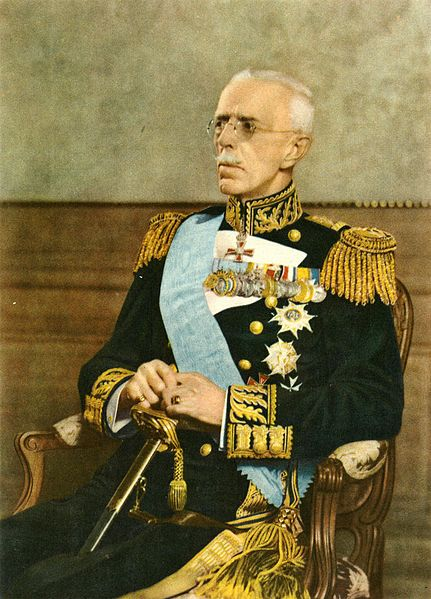
In Sweden, King Gustav V was the last monarch to intervene in politics over his insistence that Sweden strengthen itself in the event of World War I spreading to Scandinavia. The Russian Revolution of 1917 caused a spread of leftist politics in Europe and Sweden was not unaffected by this. The King tried to replace the outgoing government with another conservative one but found himself powerless to do so and forced to accept a succession of basically socialist governments afterwards. Seen as being sympathetic to the German Empire in the First World War he was also accused, though Sweden was neutral, of being sympathetic to Nazi Germany in World War II. These charges mostly come down to the fact that he preferred not to antagonize Hitler rather than risk the swift conquest and occupation of his country, which hardly seems out of order. In any event, no matter how unjustly, King Gustav V did see his reputation damaged because of World War II which meant that along with the loss of his political power, his personal influence fell away as well. Since that time the Swedish monarchy has been firmly restricted to a purely ceremonial role with no real part in government at all. Incredible as it sounds, the Swedish monarchy was most impacted by two world wars despite Sweden being neutral in both.
The French, of course, remained republican before, during and after both world wars. The last monarch to reign over France was Napoleon III who was, of course, the dominant figure in the Second French Empire but the last King to reign over France was King Louis Philippe. He was a constitutional monarch but still one in which he played an active role in government and making policy. That, of course, ended with his downfall and the end of the monarchy altogether.
In neighboring Spain, King Alfonso XIII was around for the First World War, though he lost his throne at the start of the decade that saw the outbreak of World War II. The powers of the Spanish monarchy had changed several times throughout history, from the change from the Habsburg style to the more absolutist Bourbon dynasty and then with the defeat of the Carlists from absolute to constitutional monarchy. However, King Alfonso XIII retained some powers and considerable influence throughout most of his reign. He had zealously pushed for the war in North Africa to conquer a new Spanish empire to compensate for the loss of the old one but this produced a great deal of public anger and, in the end, the King backed the dictatorship of the Marques de Estella. He was forced from power in 1930 and the King lost his throne in 1931. When the monarchy was restored with King Juan Carlos, the King inherited near absolute power from Generalissimo Franco but willingly became a constitutional monarch. However, because of his popularity from doing this, King Juan Carlos retained a great deal of influence until 2012 when he lost popularity so quickly and so dramatically that he felt obliged to abdicate, something he had never expected to do. Since then the monarchy has been largely ceremonial.
In the Kingdom of Portugal, which was destroyed prior to the First World War, the monarchy had shifted from absolutism to constitutional rule with the Liberal Wars of 1823 to 1834, the cause of absolute monarchy being defeated with King Miguel I but the monarch retained certain powers and continued to play an active role in national policy right up until the overthrow of the last King of Portugal, Manuel II, in 1910.
For Portugal’s most long-standing ally, the United Kingdom of Great Britain and (Northern) Ireland, the world wars also did not have a significant impact on royal authority. The power of the monarchy had shifted in both directions over the centuries but certainly a major change came with the Revolution of 1688 and later with the throne passing to the House of Hanover when the prime ministerial office first took shape as the leader of the British government. That looked to be set to shift back again in the opposite direction under King George III but his decline and need for a regency, caused the trend to continue and the British monarchy became firmly set as one which reigns but does not rule. The world wars had no appreciable impact other than a scare with the rise of radical leftist agitation at the end of World War I and in the inter-war years when, along with his choice of wife, many feared that King Edward VIII intended to play a more active role in the government of his country than was the norm for British monarchs, something which helped force his abdication and replacement by King George VI who was reliably committed to the constitutional set up as it was. However, one can still see a considerable loss in influence coinciding with the loss of the British Empire for the monarchy which was to a large extent caused by World War II.
Finally, though, we have one area which is often overlooked but which provides a rather dramatic example of monarchs becoming more powerful rather than less so during the interval between the world wars and that was in the Balkan monarchies of Bulgaria, Romania and the post-World War I Kingdom of Yugoslavia. Although starting out as a constitutional monarchy, cobbled together from the southern provinces of Austria-Hungary after World War I and under the Serbian Royal Family, the Kingdom of Yugoslavia saw a dramatic change fairly early in life. On January 6, 1921 King Alexander I dissolved the constitution and ruled the country himself for the rest of his life in what was termed, rather critically, the, “January Sixth Dictatorship”. He worked to centralize power, tried to force together the various nationalities into a new Yugoslav national identity and as part of that it was he who changed the name of the country from the rather wordy title of “The Kingdom of Serbs, Croats and Slovenes” to simply, “The Kingdom of Yugoslavia” or the southern Slavs. In 1931 he moved to enact a new constitution but one which still reserved primary power to the Crown, though he was assassinated in 1934 and as a result of World War II, that constitutional arrangement would not last long.
Something similar happened in the Kingdom of Romania. Upon his death in 1927, King Ferdinand was succeeded by his grandson King Michael who was, of course, a child who could not exercise power. However, in 1930, his father, Crown Prince Carol, returned to his homeland and seized power as King Carol II. He began a campaign which he referred to as a “national renaissance” with a focus on reviving Romanian nationalism, devotion to the monarchy and national regimentation. With their uniforms, berets and Roman salutes, many observers referred to this as a sort of fascistic royal dictatorship. Absolute monarchy was being revived in Romania under King Carol II. Because the political situation had been so chaotic, King Carol II was able to use the royal emergency powers to enact a new constitution which effectively made him an absolute monarch in all but name. However, Carol II tended not to be too persistent and he soon handed over most of the duties of government to General Ion Antonescu in 1940. With the outbreak of World War II, the Romanian monarchy became imperiled as the Nazi leadership in Germany did not like King Carol II. When they started to conspire with Antonescu the King ordered the arrest of the general but was then overthrown in a coup and replaced by his son, King Michael, who was restored to his former throne. He was not allowed to rule but did seize power when he overthrew the pro-Axis government in 1944 but that, of course, did not last long as by the following year the Soviets had occupied Romania and the monarchy was soon destroyed.
The Kingdom of Bulgaria saw a similar revival of royal power in the inter-war years as in Yugoslavia and Romania. King Boris III came to the throne after the Bulgarian defeat in World War I saw King Ferdinand being forced to abdicate. There was unrest, threats of revolution and a deluge of assassinations but King Boris III handled the situation adeptly. In 1934 a coup established a short-lived military dictatorship but in 1935 Boris III organized a successful, royalist, counter-coup that resulted in a new prime minister who, along with his successor in office, with both loyal royalists who could be counted on to govern in accordance with the wishes of King Boris III. He was the man in charge in Bulgaria and everyone knew it. Boris III banned dissident political parties, made a royal marriage alliance with the Kingdom of Italy and reconciled with the Kingdom of Yugoslavia. In short, he was ruling and ruling rather well. World War II, however, changed everything. Bulgaria joined the Axis powers but refused to participate in the war with Soviet Russia. Hitler was outraged and after a fiery meeting with the Nazi Fuhrer, King Boris III died under mysterious circumstances. Succeeded by his son, King Simeon II, the child monarch naturally could not rule and the end of World War II brought a swift end to the Bulgarian monarchy so that he never had the opportunity, though he would later govern the country as elected prime minister.
So, as we can see, World War I had a major impact on the power of kings but only in certain countries. For others, World War II was the pivotal conflict and for others, neither had all that much to do with their ultimate overthrow or loss of power to elected politicians. The years between the wars saw some of the most dramatic changes; the King of Spain lost his throne, the King of Denmark lost his power while the Kings of Romania, Bulgaria and Yugoslavia saw themselves empowered to the point of practically becoming absolute monarchs. The purely ceremonial monarchies of today are a rather recent innovation when one takes the broad view and, as was seen in the recent Supreme Court case involving Britain leaving the European Union, we are reminded that monarchs today, such as the British monarch, often still retain considerable power and authority but are simply not allowed to exercise it. Given how chaotic politics is becoming these days, I would say it is not entirely beyond the realm of possibility that a monarch who acts to put himself (or herself) at the forefront of a campaign for national revival in a time of emergency might be able to reverse this recent trend. However, whether any would and whether the situation develops in a way that would be conducive to it, is anyone’s guess.
Tuesday, January 31, 2017
Some Thoughts on the Subject of "Unity"
There is a great deal of talk in the western world lately, most of it specious in my opinion, on the importance of “unity” along with denunciations of “division”. Much of this has been aimed at the current American president, some even setting up non-stop live stream sessions of people chanting, “you will not divide us”. For most of these people, I have no doubt, it is nothing more than the latest, fashionable, mindless talking point because, under other circumstances, they love nothing more than dividing people. They love dividing people so much that when they have exhausted existing divisions, they invent completely new ones to focus on. There have long been racial divisions, ethnic divisions, religious divisions and of course political divisions but in many parts of the world those were no longer sufficient. In much of Europe, for example, everyone in a given country was the same race and ethnicity, so there were no divisions there. Most people had given up on their own religion and had generally prohibited religious division anyway (when northern Europe became officially Lutheran the Catholic Church was quickly banned) so there was nothing to do on that front. Even in the area of politics, liberalism had won the day and no alternative was given serious consideration.
Obviously, given such a situation, the only thing to do was to import people of different races, different ethnicities, a different religion, though, because the government was behind this, people who could be expected not to immediately shake the boat when it came to politics. In the “battle of the sexes” the fight had pretty much ground to a halt. The feminists had won. They got the vote, they got disposal marriage, they got abortion, they got tax-payer funded birth control and so on. Women live longer than men, are now more educated than men and, as usual, are not imprisoned like men. They are even putting women in combat units, on warships, even in submarines and when your feminist devotion is pushing you to fight for the right to spend over a month sealed in a metal tube hundreds of feet under water, cheek by jowl with dozens of unwashed men breathing recycled farts and body odor, you are most likely running out of things to demand. So, new divisions had to be invented, like the “transgender” phenomenon. Now we get to argue over which bathroom can be used by someone who claims to be a woman but who still has a penis.
Obviously, I doubt the sincerity of people who claim to want unity, who chant “better together” while also arguing that “diversity is strength”. For those who may be slow in the etymology department, the root word of “diversity” is “divers” which comes from Latin via the French for “separate” or, in other words, “division”. Claiming you want unity while arguing that divisions make us stronger is rather nonsensical to put it mildly. However, unity is something that everyone claims, at least, to be thirsting for. You have people on the far left marching in the street championing unity, though of what sort I honestly have not the first clue, while on the far right you also have people arguing for unity which, agree with them or not, at least seems to make more sense when one looks at their program which generally includes making societies more homogenous in one area or another. It is rather complicated. The far-right basically says that birds of a feather should flock together. The far-left seems to be saying that we should always be creating new divisions only to then ignore them but even then, only in certain areas while not ignoring them in others. The same people who say “race is a social construct” are the same ones who push racial quotas. Don’t ask me to explain it. These are, by the way, usually the same people who complain about how huge the gap is between the very rich and the very poor while simultaneously importing more extremely poor people every year. Go figure.
Why do I bring this up here? Because, once upon a time, monarchists tended to list greater unity as being one of the perks of having a monarchy. In the past, and perhaps still today though it is doubtlessly declining, there was polling data to back this up. There was more social cohesion in countries which had a monarch as their Head of State. This was traditionally explained by pointing out that modern constitutional monarchies have a head of government who is a partisan, political figure but a separate Head of State who is a non-partisan, non-political, totally impartial figure who is tied to everyone in the country by way of history, culture and tradition. All of that is true, however, it has been increasingly less effective as the monarchy itself has been the cause of division in a number of countries. Some people wish to maintain the monarchy while others actively campaign to abolish it and turn their countries into republics. Australia is an example of this as is Spain. To a lesser extent, one could say the same of Canada. In that country the monarchy is largely ignored but when it is brought up, immediately one sees divisions between those who support the monarchy and those who want it abolished as an outdated relic of their colonial history as part of the British Empire.
The problem relates back to one that we have touched on here before. For most of our history, the monarchy was a source of unity other than the occasions in which the monarchy itself was fought over in succession disputes. However, that all began to change with the French Revolution and the proliferation of mass-politics, representative government and, to put it simply, liberalism. Prior to the revolutionary period, politics as we know it today did not exist. The monarch ruled and policies came and went depending on the situation, what worked and what did not. The people may have liked certain policies and disliked others but there was little to no ideological divisions in society. Then came the revolutionary period, then came liberalism and suddenly everyone was involved in politics, suddenly there were political parties at war with each other in every country. Suddenly there were ideological factions battling for control of the government. It became impossible for many people to evaluate policies based on their effectiveness because they were blinded by their ideological loyalty. However, it was still possible for there to be unity around the monarch because the monarch, where they still reigned anyway, was above all of that tumult.
Today, however, we are seeing that this situation has its limits. The liberal model, as I have said before, is based on a sort of social contract. It is based on a set of rules that everyone must abide by in order for the system to function. If one side decides not to follow those rules, the system breaks down. It functions only so long as everyone agrees to keep it functioning. We are now seeing the same applied to monarchy. Yes, the monarch can be a source of great unity and a real strength in that regard but only so long as everyone agrees to bow before the throne. In the old days, this was not an option. The monarch ruled and if you in any way opposed this you were a traitor and would be dealt with rather harshly. Today, under the liberal system, this is no longer the case. You are, in most monarchies, free to oppose the monarchy and so the monarchy ceases to be a source of unity and becomes an object of division. This is not, obviously, the fault of the monarchy but rather the fault of the liberal system as a whole.
The Dual-Monarchy of Austria-Hungary is often pointed as an example to illustrate a number of points, good and bad. By the time it had become “Austria-Hungary” it clearly represented something rather out of step with the rest of most of its contemporaries. The American diplomat James W. Gerard famously observed, “That extraordinary empire known as the Austrian-Hungarian Dual Monarchy is less an Empire or a Kingdom or a State than the personal property of the Habsburgs, whose hereditary talent for the acquisition of land is recorded on the map of Europe today!” Gerard was somewhat accurate in this observation, given that he was looking from a modern perspective at a political entity which had evolved from a different era. There had, of course, been efforts to foster greater internal unity in the past but these met with fierce resistance and ultimately failed. Back when it was still, nominally, the “Holy Roman Empire of the German Nation” the Emperor Joseph II tried to enforce German as the official language for all people in his polyglot empire but was not successful. Ultimately, all that did unite the peoples of Austria-Hungary was their shared loyalty to the Habsburg monarchy. Germans, Magyars, Slavs, Protestants, Catholics, Jews and Muslims all coexisted so long as loyalty to the Crown was enforced. Without that, there was nothing to hold them together and what had been Austria-Hungary divided and then divided further.
Another illustrative case is the Russian Empire. Russia, after all, was the last major power among the Christian countries to be an absolute monarchy. Prior to 1905 there was no constitution of any sort, no elected national assembly, no political parties or anything of the sort. There was simply the Czar, his word was law and there existed no higher authority beyond the Czar to which one could appeal save for God. Today, people tend to laugh or roll their eyes when they hear of how Czar Nicholas II resisted power-sharing in a constitutional monarchy by pointing to his British cousins as his “nightmare scenario”. People find it funny that the Czar seemed to think the British were in a terrible situation because of their political system while he had to deal with periodic uprisings, terrorist attacks and a seemingly unending string of assassinations. However, this is to miss the point of what the Czar’s perspective was. He was thinking not of how peaceful or moderate the country was overall but rather at the institutionalized divisions of the British government, at the ideological warfare going on between the Labour Party and the Tories which this manifested. Russia may have had very serious problems of its own, but things were more clear cut. The Czar was the “Emperor and Autocrat of all the Russias” and he decided what direction the country would take and you were either with him or against him and that was that.
It may be that this traditional sort of political system is so far removed as to be beyond the capacity of your average, modern person to fully grasp but it was, I assure you, once taken for granted as being the norm. The important point that should be grasped, however, is that a constitutional monarchy, as part of a liberal society, is not immune from harm and cannot but be effected by the sea that it swims in. Today this is becoming all too noticeable given how the liberal mask is starting to slip ever more and we see just how little they truly believe in what they have so long claimed to champion. This matters because, so long as liberals maintained their adherence to the rules of the game, it was possible to argue for a largely ceremonial monarchy as being of great practical benefit. If, however, the current trend continues in which liberals become increasingly overt in suppressing all opposition, only a robust, traditional monarchy will suffice. Personally, I am content to allow the liberals to go on with their hysterics as they are helping to prove the point that any compromise with them is impossible. If they want to play the game of ‘either we suppress you or you suppress us’ then, I for one am perfectly open to suppressing them. At that point, unity can be achieved.
Subscribe to:
Posts (Atom)