Sunday, August 7, 2016

The Tiburtine Sybil & Imperial Prophecy

In the old days of Christendom, one could mention the Tiburtine Sybil and the prophecies regarding the Roman emperors and many people, certainly educated people, would know immediately what was being talked about. Today that is certainly not the case and so some background information must be provided as, aside from experts in this particular field or, perhaps, art history aficionados, no average person will know what this is all about. First of all, we have the figure of the Sybil. The sybils were women who acted as oracles, usually associated with a particular holy site in pagan times. The custom originated in ancient Greece but soon spread to Italy, Asia Minor and other areas. The Oracle of Delphi is probably the most well known example of a sybil. These women were often sought out for prophecy and divine guidance as it were by powerful people. In the time of the Roman Empire one of the most prominent was the Tiburtine Sybil, known as such because she resided at the town of Tibur, an old Etruscan town, which is today the Italian city of Tivoli. Many stories grew out of this particular sybil later on among Christians concerning the Roman emperors.

Emperor Augustus & the Tiburtine Sybil
One thing to clarify at the outset was that the sybils were, obviously, not Christian religious figures but were associated with paganism. However, once upon a time, this did not cause Christians to discount stories about their prophecies. They knew from their Bible stories that the pagan priests of Pharaoh were able to perform seemingly miraculous deeds or that the witch of Endor had been able to summon up the spirit of Samuel for King Saul, for example. It was taken for granted that people who were not worshippers of the Christian God could still possess amazing gifts and that God could use such people for His own purposes. Later examples of such things might include the Native American shamans who, according to various stories, made prophecies about the coming of the Spanish or had visions of the Blessed Virgin to prepare them to receive the Gospel when Christian missionaries later arrived. There was also, it must be said, an effort by the Christians of the “Ages of Faith” to look back at classical history and to incorporate it into their new, Christian, world view. The story of Pope St Gregory the Great, momentarily resurrecting the Roman Emperor Trajan in order to baptize him, is an example of this. Virtually everyone discounts this story now but it reflects the wish of people to see so great a man, such a revered emperor, saved from eternal damnation for not having been a Christian.

Emperor Augustus & the Tiburtine Sybil
The first recorded instance of the Tiburtine Sybil crossing paths with a Roman emperor came in the time of Augustus Caesar. The story goes that Emperor Augustus approached the Tiburtine Sybil, Albunea, at the Temple of Vesta to ask if he should be worshipped as a god. This meeting was once a very common thing to see depicted in art. An Archbishop, Jacobus de Voragine, later recorded this story, stating that it had been handed down to him by Pope Innocent III, that Augustus met the Sybil and that the Sybil revealed to him one who would come after him, greater than he, and showed him a vision of the birth of Christ, referring to the Blessed Virgin as “the Altar of Heaven” where a church was later built and dedicated as such. According to Virgil, the Cumaean Sibyl also made such a prophecy about the birth of Christ and stories such as these, which became widespread, explain why the sybils were included in Renaissance works of art, such as by Michelangelo, alongside Old Testament prophets in foretelling the coming of the Christian era. These would also coincide with other stories, once popular, about the early Roman emperors taking a “hands off” approach to Christ. Stories circulated, for example, that Emperor Tiberius, who did not exactly have a reputation for kindness, ordered that Christians not be persecuted or accused and even talked of including Jesus Christ in the pantheon of Roman gods.

If such stories were true, the prophecies of the Tiburtine Sybil to Emperor Augustus might help explain why such an attitude was taken or why someone like St Paul would prefer to put his fate in the hands of the Emperor Nero rather than his own Jewish countrymen of the Sanhedrin. There were actually a great many such accounts of miraculous events and Christian prophecies concerning the pagan Roman emperors before the more famous events after the Battle of the Milvian Bridge and the baptism of Emperor Constantine the Great. There was the story of Pope St Clement I being a cousin of the Emperor Diocletian (in all likelihood he was a freedman who had been in his employ), Emperor Antoninus Pius condemning any illegal attacks on the Christian community, the dramatic story of Emperor Marcus Aurelius and the “Thundering Legion” or his son Emperor Commodus having a Christian mistress which is often pointed to as a reason for this fairly irascible Caesar refraining from persecuting Christians. She is also credited with influencing Emperor Commodus to release Pope St Calixtus I from prison. A revelation, passed down the imperial line, originating in a pagan source that they would not question, would be a possible explanation for such behavior.

Emperor Constans
However, other than foretelling Emperor Augustus of the birth of Christ, the most famous prophecy of this sort from the Tiburtine Sybil concerning an apocalyptic vision about a certain Emperor Constans. This prophecy foretold of a Greek king who would rise to become “king of the Romans and the Greeks” or, in other words, the Roman Emperor of East and West alike again, who would be very tall, very handsome, very wealthy, will destroy the enemies of Christianity, end all pagan worship, convert the Jews and defeat the massive, mysterious powers of Gog and Magog, after which he will retire to the Holy City of Jerusalem, abdicate his throne and hand the empire over to God. At that point, the Sybil describes what we would recognize as the rise of the Anti-Christ, coming from the tribe of Dan, who will win the people over by miraculous acts, who will destroy the Roman Empire and only then reveal himself as the agent of evil from the Temple of Jerusalem. This, of course, is very similar to other prophecies concerning “the Final Emperor” or the “Great Catholic Monarch” who will lead a last revival of Christian power before the end of the world.

An interesting point in the prophecy of the Tiburtine Sybil is that this monarch is named as Emperor Constans and that the prophecy was made, as near as we can tell, around the year 380 AD, a few decades after Rome had already had the reign of the historic Emperor Constans, the son of the Christian Emperor Constantine the Great, who came to the throne in 337 and ruled until he was assassinated in 350. If we were to be skeptical and presume that the Sibyl was trying to tailor her message for the audience, or that the story was invented later to appeal to Christian sensibilities, naming this future Christian hero after Emperor Constans would not make much sense. He was not known for being a terribly nice man or a terribly good emperor, though he too was part of a prophecy of his own concerning his grandmother, the Christian Empress St Helena. The prophecy said he would die in the arms of his grandmother and when he was assassinated it was after being cornered in a military post named Fort Helena.

Emperor Tiberius
So, what is the point of all this? I will be the first to admit it is largely just an act of indulgence on my part since I am interested in this sort of stuff. As with anything of this nature, some people will be inclined to believe and others will be inclined to disbelieve it and there really isn’t anything that anyone can say to prove either side right or wrong. I will say, at the very least, the existence of these stories and that they were passed on for so long reveals something to us about the people and the faith of Christendom. Sources of revelation were not rejected for being pagan, the people of the time recognizing that God can use anyone to participate in His plan. It shows also the centrality of the Roman Empire and the Roman emperors in the hearts of minds of Christian people and how central that Roman imperial tradition was to Christendom itself. The Christians of the late Roman Empire, even with all that was going on around them, did not cease to believe that their ‘realm’ on earth was something special, that Christianity had sprang up in that empire was no accident and that the Roman Empire was something that others would strive to bring back, that they hoped ultimately would come back, with all Christian, European peoples united under one divinely ordained Caesar.

Wednesday, August 3, 2016

The League of Nations: Root of U.N. Evil

It seems obvious and beyond dispute to me that the United Nations is a thoroughly contemptible organization that ranges from wastefully ineffective to horrifically malevolent in its actions. It has lofty goals of course but it has no oversight, is not accountable and is rife with corruption. Moreover, we have since found out for a fact that UN forces have participated in an unprecedented and disgusting criminal campaign of rape, child molestation and exploitation in Africa. What little good it might do is far outweighed by the horrors it has perpetrated and these good things could be done by other organizations. It does not prevent conflict, it shelters despicable characters, stops some countries from doing good and enables others to do evil. However, the root of all evil for the United Nations was its predecessor the League of Nations. The United Nations was originally the primary Allied nations of World War II, a conflict which the League of Nations had failed to prevent, and the U.N. was intended to be the League of Nations but with all of the mistakes that had made it a failure corrected.

Woodrow the Worst
That did not happen of course but maybe, just maybe, that was because the real mistake was the League of Nations itself. The idea for some sort of international organization had been advocated for some time by British leftists, Labour Party members, Fabian Socialists and the like but the League of Nations that was actually created was born out of the uninformed idealism of U.S. President Woodrow Wilson at the end of World War I. When the former professor turned Democrat politician went to the Versailles Conference to lecture the nations of the Old World on how to fix things, Wilson was a failure. He later admitted he did not know what he was talking about and almost everything he called for was ignored by his Allied partners. In the end, he sacrificed almost everything he said he stood for in order to get agreement to his legacy project which was the League of Nations. The creation of the League of Nations was the only major goal of Woodrow Wilson that he was able to see achieved. However, even then, it proved an embarrassment at the outset when he returned to his own country.

The United States of America refused to accept the Versailles Treaty, later making its own separate peace treaties with the Central Powers, and also refused to join the League of Nations. The United States would be the most significant world power that never joined the League of Nations but others who had originally been excluded were later admitted and it reflects the politics of the League and what was deemed acceptable by the leaders of this new international world order. Germany, the enemy in World War I, was excluded from the League but, after the Weimar Republic proved sufficiently subservient and willing to disarm and not resist the League, was allowed to join in 1926. This followed the French occupation of the Rhineland in 1919, which caused outrage across Germany after numerous rapes of German women by French colonial troops (from the African colony of Senegal) and the 1923 occupation of the Ruhr valley by French and Belgian troops. Soviet Russia, also initially excluded for being a communist state most regarded as illegal and illegitimate, was also admitted in 1934. What is interesting about the timing of that was the fact that Adolf Hitler, who had always despised the League, had taken Germany out the previous year.

Sinister Stalin
Ultimately, the League of Nations had decided that having a communist member was acceptable, even though the Soviet leadership had done nothing but condemn and castigate the leading members of the League from ‘day one’ as bourgeois capitalists and imperialists. The Soviet Union was expelled from the League at the end of 1939 because of the Soviet invasion of Finland. The League was supposed to respond to aggression with economic sanctions, however, that was never a viable option for the Soviet Union. At that point, they were still doing business with Nazi Germany, which was outside the League and would certainly not be following their orders, and the leading countries such as France and Britain were at war with Germany by that point and were not looking to antagonize the Russians. It is interesting to note that the Soviets had carried out a number of aggressive acts prior to joining the League, and was only expelled as a result of such aggression after making a pact with Germany which, under Hitler, had never had much use for the organization.

If this makes the League seem rather inconsistent and perhaps less than honest, the first major problem the League was unable to solve shows it even more. That, of course, was the 1931 occupation of Manchuria by the Imperial Japanese Army following the Mukden Incident. The Japanese military, acting independently of the government in Tokyo, moved quickly, took control of the country and soon set up a client state, the “State of Manchukuo” (which is simply ‘Manchuria’ in Chinese). By the time the commission from the League, headed by the Earl of Lytton, arrived in Manchuria, they were investigating what was already an accomplished fact, not something that was about to happen or in the process of happening. Their final report concluded that the Japanese had acted aggressively and that the State of Manchukuo was not a legitimate country. Deeply offended, the following year in 1933 the Empire of Japan officially left the League of Nations. What makes this case smell of corruption is that few historians doubt that if Japan had pursued an “Open Door” policy in Manchuria, reducing their own interest and control in the region to allow in other countries to invest, the commission would likely have come to the opposite conclusion.

The Mild Manchu Emperor
Such might have been in the best interests of Japan as opening Manchuria up to other countries would have induced them to recognize the State of Manchukuo immediately and given them a vested interest in its survival. However, it is easy to see why Japan did not do this, given that they had done the work, they had taken the risk and thus they saw no need to share the spoils. They had a valid point when they asked why there was a Monroe Doctrine for the Americas but an “Open Door” policy in China. There seems little room for doubt that the League found against Japan because Japan cut out the other great powers from having a share of the profits. It is also clear that the historical argument was on the side of the Japanese. They had restored the legitimate Manchu ruler to his ancestral homeland. The League also, contradictorily, branded Japan an aggressor while not saying anything to refute the claim of the Japanese military that the Chinese had been responsible for the Mukden Incident itself. So, they let this accusation stand, that the Chinese had attacked the Japanese-owned railroad and yet still ruled that the Japanese had acted aggressively.

In the end, nothing was done by the League and the only result was that it discouraged most of the international community from recognizing the State (and later Empire) of Manchukuo as a legitimate country. Putting sanctions on Japan would have been futile. The deed was already done and such sanctions would not be able to undo it as the source of most of the imports Japan relied on was the United States, which was not a member of the League, not bound by their decisions and which was not about to cut off trade with Japan over Manchuria. In fact, the President of the United States, Republican Herbert Hoover, was of the opinion that, given the Soviet occupation of Mongolia and support for the Chinese communists, the Japanese occupation of Manchuria was a justified act of self-defense. Any such action, he felt, would put America on the road to war with Japan and that he was not about to do. His Democrat successor, Franklin Roosevelt, would later take the opposite view, would put sanctions on Japan and would ultimately end up at war just as Hoover had predicted.

The Uncooperative Duce
The issue of Manchuria, however, was only deemed significant for the League in retrospect, not at the time. The League was supposed to resolve international disputes and, with the Japanese occupation being already accomplished, no major dispute seemed to exist. The Chinese were upset of course, but they had not been able to put up much of a fight nor did they feel compelled to go to war over the issue. Basically, the League wanted to have for itself the power to make the big decisions in world affairs. Japan had acted without League approval but it had not acted with League disapproval either because the issue was resolved before the League became involved. They would not have to wait very long, however, before the League was faced with a real challenge and one there would be no way to escape without either showing that they were the real arbiters of international affairs or that they were ultimately powerless to enforce their liberal, idealistic vision of the world on the global community. That challenge can be traced to a single man and that man was Benito Mussolini.

Most are probably aware of the basic facts. There was an “incident” at an isolated outpost, Abyssinia (Ethiopia) claimed the outpost had been built in their territory and a large force attacked it. Mussolini responded with preparations for war. It would take about a year for arrangements to be made and Italian military forces to be transferred to East Africa and so this time the League of Nations had plenty of time to respond. Once again, they acted against the findings of their own investigation, at least in a way. They never really said which side was to blame for starting the trouble, never asserted that the Italians had not been attacked nor, contrarily, did they show how or why Italian forces would have attacked an Ethiopian force five times as large without their own army to back them up. The fact that it took so long to transfer the bulk of Italian military strength to Africa rather proves the point that this was not some pre-planned conspiracy. However, the League of Nations nonetheless condemned Italy as an aggressor, threatening to place sanctions on the kingdom, if Mussolini did not back down. A line had been drawn.

Haile Selassie, chosen showcase
This was about power on the world stage and much bigger than Abyssinia. Liberal idealism had little to do with it. After all, Abyssinia was an absolute monarchy, no more democratic than Fascist Italy was. It still practiced slavery on a large scale and this, in fact, had been part of the reason why it became a member of the League of Nations in the first place. Ordinarily, such a tribal state would not have been considered the proper material for a League member but Abyssinia had been brought in, ironically enough, under the sponsorship of Italy. This was because anti-slavery societies in Britain had been pushing for British intervention in the country to end the practice and Italy, not wanting Britain to gain control of the country as a result, backed the Abyssinian bid for membership along with a promise to end slavery (which the Ethiopian Emperor Haile Selassie had promised to do but which was so entrenched that it had not been accomplished over a decade later).

The status, the power and prestige of the League of Nations was put on the line when Italy was condemned and sanctions threatened if Mussolini went ahead with his war. The issue was far bigger than one African country and Mussolini was more than willing to be the one to accept their challenge, to call their bluff in a way. After so many years of portraying himself as the strong leader, the man who was always right, the modern-day Caesar who was going to re-build the Roman Empire, Mussolini could not back down. He was also thoroughly disgusted by the League in general, infuriated by their efforts to overrule him, their threats of sanctions and was determined to defy them. National pride was also involved, which ran counter to the internationalism of the League. Italy had been humiliated in Abyssinia once before, the defeat at Adowa which had brought down the powerful Crispi regime, Mussolini was not going to let that happen again. The man who had been fairly popular around the world, other than in the socialist/communist sectors, suddenly became a villain as he chose to openly defy the League of Nations. He warned them in a public address that Italy would respond to economic sanctions with discipline and to sanctions of a military nature with war.

Mussolini, fashionable strongman to international villain
Some leaders in Britain and France, not wishing to lose Italy as an ally against Germany, tried to come to a compromise. Mussolini was receptive to the idea, war could have been avoided, but when the attempted deal was leaked to the public, such an outcry arose that it fell apart and the British and French foreign ministers were forced to resign. This was, in a wider sense, not so much a conflict between Italy and Abyssinia but a conflict between Italy and the League of Nations. Sanctions were imposed which severely hurt the Italian economy but it did not turn the people against the Duce, rather it turned them against the League of Nations. Nor were the sanctions strict enough to bring Italian military operations to a halt. Oil, for example, was not embargoed. However, once again, even if it had been, that could not have stopped Italy from buying oil from the United States. Many have pointed out that the British did not close the Suez Canal to Italian warships, however, long-standing agreements stated that Britain could not close the canal to any country except in time of war and a war with Italy was the last thing Britain wanted, particularly over a conflict in one of the relatively few parts of the world where Britain had no interests.

The League was confident that they would win. They predicted that it would take the Italian military at least two years of hard fighting to totally dominate the huge local population and rugged terrain of Abyssinia. By that time, the effect of the sanctions would be crippling and the Italian people would rise up in opposition and remove Mussolini from power. Of course, it did not work out that way and the sanctions were actually part of the reason why. The hopes of the League were obvious to everyone, not excluding Rome, and Mussolini soon replaced the commander of his forces in Africa who was waging a slow, cautious campaign to minimize losses, with another commander who had orders to use any means necessary to win the war quickly. Rather than two years, Abyssinia was conquered in seven months.

Proclaiming the empire, death knell of the League
Mussolini crowed to his Blackshirts, “…lift on high, legionaries, your standards, your steel and your hearts and salute, after fifteen centuries, the reappearance of the Empire on the fatal hills of Rome!” The mood at the League of Nations, was one of furious dejection. The organization which has set itself up as the arbiter of world affairs and the guarantor of the post-Great War world order, the promoters of internationalism had their illusions shattered by the Kingdom of Italy. This was far more significant than the fate of Ethiopia. Mussolini had defied the League of Nations, the supposed ruling class of the world community, defied their sanctions and, worse, had beaten them. The rest of the world had seen them beaten. Immediately, even before the conflict in Africa had been fully resolved, countries began to take notice and to make changes accordingly. Liberal idealism had failed its test and pragmatism began to come back into style among some nations. Since the League had so championed the cause of Ethiopia, they tried to gain at least some moral support from outside its membership. The Ethiopians called upon the Empire of Japan, asking for no actual assistance but simply a show of moral support by condemning the Kingdom of Italy. The Japanese refused. Given their occupation of Manchuria not so many years before, it would have seemed rank hypocrisy to do otherwise. Instead, Japan came to a practical agreement with Italy. The Empire of Japan formally, and before the western democracies, recognized the King of Italy as Emperor of Ethiopia. In return, the Kingdom of Italy formally recognized and established diplomatic relations with the Japanese-sponsored Empire of Manchukuo.

Franco, who stopped the reds in the west
The League of Nations was officially a “lame duck” and the world soon saw the evidence with the outbreak of the Spanish Civil War. The idealists were rendered rather powerless by their own idealism while the pragmatists made real headway. The League of Nations was appealed to, the League of Nations studied the problem and finally took no more action that to offer safe haven in Switzerland for the art treasures of Spain. The republicans received assistance from Soviet Russia but Stalin made them pay such a heavy price for it that, had the republicans won, he would have effectively owned Spain when it was over. General Franco and the nationalists received some limited, though highly effective, support from Adolf Hitler and a huge amount of help from Benito Mussolini. Idealism nor ideology had nothing to do with it, contrary to what many now say, Franco was not a Spanish Hitler. He was simply an old-style conservative, not any sort of radical out to change the world or the course of history. He just wanted his old Spain back. He was not even very similar to his greatest benefactor Mussolini, other than an authoritarian streak, use of the Roman salute and a preference for nationalism over internationalism. Mussolini helped Franco because he wanted Franco in his debt, he wanted to extend his influence throughout the Mediterranean area and even hoped of returning the House of Savoy to the vacant Spanish throne. And, of course, there was a genuine sympathy among Latin, Catholic Italians for Latin, Catholic Spaniards and the suffering they were enduring at the hands of the republic.

The League of Nations, rather like a referee that everyone ignores, simply sat on the sidelines, ineffectively blowing a whistle, while General Franco and his nationalists won a great victory. Franco did better than anyone would have likely thought. He won the war, solidified his hold on power, had sense enough to stay out of World War II and thus outlived his primary creditors. Spain withdrew from the League of Nations in 1939 but it mattered little by then as the outbreak of World War II was the final nail in the coffin. Those powers who tried to be idealistic in the build-up to that war, ultimately lost everything, while those who pragmatically and even cynically, took the opportunities that came, such as Stalin, who would ally with Nazi Germany, imperialist Britain or capitalist America as it served his interests, would come out with the greatest gains. Yet, those liberal idealists seemed to learn very little if anything at all from the demise of the League of Nations.

The Big Three at Yalta
The fact that no lessons were learned is rather proven by the fact that the League of Nations never officially died. It did no business after the outbreak of World War II but legally it still existed until 1943 when the Allies agreed to replace it with a new organization; the United Nations we still have today. Think about that fact for a moment. An organization which was intended to stop there being any more wars, was revived and refurbished during the largest, costliest war in human history which had broken out on its watch and which it had failed to prevent. And so the madness continues, only on a larger scale, with a more entrenched, more corrupt, more power-hungry bureaucracy which has taken on a life of its own. It also, for a change, had the United States of America as a founding member this time. That was due to the grip on power that Roosevelt and the Democrats had at the time. Republicans have never been nearly so supportive and most conservative Americans instinctively despise the organization to this day. It has not prevented any major wars, fought one significant conflict and that mostly because the communists had gone on strike before figuring out they could manipulate it to their own advantage as often as not.

The U.N. today is still preaching the same vague, liberal idealism that the League of Nations preached before, if anything even more hypocritically, being a worse version of the League. It benefits no one other than the internationalist, elite class who make fortunes for themselves by working for it. They spend most of their time jetting around the world to luxurious resorts in exotic locations to talk about this or that and congratulate themselves on their own imagined superiority. Their internationalism and their slavish though always hypocritical, devotion to liberal idealism setting them apart from all that has gone before.

That is the important part for readers here to remember. The League of Nations was the first organization of its kind. The nearest thing to a precedent that had gone before them was the “Concert of Europe” which tried to put Europe back together after the French Revolutionary wars and to keep the peace and maintain the existing order of traditional authority. That final part, the “traditional authority” part, makes all the difference. The League of Nations was the first effort at international cooperation that did not consist of monarchs or the representatives of monarchs coming together and that makes all the difference. Monarchs, after all, have a paternal attachment to their nations which makes them inherently more responsive to practical reality than some ideology or political idealism. The Congress or Vienna System of the Concert of Europe was practical and not idealistic. The fact that the King of Great Britain and Ireland was a constitutional monarch and the Emperor and Autocrat of All the Russias was an absolute monarch did not matter. The fact that the King of Prussia was a Protestant and the King of Spain was a Catholic made no difference, they were not trying to spread some ideal formula for solving the problems of the world, they were simply trying to maintain peace and stability. History clearly shows which of these two systems was more successful in achieving the goals they set for themselves.

Sunday, July 31, 2016

Flag Day in Hawaii

Today is flag day in the state (and former kingdom) of Hawaii or Ka Hae Hawaii day. Among the state flags of the United States, Hawaii stands out. It looks like it belongs but not in the present day. It looks more like a flag from New England during the move towards independence. Indeed, there were flags used by New England regiments in the War for Independence that were very similar, almost identical. However, the state flag of Hawaii is, like the flag of Texas, the same flag as had been the national flag of Hawaii. It was intentionally made to reflect the styles of both the British Empire and the United States, the two foreign powers the Kingdom of Hawaii had most contact with. Originally, of course, Hawaii was not a country and no one had a flag or even really an idea of what one was. It was a totally foreign concept. However, that all changed with the arrival of the British and the Hawaiians took their example from the British. When King Kamehameha I united the Hawaiian islands into a single country under his rule, he used the British flag and the Red Ensign remained the only national flag used by the Kingdom of Hawaii until 1816.

By that time, things were changing around the world. The United States of America had established itself as a power that was here to stay and was starting to make contact with other nations around the world. Some stories say that the U.S. objected to the King flying a British flag during the War of 1812 but that is doubtful. In any event, advisers did warn the King that flying the flag of a foreign power, even an ally (as they regarded the British), was bound to cause problems with other foreign powers. So, the Hawaiians wanted a distinct flag of their own but one that would also show their friendship with United States as well as reflecting their history of close relations or protectorate status with the British Empire. The result was the Hawaiian flag as we know it today, the Union Jack in the canton as a reference to Great Britain and the field of stripes as a reference to the style of the American flag. The alternating white, red and blue stripes, eight in total, represent the eight inhabited islands of the Kingdom of Hawaii; Hawai'i, O'ahu, Kaua'i, Kaho'olawe, Lana'i, Maui, Moloka'i and Ni'ihau. This standardization of the number of stripes to represent the islands was done by King Kamehameha III.

The Kingdom of Hawaii was later overthrown in a U.S.-backed coup by American settlers who proclaimed a republic, however, rather like the short-lived "Republic of California" it was never regarded as a legitimate country, recognized by foreign powers but was simply a stepping stone on the road to annexation as a U.S. Territory. That happened on August 12, 1898 and so the flag of the Kingdom of Hawaii was retained and continued in use throughout the period and after Hawaii was accepted as a state of the Union on August 21, 1959 and on to today. The current heir to the throne of Hawaii is Quentin Kawananakoa or Prince Kawananakoa, who followed the tradition of his family in being involved in politics as a member of the Republican Party. Hawaii, however, being a very liberal, pro-Democrat state, some Hawaiian natives have rejected him because of this and give their support to members of other family lines whose political views are less conservative and more in line with their own.

Wednesday, July 27, 2016

The Italian Empire, A History to Take Pride In

The Italian colonial empire was a short-lived affair but one that had far more extensive roots than most people realize. As a united country, the Kingdom of Italy is often described as the last to obtain an empire and the first to lose it but Italians had been colonizers for a very long time. One need not go back to the Roman Empire when the whole Mediterranean basin was ruled from Italy but simply going back to the Middle Ages or the Renaissance shows that various Italian states had minor colonial holdings of their own. The Republic of Genoa held territory on the Crimean peninsula, the Kingdom of Sicily held Tunisia for some time and the Republic of Venice had extensive holdings down the coast of the Adriatic and in the Aegean Sea as well as controlling Crete and Cyprus. The Grand Duke of Tuscany sent a preliminary expedition to South America with the intention of establishing an Italian colony in the New World but he died before the project could be completed. Unlike virtually every other colonial power, Italians were most often not treading on new ground but simply returning to lands which their ancestors had held, sometimes for centuries, before them.

Governor's Palace in Eritrea
The colonial empire of the Kingdom of Italy had humble beginnings. It started when the Rubattino Shipping Company bought land around the Bay of Assab on the coast of the horn of Africa from the Sultan of Raheita in 1869 to establish a coaling station. This holding was later bought by the Italian government and expanded to become the first overseas colony of the Kingdom of Italy with the first Italian settlers arriving in 1880. Hearkening back to the old Roman name for the Red Sea, the Italians named the territory Eritrea. In 1888 the first railroad in the country was built and another improvement of particular pride was the Asmara-Massawa Cableway which was the longest in the world at the time (the British later dismantled it after World War II). Laws against racial mixing were imposed but no one seemed to mind much as, for the first time in their history, the local Africans had access to modern medical services, improved sanitation, transportation and improvements in agriculture. Italy lost money in the enterprise on the whole but the lives of the natives certainly improved, particularly because of the Italian colonial army which prevented raids on the country from Ethiopia, particularly from the Tigray region.

As a result, many Eritreans enlisted in the Italian colonial army and many gained quite a high reputation. Marshal of Italy Rodolfo Graziani considered the Eritreans the best of the Italian colonial soldiers and the famous cavalry officer, Amedeo Guillet, referred to them as the ‘Prussians of Africa’. During the Fascist era there was also a huge increase in industrialization in Eritrea and a subsequent boom in the population, both African and Italian. Before the outbreak of World War II, Asmara was a growing, prosperous city dotted with coffee shops, ice cream parlors, pizzerias and even its own race track. The fact that it was a “planned” city meant that it had many modern conveniences that even some cities in Italy lacked and boasted scenic wide boulevards lined with trees. These many improvements as well as the threat from Ethiopia worked together to ensure that Eritrea remained a loyal colony.

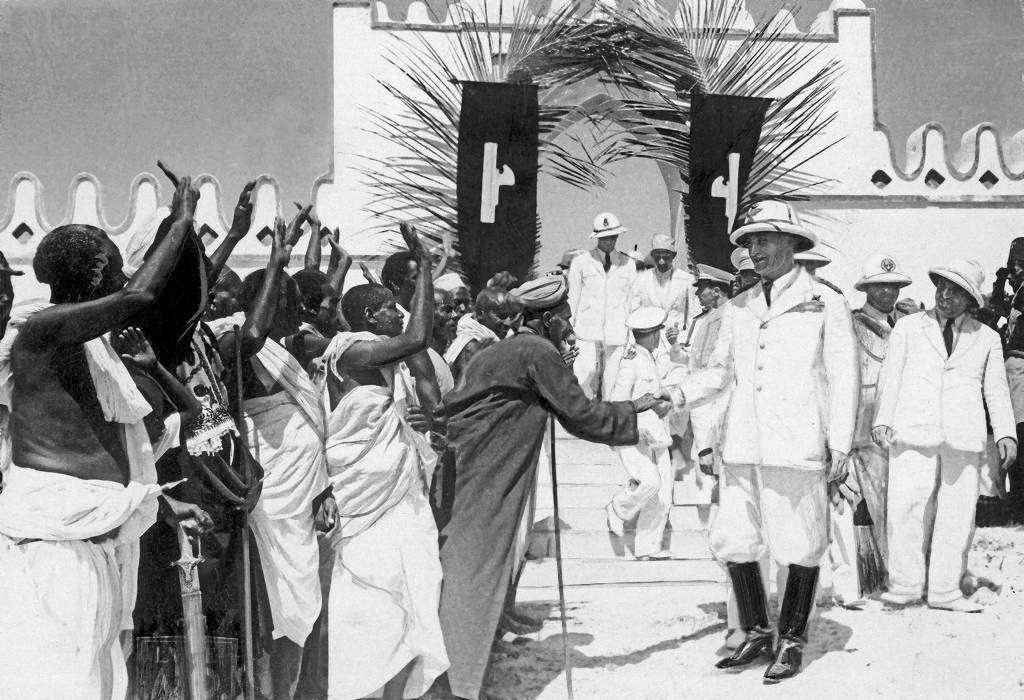
Not long after the first foothold in Eritrea was established, Italy also gained new territory on the southern side of the Horn of Africa in Somalia. In 1888 Sultan Yusuf Ali Kenadid of Hobyo made his province an Italian protectorate. The following year the Sultan of Majeerteenia did the same and the colony of Italian Somaliland was established. Here, development was somewhat slower as the Italians left local affairs in the hands of the local rulers, paid them a pension and focused on foreign relations, defense and the establishment of port facilities. In 1905 the Italian government decided to establish a formal colony in the region, partly because it was discovered that the local company had been turning a blind eye to the continued operation of the slave trade in the region. By 1908 the legal formalities were finished to establish Italian Somaliland as a formal colony. The most determined problem, early on, was the trouble caused by Muhammad Abdullah Hassan, aka “the Mad Mullah” but that violent movement was duly done away with and in the Twentieth Century development began to spread from the coast further inland.

Prince Luigi Amedeo formed an Italian-Somaliland Agricultural Society that established new, model plantations in the colony for the growing of sugar, bananas and cotton. The same year, 1920, saw the first modern bank established in Somalia when the Banca d’Italia opened a branch in Mogadishu. Surveys were done, after which more development proceeded such as the establishment of model farms, schools and hospitals. Before the end of the decade, Crown Prince Umberto had come to witness the opening of a new Catholic cathedral in Mogadishu and the region’s first international airport was established. The Sultan of Hobyo was usually very loyal to the Italians, the only problem occurring when he was excepted to allow British troops to land in his territory and Somalis tended to resent the British for their colonial rule over Somali tribes in the north (British Somaliland). After this, the Sultan was replaced by the Italian authorities and the population was disarmed but there were no major problems in the future and the Italians continued to abide by their agreements and allow the original, northern protectorates to govern themselves in their own way. Somalians were also enlisted in the Italian colonial army and included such colorful units as a corps of camel-born artillery.

The Battle of Adowa
There were, of course, bound to be setbacks. When the Italians took control of Eritrea, one of the local chieftains who had given his approval was one Sahle Maryam of Shewa. In exchange for this, Italy gave him support such as modern weapons in defeating his rivals to take control of Ethiopia as Emperor Menelik II. A treaty was signed that was supposed to ensure peace between the two, however, there was a discrepancy in the wording as it read differently in the Italian-language and Amharic-language versions. One established, essentially, an Italian protectorate over Ethiopia and the other said that Ethiopia could have Italian protection but only if and when they wanted it. Each side, of course, accused the other of changing the text in their version, Menelik II broke off diplomatic relations with Italy, effectively declaring war. A small Italian colonial army of a little over 17,500 men was later attacked by an Ethiopian army of around 100,000 and almost totally wiped out, ending, for the time being at least, any idea of Italy establishing any sort of control or influence over Ethiopia.

Italian troops landing in Libia
However, of all overseas territories, none seemed more near at hand to Italy than Tunisia. Not only was it extremely close, but it had a sizable Italian population that had been present for a very long time. In the “Scramble for Africa” the Italian government sat back, taking the moral high road as it were, only to see Tunisia snatched up by the French. This caused quite a backlash in Italy and a renewed effort to make sure that such a thing did not happen again with the other north African lands south of Italy, three provinces still held by the Ottoman Sultan of Turkey, known to Italians as “the fourth shore”. Determined not to let another power snatch this region away from them, the Italian government began investing in the area and when the Turkish government started to clamp down on the increased Italian interest, Italy declared war on the Ottoman Empire in September of 1911. Italian military forces landed on the coast and quickly seized control of the major ports while the Ottoman forces, largely Arab raiders with Turkish officers, fell back into the interior to strike at any Italian attempt to move south. The situation produced a stalemate as Italy had been counting on the support of the local Arab population and resources had not been allocated for a major campaign in the desert interior of the country. The Turks, likewise, could rule the desert but proved incapable of dislodging the Italians from the coast or of challenging Italian naval supremacy.

In 1912 the Turks finally agreed to come to terms with Italy, prompted by the Italian seizure of Rhodes and other nearby islands and the threat of an attack on the Dardanelles, which all powers were anxious to avoid. The former Ottoman provinces of Tripolitania, Cyrenaica and Fezzan were ceded to Italy which, in due time, merged them into one colonial administration, resurrecting the old Roman name for the region, “Libia”. Actual Italian control, however, continued to remain mostly on the coastal region and during the First World War, attacks by Islamic insurgents, backed up by Turkey and Germany in an effort to restore Ottoman Turkish control over the whole of north Africa, forced the Italians back into the major port cities as the overwhelming bulk of Italian military strength was concentrated on the critical border region with Austria. However, all of that changed after the acquisition of power by Benito Mussolini and his Fascist party. From 1923 until 1932 a fierce irregular war raged in the region, known as the Pacification of Libya. Stopping the terrorist attacks on Italian settlers and ending the insurgency took time but finally Italian forces resorted to repressive measures and the rebellion was ended, with the primary insurgent leader actually being captured by a troop of Libyan cavalry fighting on the Italian side. The first modern roads were built, port facilities were modernized and new model farming communities were established. Much progress was made under the governorship of Air Marshal Italo Balbo and when he was killed at the start of World War II, witnesses remarked that the Libyans showed more grief than the Italians at his loss because he had made things so much better.

Victory parade in the Ethiopian capital
The next colonial acquisition for Italy was Ethiopia, which, of course, was the cause of much controversy. It was sparked by an attack on an Italian outpost which was on land that the Ethiopians claimed as their own. The fact that this was not something instigated by Italy is evident enough by the amount of time it took to transfer military forces to Eritrea and Somalia to fight the actual war. The League of Nations opposed this and the issue became larger than Ethiopia but was, rather, seen by Mussolini as a struggle against the leaders of the existing international world order, embodied by the League. The fighting was harsh but, in the end, Italian forces conquered Ethiopia in seven months and merged it, administratively, with Eritrea and Somalia into “Italian East Africa”. Tensions were high at first and when the Viceroy, Marshal of Italy Rodolfo Graziani, was badly wounded in an assassination attempt, there were bloody reprisals. However, he was replaced by the Duke of Aosta under whose administration the country was at peace and began to see considerable improvements, including the abolition of slavery in the country. Plans for the modernization of the capital and other projects were ultimately canceled by the outbreak of World War II.

Italian troops enter Durazzo, Albania
The Kingdom of Albania was occupied by Italian forces with practically no opposition by the native population shortly before the outbreak of World War II, however, again, the fact that Italy joined World War II so shortly thereafter, and the Italian presence was removed after 1943, meant that the Italians were able to have very little impact on Albania. Although, it is worth pointing out, that the period of union with Italy, following the conquest of Greece and Yugoslavia, was the only time that the nationalist goal of “Greater Albania” was actually achieved, albeit for a short time. Before World War II had ended, all Italian colonial possessions were, of course, taken away and given independence or, short of that, given nominal independence under the temporary stewardship of a parent country. It is worth pointing out though that, at the time of Italian entry into World War II, there was no widespread opposition to Italian rule in any of the colonies.

The Italian presence in Albania was not entirely welcomed but not entirely opposed either and most of those in the Albanian government had previously been in the government of Ahmed Zog, the previous potentate of the country. Libya, Eritrea and Somalia were all quite calm and peaceful under Italian rule, the only place where any opposition at all existed was in Ethiopia. That is understandable given that, unlike all the others, the Ethiopians had a history as a previously independent country with their own sense of nationhood. However, even there, serious opposition had been dealt with and most accepted the change and got on with things. In fact, of all the colonial troops who served in the Italian royal army in World War II, the only native soldier to earn the highest Italian decoration for bravery was an Ethiopian. So, even there, considerable levels of support and devotion did exist. What is illustrative of the Italian colonial enterprise overall, and why Italians should not be ashamed of their short-lived period of imperialism, is the fate of the former Italian colonies after Italian rule was removed and these places became independent.

Colonial Mogadishu
The Kingdom of Albania was occupied by the Germans and then, after the Allied victory in World War II, fell to the communists of Enver Hoxha who established a Marxist tyranny, so fanatical and so murderous that it alienated Stalinist Russia, Maoist China and Tito’s Yugoslavia in turn. Albania fell into oppressive poverty and had the lowest standard of living of any European country. To this day, it has not fully recovered. Italian East Africa was occupied by the Allies (mostly British imperial troops) and broken up into the countries that exist today. Somalia was under the military administration of Britain and became nominally independent though in 1949 stewardship over the country was given to the Italian Republic until 1960 when it was joined with the former British colony of British Somaliland to create the country as we know it today. And, as we know, Somalia has become the go-to example in the world for a “failed state”, being reduced by poverty, crime and internal warfare to a state of total chaos. When one thinks of Somalia today it is only as a place of anarchy, warlords and a nest of pirates. Somalis have fled their failed independent homeland in huge numbers, going as far abroad as Minnesota and Sweden to get as far away from their nightmarish native land as possible.

Asmara station, Eritrea
In Eritrea, the first Italian colony, the British military ruled the place until 1950 because no one could decide what to do with it. One person who knew exactly what he wanted to do with it was the de-throned Emperor of Ethiopia Haile Selassie who was pushing for Allied support for the Ethiopian annexation of Eritrea even before British imperial forces had set him back on his own throne. The United Nations, in the 1950’s, finally agreed that Eritrea would be joined with Ethiopia in a “federation” with Eritrea officially remaining independent. That charade ended in 1962 when Haile Selassie dissolved the Eritrean parliament and unilaterally declared the country to be part of Ethiopia. Not surprisingly, war broke out immediately as the Eritreans fought the Ethiopians in a brutal conflict that spanned the next thirty years, only ending when the Eritreans made an alliance with a faction of Ethiopian rebels after which the UN stepped in to hold a referendum. This, of course, resulted in the Eritreans voting for their independence in 1993. Eritrea got it, established a dictatorship and haven’t had another exercise in democracy since. Needless to say, thirty years of war, terrorism and finally Marxist dictatorship have left the country an impoverished wreck.

Haile Selassie & Winston Churchill
Ethiopia, again, is really in a class by itself and cannot entirely be compared to the others. Still, the post-Italian period has not been pleasant for the country, though it would also be worse than the pre-Italian period as well. Haile Selassie was put back in control of the country and money poured in from the victorious Allies through various aid funds. Still, this did not benefit the country overall as serious divisions and problems remained which Haile Selassie struggled to deal with. He championed the cause of pan-African unity and opposition to European colonialism in Africa (even while imposing his own sort of colonial rule over the unwilling population of Eritrea) but this ultimately proved to be not so beneficial to the “Conquering Lion of Judah” as he styled himself. Most of the anti-colonial movements in Africa were communist and after some particularly hard times the communists managed to overthrow Haile Selassie in 1974. This time there was no British Empire to put him back on his throne again and he was murdered the following year. His replacement was a communist dictatorship so vicious and so oppressive that it must rank among the very worst in the entire world. Oppression, murder and misery prevailed to the point that the very name of Ethiopia became synonymous with “starvation” in the rest of the world. Again, even after the communist regime officially fell, the country has still not recovered from the decades of murderous misery the communists inflicted on it.

King Idris
Finally, we have the case of Libya. British military rule gave way to the creation of a new monarchy under the former Emir of Cyrenaica who became King Idris I of Libya in 1951. The British and Americans established close ties with the new regime, built military bases there and in 1959 Exxon discovered vast deposits of oil in the country which changed things considerably. New wealth brought greater resentment and efforts to promote unity failed, mostly because neither the King himself nor any of his people recognized him as a “Libyan” but rather as the Emir of Cyrenaica who had been imposed by western powers over the whole country. He was accused of favoring his own circle when it came to dishing out the oil revenues and of being too friendly with foreign powers and foreign oil companies. This culminated in King Idris being overthrown while on holiday by a military coup led by Colonel Muammar Gaddafi in 1969.

Gaddafi with African chiefs
Gaddafi, as we know, established a brutal and farcical dictatorship over the country, marked by tyranny at home, support for terrorism abroad and for the increasingly bizarre behavior of Gaddafi himself. Whether it was his painfully long orations at the UN, his threats of war against Switzerland or his bevy of buxom female bodyguards, no one could accuse Gaddafi of being boring. He also used the threat of floods of illegal immigrants to extort huge financial benefits as well as groveling apologies from the Italian government. In 2011 the hated dictator was overthrown, with air support from NATO, and given mob justice on the streets of Sirte. Since that time, Libya has fallen into chaos and is increasingly becoming a hotbed of terrorism, economically stagnant, politically unstable and extremely dangerous. Certainly, a far cry from what it had been during the tenure of Air Marshal Italo Balbo to be sure. And this in a country, it is worth remembering, where Italian-born Roman legions marched long before the first Arab ever cross the Sinai or the name of Mohammed was known to the world.

The wartime peak of Italian expansion
No, the historical record clearly shows that Italians have no reason to feel ashamed of their colonial past overall. Certainly there were unpleasant episodes in a couple of places but, on the whole, these parts of the world often saw their only periods of sustained stability and progress while under the Italian flag and the Crown of Savoy. Without exception, none of them have fared better after Italian rule was withdrawn. On the contrary, their record as independent states has been a record of failure. That does not mean, of course, that anyone in any of these places is nostalgic for the colonial past. National and racial awareness exists today in a way that did not exist in those days, though it is interesting to note that the Albanian government recently requested the return of the Italian military to deal with the influx of illegal immigrants (aka “refugees”) into their country, many of them fleeing former Italian colonies that have since become failed states. That, in itself, rather tells the story doesn’t it? European rule once came to Africa and, now that it is gone, Africans (and others) are now coming to Europe to live once more under their former imperial rulers.

Saturday, July 23, 2016

If Japan is Fascist, Then So Are You

Last week, the conservative periodical “National Review” took time out from calling Donald Trump a fascist to take a swing at America’s most important ally in East Asia with an article by Josh Gelernter called, “Japan Reverts to Fascism”. The author wrote with great alarm that Shinzo Abe’s Liberal Democratic Party and the coalition it leads recently won a large enough majority in both houses of the legislature to amend the Japanese constitution, the constitution which Japan has had since the end of World War II and which has never been amended to date. He describes all of the ways that, in his mind, Japan is reverting to a fascist state which seems an odd thing for a conservative American magazine to say about a conservative government that is America’s staunchest ally in the region and easily one of our most important allies in the world. Calling someone a “fascist” is usually the trademark of the left. In fact, today, about the only definition of a fascist is anyone who the left doesn’t like. It is a bizarre and inflammatory accusation to make just at the outset. But, he made it and so must back it up. What evidence does Mr. Gelernter present to justify such an accusation?

He begins by pointing out that Prime Minister Abe and many of his compatriots belong to a nationalist group called Nippon Kaigi which portrays the Japanese as the ‘good guys’ in World War II who were simply trying to liberate East Asia from the clutches of the wicked white race only to become the victims of the overpowering force of the Allies. This is, admittedly, his strongest point as a failure to understand and recognize the mistakes of the past leaves a country vulnerable to repeating them and World War II was certainly a mistake for Japan. The Empire of Japan was destroyed by it, so obviously that wasn’t good for Japan or anyone else. However, as troubled as people in the west have every right to be about being vilified, the effort to refute the vilification of Japan is not something that should be considered troubling or at all unusual. Western countries have done immense damage to themselves by indulging in a masochistic guilt-complex and Japan would be wise to avoid a similar mistake. Also, the fact that the Japanese would have a different point of view, whether you think it right or wrong, about World War II should not be considered that outrageous.

For the sake of a largely American audience, allow me to point to some examples that will best illustrate why this is a double-standard. Most Canadians have a very different view of the War of 1812 than most Americans. Most Mexicans think they were the ‘good guys’ in the War for Texas Independence and the Mexican-American War. Although it is not the case today, for much of American history, most British people had a very different view of the American War for Independence than most people in the United States. Does this bother anyone today? Again, until relatively recently, most Americans in the south still thought they were the ‘good guys’ and the United States were the ‘bad guys’ in the Civil War. It is actually normal for countries to have different points of view about conflicts depending on which side you were on. Now, Japan has not been entirely consistent on this point, particularly concerning the other Axis powers Japan willingly joined before the war started but it is perfectly natural for any country to give their own side the benefit of the doubt compared to others. I could also point out that China and Russia also both have different opinions about World War II compared to the western Allies but no one seems to mind that very much.

However, while that first exhibit on the part of Mr. Gelernter may have some, small, bit of merit to it as something America and other western countries should be concerned about, his case goes from that rather shaky bit of ground to fall headlong into a bottomless pit of ridiculousness. He says that the people in power in Japan are still mad about the Japanese Emperor being forced to renounce his divine status, which is something that is debatable but which, in any event, is something that anyone in Japan should have every right to be upset about. He mentioned fairly early in the piece, which I reserved bringing up until now, that part of the proposed amendments to the constitution that the Japanese government is seeking were described by the LDP with the words, “several of the current constitutional provisions are based on the Western European theory of natural human rights; such provisions therefore [need] to be changed.” Mr. Gelernter takes great exception to there being anything objectionable about “Western European theory of natural human rights”. However, isn’t one of those human rights the freedom of religion? Shouldn’t the Japanese be free to practice the form of Shinto, their own native faith, however they choose? Don’t they have the freedom to believe in the divinity of their Emperor just as other people believe in the divinity of Jesus? Isn’t this one of the main points of the version of human rights he’s defending?

This is why I say that, by the logic of Josh Gelernter, if the Japanese are fascists, then so are you, so am I, so is almost everyone reading these lines. Does wishing to worship according to your own beliefs make you a fascist? He goes on from there to point to such things as people flying the Japanese naval ensign, aka “the Rising Sun” flag which was formerly the flag of the Imperial Japanese Navy, is currently the flag of the Japanese Maritime Self-Defense Force and so has been in use long before World War II and is still in use today. Does flying a flag of your country make you a fascist? Probably the most absurd thing he points to as evidence, however, is the Japanese national anthem. He seems to have an obsessive paranoia about this song, the lyrics of which are the oldest national anthem in the world so, again, something that was around long before World War II, long before fascism ever existed. It is a song wishing for a long reign for the Emperor which makes it about as “controversial” as the British national anthem, “God Save the Queen”. Does singing your own national anthem make you a fascist? If you think that is a silly question, why does this only seem to apply to Japan whereas in every other country, flying a historic flag or singing your national anthem is considered the most basic and inoffensive forms of patriotism and nothing sinister at all?

He also points to certain words and international rankings about the media to imply that freedom of the press is being restricted in Japan. He warns that the NHK, the state broadcasting network, is a mouthpiece for the government, implying that it spouts nothing but right-wing propaganda. Anyone can watch the NHK (it has an English-language channel) and see for themselves that this is ridiculous. If anything, the content on NHK is viewed by most Japanese on the political right as being skewed toward the left. This should not be considered surprising given that anyone with any honesty will say the same about the BBC in Britain, the CBC in Canada or the ABC in Australia. In the United States, given what is put out by the likes of CNN, MSNBC or FNC, I have a hard time taking such concerns about Japan seriously. The media itself is the biggest threat to a free press these days given how widespread, around the world, dishonesty and bias is. There is a reason why most Americans, in a country that prides itself on its free press, considers the media extremely dishonest and untrustworthy.

Finally, he also mentions the changes regarding the armed forces in Japan and the degree to which Japan has recently been strengthening the Self-Defense Forces. For an American conservative magazine to make an issue of this is appallingly ignorant. The United States has been urging Japan for decades to strengthen itself so as to be a stronger ally. A strong ally is a help whereas a weak ally is liability. That is a fact so basic that anyone should be able to grasp it. Japan is also in a very dangerous neighborhood. Russia still occupies Japanese territory, North Korea is constantly firing missiles in their direction and Communist China has been building up its military forces at an alarming rate while also making claims to Japanese territory. Any other country in the world with any sense at all would be doing everything they could to strengthen themselves in such a position. I will say again, if flying a flag, singing the national anthem and wanting a strong military is evidence of fascism, then almost every other country in the world would be considered fascist as well.

No, there is obviously a double-standard at work here and it just might have to do with those “Western European” theories about human rights Mr. Gelernter is so fond of. The nations of Western Europe and North America have, sadly, adopted a very liberal, internationalist mindset and guilt-complex that is destroying western civilization. An entire people seems bent on suicide and the people of Japan would only be showing great wisdom in wishing to take a different path. Are we holding up these same values at all anymore anyway? Freedom of religion is one Mr. Gelernter does not seem willing to extend to Japan and in the west it seems these days that some religions have more freedom than others. Freedom of speech also seems to be ever more restricted these days. Freedom of assembly doesn’t seem to be evenly applied anymore, it depends on what you are assembling for. Did anyone notice that the Bush family boycotted the recent Republican National Convention? I know, they oppose Donald Trump but it certainly paints an odd picture that a man like George W. Bush who would go to war to spread democracy would stay home and pout when the democratic process in his own party does not go the way he wanted it to.

The left, and now apparently the National Review, has become so fond of labeling anyone they disagree with a “fascist” that the term has effectively lost its sting. Taking a righteous pride in the symbols of your own country, like your flag or your anthem, to revere your monarch, to want strength and security for your nation and, yes, even to defend the honor of your forefathers should not be considered negative things and the fact that some would shows only that there is something very wrong with them, not with Japan. Of course, anyone can agree or disagree with certain points taken by the Japanese government, one can agree or disagree with their views on World War II but to make such accusations as this article does, for the reasons that it does, is simply disgusting and more alarming than anything coming from Tokyo. To love your country, to wish it to be strong and secure and to take your own side in an argument is natural and would previously have been accepted by everyone as simple common sense. If, however, that is the current measure of what it means to be a fascist, then, all I can say, is that the western democracies must owe a profound apology to the spirit of Mussolini.
Related Posts Plugin for WordPress, Blogger...