With all the trouble Greece is going through at the moment, I thought we might take a look back at some of the great mythological heroes of the ancient Greeks, all of them princes or kings of some variety, and we will start with one who is possibly the best known Greek hero in the wider world: Perseus. Why is he the best known? I don’t think most schools teach Greek mythology anymore (they did when I was there) but most probably know about him because he’s been in the movies. Yes, there were a few, the best known being one pretty good one featuring Sir Laurence Olivier and the guy from L.A. Law and more recently a really terrible one starring lots of CGI. The problem with that is that now a whole lot of people have a really warped view of the whole Perseus story because all they know is what they’ve seen in the movies. Let me state for the record that in the actual story there was no clockwork owl, no detour to hell and, most importantly, no Kraken! I will say this once and only once: the Kraken was a Viking sea monster best as I recall, had nothing to do with the Greeks or any Caribbean pirates with lots of eye-shadow. Why he came to be the generic, all-purpose sea monster for movies, I don’t know, but he had nothing to do with Perseus. He was probably in the North Sea trying to chat up the Mitgard serpent at the time.
So, there was Perseus, who was the son of Zeus (Jupiter), the big man on campus where the gods hung out, and Danae who was the daughter of King Acrisius of Argos. The King had been told by a fortuneteller (maybe he called Miss Cleo for his free reading) that Danae would have a son who would kill him, so he wanted to make darn sure she never got pregnant. So, he locked her up in a full-body chastity belt but Zeus turned himself into a shower of gold (sounds a bit perverted), seeped in and had his way with her and nine months later she gave birth to a healthy baby man-god named Perseus. King Acrisius was pretty freaked out about this but he didn’t want to kill the son of a god, or a god’s ‘friend with benefits’ so he sealed them in a box and tossed them out to sea. A fisherman found them and took them in and the fisherman happened to be the brother of King Polydectes, ruler of the island. Well, when you’re pretty enough to turn the head of a married god, even after being locked in a box at sea Danae was still gorgeous enough to throw a craving on old Polydectes. Perseus, who was growing up fast, didn’t like that and told the King to go take a cold shower so the King decided that Perseus had to go.
The King threw himself a party but when Perseus arrived he forgot to bring the King a present. Oops! I’m sure Polydectes was saying, “What? No present? I save your life, the life of your mother, I take you both in and you can’t even bring me a blender? A necktie, cufflinks, nothing? Ungrateful little snot!” Not wanting to appear rude, Perseus promised to get the King any gift at all that he desired. Aha! Opportunity knocks! Polydectes therefore asks Perseus to bring him the head of the Gorgon Medusa. As most probably know, Medusa was a gorgeous woman with lovely long hair who made the sea god Poseidon mad with lust and the two got freaky in the Temple of Athena. Well, the goddess caught them in the act and was thoroughly outraged and turned Medusa into a horrible monster with snakes for hair who would cause any living thing to turn to stone simply by looking at her. So, important safety tip for anyone going to Greece: don’t do the nasty in a temple -it’s not a good idea. But, Perseus has to kill this woman-monster thing, because he promised and he’ll look really bad if he doesn’t keep his word. But, he knows he will need help to do it and he doesn’t even know where to find Medusa. However, Athena was still nursing her grudge and she gives Perseus a little hint, telling him where to find some of the other sisters of the Gorgon sisters who can tell him where to find her and where to get help.
These were the Grey Sisters; Dread, Horror and Alarm who were really, really old (AARP members) and who had to share one tooth and one eye between them. So, Perseus goes to see them, snatches their eye while they are passing it around and thus forces them to answer his questions. They tell him where to find the nymphs who can give him the tools he needs to kill Medusa and where to find the rather reclusive reptile-woman herself. So, he goes to the nymphs who give him a magic bag to hold Medusa’s head and the other gods pitch in as well since, after all, it wouldn’t look for good for a half-god to be done in on an epic quest now would it? Zeus gives his illegitimate son a magic sword that can cut through anything, Hades gives him a magic helmet that allows him to disappear into the darkness, Athena gave him a really shiny, well polished shield and Hermes lent him his flying sandals. Quite a haul, thanks Pop! So, with all his supernatural accoutrements Perseus heads out to the cave where the Gorgons live.
He found them and there was an epic battle of the ages, man against monster … well, not really. Actually, Perseus slipped in while the three were asleep, looked at Medusa’s reflection in his shield so he wouldn’t turn to stone and cut her head off before anyone knew he was there. Her two sisters woke up, quite outraged (they were immortal so their ugly sister didn’t turn them to stone) took after Perseus to kill him but he slapped on his trusty “Helmet of Darkness” and slipped away. It was from the neck of the dead Medusa that the flying horse Pegasus sprang but, although he features prominently in all the movies, Pegasus really didn’t have much to do with this story. Who needs to worry about taking care of a horse when you have magic flying sandals? Perseus puts Medusa’s head in his magic bag and is flying back home when he happens to pass by the Kingdom of Ethiopia (not the one in Africa, this was before that) and he sees a devastatingly gorgeous girl chained to a rock about to be eaten by a giant sea monster. What? What’s that? Does someone require a dashing hero to save the pretty, helpless, damsel in distress? Perseus to the rescue! In most modern tellings of this tale, saving this down-on-her-luck babe is the whole point of killing Medusa but, in fact, it was all purely coincidental. Perseus just happened to be flying by at the right place at the right time.
Here’s what happened. The girl was Princess Andromeda, daughter of King Cepheus and Queen Cassiopeia. Queen Cassiopeia was rather haughty, rather vain and probably starred in the reality show “Real Housewives of Ethiopia”. She thought she was the most gorgeous thing ever and that probably would have been okay until she said, really loudly, that she was prettier than the sea god Poseidon’s current sea-nymph girlfriend was and then there was this whole big cat fight. We can imagine the sea nymph running up to Poseidon, “Did you hear what she said? You’re not going to let her say that are you? She’s nowhere near as pretty as me! If you really thought I was prettiest you would do something horrible to that woman. Or do you agree with her? You think I’m ugly don’t you!” (stomps out at slams the door -really loudly for added effect). So, to get some peace, Poseidon has to smite the Ethiopians. He goes to Italy and releases the monstrous beast called Mussolini who goes …. No, no, sorry, I’m getting mixed up here, sorry, different country. No, Poseidon sends a big sea monster to terrorize Ethiopia. The Oracle of Apollo informs them that Princess Andromeda must be sacrificed to the monster to make it go away.
Perseus swoops down and saves the vivacious victim by turning the sea monster to stone using the head of Medusa. The sea monster, who was not the Kraken who was not a Titan didn’t even really have a name. The story says “Cetus” but that was a name for pretty much anything big and scary that lived in the sea. Anyway, Cetus became Ethiopia’s biggest seaside statue and Perseus decides he wants to marry Princess Andromeda. She probably looked really hot chained to that stone with her pouty lips and tear-filled eyes. Problem is she’s already engaged. Awkward! What is a princess to do? Marry the man she’d already promised to or marry the half-god man who saved her from the sea monster? It hardly seems fair but, Perseus makes it easy by whipping out his trusty head of Medusa and turning her old flame to Stone Cold Steve Austin. Perseus flies back home, turns Polydectes to stone and frees his mother to marry her true love Dictys (wonder how he got that name) though while flying over Libya he spilled some of Medusa’s blood on the sand and created a race of monstrous serpents. Oops! But eventually they died, became petroleum and supported a notorious dictator for several decades. Perseus takes Andromeda back to Argos to claim his original throne and they live happily ever after, making babies who eventually became the Persians. Or something like that. It had to be a pretty happy marriage. I bet Andromeda never nagged her husband. “What’s that dear? You don’t feel like doing the dishes? Well, it’s a good thing I ‘DID feel like it’ when you were chained to that rock by your psycho mother about to be eaten alive by a giant sea snake…Yeah, that’s what I thought. And bring me a beer!”
And so, there you have it, the story of the mythological Greek hero Perseus according to The Mythically Mad Monarchist.
Friday, May 11, 2012
Thursday, May 10, 2012
Papal Profile: Pope Benedict XVI
The first pontiff of the Third Millenium, Pope Benedict XVI was born Joseph Alois Ratzinger in the small Bavarian town of Marktl am Inn on Holy Saturday, 1927. His father was a policeman and his mother was from the Austrian region of Tyrol, and both were devout Catholics. His father retired in 1927 and the family tried their best to avoid the expanding Nazi regime of Adolf Hitler, Ratzinger's father being a known critic of the Nazis -the same party which dismissed Catholicism as a religion of "Jews and Romans". He escaped service throughout most of World War II because of his age, but as the situation grew worse he was forced into the Air Force in 1943 but never served in any combat role. Later he was pressed into the labor corps where he worked in Eastern Europe before being released and drafted into the army, but his unit never went to the front. Before the war ended, young Joseph deserted at the risk of his life because of his opposition to the Nazi regime. He knew he had a religious calling and was determined to spend his life serving the Church.
After attending the seminary, where he did very well having a reputation as a very intelligent, devout and scholarly young man with an "angelic" singing voice, he was ordained a priest in 1951 along with his older brother Georg. He continued his studies and in 1958 became a professor at Freising College. The following year he took a post at the University of Bonn where he served until 1963 when he transferred to the University of Munster. His reputation had become so great that Joseph Cardinal Frings of Koeln, Germany took Fr. Ratzinger with him as his theologian to the Second Vatican Council. Ratzinger was included as one of the reformers of Vatican II, but would later write extensively on the need to "reform the reforms" of the council. Like many at the time, he thought the changes outlined by the Council were necessary but that these were often implemented in such a way as to remove any value or even be harmful to the Church and its work.
In 1966 Ratzinger went to work at the University of Tuebingen, but later resigned because of the increasing acceptance of secularism, atheism and Marxism. He became an outspoken but very thoughtful critic of such rising world-wide trends as materialism, communism, liberalism and the acceptance of homosexuality. In March of 1977 Ratzinger was named Archbishop of Munich and Freising, taking as his motto, "be co-workers in the truth". Three years later he was given the rank of cardinal by HH Pope Paul VI. Shortly after the accession of Pope John Paul II, Cardinal Ratzinger was named Prefect of the Congregation for the Doctrine of the Faith in 1981. This office, known as the Holy Office of the Inquisition before Pope St Pius X changed it in 1908, made Cardinal Ratzinger the chief enforcer of orthodox doctrine for the Church. The former Holy Office couldn’t have been in better hands.
While doing his duty in this office, Cardinal Ratzinger gained many friends and more than a few enemies because of his firm determination to uphold Catholic doctrine. Some of the issues he tackled which gained him fame and notoriety were his writings explaining that Catholics who voted for pro-abortion politicians were cooperating with a sinful act, that women could not be ordained priests, that homosexuality was wrong and homosexual marriages an absolute sacrilege and firmly upholding the supremacy of the Catholic Church as the one, true church founded by Christ for the salvation of the world. Many non-Catholics were outraged by this as were many Catholics (or “Catholics”) who had been advocating that the Church embrace things like abortion, gay “marriage” and ordain women. While Cardinal Ratzinger was on guard, such agendas were certain to go nowhere. As he grew older, Cardinal Ratzinger tried several times to retire, but Pope John Paul II would not let this most devout and faithful cardinal go. Finally, as Dean of the College of Cardinals, Ratzinger had the sad duty of presiding over the funeral of Pope John Paul II after his death on April 2, 2005.
After the traditional conclave, on the second day of voting, April 19, 2005 Cardinal Ratzinger was elected to the Throne of St Peter, taking the name of Benedict XVI. He announced that the goals of his reign would be to unite all Christians, resist the creeping secularism in the world and uphold the truth and purity of the Church's teaching. Benedict XVI, at 78, is the oldest man elected to the See of Peter since Pope Clement XII in 1730 and is the seventh German pope in history. Many worried that Benedict XVI would be far too authoritarian, but have quickly discovered the warmth, humor and humility of the new Pope. He has spoken out of the need to battle the "dictatorship of relativism" and to unite all Christians without any compromise to the truth because of the pressure of the modern world. This has led to some controversies as the Pope has dealt with other religions though in virtually every case it was a case of hyper-sensitivity or feigned moral outrage rather than any extremism on the part of the Pontiff. Eyebrows were raised when the Pope categorized the Catholic and Orthodox communities as churches but the Protestants as Christian sects. This was, of course, simply a reference to the Apostolic Succession which, generally, Protestants do not consider significant anyway. Venezuelan dictator Hugo Chavez, among others, also expressed outrage when the Pontiff, while visiting South America, said that the indigenous peoples were ’silently longing’ for Christianity. Many people seemed to ignore the basic truth that any Christian would (or should) believe that everyone is longing for Christianity, consciously or not.
Benedict XVI has made sincere efforts at outreach to people of other religious beliefs but many in the secular world cannot see that or understand how the Pope could do so while refusing to compromise the teachings of the Catholic Church. While not relenting in pursuit of the goal of Christian and religious unity, the Pope has also made it clear that past efforts at times mistakenly gave the impression that all beliefs are the same, an impression he has worked to correct, viewing it as another aspect of the tyranny of relativism which he has devoted his reign to opposing. This has also fit in with the noticeably more traditional style of Pope Benedict XVI. Since his election he has elevated the traditional form of the mass (in the Latin language) within the Church, insisted on a more traditional and reverent pose for those receiving communion and has adopted more traditional style vestments than have been seen in recent times. He has also enacted special guidelines to welcome in disgruntled traditional Christians into the Catholic Church, specifically from the Church of England where the embrace of the ordination of women, gay “marriage” and other issues have caused many old-fashioned Anglicans to turn to Rome.
In the past, moves in this direction were often discouraged by many Catholic officials for fear that anything seen as “traditional” would put off younger Catholics and drive people out of the Church. Pope Benedict XVI doesn’t seem to be buying that line of thought. In fact, the Pope has spoken out on several occasions that he believes the Church must hold ever more strongly to traditional truth even while Catholicism may be reduced to small (but devout) isolated communities in a sea of secularism and irreligion. The choice of his reigning name reflects this as well, calling to mind St Benedict, that a new “Dark Ages” is coming which the Church will have to endure, protecting what they have inherited, before going out to start the work of conversion all over again. The quality and ability of Pope Benedict XVI can be easily gauged by simply asking Catholics their opinion of him. Some will have unqualified praise while others will have nothing but criticism. However, it is those who actually attend Church regularly and believe in Church teachings (even the really difficult ones) who think well of him and those who are more ‘Catholics in name only’ who do not. There should be no doubt that, from a Catholic perspective, for devoted Catholics, Benedict XVI has been a great Pontiff. Those who criticize him are generally those who favor innovation and do not view Church history and tradition with great respect. In other words, generally the sort whose criticism speaks well for the person in question.
Wednesday, May 9, 2012
The Crown Passes to Umberto II
It was on this day in 1946 that, with the abdication of HM King Vittorio
Emanuele III, the Italian throne passed to his son, the last to occupy it, HM
King Umberto II. He had already served some time as effective head-of-state
since his father had semi-retired and made the Prince of Piedmont the
"Lieutenant General of the Realm". In that capacity he had worked well with the
Allied commanders on the scene, who were impressed by his devotion to his
country and his diligence. However, most of the Allied governments were opposed
to him and to the continuation of the Kingdom of Italy to varying degrees. He
appointed new ministers, bringing in representatives from every level of
society. Because the question of whether Italy would remain a monarchy or become
a republic had not been settled, in an effort at even-handed fairness, King
Umberto II did not require his new ministers to take the usual oath of
allegiance to him, though Ivanoe Bonomi chose to do so anyway. In an interview
he said that, after the fascist era, Italy would have to move to the left but
that the monarchy was needed to stabilize the country during such a shift and
warned that a republic could lead to a presidential dictatorship. He also
pledged considerable reforms to the Italian constitution.
However, the Allied powers were not receptive to the efforts of King Umberto II to encourage friendship and closer cooperation. He supported Italy becoming a fully independent member of the western alliance, already envisioned at that time because of the growing communist force in the east and hoped that by showing good faith the Kingdom of Italy would be allowed to keep her colonies (gained before the Fascists came to power) and be given a fair and just frontier with Yugoslavia. All of these efforts were blocked, partly because of the attitudes of the Allies themselves and partly because of pressure brought on them by their Soviet partners. They refused to permit the printing of monarchist newspapers and when the King asked British Prime Minister Churchill for a message of support for the Italian Crown he was met only with silence. The other powers proved unwilling to grant the slightest favor to the side which had turned Italy from an enemy into an ally, even though previously great promises had been made to Mussolini if he would only have done the same. It is ironic that what had been offered to the Duce by his enemies would not be granted to the King who had always opposed him. Whereas Mussolini had been offered the restoration of all pre-war Italian territory and even territorial gains in the Balkans if he would abandon the Axis, after the King did just this, Italy was to gain nothing, maintain nothing and lose everything.
King Umberto II came to
the throne with a great deal more support, among Italians at least, than he is
usually given credit for. He was very popular with the army (most of whom would
not be allowed to vote in the upcoming referendum), those on the right and the
moderate left supported him (the center was ambiguous) and he was well liked by
the Vatican because of his sincere Catholic faith. The biggest obstacles to his
short reign were the communists, whose partisan bands re-emerged as soon as the
Fascist threat had passed, and the die-hard Fascists of Mussolini's puppet
Social Republic. It would certainly have been better for Italy and for the
Allies themselves to have supported the King in standing opposed to these
revolutionary factions. With the country under occupation, there was very little
the King could do to support his own cause so long as the Allies remained
opposed or at best indifferent to him. The referendum went ahead, rigged though
it was, and King Umberto II agreed to abide by the outcome, knowing it had been
unfair, because he refused to see his already war-torn country thrown into
conflict again. Today we can see very well the results of his exile and the
downfall of the monarchy. Italy is deeply in debt thanks to a political class
that buys votes (and are the most lavishly paid in Europe), the country is
divided, an un-elected Prime Minister runs the government and a communist is
President. HM King Vittorio Emanuele III had predicted that a republic would be
the ruin of Italy and that only the communists would benefit from it. His
foresight could not have been more accurate.
However, the Allied powers were not receptive to the efforts of King Umberto II to encourage friendship and closer cooperation. He supported Italy becoming a fully independent member of the western alliance, already envisioned at that time because of the growing communist force in the east and hoped that by showing good faith the Kingdom of Italy would be allowed to keep her colonies (gained before the Fascists came to power) and be given a fair and just frontier with Yugoslavia. All of these efforts were blocked, partly because of the attitudes of the Allies themselves and partly because of pressure brought on them by their Soviet partners. They refused to permit the printing of monarchist newspapers and when the King asked British Prime Minister Churchill for a message of support for the Italian Crown he was met only with silence. The other powers proved unwilling to grant the slightest favor to the side which had turned Italy from an enemy into an ally, even though previously great promises had been made to Mussolini if he would only have done the same. It is ironic that what had been offered to the Duce by his enemies would not be granted to the King who had always opposed him. Whereas Mussolini had been offered the restoration of all pre-war Italian territory and even territorial gains in the Balkans if he would abandon the Axis, after the King did just this, Italy was to gain nothing, maintain nothing and lose everything.
Royal Regalia: Symbols of Imperial Vietnam
![]() |
| The Imperial headdress |
![]() |
| In full formal attire |
The original seal used by the Nguyen Dynasty came from the Great Qing Empire in Peking along with the recognition by the Manchu Dynasty of the Nguyen right to rule Vietnam. As with many neighboring countries, China and Vietnam had a relationship whereby the Vietnamese recognized the senior position of Imperial China, and would call on China for help if attacked by an outside force, while Vietnam remained independent and self-governing. For the sake of peaceful relations, the rulers of Vietnam would deal with Peking as “kings” while dealing with their own people as “emperors”. This all changed, however, when the French arrived and when conflict broke out the Vietnamese Emperor Tu Duc called on the Qing Empire for help. The resulting Sino-French War saw China defeated and, as a result, to symbolize who the new power was in the neighborhood, the French confiscated and destroyed the original imperial seal granted by the Qing court at the start of the reign of the Nguyen Dynasty. They replaced it with another of course, of traditional design, to symbolize that France was the new protecting power or feudal overlord to put it another way.
![]() |
| Handing over the Seal and Sword |
![]() |
| The last Emperor with the seal in France |
Tuesday, May 8, 2012
Favorite Royal Images: A Royal Celebrity
Indian film star Raima Dev Sen Verma is the daughter of Moon Moon Sen and Bharat Dev Varma, a member of the Royal Family of Tripura, India. Her grandmother was Princess Ila Devi of Cooch Behar and her aunt was Maharani Gayatri Devi of Jaipur. Her great-grandmother, Princess Indira, was the only daughter of Maharaja Sayajirao Gaekwad III of Baroda.
Monday, May 7, 2012
Remembering the Dutch Empire
The Netherlands was once thought of mostly as a quaint little country of idyllic scenes. Windmills, wooden shoes and tulips. Today, sadly, it is probably best known for prostitution and marijuana bars. It is not usually thought of as an imperial power. Yet, the Netherlands was indeed once the center of a great maritime empire that stretched all around the world. The Dutch were roughly third out of the gate in the game of colonial expansion and, focusing mostly on trade and business rather than conquest and territorial acquisition, they were also extremely successful. At one time or another there was not an inhabited continent in the world that did not have a Dutch foothold on it or at least some tenuous connection to the Netherlands. Australia, for instance, was never a Dutch possession, yet they were the first to map the coastline and this explains why so many surrounding areas, from Tasmania to New Zealand, have Dutch names. In fact, before it acquired its present name, Australia was originally known as New Holland. There were Dutch settlements in North America, the Caribbean Sea, South America, Africa, India, Southeast Asia and even a special Dutch connection to Japan.
The Dutch Republic, under the guidance of the Princes of Orange, prospered rapidly after winning independence from Spain and Amsterdam became a center of international trade, ship building, navigation and finance as well as being a cultural center as well. Their first voyages to the Spice Islands of the East Indies proved so fantastically successful that Dutch merchants, explorers and privateers quickly outdid each other in daring to make their own fortunes. In 1614 the Dutch established the colony of New Netherland on the east coast of North America, originally intended as an outpost for fur trading. They established friendly relations with the Native Americans and purchased all the land they claimed, though later on there would be disputes over the nature of these transactions since American Indians lacked the European concept of buying or selling exclusive ownership. Nonetheless, this was not a case of conquerors brutalizing primitive peoples. The Dutch made a conscious effort to do everything fairly and legally in accepted business deals. The Dutch colony was famously cosmopolitan, free and tolerant. Slavery did exist but even slaves had certain rights no one could violate. In 1667 New Netherland was conquered by the English and renamed New York (in honor of the Duke of York, later King James II) but the Dutch presence remained strong and even today the flag of New York City bears the traditional Dutch colors of orange, white and blue.
A number of islands were gained in the Caribbean, most of which remain associated with the Netherlands still today, all of them very successful, versatile and prosperous. The Netherlands also controlled vast tracts of modern northern Brazil and the north coast of South America. This was during the same time when Dutch privateers reaped huge rewards by preying on Spanish and Portuguese ships carrying silver and gold mined in the Americas back to Europe. However, this position did not last long and the Dutch holdings on the South American mainland were eventually reduced to Dutch Guiana (aka Suriname today). This area had been conquered from the English in the same war in which the Dutch lost New York. Dutch Guiana was a successful colony and, it is worth pointing out, when independence was at hand in the 20th Century everyone who was able (about a third of the entire population) fled the colony (most going to The Netherlands) rather than live under an independent republican government. These people proved far-sighted for “Suriname” has proven an utter failure as an independent republic, quickly falling into the typical cycle of coups, socialist dictatorship and poverty.
Across the South Atlantic, as most know, Dutch settlers also established themselves at the southern tip of Africa. With great courage and industriousness they built a thriving little colony which was confiscated by the British during the Napoleonic Wars, like many Dutch colonies were. Unlike some others, South Africa was not returned. However, the rugged Dutch farmers moved north to establish their own farming communities (and eventually republics) and over the centuries became their own rather unique group of people. Still, their Dutch roots remain evident even today and, although not free from all criticism, the industrious Dutch settlers laid the foundation for what became, eventually, the first (and only) country in Africa to achieve the prosperity of “First World” countries.
![]() |
| Dutch troops on Formosa |
However, the crown jewel of the Dutch empire, the largest and most beneficial by far was the Dutch East Indies, which is today Indonesia. Like most of the empire, the first Dutch involvement in the region came in the time of Dutch Republic but the Dutch East Indies was probably more associated with the Kingdom of The Netherlands as the holdings of the Dutch East India Company were not consolidated into a Dutch national colony, the Dutch East Indies, until 1800, not many years before The Netherlands became a monarchy (though even as a republic the Princes of the House of Orange had provided national leadership). The Dutch East Indies was one of the most successful and beneficial colonial enterprises in history, originally benefiting from the spice trade, later from plantations and finally from the exploitation of tremendous oil reserves founded and extracted by the Dutch. For a great deal of time the Dutch presence was very limited and large parts of the archipelago remained effectively independent until the early 20th Century. Still, it was an act of tremendous skill to consider that a country as small as The Netherlands was administrator and protector of an archipelago which stressed across an area of roughly the same length as the entire continent of Europe.
![]() |
| Admiral Maarten Van Tromp |
A long period of peace, unfortunately, caused the Dutch to grow complacent whereas previously they had been known for their alert preparedness. As a result, the Nazi invasion in World War II saw The Netherlands Army woefully unprepared and ill-equipped due to a long period of budgetary neglect by the government. Still, the Dutch forces offered spirited resistance and the army was still intact when the government surrendered to spare the urban areas from German air attack. In the Far East, the tiny Dutch submarine force in the East Indies took a painful toll on Japanese shipping when Japan invaded the archipelago. In fact, in those early days, the Dutch submarine flotilla scored more successes than the entire undersea fleet of the United States Navy (whose boats were plagued by malfunctioning torpedoes). Remaining Dutch forces later joined up with the Allied forces under General Douglas MacArthur in his victorious campaign across New Guinea.
![]() |
| Colonial troops in the Dutch East Indies |
Today, with anti-colonialism still being all the rage, it is popular to cast the Dutch as the villains in this story but it is important to see things from the point of view of someone in The Netherlands or the Dutch minority in Indonesia. They had developed the inter-island trade in the archipelago that benefited everyone. It was they who had discovered the oil reserves and turned them into a profitable enterprise and it was they who had developed the islands far beyond anything they had known before. Now, a new group of radicals was threatening to take it all away. Further, by pouncing the very same year World War II ended, the Dutch felt that they were being kicked while they were down, so to speak, and by people who had allied with their enemies, not only in the East Indies but in Europe as well. They were also all too aware of how these same people had done nothing to alleviate the suffering of the Dutch people in the East Indies who had been kept in horrible conditions in internment camps by the Japanese during the long years of war. Given the racial rhetoric of the revolutionaries, they feared even worse might be in store for them.
![]() |
| General Simon Hendrik Spoor |
The fall of the Dutch empire was terrible, for all concerned, if one looks at the situation honestly. Tens of thousands were killed, millions displaced, many minorities were persecuted (even those who had supported the revolution), Dutch colonists, many of whom had lived in the Indies for generations, had their property seized and were deported, en masse, back to The Netherlands (causing a considerable short-term economic burden on the already hard pressed population). Also for the Indonesians themselves, their ancient local monarchies were torn down and many people died in coup attempts and in-fighting between factions ranging from strident communists to Islamists. It brought no freedom to the people nor any economic improvement as the revolutionary leaders had promised. Things would eventually get somewhat better, but it was a long, difficult process with many rebellions and ongoing guerilla warfare along the way by more strident Marxists and Islamic radicals. Sukarno eventually established what amounted to a military dictatorship and threatened neighboring Malaysia and Brunei. Realizing all too late what a mistake they had made, the United States even undertook clandestine efforts to remove Sukarno but these were unsuccessful. U.S. foreign aid was withdrawn and poverty skyrocketed.
Since that time The Netherlands itself has remained one of the most stable, free and consistently prosperous countries in the world. The remaining Dutch islands in the Caribbean also have an above average per capita income for their region and enjoy a high standard of living based mostly on the energy and tourism industries. The same cannot be said for the colonies which broke away from the Dutch Crown to embrace republicanism. In Suriname the economy went down hill fast since independence and has never really recovered to any level of sustained prosperity. Indonesia has known corruption, rebellion, poverty, extremism and in most recent years has gained notoriety by the effort to take over the former Portuguese colony of East Timor, the failure of which has been seized on by terrorists as a justification for their acts of gruesome violence around the world. However you look at it, the situation since the republic has not been an improvement over the era of the Dutch empire. As with any people, over such a period of time, mistakes were made and there are dark spots on the record. On the whole, however, the Dutch have a great deal more to be proud of than otherwise and have displayed in every corner of the world the tenacity, creativity and industriousness that make up some of the best aspects of the character of the people of the Kingdom of The Netherlands.
Sunday, May 6, 2012
Monarchist Quote
"Therefore both divine and human laws cry out against those who strive by treason and sedition to drive the people from confidence in their princes and force them from their government."
-HH Pope Gregory XVI
Saturday, May 5, 2012
Royal News Roundup
Starting with the embattled King of Spain, HM Juan Carlos I underwent a second hip surgery on Thursday after twisting the joint following his initial injury two weeks ago while on a hunting trip in Botswana. The trip, as we all know, has earned the King widespread condemnation and even prompted calls for his abdication with anti-monarchy agitators using the very freedoms King Juan Carlos gave the Spanish to criticize him. Republicans have been making full use of this dust up to call for an end to the Spanish monarchy, restored after the death of long-time strongman Generalissimo Francisco Franco. It seems so incredible that the discontent being caused by economic hardships, which are themselves the result of the socialist policies of the parties the Spanish people voted into office, is now being directed at the King who gave and defended the rights of the people to vote in multi-party elections and have freedom of speech, freedom of the press and so on. All because of a hunting trip. I will never understand it. This has, however, highlighted how the attitudes in modern Europe have changed so drastically and why monarchists cannot ever be content or feel secure just because a monarch is on the throne. The attitudes of the public at large must be adjusted and, sadly, in very few countries is this being done. A monarch is responsible FOR his people. He should not be responsible TO his people. Today we see the eventual result of this attitude on the part of the fickle mob. As Spain slips deeper into economic crisis we see that no lessons have been learned as so many call for an end to the monarchy (which had nothing to do with it) while demanding more of the poison that caused the crisis in the first place.
Alas, it does sometimes seem that royals try their best to put me off being a royalist (but it won’t work!). Across the border on the French Republic the French monarchist group La Nouvelle Action royaliste jumped into the presidential elections by calling on its members to vote for Francois Holland of the Socialist Party. What?! Is this some kind of joke? Not to be outdone, the Orleanist claimant to the French throne, HRH Prince Henri, Count of Paris, responded by endorsing President Nicolas Sarkozy, saying that he had the proven experience to lead France forward in the difficult times ahead (via his Twitter account). I am flabbergasted and wondering if there is something going on here that I am missing. I’ve never understood how any royalist could support a socialist candidate and as far President Sarkozy, while there may have been worse alternatives, has it not been (at least in part) his leadership that brought France to this sad condition? In the absence of a viable monarchist candidate, I don’t know who a loyal French man or woman could support. It may not be popular to say so, but I have never been more tempted to cheer for Marine Le Pen and the National Front. I still have big reservations about her foreign policy ideas but she seems to be the only major candidate talking sense on issues like immigration and the European Union. She is certainly nowhere close to being a monarchist but neither is Holland or Sarkozy and I cannot see any possible benefit for royalists or royal claimants in backing either of those candidates. Who knows, perhaps if things get really bad in France (really, really bad) and the traditional monarchists remain divided, we will have the Bonaparte clan make another bid for power. Given the current state of affairs, a Third Empire could only be an improvement.
Across the Channel in Britain, TRH the Duke and Duchess of Cambridge celebrated their first anniversary on Sunday in a private, low-key little celebration. The papers are already buzzing with baby anticipation but, please, there is still plenty of time for that (maybe not a huge amount, but still plenty of time) and I’m sure the couple need no pressure from the press on that subject. Later in the week the Duke and Duchess met with soldiers and the families of those who participated in the Scott-Amundsen expedition to the north pole, of which Prince William was patron. The enterprise raised some £ 30 million for the Royal British Legion to care for sick and wounded British soldiers. Later the Cambridge couple went to the Imperial War Museum for the opening of a new exhibit on the First World War, looking over new displays getting ready for the centenary of the start of World War I in 2014. The Duke of Cambridge is patron of the effort and he gave a speech at the event saying, “Every exhibit, every display, every tank, aircraft and medal in its case, speaks to us of sacrifice, of the facing down of evil, of freedom bought and preserved -for us- at unimaginable cost in human lives and suffering”. The Prince also spoke about the pride it represented for the accomplishments of the people of Britain and those from across the Commonwealth who came together in a common cause to safeguard, as he put it, “the freedom of the world”. I could quibble with that assertion but, being an outsider, I will exercise my right to remain silent.
Moving over to the Low Countries, in The Kingdom of The Netherlands it was Queen’s Day on Monday, a cheerful national celebration honoring the day that HM Queen Beatrix came to the Dutch throne. This year, however, things were not quite so jubilant as usual since the absence of Prince Friso was so sadly evident. The Queen said, “It is a pity and sad that our family isn’t complete today. But I’m very grateful for all the warmth and wishes we have seen and heard here today and I will pass it on”. The Queen, Crown Prince and Princess still carried on and joined in the festivities. Over the years, in the face of some very painful hardships, the devoted Dutch people have time again rallied to their monarchy in times of trouble and always come together to help each other out. The House of Orange remains very widely popular in The Netherlands with a recent poll giving the Queen an 80% approval rating. The Crown Prince also received high marks but it was his lovely Latina bride, Crown Princess Maxima, who is the most popular member of the Royal Family amongst the populace. Meanwhile, on Thursday, in the Grand Duchy of Luxembourg the Palace has announced the wedding date for Hereditary Grand Duke Guillaume and Countess Stephanie de Lannoy. The marriage will take place on Saturday, October 20th. It should be a day to remember for Luxembourg and all fans of the Royal Family around the world.
There has been some major political rumblings in the usually pacific Principality of Liechtenstein. As readers will recall, there is currently a campaign afoot to revoke the right of the Prince to veto legislation. This was undertaken by a small but radical pro-abortion lobby which campaigned previously for a referendum to legalize abortion in the officially Catholic micro-monarchy. However, the Prince threatened to use his veto if the referendum came back in favor of changing the law. The pro-abortion crowd blamed this threat for the failure of the referendum and so are now campaigning to take away that power from the monarch. However, Hereditary Prince Alois, who is currently ruling as regent on behalf of his semi-retired father Sovereign Prince Hans-Adam II, is fighting back. In a speech to Parliament the Hereditary Prince said, “The royal family is not willing to undertake its political responsibilities unless the prince…has the necessary tools at his disposal,” adding, “But if the people are no longer open to that, then the royal family will not want to undertake its political responsibilities and…will completely withdraw from political life”. HSH Prince Hans-Adam II previously threatened to abdicate if the current constitution, which granted the monarchy greater powers, was not approved, which it was, overwhelmingly. The pro-abortion crowd immediately insisted that they have no intention of abolishing the monarchy but only to remove the veto power. However, the Hereditary Prince has taken the attitude that if the monarch will not have the power to act as he thinks best, they will wash their hands of the political process, which would likely mean the end of Liechtenstein altogether. I am hopefully optimistic that this latest effort to subvert Princely authority will end in failure. Höch der Fürst von Liechtenstein!
Finally, in the far north, in the Kingdom of Sweden on Monday the people were given their first public look at their future Queen when baby Princess Estelle joined the Royal Family on the balcony at the Royal Palace in Stockholm during the celebrations of the 66th birthday of HM King Carl XVI Gustaf. Crown Princess Victoria was rightly beaming with pride, as was proud papa Prince Daniel who helped his little daughter wave to the adoring crowd below. It was a great day for the monarchy in Sweden and a public assurance of the future of the House of Bernadotte. To the west, in the Kingdom of Norway, the Royal Palace in Oslo confirmed that Norway’s controversial Princess Martha Louise, with her husband and three daughters of course, will be leaving the country and moving to London. There is no word as to why or when this move will be taken place only that their children will be attending an English school and that the Princess will not be opening any of the so-called “angel schools” that have attracted some derision and criticism in her own country. The Princess will represent the Kingdom of Norway when needed but her royal duties have been very light for a long time as the Royal Family rather put some distance between Princess Martha Louise and the rest of the family due to her books and schools dealing with people talking to their guardian angels. As I’ve said before, I certainly don’t agree with the Princess on all spiritual matters, but I have a soft spot for her and I think she has been treated unfairly. Talking to angels is hardly what I would consider the most outrageous royal behavior ever exhibited. I hope she thrives in London, I think she’s a nice lady with a good heart and a credit to the King and Queen who raised her.
Friday, May 4, 2012
Monarch Profile: King Savang Vatthana of Laos
Few monarchs of recent times have had to face such a calamitous collection of difficulties as His Majesty Savang Vatthana, the last King of Laos. He was born Samdach Brhat Chao Mavattaha Sri Vitha Lan Xang Hom Khao Phra Rajanachakra Lao Parama Sidha Khattiya Suriya Varman Brhat Maha Sri Savangsa Vadhana on November 13, 1907 at the Royal Palace of Luang Prabang to Their Majesties King Sisavang Vong and Queen Kham-Oun I, the second of five children. During this time Laos was part of the French colonial union of Indochina along with Cambodia and the three regions of old Vietnam (Tonkin, Annam and Cochinchina). The new prince’s father, King Sisavang Vong, was very cognizant of the advances France had brought to his country as well as their role in aiding in the unification of the minor Lao kingdoms into a single Kingdom of Laos. He was determined to always maintain friendly relations with France and, like other royals of the time, sent Crown Prince Savang Vatthana to France at the age of 10 to be given a western education and to learn something of the world outside of Laos.
The Crown Prince went to a prestigious private school in Montpellier and later earned a degree in Paris at École Libre des Sciences Politiques, also a prestigious institution where French diplomats were trained. He spent ten years in France learning about history, science, statecraft, diplomacy and so on. As he had left at such an early age, when he returned to Laos traditional royal tutors had to repeat some of the traditional Lao education he had received as a child. It is probably safe to say that Savang Vatthana would be the most well and diversely education monarch that Laos ever had. Not long after his return, on August 7, 1930 he married his future Queen Khamphoui, a girl from Luang Prabang, beginning what would be a devoted and fruitful marriage. In the following years the couple would have seven children. They were always a close-knit family, praying and playing together. Tennis was a very popular sport that had been introduced to the country and the Crown Princely family would play together whenever they had a chance as well as being always eager to take in tournaments when they happened to be traveling abroad.
HRH Savang Vatthana was also a very religious man. As King of Laos he would one day hold a sacred, even semi-divine position, and he took his religious duties very seriously. He poured over Buddhist scriptures, practiced intense self discipline and, of course, served in a monastery as a monk himself as was customary. In time he became an expert on the sangkha, even by the standards of the Buddhist clergy. The Crown Prince was determined that when he came to the throne and inherited the position of chief protector of the Buddhist faith in Laos that he would know it completely and be able to do so. Not just protecting it from attack but also from any who would attempt to subvert its true meaning. It is tragic that a man who was such a sincere and devout Buddhist would face such a horrific succession of conflicts, violence and hatred throughout his life. The first, but unfortunately not the last, was when World War II spread to southeast Asia.
The Empire of Japan, already allied to the Kingdom of Thailand, occupied Indochina and found many willing allies among those who wished to throw off European colonialism and grasp the hope of independence. The Japanese also made it clear that, believing in the imperial system as they did, traditional monarchs were who they preferred to work with. Many in Japan expected the mere offer of independence would be sufficient to enlist Laos on their side in the greater war. That was not to be the case. Crown Prince Savang Vatthana was sent by the King to the Japanese military headquarters in Saigon, Vietnam to relay his position and carry on negotiations as needed. In a very bold move he made it abundantly clear that the Kingdom of Laos was an ally of France and part of the French union and that was not going to change. The Japanese, needless to say, were not pleased and, as a matter of necessity, occupied Laos and allied with the nationalist faction to force a declaration of Laotian independence. Again acting for the King, Crown Prince Savang Vatthana vociferously protested against the Japanese presence in Laos and their actions in the political sphere.
Ultimately, the King was proven to be the more foresighted. In 1945 the Japanese were defeated and evacuated southeast Asia and in 1949 France granted full self-rule to Laos as part of the Union of Indochina. In 1951 the Crown Prince took office as Prime Minister under his father and in 1953 negotiated the treaty by which France recognized the full independence of the Kingdom of Laos as a neutral constitutional monarchy with a new prime minister taking office. In the summer of 1959 as the King become increasingly frail, Savang Vatthana assumed the position of regent. Fighting was still going on in Vietnam between the communist and non-communist factions and the kingdoms of Laos and Cambodia were in danger of being dragged into conflict as well. A smooth transition of leadership was essential and only a few months later the old king died and on October 29, 1959 Savang Vatthana became King of Laos. The new monarch, however, decided to delay the grand coronation rites due to the civil war that was raging in his country as a result of the communist insurgency.
King Savang Vatthana stood in a precarious position. His country was essentially divided into three factions. On one side were the communist insurgents, the Pathet Lao, who wanted to take over the country and were supported by the communist North Vietnamese. On the other side were the anti-communist nationalists who wanted to fight the insurgency and the North Vietnamese and were supported by the United States of America. In the middle was the neutral faction which wanted to keep Laos neutral and neither support nor oppose either side in the Cold War that come to Southeast Asia, the Soviet Union originally supported this faction. Making things even more painful for the King was the fact that each faction was led by a royal prince who were his cousins with each claiming to be prime minister and each recognized by their primary foreign supporters, either North Vietnam, Soviet Russia or the United States. King Savang Vatthana therefore went on a worldwide tour in an effort to gain foreign support for an independent Kingdom of Laos and by establishing friendly relations with all to hopefully influence them to withdraw their support for the factions which were dividing his country.
However, try as he might, King Savang Vatthana simply could not stop the escalating conflict in Vietnam from spreading to his country. The North Vietnamese established routes through Laos for moving men and supplies into South Vietnam and the United States (clandestinely) employed forces to attack these routes. Finally, in 1961, the National Assembly reached a slim majority in favor of Prince Boun Oum of Champassack, leader of the anti-communist faction supported by the United States. King Savang Vatthana recognized the new government, which was crucial as he occupied the only position in national government that was beyond dispute. However, he hoped that the factions would form a coalition government to unite the country. Putting all of his political and moral authority behind this cause, the following year in 1962 the King managed to obtain this coalition with all sides claiming to want nothing more than a peaceful, neutral, independent Laos. However, the communists would never go along with any regime that they did not control and the coalition soon fell apart.
There was a succession of coups and coup attempts until finally there was no room for neutrality. The communist Pathet-Lao refused to take part in any talks, elections or compromises and the neutralist and anti-communist factions joined forces against them. For roughly a decade after this a civil war raged in the small, mountainous Kingdom of Laos between the royal government and the communist Pathet-Lao. One side was supported by the communist North Vietnamese, the other by the United States. It was extremely painful for the King who was always a man of peace but circumstances had left no other option. Everything would depend on whose allies sent the most support and that issue was determined in 1975.
It was in that year the last U.S. troops left South Vietnam, pulling out the military and financial support the non-communist forces had come to depend on. Saigon fell to the North Vietnamese who were then able to increase their support for the communist insurgents in Laos. They quickly seized power and on December 2, 1975 forced King Savang Vatthana to abdicate. As in the other countries of Indochina, the communists first made a show of reconciliation by appointing the former King advisor to the President but this charade did not last long. The communists did not want to deal with him at all but the King refused to leave the country and abandon his people. Finally, in 1977 the King and Royal Family were arrested by the communists and sent to “Camp Number One” in northern Laos for political prisoners. None of his people would ever see him again. The King passed his 70th year in this prison but finally died, no one is sure even today exactly when or under what circumstances. The Lao Royal Family continues to survive in exile thanks to those who escaped the country and Laos remains little more than a client state of the communist regime in Vietnam. Thankfully, inspired by the example of King Savang Vatthana, the Lao exile community around the world remains defiant, staunchly royalist and determined to one day see the communist tyranny destroyed and the Kingdom of Laos restored to its former glory.
Thursday, May 3, 2012
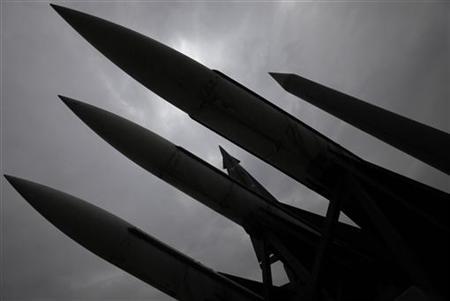
Classifying North Korea
North Korea recently went through another father-to-son change in leadership. It remains to be seen if the latest Kim will be as sadistically whacky as his father and grandfather but it has also brought up some questions about the North Korean government. Whenever North Korea comes up in the news I am invariably asked by someone if North Korea is actually a monarchy. “Father succeeds son, holding total power; that’s an absolute monarchy, right?” WRONG! North Korea is, all in all, one big lie. It is a charade on a national scale. It is half the population of the Korean peninsula being forced to play a game of “let’s pretend” at gun point. They call themselves the “Democratic People’s Republic of Korea”. That’s a lie to start with. As everyone knows, there is nothing at all “democratic” about North Korea and it can only even claim the most loose definition of being a republic in that it is not a monarchy. And even if it were a monarchy, it would still not be an absolute monarchy. At least not in my book, I realize most people in the world do not share my definition of absolute monarchy. As I have explained before, like French Bishop Jacques Bossuet, I admire absolute monarchy but am not a fan of arbitrary monarchy. I am not a fan of arbitrary power no matter who is wielding it.
According to Bishop Bossuet, there are four basic attributes of arbitrary government. There were (I) that subjects are born slaves and none are free, (II) no one possesses private property, the prince controls all sources of wealth and there is no inheritance, (III) the prince can dispose of the property and lives of all in his realm at his whim and, finally, (IV) there is no law but the will of the ruler. Obviously, North Korea possesses each and every one of those four attributes. It is the perfect example of an arbitrary government in operation. The North Korean people are, as a whole, down to the last man, woman and starving child, no more than the slaves of their government. There is no private property, in fact there is no commerce at all in North Korea. The State controls everything and issues the people what the State deems them to need. There is nothing any person in North Korea can possess, including his life and the lives of his children, which the State cannot take away from him or her at any time for any reason or no reason at all. The people live in constant fear, not only of the State, but of each other. And, of course, there is no law but that of the “Supreme Leader”. Communism provides the justification for the government but the rulers can deviate from Marxist dogma as they choose.
Could North Korea then be described as an arbitrary monarchy? Again, no. North Korea is not a monarchy of any kind. The fact that the country has been ruled by father, son and grandson in turn no more makes them a monarchy than the fact that the Pope is elected makes the Vatican a republic. There is actually no hereditary succession in North Korea. Most people do not realize this. Kim Il-Sung was the first President of North Korea. His son, Kim Jong-Il, never succeeded to that office, nor has his son. Confused yet? Well, you should be because this is how far into never-never land North Korea has fallen. Kim Jong-Un and Kim Jong-Il were never President of North Korea because Kim Il-Sung (who died in 1994) is STILL the President! There is no “The King is dead, long live the King” in North Korea. Nope, living or not, Kim Il-Sung is the “Eternal President” of North Korea and always will be. Kim Jong-Il was “Supreme Leader”, he gave the orders and he was in total control, but he was not the President. The President of North Korea, for the last 18 years, has been a dead man. Christopher Hitchens once described North Korea as a “necrocracy” for this reason.
A monarchy is something that grows up naturally, over time, in a certain place in accordance with the culture of that place. The communist regime in North Korea was something totally alien that was imposed on the country, suddenly and had to be hammered into place by brute force. Korea, of course, had been a monarchy. Immediately prior to the division of course it had been a colonial appendage of the Empire of Japan and prior had been a vassal kingdom of Imperial China. However, it had also, briefly, been an independent empire of its own but that had grown out of the much older and well established Kingdom of Korea that existed previously. The Democratic People’s Republic of Korea has nothing, whatever at all in common with that Korean Empire which had reigned during the last period of united independence on the peninsula. It was the most radical break imaginable to that old and glorious tradition. The prior Korean kingdom and empire had been a place of highly advanced Confucian learning, progress and prosperity to a degree that caused even their powerful Chinese and Japanese neighbors to look on them with a degree of envy. Today, Japan looks on North Korea with great concern or worry and China regards them as a rather ill-behaved and embarrassing child they are obliged to support. To put it succinctly, we know what a Korean monarchy looks like and the DPRK is certainly NOT that.
To a large extent, North Korea is, thankfully, an almost unique aberration in the world in the extent of its horror. It is less like any sort of a country at all and more akin to a vast slave labor camp. The level of self-deception on the part of the leadership and brainwashing on the part of the public has reached a level that I doubt any other country has ever reached. Even those regimes with which North Korea is friendliest; the PRC, the Socialist Republic of Vietnam, the Kingdom of Cambodia and the Lao People’s Democratic Republic have all in at least some small measure (with the possible exception of Laos which is a puppet of Vietnam in any event) realized that the path they started out on was a failure and have been making at least some changes in an effort to improve things. North Korea has not. It is the picture of a totally arrested society where anything that sustains them is credited to their “Great Leader” and all of their colossal ills are blamed on South Korea and the United States, making any effort at improvement useless to even consider. Given this, North Korea almost defies categorization or any effort to understand the place or apply any sort of reason to it at all. Everyone who has ever visited North Korea has been shocked that such a place could possibly be real. Every journalist I have ever seen interviewed after visiting North Korea has said the same exact thing, that it was an Orwellian nightmare brought to life.
Monarchies all around the world have much in common (as all people do as well) and yet are very unique. In certain regions; Europe, the Middle East, the Far East, south Asia etc they may have much in common from one to another but they are still quite unique. Given that, monarchists are often annoyed by republicans who try to paint with a broad brush and, for example, argue against the monarchy in Belgium by pointing to ancient Babylon or condemn the monarchy of the United Kingdom by citing the example of Saudi Arabia. Republicans will of course hypocritically complain when a monarchist cites to someone from the French Republic such cases as the Soviet Union, Nazi Germany or Pol Pot’s Cambodia. Keeping that in mind, far from being understandable as a monarchy, North Korea does, in a way, represent the ultimate in “republicanism”. It is the example of what happens when a political-economic doctrine is taken to the ultimate extreme, of throwing out history, tradition, morals and values and making the political machine, the “State” the ultimate authority, the ultimate guardian and the ultimate religion. North Korea, in that way, is a shining example of what results from all those who would trust political ideologies to solve their problems and ever bigger governments and government programs to take care of everything for them.
![]() |
| The fruits of Communism |
Could North Korea then be described as an arbitrary monarchy? Again, no. North Korea is not a monarchy of any kind. The fact that the country has been ruled by father, son and grandson in turn no more makes them a monarchy than the fact that the Pope is elected makes the Vatican a republic. There is actually no hereditary succession in North Korea. Most people do not realize this. Kim Il-Sung was the first President of North Korea. His son, Kim Jong-Il, never succeeded to that office, nor has his son. Confused yet? Well, you should be because this is how far into never-never land North Korea has fallen. Kim Jong-Un and Kim Jong-Il were never President of North Korea because Kim Il-Sung (who died in 1994) is STILL the President! There is no “The King is dead, long live the King” in North Korea. Nope, living or not, Kim Il-Sung is the “Eternal President” of North Korea and always will be. Kim Jong-Il was “Supreme Leader”, he gave the orders and he was in total control, but he was not the President. The President of North Korea, for the last 18 years, has been a dead man. Christopher Hitchens once described North Korea as a “necrocracy” for this reason.
![]() |
| Where the money goes |
To a large extent, North Korea is, thankfully, an almost unique aberration in the world in the extent of its horror. It is less like any sort of a country at all and more akin to a vast slave labor camp. The level of self-deception on the part of the leadership and brainwashing on the part of the public has reached a level that I doubt any other country has ever reached. Even those regimes with which North Korea is friendliest; the PRC, the Socialist Republic of Vietnam, the Kingdom of Cambodia and the Lao People’s Democratic Republic have all in at least some small measure (with the possible exception of Laos which is a puppet of Vietnam in any event) realized that the path they started out on was a failure and have been making at least some changes in an effort to improve things. North Korea has not. It is the picture of a totally arrested society where anything that sustains them is credited to their “Great Leader” and all of their colossal ills are blamed on South Korea and the United States, making any effort at improvement useless to even consider. Given this, North Korea almost defies categorization or any effort to understand the place or apply any sort of reason to it at all. Everyone who has ever visited North Korea has been shocked that such a place could possibly be real. Every journalist I have ever seen interviewed after visiting North Korea has said the same exact thing, that it was an Orwellian nightmare brought to life.
Monarchies all around the world have much in common (as all people do as well) and yet are very unique. In certain regions; Europe, the Middle East, the Far East, south Asia etc they may have much in common from one to another but they are still quite unique. Given that, monarchists are often annoyed by republicans who try to paint with a broad brush and, for example, argue against the monarchy in Belgium by pointing to ancient Babylon or condemn the monarchy of the United Kingdom by citing the example of Saudi Arabia. Republicans will of course hypocritically complain when a monarchist cites to someone from the French Republic such cases as the Soviet Union, Nazi Germany or Pol Pot’s Cambodia. Keeping that in mind, far from being understandable as a monarchy, North Korea does, in a way, represent the ultimate in “republicanism”. It is the example of what happens when a political-economic doctrine is taken to the ultimate extreme, of throwing out history, tradition, morals and values and making the political machine, the “State” the ultimate authority, the ultimate guardian and the ultimate religion. North Korea, in that way, is a shining example of what results from all those who would trust political ideologies to solve their problems and ever bigger governments and government programs to take care of everything for them.
Wednesday, May 2, 2012
War of 1812 Wednesday, Part VI, The Results of the War
Continued from Part V
If one takes the American politicians at their word that the War of 1812 was about the British blockade of Europe, impressments of sailors and freedom of the seas; the conflict settled absolutely nothing. The British had stopped all of these policies when the defeat of Napoleon made them unnecessary. Nonetheless, some Americans seized on this and tried to claim the War of 1812 as an American victory, forcing the British to come to the American point of view regarding maritime rights. The fact that some made such a claim makes it no less ridiculous. The United States had not forced Britain to change a single policy and the American dream of conquering Canada had ended in ignominious failure. Against nearly impossible odds the Crown forces had held their own, repelled the American attacks and even managed to win the singular distinction of being the only enemy force to ever occupy Washington DC.
If there was one group of people though who clearly understood the significance of the war it was the Canadians. Before the American Revolution Canada had been mostly French Canada, but the exiled American loyalists had laid the foundation for English-speaking Canada and the victory of Canadian troops against massive American armies brought about a new sense of Canadian pride and national identity. Quite the opposite of the American dream of Canadians welcoming their invasion with grateful hearts and outstretched hands, the French and English Canadians had been united against a common enemy in the defense of their country as well as winning the respect of many in Britain for their loyalty and determination, which ultimately led down the road to self-government and autonomy within the British Empire and finally complete independence among the Commonwealth. More than the British or the Americans, Canadians remember the War of 1812 as the conflict which saved them as a unique country from American domination.
In the United States, reaction was somewhat mixed. American pride was so great that they refused to admit being defeated and congratulated themselves for surviving the conflict without losing any territory. "The Second War for Independence" many called it. On the surface and in public there was a great deal of pride and celebration of the American victories, no matter how important or unimportant they might have been. Underneath though, the United States had learned some hard lessons and though they might not have admitted it openly, they realized some of their arrogant attitudes about a professional military had to change. Blind faith would no longer be put in a civilian militia and the US government soon established the US Military Academy at West Point for the formal training of officers for the regular army. Men like Winfield Scott, Zachary Taylor and Andrew Jackson would also go on to illustrious careers after gaining fame in the War of 1812. Nor had American zeal for expansion been entirely extinguished either. In the decades that followed Florida was added to the Union as was the Republic of Texas and after a war with Mexico all of southwest so that American power stretched to the Pacific Ocean. It is noteworthy though that all future expansion looked south and west; the idea of invading Canada never came up again and the two countries have been relatively peaceful ever since. The biggest losers were probably the Indian tribes who faced renewed aggression from the United States and this time with no support from the British to resist them.
In conclusion, it is safe to say that the United States has been somewhat selective in labeling the War of 1812 a victory at best or a stalemate at worst. Despite all of the political talk about freedom of the seas, the War of 1812 was pushed through by the War Hawks and their primary goal was the conquest and annexation of Canada. In this, the United States failed completely and only barely survived the British counterattack which followed after it. Even the expansionism that followed later was entirely to the south and west, never the north, which has been avoided ever since. The United States failed to conquer Canada, failed to forcibly alter any British plans or policies and although they removed Britain as an Indian ally, they certainly continued to have Indian wars as long as US expansion continued. The British Empire, on the other hand, successfully defended all of their territory, firmly stopped any designs the United States had on taking control of British North America and left the war still the dominant world power of the time. So, if the War of 1812 was a stalemate, it was one much closer to being a British victory than an American one by any measure of judgment.
If one takes the American politicians at their word that the War of 1812 was about the British blockade of Europe, impressments of sailors and freedom of the seas; the conflict settled absolutely nothing. The British had stopped all of these policies when the defeat of Napoleon made them unnecessary. Nonetheless, some Americans seized on this and tried to claim the War of 1812 as an American victory, forcing the British to come to the American point of view regarding maritime rights. The fact that some made such a claim makes it no less ridiculous. The United States had not forced Britain to change a single policy and the American dream of conquering Canada had ended in ignominious failure. Against nearly impossible odds the Crown forces had held their own, repelled the American attacks and even managed to win the singular distinction of being the only enemy force to ever occupy Washington DC.
If there was one group of people though who clearly understood the significance of the war it was the Canadians. Before the American Revolution Canada had been mostly French Canada, but the exiled American loyalists had laid the foundation for English-speaking Canada and the victory of Canadian troops against massive American armies brought about a new sense of Canadian pride and national identity. Quite the opposite of the American dream of Canadians welcoming their invasion with grateful hearts and outstretched hands, the French and English Canadians had been united against a common enemy in the defense of their country as well as winning the respect of many in Britain for their loyalty and determination, which ultimately led down the road to self-government and autonomy within the British Empire and finally complete independence among the Commonwealth. More than the British or the Americans, Canadians remember the War of 1812 as the conflict which saved them as a unique country from American domination.
In the United States, reaction was somewhat mixed. American pride was so great that they refused to admit being defeated and congratulated themselves for surviving the conflict without losing any territory. "The Second War for Independence" many called it. On the surface and in public there was a great deal of pride and celebration of the American victories, no matter how important or unimportant they might have been. Underneath though, the United States had learned some hard lessons and though they might not have admitted it openly, they realized some of their arrogant attitudes about a professional military had to change. Blind faith would no longer be put in a civilian militia and the US government soon established the US Military Academy at West Point for the formal training of officers for the regular army. Men like Winfield Scott, Zachary Taylor and Andrew Jackson would also go on to illustrious careers after gaining fame in the War of 1812. Nor had American zeal for expansion been entirely extinguished either. In the decades that followed Florida was added to the Union as was the Republic of Texas and after a war with Mexico all of southwest so that American power stretched to the Pacific Ocean. It is noteworthy though that all future expansion looked south and west; the idea of invading Canada never came up again and the two countries have been relatively peaceful ever since. The biggest losers were probably the Indian tribes who faced renewed aggression from the United States and this time with no support from the British to resist them.
In conclusion, it is safe to say that the United States has been somewhat selective in labeling the War of 1812 a victory at best or a stalemate at worst. Despite all of the political talk about freedom of the seas, the War of 1812 was pushed through by the War Hawks and their primary goal was the conquest and annexation of Canada. In this, the United States failed completely and only barely survived the British counterattack which followed after it. Even the expansionism that followed later was entirely to the south and west, never the north, which has been avoided ever since. The United States failed to conquer Canada, failed to forcibly alter any British plans or policies and although they removed Britain as an Indian ally, they certainly continued to have Indian wars as long as US expansion continued. The British Empire, on the other hand, successfully defended all of their territory, firmly stopped any designs the United States had on taking control of British North America and left the war still the dominant world power of the time. So, if the War of 1812 was a stalemate, it was one much closer to being a British victory than an American one by any measure of judgment.
Tuesday, May 1, 2012
Favorite Royal Images: Kamehameha the Great
It was on this day in 1785 that King Kamehameha I triumphed over his enemies to establish the Kingdom of Hawaii.
Subscribe to:
Posts (Atom)

.jpg)


